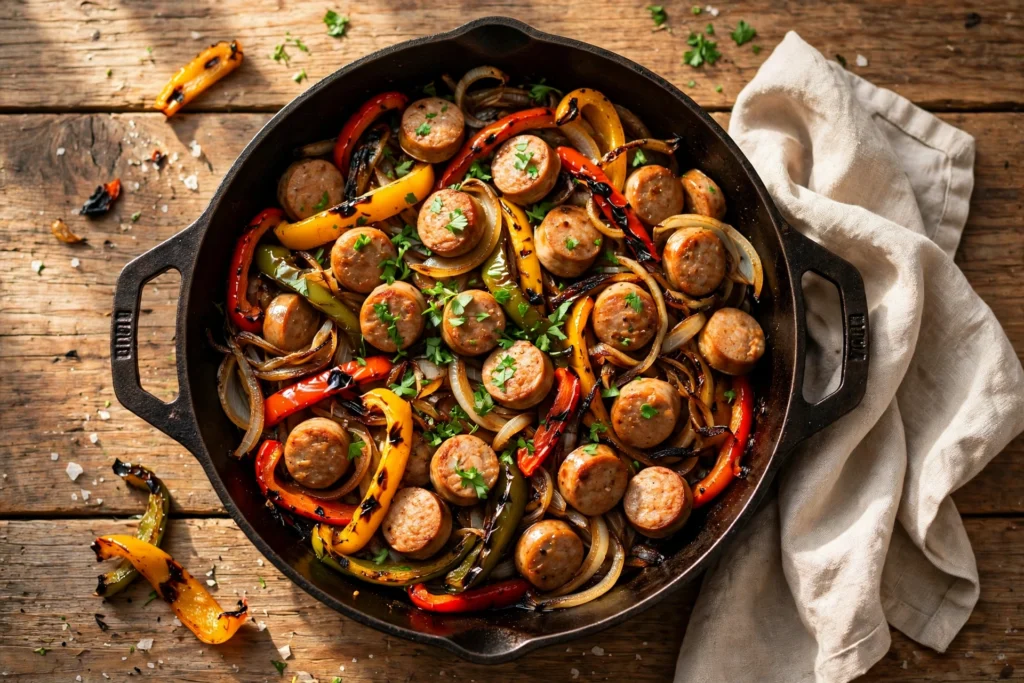
If you are looking for chicken sausage recipes that actually taste like dinner and not like a shortcut, this is the one to start with. One pound of chicken sausage, three colorful bell peppers, and a sweet onion go into a single skillet, and thirty minutes later you have golden-brown sausage coins, peppers with charred edges, and a glossy balsamic pan sauce. It tastes smoky, sweet, and savory all at once.
There is no marinating, no oven, and no pile of dishes. The sausage does most of the flavor work, the peppers cook in the same pan, and dinner is ready while the rice cooks. Once you learn the browning rules below, this skillet becomes a regular in your rotation.

The Skillet That Saved My Busiest Week
There was a week when every evening felt like a race — work ran late, the fridge was nearly empty, and I kept reaching for the same tired takeout menu. Then I found a pack of chicken sausage I had bought on a whim, and three peppers one day away from going soft. I sliced everything into a hot skillet, mostly because it was faster than deciding what else to make, and twenty minutes later dinner was on the table. My family asked for it again the next night. That was when I understood what a good skillet dinner really is: not a compromise, but a plan. Now I keep chicken sausage in the fridge on purpose.
Joanne Helena
Why You’ll Love It
- Ready in 30 minutes. Ten minutes of slicing, twenty in the pan.
- One pan, easy cleanup. Everything happens in one skillet.
- Big flavor, little effort. The sausage brings the seasoning, so the list stays short.
- Sweet peppers, charred edges. The peppers stay tender-crisp, never mushy.
- Naturally lighter. Chicken sausage is leaner than pork sausage.
- Five ways to serve it. Over rice, in a roll, with pasta, over potatoes, or low-carb.
- Great for meal prep. It reheats beautifully and tastes better the next day.
Ingredients
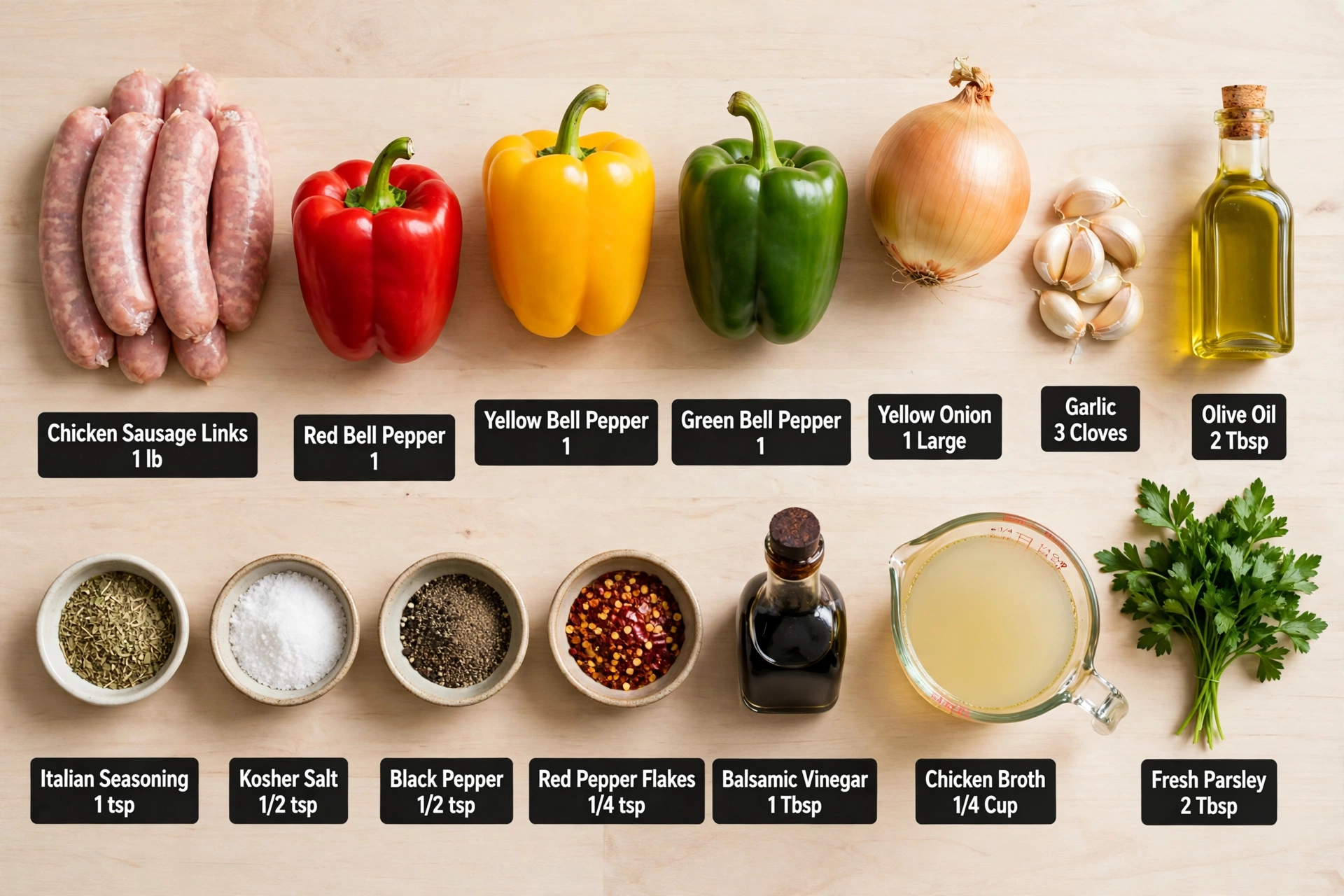
- 1 pound chicken sausage links (about 4 links) — The star of the dish. Fully cooked links are the easiest choice — you only need to brown them. Italian-style is the classic flavor here, but apple, spinach and feta, or sun-dried tomato all work. Substitution: raw chicken sausage links, sliced the same way — just cook them fully to 165F inside (see Technique).
- 1 red bell pepper, sliced into strips — Sweet, colorful, and the first pepper to soften. Slice it into even 1/2-inch strips so it cooks evenly. Substitution: 1 more yellow pepper.
- 1 yellow bell pepper, sliced into strips — The sweetest of the three peppers, and it turns a beautiful golden color in the pan. Substitution: 1 orange bell pepper.
- 1 green bell pepper, sliced into strips — Slightly bitter in the best way, balancing the sweetness of the other peppers. Substitution: 1 poblano pepper, seeded, for a mild smoky note.
- 1 large yellow onion, thinly sliced — It cooks down sweet and soft and forms the base of the pan sauce. Slice it thin so it melts into the peppers. Substitution: 1 large red onion, thinly sliced.
- 3 garlic cloves, minced — Warm, savory depth. Mince it by hand — pressed garlic burns faster in a hot pan. Substitution: 1 teaspoon garlic powder, added with the Italian seasoning.
For the Oil, Seasonings, and the Pan Sauce
- 2 tablespoons olive oil — For browning the sausage and sauteing the vegetables. It handles the heat well. Substitution: avocado oil or vegetable oil.
- 1 teaspoon Italian seasoning — The dried herb blend that makes the skillet taste Italian: oregano, basil, thyme, and rosemary. Substitution: 1/2 teaspoon dried oregano plus 1/2 teaspoon dried basil.
- 1/2 teaspoon kosher salt — Seasons the vegetables, which need it — the sausage is already seasoned. Substitution: 1/4 teaspoon fine sea salt.
- 1/2 teaspoon black pepper — A little bite against the sweet peppers. Substitution: 1/4 teaspoon white pepper.
- 1/4 teaspoon red pepper flakes — A gentle warmth in the background, not real heat. Leave it out if you prefer no spice. Substitution: a pinch of cayenne pepper.
- 1 tablespoon balsamic vinegar — The deglaze. It lifts the browned bits off the pan and adds a sweet-tart shine. Substitution: 1 tablespoon red wine vinegar plus 1/2 teaspoon honey.
- 1/4 cup low-sodium chicken broth — Helps the balsamic form a light pan sauce and keeps the peppers from drying out. Low-sodium matters, because the sausage is already salty. Substitution: 1/4 cup water.
- 2 tablespoons fresh parsley, chopped — A bright, fresh finish over the top just before serving. Substitution: fresh basil, chopped.
How to Make Chicken Sausage and Peppers Skillet
Step 1: Slice the Sausage and Vegetables
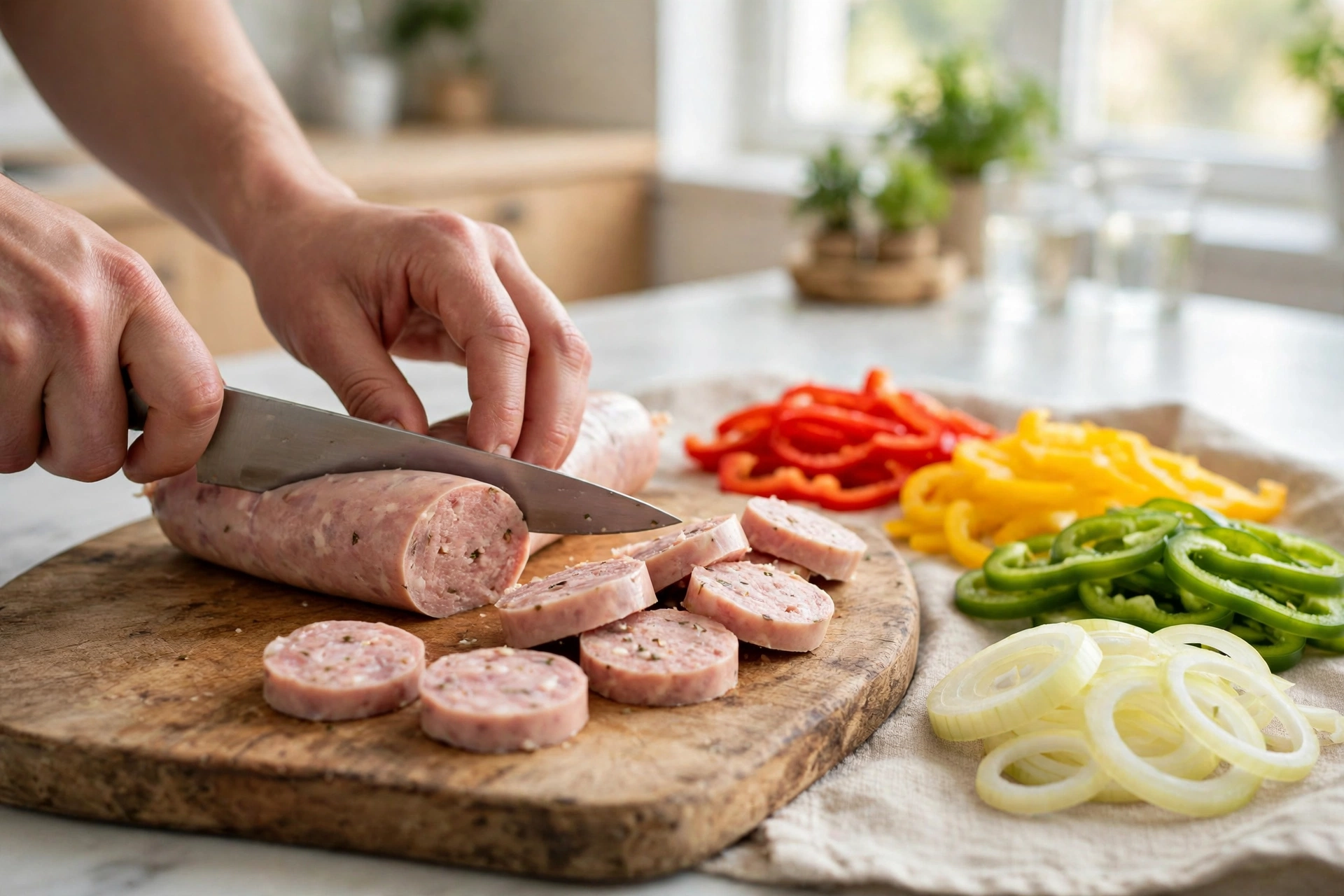
Slice the sausage and vegetables. Slice the chicken sausage links into coins about 1/2 inch thick — thick enough to stay juicy, thin enough to brown well. Slice the three bell peppers into strips about 1/2 inch wide, and slice the onion thinly. Mince the garlic and chop the parsley. Keep them in separate piles — they go into the pan at different times. This is the whole prep — about 10 minutes.
Step 2: Brown the Sausage
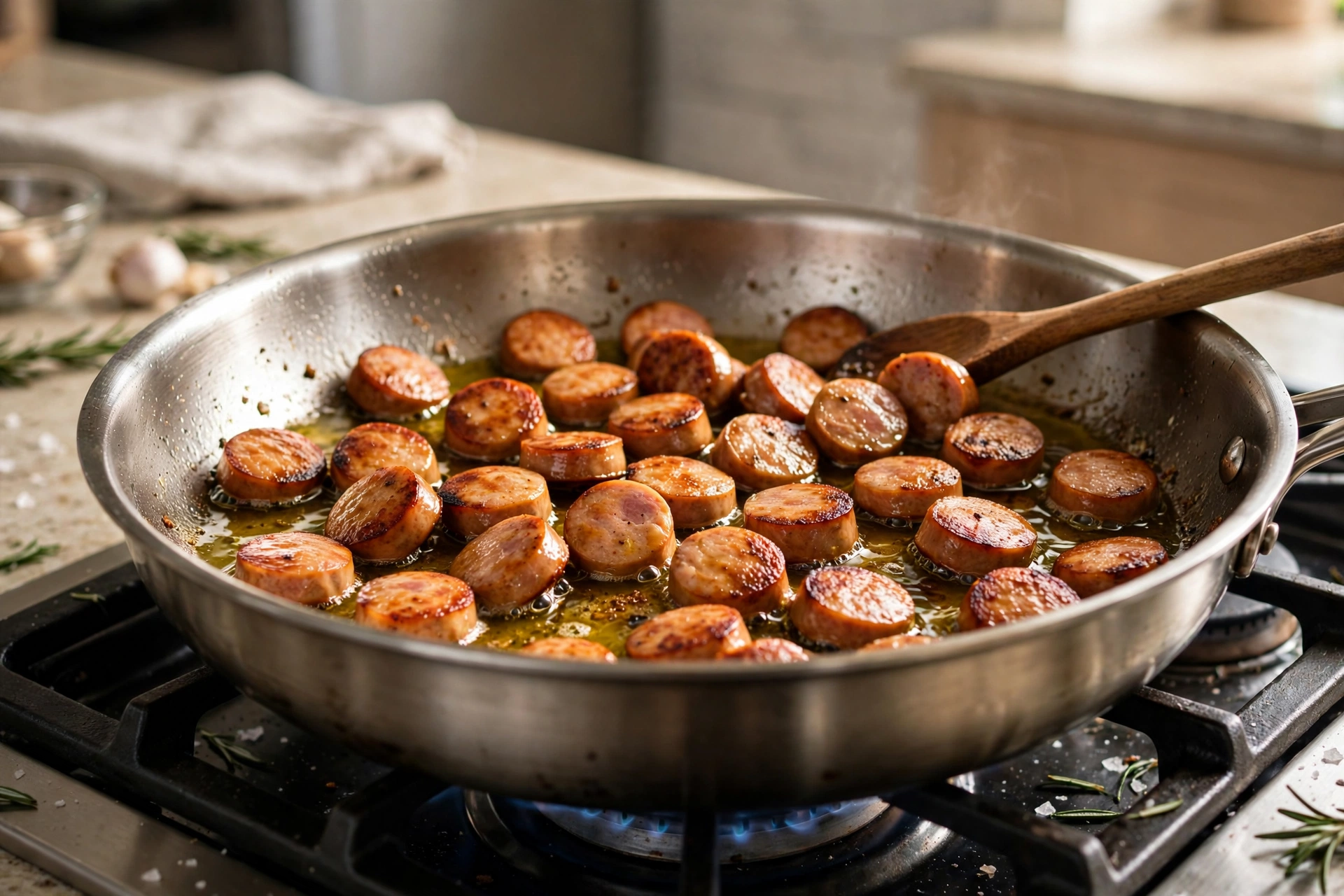
Brown the sausage. Heat the olive oil in a large skillet over medium-high heat until it shimmers, about 2 minutes. Add the sausage coins in a single layer — do not crowd them, or they will steam instead of brown. Cook without moving for 2 to 3 minutes, until the bottoms are deep golden-brown, then flip and brown the other side for another 2 to 3 minutes. With fully cooked links, browning is about color and flavor, not doneness. Move the browned sausage to a plate.
Step 3: Cook the Peppers and Onions
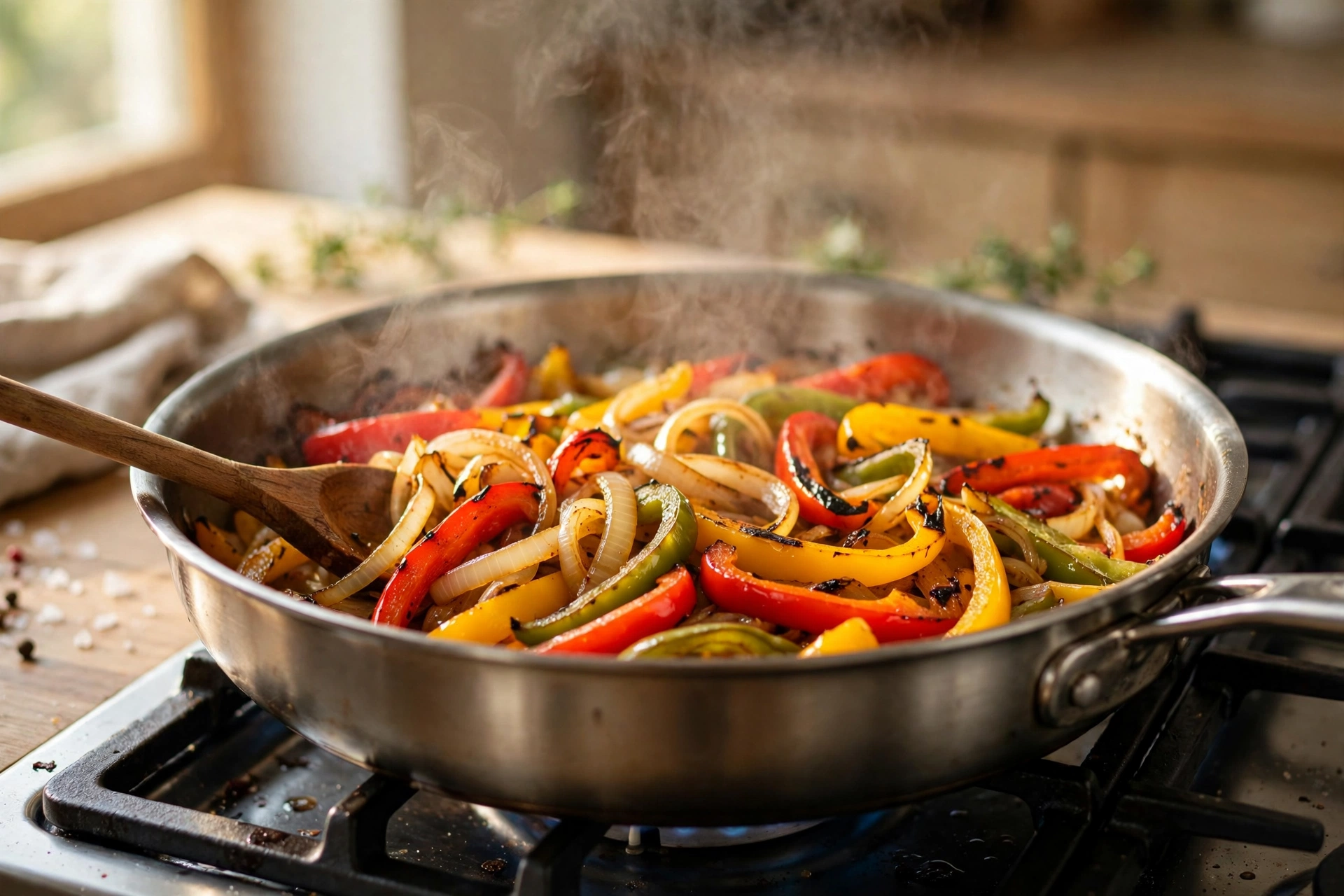
Cook the peppers and onions. Add the onion to the same hot skillet — do not wipe it out; the browned bits are flavor. Cook for 3 to 4 minutes, stirring now and then, until the onion softens and turns golden at the edges. Add the pepper strips and cook for 5 to 6 minutes more, until tender-crisp with lightly charred edges, seasoning with the salt and black pepper as they cook. Then stir in the garlic, Italian seasoning, and red pepper flakes and cook for 1 minute, until fragrant — garlic goes in last because it burns fast.
Step 4: Deglaze and Simmer
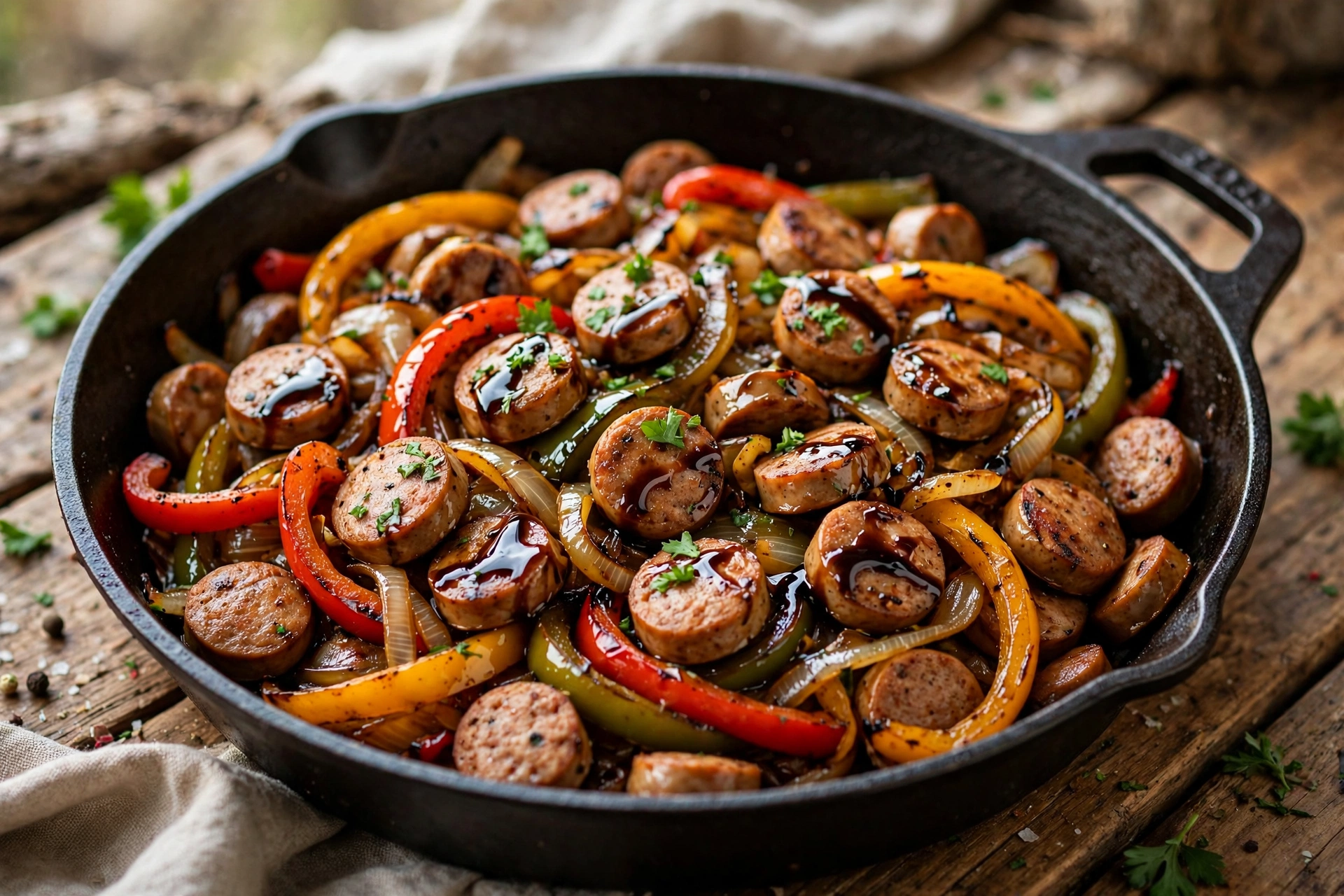
Deglaze and simmer. Slide the browned sausage back into the skillet. Pour in the balsamic vinegar and the chicken broth — the pan will hiss, and that is exactly what you want. Scrape the bottom with a wooden spoon to lift up the browned bits; those bits are the sauce. Simmer for 2 to 3 minutes, until the liquid reduces to a light glaze that coats everything. Taste before adding more salt — the sausage is already salty.
Step 5: Rest and Serve
Rest and serve. Take the skillet off the heat and rest it 2 minutes — the sauce thickens and the flavors settle. Sprinkle the chopped parsley over the top and serve straight from the skillet, family style, or piled onto plates. See the serving system below for the five best ways to turn it into a full dinner.
Technique: The Browning Rules, the Buying Guide, and Pepper Doneness
Three small skills decide whether this skillet is great or just fine: buying the sausage, browning it, and cooking the peppers.
How to Buy Chicken Sausage
Chicken sausage comes in two kinds, and the package tells you which one you have. Fully cooked links say “fully cooked” on the label — these only need browning, and this recipe is written for them. Raw links say “cook thoroughly” — these need to reach 165F in the center, so cook the slices 2 to 3 minutes longer per side, until no pink remains. Either kind works.
For flavor, Italian-style is the classic match for peppers and onions. Apple chicken sausage is sweeter, spinach and feta adds a salty, herby note, and sun-dried tomato brings a deeper flavor. Read the label before you buy: look for a short ingredient list and check the sodium — some brands are very salty, and if yours is, skip the extra salt on the vegetables. Avoid pre-sliced links; whole links brown better.
The Browning Rules
Browning is where the flavor comes from. First, the pan must be hot before the sausage goes in — if the oil does not shimmer, wait. Second, the sausage goes in a single layer with space between the coins; crowded sausage steams and stays pale and rubbery, so brown in two batches if your skillet is small. Third, do not move the coins. Let each side sit for 2 to 3 minutes until deep golden-brown, then flip once. A properly browned coin releases from the pan easily; one that sticks is not ready yet.
Pepper Doneness: Tender-Crisp, Not Mushy
The most common mistake is cooking the peppers too long. They should be tender-crisp — soft enough to bite through, firm enough to hold their shape, with a few charred edges. That takes 5 to 6 minutes over medium-high heat after the onion has softened. If the peppers go in with the onion, the onion stays raw while the peppers overcook; if the pan is crowded, the peppers steam and turn limp. Cook them in a wide skillet and taste one — it should bend without breaking and still have a little bite.
The Deglaze
The deglaze is a thirty-second step that finishes the dish. When the balsamic vinegar and broth hit the hot pan, they dissolve the browned bits stuck to the bottom — the fond — and turn them into a sauce. Scrape firmly with a wooden spoon while the liquid bubbles. If the pan looks dry, add another splash of broth; if the sauce looks thin, simmer one more minute. The finished glaze should coat the back of a spoon, not pool in the pan.
Tips for the Best Chicken Sausage and Peppers
- ✔ Slice the sausage 1/2 inch thick. Thinner coins dry out; thicker coins brown poorly.
- ✔ Do not crowd the pan. Brown in a single layer, in two batches if your skillet is small.
- ✔ Wait for the shimmer. If the oil is not shimmering, the pan is not hot enough.
- ✔ Onions first, peppers second. The onion needs a head start, or it stays raw.
- ✔ Garlic goes in last. It burns in under a minute, so add it with the seasoning.
- ✔ Taste before you salt. The sausage is already seasoned; the vegetables need the salt.
- ✔ Let it rest 2 minutes. The glaze thickens and the flavors settle.
Variations
Spicy Chicken Sausage and Peppers
Use hot Italian chicken sausage, double the red pepper flakes, and add 1 sliced jalapeno with the peppers. Finish with lime instead of parsley.
Chicken Sausage and Peppers with Mushrooms
Add 8 ounces of sliced cremini mushrooms with the onion and cook until they brown at the edges, about 5 minutes, before adding the peppers. The mushrooms make the skillet heartier and stretch it to 5 servings.
Creamy Sausage and Peppers
After the deglaze, stir in 1/2 cup of heavy cream and simmer 2 minutes until silky. This version is wonderful over pasta — the cream catches the balsamic and the sausage drippings.
Sheet Pan Chicken Sausage and Peppers
Toss the sliced sausage, peppers, and onion with the oil and seasonings on a sheet pan and roast at 425F for 20 to 25 minutes, stirring once halfway through. No browning step, and the peppers get lovely roasted edges. Finish with the balsamic and parsley after it comes out.
Sausage and Peppers with Potatoes
Add 2 cups of diced baby potatoes with the onion and cook for 8 to 10 minutes before adding the peppers, plus an extra 1/4 cup of broth so nothing sticks. This turns the skillet into a complete one-pan dinner with no side dish needed.
Low-Carb Sausage and Peppers
Serve the skillet as it is, with a big green salad on the side, and skip the rice, rolls, and pasta. The dish itself is already low in carbs.
What to Serve With Chicken Sausage and Peppers
This skillet pairs with almost anything, so pick the serving style that fits your night. The classic is steamed white rice or buttered egg noodles, which soak up the balsamic glaze. For a sandwich night, pile it into warm hoagie rolls with provolone — a favorite for game day. Over mashed potatoes it is comfort food; over pasta, a full Italian-style dinner. For a lighter plate, serve it with a green salad and crusty bread. If you are building a chicken-themed week, baked chicken makes a great second easy chicken dinner, and buffalo chicken dip works as a starter when friends come over.
Storage
In the Fridge
Cool completely, then store in an airtight container in the fridge for up to 4 days. The flavors improve overnight, so leftovers are genuinely good.
Reheating
Reheat in a covered skillet over medium-low heat for 5 to 7 minutes, with a splash of broth to loosen the glaze. The microwave works too, in 60-second bursts at 50 percent power. Avoid high heat, which toughens the sausage.
In the Freezer
This skillet freezes well for up to 3 months. Cool completely, pack into freezer bags in single-serving portions, and press out the air. Thaw overnight in the fridge and reheat gently. The peppers will be softer after freezing, but the flavor holds up.
Meal Prep
Double the recipe and divide it into 4 lunch containers with rice or potatoes. It keeps 4 days and reheats in 2 minutes.
Frequently Asked Questions
What are the best chicken sausage recipes for dinner?
The best ones let the sausage do the flavor work. This skillet is a great starting point — one pan, 30 minutes, peppers and onions with a balsamic glaze. For other easy chicken dinners in the same spirit, try crockpot chicken tacos for a hands-off night, or chicken tinga when you want something smoky and saucy.
Do I need to cook chicken sausage before adding it to the skillet?
It depends on the kind you bought. Fully cooked links only need browning — 2 to 3 minutes per side until golden. Raw chicken sausage must reach 165F in the center, so give the slices 2 to 3 extra minutes per side until no pink remains. The label will say “fully cooked” or “cook thoroughly”.
What kind of chicken sausage is best for peppers and onions?
Italian-style is the classic choice — its fennel and herb seasoning matches peppers and onions perfectly. Apple is good if you like a sweeter dish, and spinach and feta or sun-dried tomato are both good. Avoid pre-sliced sausage; whole links brown much better.
Why is my sausage and peppers soggy?
It is soggy for one of three reasons: the pan was crowded, so everything steamed instead of browning; the heat was too low; or the peppers cooked too long. Use a wide skillet, brown the sausage in a single layer, and cook the peppers just 5 to 6 minutes until tender-crisp.
Can I make chicken sausage and peppers ahead of time?
Yes. Cook the full skillet, cool it, and refrigerate it for up to 4 days — the flavor actually improves overnight. Reheat it in a covered skillet over medium-low heat with a splash of broth. You can also slice everything the night before, so cooking takes 20 minutes.
Is chicken sausage healthier than pork sausage?
Usually, yes. Chicken sausage is typically much lower in fat and calories than pork sausage, because it is made from lean chicken rather than pork shoulder. Numbers vary by brand, so check the label for a short ingredient list and a sodium level you are comfortable with.
Try These Next
- Baked Chicken — juicy oven-baked chicken breasts, ready in under 30 minutes.
- Crockpot Chicken Tacos — slow cooker chicken tacos for a busy night.
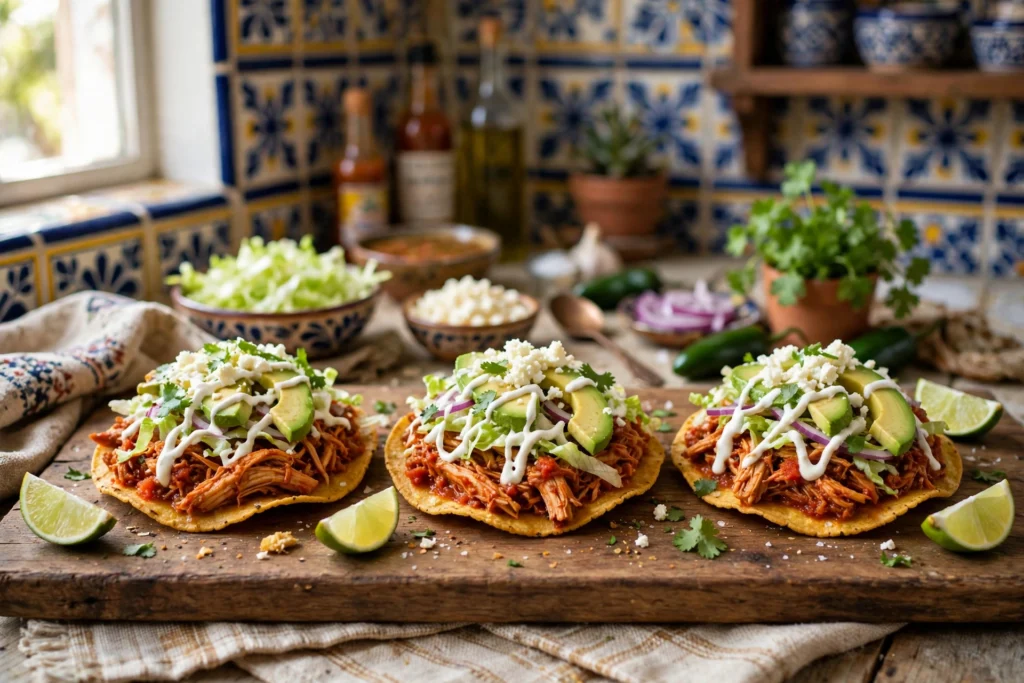
- Chicken Tinga — smoky, saucy shredded chicken for tacos and tostadas.
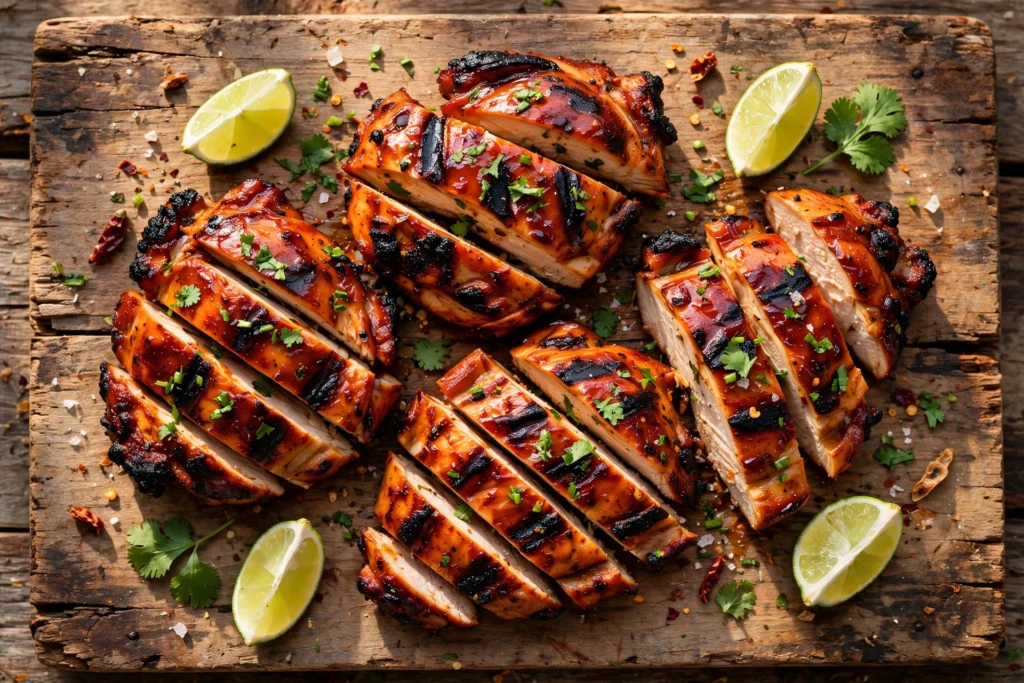
- Copycat Chipotle Chicken — chipotle-marinated chicken like the restaurant version.
- Buffalo Chicken Dip — creamy, spicy dip for game day and parties.
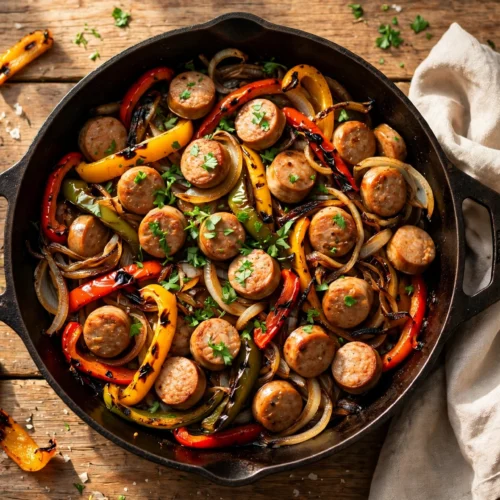
Chicken Sausage and Peppers Skillet
Ingredients
- 1 pound chicken sausage links about 4 links, sliced into 1/2-inch coins
- 1 red bell pepper sliced into strips
- 1 yellow bell pepper sliced into strips
- 1 green bell pepper sliced into strips
- 1 large yellow onion thinly sliced
- 3 garlic cloves minced
- 2 tablespoons olive oil
- 1 teaspoon Italian seasoning
- 1/2 teaspoon kosher salt
- 1/2 teaspoon black pepper
- 1/4 teaspoon red pepper flakes
- 1 tablespoon balsamic vinegar
- 1/4 cup low-sodium chicken broth
- 2 tablespoons fresh parsley chopped
Instructions
- Slice the chicken sausage into 1/2-inch coins. Slice the bell peppers into 1/2-inch strips and the onion thinly. Mince the garlic and chop the parsley.
- Heat the olive oil in a large skillet over medium-high heat until shimmering, about 2 minutes. Add the sausage coins in a single layer and cook without moving for 2 to 3 minutes per side, until deep golden-brown. Move the browned sausage to a plate. (If using raw sausage, cook 2 to 3 minutes longer per side, until it reaches 165 degrees F inside.)
- Add the onion to the same skillet and cook 3 to 4 minutes until softened and golden at the edges. Add the pepper strips and cook 5 to 6 minutes until tender-crisp with lightly charred edges. Season with salt and black pepper. Stir in the garlic, Italian seasoning, and red pepper flakes and cook 1 minute until fragrant.
- Return the sausage to the skillet. Pour in the balsamic vinegar and chicken broth, scraping the bottom of the pan with a wooden spoon to lift up the browned bits. Simmer 2 to 3 minutes until the liquid reduces to a light glaze.
- Take the skillet off the heat and rest 2 minutes. Sprinkle with the chopped parsley and serve.
Notes
- Slice the sausage 1/2 inch thick — thinner coins dry out, thicker coins do not brown as well.
- Brown the sausage in a single layer; crowd the pan and it steams instead of browning.
- Cook the onion first, then the peppers — the onion needs a head start.
- Add the garlic last, with the seasoning, so it does not burn.
- Taste before adding more salt — the sausage is already seasoned.
- Leftovers keep 4 days in the fridge and freeze up to 3 months; reheat gently with a splash of broth.