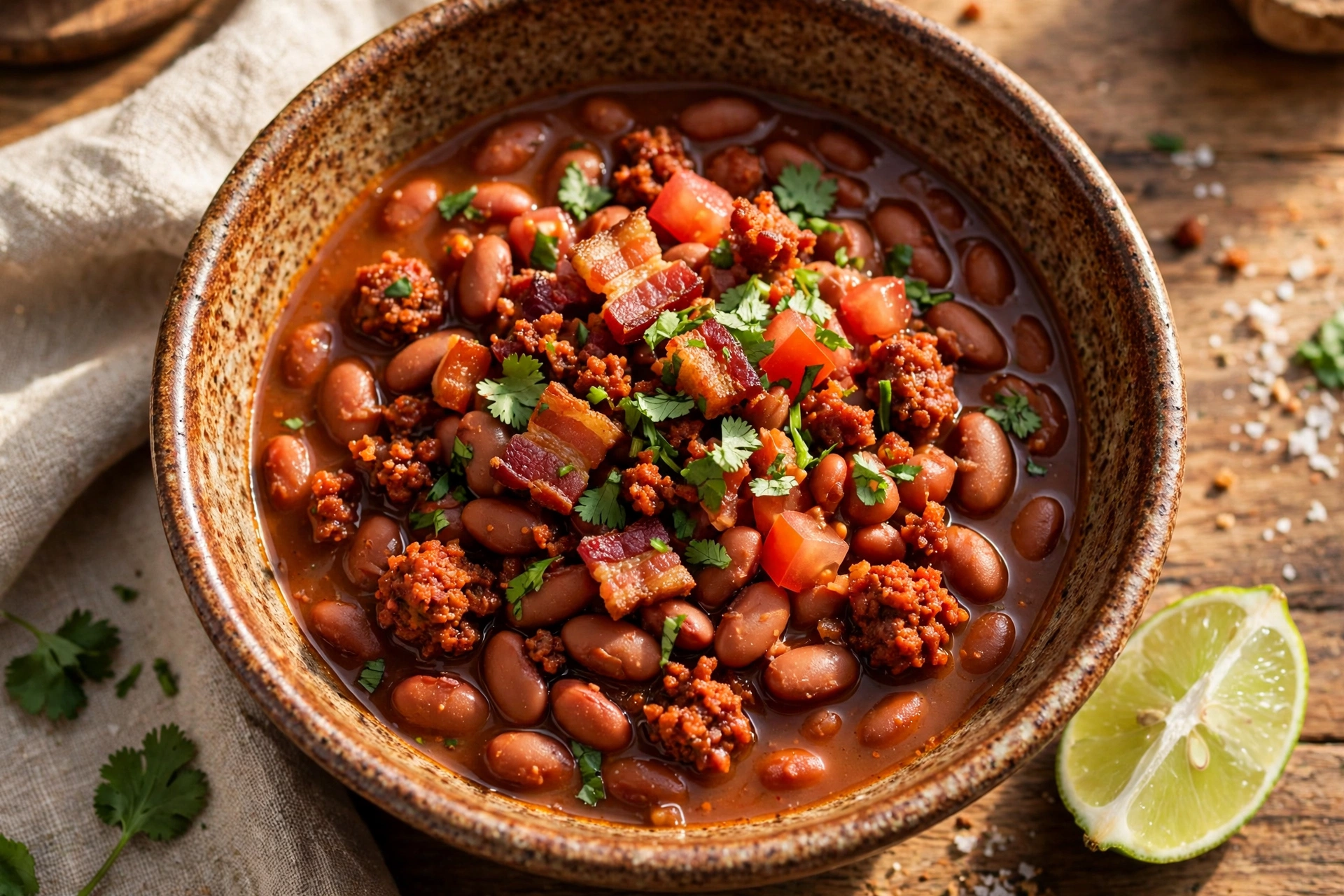
Looking for the side dish that turns grilled meat into a feast? These frijoles charros are exactly that — tender pinto beans simmered in a smoky, savoury broth with crispy bacon, chorizo, tomatoes and chiles. They are the cowboy beans of Mexico, and they taste like a campfire supper: rich, hearty and full of flavour.
The best part is how little hands-on work they take. The beans simmer away on their own for about two hours, and while they cook you fry the bacon and vegetables in one skillet. Then everything goes into the same pot for a final simmer, and the broth turns into something you will want to spoon up on its own.
Serve them beside carne asada, tacos or grilled chicken, and watch the pot empty first. If you love the smoky, brothy beans served in Mexico, these frijoles charros will become a new favourite at your table.
Why You’ll Love It
- A Mexican classic side. Frijoles charros are the cowboy beans of Mexico — pinto beans simmered with bacon, chorizo and chiles.
- Smoky, brothy and hearty. The bacon fat and chorizo turn a simple pot of beans into a rich, savoury dish.
- Mostly hands-off. About 2 hours 15 minutes start to finish, but most of it is the beans simmering on their own.
- One pot at the end. Everything finishes together in the same pot, so the flavours meld and the washing up stays small.
- Feeds a crowd. One pound of beans makes 8 generous servings — perfect for family dinners and cookouts.
- Even better the next day. The flavour settles and deepens overnight, so leftovers are a treat, not an afterthought.
What Are Frijoles Charros?
Frijoles charros means “cowboy beans” in Spanish, and the name tells you exactly what they are: a pot of pinto beans cooked the way ranch cooks in northern Mexico have made them for generations — with bacon, sausage, tomatoes, onion and chiles, simmered until the broth is rich and the beans are meltingly tender. They are not refried beans and they are not plain boiled beans; they are beans with a whole meal’s worth of flavour in the pot.
The dish is a carne-asada side first and foremost. In Mexico, frijoles charros sit next to grilled steak, tacos and roasted meats at family gatherings and cookouts, and the broth is spooned over everything on the plate. They are also a meal on their own with warm tortillas — the beans, the bacon and the broth are filling enough without anything else.
This version follows the classic pattern: dried pinto beans simmered in water with onion, garlic and epazote, then finished with a skillet of crisp bacon, browned chorizo and softened vegetables, all simmered together for a final 15 to 20 minutes. No soaking is needed — the beans just need time.
Ingredients
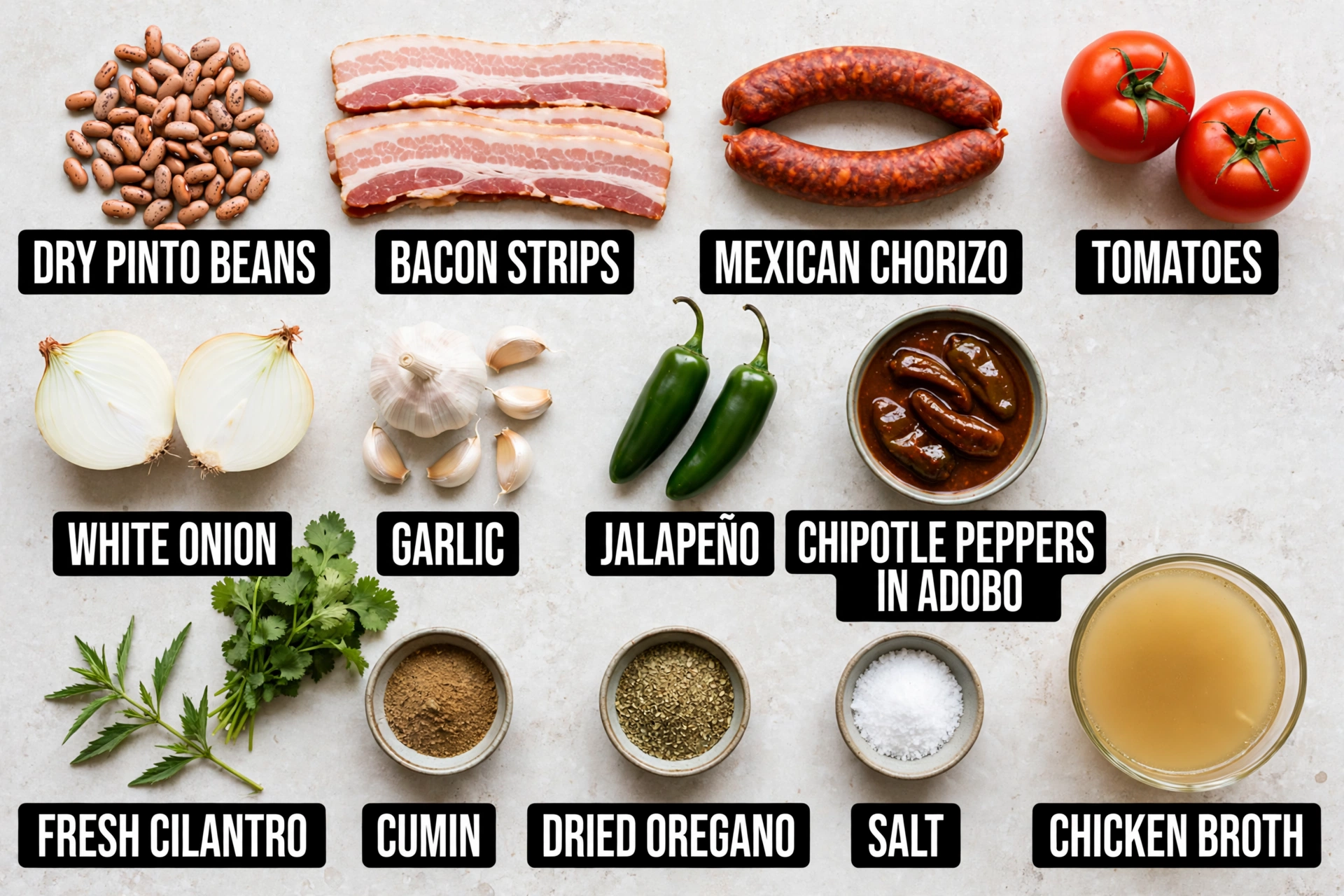
For the beans:
Dry pinto beans — 1 lb (2 cups), rinsed and sorted. Pinto beans are the classic bean for frijoles charros — they cook up creamy inside and hold their shape in the broth. Rinse them well and pick out any small stones or broken beans first. Black beans work in their place, but the dish will be darker and a little earthier.
Water — 10 cups. The beans need plenty of water to simmer in — enough to cover them by 2 to 3 inches. Keep the pot topped up as they cook, so the beans never sit above the water line. Chicken or beef broth can replace part of the water for a richer pot.
White onion — 1/2, for the pot. Half an onion goes in with the beans and flavours the cooking water from the start. It softens and nearly disappears by the time the beans are tender. The other half is diced for the skillet.
Garlic — 2 cloves, for the pot. Two garlic cloves simmer with the beans and give the broth a gentle savoury base. The third clove goes into the skillet with the vegetables.
Fresh epazote — 2 sprigs (or 1 bay leaf). Epazote is the traditional Mexican herb for beans — it adds a distinctive, slightly citrusy note and is said to make beans easier to digest. If you cannot find it, a bay leaf gives the pot a similar background warmth; remove it before serving.
For the smoky filling:
Thick-cut bacon — 6 strips, cut into 1-inch pieces. Bacon is the heart of frijoles charros — it renders its fat into the skillet and crisps up into smoky bites that go through the whole pot. Thick-cut bacon is best because it stays meaty instead of shattering. Turkey bacon works, but it renders far less fat, so add a tablespoon of oil to the pan.
Mexican chorizo — 1/2 cup, crumbled (optional). Chorizo is the optional second meat — it browns in the bacon fat and adds a deep, paprika-rich heat. Use fresh Mexican chorizo (the soft, crumbly kind), not the firm cured Spanish kind. Leave it out if you prefer a bacon-only pot; the beans are still excellent.
White onion — 1/2, diced. The second half of the onion is diced and cooked in the bacon fat until soft and sweet. It is the base of the filling, and it melts into the broth in the final simmer.
Garlic — 1 clove, minced. The last garlic clove goes into the skillet with the onion and jalapeño. It only needs a minute — garlic burns quickly in hot fat, so add it after the onion has softened.
Tomatoes and Chiles:
Diced tomatoes — 1 can (14.5 oz). Tomatoes give the broth its colour and a gentle tang that balances the rich bacon fat. A can of diced tomatoes is the easy choice; 2 medium fresh tomatoes, diced, work just as well when they are ripe.
Jalapeño — 1, diced. One jalapeño gives the pot a mild, fresh heat. Leave the seeds in for more fire, or take them out for a gentler pot. A serrano chile is the usual swap — smaller and hotter, so use one and taste as you go.
Chipotle peppers in adobo — 1 tablespoon, chopped, plus 1 teaspoon adobo sauce. Chipotles in adobo are the smoky note that makes these beans taste like a campfire. Chop the peppers and spoon a little of the sauce in too. If you like it milder, use just the sauce and skip the chopped peppers.
Seasoning, Broth and Cilantro:
Ground cumin — 1 teaspoon. Cumin adds a warm, earthy depth that suits the beans and the chorizo. It is the quiet spice in the pot — you notice it most when it is missing.
Dried oregano — 1 teaspoon. Oregano gives the broth a herby, slightly peppery lift. Mexican oregano is the traditional choice and tastes a little more citrusy than the Mediterranean kind, but either works.
Salt — 1 teaspoon, or to taste. Salt seasons the finished pot, but add it at the end — the bacon, chorizo and broth are already salty, and it is easy to overshoot. Taste first, then season.
Black pepper — 1/2 teaspoon. Pepper adds a gentle warmth behind the other spices. Freshly ground is best, but pre-ground works too.
Chicken broth — 4 cups (1 quart), for the final simmer. Broth tops up the pot for the final simmer and makes the finished broth richer than water alone. Low-sodium broth is the right choice, so you can control the salt. Beef broth works too.
Fresh cilantro — 1/2 cup, chopped. Cilantro is the fresh finish — stirred in at the end, it cuts through the richness with a bright, green note. If you do not like cilantro, chopped green onion is the closest swap.
How to Make It
1 Rinse and Start the Beans: Rinse the pinto beans in a colander and pick out any stones or broken beans. Put them in a large pot with the water, half an onion, 2 garlic cloves and the epazote or bay leaf. Bring to a boil, then turn the heat down and simmer gently, partially covered, for 1 1/2 to 2 hours, until the beans are tender. Top up with hot water if the level drops below the beans.
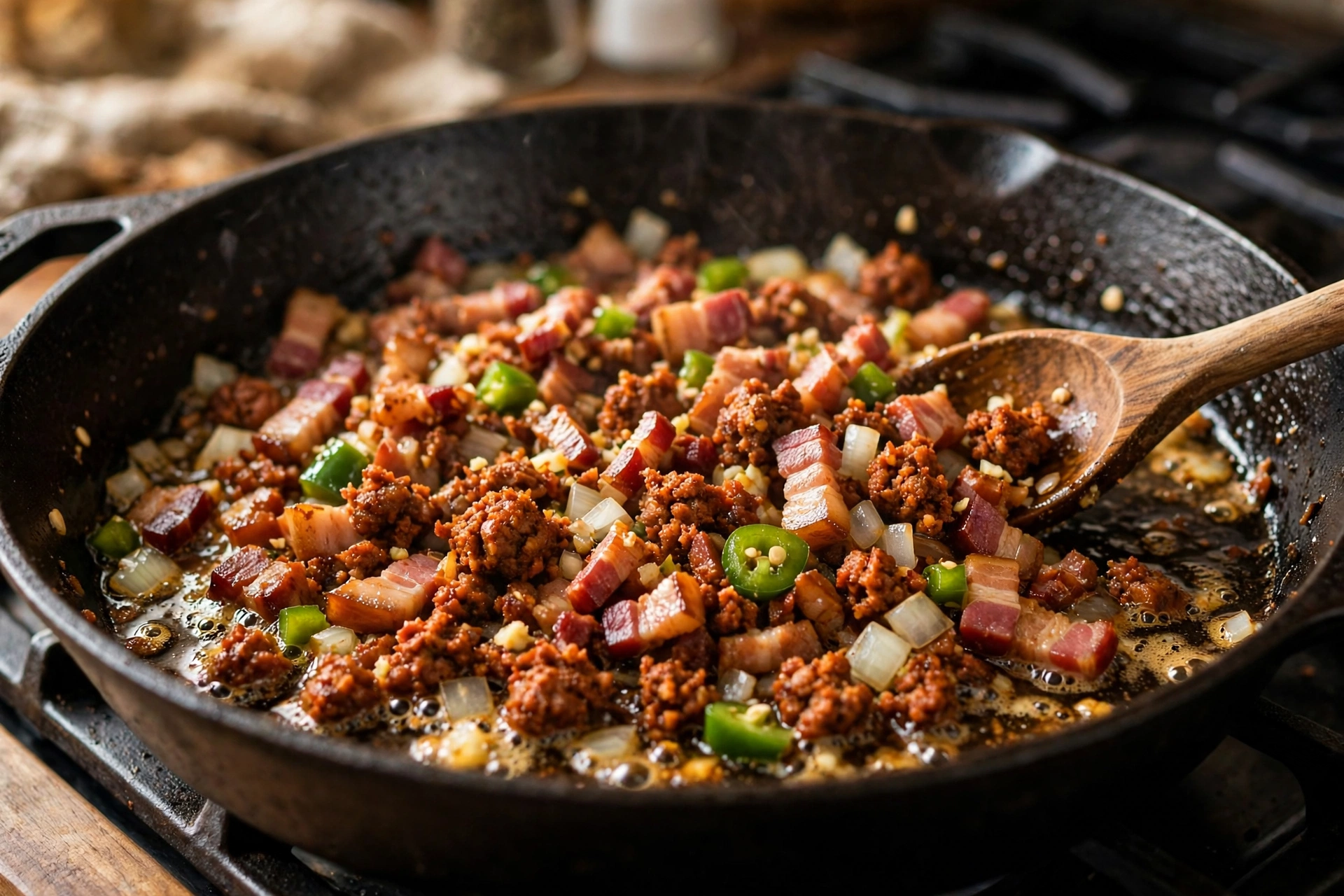 2 Crisp the Bacon and Brown the Chorizo: While the beans simmer, put the chopped bacon in a large skillet over medium heat and cook until crisp, about 8 minutes. Add the crumbled chorizo and cook 3 to 4 minutes more, breaking it up with a spoon, until browned. Do not drain the pan — the fat is going into the pot.
3 Soften the Vegetables: Add the diced onion and jalapeño to the skillet and cook 4 to 5 minutes, until soft. Stir in the minced garlic and cook 1 minute more, then add the tomatoes, chipotle and adobo sauce, cumin, oregano, salt and pepper. Cook 2 minutes, stirring, until everything smells fragrant.
Simmer, Season and Serve:
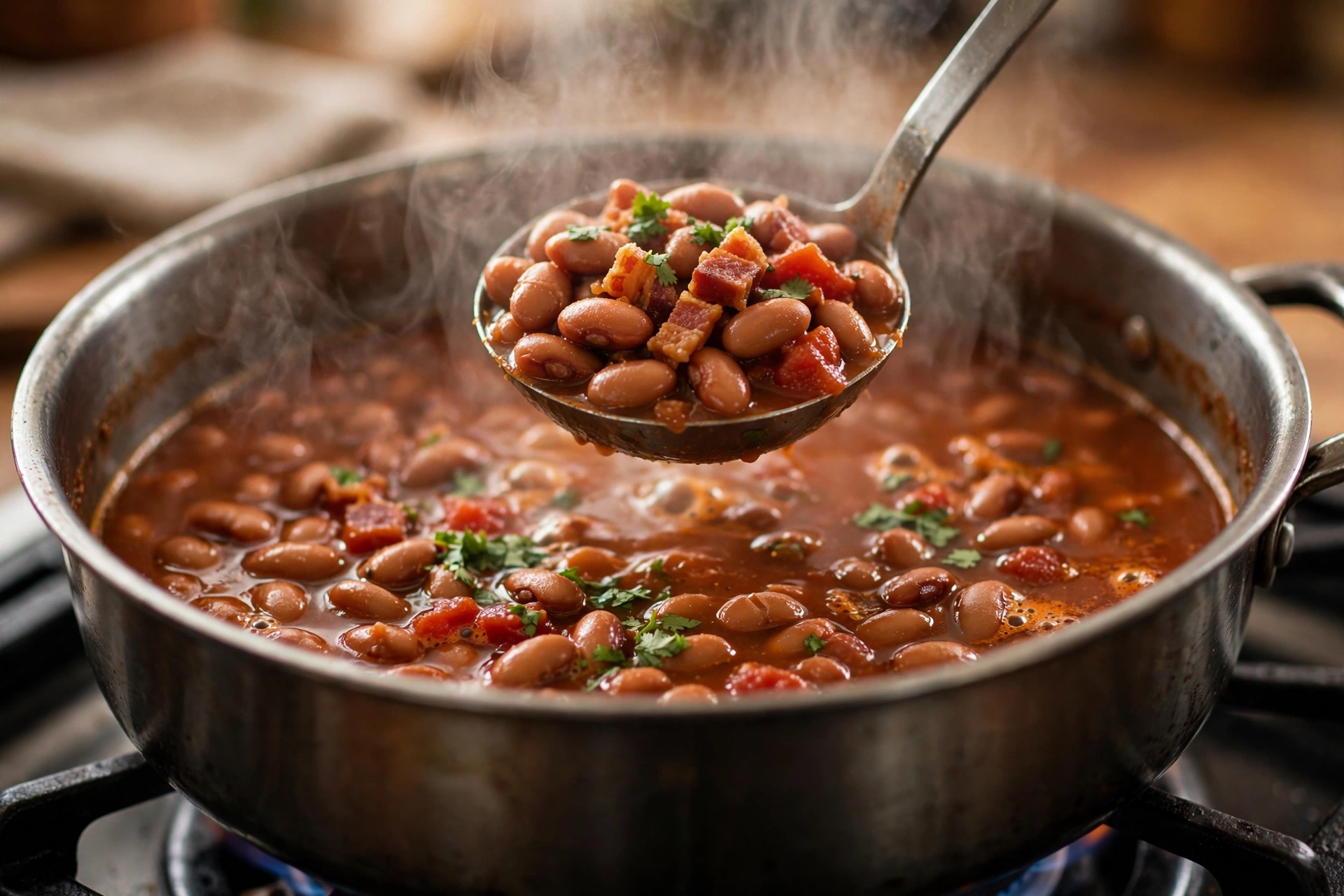 4 Combine and Simmer: Tip the whole skillet — fat and all — into the pot of cooked beans. Pour in the chicken broth, stir gently, and simmer everything together for 15 to 20 minutes, so the broth turns rich and the flavours meld.
5 Taste and Thicken if Needed: Taste the beans and add more salt only if they need it. If the broth is thinner than you like, stir together 2 tablespoons of cornstarch with 4 tablespoons of cold water and stir it in, then simmer 2 minutes until the broth thickens slightly.
6 Serve Hot: Stir in the chopped cilantro, ladle the beans into bowls with plenty of broth, and serve hot with warm tortillas.
Technique: Tender Beans and a Flavourful Broth
Two things decide whether frijoles charros turn out silky and rich or tough and thin: how the beans cook, and what goes into the broth.
First, the beans. Start them in plenty of cold water and bring the pot to a gentle simmer — never a hard, rolling boil, which breaks the skins and turns the beans to mush. Keep the beans covered with water the whole time; if the level drops, top it up with hot water, not cold, so the cooking never stalls. The beans are done when one crushes easily between your fingers — usually 1 1/2 to 2 hours. There is no shortcut worth taking: undercooked beans stay chalky, and no amount of simmering with the filling will fix them.
Second, the broth. The flavour does not come from the beans alone — it comes from the fat. Render the bacon slowly so the fat melts out before the pieces crisp, brown the chorizo in that fat, and soften the vegetables in it too. Then tip the whole skillet, fat and all, into the pot. That fat is what makes the broth rich and glossy instead of thin and watery. The final 15 to 20 minutes together is when it all comes together — the beans drink in the smoky, tomatoey broth, and the broth takes on the creaminess of the beans.
One more thing matters: taste before you salt. Bacon, chorizo and broth are all salty already, and the pot concentrates as it simmers. Season at the end, a little at a time, and you will never overshoot.
Tips
- ✓ Rinse and sort the beans. Pick out any stones or broken beans before they go in the pot — one stone can crack a tooth.
- ✓ Start the beans first. The beans take the longest, so get them simmering, then cook the bacon and vegetables while they cook.
- ✓ Do not drain the bacon fat. It goes into the pot with the beans and is what makes the broth rich and glossy.
- ✓ Keep the beans covered with water. Top up with hot water if the level drops, so the beans never cook dry.
- ✓ Simmer gently, never boil hard. A hard boil breaks the bean skins and turns the pot mushy; a gentle simmer keeps them whole and creamy.
- ✓ Taste before you salt. The bacon, chorizo and broth are already salty — season at the end, a little at a time.
Variations
- With canned beans. In a hurry, use 2 cans (16 oz each) of pinto beans, drained, and simmer them with the broth and filling for about 20 minutes — the whole pot takes about 1 hour.
- Without chorizo. Skip the chorizo and use 8 strips of bacon instead. The beans are still smoky and rich, just a little milder.
- Vegetarian. Leave out the bacon and chorizo, cook the vegetables in 2 tablespoons of oil, and use vegetable broth. Add 1 teaspoon of smoked paprika for the smoky note.
- With beer. Replace 1 cup of the chicken broth with a Mexican lager — it adds a malty depth to the broth.
- Spicier. Add a second jalapeño, or a diced serrano, and an extra tablespoon of chipotle in adobo.
- With ham hock. For an even richer pot, simmer a smoked ham hock with the beans and shred the meat back in at the end.
What to Serve With
Frijoles charros belong next to grilled meat — that is their whole job. Serve them with Skirt Steak Tacos for a carne-asada night, or with Cilantro Lime Rice — the bright rice and the smoky beans are made for the same plate.
For a bigger table, Chile Colorado makes a rich, slow-cooked main beside them, and Slow Cooker Calico Beans turn the table into a full bean feast for a crowd. Caldo de Pollo — golden Mexican chicken soup with vegetables — is another warming pot for the same table. Set out warm corn tortillas, lime wedges and extra cilantro, and let everyone spoon broth over everything.
Storage
Let the beans cool in their broth before moving them to an airtight container — the broth keeps them from drying out. They keep in the fridge for 4 to 5 days, and the flavour settles and improves after a rest, so they are often better the next day.
To reheat, warm them gently in a saucepan over low heat, adding a splash of water or broth if the broth has thickened too much. For longer storage, freeze the beans in meal-size portions with plenty of broth for up to 2 months. Thaw overnight in the fridge, then reheat the same way and stir in fresh cilantro before serving.
Frequently Asked Questions
What are frijoles charros, and where are they from in Mexico?
Frijoles charros are Mexican cowboy beans — pinto beans simmered in a smoky broth with bacon, chorizo, tomatoes, onion and chiles. They come from the ranch cooking of northern Mexico, where they are the classic side for carne asada at family gatherings and cookouts.
Do I need to soak pinto beans before making frijoles charros?
No. Most modern versions skip the soak — the beans just simmer longer, 1 1/2 to 2 hours, until tender. If you do soak them for 4 hours or overnight, they cook faster, in about 1 hour, but it is not required.
Can I make frijoles charros with canned beans?
Yes. Use 2 cans (16 oz each) of pinto beans, drained, and simmer them with the broth and the skillet filling for about 20 minutes. The whole pot takes about 1 hour, and the beans are still rich and smoky.
More Questions About Frijoles Charros
What is the difference between frijoles charros and frijoles de la olla?
Frijoles de la olla are plain pot beans — pinto beans simmered in water with onion, garlic and epazote, and nothing else. Frijoles charros start the same way, then add bacon, chorizo, tomatoes and chiles, so the broth is smoky, rich and much more flavourful.
Can I make frijoles charros without bacon or chorizo?
Yes. Cook the vegetables in 2 tablespoons of oil instead of bacon fat, use vegetable broth, and add 1 teaspoon of smoked paprika for the smoky note. The beans will be lighter, but still hearty and full of flavour.
Can I freeze frijoles charros?
Yes. Freeze them in meal-size portions with plenty of broth for up to 2 months. Thaw overnight in the fridge, reheat gently with a splash of water or broth, and stir in fresh cilantro before serving.
Try These Next
Skirt Steak Tacos — juicy citrus-marinated steak in warm corn tortillas, the classic carne-asada partner for these beans.
Cilantro Lime Rice — fluffy Mexican rice with lime and cilantro, the bright side for a smoky pot of beans.
Slow Cooker Calico Beans — sweet and smoky beans that feed a crowd, perfect beside a rich stew.
Chile Colorado — tender Mexican beef braised in a smooth red chile sauce, made for scooping up with beans.
Frijoles Charros
Ingredients
Equipment
Method
- Rinse and sort the beans, then put them in a large pot with the water, half an onion, 2 garlic cloves and the epazote or bay leaf; bring to a boil, then simmer gently, partially covered, for 1 1/2 to 2 hours until tender, topping up with hot water as needed.
- While the beans simmer, cook the chopped bacon in a large skillet over medium heat until crisp, about 8 minutes; add the crumbled chorizo and cook 3 to 4 minutes more until browned. Do not drain the pan.
- Add the diced onion and jalapeño to the skillet and cook 4 to 5 minutes until soft; stir in the minced garlic and cook 1 minute, then add the tomatoes, chipotle and adobo sauce, cumin, oregano, salt and pepper and cook 2 minutes, stirring.
- Tip the whole skillet, fat and all, into the pot of cooked beans; pour in the chicken broth and simmer everything together for 15 to 20 minutes.
- Taste and add more salt only if needed; if the broth is thinner than you like, stir in a slurry of 2 tablespoons cornstarch with 4 tablespoons cold water and simmer 2 minutes.
- Stir in the chopped cilantro, ladle into bowls with plenty of broth, and serve hot with warm tortillas.
Notes
- Rinse and sort the beans — pick out any stones or broken beans before they go in the pot.
- Start the beans first and cook the bacon and vegetables while they simmer — the beans take the longest.
- Do not drain the bacon fat — it goes into the pot with the beans and is what makes the broth rich and glossy.
- Keep the beans covered with water as they cook, and top up with hot water if the level drops.
- Taste before adding salt — the bacon, chorizo and broth are already salty.