
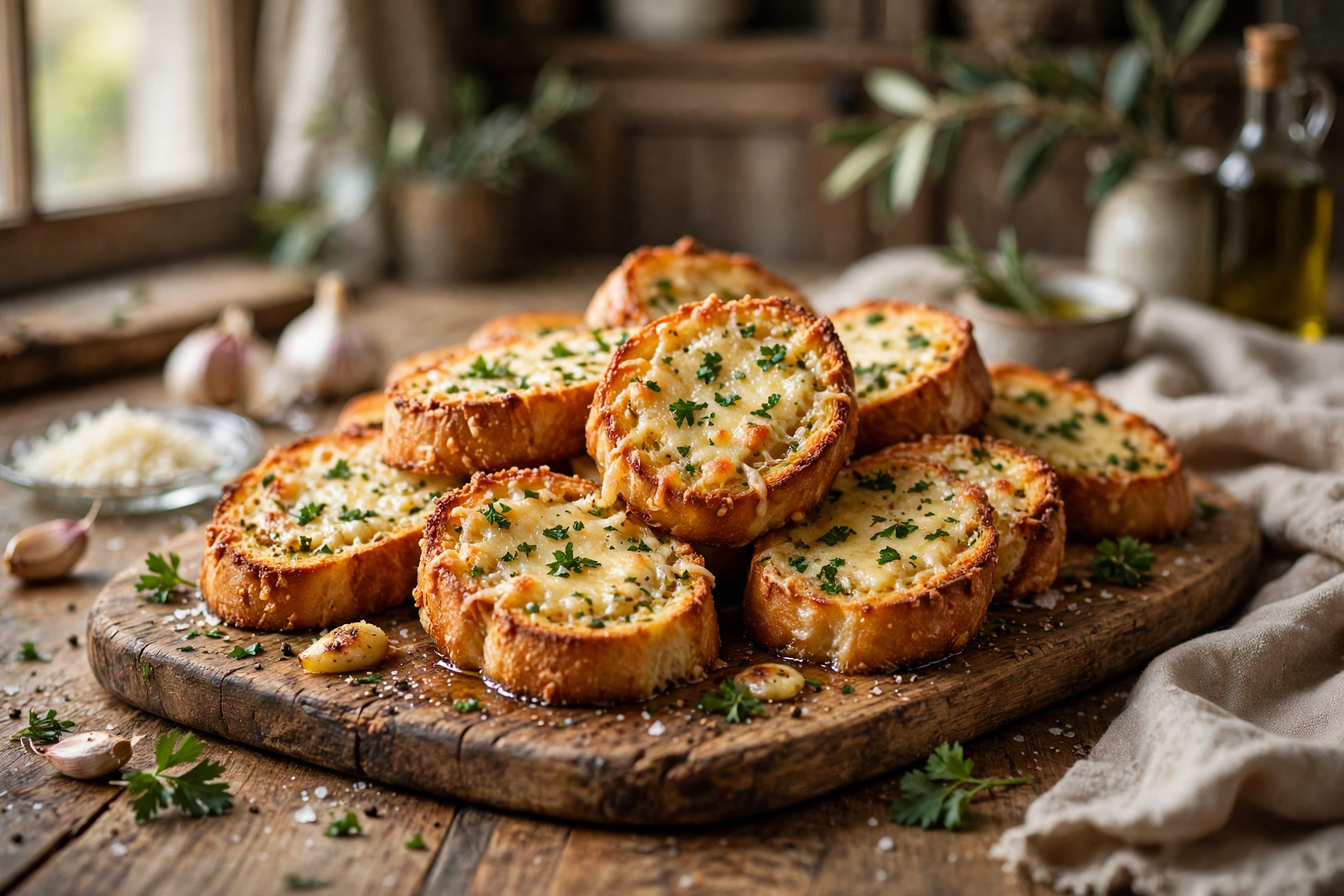
Garlic toast is the side dish that disappears first. Buttery, garlicky, golden at the edges and soft in the middle, with a salty parmesan crust on top — This garlic toast recipe takes twenty minutes, one loaf of French bread, and a bowl of garlic butter, and it turns out crisp every time.
The trick is the butter-spread system. Softened butter, not melted butter, spread edge to edge on every slice, so the garlic flavor reaches the crust and the bread toasts instead of soaking. Fresh garlic goes into the butter, parmesan goes on top, and a short bake plus a quick broiler finish gives you golden tops and a soft center.
 The Bread My Grandmother Never Let Go Stale
Why You’ll Love It
- Ready in 20 minutes. Ten minutes of prep and ten minutes in the oven — faster than the pasta it goes with.
- Only 8 ingredients. French bread, butter, garlic, parmesan and a few pantry seasonings are the whole recipe.
- Crisp edges, soft center. A hot oven and the right slice thickness give you crunch outside and chew inside.
- Garlic in every bite. The butter is spread edge to edge, so there is no plain, sad corner on any slice.
- Parmesan crust on top. Freshly grated parmesan melts into a salty, golden crust that plain garlic toast never has.
- Goes with everything. Pasta, soup, steak, salad — garlic toast belongs next to all of them.
- Saves stale bread. A loaf that is a day old makes the best garlic toast, because it toasts instead of soaking.
Ingredients
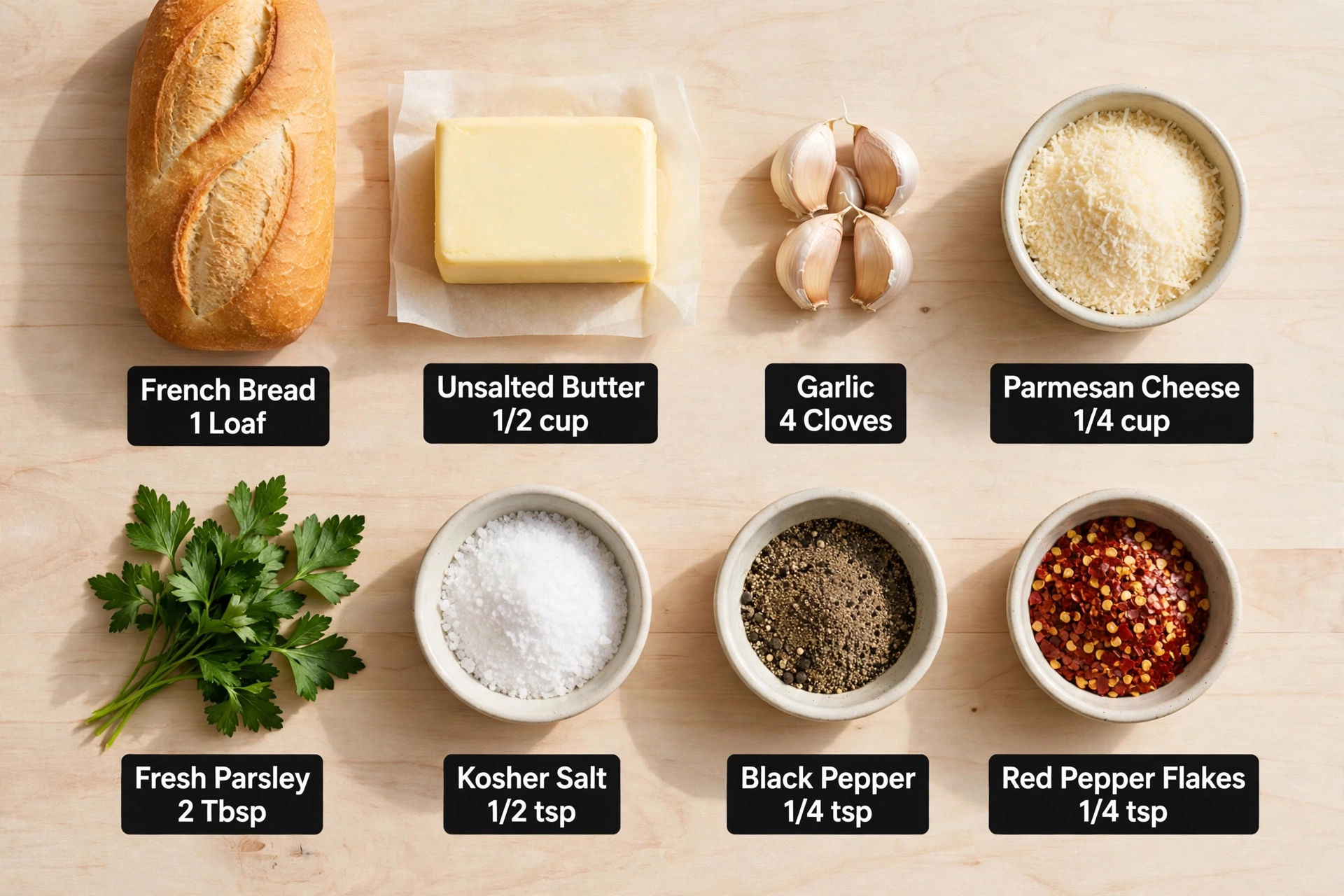
- 1 loaf French bread (about 1 lb) — A sturdy loaf with a crisp crust and a soft, open crumb. Slice it on a slight diagonal into 12 slices, about 1/2 inch thick. Substitution: Italian bread, a baguette, or thick-sliced Texas toast.
- 1/2 cup unsalted butter, softened — The base of the spread. Softened butter spreads smoothly and stays on the surface of the bread; melted butter soaks straight in and leaves the toast soggy. Substitution: salted butter, with 1/4 teaspoon less salt.
- 4 garlic cloves, minced — The flavor that defines the toast. Fresh garlic is brighter and cleaner than powder, and you can taste the difference in a recipe this simple. Mince it very fine so no single bite is all garlic. Substitution: 1 1/2 teaspoons garlic powder.
- 1/4 cup grated Parmesan cheese — A salty, nutty crust on top of each slice. Grate it fresh from a block — pre-grated parmesan has anti-caking agents that keep it from melting smoothly. Substitution: Pecorino Romano, in the same amount.
- 2 tablespoons fresh parsley, chopped — A bright, fresh finish that keeps the rich butter from feeling heavy. Add it to the butter, and save a little for scattering over the finished toast. Substitution: 2 teaspoons dried parsley.
- 1/2 teaspoon kosher salt — Seasons the butter so the garlic and parmesan taste like themselves. Substitution: 1/4 teaspoon fine sea salt.
- 1/4 teaspoon black pepper — A little bite against the rich butter. Substitution: white pepper, in the same amount.
- 1/4 teaspoon red pepper flakes (optional) — A gentle warmth, not real heat. Leave it out if you prefer no spice, or if children are eating. Substitution: a pinch of cayenne pepper.
How to Make Garlic Toast
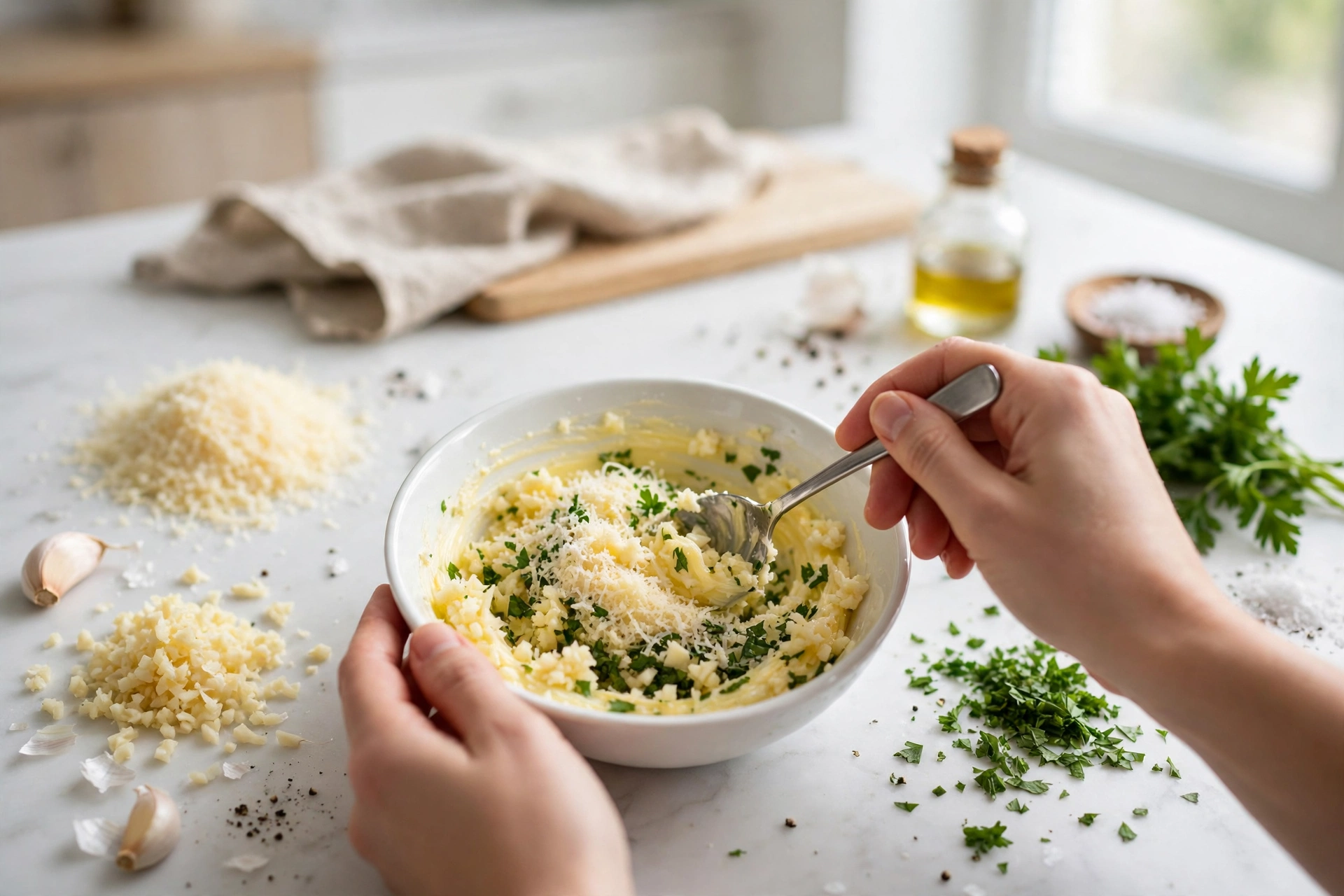
Make the Garlic Butter. Heat the oven to 400F and line a baking sheet with parchment paper. Put the softened butter in a bowl and mash it with a fork until it is smooth and spreadable. Stir in the minced garlic, parmesan, parsley, salt, black pepper and red pepper flakes until everything is evenly mixed. Taste the butter — it should taste boldly garlicky and salty, because the bread will soften the flavor. Let it sit for 5 minutes while the oven heats, so the garlic starts to flavor the butter.
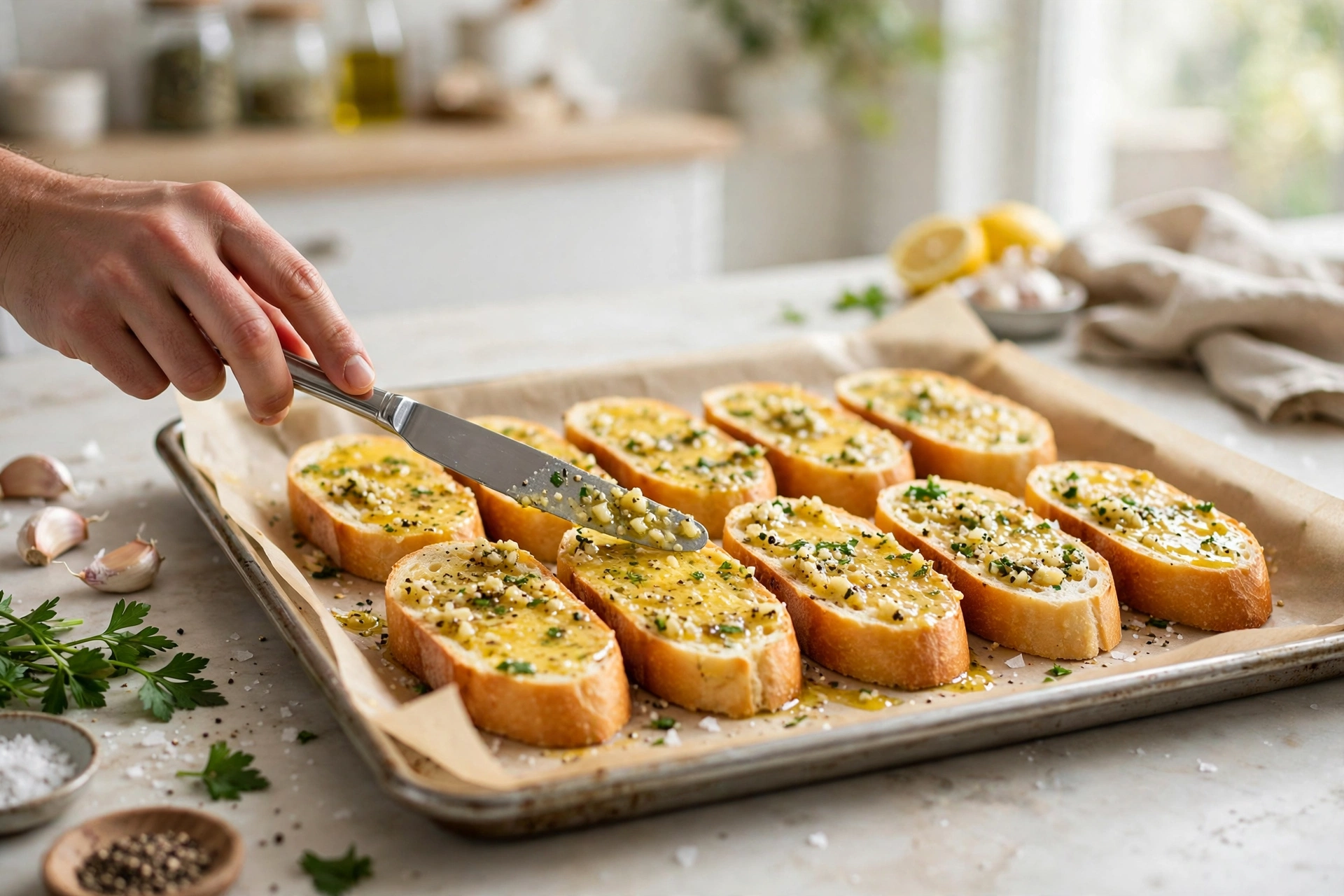
Spread Edge to Edge. Slice the bread on a slight diagonal into 12 slices, about 1/2 inch thick, and lay them in a single layer on the baking sheet. Spread the garlic butter over the top of each slice, all the way to the edges — every corner, every crust. This is the whole system: a bare edge stays pale and plain, while a buttered edge turns golden and crisp. Use about 2 teaspoons of butter per slice, and do not skimp on the corners.
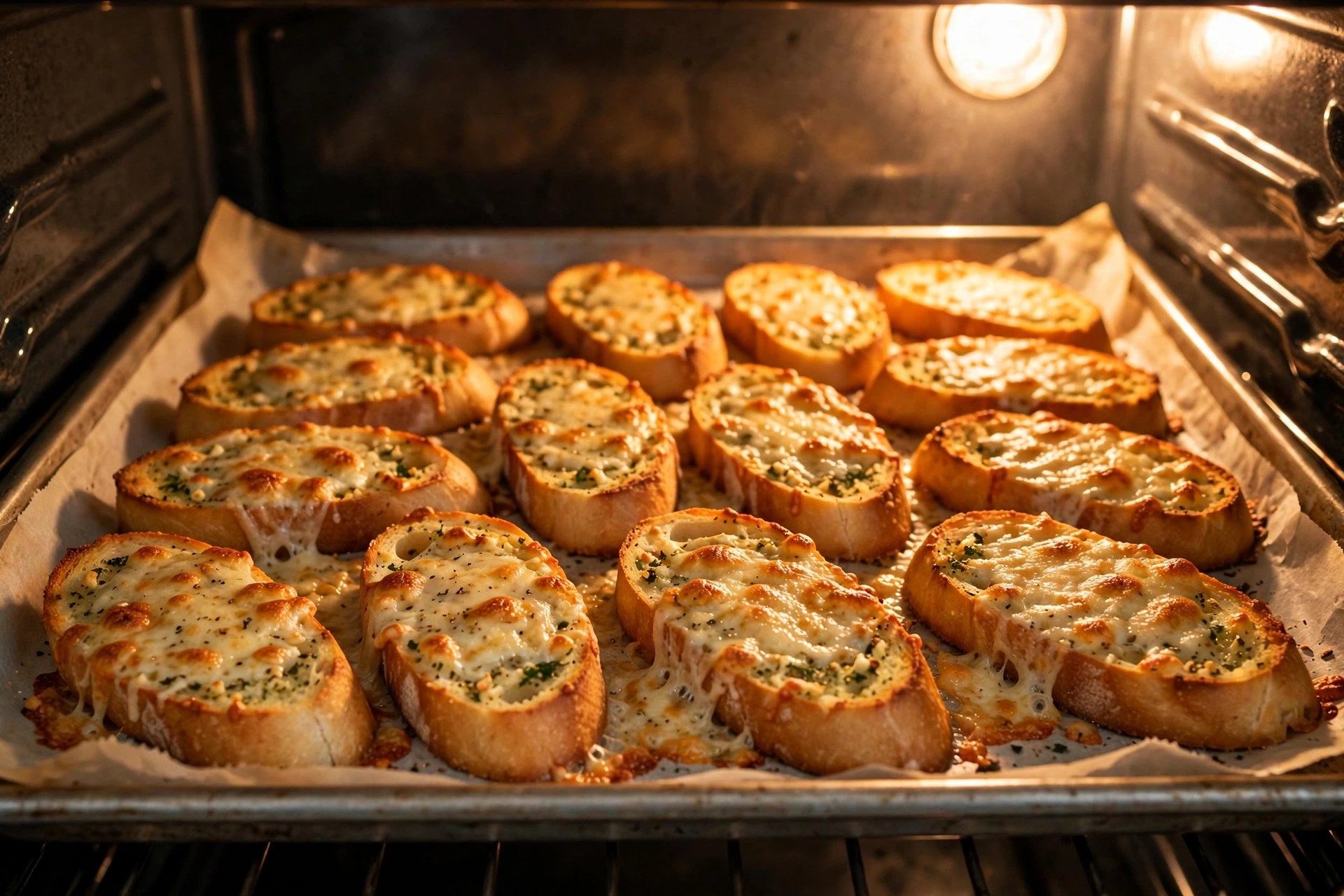
Bake Until Golden. Bake on the middle rack for 8 to 10 minutes, until the edges are firm and golden and the parmesan is melted and bubbling. The middle rack matters — the top rack browns the cheese before the bread toasts, and the bottom rack leaves the tops pale. Do not walk away for the whole bake; ovens vary, and the difference between golden and burnt is about a minute at this heat.
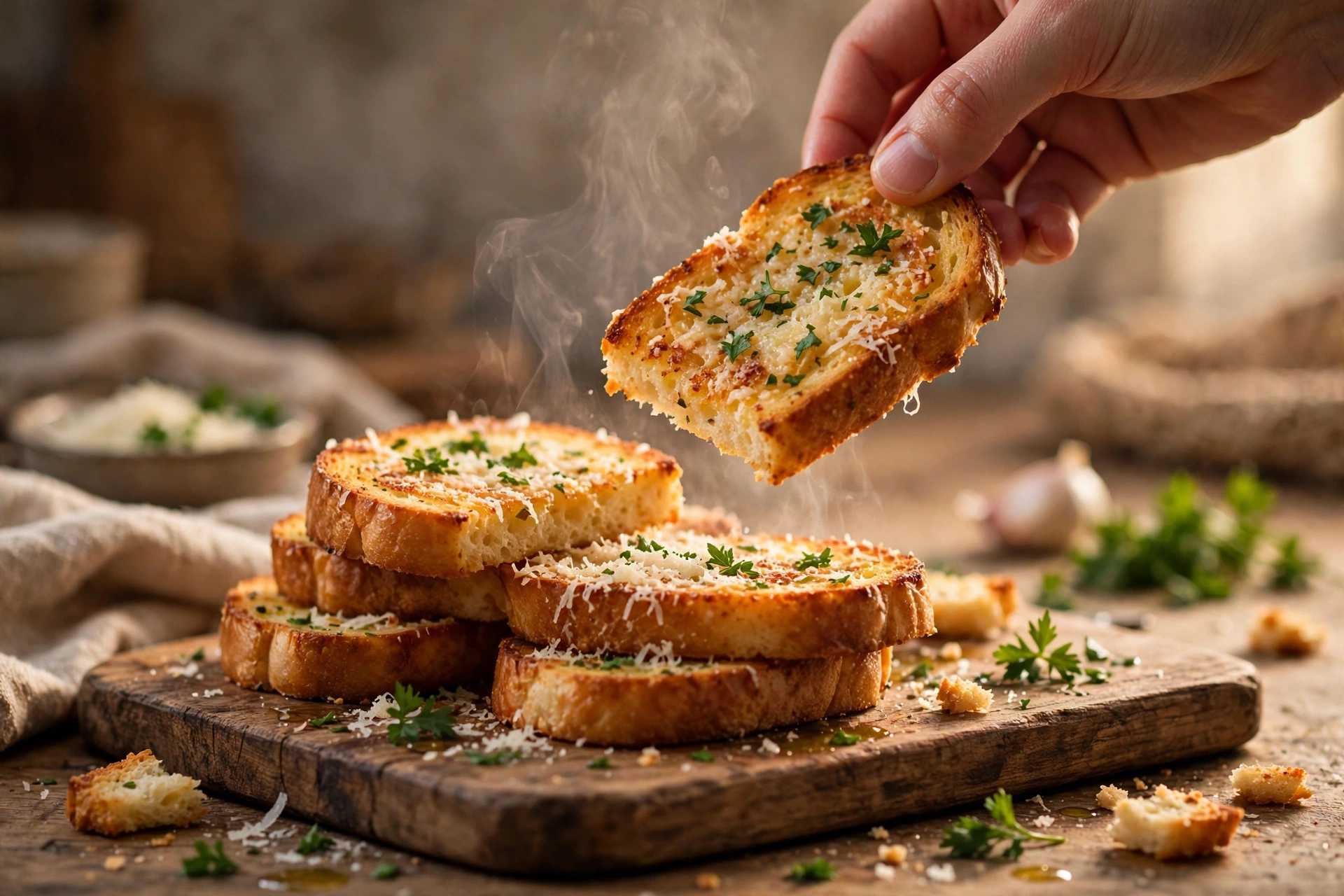
Broil and Serve. Turn the broiler on high and broil the toast for 1 to 2 minutes, watching it the whole time, until the tops are deeply golden and the cheese is crisp at the edges. The broiler is the fastest way to ruin a batch, so stand there and do not open another tab, answer a message, or turn your back. Pull the tray out, scatter the extra parsley over the top, and serve immediately — garlic toast loses its magic crispness fast, so it goes from the oven to the table, not to a warming drawer.
Technique: The Butter-Spread System, the Garlic Rule, and the Bread Guide
Garlic toast fails in only a few ways, and all of them come from the butter. Soggy toast, pale edges, and burnt garlic are the three complaints, and this section takes them one at a time.
Softened Butter, Never Melted
Melted butter is the single biggest mistake in garlic toast. It soaks straight into the crumb, so the bread steams instead of toasting, and the garlic sinks with it instead of staying on the surface where you can taste it. Softened butter does the opposite: it sits on top of the slice, melts slowly in the oven, and toasts the surface golden while the inside stays soft. So take the butter out of the fridge 30 minutes before you start. If you forgot, cut it into small pieces and microwave it for 5 seconds at a time — stop while it is still soft, not liquid.
Edge to Edge, Every Slice
A bare edge is a wasted edge. Butter that stops short of the crust leaves a pale, dry ring around every slice, and that ring is the first thing people taste. So spread the butter all the way to the edges, and press it into the corners with the back of the knife. Use about 2 teaspoons per slice — enough to see the butter, not so much that it pools on the tray.
Fresh Garlic or Garlic Powder: The Rule
Fresh garlic is better, and it is not close. Minced fresh garlic gives the toast a bright, sharp garlic flavor that powder cannot match, and in a recipe with eight ingredients, you can taste the difference. But fresh garlic burns faster than powder, so mince it very fine and mix it into the butter first — the butter coats the garlic and protects it from the direct heat. Garlic powder is the backup: it gives a milder, more even flavor, it never burns, and it works well for a big batch. Use 1 1/2 teaspoons of powder in place of the 4 cloves. Never use garlic salt.
The Bread Guide
The bread decides the toast. French bread is the best all-rounder: a crisp crust, a soft crumb, and slices big enough to hold a full spread of butter. Italian bread is nearly as good, a little softer and a little sweeter. A baguette makes smaller, crunchier slices — cut them 3/4 inch thick so they do not dry out. Texas toast is the thickest option; bake it 2 minutes longer. Day-old bread is better than fresh bread for all of them, because a slightly dry crumb toasts instead of soaking. Whatever bread you use, slice it 1/2 inch thick.
The Broiler Finish
The broiler is the most powerful tool in this recipe, and the easiest way to ruin it. It browns the cheese and crisps the edges in 1 to 2 minutes, but it can burn a batch in 30 seconds. So keep the rack in the middle, not directly under the heat, turn the broiler on high only after the bake is done, and stand at the oven watching the whole time. The toast is ready when the tops are deeply golden and the cheese is bubbling at the edges — pull it then, not a minute later.
Tips for the Best Garlic Toast
- ✔ Soften the butter, do not melt it. Melted butter soaks in and leaves the toast soggy; softened butter stays on top and toasts golden.
- ✔ Spread to the edges. A bare edge stays pale and plain — butter every corner of every slice.
- ✔ Mince the garlic very fine. A chunk of garlic in one bite is bitter; fine mince spreads the flavor evenly.
- ✔ Grate the parmesan fresh. Pre-grated parmesan has anti-caking agents that keep it from melting smoothly.
- ✔ Bake on the middle rack. The top rack burns the cheese, and the bottom rack leaves the tops pale.
- ✔ Watch the broiler. One to two minutes is all it takes, and the difference between golden and burnt is about thirty seconds.
- ✔ Serve immediately. Garlic toast loses its crispness fast — it goes from the oven straight to the table.
Variations
Cheesy Garlic Toast
Add 1/2 cup of shredded mozzarella to the butter along with the parmesan, and bake as directed. The mozzarella melts into a gooey, stretchy layer under the crisp parmesan crust. Add the mozzarella in the last 2 minutes of baking if you prefer it soft instead of browned.
Spicy Garlic Toast
Double the red pepper flakes to 1/2 teaspoon and add 1/4 teaspoon of cayenne to the butter. The heat sits behind the garlic instead of on top of it, and a squeeze of lemon over the finished toast cools it down nicely.
Herb Garlic Toast
Swap the parsley for 1 tablespoon of chopped fresh rosemary and 1 tablespoon of chopped fresh thyme, and add the zest of 1 lemon to the butter. This version tastes herby and bright, and it is beautiful next to roast chicken or turkey.
Garlic Toast with Olive Oil
Swap half the butter for olive oil, and brush the slices with the oil first, then spread the garlic butter on top. The oil crisps the bread a little more, and the toast tastes lighter — good with soup, where a heavy buttered slice would be too much.
What to Serve With Garlic Toast
Garlic toast belongs next to anything with sauce to mop up. Start with pesto pasta — herby, creamy pasta and buttery garlic toast are the most natural pairing on this site, and the toast soaks up the pesto beautifully. For a lighter plate, serve it with a salad dressed in italian dressing — the bright, acidic dressing cuts through the rich butter perfectly. Next to a main, it loves carne asada and grilled pork tenderloin — smoky grilled meat and garlic toast are a steakhouse combination. For a snack table, set it out with queso fundido — warm, melted cheese dip and crisp garlic toast are made for each other. Whatever you serve it with, make more than you think you need.
It is the perfect partner for a fresh kale salad.
Pile it next to chicken sausage and peppers and let it soak up the balsamic glaze.
Storage
In the Fridge
Let the toast cool completely, then store it in an airtight container or a sealed bag in the fridge for up to 3 days. The garlic butter alone keeps longer: mix a batch, store it covered in the fridge for up to 1 week, or freeze it for up to 3 months, and spread it on fresh bread whenever you want toast.
Reheating
Reheat in a 350F oven for 3 to 4 minutes, until crisp again — never in the microwave, which turns garlic toast rubbery and soft. A toaster oven works just as well, and the air fryer at 350F for 2 to 3 minutes brings back the crunch fastest.
In the Freezer
Freeze the toast before baking, not after. Spread the butter on the slices, lay them in a single layer on a baking sheet, freeze until solid, then stack them in a freezer bag for up to 3 months. Bake straight from frozen at 400F for 12 to 14 minutes, then broil as directed. Baked garlic toast freezes poorly, so freeze it unbaked and bake it fresh.
Frequently Asked Questions
How do I make garlic toast?
Slice French bread into 12 slices about 1/2 inch thick, spread each slice edge to edge with a garlic butter made from 1/2 cup softened butter, 4 minced garlic cloves, 1/4 cup grated parmesan, parsley, salt and pepper, then bake at 400F for 8 to 10 minutes and broil for 1 to 2 minutes until golden.
What is the difference between garlic toast and garlic bread?
Garlic toast is sliced, spread with garlic butter, and toasted until crisp — each slice is its own piece, golden on top and soft inside. Garlic bread is usually a whole loaf, sliced accordion-style or lengthwise, spread with garlic butter and baked in foil, so it stays soft and steamy instead of crisp.
Should I use fresh garlic or garlic powder for garlic toast?
Fresh garlic is better — it gives a brighter, sharper garlic flavor that powder cannot match. Mince it very fine and mix it into the butter first, so the butter protects it from burning. Garlic powder works when you want a milder, more even flavor, or when you are making a big batch: use 1 1/2 teaspoons of powder in place of 4 fresh cloves.
Why is my garlic toast soggy?
It is almost always the butter. Melted butter soaks into the bread and steams it instead of toasting it, so always use softened butter that spreads like frosting. The other cause is baking at too low a temperature, or covering the toast with foil — both trap steam. Bake uncovered at 400F, and the toast stays crisp.
Can I make garlic toast in the air fryer?
Yes. Set the air fryer to 375F and cook the slices in a single layer for 4 to 5 minutes, until golden. Work in batches and do not stack the slices, so the hot air reaches every surface. The air fryer browns the tops on its own, so you can skip the broiler finish.
How do I store leftover garlic toast?
Let it cool completely, then store it in an airtight container in the fridge for up to 3 days. Reheat it in a 350F oven for 3 to 4 minutes, or in the air fryer at 350F for 2 to 3 minutes — never in the microwave, which turns it rubbery. For longer storage, freeze the toast unbaked, buttered and sliced, for up to 3 months, and bake it straight from frozen.
Try These Next
- Pesto Pasta — creamy, herby pasta that garlic toast was made to mop up.
- Italian Dressing — a bright homemade dressing for the salad you serve alongside.
- Carne Asada — smoky grilled steak with lime, a steakhouse partner for garlic toast.
- Grilled Pork Tenderloin — juicy grilled pork that loves a buttery, garlicky side.
- Queso Fundido — warm, melted cheese dip, made for dipping crisp garlic toast.
Garlic Toast
Ingredients
- 1 loaf French bread (about 1 lb) sliced into 12 slices
- 1/2 cup unsalted butter softened
- 4 garlic cloves minced
- 1/4 cup grated Parmesan cheese
- 2 tablespoons fresh parsley chopped
- 1/2 teaspoon kosher salt
- 1/4 teaspoon black pepper
- 1/4 teaspoon red pepper flakes optional
Instructions
- Heat the oven to 400 degrees F and line a baking sheet with parchment paper. Mash the softened butter in a bowl until smooth, then stir in the minced garlic, Parmesan, parsley, salt, black pepper, and red pepper flakes. Let it sit for 5 minutes.
- Slice the bread on a slight diagonal into 12 slices, about 1/2 inch thick. Lay the slices in a single layer on the baking sheet.
- Spread the garlic butter over the top of each slice, all the way to the edges, using about 2 teaspoons per slice.
- Bake on the middle rack for 8 to 10 minutes, until the edges are firm and golden and the Parmesan is melted and bubbling.
- Turn the broiler on high and broil for 1 to 2 minutes, watching the whole time, until the tops are deeply golden. Scatter the extra parsley over the top and serve immediately.
Notes
- Use softened butter, never melted — melted butter soaks in and leaves the toast soggy.
- Spread the butter all the way to the edges, so no slice has a pale, dry ring.
- Mince the garlic very fine so no single bite is all garlic.
- Grate the Parmesan fresh — pre-grated Parmesan does not melt smoothly.
- Bake on the middle rack, and watch the broiler the whole time — golden turns to burnt in about 30 seconds.
- Serve immediately — garlic toast loses its crispness fast.
- Leftovers keep 3 days in the fridge; reheat in a 350 degree F oven, never in the microwave.