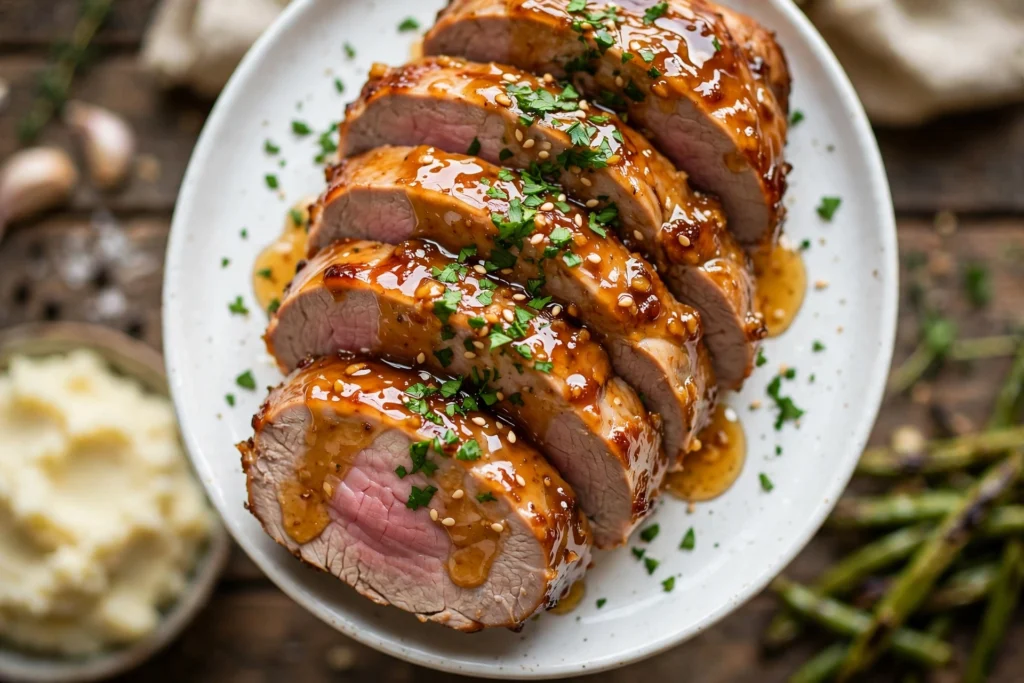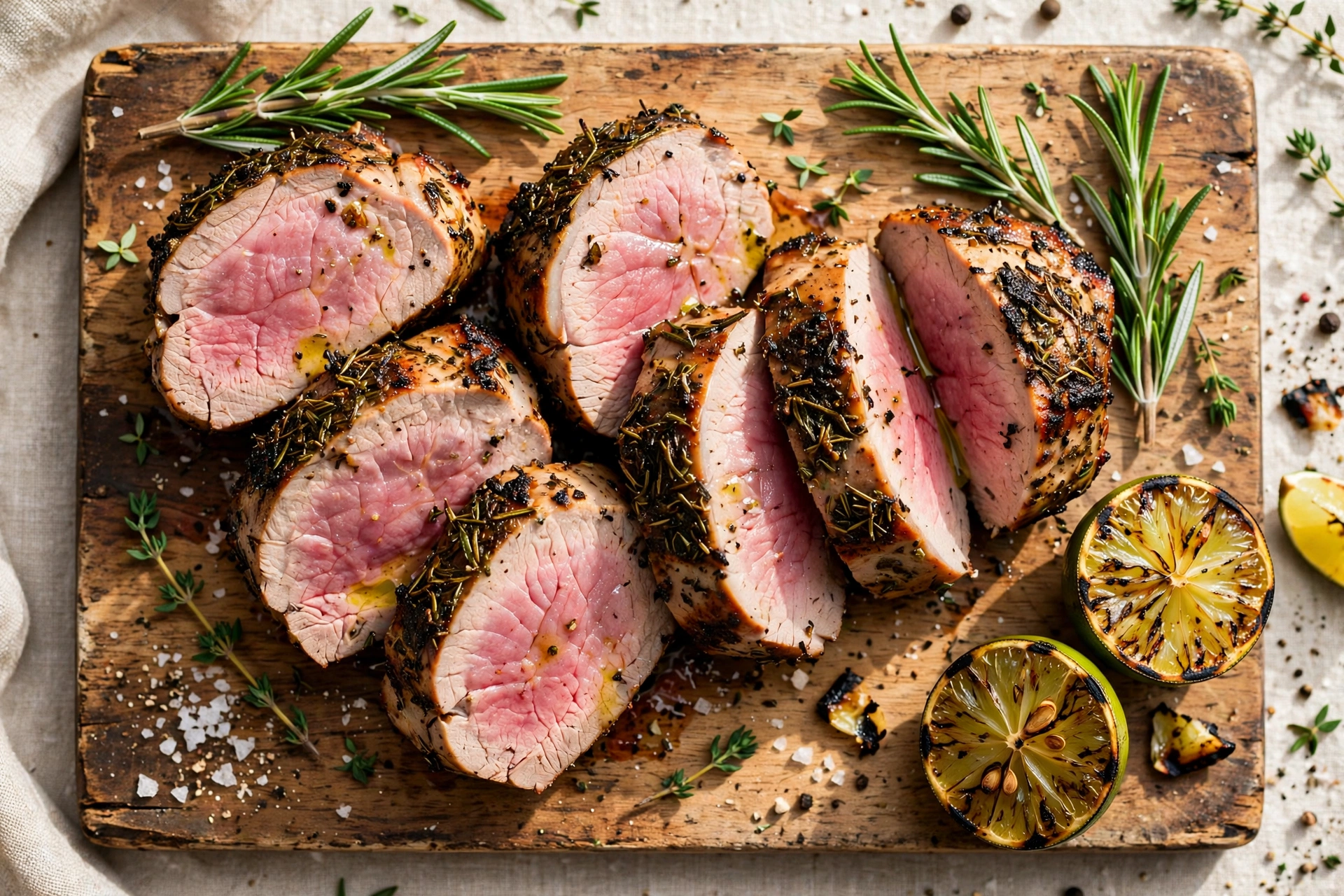
Pork tenderloin is the most forgiving cut on the grill — if you know the temperature. This grilled pork tenderloin comes off the fire juicy and blushing pink in the middle, crusted with rosemary, garlic, thyme and lemon, and sliced into tender medallions. The whole cook takes about 20 minutes, and the marinade does most of the work while you set the table.
The fear with pork tenderloin is always the same: dry meat. It is a lean cut with almost no fat, so it dries out fast when it is overcooked by even a few degrees. The fix is a thermometer and a two-zone grill: sear hard for color, finish gently over indirect heat, and pull at 140°F so carryover heat brings it to 145°F while it rests.

Why You’ll Love It
- Juicy every time. The pull-at-140°F rule and the rest take the guesswork out of pork.
- Ready in 30 minutes. Ten minutes of prep, twenty minutes on the grill, plus marinating.
- Fresh-herb flavor. Rosemary, thyme, garlic, Dijon and lemon — no bottled sauce needed.
- Two-zone method. A hard sear for color, gentle indirect heat to finish — no burnt outside, raw inside.
- Lean and satisfying. Tenderloin is one of the leanest cuts, and it still eats like a treat.
- Feeds a crowd easily. One tenderloin serves four; grill two and you feed eight with no extra work.
- Great leftovers. Sliced cold over salads, or warmed gently the next day.
Ingredients
The Pork
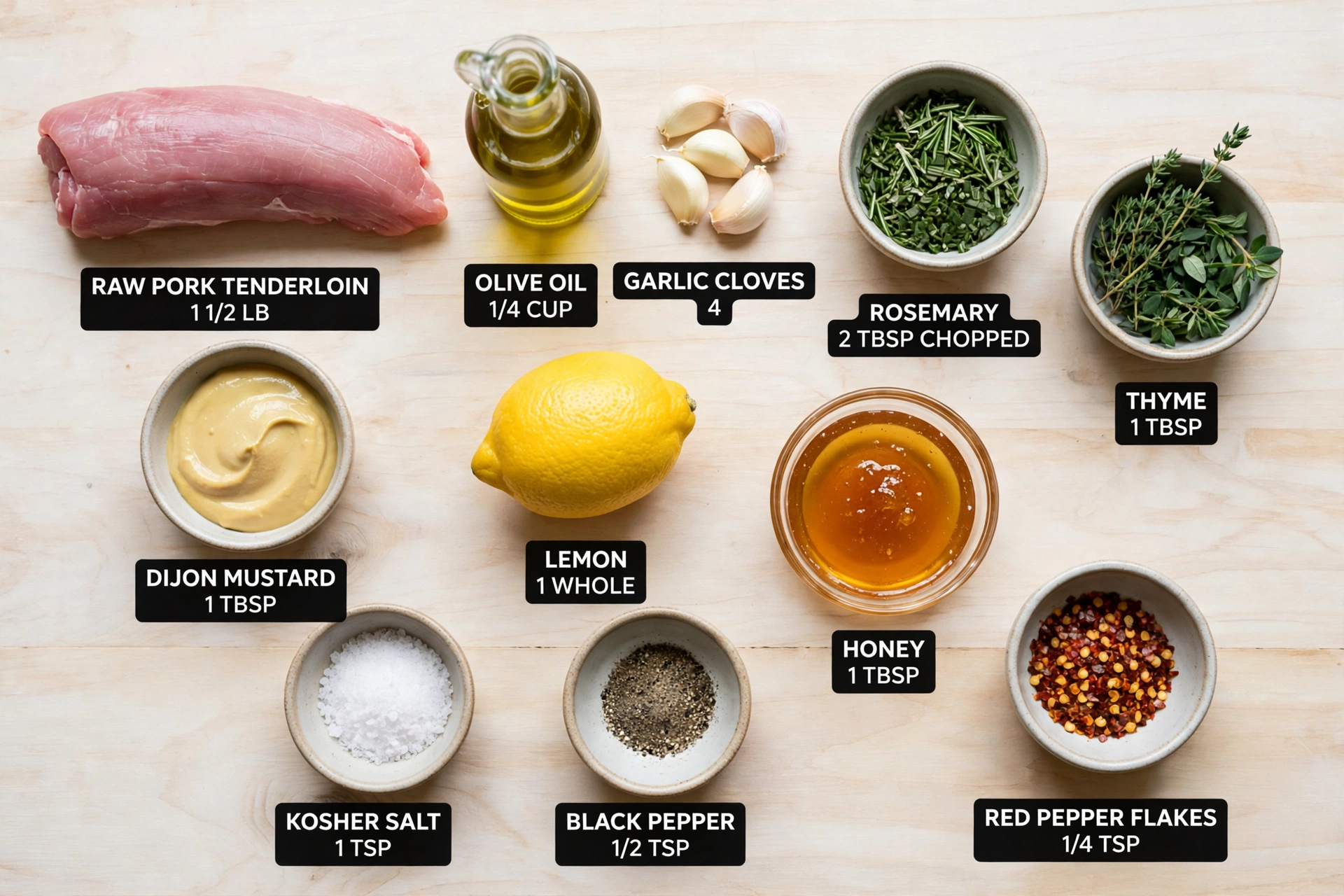
- 1 1/2 pounds pork tenderloin (1 large or 2 small tenderloins) — The star of the recipe. Look for a tenderloin, not a pork loin — the loin is a much bigger, wider roast and cooks completely differently. Substitution: 1 1/2 pounds pork loin chops, grilled 4 to 5 minutes per side.
The Herb Marinade
- 1/4 cup olive oil — The base of the marinade. It carries the herbs onto the meat and helps the outside brown on the grill. Substitution: avocado oil.
- 4 garlic cloves, minced — Warm, savory depth in every bite. Fresh garlic matters here — the marinade is the flavor. Substitution: 1 teaspoon garlic powder.
- 2 tablespoons chopped fresh rosemary — The woodsy, piney note that makes grilled pork taste like summer. Strip the leaves from the stems and chop them fine. Substitution: 2 teaspoons dried rosemary, crushed.
- 1 tablespoon fresh thyme leaves — Earthy and gentle, the quiet partner to the rosemary. Substitution: 1 teaspoon dried thyme.
- 1 tablespoon Dijon mustard — Helps the marinade cling to the meat and adds a sharp, tangy backbone. Substitution: 1 tablespoon whole-grain mustard.
- 1 lemon, zested and juiced — The zest goes into the marinade for fragrance; the juice adds brightness. Substitution: 1 tablespoon red wine vinegar plus the zest of half a lemon.
- 1 tablespoon honey — A touch of sweetness that helps the outside caramelize on the grill. Just a spoonful — more would burn. Substitution: 1 tablespoon maple syrup or brown sugar.
- 1 teaspoon kosher salt — Seasons the meat all the way through while it marinates. Substitution: 3/4 teaspoon fine sea salt.
- 1/2 teaspoon black pepper — A little bite in the crust. Substitution: white pepper, in the same amount.
- 1/4 teaspoon red pepper flakes — A whisper of heat in the background. Leave it out for a mild version. Substitution: a pinch of cayenne pepper.
How to Make Grilled Pork Tenderloin
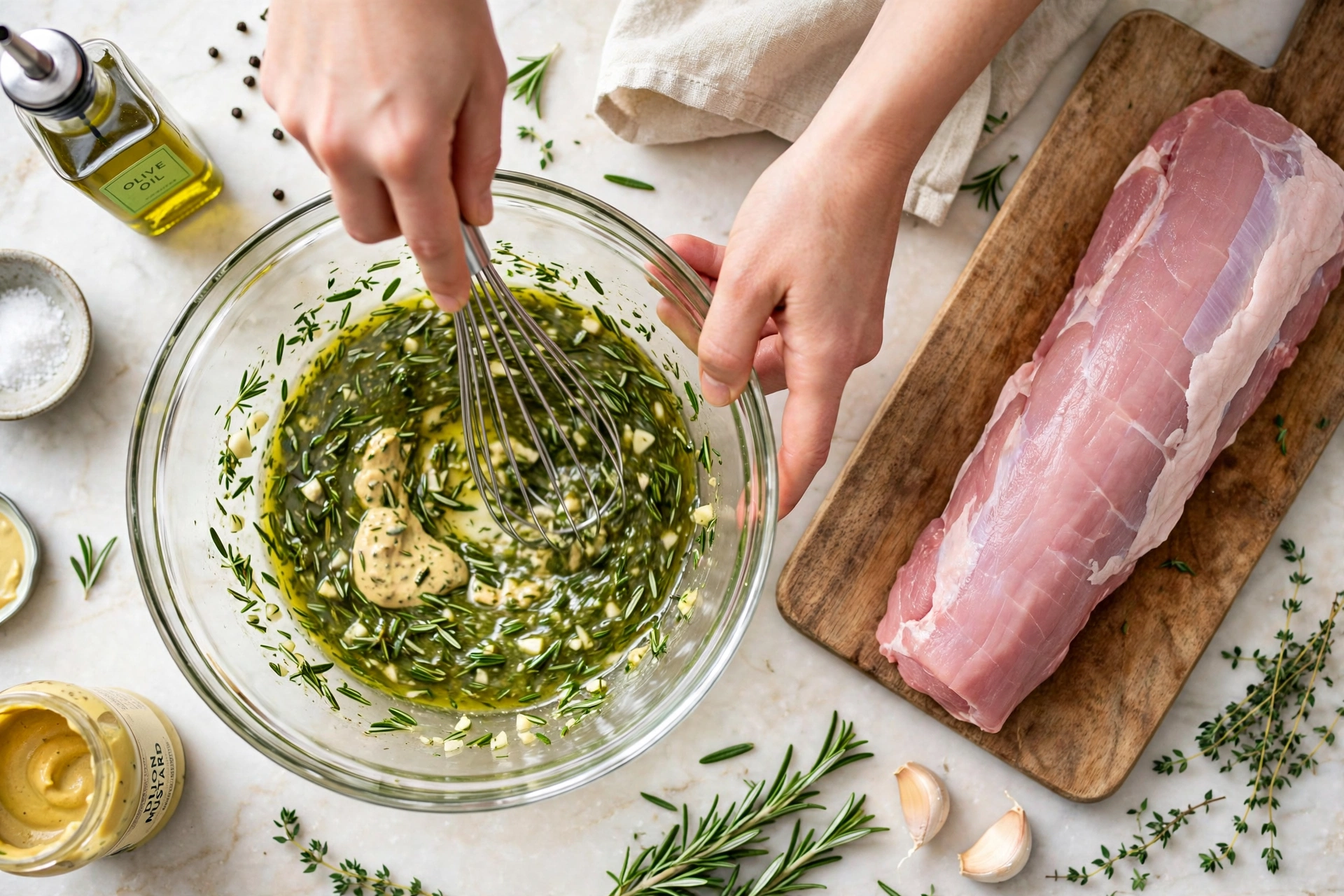
1Step 1 – Make the Marinade and Marinate
Make the marinade and marinate. Trim the silver skin — the thin, shiny membrane that never softens — by sliding a sharp knife under one end and cutting it away in strips. Pat the pork dry. In a medium bowl, whisk together the olive oil, garlic, rosemary, thyme, Dijon mustard, lemon zest, lemon juice, honey, salt, pepper and red pepper flakes. Put the pork in a zip-top bag or a shallow dish, pour the marinade over it, and turn to coat. Seal and refrigerate for at least 30 minutes, or up to 4 hours. Two hours is the sweet spot — but do not go past 24 hours, or the lemon juice will start to change the texture of the meat.
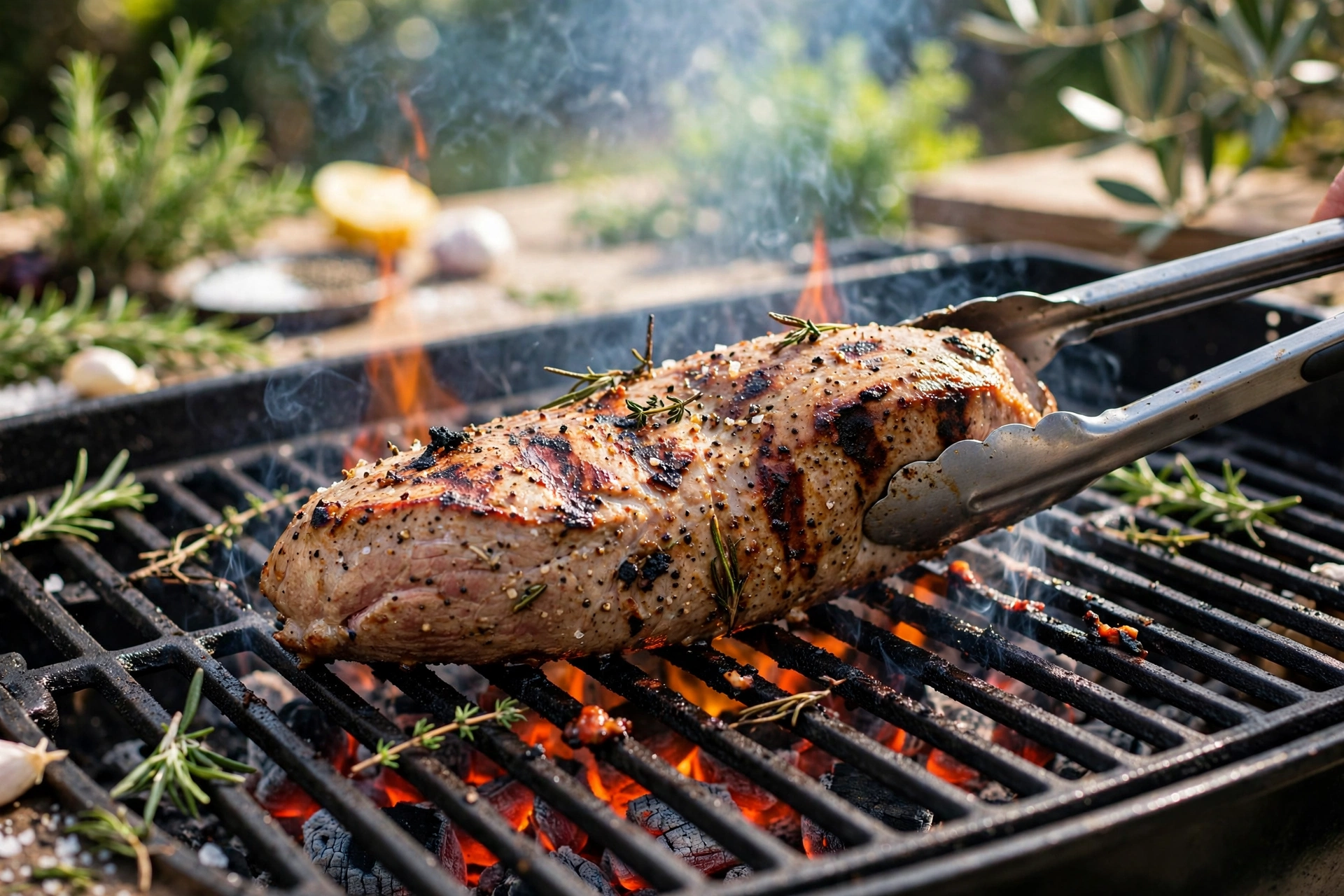
2Step 2 – Sear on the Grill
Sear on the grill. Take the pork out of the fridge 20 minutes before grilling so it loses its chill. Preheat the grill to medium-high (400 to 450°F) with a two-zone setup: high heat on one side, low or no heat on the other. Oil the grate well. Remove the pork from the marinade, let the excess drip off, and discard the used marinade. Place the tenderloin over the hot side and sear for 2 to 3 minutes per side, turning with tongs, until all four sides have deep brown grill marks. The honey helps the crust color fast, so watch it — if it darkens too quickly, move the pork sooner.
3Step 3 – Finish Over Indirect Heat
Finish over indirect heat. Move the pork to the cooler side, close the lid, and cook for 10 to 12 minutes more, turning once halfway through. The gentle heat finishes the center without burning the crust. Start checking after 8 minutes with an instant-read thermometer in the thickest part. Pull the pork when it reads 140°F — it will climb to 145°F as it rests, which is exactly where juicy pork tenderloin lives.
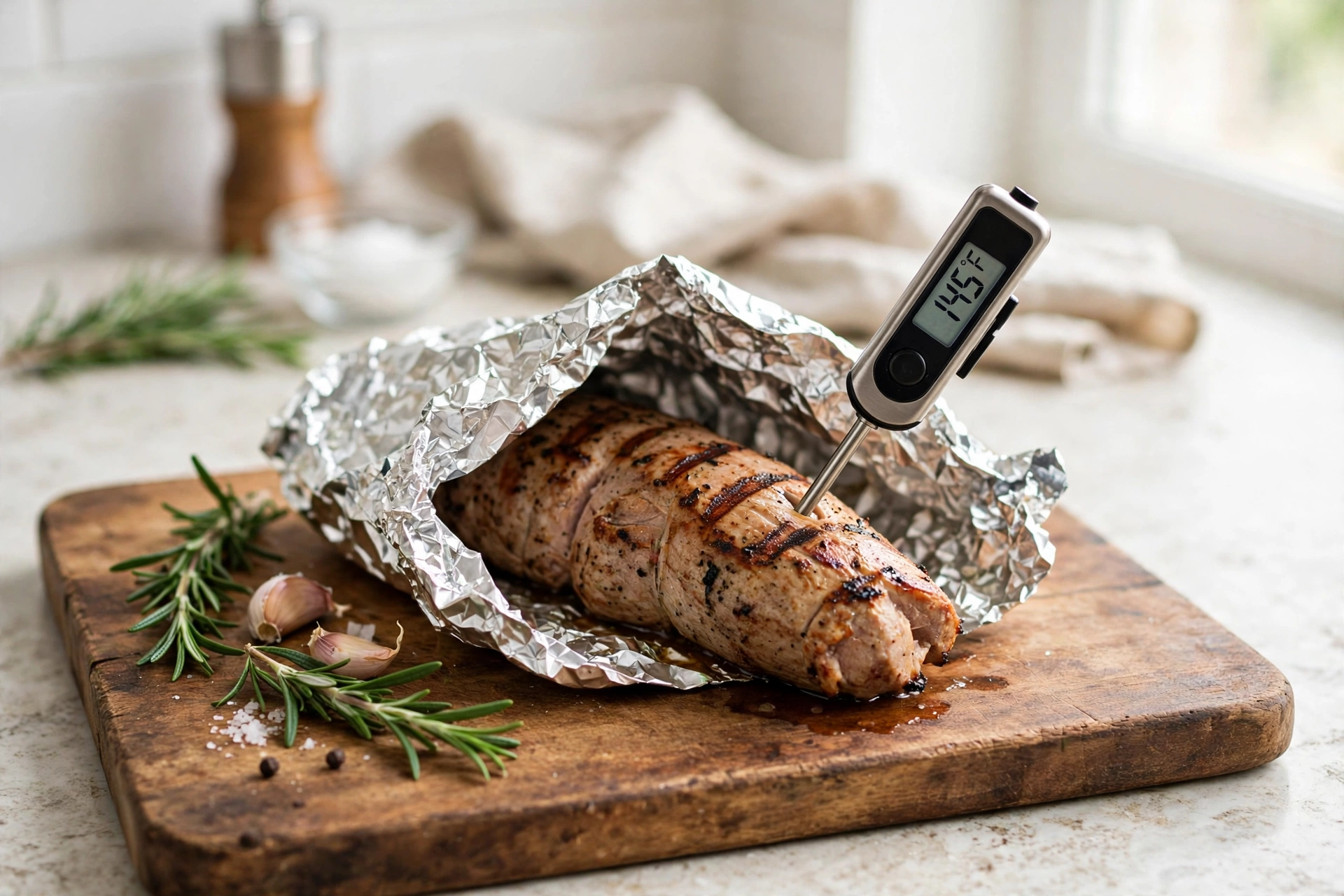
4Step 4 – Rest the Pork
Rest the pork. Transfer the tenderloin to a cutting board and tent it loosely with foil. Rest for 10 minutes — do not skip this, and do not slice into it early. Resting lets the juices settle back through the meat instead of running out onto the board, and the carryover heat finishes the cook. A tenderloin sliced straight off the grill loses a puddle of juice; rested for 10 minutes, it stays juicy in every slice.
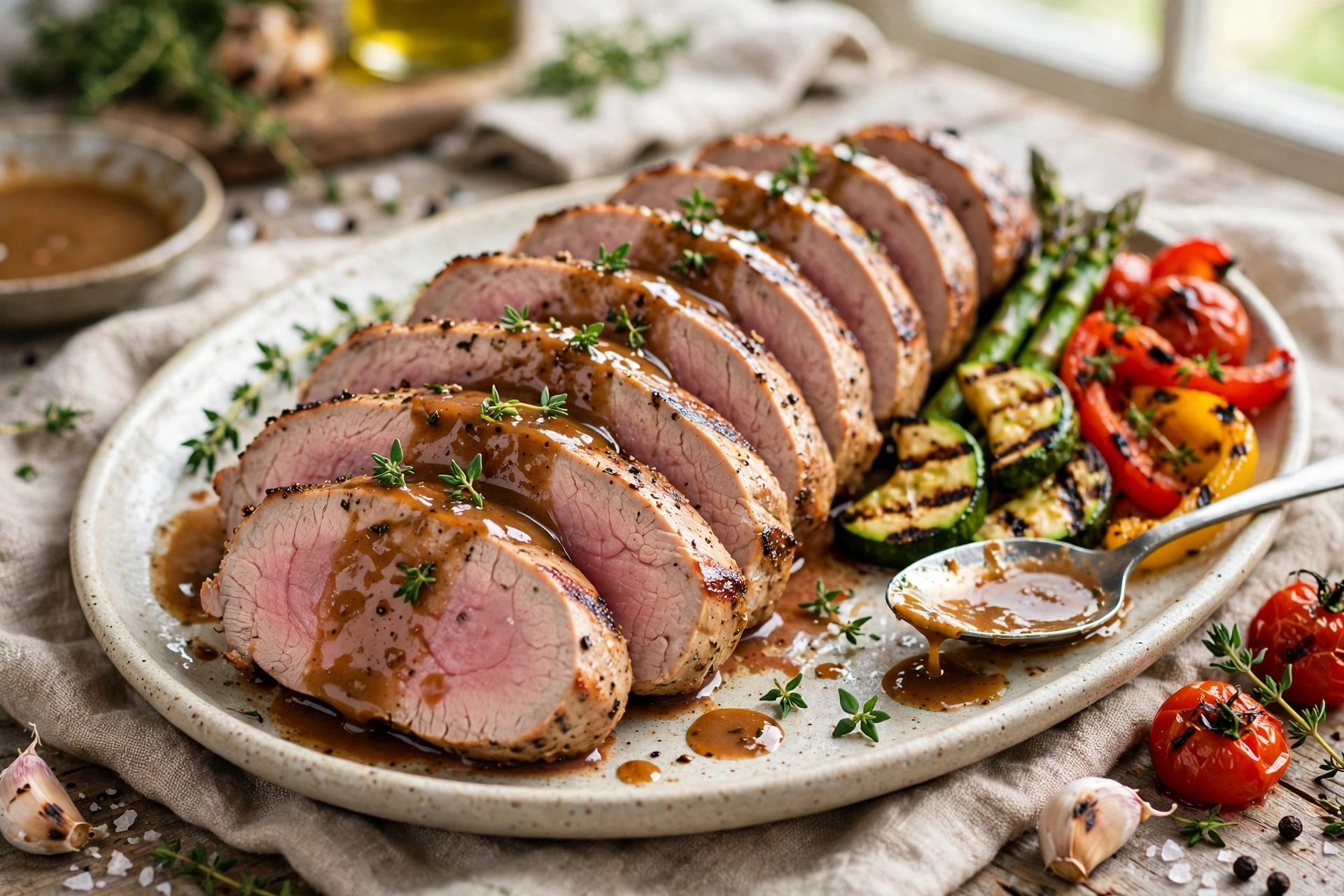
5Step 5 – Slice and Serve
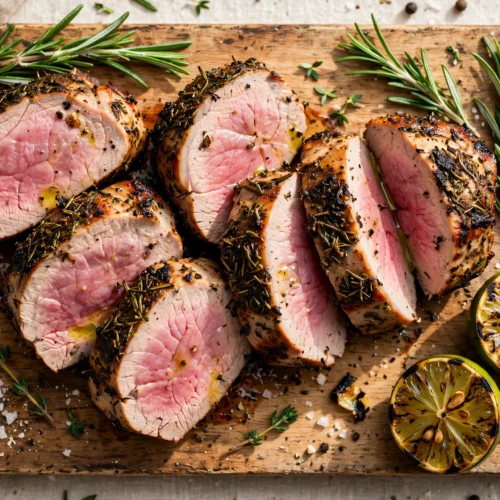
Slice and serve. Slice the tenderloin against the grain into medallions about 1/2 inch thick and fan them out on a platter. Spoon any juices from the cutting board over the top and scatter a few thyme leaves over the slices. Serve warm — the pan juices are the best sauce this pork will ever need.
Technique: The Doneness and Temperature Guide
Pork tenderloin is a lean cut with almost no fat, so a few degrees are the difference between juicy and dry. The thermometer is not optional here — it is the whole technique. Color and time are rough guides; temperature is the truth.
Pull at 140°F, Rest to 145°F
The USDA safe temperature for pork is 145°F, with a 3-minute rest. But if you pull the pork at 145°F, carryover heat pushes it to 150°F while it rests, and the meat dries out. So pull at 140°F and let the rest do the last 5 degrees. Check after 8 minutes on the indirect side, then every 2 minutes after that.
What the Inside Looks Like
At 145°F, a medallion is blushing pink in the center with a pale, juicy ring around it. That pink is safe — the USDA lowered the safe temperature for pork to 145°F years ago, and the old 160°F rule is why so many people grew up eating dry pork. A gray, uniform center means the pork went past 155°F, and no sauce will bring the juiciness back.
The Two-Zone Grill
A two-zone grill — hot on one side, cool on the other — is what makes this recipe work. The hot side gives you the sear and the crust in minutes; the cool side gives gentle, even heat to finish the center without scorching the outside. On a gas grill, set one side to high and the other to low or off. On charcoal, pile the coals on one side and leave the other empty.
Slice Against the Grain
The muscle fibers in a tenderloin run lengthwise, so slicing across it into round medallions cuts those fibers short. Short fibers are tender; long fibers are chewy. Slice about 1/2 inch thick, on a slight diagonal for wider slices, and always use a sharp knife — a dull one tears the crust and squeezes the juice out.
Tips for the Best Grilled Pork Tenderloin
- ✓️ Trim the silver skin. The shiny membrane never softens — slide a knife under it and cut it away before marinating.
- ✓️ Marinate at least 30 minutes. Two hours is the sweet spot; do not go past 24 hours or the lemon changes the texture.
- ✓️ Let the pork lose its chill. Twenty minutes out of the fridge before grilling keeps the center from staying cold.
- ✓️ Oil the grate. A well-oiled grate keeps the herb crust on the pork instead of stuck to the grill.
- ✓️ Use a two-zone grill. Sear over direct heat, finish over indirect heat — never cook the whole time over the hottest part.
- ✓️ Pull at 140°F. Carryover heat brings it to 145°F while it rests. Pulling at 145°F means dry pork.
- ✓️ Rest 10 minutes, tented loosely. Slicing early spills the juices onto the board instead of keeping them in the meat.
- ✓️ Slice against the grain. Medallions cut across the fibers are tender; slices along them are chewy.
Variations
Spicy Chipotle Pork Tenderloin
Swap the rosemary and thyme for 1 minced chipotle in adobo and 1 teaspoon of smoked paprika, and use lime juice instead of lemon. The chipotle brings smoke and heat, and the honey balances it.
Garlic Butter Pork Tenderloin
Skip the marinade. Season the trimmed tenderloin with salt, pepper and 1 teaspoon of garlic powder, then grill as directed. While it rests, melt 3 tablespoons of butter with 2 minced garlic cloves and chopped parsley, and spoon it over the sliced pork.
Honey Mustard Pork Tenderloin
Double the Dijon and the honey to 2 tablespoons each, and leave out the rosemary. The sweet-tangy crust caramelizes beautifully — watch it closely during the sear, because the extra honey browns fast.
Italian Herb Pork Tenderloin
Swap the rosemary and thyme for 1 tablespoon of Italian seasoning plus 1/2 teaspoon of dried oregano. Finish with lemon and a drizzle of olive oil — the version that pairs best with pasta.
Smoky Paprika Pork Tenderloin
Add 1 teaspoon of smoked paprika and 1/2 teaspoon of ground cumin to the marinade, and swap the lemon for lime. The smoke and cumin give the pork a southwestern accent that loves beans and rice.
Pork Tenderloin with Chimichurri
Grill the pork exactly as written and serve it with chimichurri — parsley, garlic, olive oil, red wine vinegar and red pepper flakes, chopped together. The bright, garlicky sauce is the perfect partner for the herb-crusted pork.
What to Serve With Grilled Pork Tenderloin
This tenderloin loves simple sides. Grilled vegetables — zucchini, bell peppers, and corn — cook on the same grill while the pork rests. Roasted potatoes or a creamy mash soak up the pan juices, and a green salad with lemon vinaigrette cuts through the richness of the crust. For a second grilled dish, carne asada makes a smoky partner, and grilled pollo asado turns the meal into a full grill night. Our slow cooker brisket is the low-and-slow contrast to this fast grill. For a lighter plate, serve the sliced tenderloin over pesto pasta with the pan juices spooned over the top. If you prefer your tenderloin roasted instead of grilled, our honey garlic pork tenderloin uses a honey-garlic glaze and the oven — the same cut, a completely different dinner. For drinks, keep it easy — a cold lager, iced tea, or sparkling water with lemon.
Storage
In the Fridge
Let the pork cool completely, then store it in an airtight container in the fridge for up to 3 days. Store it unsliced if you can — a whole tenderloin stays juicier than pre-sliced medallions, and day-two pork is excellent sliced cold over a salad.
Reheating
Reheat gently, because high heat dries pork out fast. Warm slices in a covered skillet over low heat with a splash of broth for 3 to 4 minutes, or wrap the tenderloin in foil with a spoonful of broth and warm it in a 300°F oven for 10 to 12 minutes. The microwave works in a pinch — 30-second bursts at half power with a splash of water. Warm is enough; steaming hot all the way through means dry pork.
In the Freezer
Grilled pork tenderloin freezes well for up to 3 months. Cool it completely, wrap the whole tenderloin tightly in plastic wrap and then foil, or freeze sliced medallions in a bag with the air pressed out. Thaw overnight in the fridge, then reheat gently with a splash of broth. Reheated pork is best in sandwiches, tacos, or over pasta, where a sauce keeps it moist.
Frequently Asked Questions
What temperature should pork tenderloin be cooked to?
Pork tenderloin is done at 145°F, measured in the thickest part. Pull it off the grill at 140°F and rest it for 10 minutes — carryover heat brings it to 145°F. At that temperature the center is blushing pink and juicy, which is safe and correct for pork.
How long does it take to grill pork tenderloin?
About 15 to 20 minutes total: 2 to 3 minutes per side over direct heat to sear, then 10 to 12 minutes over indirect heat to finish. The exact time depends on thickness, so use a thermometer, not the clock — pull at 140°F and rest for 10 minutes.
Is pork tenderloin supposed to be pink in the middle?
Yes. At 145°F the center is blushing pink, and that is safe — the USDA safe temperature for pork is 145°F with a 3-minute rest. The old rule of cooking pork until gray and 160°F is outdated, and it is why so many people grew up eating dry pork.
What is the difference between pork tenderloin and pork loin?
They are different cuts. Pork tenderloin is a long, thin, lean muscle, about 1 to 1 1/2 pounds, and it cooks in 15 to 20 minutes. Pork loin is a much wider roast, usually 3 to 5 pounds, and it needs roasting, not grilling. They are not interchangeable — a pork loin grilled for 20 minutes would still be raw in the middle.
How long should you marinate pork tenderloin?
At least 30 minutes, and 2 hours is the sweet spot for this herb marinade. You can marinate up to 4 hours. Do not go past 24 hours — the lemon juice will start to change the texture and make the outside mushy.
Can you grill pork tenderloin from frozen?
You should not. A frozen tenderloin cooks unevenly — the outside burns while the inside stays cold and raw. Thaw it overnight in the fridge, or in cold water for about an hour, changing the water every 30 minutes, then marinate and grill as directed.
Try These Next
- Honey Garlic Pork Tenderloin — the same cut, roasted in the oven with a honey-garlic glaze — the perfect comparison cook to this grilled version.
- Carne Asada — smoky grilled steak with lime and cilantro, for a second grilled main on the same night.
- Grilled Pollo Asado — citrus-marinated grilled chicken, and the best partner for a full grill-night table.
- Slow Cooker Brisket — the low-and-slow contrast to this fast grill: tender beef that cooks all day while you do nothing.
- Pesto Pasta — creamy, herby pasta, and a wonderful bed for sliced grilled pork tenderloin.
- crispy baked chicken thighs — juicy thighs with shatteringly crisp skin.
- beurre blanc — a silky butter sauce for grilled meats.
Grilled Pork Tenderloin

Ingredients
The pork:
- 1 1/2 pounds pork tenderloin (1 large or 2 small tenderloins), silver skin trimmed
The herb marinade:
- 1/4 cup olive oil
- 4 garlic cloves minced
- 2 tablespoons chopped fresh rosemary
- 1 tablespoon fresh thyme leaves
- 1 tablespoon Dijon mustard
- 1 lemon zested and juiced
- 1 tablespoon honey
- 1 teaspoon kosher salt
- 1/2 teaspoon black pepper
- 1/4 teaspoon red pepper flakes
Instructions
- Trim the silver skin from the tenderloin and pat the pork dry. Whisk together the olive oil, garlic, rosemary, thyme, Dijon mustard, lemon zest, lemon juice, honey, salt, pepper and red pepper flakes.
- Put the pork in a zip-top bag or shallow dish, pour the marinade over it, and turn to coat. Seal and refrigerate at least 30 minutes, or up to 4 hours.
- Take the pork out of the fridge 20 minutes before grilling. Preheat the grill to medium-high (400 to 450 degrees F) with a two-zone setup: high heat on one side, low or no heat on the other. Oil the grate.
- Remove the pork from the marinade, let the excess drip off, and discard the used marinade. Sear over the hot side for 2 to 3 minutes per side, until all four sides have deep brown grill marks.
- Move the pork to the cooler side, close the lid, and cook 10 to 12 minutes more, turning once, until an instant-read thermometer in the thickest part reads 140 degrees F.
- Transfer to a cutting board, tent loosely with foil, and rest 10 minutes. Slice against the grain into medallions about 1/2 inch thick, spoon the pan juices over the top, and serve warm.
Notes
- Pull the pork at 140 degrees F — carryover heat brings it to 145 degrees F while it rests. Pulling at 145 means dry pork.
- Trim the silver skin before marinating; it never softens, no matter how long you cook it.
- Marinate at least 30 minutes; 2 hours is the sweet spot. Do not go past 24 hours or the lemon changes the texture.
- Use a two-zone grill: sear over direct heat, finish over indirect heat, so the crust never burns before the center is done.
- Rest 10 minutes tented loosely before slicing — slicing early spills the juices onto the board.
- A blushing pink center at 145 degrees F is safe and correct for pork; a gray center means it went past 155 degrees F.
- Leftovers keep 3 days in the fridge and freeze up to 3 months; reheat gently with a splash of broth.