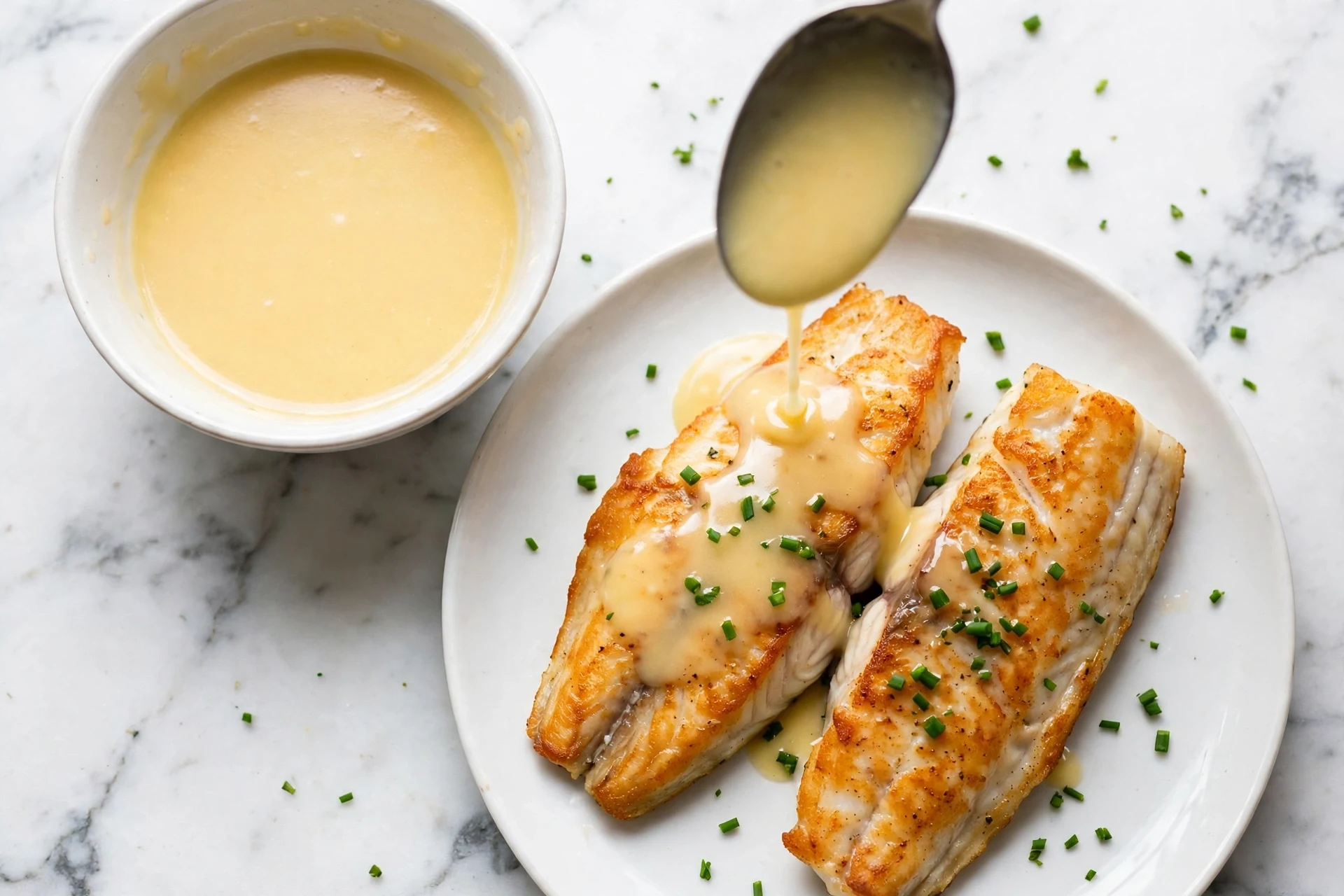
Beurre blanc is the sauce that makes a plain piece of fish taste like a French restaurant dinner. It is pale gold, silky, and rich, with a bright tang from white wine and vinegar that keeps all that butter from feeling heavy. Best of all, it takes only 25 minutes and eight ingredients, and once you know the one rule — cold butter, low heat — it comes together every single time.
Most home cooks are scared of beurre blanc, and the fear is fair. It is an emulsion, which means it can split into a greasy puddle if the pan gets too hot. Yet the fix is simple, and this recipe gives you the full system: a reduction you can measure, a temperature rule you can feel, and a rescue that saves the sauce even if it splits.
The Sauce That Taught Me to Trust Low Heat

The first time I made beurre blanc, I did everything fast. I turned the heat up because I was in a hurry, and the sauce broke into a shiny pool of melted butter. I threw it out and ordered takeout. The second time, I slowed down. I kept the heat so low that the pan barely whispered, and I added the butter one cube at a time, whisking the whole way. Suddenly there it was: a pale, glossy sauce that coated the spoon like heavy cream. That night we poured it over pan-seared fish, and my family asked what restaurant it came from. It came from our kitchen, from patience, and from one rule I never break now — cold butter, low heat, and no rushing.
Joanne Helena
Why You’ll Love It
- Restaurant flavor at home. A classic French butter sauce that turns simple fish or chicken into a special dinner.
- Ready in 25 minutes. Ten minutes of prep, then fifteen minutes at the stove.
- Only 8 ingredients. Butter, wine, vinegar, shallots, cream, lemon, salt, and pepper.
- Foolproof with the rescue. Even if the sauce splits, the fix in this article brings it back.
- No special equipment. One small saucepan, a whisk, and a fine sieve are all you need.
- Endlessly flexible. Change the herbs or the acid and the sauce becomes a whole new recipe.
- Make-ahead friendly. It holds warm for 30 minutes, so you can finish it before the fish is done.
Ingredients
The Sauce
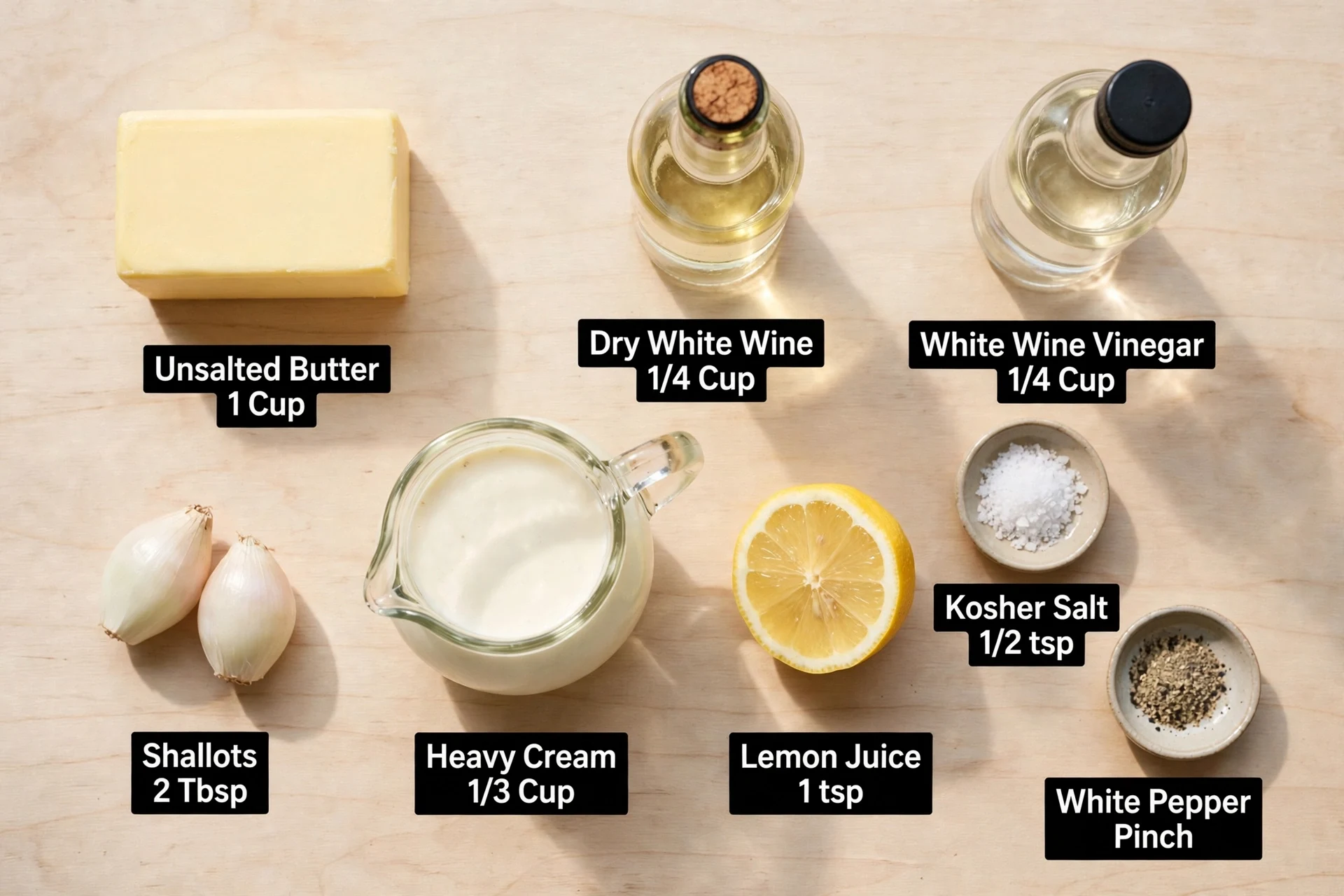
- 1/4 cup dry white wine — The first half of the acidic base; it gives the sauce its bright, winey backbone. Use a wine you would drink, like Sauvignon Blanc. Substitution: 1/4 cup dry vermouth.
- 1/4 cup white wine vinegar — The second half of the acid; it sharpens the sauce and balances the butter’s richness. Substitution: champagne vinegar, in the same amount.
- 2 tablespoons finely chopped shallots (about 1 small shallot) — The sweet, delicate onion flavor that makes beurre blanc taste French instead of just buttery. Substitution: 2 tablespoons finely chopped sweet onion.
- 1/3 cup heavy cream — The insurance policy. Cream is not strictly traditional, yet it stabilizes the emulsion and makes splitting far less likely. Substitution: leave it out for a classic no-cream version — the sauce will be lighter, and the heat rule matters even more.
- 1 cup (2 sticks) cold unsalted butter, cut into 1/2-inch cubes — The whole sauce. Cold butter is non-negotiable: it melts slowly into the reduction and builds the emulsion instead of turning into oil. Substitution: salted butter, with the added salt reduced to a pinch.
- 1/2 teaspoon kosher salt, plus more to taste — Seasons the sauce and sharpens the wine and butter flavors. Substitution: 1/4 teaspoon fine sea salt.
- 1 pinch white pepper — Gentle heat without dark specks in a pale sauce. Substitution: a pinch of black pepper, though the specks will show.
- 1 teaspoon fresh lemon juice — A final lift of brightness at the end. Substitution: 1 teaspoon white wine vinegar, added with the salt.
- 1 teaspoon chopped fresh chives or tarragon, for serving (optional) — A green, herby finish over the poured sauce. Substitution: chopped fresh parsley or dill.
How to Make Beurre Blanc
1 Make the Reduction
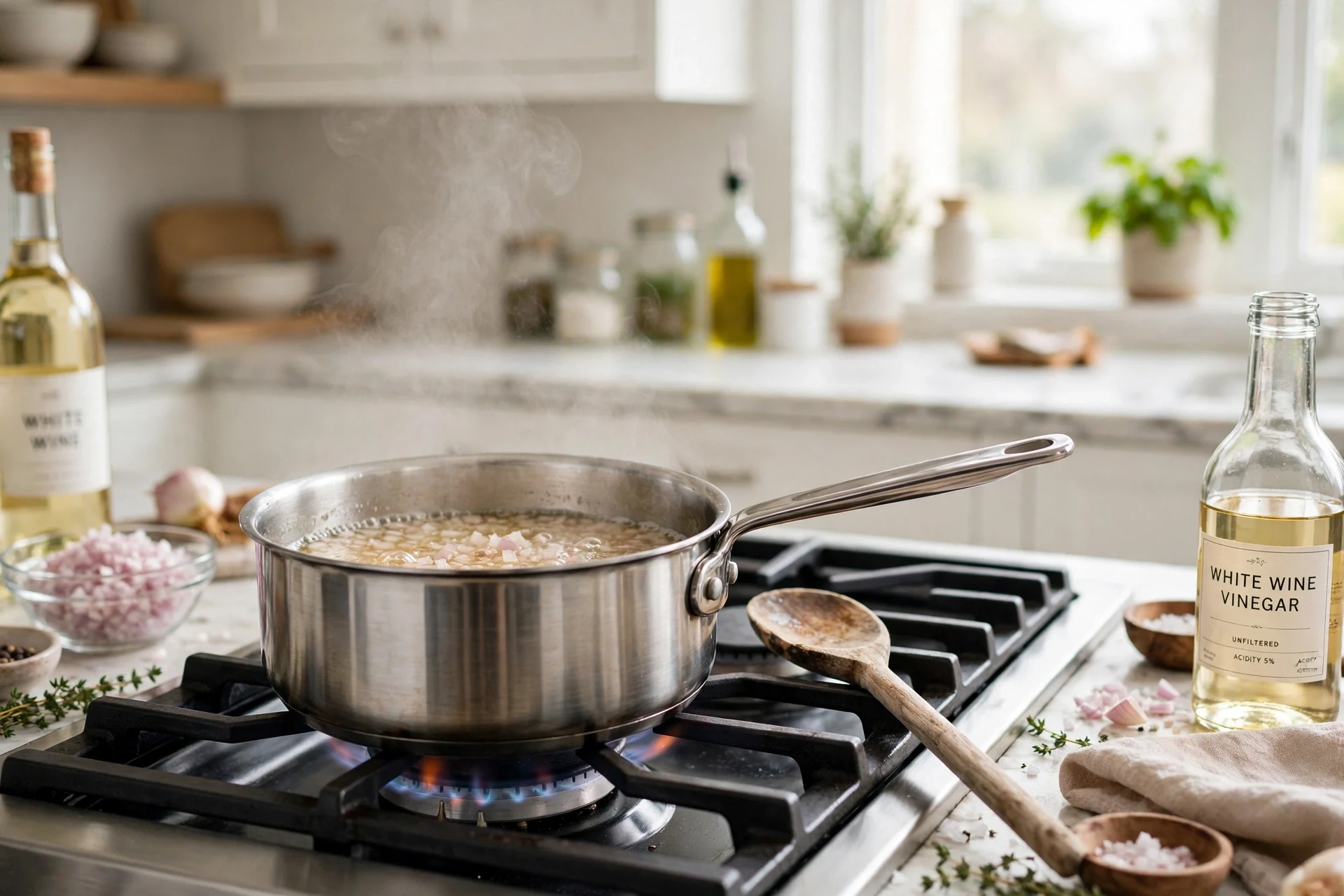
Make the reduction. Combine the white wine, white wine vinegar, and chopped shallots in a small heavy-bottomed saucepan over medium heat. Bring to a simmer and cook for 4 to 5 minutes, until the liquid has reduced to about 2 tablespoons. Tilt the pan and you should see a small pool of liquid with the shallots sitting in it. This step matters: too much liquid left and the sauce will be thin; too little and there is nothing for the butter to emulsify into.
2 Add the Cream
Add the cream. Pour in the heavy cream and bring the mixture back to a gentle simmer. Cook for 1 minute, stirring, until the cream has thickened slightly and the mixture looks a little creamy. Then reduce the heat to low. The cream is your safety net here — its fat helps hold the emulsion together — so do not skip it on your first try.
3 Whisk in the Butter
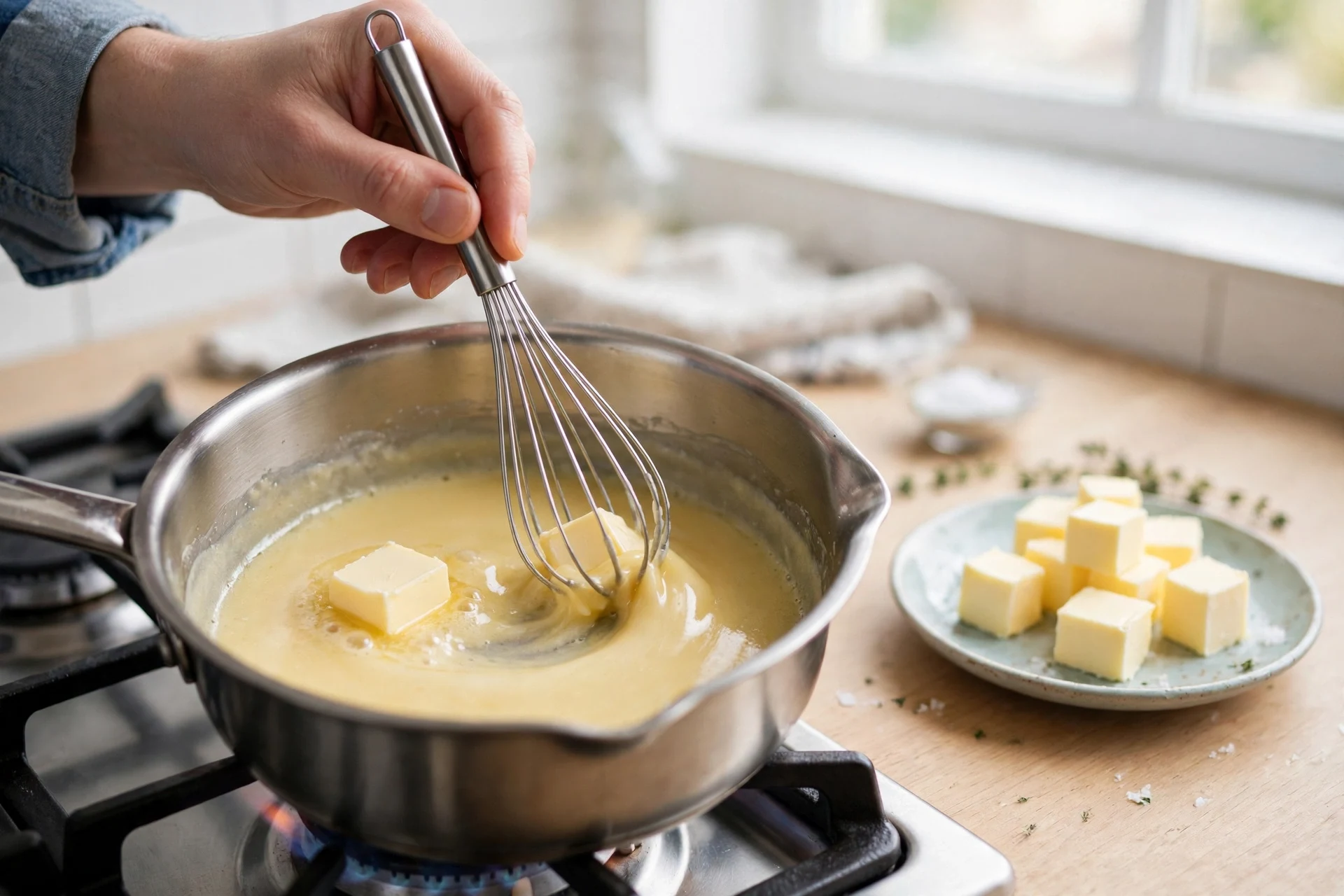
Whisk in the butter. Add a few cubes of cold butter at a time, whisking constantly. Wait until each addition is almost melted before adding the next. Keep the heat on low the whole time — the sauce should stay warm, never simmering. After 8 to 10 minutes, all the butter will be in, and the sauce will be pale gold, glossy, and thick enough to coat the back of a spoon. If the pan feels too hot to touch, lift it off the heat for 20 seconds and keep whisking.
4 Strain and Season
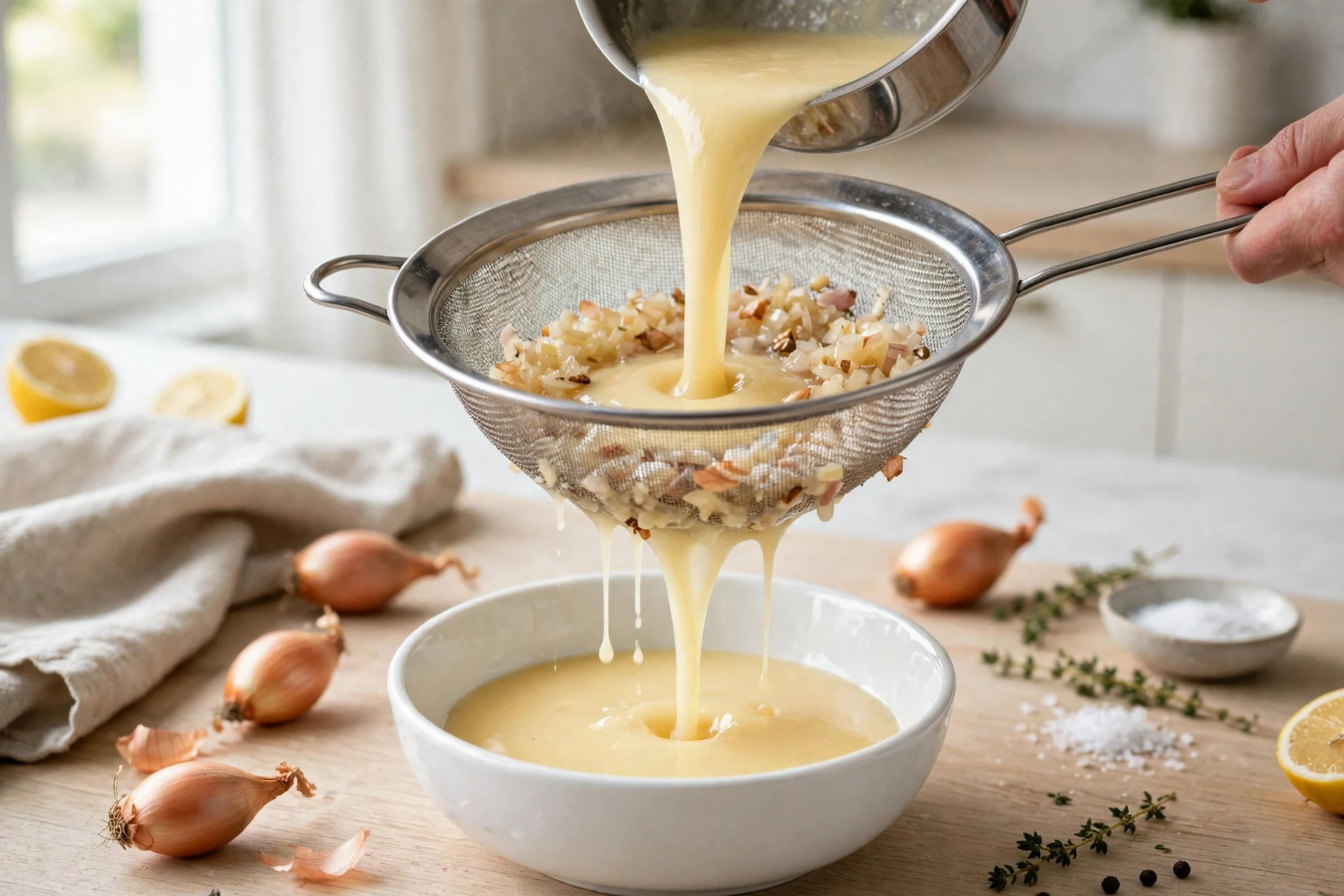
Strain and season. Remove the pan from the heat. Pour the sauce through a fine-mesh sieve into a small warm bowl, pressing gently on the shallots to get every drop out. Stir in the salt, white pepper, and lemon juice, then taste. It should taste rich and tangy at the same time. Add a little more salt or lemon if it tastes flat.
5 Serve
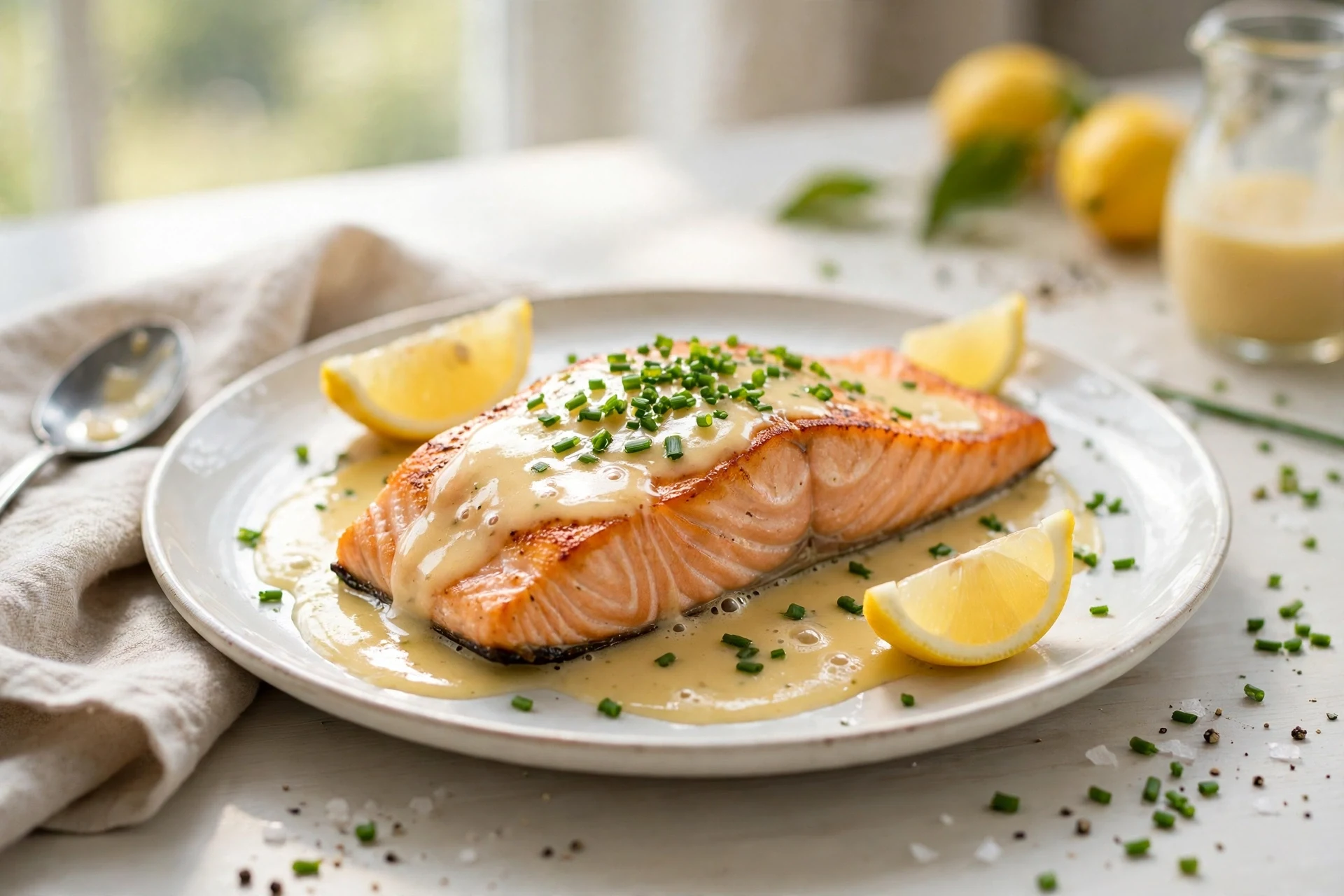
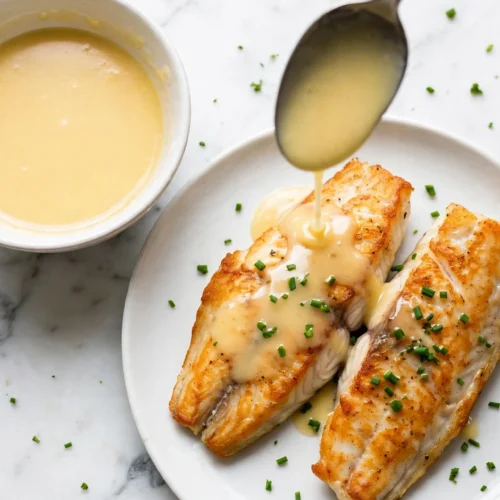
Serve. Spoon the warm sauce over fish, chicken, or vegetables right away, and sprinkle with chives or tarragon if you like. Beurre blanc is served warm, never steaming hot, and never cold. If you need to hold it, keep the bowl in a warm spot — on the back of the stove, or over a pan of warm water — and whisk it every few minutes.
Technique: The Emulsion — How Beurre Blanc Works, and How to Save It
Beurre blanc is not a thickened sauce. There is no flour and no egg, so the thickness comes from one thing only: tiny droplets of butterfat held in suspension in the wine reduction. That suspension is called an emulsion, and it is delicate. Once you understand the two things that break it — heat and speed — you can control it completely.
The Temperature Rule You Can Feel
Butter melts at about 90°F, and an emulsion breaks when the sauce gets close to a simmer, around 180°F. Between those two points is your working zone, and it is wide. The practical test needs no thermometer: hold your hand a few inches above the pan. If it feels warm and comfortable, you are fine. If it feels hot enough that you want to pull your hand away, lift the pan off the heat and keep whisking until it cools a little. The sauce should never bubble while the butter goes in.
The Reduction Target, Measured
The most common beginner mistake is leaving too much liquid in the pan. Start with 1/2 cup of liquid total — the wine plus the vinegar — and reduce it to about 2 tablespoons, roughly two-thirds gone. To check, tilt the pan: the liquid should pool in one corner in a spoonful or two, with the shallots piled in it. If the pan looks nearly dry, add a tablespoon of water — a dry pan scorches the shallots and there is nothing left to emulsify.
The Rescue: How to Fix a Split Sauce
Even careful cooks split a beurre blanc sometimes, and it is not a disaster. First, take the pan off the heat at once. Second, put 1 tablespoon of cold water or cold cream in a clean bowl. Third, whisk the broken sauce into the cold liquid one spoonful at a time, whisking hard after each spoonful. The cold liquid gives the fat droplets something new to cling to, and the emulsion rebuilds. If the sauce still looks greasy, add another tablespoon of cold cream and keep whisking. Nine times out of ten, the sauce comes back glossy and smooth. If it does not, strain out any solids and use what you saved as a warm butter drizzle — it will still taste wonderful.
Tips for the Best Beurre Blanc
- Keep the butter cold until the last second. Cut it into cubes, then put the plate back in the fridge while the reduction simmers.
- Use a heavy-bottomed pan. Thin pans develop hot spots, and a hot spot is exactly where an emulsion breaks.
- Add the butter slowly. A few cubes at a time, whisking constantly, is the whole technique. Dumping it in all at once melts it into oil.
- Never let the sauce simmer once the butter starts going in. Warm is the goal; bubbling is the enemy.
- Strain into a warm bowl. A cold bowl chills the sauce and can make it seize. Fill the bowl with hot tap water for a minute, then dry it before straining.
- Season at the end. Salt and lemon go in after straining, so you can taste the finished sauce and adjust it exactly.
- Make it last. Cook the fish first and the sauce second, or hold the finished sauce warm for up to 30 minutes, whisking now and then.
Variations
Beurre Blanc with Tarragon
Stir in 1 teaspoon of chopped fresh tarragon with the lemon juice at the end. Tarragon’s gentle anise flavor is the classic partner for chicken and for eggs.
Lemon Beurre Blanc
Leave out the white wine vinegar and use 1/4 cup of lemon juice plus 1/4 cup of white wine instead. The sauce becomes brighter and more citrusy, and it is lovely over shrimp and scallops.
Beurre Rouge (Red Wine Butter Sauce)
Swap the white wine for a dry red wine and the white wine vinegar for red wine vinegar. The sauce turns a deep rose color and tastes rounder and richer — a beautiful match for steak and roast beef.
Beurre Blanc with Dijon
Whisk 1 teaspoon of Dijon mustard into the reduction just before the butter goes in. The mustard adds a sharp, savory edge and helps the emulsion hold, so this is a good version for a first attempt.
What to Serve With Beurre Blanc
Beurre blanc was made for fish. Spoon it over easy baked salmon and the lemon, garlic, and herbs in the salmon meet the tangy butter sauce perfectly. It is just as good over pan-seared white fish, scallops, or shrimp, and over poached eggs on a weekend morning. Beyond seafood, try it over baked chicken — the sauce turns a simple chicken breast into a bistro dinner — or over honey garlic pork tenderloin, where the sauce’s acidity cuts the sweetness of the glaze. For vegetables, pour it over steamed asparagus or green beans. On the side, keep it simple: crusty bread for the extra sauce and a green salad with italian dressing.
Storage
In the Fridge
Beurre blanc does not store like other sauces, so plan to make it fresh and serve it the same day. If you must keep it, pour the finished sauce into a small container and refrigerate it for up to 1 day. It will solidify into a pale butter block — that is normal, since it is mostly butter.
Reheating
Reheat it very gently, and never in the microwave. Put the solidified sauce in a small saucepan over the lowest heat, or in a bowl over a pan of warm water, and whisk constantly as it melts. Add a teaspoon of cold cream if it looks greasy. Even with care, a reheated beurre blanc is rarely as silky as a fresh one, so make only as much as you will serve.
In the Freezer
Do not freeze beurre blanc. Freezing breaks the emulsion completely, and the thawed sauce separates into butter and liquid that will not come back together, even with the rescue fix. If you want to prep ahead, measure the wine, vinegar, and shallots into the pan and cube the butter the day before — then cook the sauce fresh in 25 minutes.
Frequently Asked Questions
What is beurre blanc?
Beurre blanc is a classic French butter sauce made by reducing white wine, white wine vinegar, and shallots, then whisking in cold butter a little at a time until the sauce turns pale, glossy, and thick. Its name means “white butter” in French. It is traditionally served warm over fish and seafood.
Why did my beurre blanc split?
It split because the pan got too hot. When the sauce simmers or boils while the butter goes in, the fat droplets merge back into oil and the emulsion breaks. The fix is in the Technique section: take the pan off the heat, whisk the broken sauce one spoonful at a time into a tablespoon of cold water or cold cream, and the emulsion usually rebuilds.
Can you make beurre blanc without cream?
Yes. The classic French version has no cream — just wine, vinegar, shallots, and butter. It is lighter and more delicate, but it splits more easily, so the heat rule matters even more. Cream is an optional stabilizer, not a requirement.
What is the difference between beurre blanc and hollandaise?
Both are butter emulsions, but hollandaise is thickened with egg yolks and lemon juice, while beurre blanc is thickened with a wine and vinegar reduction and has no egg at all. Hollandaise is richer and thicker; beurre blanc is lighter, tangier, and more delicate.
How do you keep beurre blanc warm?
Keep the strained sauce in a warm bowl in a warm spot — on the back of the stove, or over a pan of warm water with the heat off — for up to 30 minutes. Whisk it every few minutes so it stays smooth. Never hold it over direct heat, and never let it simmer.
What do you serve beurre blanc with?
It is best with fish and seafood — salmon, white fish, scallops, and shrimp — and it is also wonderful over chicken, pork tenderloin, poached eggs, and steamed vegetables like asparagus and green beans.
Try These Next
- Easy Baked Salmon — lemon, garlic, and herbs, ready in under 30 minutes, and the perfect partner for this sauce.
- Baked Chicken — juicy baked chicken breast that turns into a bistro dinner under a spoonful of beurre blanc.
- Honey Garlic Pork Tenderloin — sweet, savory pork that loves the tangy butter sauce.
- Italian Dressing — a bright homemade dressing for the simple green salad to serve alongside.
- Pesto Pasta — creamy, herby pasta for a complete dinner-party menu.
- pan-seared salmon — a buttery, garlic-kissed main that loves this sauce.
- hard-boiled eggs — perfectly cooked eggs for salads and snacks.
Beurre Blanc
Ingredients
- 1/4 cup dry white wine
- 1/4 cup white wine vinegar
- 2 tablespoons finely chopped shallots about 1 small shallot
- 1/3 cup heavy cream
- 1 cup 2 sticks cold unsalted butter, cut into 1/2-inch cubes
- 1/2 teaspoon kosher salt plus more to taste
- 1 pinch white pepper
- 1 teaspoon fresh lemon juice
- 1 teaspoon chopped fresh chives or tarragon for serving (optional)
Instructions
- Combine the white wine, white wine vinegar, and chopped shallots in a small heavy-bottomed saucepan over medium heat. Simmer 4 to 5 minutes, until the liquid has reduced to about 2 tablespoons.
- Pour in the heavy cream and bring to a gentle simmer. Cook 1 minute, stirring, until slightly thickened. Reduce the heat to low.
- Add a few cubes of cold butter at a time, whisking constantly. Wait until each addition is almost melted before adding the next. Keep the heat on low — the sauce should stay warm, never simmering — until all the butter is in, 8 to 10 minutes.
- Remove from the heat. Strain through a fine-mesh sieve into a warm bowl, pressing on the shallots to extract the liquid. Stir in the salt, white pepper, and lemon juice. Taste and adjust.
- Spoon over fish, chicken, or vegetables right away. Sprinkle with chives or tarragon if you like, and serve warm.
Notes
- Keep the butter cold until the last second — cut it into cubes and return the plate to the fridge while the reduction simmers.
- Never let the sauce simmer once the butter starts going in; warm is the goal, bubbling is the enemy.
- If the sauce splits, whisk it one spoonful at a time into 1 tablespoon of cold water or cold cream in a clean bowl — the emulsion usually rebuilds.
- Reduce the wine and vinegar to about 2 tablespoons; too much liquid left makes a thin sauce, and a nearly dry pan scorches the shallots.
- Strain into a warm bowl so the sauce does not seize, and season with salt and lemon only after straining.
- Do not freeze beurre blanc — freezing breaks the emulsion. Make it fresh and serve the same day.