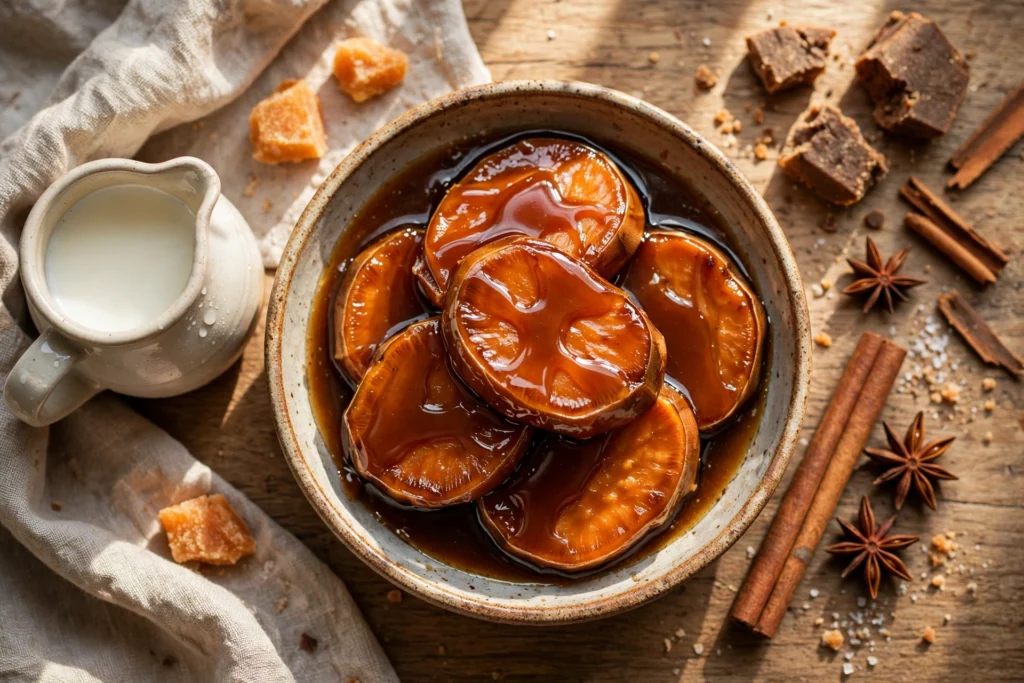
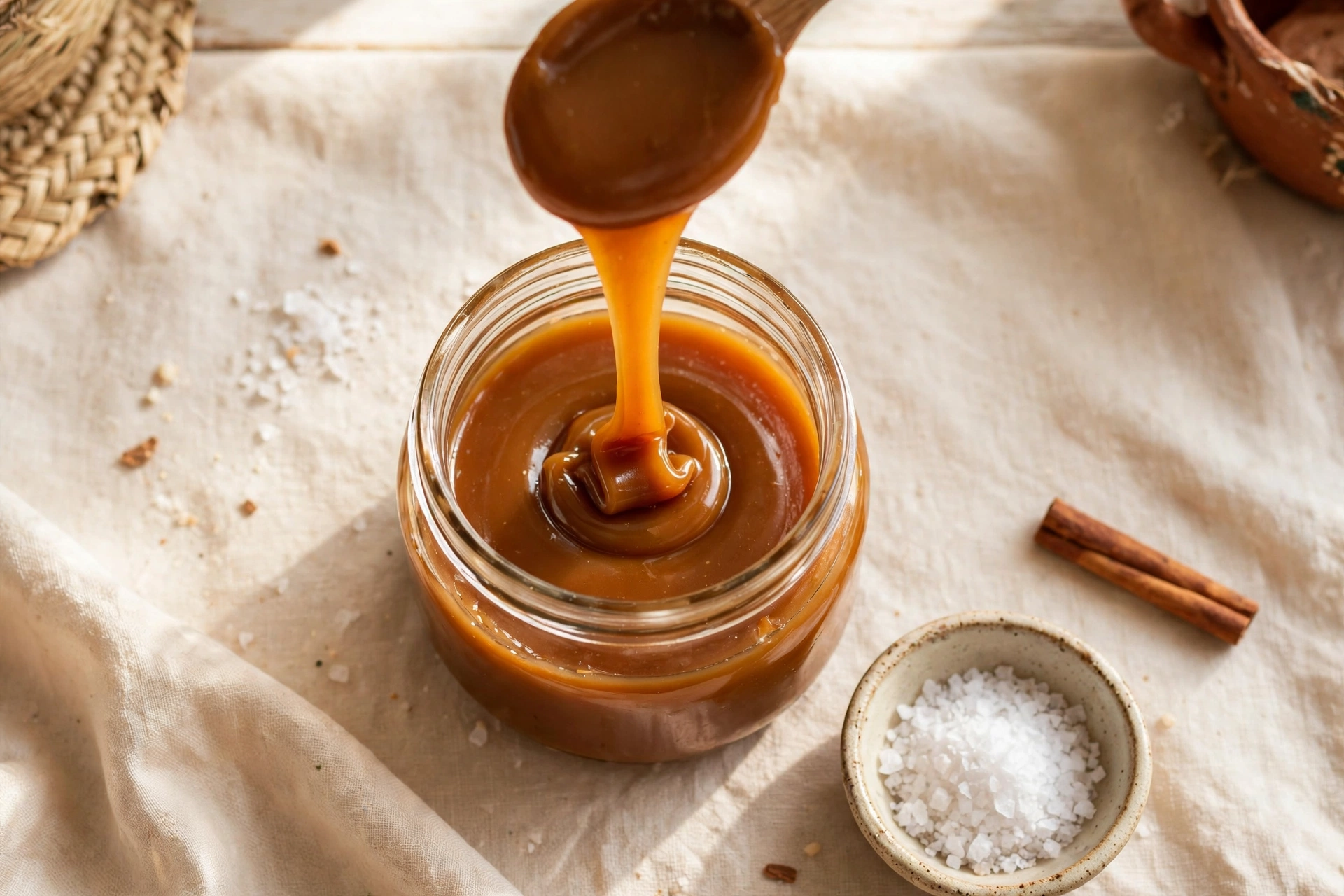
There is a jar in my fridge that never lasts a full week. It is cajeta, and once you make it at home, you will understand why. This Mexican caramel sauce is thick, glossy, and deeply golden, with a gentle tang from goat milk that regular caramel simply does not have. It takes about 75 minutes on the stove, and most of that time is just stirring now and then.
Why You’ll Love It
- Only 6 ingredients. Goat milk, sugar, baking soda, cinnamon, vanilla, and salt. That is the whole list.
- A flavour caramel cannot copy. Goat milk gives cajeta a soft tang and a rich, almost toasty depth that cow’s milk caramel never quite reaches.
- You control the thickness. Cook it a little less for a pourable sauce, or a little longer for a thick spread. This recipe tells you exactly how to hit each one.
- One batch, endless desserts. Drizzle it over ice cream, spoon it on cakes, dip churros in it, or eat it straight from the jar with a spoon. No judgement here.
- It keeps for weeks. A jar of cajeta in the fridge is a dessert emergency kit. Warm it for a few seconds and it is ready again.
- It makes a beautiful gift. Pour it into small jars, tie a ribbon around the lid, and you have a homemade holiday gift that looks far fancier than the effort it took.
Ingredients
The Base
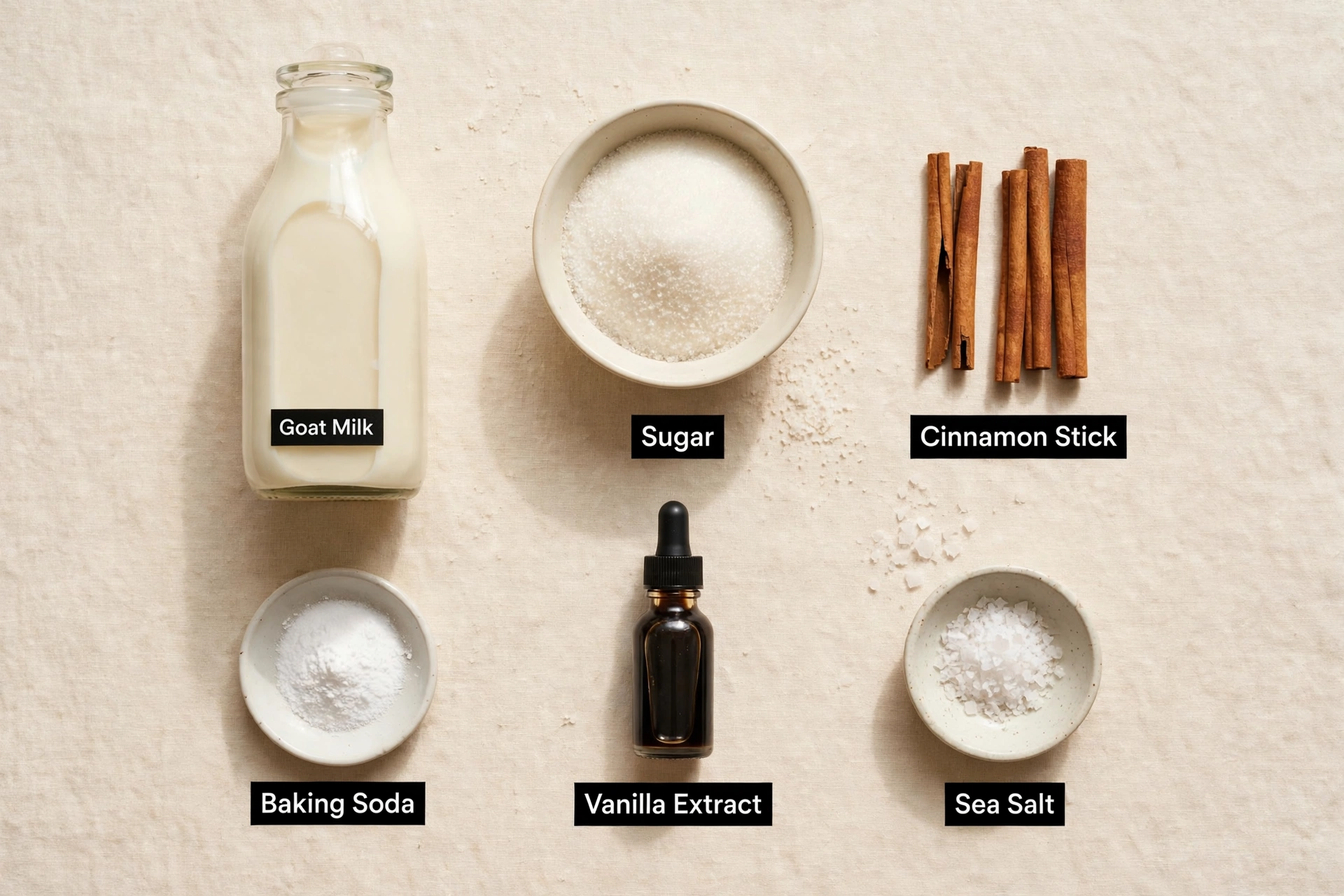
- 4 cups goat milk, divided — Goat milk is the heart of cajeta, and it is what makes it different from dulce de leche. Its slight tang balances the sugar and gives the sauce its signature flavour. Use whole goat milk from the dairy aisle or a carton of shelf-stable goat milk. If you cannot find goat milk, you can use whole cow’s milk instead, but the result will taste closer to dulce de leche and a little less tangy.
- 1 cup granulated sugar — Sugar is both the sweetener and the source of the caramel colour. As the milk slowly reduces, the sugar caramelizes and turns the sauce golden, then amber, then deep brown. Do not reduce the sugar to “make it healthier,” because the sauce will not thicken or colour properly. For a slightly deeper flavour, swap 1/4 cup of the white sugar for light brown sugar.
- 1/2 teaspoon baking soda — Baking soda is the quiet hero of this cajeta recipe. It lowers the acidity of the goat milk, which helps the sauce brown evenly instead of curdling, and it keeps the colour developing slowly so the sauce does not burn. Dissolve it in a little milk first, and add it off the heat, because it will foam up fast.
The Flavour
- 1 cinnamon stick — Cinnamon gives cajeta its warm, gentle spice. A Mexican canela stick is ideal because it is softer and more fragrant than regular cassia cinnamon, but a standard cinnamon stick works well too. Remove it before jarring the sauce. If you only have ground cinnamon, use 1/2 teaspoon and strain the finished sauce.
- 1 teaspoon pure vanilla extract — Vanilla rounds out the caramel and adds warmth. Stir it in at the very end, off the heat, so its flavour does not cook away. Mexican vanilla is lovely here if you have it. A split vanilla bean can replace the extract; add it with the milk and remove it before jarring.
- 1/4 teaspoon fine sea salt — Salt does not make cajeta salty. Instead, it sharpens the caramel flavour and keeps the sweetness from feeling flat. Fine sea salt dissolves easily into the milk. Flaky sea salt is better saved for sprinkling on top when you serve it.
How to Make Cajeta
Getting Started
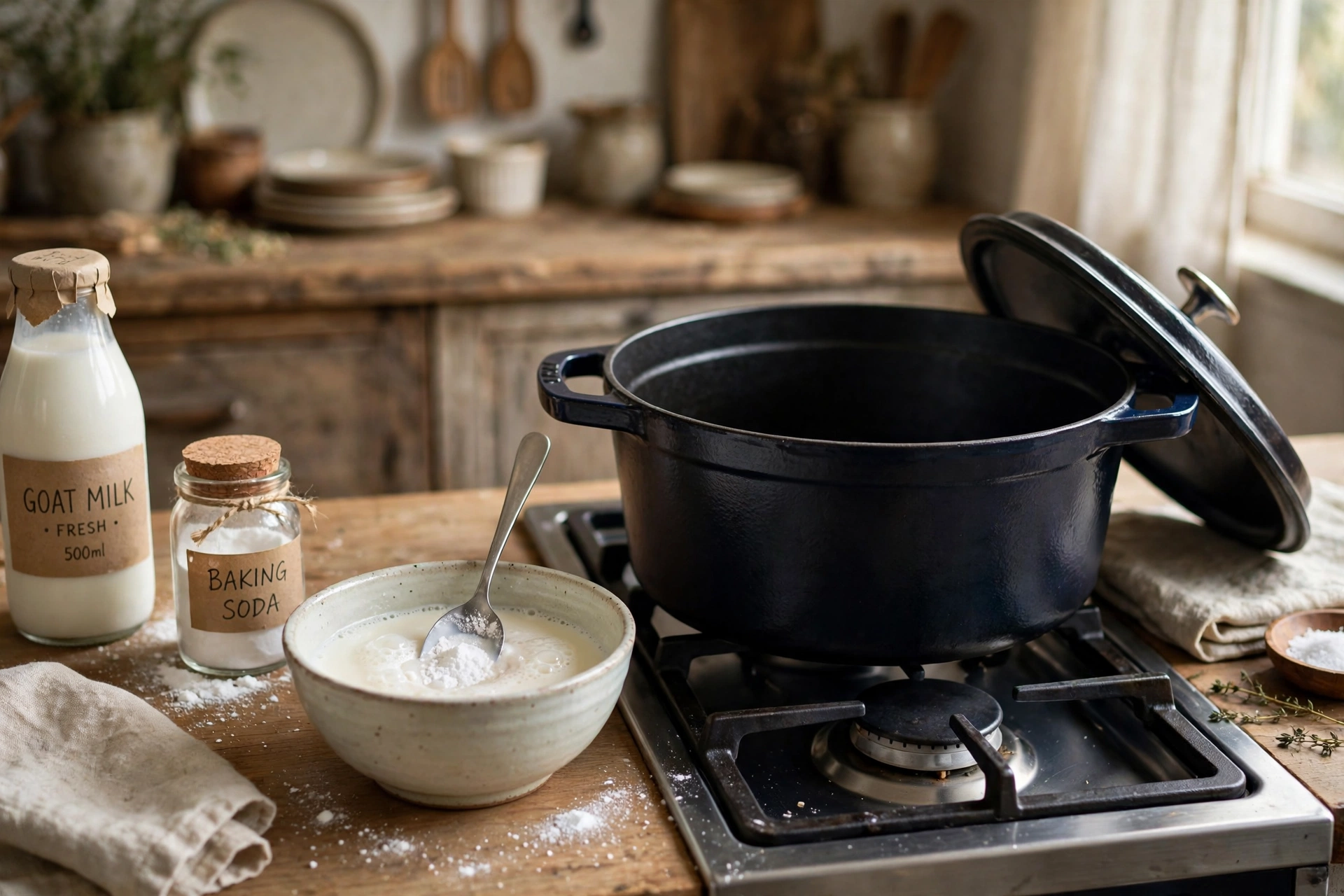
Step 1 — Mix the baking soda. Pour 1/4 cup of the goat milk into a small bowl and stir in the baking soda until it dissolves. Set the bowl beside the stove. This little step matters, because you will need the mixture ready the moment the milk simmers.
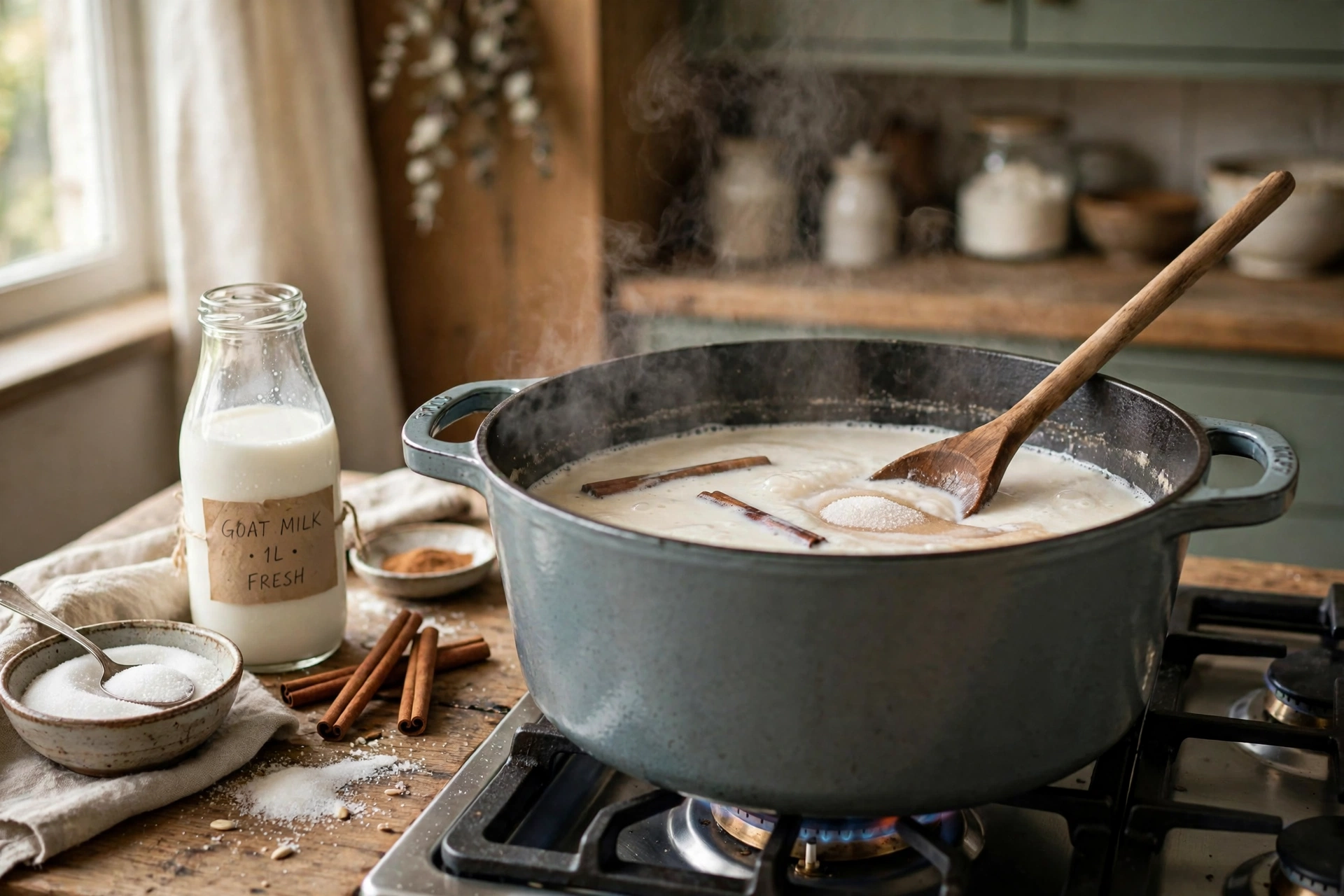
Step 2 — Warm the milk and sugar. Pour the remaining goat milk into a large, heavy Dutch oven or pot, then add the sugar, the cinnamon stick, and the salt. Place the pot over medium to medium-high heat and stir often until the sugar dissolves and the milk comes to a gentle simmer. Do not walk away, because milk boils over fast.
The Long Simmer
Step 3 — Add the baking soda and watch the foam. Take the pot off the heat and pour in the baking soda mixture. The milk will bubble and foam up right away, sometimes rising high in the pot. Keep stirring calmly and let the foam settle. This is normal, and it is exactly why you used a large pot. Once the bubbling stops, return the pot to the stove and bring it back to a low simmer.
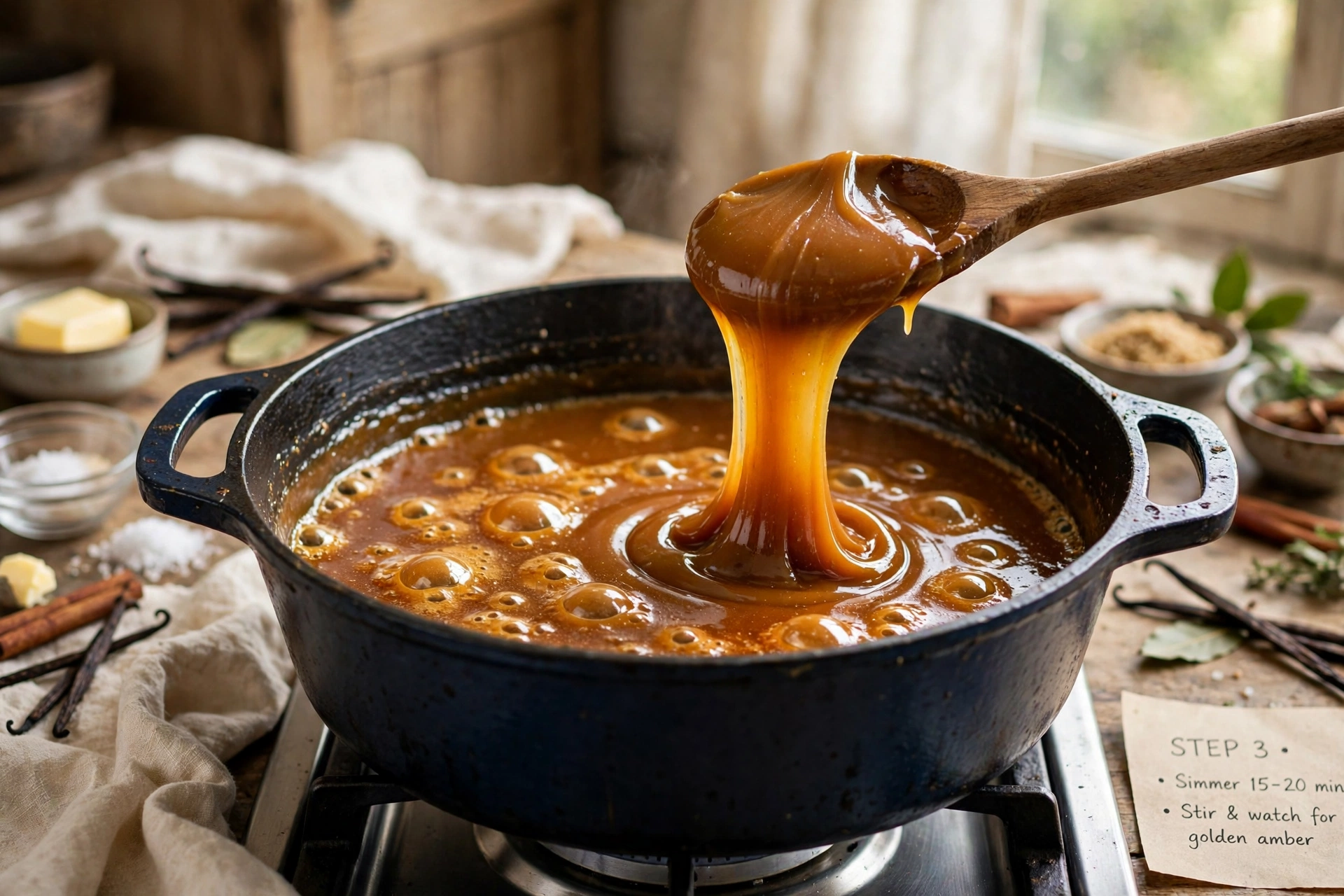
Step 4 — Simmer and stir while it turns golden. Cook the cajeta uncovered at a gentle simmer for about 1 hour to 1 hour 15 minutes. Stir every 10 minutes at first, then more often as it thickens, scraping the bottom and sides so nothing sticks. The sauce will slowly turn pale gold, then amber, then a rich caramel brown. Remove the cinnamon stick once the colour starts to deepen.
Testing and Jarring
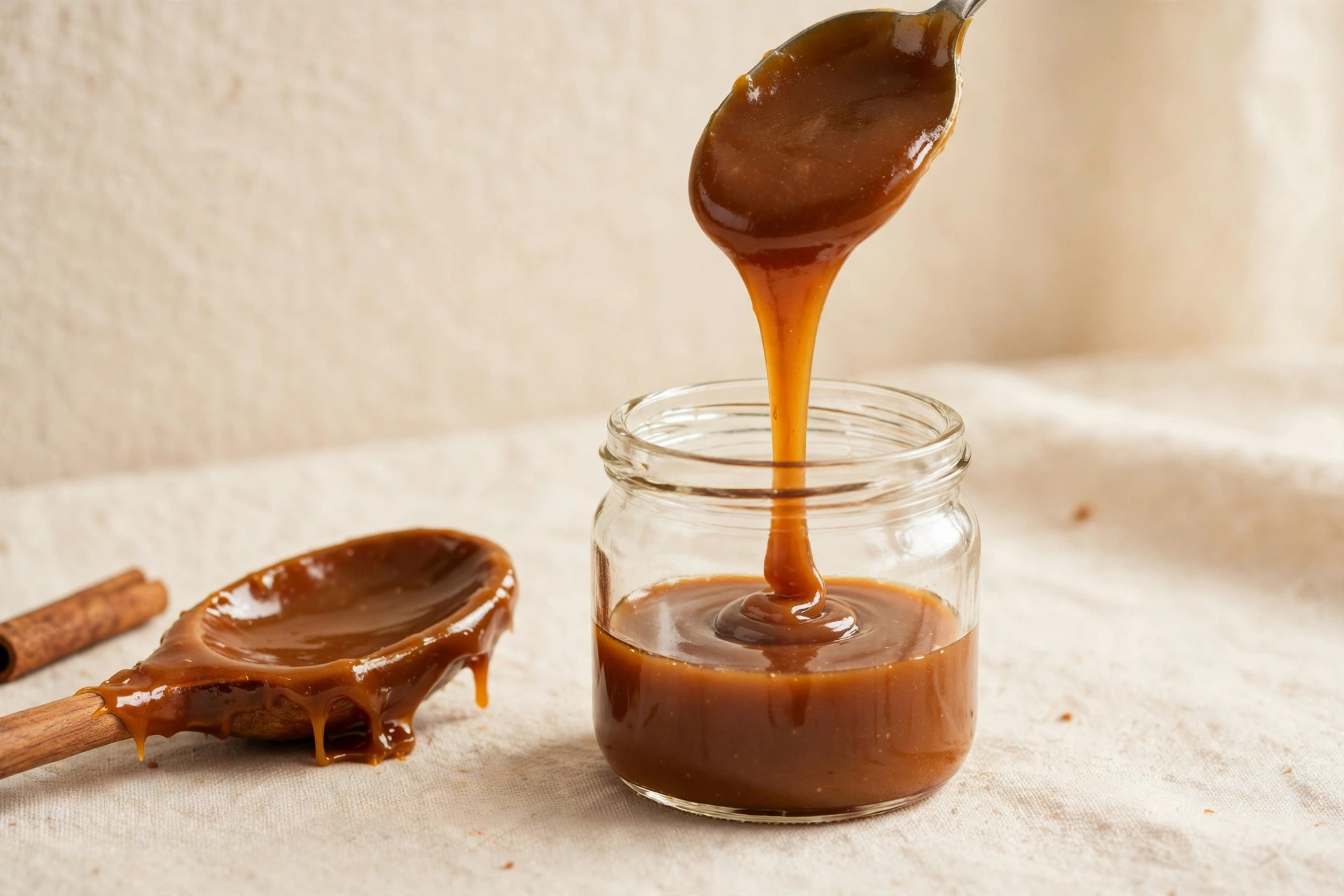
Step 5 — Test the thickness. When the sauce coats the back of a wooden spoon and a trail drawn through it with a spatula holds for a second or two, it is done. For a thinner pouring sauce, stop a few minutes earlier. For a thick spread, cook about 10 minutes longer. Remember that cajeta thickens a lot as it cools, so stop just before it looks perfect in the pot.
Step 6 — Add the vanilla and jar it. Take the pot off the heat and stir in the vanilla extract. Let the cajeta cool for 10 minutes, then pour it into clean glass jars. It will thicken further as it cools. Serve it warm, or refrigerate it once it reaches room temperature.
Technique: The Two Moments That Decide Your Cajeta
Most cajeta recipes tell you to stir and wait, but two moments decide whether your sauce turns out silky or scorched.
The Foam Stage
The first danger moment comes right after you add the baking soda. Goat milk is slightly acidic, and baking soda reacts with that acid by releasing gas. As a result, the milk foams and rises fast, sometimes doubling in height in a few seconds. That is why the recipe uses a large pot and why you take the pot off the heat first. If the foam climbs too high, lift the pot higher, keep stirring, and wait. It will settle in under a minute. A pot filled more than two-thirds full is asking for a boil-over, so use your biggest heavy pot even if the milk looks small in it.
The Final Ten Minutes
The second danger moment comes near the end. For the first hour, cajeta changes slowly, and stirring every 10 minutes is plenty. However, once the sauce turns a medium amber colour, everything speeds up. The milk has mostly reduced, the sugar is caramelizing fast, and the sauce can go from perfect to burnt in a few minutes. So stay at the stove for the last 10 minutes and stir constantly, scraping the bottom in slow figure-eights. If you see dark specks or smell anything sharp and bitter, take the pot off the heat at once. You can strain out a few specks, but you cannot un-burn caramel.
How to Tell It Is Done
Colour and the spoon test beat the clock, because stoves and pots vary. For a thin pouring sauce, stop when the cajeta coats the back of a spoon and a spatula trail closes almost at once. A classic sauce is ready when the trail holds for a second or two. For a thick spread, stop when the trail stays open for several seconds and the sauce falls in a slow, heavy ribbon. In every case, pull the pot off the heat a little early. Cajeta firms up as it cools, and a sauce that looks just right in the pot will be too thick in the jar.
Tips for the Best Cajeta
- ✔ Use a heavy pot. A Dutch oven or a heavy-bottomed pot spreads heat evenly and protects the milk from scorching. Thin pots create hot spots and burnt patches.
- ✔ Never leave it at a rolling boil. Cajeta wants a gentle simmer. A hard boil makes the milk foam over and can curdle it.
- ✔ Stir with a wooden spoon or a heatproof spatula. Both let you feel the bottom of the pot, so you can catch any sticking early.
- ✔ Strain it if you like it silky. Pour the finished cajeta through a fine-mesh strainer into the jar. This catches any cinnamon bits or tiny cooked milk flecks and gives you a perfectly smooth sauce.
- ✔ Do not double the batch in one pot. A bigger batch is far easier to scorch. Make two separate batches instead.
- ✔ Warm it before serving. Cold cajeta is thick and spoonable. Warm it for 10 to 15 seconds in the microwave, or set the jar in warm water, and it turns pourable again.
Variations
Thinner Pouring Sauce
For a sauce you can drizzle over ice cream or pancakes, stop cooking about 10 minutes earlier than the classic version. The cajeta will look a little loose in the pot, but it will set into a pourable sauce as it cools. If it still thickens too much in the fridge, stir in hot water one tablespoon at a time until it pours the way you like.
Cajeta with Cow’s Milk
If goat milk is hard to find or too pricey, use whole cow’s milk in the same amount. The method does not change, and the sauce will still be delicious. However, the flavour will be milder and sweeter, much closer to dulce de leche, and it may take a little longer to colour. Add an extra pinch of salt to balance the sweetness.
Slow Cooker Cajeta
Combine all the ingredients except the vanilla in a slow cooker and cook uncovered on high. Stir once the milk is warm so the sugar dissolves, then cook for 8 to 10 hours, stirring near the end, until the sauce turns amber and thick. Slow cookers vary a lot, so check the colour after 6 hours. Stir in the vanilla at the end.
Flavoured Cajeta
Once you have the classic version down, try a twist. Stir in 1 tablespoon of instant espresso powder with the sugar for a coffee cajeta that is wonderful over ice cream. Or add a pinch of cayenne and an extra cinnamon stick for a gentle Mexican-chocolate warmth.
What to Serve With Cajeta
Cajeta improves almost any dessert it touches. For example, drizzle it warm over Mexican rice pudding and the creamy rice turns into something special. It is also lovely spooned over Tres Leches Cupcakes, where the milky cake soaks up the caramel. In addition, try it on capirotada, the Mexican bread pudding, or over a slice of pan de elote with vanilla ice cream. Beyond cakes and puddings, use it as a dip for churros, fresh fruit, and pan dulce, or swirl it over cheesecake and brownies. And if no dessert is in sight, a spoonful straight from the jar is a perfectly good plan. Spoon cajeta over fresas con crema for a cool, creamy contrast to the warm caramel. Drizzle it over a slice of Basque cheesecake — the burnt top and creamy center take the caramel beautifully.
Storage
Let the cajeta cool to room temperature, then pour it into clean glass jars with tight lids and refrigerate it. It keeps in the fridge for up to 3 weeks. The sauce will thicken and firm up when cold, so warm the jar for 10 to 15 seconds in the microwave, or set it in a bowl of warm water for a few minutes, before serving. Stir it well after warming.
Cajeta also freezes well. Pour it into freezer-safe jars, leave about an inch of space at the top, and freeze for up to 3 months. Thaw it overnight in the fridge, then warm it gently and stir until smooth. If it looks slightly grainy after thawing, slow warming and steady stirring will bring it back together. Do not leave cajeta at room temperature for more than a couple of hours, and always use a clean spoon.
Frequently Asked Questions
About Cajeta
Cajeta is a traditional Mexican caramel sauce made by slowly cooking goat milk with sugar until it reduces into a thick, golden-brown sauce. It comes from Celaya, in Guanajuato, and it is often sold as a candy or a dessert topping. The goat milk gives it a gentle tang and a rich, toasty flavour that sets it apart from regular caramel.
Cajeta and dulce de leche are made in a similar way, by slowly cooking milk and sugar, but they use different milks. Cajeta is made with goat milk, while dulce de leche is made with cow milk. As a result, cajeta tastes tangier and more complex, while dulce de leche tastes milder and sweeter. Both are delicious, and you can use them in many of the same desserts.
Yes, you can. Use whole cow’s milk in the same amount and follow the same steps. The sauce will still thicken and turn golden, but the flavour will be milder and closer to dulce de leche, and it may take a little longer to reach the same colour. Add an extra pinch of salt to keep the sweetness balanced.
Troubleshooting and Storage
Curdling usually happens when the milk boils too hard. Goat milk is delicate, so keep it at a gentle simmer and never let it reach a rolling boil. Graininess can also come from sugar that never fully dissolved, so stir well at the start. If your finished cajeta is slightly grainy, strain it and warm it gently while stirring.
Homemade cajeta keeps in a sealed jar in the fridge for up to 3 weeks. It thickens when cold, so warm it for 10 to 15 seconds in the microwave or set the jar in warm water before serving. Always use a clean spoon.
Yes, cajeta freezes well for up to 3 months. Pour it into freezer-safe jars, leave about an inch of space at the top, and thaw it overnight in the fridge. Warm it gently and stir well before serving.
Try These Next
If you loved this cajeta recipe, try these Mexican desserts too. Spoon warm cajeta over Tres Leches Cupcakes or a bowl of Mexican rice pudding. For a cosy baked dessert, try capirotada or a slice of pan de elote with cajeta on top. And for a sweet bite with coffee, make mazapan — its nutty sweetness pairs beautifully with this goat milk caramel.
Cajeta (Mexican Caramel Sauce)
Ingredients
- 4 cups goat milk divided
- 1 cup granulated sugar
- 1/2 teaspoon baking soda
- 1 cinnamon stick
- 1 teaspoon pure vanilla extract
- 1/4 teaspoon fine sea salt
Instructions
- Pour 1/4 cup of the goat milk into a small bowl and stir in the baking soda until dissolved. Set aside.
- Place the remaining goat milk, sugar, cinnamon stick and salt in a large heavy Dutch oven or pot over medium to medium-high heat. Stir often until the sugar dissolves and the milk comes to a gentle simmer.
- Remove the pot from the heat and add the baking soda mixture. Stir while the milk foams and bubbles, until the foaming stops. Return the pot to the heat and bring back to a low simmer.
- Cook uncovered at a gentle simmer for 1 hour to 1 hour 15 minutes, stirring every 10 minutes at first and more often as it thickens. Scrape the bottom and sides so nothing sticks. Remove the cinnamon stick once the colour deepens.
- Test the thickness: the cajeta is done when it coats the back of a spoon and a spatula trail holds for a second or two. Stop a little early, as it thickens while cooling.
- Remove from the heat and stir in the vanilla extract. Cool for 10 minutes, then pour into clean glass jars. Refrigerate once at room temperature.
Notes
- Cajeta thickens a lot as it cools, so stop cooking just before it looks perfect in the pot.
- Warm cold cajeta for 10 to 15 seconds in the microwave, or set the jar in warm water, before serving.
- Strain the finished sauce through a fine-mesh strainer for an extra silky texture.
- Store in sealed jars in the fridge for up to 3 weeks, or freeze for up to 3 months.