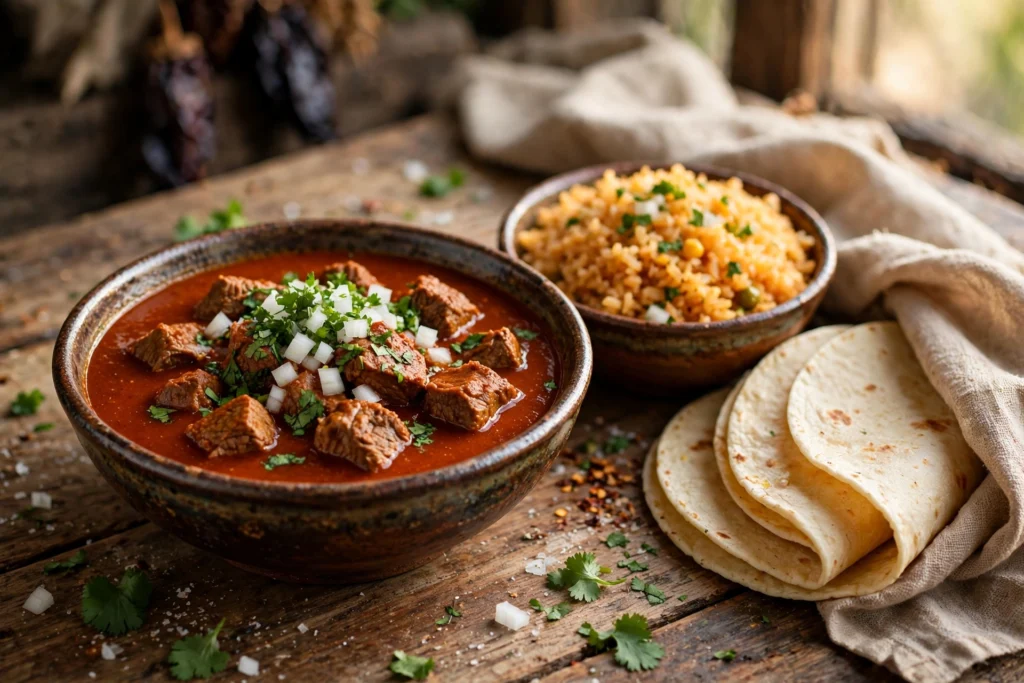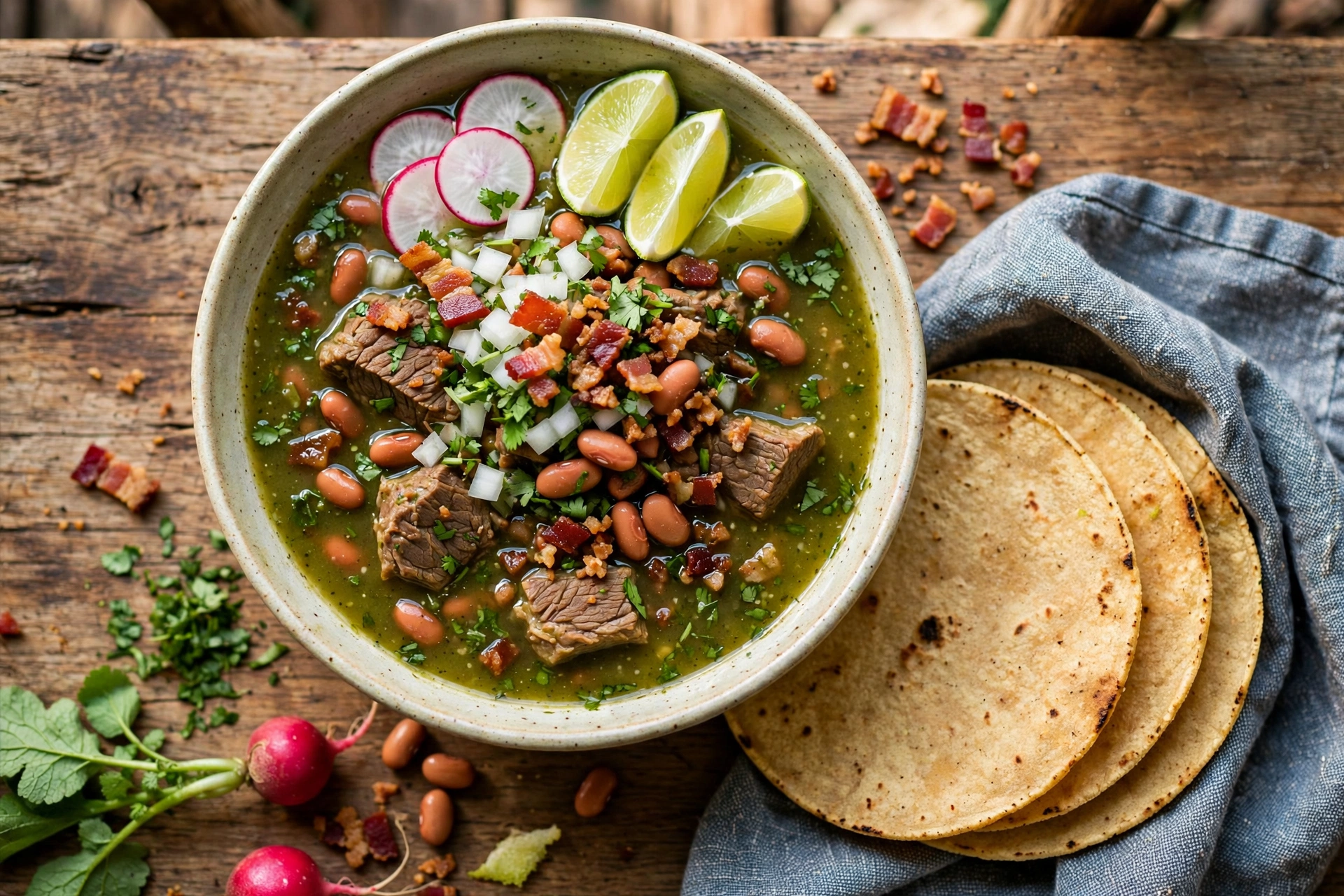
Smoky bacon, tender beef, and a bright, tangy green sauce — carne en su jugo is the bowl of soup that Guadalajara is most proud of. The name means “meat in its own juices,” and that is exactly how it cooks: small cubes of beef simmer gently in the liquid they release, then meet a fresh tomatillo sauce, creamy pinto beans, and a pile of crisp bacon on top.
This carne en su jugo recipe comes from Jalisco, the state that also gave Mexico tequila, birria, and pozole. It is a one-pot meal, so the cleanup is easy, and the whole pot is ready in about 70 minutes. Serve it with warm tortillas and a topping bar of onion, cilantro, radish, and lime, and let everyone build their own bowl.

Why You’ll Love It
- One pot, easy cleanup. Everything — bacon, beef, sauce, and beans — cooks in a single Dutch oven.
- Two flavors in every bite. The beef and bacon bring deep, smoky richness, while the tomatillo sauce brings bright, tangy freshness.
- Tender beef, guaranteed. The gentle simmer in its own juices keeps the meat soft instead of tough and dry.
- A topping bar makes it fun. Onion, cilantro, radish, lime, and avocado let everyone finish their bowl their own way.
- Feeds six generously. Two pounds of beef and two cans of beans stretch into six big bowls, so it is kind to the grocery budget.
- Even better the next day. The sauce and the beef keep melding overnight, so leftovers taste richer than the first serving.
- Naturally gluten-free. Serve it with corn tortillas and the whole meal stays gluten-free without any swaps.
Ingredients
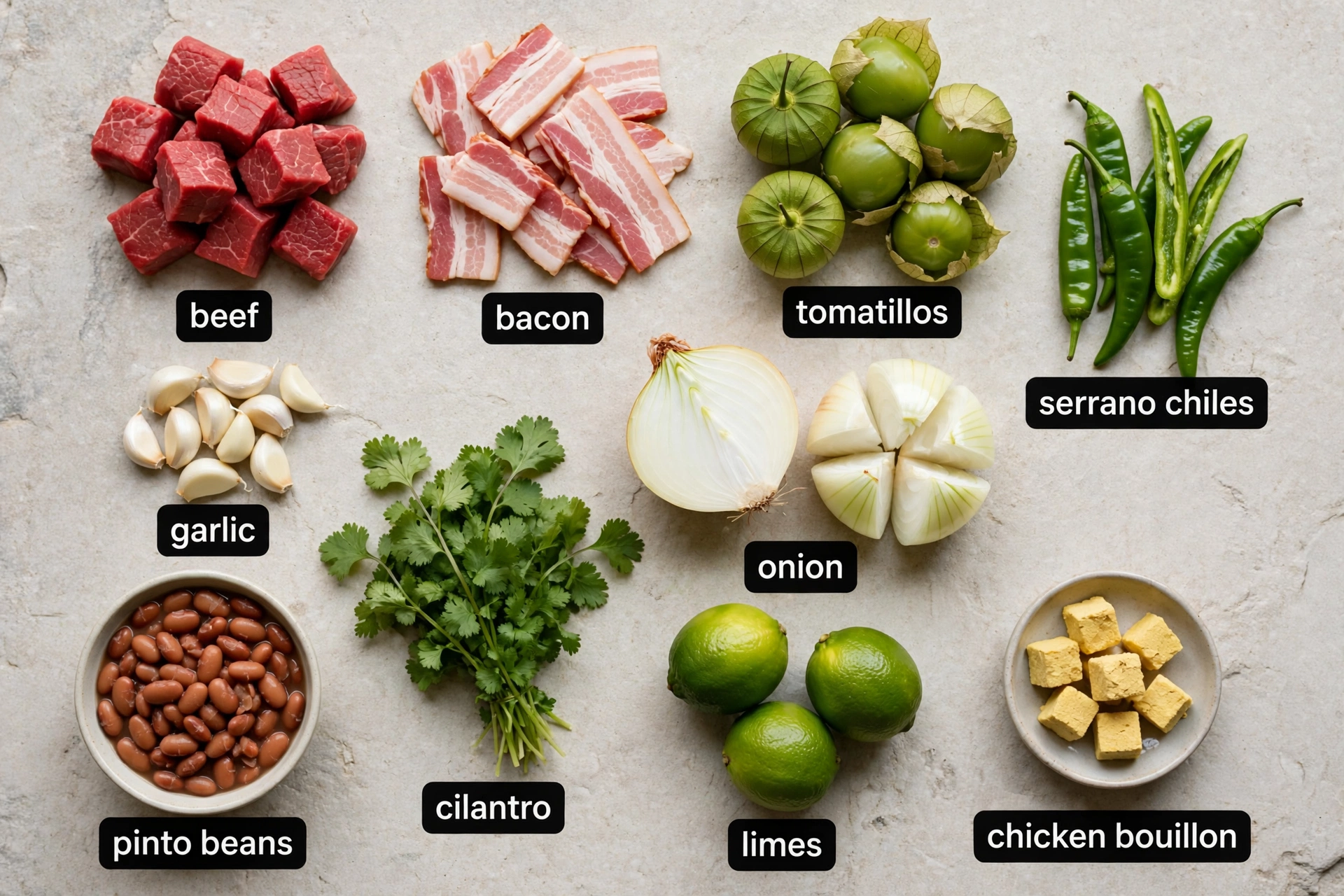
For the Tomatillo Sauce
- 8 tomatillos, husks removed and rinsed — The heart of the sauce. They give it the signature tang and the vivid green color. Substitution: green tomatoes, though the sauce turns milder and less tangy.
- 2 serrano chiles, stems removed — The heat. Two serranos give a warm, noticeable kick without overwhelming the beef. Substitution: 1 jalapeno for mild heat, or 3 serranos if your family likes it spicy.
- 4 garlic cloves, peeled — Simmered with the tomatillos so the garlic turns sweet and soft instead of sharp. Substitution: 1 teaspoon garlic powder, stirred into the blender with the sauce.
- 1/2 white onion, roughly chopped — Adds sweetness and body to the sauce. White onion is the classic choice here because it stays mild. Substitution: yellow onion, in the same amount.
- 1 cup fresh cilantro, roughly chopped (leaves and tender stems) — Half goes into the sauce and half goes on top. Substitution: flat-leaf parsley, though the flavor turns less Mexican.
- 1 teaspoon ground cumin — Warm, earthy depth that ties the sauce to the beef. Substitution: 1/2 teaspoon chili powder.
- 1 teaspoon kosher salt — Seasons the sauce so the tomatillos taste bright instead of sour. Substitution: 3/4 teaspoon fine sea salt.
For the Carne en su Jugo
- 8 slices bacon, chopped — The smoky soul of the dish. The bacon fat is what the beef cooks in, and the crisped bacon comes back as a topping. Substitution: 3 to 4 tablespoons olive oil, plus a little smoked paprika for the smoky note.
- 2 pounds top sirloin steak, cut into 1/2-inch cubes — Lean and tender, so it turns soft in a 30-minute simmer. Cut the cubes small and even so they cook at the same speed. Substitution: flank steak for a beefier bite, or beef chuck for a richer pot that needs 15 extra minutes of simmering.
- 1 teaspoon kosher salt, plus more to taste — Seasons the beef from the start so the juices it releases are already flavorful. Substitution: 3/4 teaspoon fine sea salt.
- 1/2 teaspoon black pepper — A little bite that balances the tang of the tomatillos. Substitution: white pepper, in the same amount.
- 2 tablespoons chicken bouillon powder (or 2 cubes) — The savory backbone of the broth. Substitution: 4 cups low-sodium beef broth instead of the water, and skip the bouillon.
- 4 cups water — The cooking liquid for the broth. Substitution: beef broth, for a richer pot.
- 2 (15-ounce) cans pinto beans, drained and rinsed — They make the soup a full meal. Substitution: 2 cups home-cooked pinto beans, or black beans for a slightly earthier flavor.
To Serve
- Diced white onion, chopped cilantro, and thinly sliced radishes — The classic trio of toppings.
- Lime wedges — A squeeze over the top right before eating wakes the whole bowl up.
- Warm corn tortillas — For scooping and wrapping. Flour tortillas work too, but corn is the Jalisco way.
How to Make Carne en su Jugo
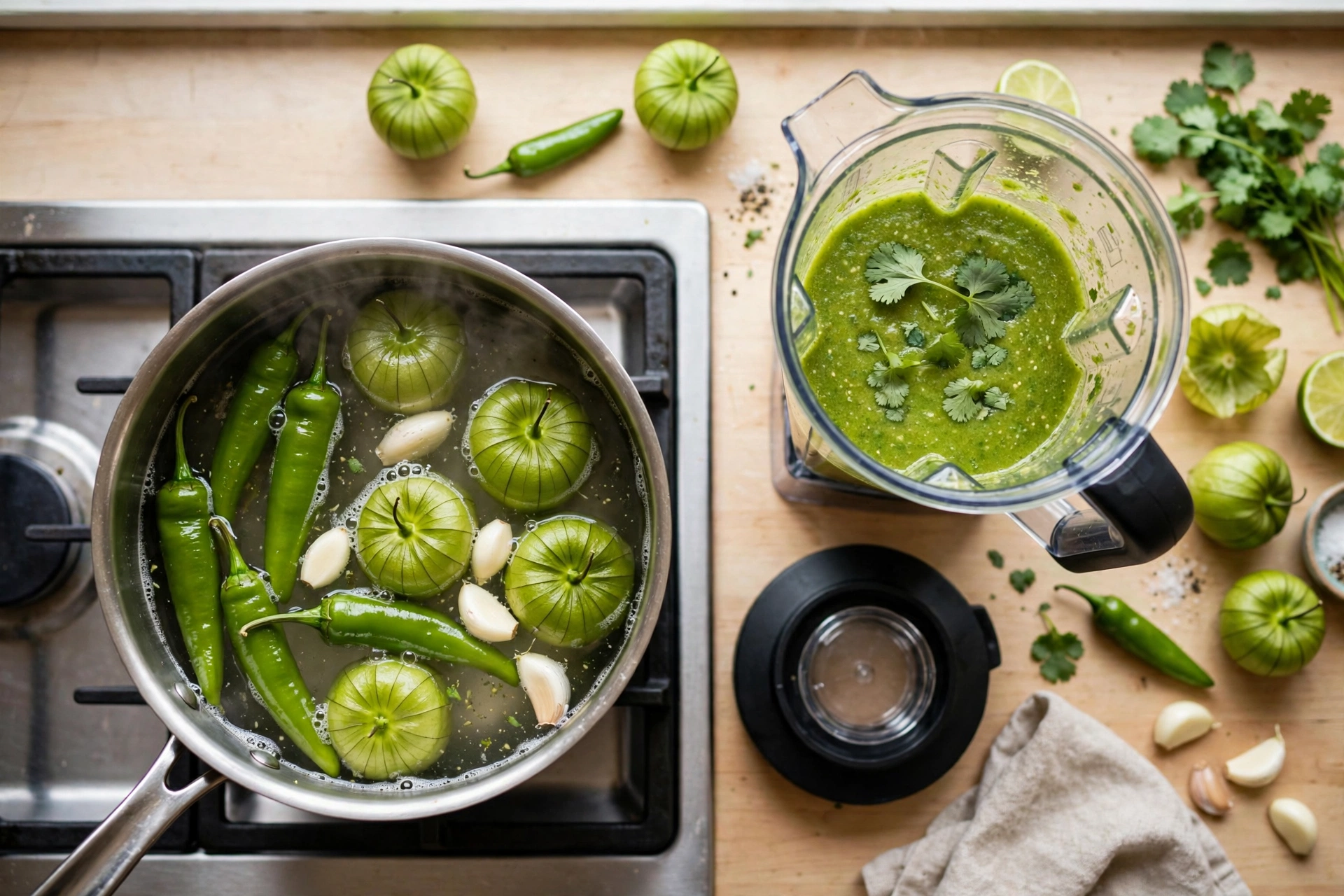
1Step 1: Simmer the Tomatillos
Simmer the tomatillos. Put the tomatillos, serrano chiles, garlic, and onion in a medium saucepan and add just enough water to cover them. Bring it to a boil, then lower the heat and simmer for about 10 minutes, until the tomatillos turn a dull olive green and feel very soft when you press them with a spoon. Drain them, saving 1/2 cup of the cooking water.
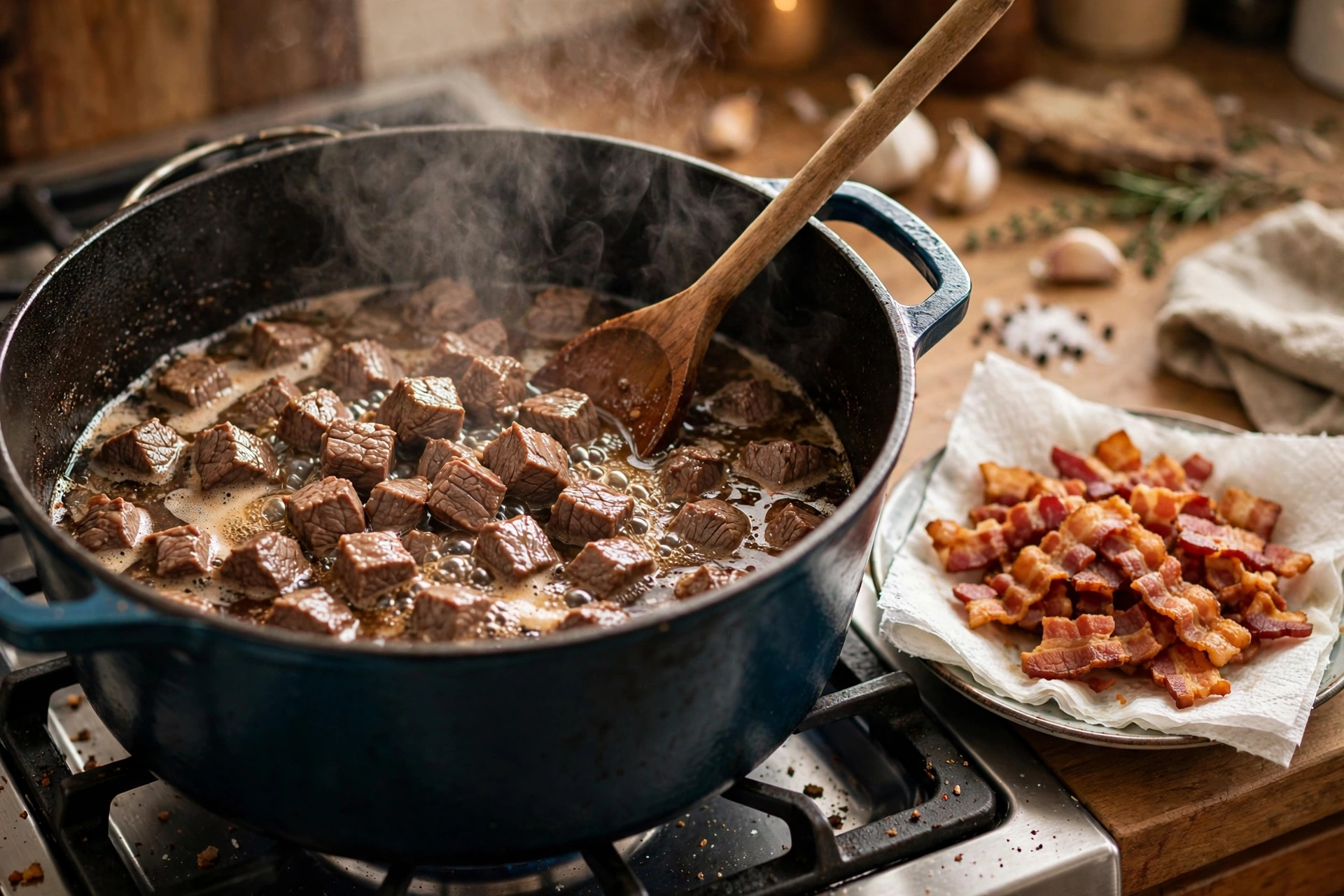
2Step 2: Crisp the Bacon
Crisp the bacon. While the tomatillos simmer, cook the chopped bacon in a large Dutch oven over medium heat for about 8 to 10 minutes, stirring now and then, until it is crisp and the fat has rendered out. Lift the bacon out with a slotted spoon and set it on a paper towel-lined plate. Leave the fat in the pot.
3Step 3: Cook the Beef in Its Own Juices
Cook the beef in its own juices. Season the beef cubes with the salt and pepper, then add them all to the pot at once. This is the one recipe where crowding the pot is correct — the beef needs to sit close together so it releases its juices instead of searing dry. Cook over medium heat for about 8 minutes, stirring now and then, until the beef has turned mostly brown and a pool of juice has formed in the pot.
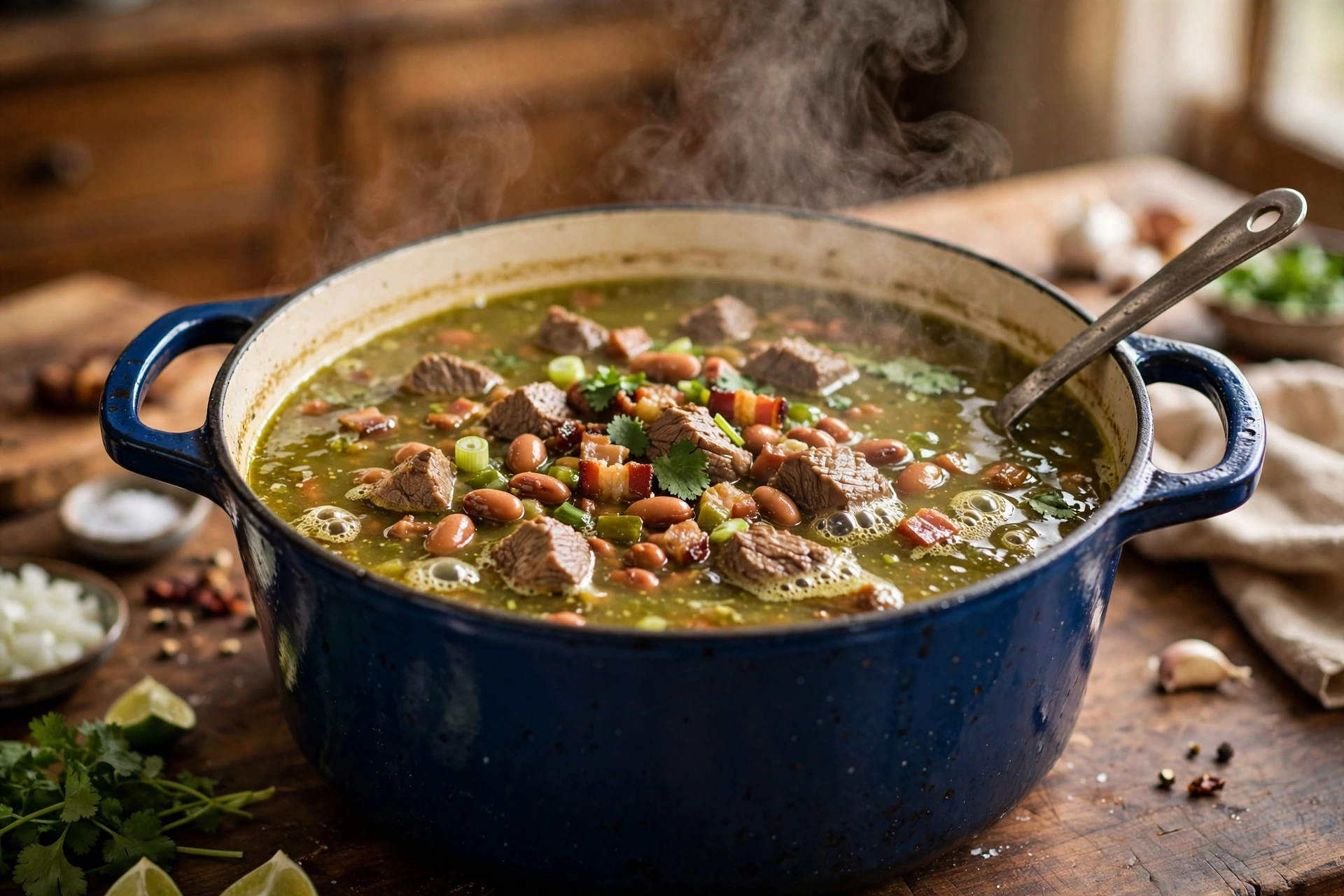
4Step 4: Blend the Sauce and Simmer
Blend the sauce and simmer. Put the drained tomatillos, serranos, garlic, onion, half the cilantro, cumin, and salt in a blender with the reserved 1/2 cup of cooking water. Blend until smooth. Pour the sauce into the pot with the beef, then stir in the 4 cups of water and the chicken bouillon. Bring it to a boil, then cover and simmer 30 minutes until tender.
5Step 5: Stir in the Beans
Stir in the beans. Add the drained pinto beans and half of the crisped bacon to the pot. Simmer for 5 more minutes, just until the beans are heated through. Taste and add more salt if needed.
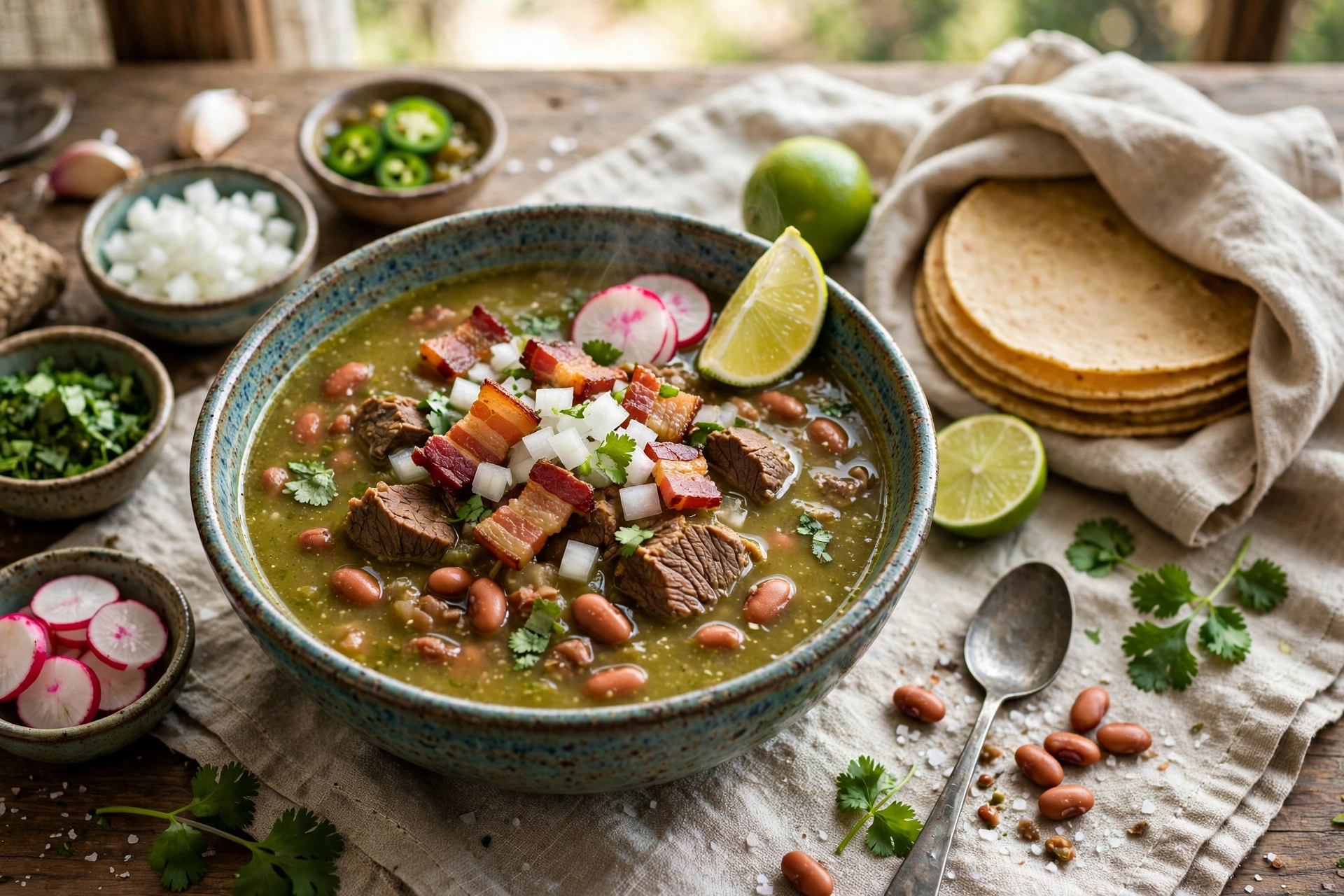
6Step 6: Serve with Toppings
Serve with toppings. Ladle the carne en su jugo into wide bowls. Top each bowl with the remaining crisp bacon, diced onion, chopped cilantro, and sliced radishes. Serve with lime wedges and warm homemade corn tortillas.
Technique: Cooking the Beef in Its Own Juices
The name of the dish is also its hardest step, so it deserves a closer look. Most beef recipes tell you to sear the meat hard, in batches, with space between the pieces. Carne en su jugo asks for the opposite — sear it the usual way and you lose the dish.
Let the Juices Do the Work
Add all the beef to the pot at once, over medium heat, in the bacon fat. The cubes will crowd together, steam a little, and start releasing their liquid. That liquid is not a mistake to boil off. It mixes with the bacon fat, carries the salt and pepper deep into the meat, and becomes the base of the broth once the tomatillo sauce joins it. Stir now and then so the bottom pieces do not stick. After about 8 minutes, the meat should look mostly brown with a generous pool of juice in the pot. That pool is your signal to move on.
When to Add the Sauce
Pour the blended tomatillo sauce in only after the beef has released its juices. If the sauce goes in too early, it boils the beef instead of letting it cook in its own liquid, and the meat turns rubbery. If it goes in too late, the beef dries out in the pot. The right moment is when the cubes are browned on the outside, still pink in a few spots, and sitting in their own juices.
Getting the Sauce Texture Right
A good tomatillo sauce for this dish is completely smooth and pourable, like a thin salsa verde. If your blender leaves flecks of tomatillo skin, blend for another 30 seconds. If the sauce tastes too tart, the fix is a pinch of sugar, not more salt. Taste the sauce first and add 1/2 teaspoon of sugar if it puckers your mouth.
Tips for the Best Carne en su Jugo
- ✔ Cut the beef small and even. Half-inch cubes cook through in the 30-minute simmer. Bigger chunks stay chewy in the middle, and uneven pieces cook at different speeds.
- ✔ Do not drain the bacon fat. Every spoonful of that fat carries smoky flavor into the beef and the broth.
- ✔ Keep the heat at medium, not high. High heat boils the juices away before the beef can cook in them. Medium heat lets the liquid build up and keeps the meat tender.
- ✔ Simmer the tomatillos until they are truly soft. Undercooked tomatillos blend into a grainy sauce with a raw, sour bite.
- ✔ Season at the end, not just the start. The beans and the extra water dilute the seasoning, so taste after the beans go in and add salt then.
- ✔ Save some bacon for the top. Half the bacon goes into the pot and half stays crisp for garnish. If all of it goes in early, it turns soft and you lose the crunch.
Variations
Spicy Carne en su Jugo
Use 3 serrano chiles instead of 2, and leave all the seeds in. For real heat, add 1 jalapeno to the blender with the tomatillos. Serve with extra lime, because the acid helps the heat feel bright instead of harsh.
Mild Carne en su Jugo
Use 1 jalapeno instead of the serranos, and remove all the seeds and white ribs. The sauce keeps its green color and tang, but the heat drops to almost nothing — a good choice when kids are at the table.
Slow-Cooker Carne en su Jugo
Crisp the bacon and cook the beef in its juices on the stove first, then move everything — beef, sauce, water, bouillon, and beans — to a slow cooker. Cook on low for 4 hours or on high for 2 hours.
Carne en su Jugo with Chuck Roast
Swap the sirloin for 2 pounds of beef chuck cut into 1/2-inch cubes. Chuck has more connective tissue, so it needs a longer simmer — about 50 minutes instead of 30 — but the payoff is a deeper, beefier broth.
Creamy Avocado Carne en su Jugo
Serve each bowl with sliced or diced avocado on top, the way many Guadalajara restaurants do. The avocado melts a little into the hot broth and makes each spoonful richer.
What to Serve With Carne en su Jugo
Carne en su jugo is a complete meal in a bowl, but the sides around it are half the pleasure. Start with homemade corn tortillas — warm, soft, and made for scooping up the broth. A topping bar is the real star: small bowls of diced onion, chopped cilantro, sliced radishes, lime wedges, and avocado, so each person builds their bowl their way. If you want a second dish on the table, frijoles charros echo the bean-and-bacon flavors in a different form, and a crisp cabbage slaw with lime and salt cuts through the richness. A spoonful of salsa verde on the side adds extra tang for anyone who wants more.
Storage
In the Fridge
Let the carne en su jugo cool completely, then store it in an airtight container for up to 5 days. Keep the toppings separate — onion, cilantro, radish, and lime stay fresh in their own containers, and the bacon stays crisp in a paper towel-lined bag.
Reheating
Reheat it gently on the stove over medium heat until it simmers, about 5 to 8 minutes. Add a splash of water or beef broth if the sauce has thickened in the fridge. The microwave works in a pinch — heat in 1-minute bursts, stirring between each, until it is hot all the way through.
In the Freezer
Carne en su jugo freezes well for up to 3 months. Cool it completely, then pack it in freezer bags or containers with the air pressed out. Thaw overnight in the fridge, then reheat on the stove as above.
Frequently Asked Questions
What is carne en su jugo?
Carne en su jugo means “meat in its own juices” in Spanish. It is a traditional Mexican beef soup from Jalisco, made with small cubes of beef cooked in the liquid they release, simmered in a tangy tomatillo sauce with pinto beans, and topped with crispy bacon, onion, cilantro, radishes, and lime. It comes from Guadalajara, the capital of Jalisco.
What cut of beef is best for carne en su jugo?
Top sirloin is the best all-round choice — lean, tender, and quick to cook in a 30-minute simmer. Flank steak works too and gives a beefier bite, while beef chuck makes a richer broth but needs about 50 minutes of simmering to turn tender.
Is carne en su jugo spicy?
It is mildly spicy. Two serrano chiles give a warm kick that most people find pleasant. For a mild pot, use 1 jalapeno with the seeds removed. For a spicy pot, use 3 serranos with the seeds left in.
What is the difference between carne en su jugo and caldo de res?
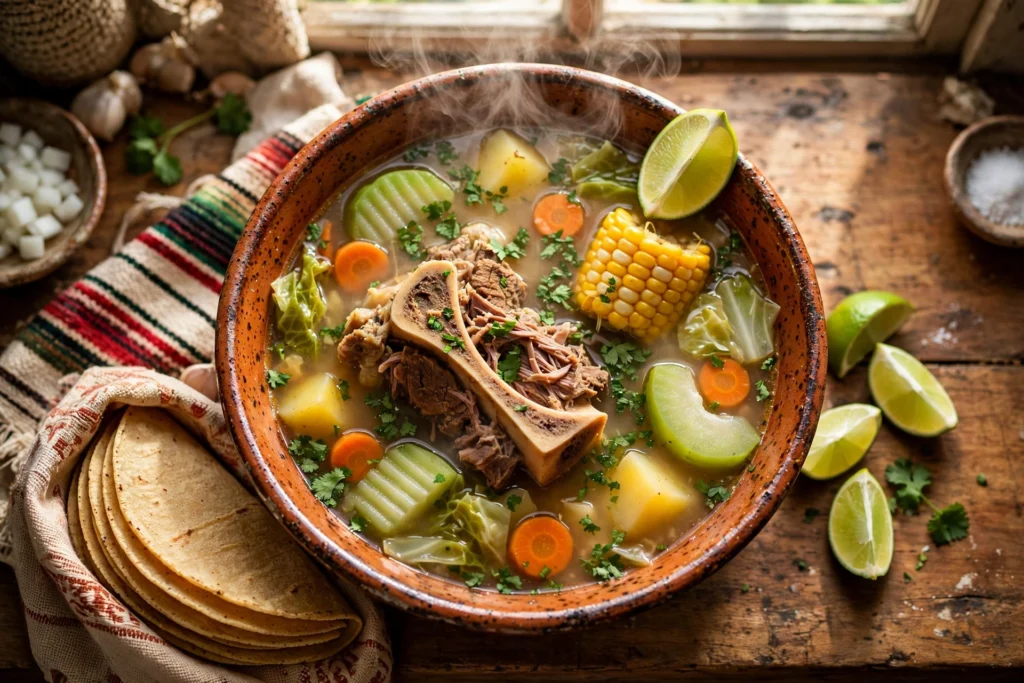
Both are Mexican beef soups, but they are built differently. Carne en su jugo cooks small beef cubes in their own juices with a tomatillo sauce, bacon, and beans. Caldo de res is a clearer beef broth soup with large pieces of beef, bone, and vegetables like cabbage, carrot, and corn.
Can I make carne en su jugo in a slow cooker?
Yes. Crisp the bacon and cook the beef in its own juices on the stove first — that step needs the direct heat of a pot. Then move everything to a slow cooker with the sauce, water, bouillon, and beans, and cook on low for 4 hours or on high for 2 hours.
Why is my carne en su jugo sauce too tart?
Tomatillos vary in acidity, and some batches are much sharper than others. Taste the sauce before it goes into the pot, and stir in 1/2 teaspoon of sugar if it puckers your mouth. The sugar does not make the dish sweet — it just rounds off the tang.
Try These Next
- Caldo de Res — a clear, brothy Mexican beef soup with vegetables, the gentler cousin of this dish.
- Carne Adovada — slow-cooked pork in red chile sauce, another deeply savory Mexican meat dish.
- Barbacoa — tender, slow-cooked beef for tacos, from the same Jalisco family of flavors.
- Ground Beef Tacos — quick weeknight tacos that use up leftover beef beautifully.
- Frijoles Charros — smoky cowboy beans with bacon, the perfect side for this soup.
- stuffed pepper soup
- slow cooker brisket
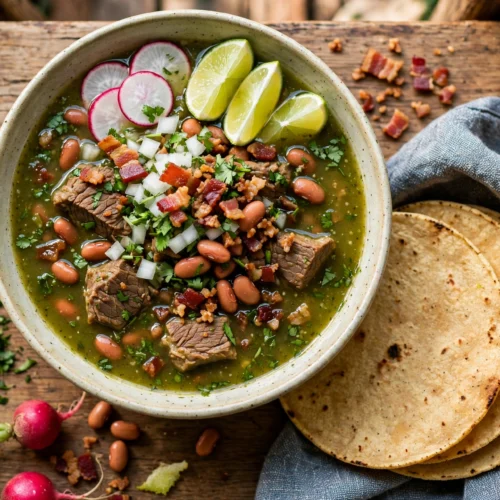
Carne en su Jugo
Ingredients
For the tomatillo sauce
- 8 tomatillos husks removed and rinsed
- 2 serrano chiles stems removed
- 4 garlic cloves peeled
- 1/2 white onion roughly chopped
- 1 cup fresh cilantro roughly chopped
- 1 teaspoon ground cumin
- 1 teaspoon kosher salt
For the carne en su jugo
- 8 slices bacon chopped
- 2 pounds top sirloin steak cut into 1/2-inch cubes
- 1 teaspoon kosher salt plus more to taste
- 1/2 teaspoon black pepper
- 2 tablespoons chicken bouillon powder
- 4 cups water
- 2 15-ounce cans pinto beans, drained and rinsed
To serve
- Diced white onion
- Chopped cilantro
- Thinly sliced radishes
- Lime wedges
- Warm corn tortillas
Instructions
- Put the tomatillos, serrano chiles, garlic, and onion in a medium saucepan and add just enough water to cover. Bring to a boil, then simmer 10 minutes until the tomatillos are dull green and very soft. Drain, reserving 1/2 cup of the cooking water.
- Cook the chopped bacon in a large Dutch oven over medium heat for 8 to 10 minutes until crisp. Remove with a slotted spoon and set aside on a paper towel-lined plate, leaving the fat in the pot.
- Season the beef cubes with salt and pepper and add them all to the pot at once. Cook over medium heat for about 8 minutes, stirring now and then, until mostly browned and a pool of juice has formed.
- Blend the drained tomatillos, serranos, garlic, onion, half the cilantro, cumin, and salt with the reserved 1/2 cup cooking water until completely smooth. Pour into the pot, stir in the water and chicken bouillon, bring to a boil, then cover and simmer 30 minutes until the beef is tender.
- Stir in the pinto beans and half of the crisped bacon. Simmer 5 more minutes until heated through. Taste and add more salt if needed.
- Ladle into bowls and top with the remaining bacon, diced onion, cilantro, and radishes. Serve with lime wedges and warm corn tortillas.
Notes
- Cut the beef into even 1/2-inch cubes so every piece cooks at the same speed.
- Do not turn the heat up high while the beef cooks — the juices need medium heat to build up.
- Simmer the tomatillos until they are dull green and collapse under a spoon, or the sauce will taste raw and grainy.
- If the sauce tastes too tart, stir in 1/2 teaspoon of sugar before it goes into the pot.
- Save half the bacon for garnish so it stays crisp on top.
- Leftovers keep 5 days in the fridge and freeze well for up to 3 months; add fresh toppings when serving.