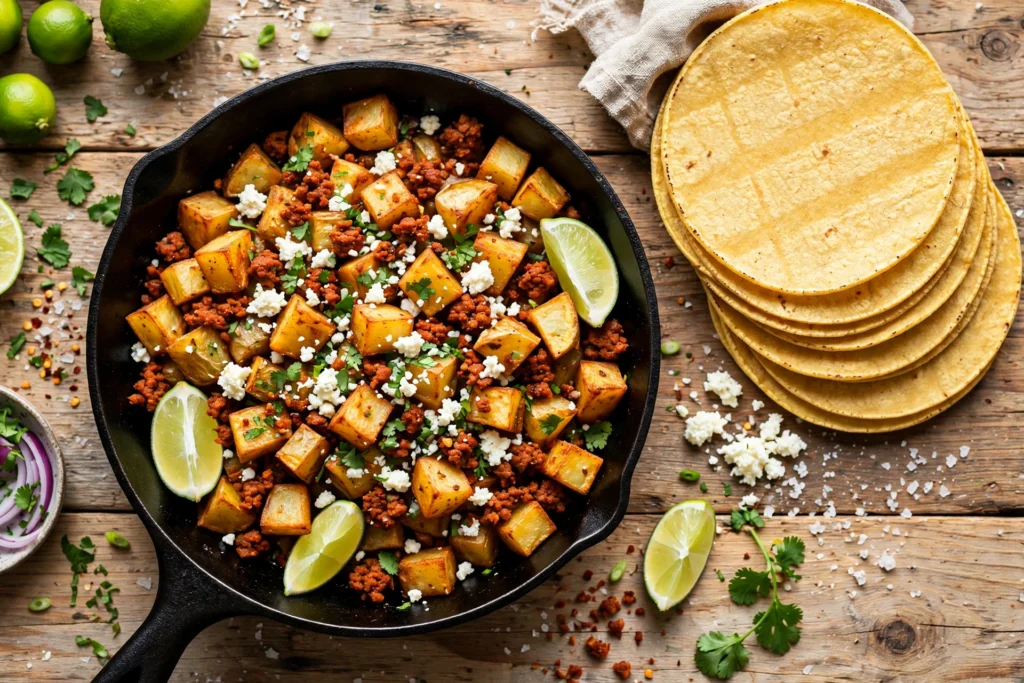
Carne adovada is the dish that makes a whole house smell like New Mexico. Tender chunks of pork shoulder soak overnight in a smooth red chile sauce. Then they bake low and slow until they fall apart with a spoon. The sauce is deep, earthy, and just spicy enough. And the best part? Most of the work happens while the pork rests in the fridge. You just wait, then bake.
Why You’ll Love It
- Deep red chile flavor. Dried ancho, guajillo, and pasilla chiles blend into a silky sauce. It tastes smoky, earthy, and rich.
- Overnight marinade does the work. The pork cures in the sauce while you sleep. As a result, the flavor goes all the way through the meat.
- Hands-off oven bake. Once the pot goes in the oven, you can relax for 2 1/2 hours. No stirring, no watching.
- Spoon-tender pork. Pork shoulder turns soft and juicy after the long, slow bake. It shreds with a fork.
- Feeds a crowd. One pot makes 6 big servings. It also stretches well for tacos or burritos the next day.
- Freezer friendly. The finished dish freezes well for up to 3 months. So it is a great make-ahead dinner.
- Real New Mexico comfort food. This is the classic red chile pork of New Mexico. It tastes like a special occasion, but it uses simple pantry ingredients.
Ingredients
For the Red Chile Sauce
- 6 dried ancho chiles — Anchos are the heart of the sauce. They bring a rich, sweet, slightly raisiny base with mild heat. Stem and seed them before use.
- 6 dried guajillo chiles — Guajillos add a brighter, fruitier note and a little more heat. They balance the sweet anchos well.
- 2 dried pasilla chiles — Pasillas add a deep, dark, almost chocolatey note. They give the sauce extra depth. If you cannot find them, use 2 more anchos instead.
- 6 cloves garlic — Garlic gives the sauce its savory backbone. Use fresh cloves, not jarred, for the best flavor.
- 1 small yellow onion, quartered — The onion blends right into the sauce. It adds sweetness and body. A white onion works too.
- 2 tablespoons apple cider vinegar — Vinegar brightens the chiles and cuts the richness of the pork. Apple cider vinegar tastes softer than white vinegar here.
- 1 tablespoon honey — Honey softens the heat and helps the chile flavor pop. Brown sugar works as a swap.
- 1 1/2 teaspoons dried Mexican oregano — Mexican oregano tastes earthy and citrusy. It is different from Greek oregano, so use the Mexican kind if you can.
- 1 1/2 teaspoons ground cumin — Cumin adds warmth and a smoky note. It ties the chiles together.
- 1 teaspoon kosher salt, plus more to taste — Salt wakes up the chile flavor. You will adjust it at the end.
- 2 dried bay leaves — Bay leaves go into the pot while the pork bakes. They add a quiet, herbal depth. Fish them out before serving.
For the Pork and Braise
- 3 pounds boneless pork shoulder, cut into 1 1/2-inch chunks — Pork shoulder is the right cut here. It has enough fat to turn melt-in-your-mouth tender. Leaner cuts like loin will dry out, so skip them.
- 2 tablespoons vegetable oil, divided — Oil is for searing the pork. A neutral oil works best. You will use it in two batches.
- 1 medium yellow onion, chopped — This onion cooks in the pot drippings. It builds a sweet, savory base under the pork.
- 1 cup low-sodium chicken broth, plus more as needed — Broth thins the sauce to the right pour. Water works too, but broth adds more flavor.
- Fresh cilantro and lime wedges, for serving — Cilantro and lime are the fresh finish. They lift the rich sauce right at the table.
How to Make Carne Adovada
1 Step 1: Prep the Chiles and the Pork
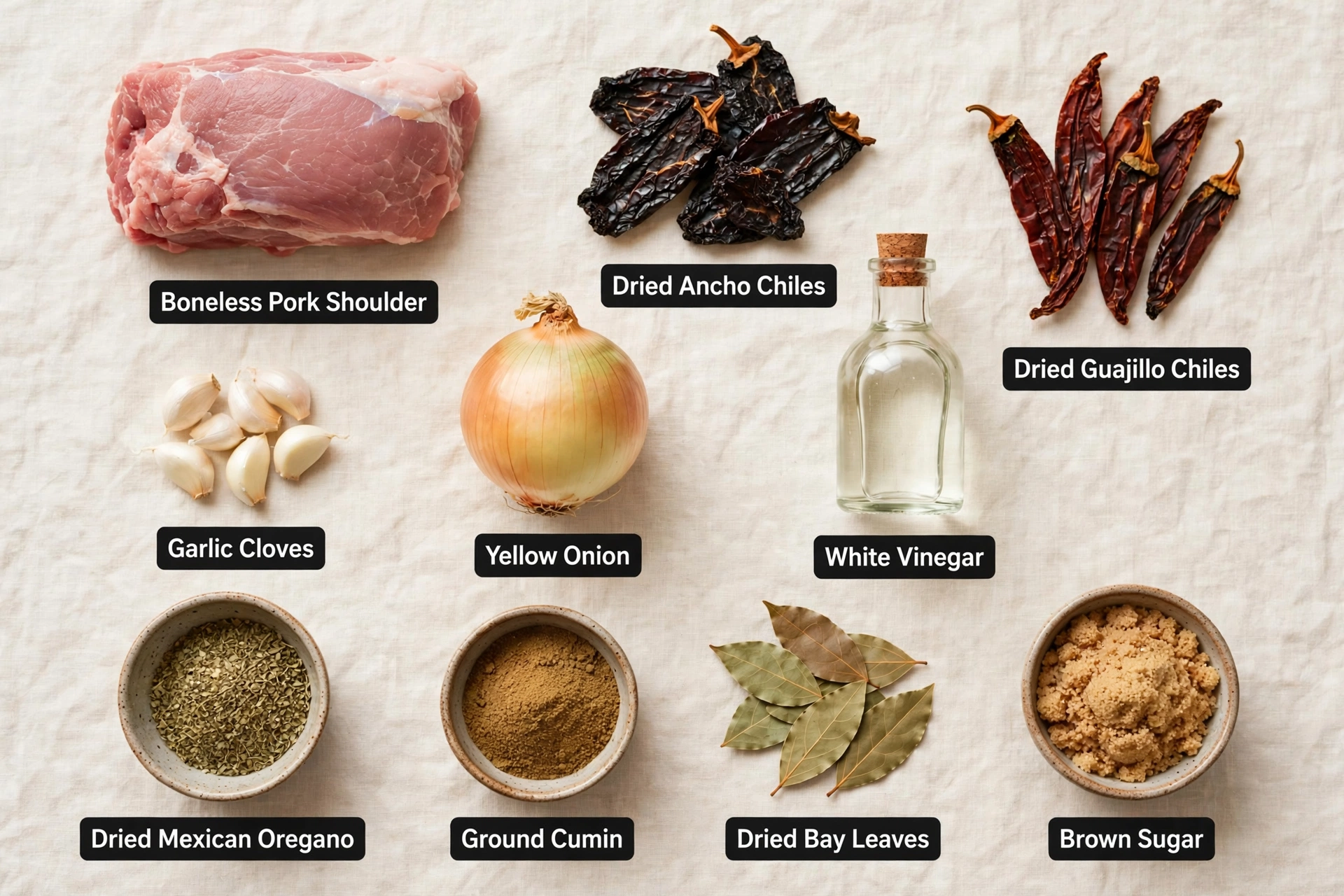
First, stem and seed the dried chiles. Tear them into rough pieces with your hands. Then cut the pork shoulder into 1 1/2-inch chunks. Pat the pork dry with paper towels. Dry pork sears much better than wet pork. Set both aside while you heat the pan.
Step 1 photo: flat-lay image above. Caption: Everything you need for carne adovada — dried chiles, pork shoulder, garlic, onion, and spices.
2 Step 2: Toast, Soak, and Blend the Sauce
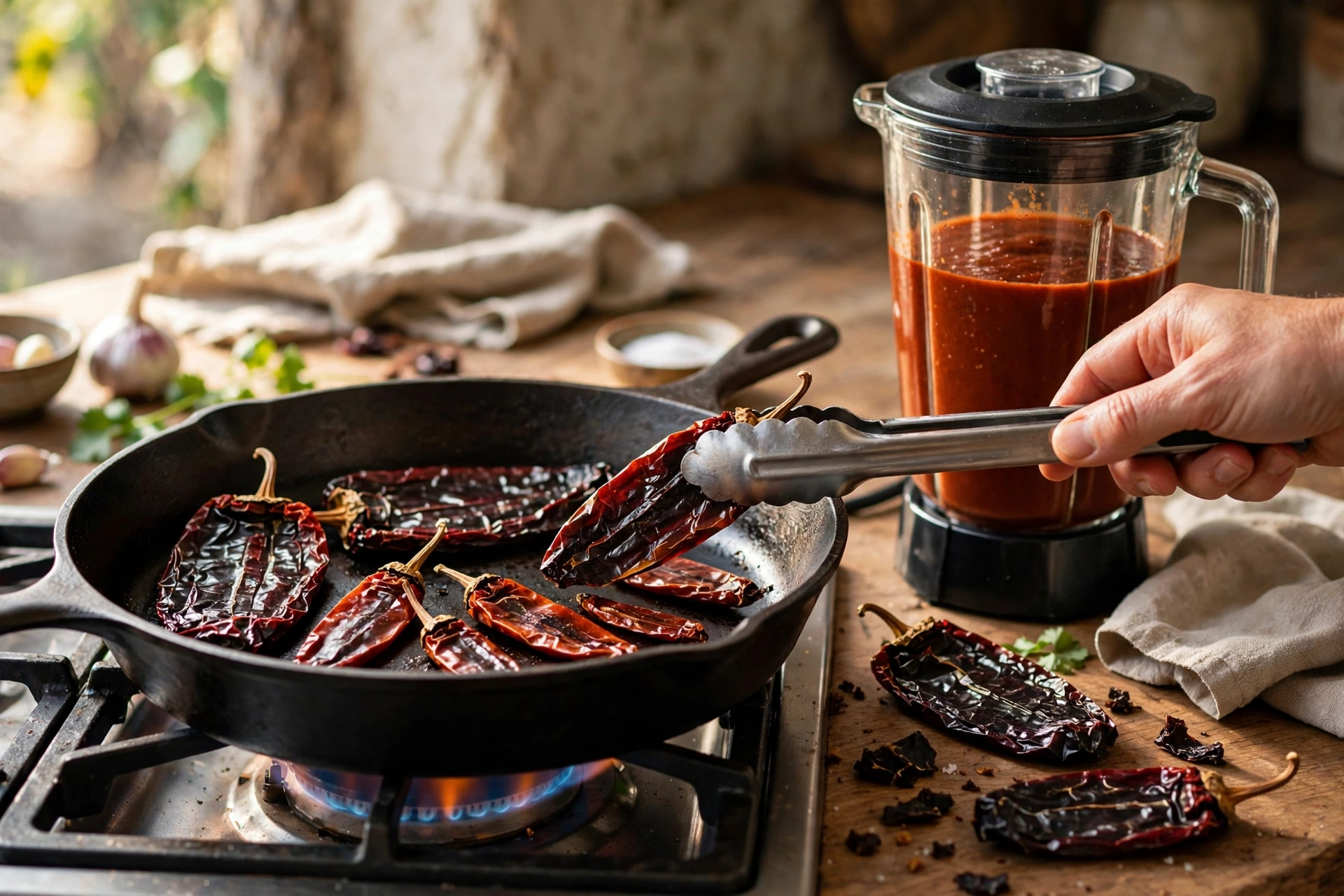
Heat a dry skillet over medium heat. Add the torn chiles and toast them for 1 to 2 minutes. Stir often until they smell fragrant. Do not walk away here. Chiles turn bitter fast if they toast too long. Next, move the chiles to a pot with the bay leaves. Cover them with water and bring it to a boil. Then take the pot off the heat and let the chiles soak for 10 minutes.
After that, lift the soft chiles into a blender with a slotted spoon. Add 2 cups of the soaking water, the garlic, the quartered onion, vinegar, honey, oregano, cumin, and salt. Blend until the sauce is fully smooth. Finally, pour it through a fine-mesh sieve into a bowl. Press with a spoon to push the sauce through. The strained sauce should pour like heavy cream.
Step 2 photo: step image 1 (toasting chiles + blender of red sauce). Caption: Toast the chiles just until fragrant, then blend them into a smooth red sauce.
3 Step 3: Marinate the Pork Overnight
Put the pork chunks in a large bowl or straight into your Dutch oven. Pour the strained chile sauce over the pork. Turn the pieces until every cube is coated. Cover the pot tightly and refrigerate for at least 8 hours, or overnight. In fact, a full 24 hours is even better. The long marinade is what drives the chile flavor deep into the meat. This is the traditional New Mexican cure. It is also the step that makes this recipe different from a quick simmered version.
Step 3 photo: step image 1 (same image). Caption: Coat every piece of pork in the sauce, then let it cure in the fridge overnight.
How to Make Carne Adovada (continued)
4 Step 4: Sear and Bake Low and Slow
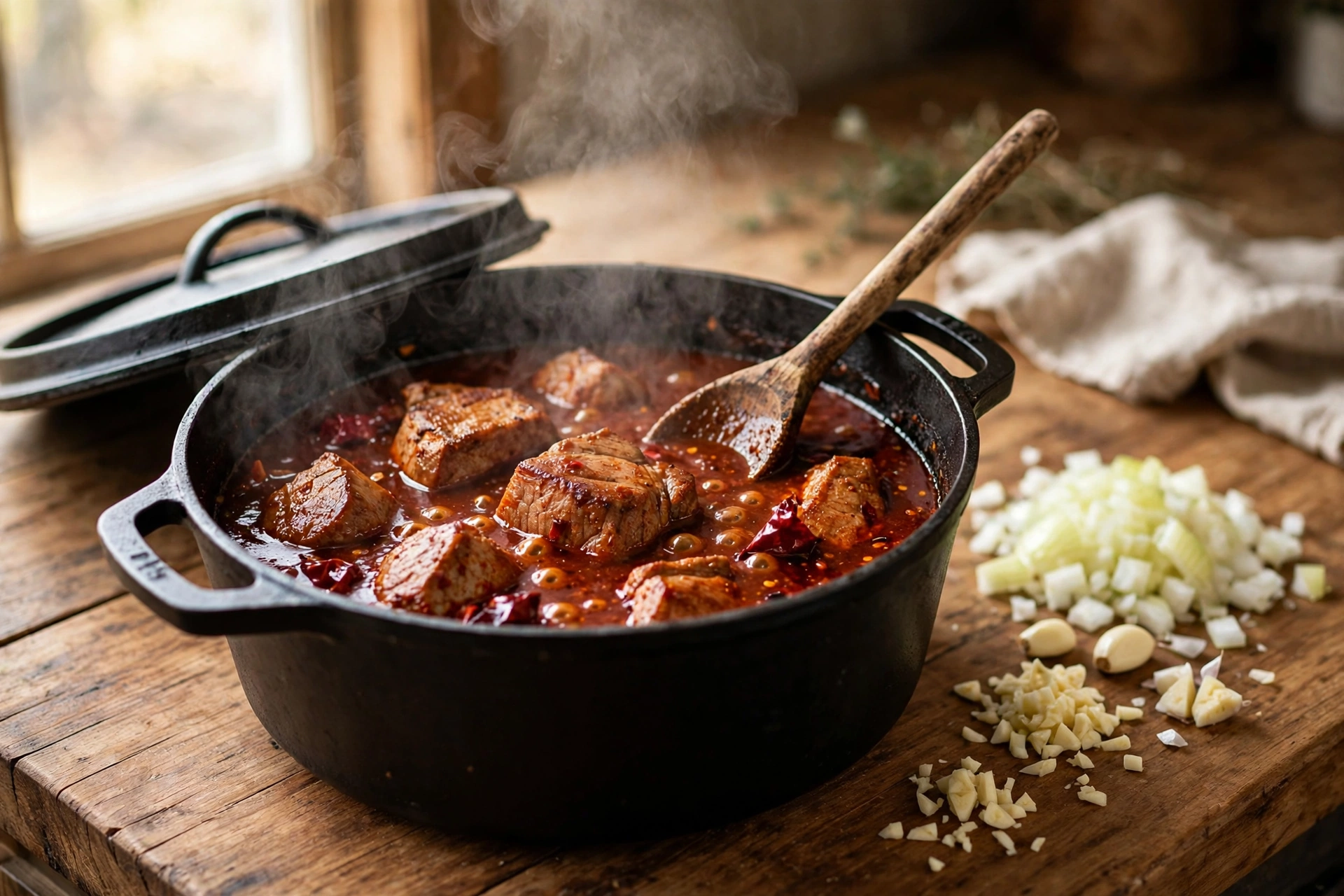
Take the pot out of the fridge 30 minutes before cooking so it is not ice cold. Heat the oven to 325°F. Lift the pork out of the sauce with tongs and set it aside. Heat 1 tablespoon of oil in the Dutch oven over medium-high heat. Sear half the pork until browned on the outside, about 2 to 3 minutes per side. Move it to a plate and repeat with the rest. Then add the chopped onion to the pot and cook for 4 to 5 minutes. Scrape up the brown bits from the bottom as you go. Those bits are pure flavor.
Next, return the pork to the pot and pour in the sauce and the chicken broth. Stir it all together. Bring it to a gentle boil, then cover with the lid and bake for 2 1/2 hours. Stir once halfway through. The pork is done when it falls apart with a fork.
Step 4 photo: step image 2 (pork simmering in red sauce in a Dutch oven). Caption: Sear the pork first, then bake it low and slow until spoon-tender.
5 Step 5: Rest and Serve
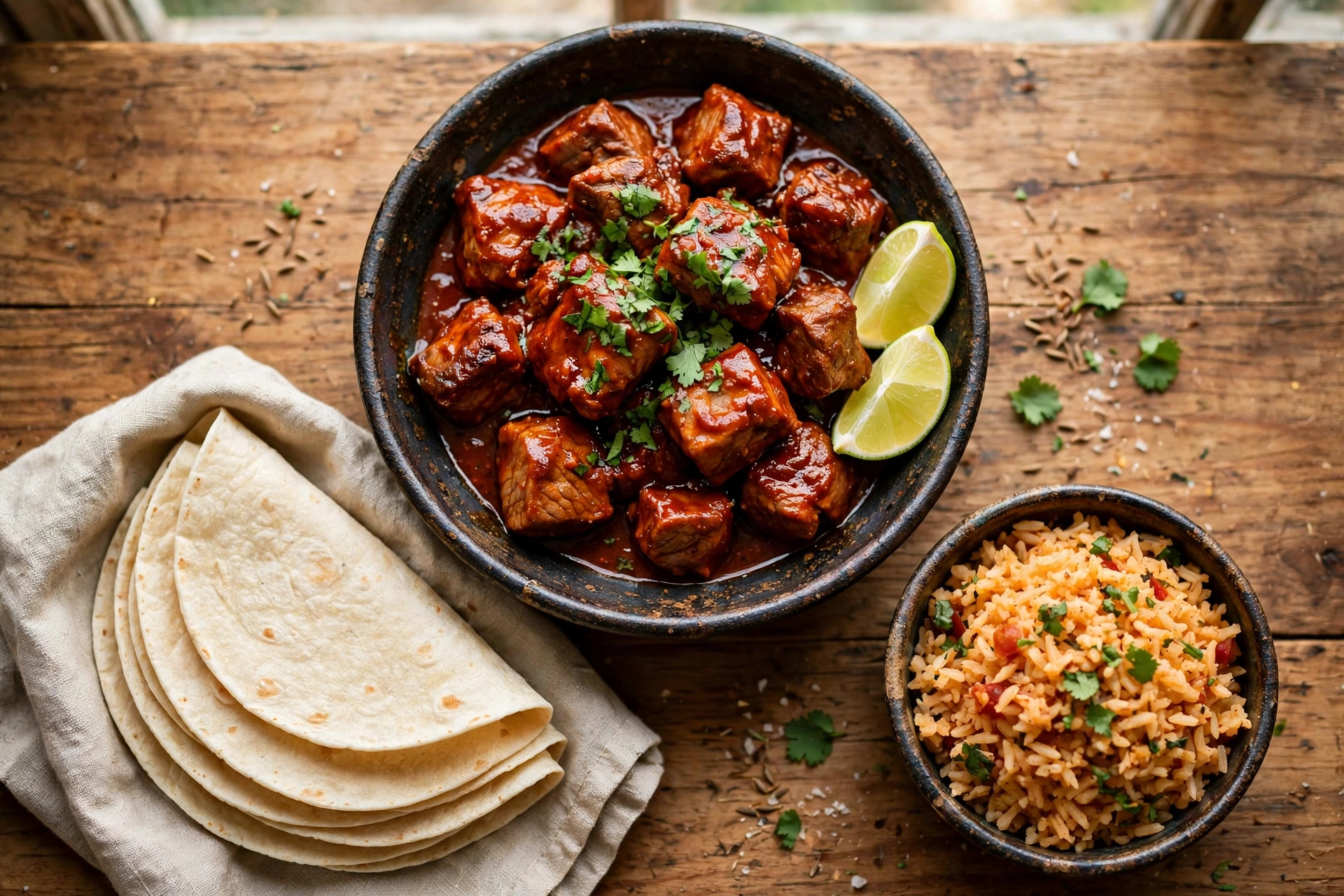
Take the pot out of the oven and let it rest for 10 minutes with the lid on. Then taste the sauce and add salt if it needs it. Fish out the bay leaves and throw them away. Serve the pork in bowls with plenty of sauce. Top each bowl with chopped cilantro and lime wedges. Add warm flour tortillas and rice on the side. The sauce is so good that you will want something to mop it up with.
Step 5 photo: hero image. Caption: Spoon-tender carne adovada in red chile sauce, ready for tortillas and rice.
Technique: The Overnight Marinade
Why the Marinade Matters
The overnight marinade is the soul of this dish. In New Mexico, cooks cure the pork in red chile sauce for a full day before it ever sees heat. During those hours, the sauce works its way into the meat. The salt and vinegar gently season the pork all the way through. The chile flavor sinks in deep instead of sitting on the surface. As a result, every bite tastes like red chile, not just the outside. A quick simmer cannot do the same job. So plan ahead by one night. The payoff is huge for almost no extra effort.
How to Get the Silkiest Sauce
A smooth sauce is what sets great carne adovada apart. First, toast the chiles lightly. If they scorch, the sauce turns bitter, and no amount of honey will fix it. So keep the heat at medium and stir the whole time. Second, soak the chiles until they are fully soft. Stiff chiles will not blend smooth. Third, blend the sauce for a full 1 to 2 minutes on high. Then strain it. The sieve catches skins and seeds that the blender misses. What comes through is a sauce that pours like heavy cream and coats the pork like velvet. Finally, keep the bake gentle. A hard boil will toughen the pork. A low oven at 325°F is the sweet spot.
Why the Oven Wins
The oven beats the stovetop for this dish. First, the heat wraps around the whole pot at once. The pork cooks evenly from every side. On the stove, the bottom can scorch while the top stays cool. Second, the oven needs no stirring. You can walk away for two hours and come back to perfect pork. Third, the lid traps steam inside the pot. That steam keeps the sauce from drying out. As a result, the pork stays juicy and the sauce stays rich. If you do use the stove, keep the flame as low as it will go. And stir the pot every 30 minutes so nothing sticks. But the oven is the easier path. It is also the more forgiving one.
Tips
- Do not skip the sear. Browning the pork adds a deep, savory layer that the sauce alone cannot give. Work in batches so the pot stays hot.
- Wear gloves for the chiles. Dried chiles can sting your hands and eyes. Gloves make the prep easy and painless.
- Control the heat. For a milder dish, use fewer guajillo chiles and leave the seeds out. For more heat, add 1 or 2 dried chiles de árbol to the blend.
- New Mexico chiles are the gold standard. If you can find dried New Mexico red chiles, swap them in for some or all of the ancho and guajillo chiles.
- Let it rest. Ten minutes of rest lets the sauce settle and the pork relax. The meat stays juicier when you serve it.
- Save the extra sauce. Leftover sauce freezes well. Use it later for enchiladas, chilaquiles, or a quick pot of beans.
Variations
- Slow cooker carne adovada. Sear the pork and build the sauce on the stove first. Then move it all to a slow cooker and cook on LOW for 6 to 7 hours. Reduce the broth by 1/4 cup so the sauce does not turn watery.
- Spicier version. Add 2 dried chiles de árbol to the chile blend. They bring clean, sharp heat without changing the flavor much.
- Carne adovada burritos. Shred the finished pork and roll it into warm flour tortillas with rice, beans, and cheese. The sauce keeps the filling juicy.
- Carne adovada enchiladas. Use the shredded pork as an enchilada filling and spoon extra red sauce over the top before baking.
- Breakfast plates. Serve the pork with fried eggs, warm tortillas, and potatoes for a hearty New Mexico breakfast.
- Lighter cut. Pork shoulder is best, but boneless country-style ribs also work. They need about 30 minutes less in the oven.
- Green chile twist. For a New Mexico red-and-green plate, serve the pork next to a bowl of green chile sauce. The two sauces side by side are a local classic called Christmas style.
What to Serve With
Carne adovada loves simple sides that soak up the sauce. Warm flour tortillas are the classic partner. Cilantro Lime Rice is perfect under a spoonful of pork and sauce. Frijoles Charros adds smoky beans to the plate. For a fresh bite, add Guacamole and a little Salsa Macha on the side. And if you want a second slow-cooked favorite, Barbacoa makes a great taco night partner for this pork.
Storage
Let the carne adovada cool to room temperature first. Then move it to an airtight container with the sauce. It keeps in the fridge for 4 days. The flavor actually gets better on day two. For longer storage, freeze it for up to 3 months. Thaw it overnight in the fridge. Reheat it gently in a covered pot over low heat. Add a splash of broth if the sauce looks thick. Do not boil it hard when you reheat it. High heat can toughen the pork.
FAQ
What is carne adovada?
Carne adovada is a New Mexico dish of pork shoulder marinated in a smooth red chile sauce, then cooked low and slow until spoon-tender. The name means “marinated meat” in Spanish. It is one of the most loved dishes in New Mexican cooking.
What is the difference between carne adovada and carnitas?
Carne adovada is pork braised in a red chile sauce, so it is saucy and deeply flavored. Carnitas is pork slow-cooked in fat until crisp at the edges, with no sauce. Both use pork shoulder. But they taste very different. Carne adovada is smooth and chile-rich. Carnitas is rich, salty, and crisp.
Is carne adovada spicy?
It has a warm, gentle heat, but it is not fiery. Ancho chiles are mild and sweet. Guajillos add a little more kick. Most people find the heat pleasant, not painful. You can make it milder by using fewer guajillos. Or you can make it hotter with chiles de árbol.
How long should I marinate carne adovada?
Marinate the pork for at least 8 hours, or overnight. A full 24 hours is even better. The long cure is what drives the chile flavor deep into the meat. If you are short on time, even 4 hours helps. But do not skip the marinade completely. It is the heart of the dish.
Can I make carne adovada in a slow cooker?
Yes, you can. First, sear the pork and build the sauce on the stove. Then move it all to a slow cooker. Cook on LOW for 6 to 7 hours. Use 1/4 cup less broth so the sauce stays thick. The oven method gives a slightly richer sauce, but the slow cooker works well.
Can I use pork loin instead of pork shoulder?
You can, but the result will not be as good. Pork loin is lean, so it dries out during a long bake. Pork shoulder has fat woven through the meat. That fat melts slowly and keeps the pork juicy. If loin is all you have, cut the bake time to 1 1/2 hours. And check it early so it does not overcook.
What do you serve with carne adovada?
Serve it in a bowl with warm flour tortillas and rice. Cilantro, lime wedges, and chopped onion are the classic toppings. Beans and guacamole round out the plate. It also works as a filling for burritos, tacos, and enchiladas.
Try These Next
- Chile Colorado — beef simmered in a red chile sauce, a close cousin to this dish
- Pierna Adobada — another adobada favorite, a whole marinated leg roast
- Barbacoa — slow-cooked beef that shreds beautifully for tacos
- Pozole Rojo — a rich red chile soup with pork and hominy
- Caldo de Pollo — a light, comforting chicken soup for the day after
- Skirt Steak Tacos — quick grilled steak tacos with the same bold flavors
Carne Adovada (New Mexico Red Chile Pork)
Tender pork shoulder marinated overnight in a smooth red chile sauce, then baked low and slow until spoon-tender.Ingredients
Method
- Stem and seed the dried chiles, tear them into pieces, and cut the pork into 1 1/2-inch chunks. Pat the pork dry.
- Toast the chiles, soak them in hot water, then blend with garlic, onion, vinegar, honey, oregano, cumin, salt, and soaking water until smooth. Strain through a fine-mesh sieve.
- Pour the sauce over the pork, coat every piece, cover, and refrigerate at least 8 hours or overnight.
- Sear the pork in batches, cook the chopped onion, return the pork with sauce and broth, and bake covered at 325°F for 2 1/2 hours.
- Rest 10 minutes, taste and adjust salt, remove the bay leaves, and serve with cilantro, lime wedges, tortillas, and rice.
Notes
- Do not skip the sear. Browning the pork adds a deep, savory layer that the sauce alone cannot give. Work in batches so the pot stays hot.
- Wear gloves for the chiles. Dried chiles can sting your hands and eyes. Gloves make the prep easy and painless.
- Control the heat. For a milder dish, use fewer guajillo chiles and leave the seeds out. For more heat, add 1 or 2 dried chiles de árbol to the blend.
- New Mexico chiles are the gold standard. If you can find dried New Mexico red chiles, swap them in for some or all of the ancho and guajillo chiles.
- Let it rest. Ten minutes of rest lets the sauce settle and the pork relax. The meat stays juicier when you serve it.
- Save the extra sauce. Leftover sauce freezes well. Use it later for enchiladas, chilaquiles, or a quick pot of beans.