
Some Mexican dinners ask for almost nothing and give back everything. Barbacoa is one of them. A pot of beef chuck roast, slow-braised in a smoky dried-chile adobo until it falls apart at the touch of a fork, then piled into warm corn tortillas with onion, cilantro and lime. It takes about four hours from start to finish. And most of that time the oven does the work while you do very little at all.
In fact, the best part is the smell. As the beef braises, the guajillo and ancho chiles, the garlic, the cumin and the cloves fill the whole house with the warm, smoky scent of a Mexican taqueria. By the time you lift the lid, the meat is dark, glossy and shreddable, swimming in a rich red sauce that tastes like it cooked all day.
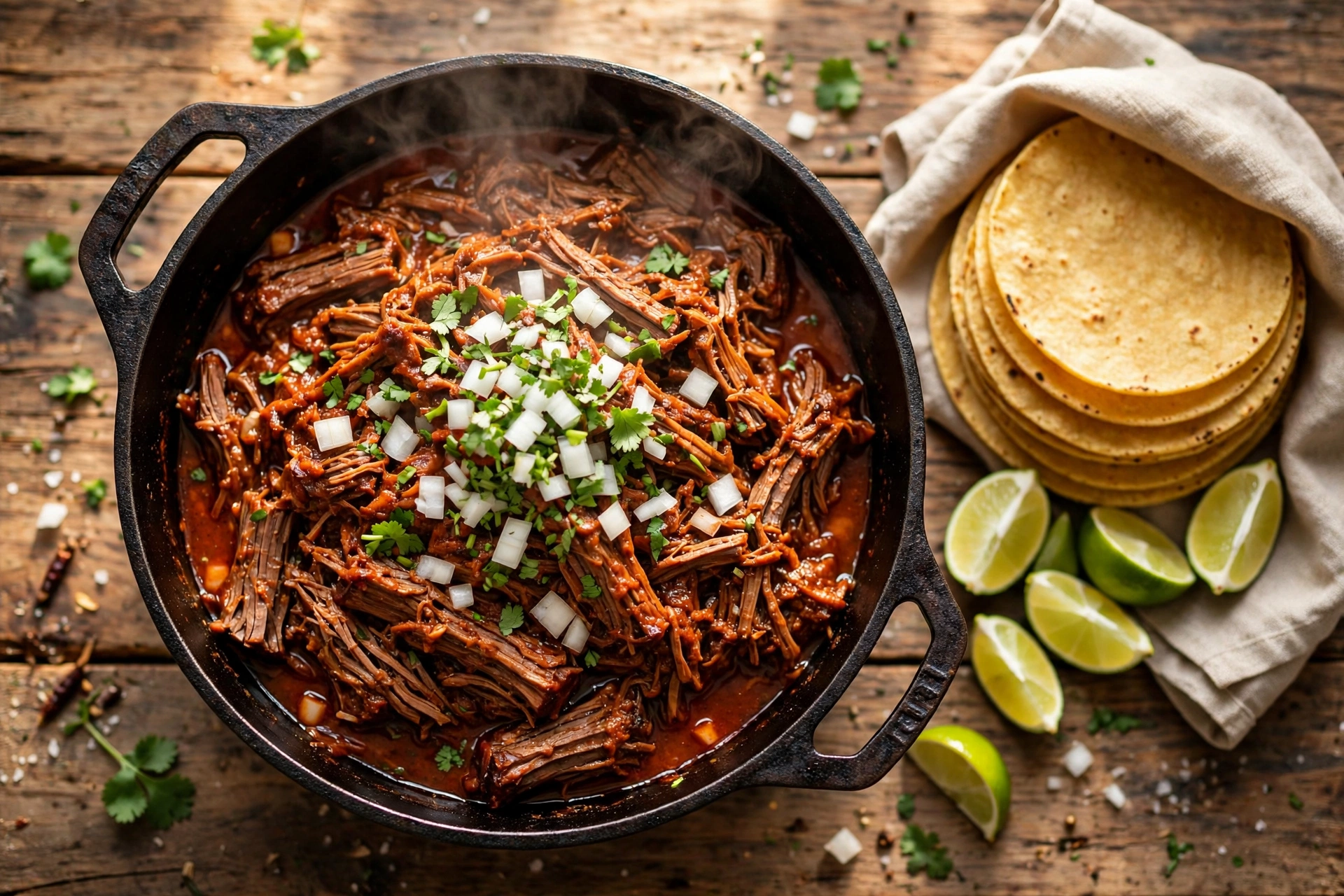
This beef barbacoa is the kind of dinner that feeds a crowd from one pot. Make it once and you will understand why Mexican families cook it for Sundays, parties and taco nights. If you love tender, smoky, fall-apart beef, this barbacoa will become the recipe you reach for first.
Why You’ll Love It
- A Mexican taco-night classic. Barbacoa is the slow-braised beef of Mexican taquerias all over Mexico — the filling for tacos, burritos, tortas and bowls.
- Mostly hands-off. The oven does the work. You sear, blend and braise, then walk away for three and a half hours.
- Fall-apart tender every time. Low, slow heat at 300°F breaks the beef down gently, so it shreds with two forks and never dries out.
- A smoky chile adobo, not a packet. Whole dried guajillo and ancho chiles, blended with garlic, cumin and clove, give a deep flavour no jar or packet can match.
- Feeds a crowd from one pot. One 3½-pound roast makes about 12 tacos — enough for a family dinner and plenty of leftovers.
- Leftovers get better. The shredded beef keeps for days and freezes beautifully, so one cook covers a week of tacos, bowls and burritos.
- Naturally gluten-free. Serve it in corn tortillas and the whole plate is gluten-free, exactly as it is.
What Is Barbacoa?
Barbacoa is slow-cooked Mexican meat, braised until it is so tender it shreds with a fork. The name comes from the old Caribbean word barbacoa, a wooden frame over a fire pit where meat was cooked low and slow. In Mexico, the tradition grew into pit cooking. Whole animals were wrapped in maguey leaves and buried with hot coals. Over time it became the pot-braised barbacoa most Mexican kitchens make today.
What is barbacoa made from? In central Mexico it is often lamb or goat. In the north, and in most Mexican restaurants in the United States, it is beef — usually chuck roast, sometimes beef cheek. Chuck roast is the cut this recipe uses. It is well marbled, affordable, and full of the connective tissue that turns to gelatin in a long, slow braise. That gelatin is what makes the shredded beef taste rich and silky instead of dry.
The Adobo Sauce
The sauce is an adobo. Dried guajillo and ancho chiles are toasted, soaked and blended with garlic, onion, cumin, clove, oregano, vinegar and citrus into a smooth, deep-red sauce. The beef braises in that sauce for hours at low heat, soaking up the smoky chile flavour as it softens. When it is done, the meat is shredded and tossed back into the sauce, so every strand is glossy and juicy.
Instead, this version is an oven barbacoa. The beef braises in a Dutch oven at 300°F — steady, even heat that a slow cooker cannot quite match. There is no beer in the braising liquid. Instead, fresh orange juice and lime juice brighten the rich sauce. And the finish is a quick broiler crisp, which gives the shredded beef browned, crunchy edges like the barbacoa from a good taco truck.
Ingredients
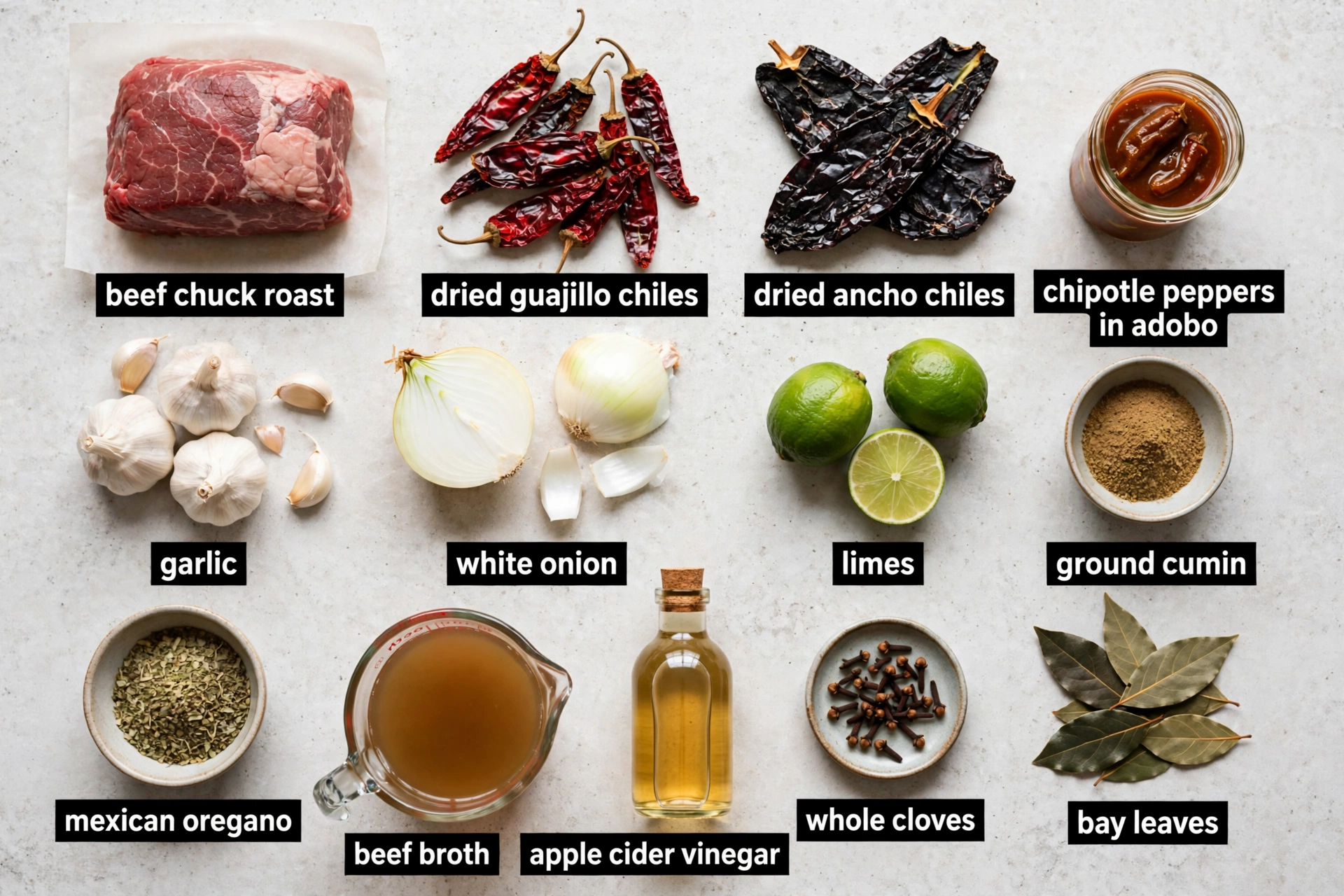
For the Beef:
Boneless beef chuck roast — 3½ pounds. Chuck roast is the best cut for barbacoa. It is well marbled, so the fat bastes the meat as it braises. And it is full of connective tissue that turns to gelatin in a long, slow cook. That gelatin is what makes the shredded beef rich and silky. Pick a roast with good marbling and a thick cap of fat. Beef cheek is the traditional alternative, and it is wonderful, but it is harder to find and costs more.
Kosher salt — 1½ teaspoons, plus more to taste. Salt is what makes the beef taste like itself. Season the chunks generously on all sides before searing. Then taste the sauce at the end and add more a pinch at a time. The braising liquid concentrates as it cooks, so season the finished beef, not the raw pot.
Black pepper — 1 teaspoon, freshly ground. Black pepper adds a warm, gentle heat behind the chiles. Freshly ground is best, since it tastes brighter than pepper that has sat in a jar for months. A teaspoon is enough — the chiles bring the real heat here.
Vegetable oil — 2 tablespoons. A neutral oil with a high smoke point is what you sear in. Vegetable oil or canola oil both work. You need just enough to coat the bottom of the Dutch oven. The beef releases its own fat as it browns, so do not add more oil than the recipe calls for.
For the Chile Adobo:
Dried guajillo chiles — 4, stemmed and seeded. Guajillo chiles are the fruity backbone of this adobo. They taste sweet, berry-like and mildly smoky, and they give the sauce its deep red colour. Tear them open, shake out the seeds, and pull off the stems. Look for chiles that are deep red and still a little flexible. Brittle, faded chiles are stale and taste dusty.
Dried ancho chiles — 2, stemmed and seeded. Ancho chiles are dried poblanos, and they bring a sweet, earthy, almost raisin-like depth. They are mild, so they add flavour without adding much heat. Two is the right number beside four guajillos. If you cannot find ancho, use two more guajillos, though the sauce will be fruitier and less earthy.
Chipotle peppers in adobo — 2, plus 1 tablespoon of the sauce. Chipotles are smoked jalapeños packed in adobo sauce, and they bring the smoky heat. Two peppers give a warm, noticeable kick. Use one for a mild barbacoa, or three for a fiery one. The spoonful of adobo sauce from the can adds extra smoke and tang.
Garlic — 5 cloves, peeled. Garlic adds the savoury depth that rounds out the chiles. Five cloves gives a bold but not overpowering garlic note. The cloves go into the blender raw, and the long braise mellows them completely.
White onion — 1, quartered. White onion is the Mexican choice for adobo. A whole onion, quartered, goes into the blender with the chiles. It adds sweetness and body to the sauce. Save a little extra diced onion for scattering over the finished tacos.
For the Seasoning:
Ground cumin — 2 teaspoons. Cumin is the warm, earthy spice that makes barbacoa taste like barbacoa. Two teaspoons is the right amount for a pot this size. Toast it in the dry skillet for 30 seconds first if you want an even deeper flavour.
Ground cloves — ¼ teaspoon. Cloves are the secret spice in a good barbacoa adobo. Just a quarter teaspoon adds a warm, almost sweet depth that you notice without being able to name it. Do not add more — cloves turn bitter fast.
Dried Mexican oregano — 1 teaspoon. Mexican oregano is earthier and more citrusy than the Mediterranean kind. Crush it between your palms as you add it. If you only have Mediterranean oregano, use half as much — it is stronger and mintier.
For the Bright Notes:
Apple cider vinegar — 3 tablespoons. Vinegar is the bright note that cuts through the rich beef. It also helps tenderise the meat as it braises. Apple cider vinegar is the best choice here, with a soft, fruity acidity. White distilled vinegar works too, though it is sharper.
Lime juice — ¼ cup, freshly squeezed. Lime juice goes into the adobo and brightens the whole sauce. Fresh lime is what makes the barbacoa taste alive. Bottled lime juice is a poor substitute here — it tastes flat and a little bitter.
Orange juice — ¼ cup, freshly squeezed. Orange juice is the Weekly Cuisine twist in this adobo. It adds a gentle sweetness and a citrus brightness that balances the smoky chiles. One orange, squeezed, gives about a quarter cup. It is a small amount, but you can taste it in the finished sauce.
Tomato paste — 1 tablespoon (optional). Tomato paste adds body and a little sweetness to the sauce. It is optional, but it helps the adobo cling to the shredded beef. If you skip it, the sauce will be a little thinner — still delicious.
For the Braising Liquid:
Low-sodium beef broth — 2 cups. Beef broth is the braising liquid that carries the adobo around the meat. Low-sodium is important, since the sauce concentrates as it cooks and salty broth turns too salty. Water works in a pinch, but broth gives a richer result.
Bay leaves — 2. Bay leaves add a quiet, herbal depth to the braise. Two leaves is enough. Fish them out before shredding — they are not meant to be eaten.
To Serve:
Corn tortillas — 12, warmed. Corn tortillas are the classic home for barbacoa. Warm them in a dry skillet or over a gas flame until soft and a little charred at the edges. Flour tortillas work too, but corn tastes more Mexican here.
Diced white onion — ½ cup. Diced raw onion is the classic barbacoa topping. It adds a fresh, sharp crunch against the rich beef. Dice it small, so every taco gets a little in every bite.
Chopped cilantro — ½ cup. Cilantro is the fresh, green finish over the beef. It adds colour and a bright herbal note. If you are one of the people who tastes cilantro as soapy, leave it out — the barbacoa is still excellent without it.
Lime wedges — 2 limes, cut into wedges. A squeeze of lime over the finished tacos wakes up every flavour. Set the wedges on the table so everyone finishes their plate the way they like it.
Crumbled cotija cheese — ½ cup (optional). Cotija is the salty, crumbly finish scattered over the top. It does not melt, it just adds a salty pop. Queso fresco does the same job.
How to Make It
1 Toast and Soak the Chiles
Heat a dry skillet over medium heat. Toast the guajillo and ancho chiles for 15 to 20 seconds per side, just until fragrant. Do not scorch them — burnt chiles taste bitter. Move the chiles to a bowl, cover with hot water, and soak for 15 to 20 minutes until soft and pliable. Then drain them.
 2 Blend the Adobo and Sear the Beef
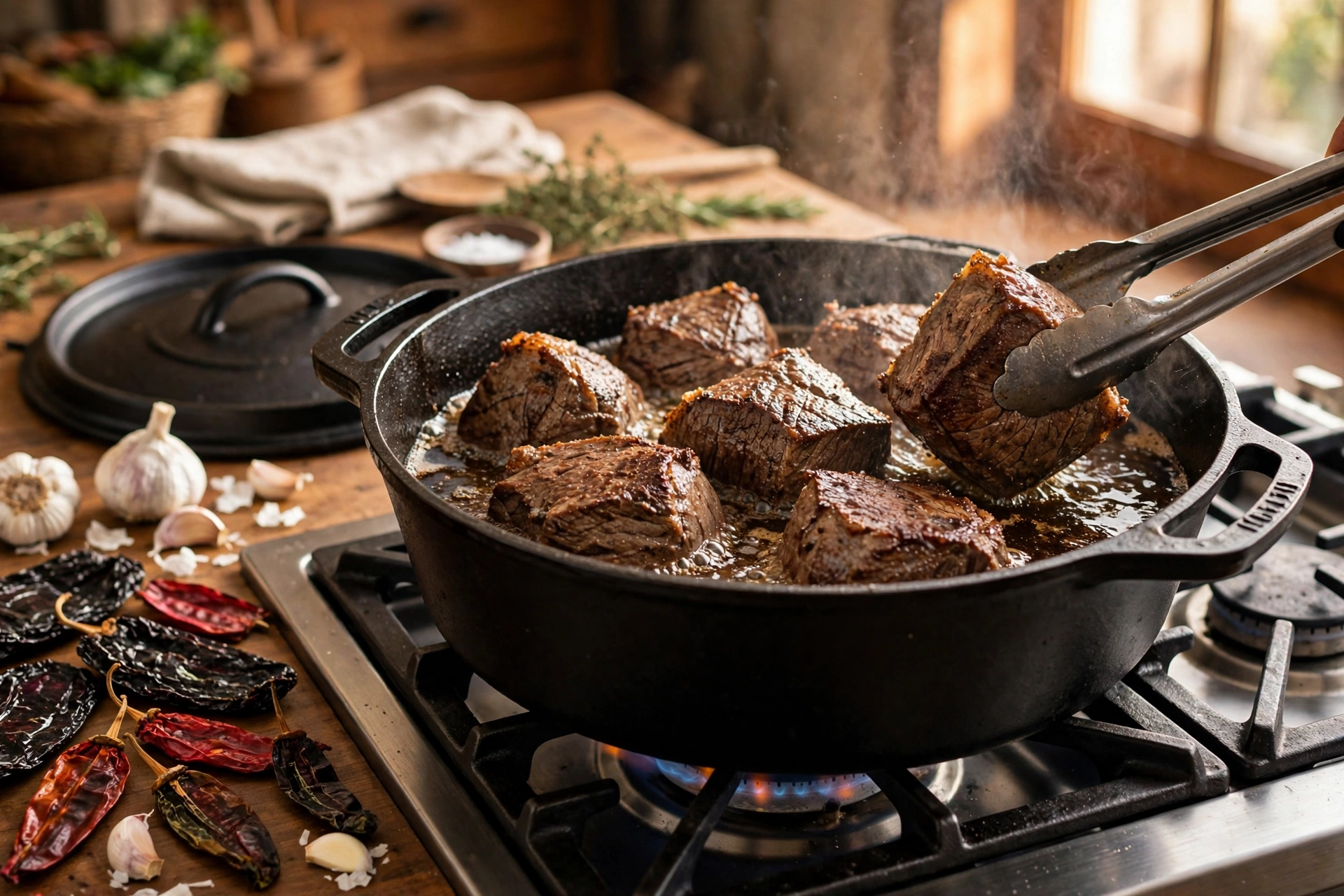
Add the drained chiles, chipotles and their sauce, garlic, onion, cumin, cloves, oregano, vinegar, lime juice, orange juice, tomato paste and 1 cup of the broth to a blender. Blend for 1 to 2 minutes until completely smooth. Meanwhile, cut the beef into 3-inch chunks. Season with salt and pepper. Sear in the Dutch oven with the oil over medium-high heat, 3 to 4 minutes per side, until deeply browned all over. Work in batches so the pieces brown instead of steaming.
3 Braise Low and Slow
Heat the oven to 300°F. Pour the blended adobo over the seared beef in the Dutch oven. Add the remaining 1 cup of broth and the bay leaves. Stir once, scraping up the browned bits from the bottom. Bring to a gentle simmer on the stove, then cover tightly and move the pot to the oven. Braise for 3 to 3½ hours, flipping the beef once halfway through, until it is fork-tender and shreds easily.
Shred and Finish:
 4 Shred and Toss in the Sauce
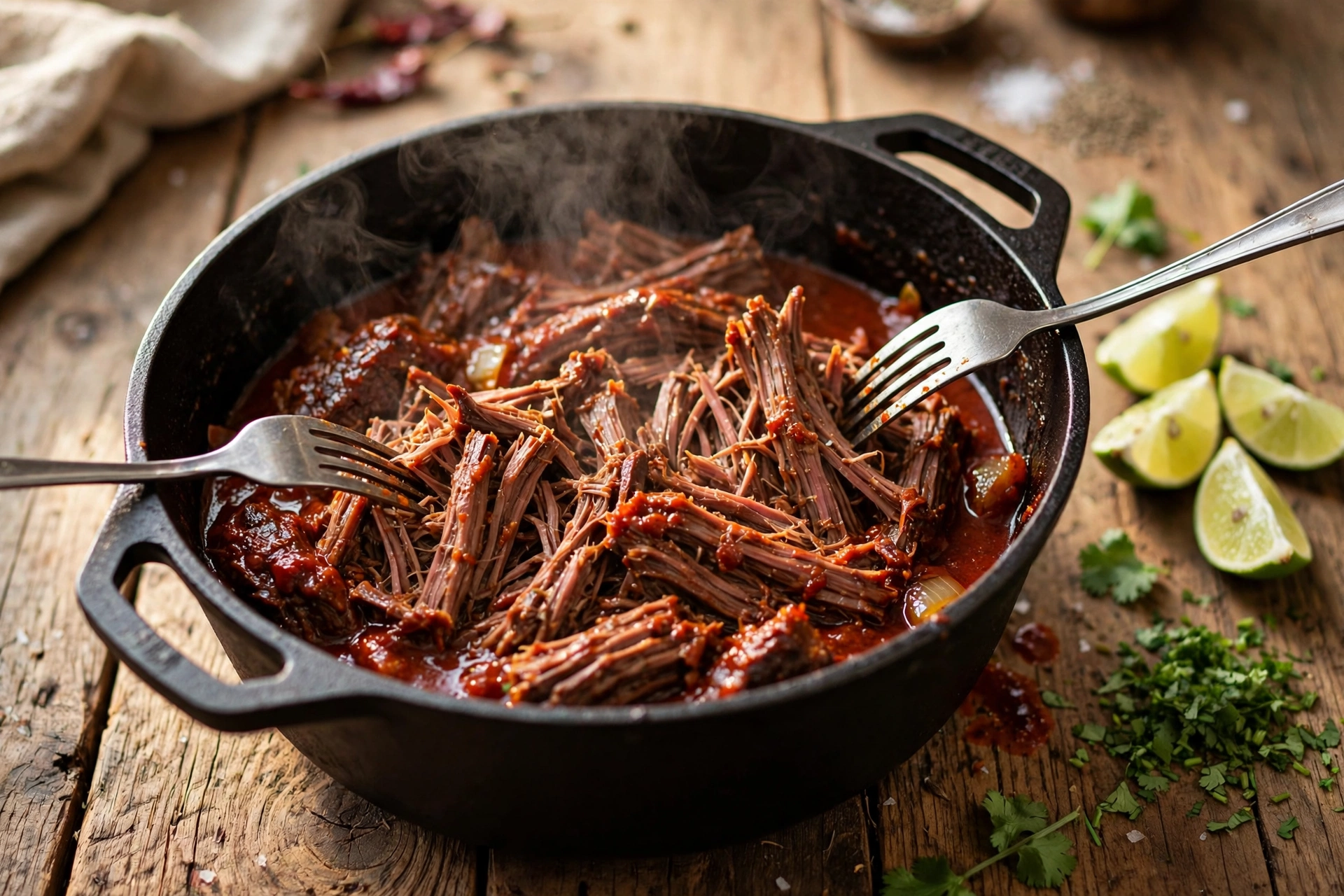
Lift the beef out onto a cutting board and let it rest for 10 minutes. Fish out the bay leaves and discard them. Strain the braising sauce through a fine sieve into a bowl, pressing the solids to get every drop. Shred the beef with two forks, pulling it into bite-size strands. Return the shredded beef to the pot and toss it in the strained sauce until every strand is glossy and juicy.
5 Rest, Crisp and Serve
For the broiler-crisp finish, spread the sauced beef on a baking sheet. Broil for 3 to 5 minutes, until the edges brown and crisp in spots. Watch it closely — it goes from crisp to burnt fast. Pile the barbacoa into warm corn tortillas and top with diced onion, cilantro, a squeeze of lime and a little cotija. Serve right away, while it is still hot and juicy.
Technique: Oven Barbacoa Without Drying Out the Beef
The difficult step in barbacoa is the braise. Three and a half hours is a long time for beef to sit in a hot oven. And the difference between fall-apart tender and dry and stringy comes down to three things: the sear, the lid and the temperature.
First, the sear. Browning the beef before it braises builds the deep, roasted flavour that a slow cooker skips. Cut the roast into 3-inch chunks first, so every piece gets browned edges. Then sear in batches in a hot Dutch oven, 3 to 4 minutes per side, until the crust is dark brown. Do not crowd the pan. A crowded pan steams the beef instead of searing it, and steamed beef never tastes roasted. If the pot is full, sear half the beef, set it aside, and sear the rest.
Second, the lid. A tight lid is what keeps the braise moist. The liquid should barely simmer — a lazy bubble or two, not a rolling boil. A hard boil drives the moisture out of the meat and into the air, and the beef dries out even while it sits in sauce. Bring the pot to a gentle simmer on the stove first, then cover it tightly and move it to the oven. If your Dutch oven lid is loose, lay a sheet of foil over the pot before the lid goes on. That seal is the whole secret of a juicy braise.
Third, the temperature. The oven should be at 300°F — low and steady. At 325°F or higher, the outside of the beef overcooks before the inside softens. At 300°F, the heat is gentle enough for the connective tissue to melt slowly into gelatin over three and a half hours. That gelatin is what makes the beef taste rich instead of dry. Start checking at 3 hours, but let tenderness be your guide. The beef is done when a fork slides in and the meat pulls apart with almost no effort — usually around 200°F to 205°F inside.
Resting and the Broiler Crisp
Two finishing moves make this oven barbacoa taste like a taco truck’s. The first is the rest. Let the beef rest for 10 minutes after it comes out of the pot. The juices settle back into the meat, and the beef shreds into clean strands instead of mush. Shred it too hot and it falls apart into a wet pile.
The second is the broiler crisp. Spread the sauced, shredded beef on a baking sheet and broil it for 3 to 5 minutes. The edges brown and crisp in spots, while the middle stays juicy. That contrast — crispy edges, juicy centre — is what separates good barbacoa from great barbacoa. Watch it the whole time. It goes from crisp to burnt in under a minute.
One more thing matters: strain the sauce. The braising liquid has spent chiles, onion and garlic in it. Straining it through a fine sieve gives a smooth, glossy sauce that coats every strand. Toss the shredded beef in that sauce while it is still warm, and taste for salt before you serve. The sauce concentrates as it cooks, so it may need less salt than you expect.
Tips
- ✓ Cut the beef into 3-inch chunks first. Smaller pieces sear better and braise faster than one big roast, and they shred more evenly at the end.
- ✓ Sear in batches. A crowded pan steams the beef instead of browning it. Brown half, set it aside, then brown the rest.
- ✓ Do not scorch the chiles. Toast them for 15 to 20 seconds per side, just until fragrant. Burnt chiles turn the whole adobo bitter.
- ✓ Seal the lid tightly. A loose lid lets the moisture escape and dries the beef out. Lay foil under the lid if yours does not seal well.
- ✓ Let tenderness decide, not the clock. Start checking at 3 hours. The beef is done when a fork slides in and it shreds with almost no effort.
- ✓ Rest before shredding. Ten minutes of rest lets the juices settle, so the beef shreds into clean strands instead of a wet pile.
Variations
In addition, this beef barbacoa is easy to shape around your family, and the base stays the same.
- Milder. Use 1 chipotle pepper instead of 2, and leave out the tablespoon of adobo sauce. The guajillo and ancho still give smoke and fruit, with only a gentle warmth.
- Fierier. Use 3 chipotles in adobo and add 2 dried chiles de árbol to the toasting step. This is the version for the hot-sauce lovers at the table.
- With beef cheek. Swap the chuck roast for 3½ pounds of trimmed beef cheek, the traditional barbacoa cut. It is richer and silkier. Start checking tenderness at 2½ hours.
- Slow cooker barbacoa. Follow the recipe through the sear and the adobo, then cook on low for 7 to 8 hours instead of braising in the oven. The oven version tastes deeper, but the slow cooker version is easier on a busy day.
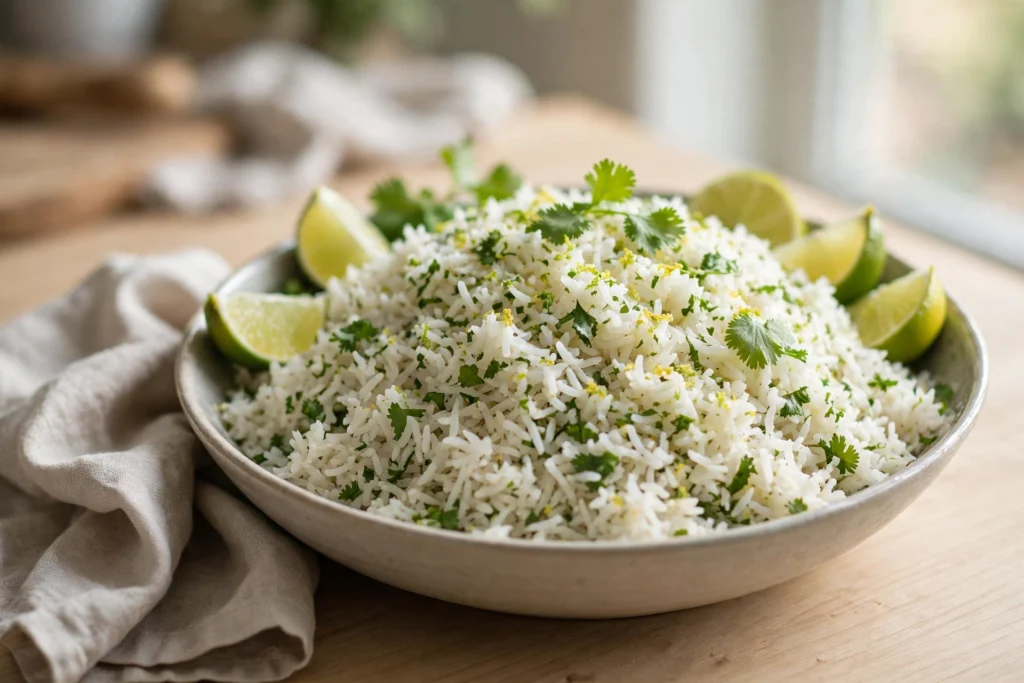
- As a burrito bowl. Skip the tortillas and serve the shredded beef over Cilantro Lime Rice with beans, corn and avocado. It is the same barbacoa, built for a fork instead of a hand.
- With pineapple. Stir ½ cup of diced fresh pineapple into the shredded beef with the sauce for a sweet, tangy al-pastor-style twist.
What to Serve With
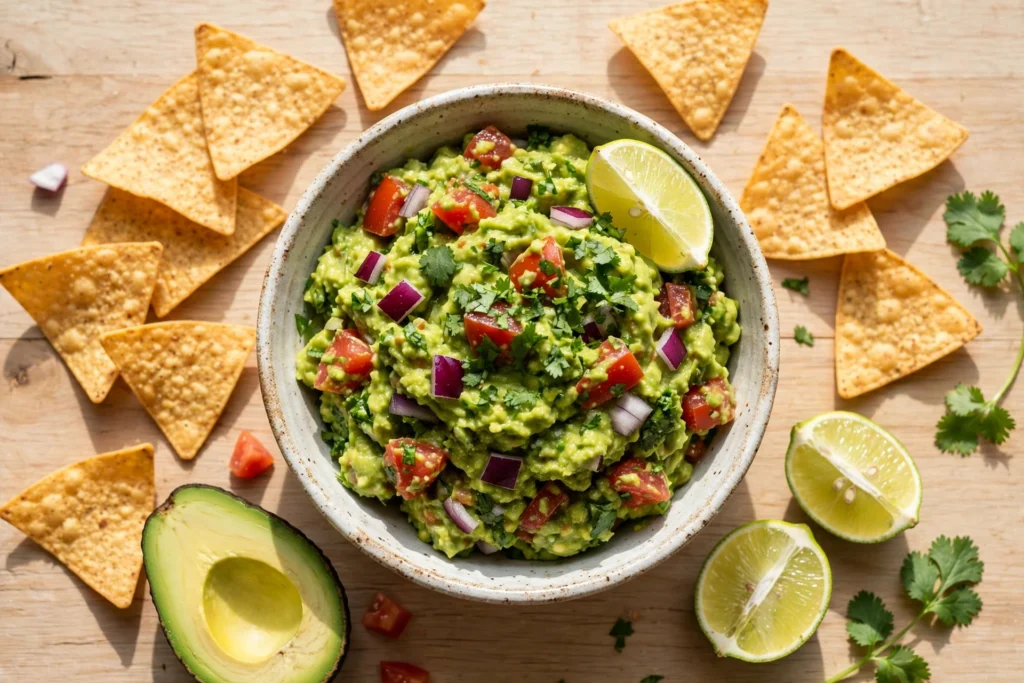
Barbacoa tacos are where this beef earns its keep. Pile the shredded beef into warm corn tortillas with diced onion, cilantro and a squeeze of lime — the classic taco-truck plate. For the full spread, set out Salsa Macha and Guacamole Recipe on the table. A spoonful of crunchy chile oil and a scoop of cool guacamole beside the rich beef is the contrast that keeps everyone reaching back.
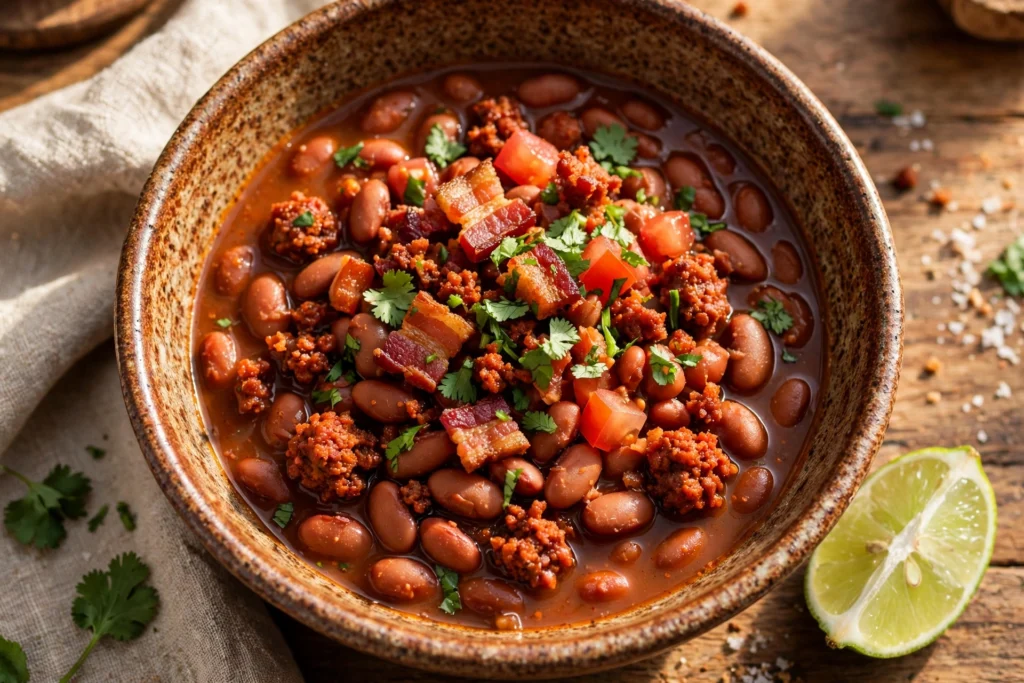
Beyond tacos, think rice and beans. A pot of Frijoles Charros — smoky, soupy pinto beans — is the traditional side that turns the plate into a full Mexican dinner. And Cilantro Lime Rice is the fluffy, lime-bright base that soaks up the extra adobo sauce.
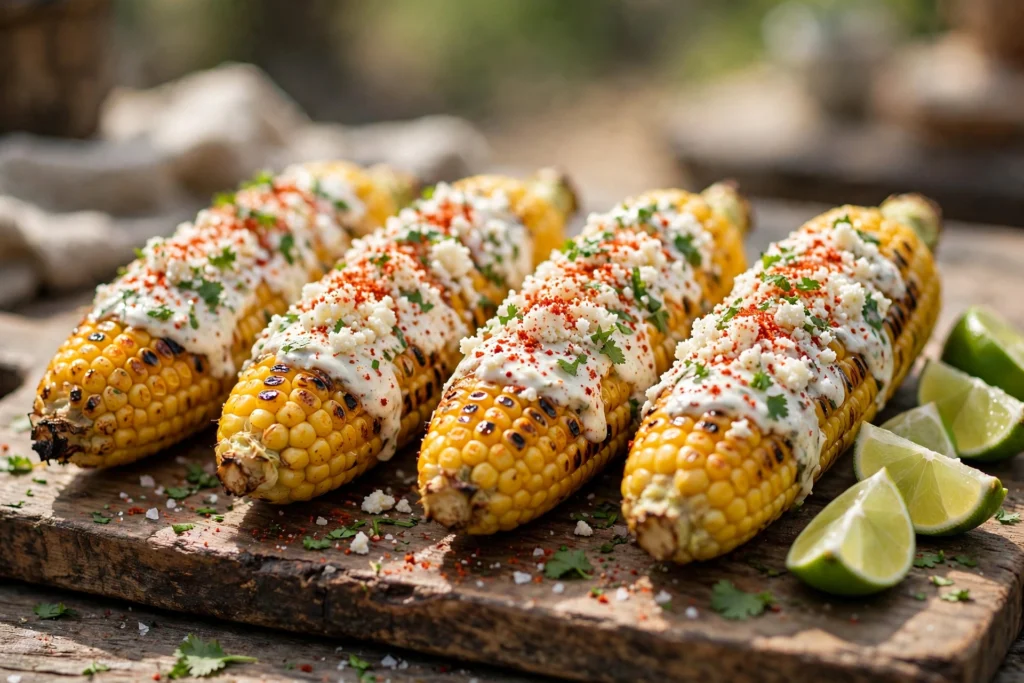
For something fresh beside the rich beef, Mexican Street Corn brings creamy, tangy, chilli-dusted corn that balances the meal beautifully. Serve it all family-style, with extra lime wedges and warm tortillas on the table, so everyone builds their plate the way they like it.
Storage
Let the shredded barbacoa cool before moving it to an airtight container. Spoon a little of the braising sauce over the top first — the sauce is what keeps the beef moist as it sits. It keeps in the refrigerator for 4 to 5 days, and the flavour actually gets better on the second day as the beef soaks up more sauce.
To reheat, warm the beef gently in a skillet over medium-low heat with a splash of the sauce or a little beef broth. Stir often and do not let it boil. The microwave works too, in short bursts with a splash of broth, but the skillet keeps the texture better. If you crisped the edges under the broiler, a quick return to a hot skillet brings back a little of that crunch.
Can you freeze barbacoa? Yes — it freezes beautifully. Pack the cooled beef with its sauce in freezer bags, press the air out, and freeze flat for up to 3 months. Thaw overnight in the fridge, then reheat in a skillet with a splash of broth. The beef tastes almost as good as the day you made it, which makes this one of the best freezer meals on the site.
Frequently Asked Questions
What is barbacoa?
Barbacoa is slow-cooked Mexican meat, braised until it is so tender it shreds with a fork. In central Mexico it is often lamb or goat. In the north, and in most Mexican restaurants, it is beef — usually chuck roast or beef cheek — cooked low and slow in a smoky chile adobo. It is served in tacos, burritos, tortas and bowls.
What cut of beef is best for barbacoa?
Beef chuck roast is the best cut for most home cooks. It is well marbled, affordable and easy to find. Its connective tissue melts into gelatin in a long braise, which is what makes the shredded beef rich and silky. Beef cheek is the traditional choice and even richer, but it is harder to find and costs more. Avoid lean cuts like sirloin or round — they dry out in a long braise.
How do you make barbacoa?
Toast and soak dried guajillo and ancho chiles. Then blend them with chipotles in adobo, garlic, onion, cumin and clove. Add oregano, vinegar, lime juice, orange juice and broth. Blend until smooth. Cut chuck roast into 3-inch chunks, season and sear until deeply browned. Pour the adobo over the beef, add bay leaves, and braise covered in a Dutch oven at 300°F for 3 to 3½ hours. Shred the beef, toss it in the strained sauce, and serve in warm tortillas.
More Questions About Barbacoa
Is barbacoa spicy?
Moderately. The heat comes from the chipotle peppers in adobo. This recipe uses 2 chipotles for a warm, noticeable kick. The guajillo and ancho chiles add smoke and fruit, not much heat. For a mild barbacoa, use 1 chipotle and skip the extra adobo sauce. For a fiery one, use 3 chipotles and add 2 dried chiles de árbol.
Can you freeze barbacoa?
Yes — it freezes beautifully. Pack the cooled shredded beef with its sauce in freezer bags, press the air out, and freeze flat for up to 3 months. Thaw overnight in the fridge, then reheat in a skillet with a splash of broth. The beef tastes almost as good as the day you made it.
What is the difference between barbacoa and carnitas?
Both are slow-cooked Mexican meats, but they are different. Barbacoa is beef (or lamb, or goat) braised in a smoky chile adobo until shreddable. Carnitas is pork, traditionally cooked in lard until tender, then crisped — rich, porky and golden, with no chile sauce. Barbacoa tastes smoky and saucy; carnitas tastes rich and crisp.
Try These Next
If you loved this Mexican beef barbacoa, try these recipes next:
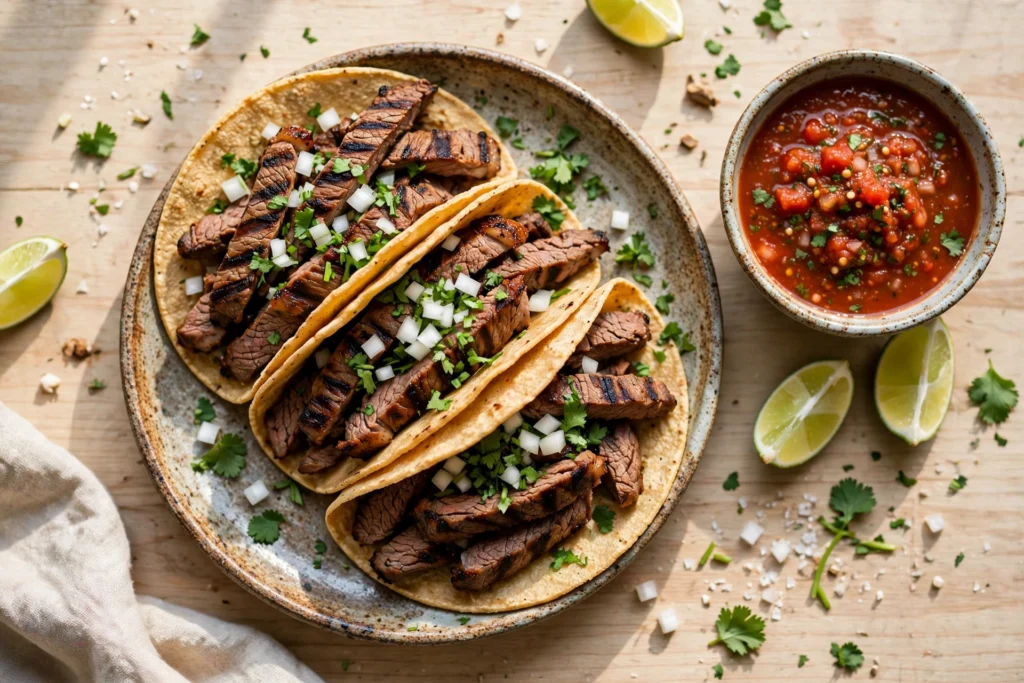
Skirt Steak Tacos — smoky grilled steak tacos with lime and cilantro, ready in under an hour.
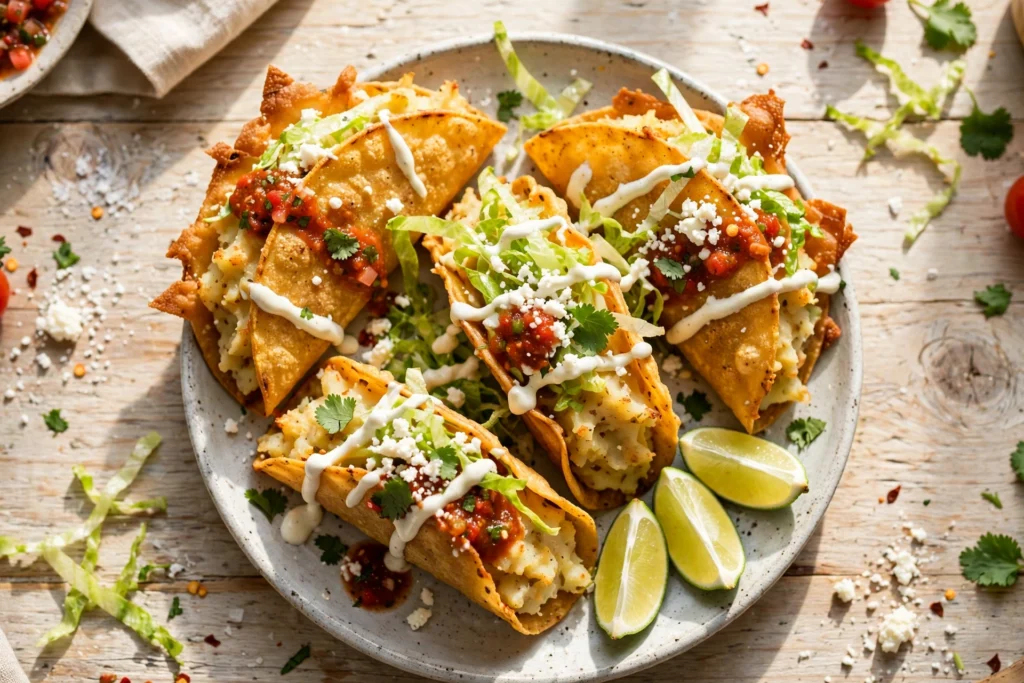
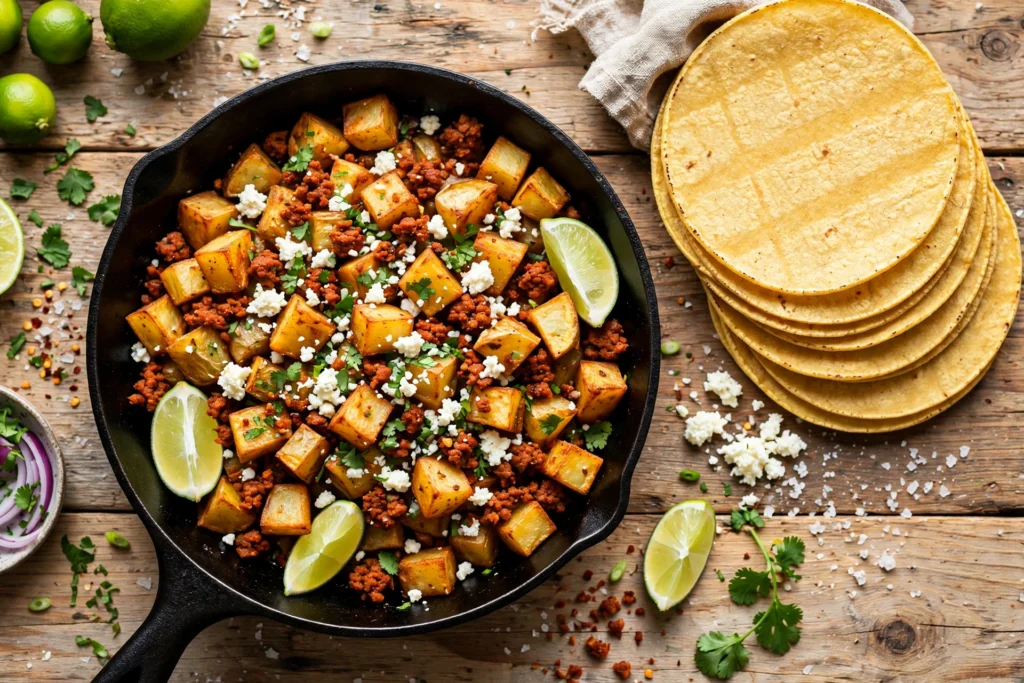
Crispy Potato Tacos — golden corn tortillas filled with mashed potatoes and cheese, fried until crisp.
Chile Colorado — tender beef simmered in a rich red chile sauce, another slow-cooked Mexican beef classic.
Frijoles Charros — smoky Mexican cowboy beans, the traditional side for a barbacoa plate.
Guacamole Recipe — fresh chunky guacamole with lime and cilantro, perfect on top of barbacoa tacos.
Beef Barbacoa Recipe
Ingredients
Equipment
Method
- Toast the guajillo and ancho chiles in a dry skillet for 15 to 20 seconds per side until fragrant; move to a bowl, cover with hot water and soak for 15 to 20 minutes until soft, then drain.
- Add the drained chiles, chipotles and their sauce, garlic, onion, cumin, cloves, oregano, vinegar, lime juice, orange juice, tomato paste and 1 cup of the broth to a blender; blend 1 to 2 minutes until completely smooth. Meanwhile, season the beef chunks with salt and pepper and sear in the Dutch oven with the oil over medium-high heat, 3 to 4 minutes per side, until deeply browned, working in batches.
- Heat the oven to 300°F; pour the blended adobo over the seared beef, add the remaining 1 cup of broth and the bay leaves, stir once, bring to a gentle simmer, cover tightly and braise in the oven for 3 to 3 1/2 hours, flipping once halfway, until fork-tender.
- Lift the beef out and rest for 10 minutes; fish out the bay leaves, strain the sauce through a fine sieve, shred the beef with two forks and toss it in the strained sauce until glossy.
- Spread the sauced beef on a baking sheet and broil 3 to 5 minutes until the edges brown and crisp; pile into warm corn tortillas with diced onion, cilantro, lime and cotija and serve right away.