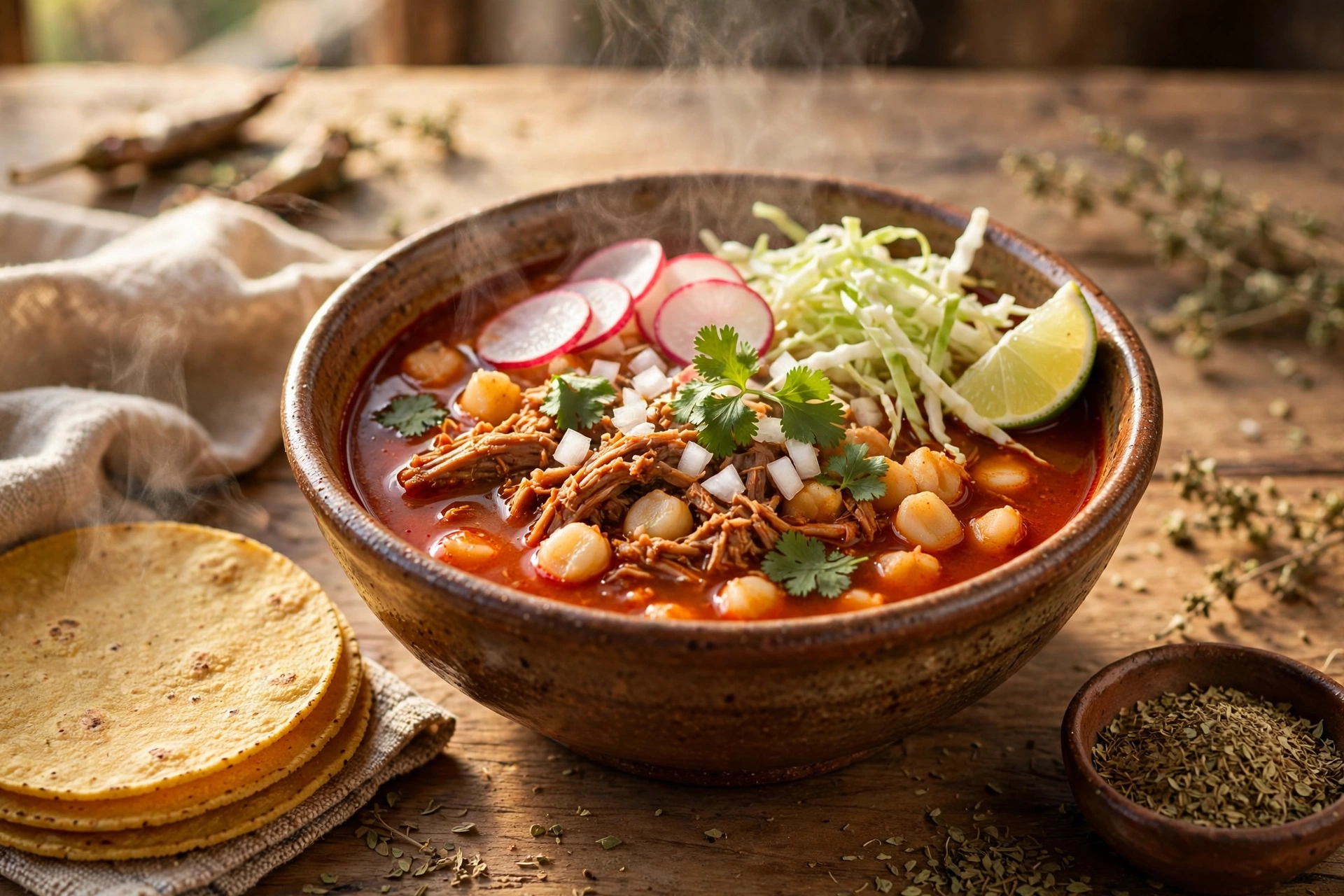
This Mexican pozole rojo is the kind of soup that turns an ordinary evening into a celebration. Tender pork and plump hominy swim in a rich red chile broth, and a pile of fresh toppings — crunchy cabbage, peppery radish, onion, cilantro and lime — lets everyone build their bowl exactly the way they like it.
Pozole rojo takes about 3 hours to make, and most of that time is gentle simmering while the pork turns meltingly tender and the broth turns deep red. It is a beloved Mexican soup, made in Mexico for holidays, birthdays and big family gatherings, and it tastes even better the next day.
Why You’ll Love It
- A Mexican celebration soup. Pozole is a traditional Mexican soup, made in Mexico for holidays and family gatherings.
- Rich red broth. Dried guajillo chiles give the broth its deep red colour and smoky depth.
- Tender pork and hominy. Hearty, filling and comforting — a proper one-pot meal.
- Toppings make it yours. Shredded cabbage, radish, onion, lime and oregano go on top, so every bowl is different.
- Feeds a crowd. One big pot serves 8, which makes it perfect for family dinners.
- Better the next day. The broth deepens overnight, so leftovers are excellent.
What Is Pozole?
Pozole is one of Mexico’s oldest soups. It is built on hominy — corn kernels that have been soaked until they puff up soft and chewy — simmered in a seasoned broth with meat. There are three classic versions: pozole rojo (red, with dried red chiles), pozole verde (green, with tomatillos and green chiles) and pozole blanco (white, with no chile sauce at all). This recipe is pozole rojo, the red version, and it is the one most people picture when they think of pozole.
The toppings are not decoration. They are part of the dish. The cool crunch of cabbage and radish, the sharp bite of onion, the squeeze of lime and the earthy sprinkle of oregano balance the rich, warm broth — and because everyone tops their own bowl, the same pot suits every taste at the table.
Ingredients
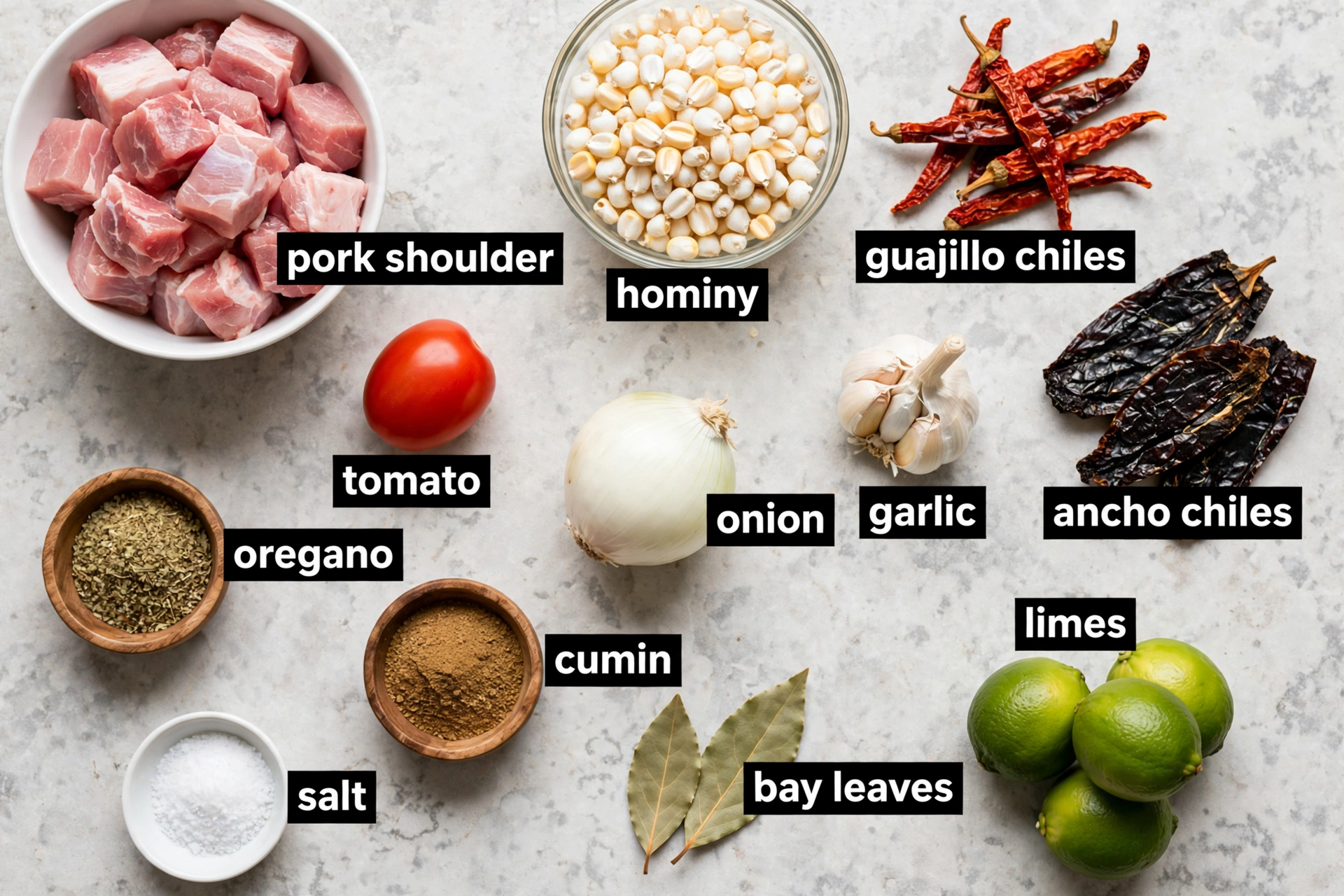
For the stew:
Boneless pork shoulder — 3 lb, cut into 1–2-inch cubes. Pork shoulder is the right cut for pozole because it turns tender and shreddable after a long, gentle simmer. Leaner cuts dry out, so keep the shoulder. If you can only find bone-in pork butt, use 4–5 lb cut into 4-inch pieces and add a little extra simmering time.
Water or low-sodium chicken broth — 8 cups. This is the base of the soup. Water gives the cleanest pork flavour, while low-sodium chicken broth adds a little extra depth. Use low-sodium broth so you can control the salt at the end.
White hominy — 3 (15-oz) cans, drained and rinsed. Hominy is the heart of pozole — it gives the soup its chewy, hearty texture. Canned hominy is already cooked, so it only needs the last 20–30 minutes in the pot to plump up. Rinse it well before adding it.
Garlic — 1 head (about 10 cloves), peeled. Garlic seasons the broth from the inside out as the pork simmers. A whole head sounds like a lot, but it mellows completely over the long cook.
White onion — 1 large, chopped. Onion adds sweetness and depth to the broth. It goes into the pot with the pork, and more chopped onion goes on top as a garnish.
Seasoning:
Bay leaves — 2. Bay leaves add a quiet, savoury background note to the broth. Fish them out before serving.
Dried Mexican oregano — 1 teaspoon. Mexican oregano is earthier and more citrusy than the Mediterranean kind, and it is the classic pozole seasoning. It goes into the broth and again on top as a garnish.
Ground cumin — 1 teaspoon. Cumin adds a warm, earthy note that ties the pork and the chile sauce together. A little goes a long way.
Kosher salt — 1 tablespoon, plus more to taste. Salt seasons the soup throughout. Start with a tablespoon and adjust at the end, because the broth concentrates as it simmers.
Black peppercorns — 1/4 teaspoon (optional). A small pinch of peppercorns adds gentle warmth to the broth. Leave them out if you prefer a cleaner flavour.
For the red chile sauce:
Dried guajillo chiles — 4 oz (about 8–10 chiles), stemmed and seeded. Guajillos are the soul of pozole rojo. They give the broth its red colour and a smoky, mild heat without making the soup spicy-hot. Stem and seed them before soaking.
Dried ancho chiles — 2 (about 1 oz), stemmed and seeded. Anchos add a deeper, slightly sweet, raisin-like note that rounds out the guajillos. If you cannot find them, use 2 extra guajillos.
Plum tomato — 1 large. The tomato adds body and a little brightness to the sauce. Some versions use a 14-oz can of fire-roasted diced tomatoes instead — either works.
Garlic — 3 cloves. A few extra cloves go into the sauce itself, so the chile flavour has a savoury backbone.
White onion — 1/2 medium. Half an onion blends into the sauce and sweetens the chiles.
Dried Mexican oregano — 1/4 teaspoon. A pinch more oregano in the sauce keeps the seasoning consistent from pot to bowl.
Ground cumin — a pinch. Just a pinch in the sauce — the main cumin goes into the stew.
Water — 2 cups, for blending. Water loosens the soaked chiles so they blend into a smooth sauce.
To serve (garnishes):
Shredded green cabbage — 2 cups; thinly sliced radishes — 1 bunch; chopped white onion — 1 small; chopped cilantro — 1/2 cup; lime wedges — 2 limes; diced avocado — 1; crumbled queso fresco — 1/2 cup; Mexican crema, for drizzling; dried Mexican oregano, for sprinkling; warm corn tortillas or crisp tostadas.
How to Make It
 1 Simmer the Pork
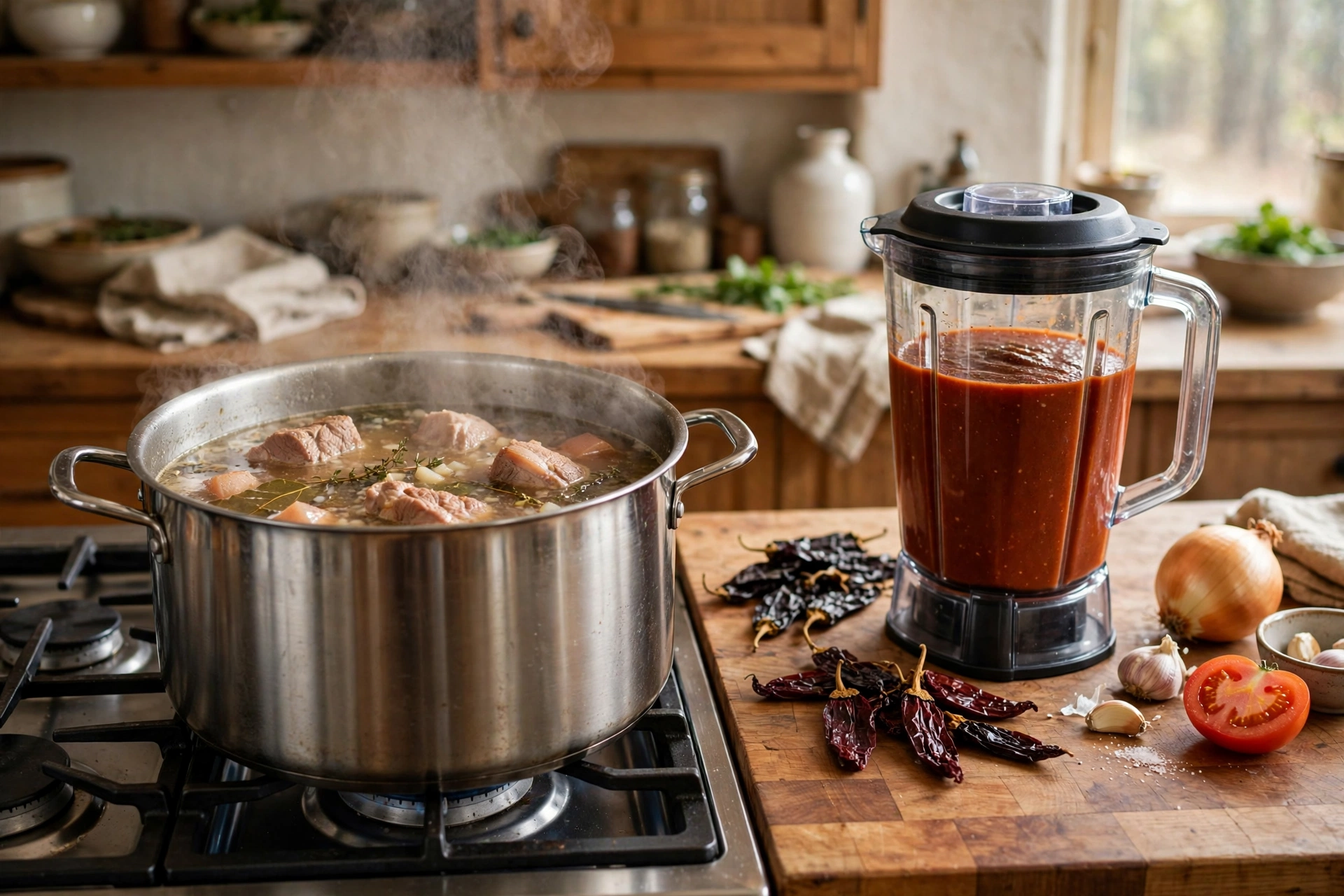
Put the pork cubes in a large stockpot with the water or broth, garlic, chopped onion, bay leaves, oregano, cumin, salt and peppercorns. Bring it to a gentle simmer, skim off any foam that rises, then lower the heat and cook for 1–1.5 hours, until the pork is starting to turn tender.
2 Make the Red Chile Sauce
While the pork simmers, toast the guajillo and ancho chiles briefly in a dry skillet — 1–2 minutes, and do not let them burn. Soak them in just-boiled water for 15–20 minutes until soft, then blend them with the tomato, garlic, half onion, oregano, cumin and 2 cups of water until completely smooth. Strain the sauce through a fine-mesh sieve.
3 Add the Sauce and Hominy
Shred or cut the pork into smaller pieces if you like it shredded, then return it to the pot. Stir in the strained chile sauce and the drained, rinsed hominy. The broth should turn a deep, rich red.
Simmer, Season and Serve:
4 Simmer Until Rich and Red
Simmer gently for 20–30 minutes more, uncovered at the end, until the broth is rich and red and the hominy has plumped up. The total pork cooking time is 2–3 hours. Taste and adjust the salt.
 5 Season
Taste the broth and season with salt until it shines. This is the moment that makes the soup — a well-salted broth tastes full and round, while an under-salted one tastes flat.
6 Serve with Toppings
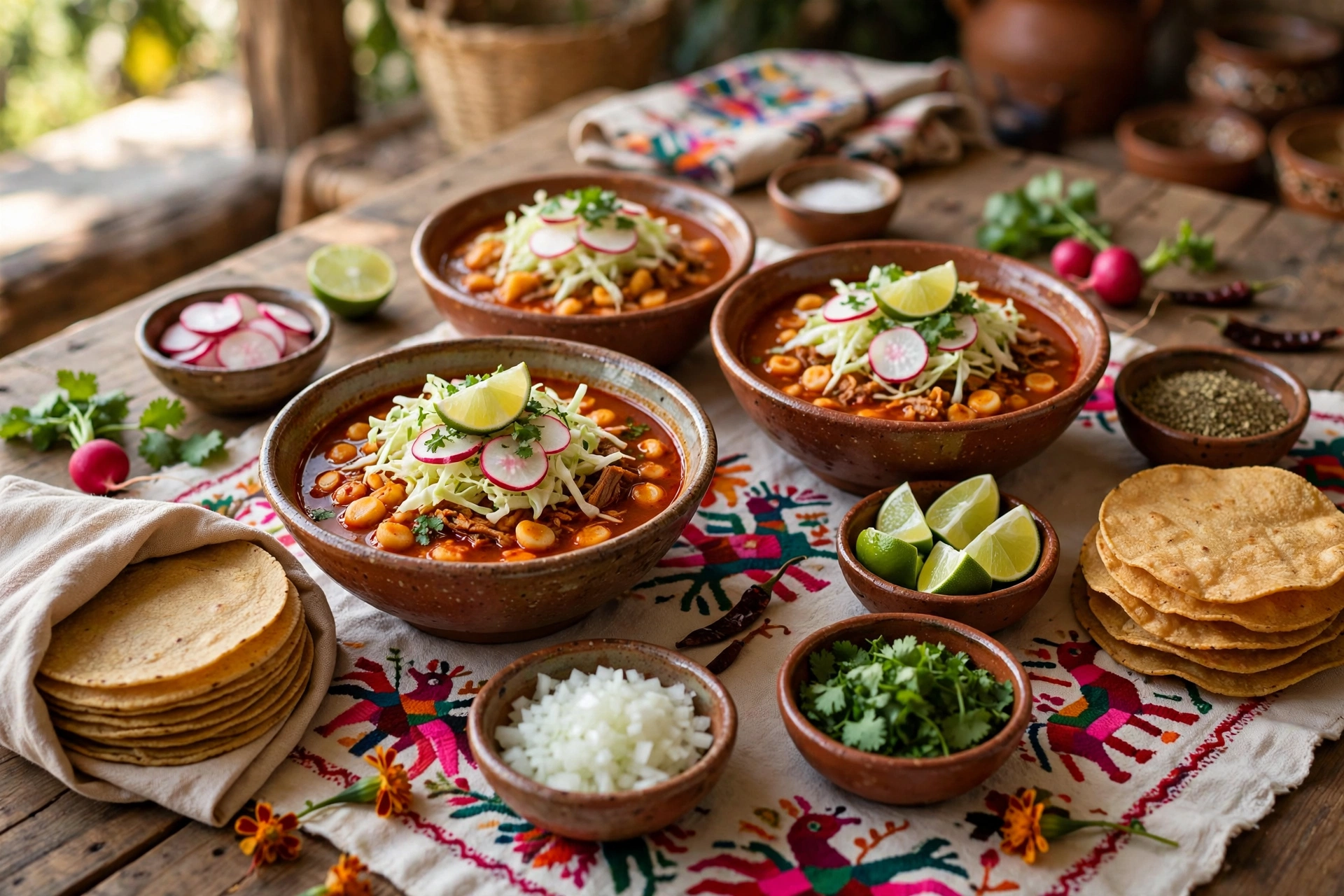
Ladle the hot pozole into bowls and set all the garnishes out on the table — shredded cabbage, sliced radishes, chopped onion, cilantro, lime wedges, avocado, queso fresco, crema and oregano — so each person tops their own bowl. Serve with warm corn tortillas or crisp tostadas.
Technique: A Rich, Smooth Red Broth Without Bitterness
Three things decide whether pozole rojo tastes like a celebration or a disappointment: the chiles, the simmer, and the hominy. First, the chiles. Toast them lightly — just 1–2 minutes in a dry skillet until they smell warm and fragrant. Burnt chiles turn the whole sauce bitter, and there is no way to fix that, so pull them off the heat early rather than late. Then soak them until they are fully soft, about 15–20 minutes in just-boiled water. Blend them until completely smooth, and strain the sauce through a fine-mesh sieve. Any skins or seeds left in make the broth gritty instead of silky.
Second, the broth. It should be rich and red, not thin. Straining the chile sauce is what makes it smooth, and simmering uncovered at the end lets it thicken slightly. Cook the pork until it shreds easily — undercooked pork stays tough, and no amount of garnish hides that. Keep the heat gentle the whole time; a hard boil toughens the meat and clouds the broth.
Third, the hominy. It goes in only for the last 20–30 minutes. Canned hominy is already cooked, so it just needs time to plump up and soak in the red broth. Add it too early and it turns soft and mushy instead of chewy.
Tips for the Best Pozole Rojo
Toast the chiles lightly. A quick 1–2 minutes in a dry skillet is enough. Burnt chiles taste bitter and will spoil the sauce.
Soak the chiles until fully soft. If they are still stiff, the sauce will be grainy no matter how long you blend it.
Simmer gently. High heat can toughen the pork. Keep the pot at a lazy bubble the whole time.
Do not rush the simmer. Time builds the flavour — the pork needs 2–3 hours to turn tender, and the broth deepens as it cooks.
Prepare the toppings while the soup simmers. Shred the cabbage, slice the radishes, chop the onion and cilantro, and cut the limes so everything is ready when the pot comes off the heat.
Taste at the end. The broth needs enough salt to shine. Season, taste, and season again if it still tastes flat.
Variations
Pozole rojo is the red version, but Mexico has two more. Pozole verde is green, made with tomatillos and green chiles instead of dried red chiles, and pozole blanco is white, with no chile sauce at all — just the pork, hominy and broth, with the same fresh toppings. The method stays the same; only the sauce changes.
Make it spicier. Blend in 1 dried morita chile or 1–2 dried árbol chiles with the guajillos for more heat. Leave them out entirely for a mild, family-friendly pot.
Make it with chicken. Some Mexican cooks make pozole with chicken instead of pork. This recipe is written for pork, so if you swap it, use bone-in chicken pieces, simmer them until tender, shred the meat and carry on with the same sauce and hominy.
Instant Pot shortcut. The pork can be pressure-cooked for about 45 minutes instead of simmered for hours. Add the sauce and hominy after pressure cooking and simmer briefly to finish.
Make it richer. Some cooks add 1 lb of pork loin and a few neck bones along with the shoulder for extra body in the broth.
What to Serve With
Set the garnishes out in small bowls and let everyone build their own pozole — shredded cabbage, sliced radishes, chopped white onion, cilantro, lime wedges, diced avocado, crumbled queso fresco, a drizzle of Mexican crema and a sprinkle of dried oregano. Warm corn tortillas or crisp tostadas belong on the table too, for scooping and crunch. For a bigger Mexican table, serve pozole rojo with Easy Chicken Enchiladas for another saucy favourite, or Chilaquiles for crispy chips in red salsa. Slow Cooker Calico Beans makes a hearty side, and Roast Turkey turns it into a full holiday spread.
Storage
Allow the pozole to cool before moving it to an airtight container. It keeps in the refrigerator for up to 3 days, and the broth tastes even better the next day as the flavours deepen. For longer storage, freeze the soup for up to 3 months — but freeze it without the garnishes. Store the broth, pork and hominy together in a freezer-safe container, and add fresh toppings when you serve it. Reheat gently on the stove until hot all the way through.
Frequently Asked Questions
What is pozole, and where is it from in Mexico?
Pozole is a traditional Mexican soup made with hominy — corn kernels soaked until they puff up soft and chewy — simmered in a seasoned broth with meat. It is one of Mexico’s oldest dishes, made for holidays, birthdays and family gatherings all over the country.
What is the difference between pozole rojo, verde and blanco?
The difference is the sauce. The red version is made with dried red chiles like guajillo, the green version with tomatillos and green chiles, and the white version has no chile sauce at all — just pork, hominy and broth, with the same fresh toppings.
What meat is used for pozole rojo?
Pork shoulder is the classic choice. It turns tender and shreddable after a long, gentle simmer, which is exactly what pozole needs. Some cooks also add pork loin or neck bones for extra body in the broth.
More Questions About Pozole Rojo
What is hominy, and where do I buy it?
Hominy is dried corn that has been soaked in an alkaline solution until the kernels puff up soft and chewy. You can buy it canned — usually in the Mexican or canned-vegetable aisle — or dried, which needs soaking and cooking first. This recipe uses canned white hominy, drained and rinsed.
Can I make pozole rojo ahead of time?
Yes — it is actually better the next day. The broth deepens overnight as the flavours settle. Make the soup, cool it, and keep it in the refrigerator for up to 3 days. Set out fresh toppings when you serve it.
Can I freeze pozole rojo?
Yes. Freeze the soup — broth, pork and hominy — in a freezer-safe container for up to 3 months. Do not freeze the garnishes. Thaw overnight in the refrigerator, reheat gently on the stove, and add fresh toppings when you serve it.
Try These Next
Chile Colorado — tender Mexican beef braised in a smooth red chile sauce.
Easy Chicken Enchiladas — crispy tortillas, red sauce and melted cheese, baked until bubbly.
Chilaquiles — a Mexican breakfast with crispy chips in red salsa.
Slow Cooker Calico Beans — sweet, smoky beans that feed a crowd.
Easy Orange Chicken — crispy chicken in a sticky orange sauce, better than takeout.
Pozole Rojo (Red Pozole)
Ingredients
Equipment
Method
- Simmer the pork in water or broth with garlic, onion, bay leaves, oregano, cumin, salt and peppercorns for 1–1.5 hours, skimming foam, until starting to turn tender.
- Toast the guajillo and ancho chiles briefly (1–2 minutes, do not burn), soak in just-boiled water 15–20 minutes, then blend with tomato, garlic, onion, oregano, cumin and 2 cups water until smooth; strain through a fine-mesh sieve.
- Shred or cut the pork, return it to the pot, and stir in the strained chile sauce and the drained, rinsed hominy.
- Simmer gently 20–30 minutes more, uncovered at the end, until the broth is rich and red and the hominy has plumped up (total pork cooking time 2–3 hours).
- Taste and season with salt until the broth shines.
- Ladle into bowls and serve with the garnishes on the side so each person tops their own bowl, with warm corn tortillas or crisp tostadas.
Notes
- Toast the chiles lightly — burnt chiles taste bitter and will spoil the sauce.
- Soak the chiles until fully soft, or the sauce will be grainy.
- Cook the pork until it shreds easily; undercooked pork stays tough.
- Add the hominy only for the last 20–30 minutes so it stays plump instead of mushy.
- The soup tastes even better the next day — the broth deepens overnight.