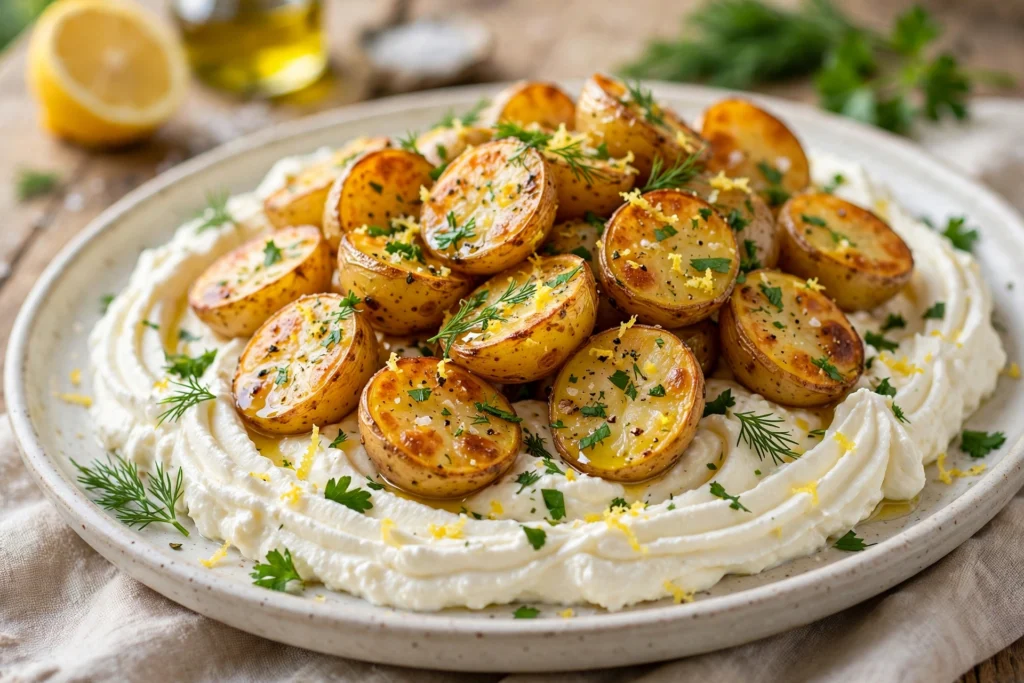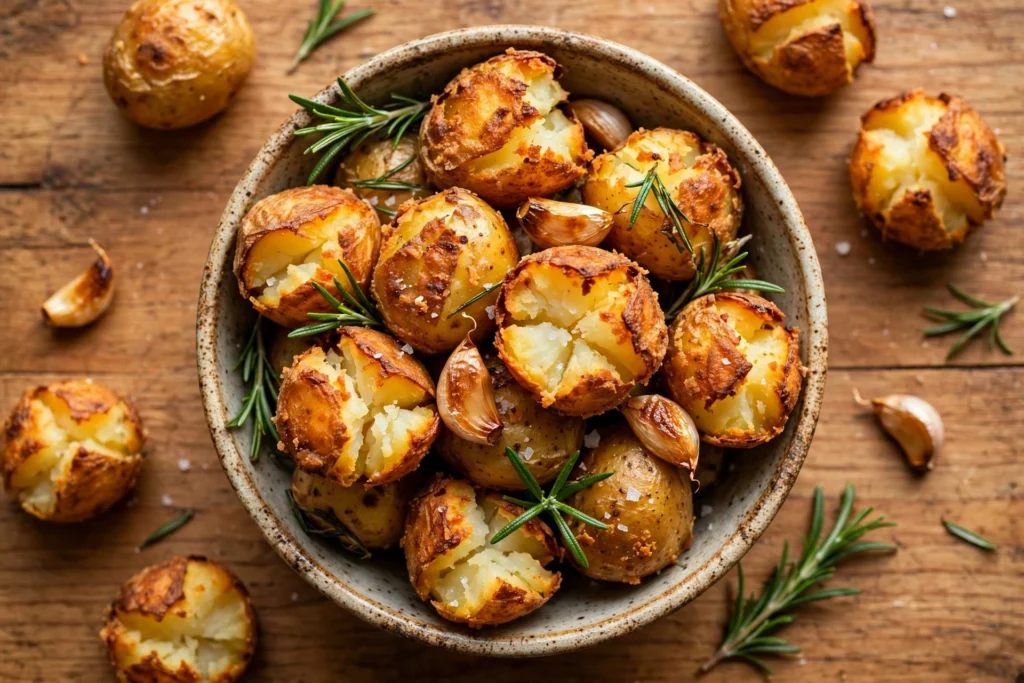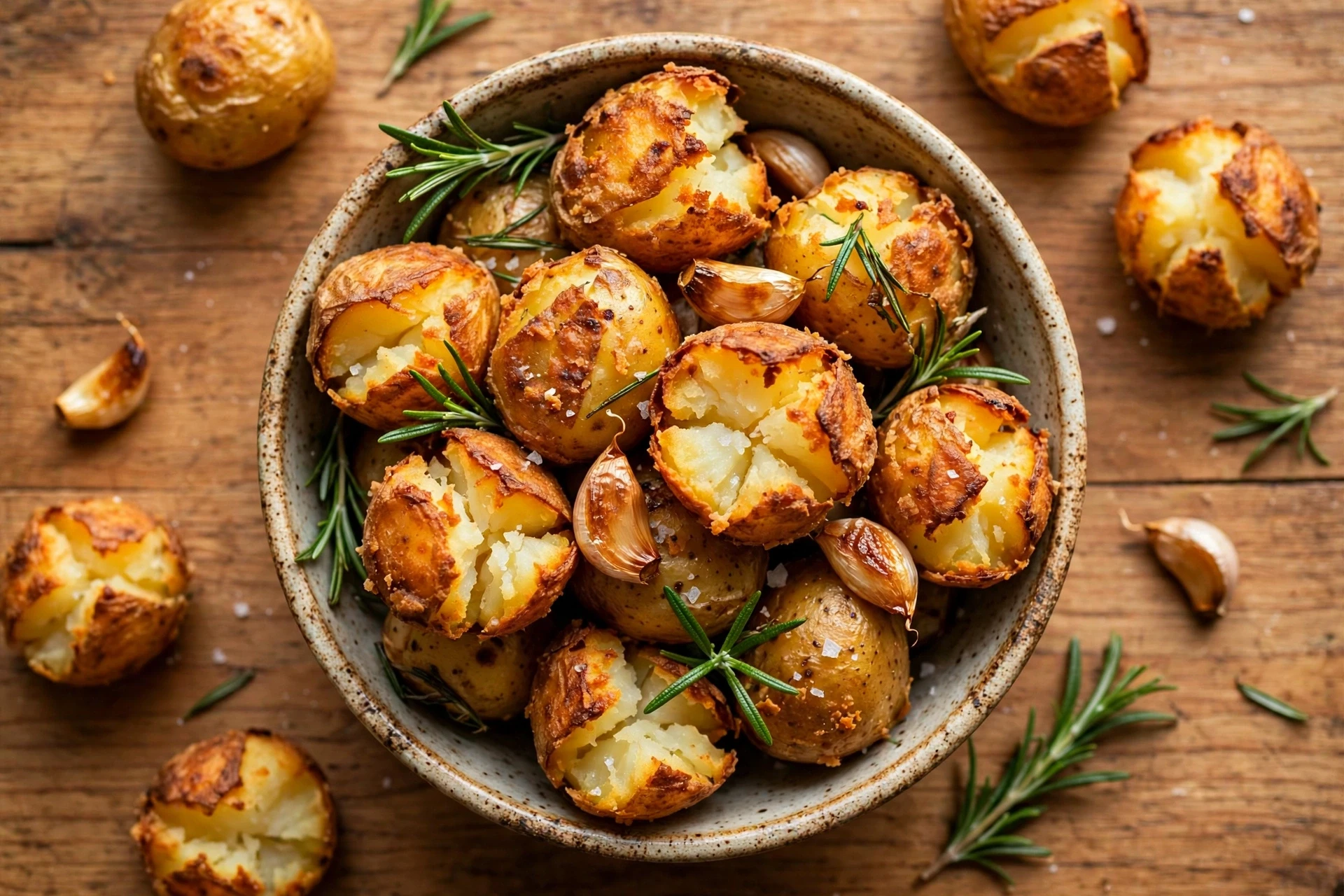
A truly crispy roast potato is two things at once: shatteringly crisp on the outside, like a potato chip, and soft and fluffy on the inside, like a baked potato. Most roast potatoes manage one or the other. These manage both, every time, because the method is a system, not a hope: parboil in slightly alkaline water, rough up the edges until they look fluffy and ragged, then drop the potatoes into fat so hot it sizzles on contact. The whole thing takes about 1 hour 20 minutes, and most of that is oven time.
Once you learn this system, roast potatoes stop being a gamble. They become the side dish people ask for by name.

Why You’ll Love It
- Shatteringly crisp outside, fluffy inside. The parboil and rough-up system builds the crunch.
- A method, not a gamble. Follow the four steps and it works every time.
- No special equipment. One pot, one roasting tin, one oven.
- The fat is your choice. Duck fat for richness, goose fat for tradition, olive oil for everyday.
- Three flavour finishes. Classic garlic-rosemary, Parmesan-herb, and a Mexican cotija-lime-chile.
- Make-ahead friendly. Parboil the day before and roast when dinner is nearly ready.
- Feeds a crowd. The recipe scales easily for holidays and Sunday roasts.
Ingredients
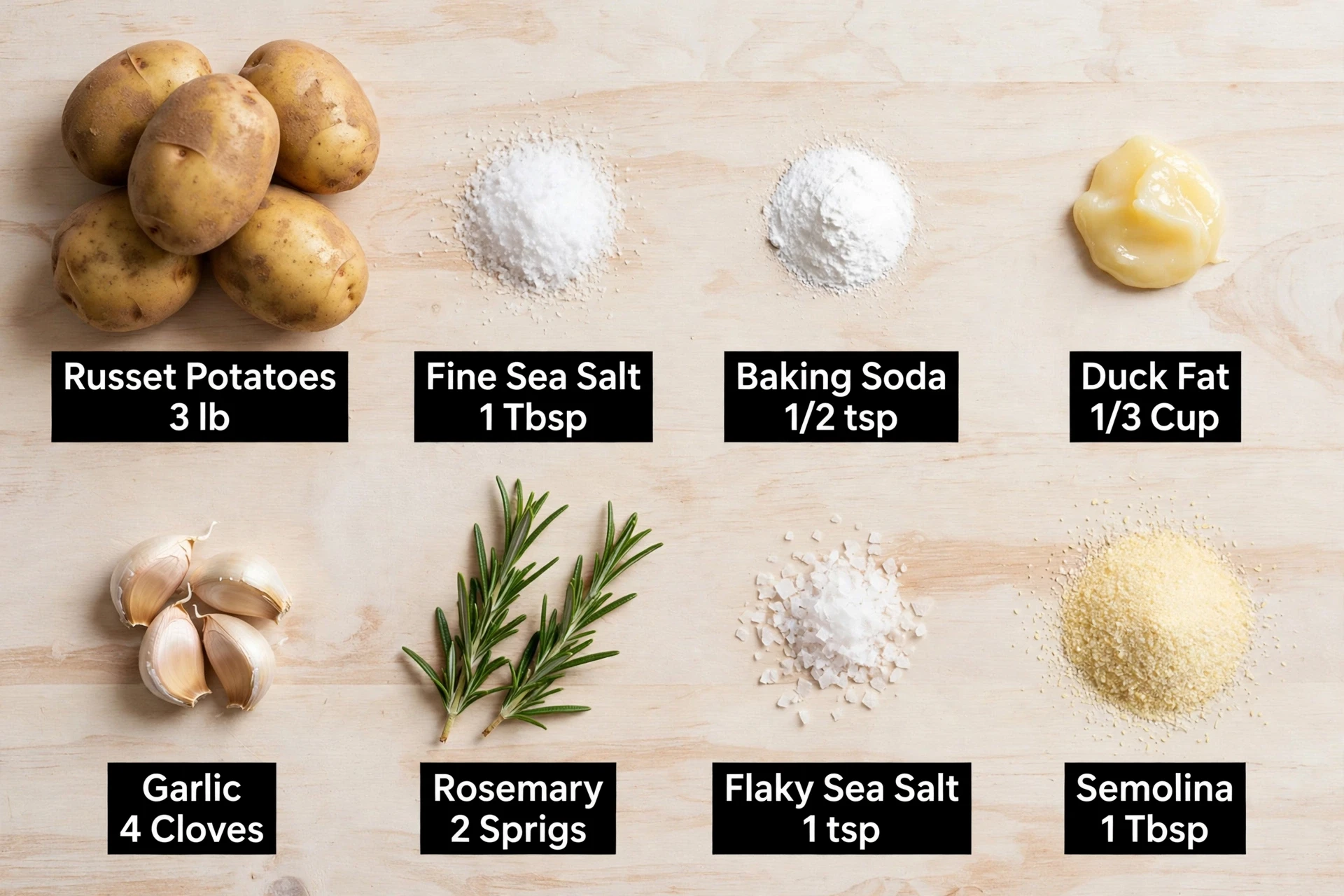
- 3 pounds Russet potatoes, peeled and cut into even chunks — Floury potatoes are the whole secret: their starch breaks down in the parboil and turns into the fluffy, ragged coating that crisps in the oven. Cut them into pieces about the size of a small egg, and keep them even so they cook at the same rate. Substitution: Yukon Gold potatoes (slightly less fluffy, still good) or Maris Piper or King Edward if you can find them.
- 1 tablespoon fine sea salt, for the parboil water — Seasons the potatoes from the inside out while they boil. The potatoes absorb a little salt in the water, so the flavour goes all the way through instead of sitting only on the surface. Substitution: 1 tablespoon kosher salt.
- 1/2 teaspoon baking soda — The small trick that makes a big difference: alkaline water breaks down the outside of the potato faster, so you get more of the starchy paste that turns into crunch. Use no more than 1/2 teaspoon, or the potatoes can taste soapy. Substitution: leave it out — the potatoes will still crisp, just a little less.
- 1/3 cup duck fat — Rich, savoury, and the highest-crisp fat in the comparison below. It needs to be screaming hot before the potatoes go in. Substitution: 1/3 cup goose fat, beef dripping, or olive oil (see the fat comparison in the Technique section).
- 4 garlic cloves, unpeeled and lightly smashed — Added halfway through roasting so they soften and sweeten without burning. The skins keep them from scorching. Substitution: 1 teaspoon garlic powder, tossed with the potatoes before roasting.
- 2 rosemary sprigs — Woodsy, piney flavour that loves roast potatoes. Added with the garlic in the second half of the roast. Substitution: 2 thyme sprigs, or 1 teaspoon dried rosemary.
- 1 teaspoon flaky sea salt, to finish — The final crunch and the final seasoning. Flaky salt sits on the crisp surface and gives little salty pops. Substitution: 1/2 teaspoon fine sea salt.
- 1 tablespoon fine semolina (optional) — Tossed over the roughed-up potatoes before they hit the fat, it adds an extra sandy, crunchy coat. Some cooks find it slightly grainy; try it once and decide. Substitution: 1 tablespoon fine polenta or cornmeal.
Which Potatoes Are Best for Roasting?
| Potato | Type | Result |
|---|---|---|
| Russet | Floury | The best US pick — fluffy inside, crispiest outside |
| Maris Piper | Floury | The British classic, if you can find it |
| King Edward | Floury | Creamy and fluffy, a lovely flavour |
| Yukon Gold | All-purpose | Good, slightly firmer and less fluffy |
| Red potatoes | Waxy | Holds its shape but stays smooth, not fluffy |
| New potatoes | Waxy | Wrong tool for this job — save them for salads |
Floury potatoes break down slightly when boiled, and those broken-down edges are exactly what roasts into a crunchy shell. Waxy potatoes hold their shape beautifully, but they never give you the fluffy centre. For crispy roast potatoes, always pick floury.
How to Make Crispy Roast Potatoes
1 Step 1: Cut and Parboil
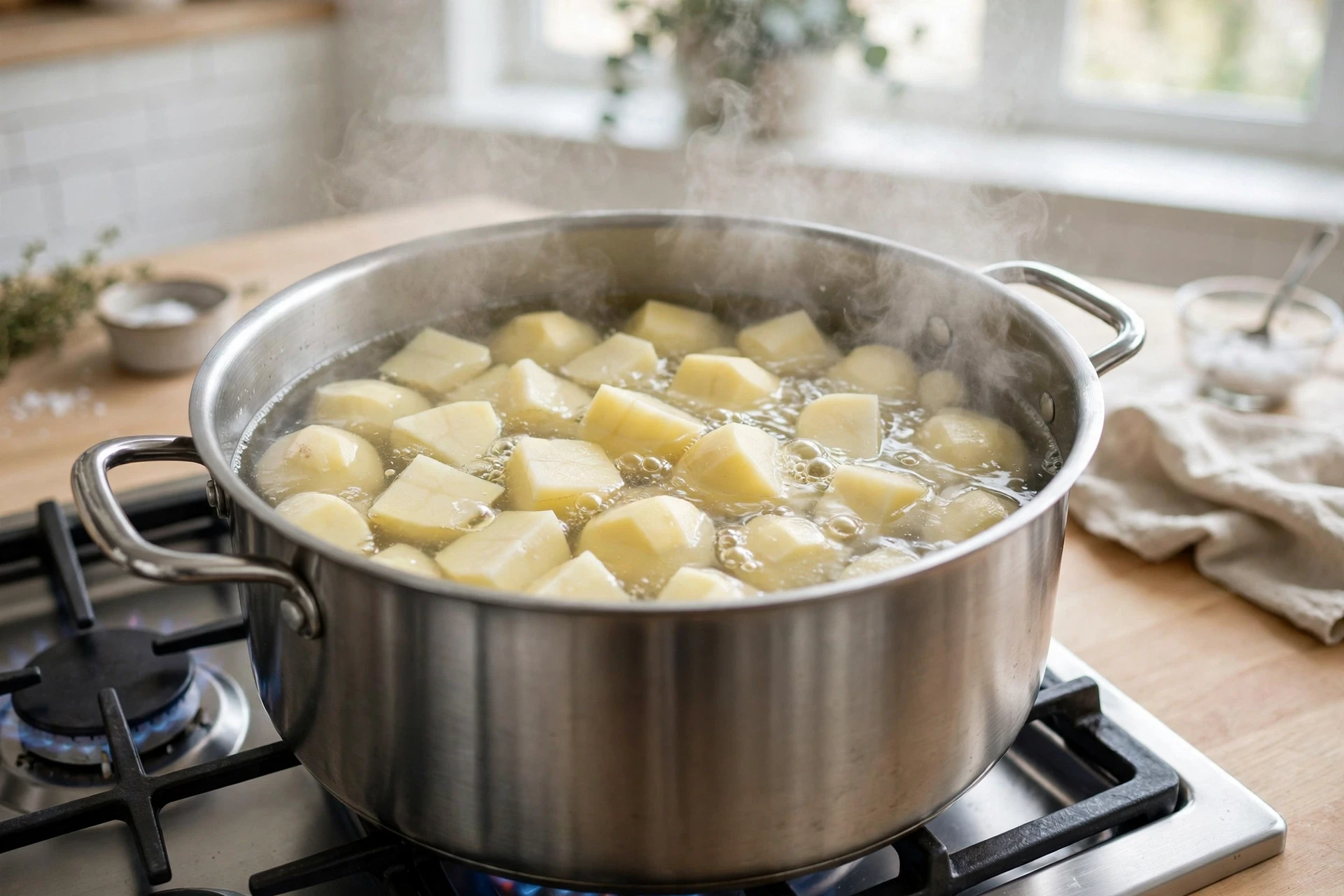
Cut and parboil. Heat the oven to 425F. Peel the potatoes and cut them into even chunks, about the size of a small egg — halve medium potatoes, cut big ones into three or four. Put them in a large pot, cover with cold water by about 1 inch, and add the fine sea salt and the baking soda. Bring to a boil, then simmer for 8 to 10 minutes, until the outside is soft and a knife meets a little resistance in the middle. The edges should look slightly softened and cloudy, not falling apart.
2 Step 2: Steam Dry and Rough Up
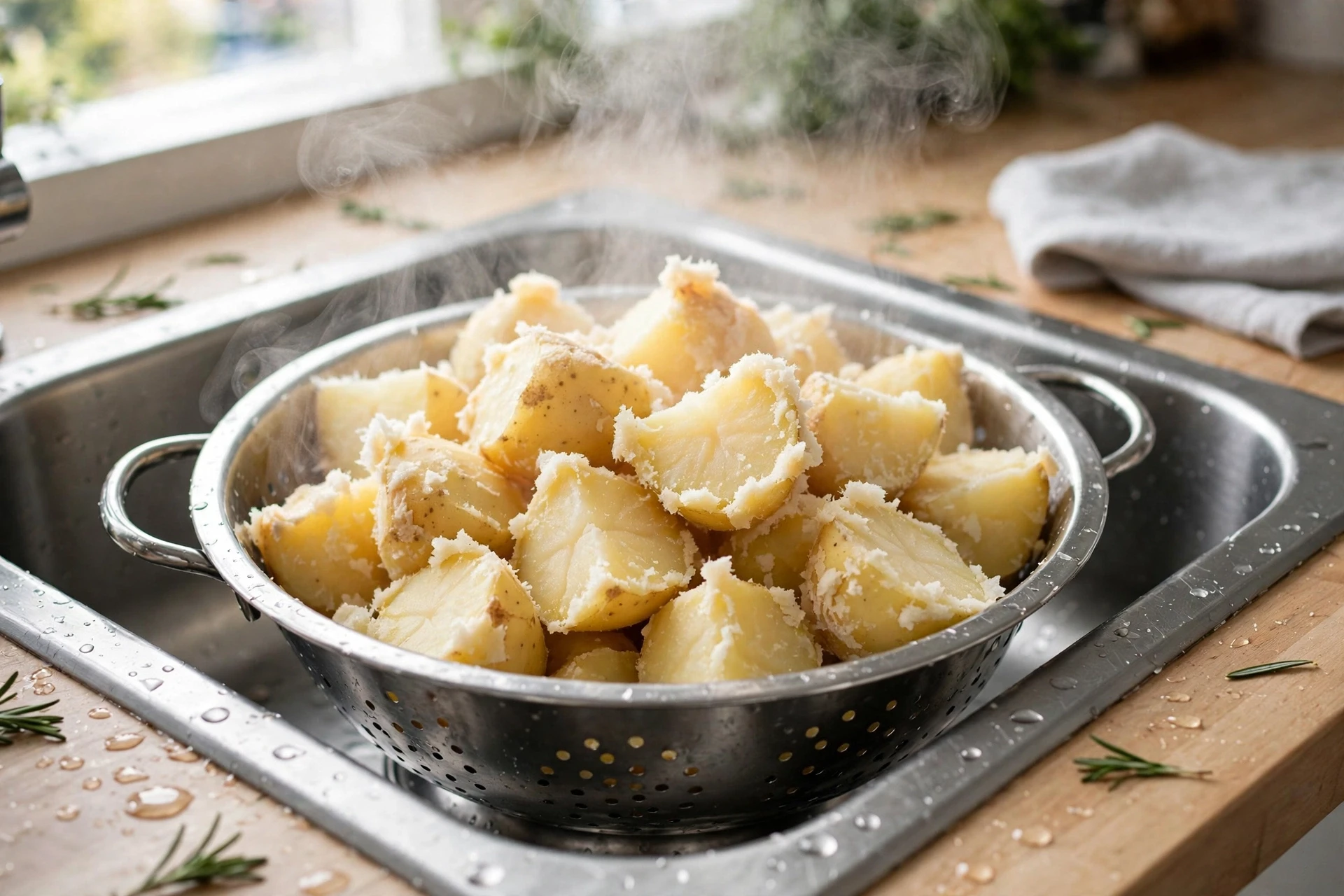
Steam dry and rough up. Drain the potatoes well in a colander and leave them to steam dry for 3 to 5 minutes — the steam escaping is moisture leaving, and dry potatoes crisp while wet ones steam. Then, still in the colander, shake and toss them hard 3 or 4 times to rough up the edges. You want a fluffy, almost mashed coating on every piece. This ragged surface is the whole game: every scuffed edge becomes crunch in the oven. If you like, toss the roughed-up potatoes with the semolina now.
3 Step 3: Heat the Fat and Add the Potatoes
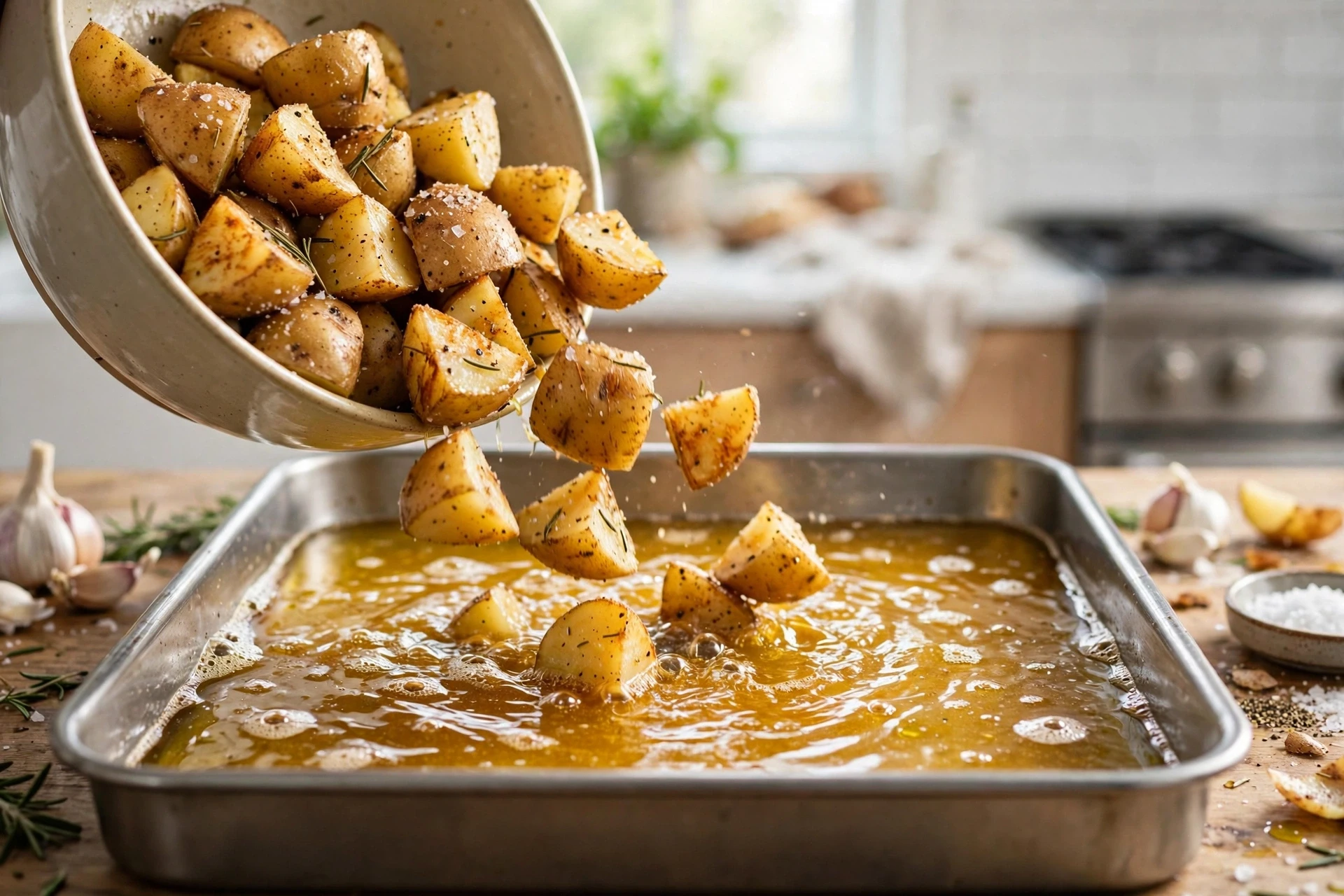
Heat the fat and add the potatoes. While the potatoes parboil, pour the duck fat into a large, heavy roasting tin and put it in the hot oven for at least 10 minutes, until it is shimmering and very hot. Take the tin out and set it on the stovetop over medium heat so the fat keeps sizzling. Carefully tip the potatoes into the hot fat, letting them slide in rather than drop, so the fat does not splash. They should sizzle loudly the moment they land — that sizzle is the crust starting to form. Turn them in the fat with a spoon so they are coated all over, and spread them out in a single layer so they do not touch.
4 Step 4: Roast, Then Turn
Roast, then turn. Roast for 25 minutes without opening the oven door. Then turn each potato over with tongs, giving it a fresh face against the hot tin. Crowded potatoes steam instead of roasting, so if the tin is full, use two tins. Put the tin back in the oven for the second half of the roast.
5 Step 5: Add Garlic and Rosemary, Roast Until Deep Golden
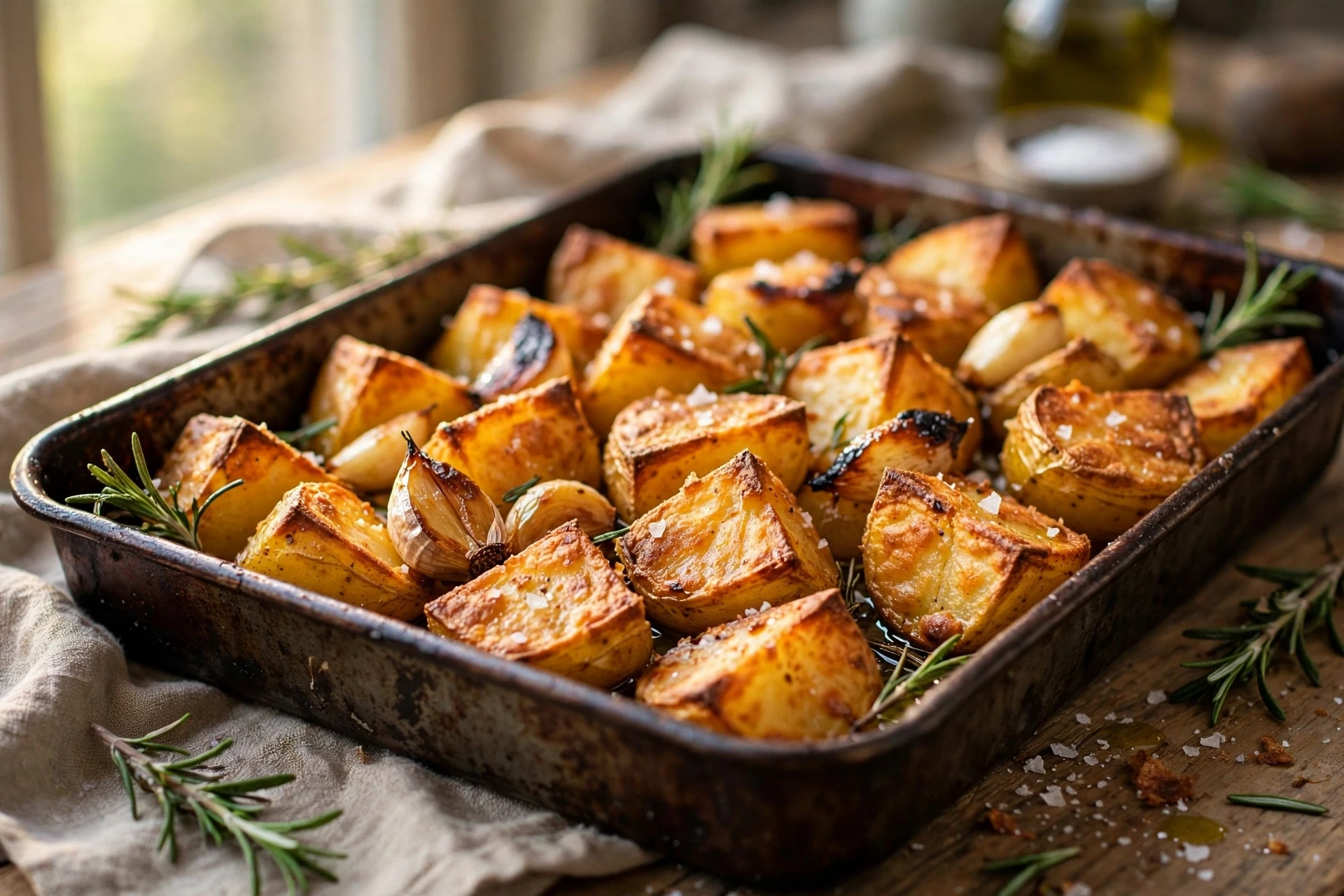
Add garlic and rosemary, roast until deep golden. When you turn the potatoes, tuck the smashed garlic cloves and rosemary sprigs into the tin between them. Roast for a further 20 to 30 minutes, until the potatoes are deep golden and very crisp — darker than you think. Pale gold means soft; deep gold means shatteringly crisp. The total roast time is 45 to 55 minutes. If a potato looks pale on one side, turn it again and give it 10 more minutes.
6 Step 6: Salt and Serve Immediately
Salt and serve immediately. Lift the potatoes onto a warm plate, sprinkle with the flaky sea salt, and serve right away. Roast potatoes are at their best in the first 10 minutes out of the oven — the crust is at its loudest and the inside is at its fluffiest. Do not cover them with foil or a lid while they wait; trapped steam softens the crust you worked so hard to build.
Technique: The Four Rules of Crisp — Parboil, Rough Up, Hot Fat, Space
Crispy roast potatoes are not luck. They are four rules, and every one of them has a reason.
Rule 1: Parboil in Alkaline Water
Parboiling softens the outside of the potato while the centre stays firm. The baking soda raises the pH of the water, which breaks down the potato’s surface pectin faster, so more starchy paste forms on the outside. That paste is what dries into a crisp shell in the oven. Simmer 8 to 10 minutes — long enough that the edges soften, short enough that the pieces hold their shape. If a potato falls apart in the pot, it was boiled too long; next time, pull them a minute earlier.
Rule 2: Rough Up the Edges
The shake in the colander is the most important 10 seconds of the recipe. Those fluffy, ragged edges have far more surface area than a smooth potato, and surface area is crunch. A smooth potato roasts into a smooth, leathery skin. A roughed-up potato roasts into a craggy, shattering crust. Shake hard, 3 or 4 times, until every piece looks scuffed and floury.
Rule 3: The Fat Must Be Screaming Hot
Cold fat soaks into the potato; hot fat seals it. When roughed-up potatoes hit fat that is already shimmering hot, the outside sets and starts crisping immediately instead of sitting there absorbing grease. Heat the fat in the tin for at least 10 minutes before the potatoes go in, and listen for the sizzle — if the potatoes land silently, the fat was not hot enough, and the result will be greasy, not crisp.
Rule 4: Give Them Space
Potatoes that touch each other steam. Potatoes with space around them roast. Use a large, heavy tin, spread the potatoes in a single layer with a little room between them, and use two tins rather than one crowded one. The same rule applies to turning: turn each potato so a fresh face meets the hot tin.
Which Fat Should You Use?
| Fat | Flavour | Crisp | Notes |
|---|---|---|---|
| Duck fat | Rich, savoury | Best | The top pick for flavour and crunch |
| Goose fat | Rich, traditional | Excellent | The classic British choice |
| Beef dripping | Deep, beefy | Excellent | Wonderful with a roast beef dinner |
| Olive oil | Clean, mild | Very good | The everyday option; use a light one, not extra-virgin, at this heat |
| Vegetable oil | Neutral | Very good | Fine and vegan-friendly |
Tips for the Best Crispy Roast Potatoes
- ✔️ Cut even pieces. Uneven pieces cook unevenly — small ones burn while big ones stay pale.
- ✔️ Do not skip the steam dry. Three to five minutes in the colander lets the moisture escape.
- ✔️ Shake hard. Timid shaking gives timid crunch — you want ragged, fluffy edges.
- ✔️ Heat the fat for a full 10 minutes. The sizzle on contact is the test.
- ✔️ Do not crowd the tin. One layer, with space, or use two tins.
- ✔️ Roast darker than you think. Deep golden is crisp; pale gold is soft.
- ✔️ Do not open the oven in the first 25 minutes. Every peek drops the temperature.
- ✔️ Serve immediately. The crust is loudest in the first 10 minutes out of the oven.
Variations
Classic Garlic and Rosemary
The recipe as written. Garlic and rosemary added at the turn, flaky salt to finish. The version to make first.
Mexican Cotija, Lime, and Chile
Toss the hot potatoes with 1/4 cup crumbled cotija cheese, the zest of 1 lime, 1/2 teaspoon chile powder, and 2 tablespoons chopped cilantro. The cotija melts slightly onto the hot crust, the lime wakes everything up, and the chile gives a gentle warmth. Serve with lime wedges.
Parmesan and Herb
In the last 10 minutes of roasting, sprinkle the potatoes with 1/4 cup finely grated Parmesan and 1 tablespoon chopped fresh parsley. The Parmesan crisps into a salty, savoury crust. Watch it closely — Parmesan goes from golden to burnt fast.
Semolina-Coat Crunch
After roughing up the potatoes, toss them with 1 tablespoon fine semolina before they go into the fat. It gives a very crunchy, sandy coat. Some cooks find it slightly grainy, so try it once and decide for yourself.
Air Fryer Crispy Roast Potatoes
Parboil and rough up as above, toss in 2 tablespoons of oil, then air-fry in a single layer at 400F for 20 to 25 minutes, shaking every 8 minutes. Smaller batches, same crunch.
What to Serve With Crispy Roast Potatoes
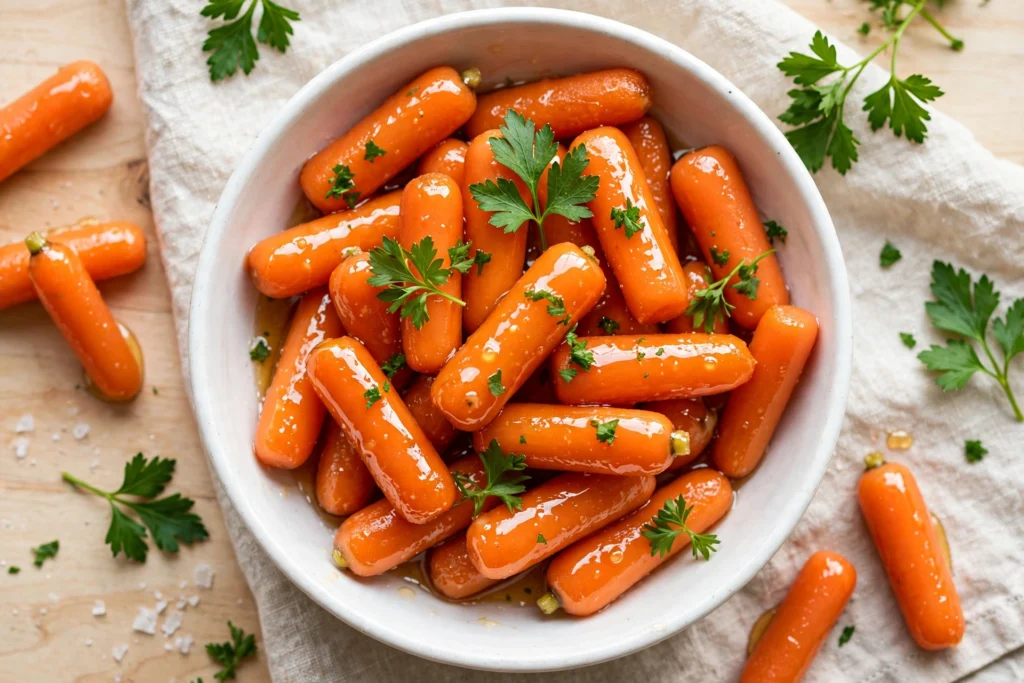
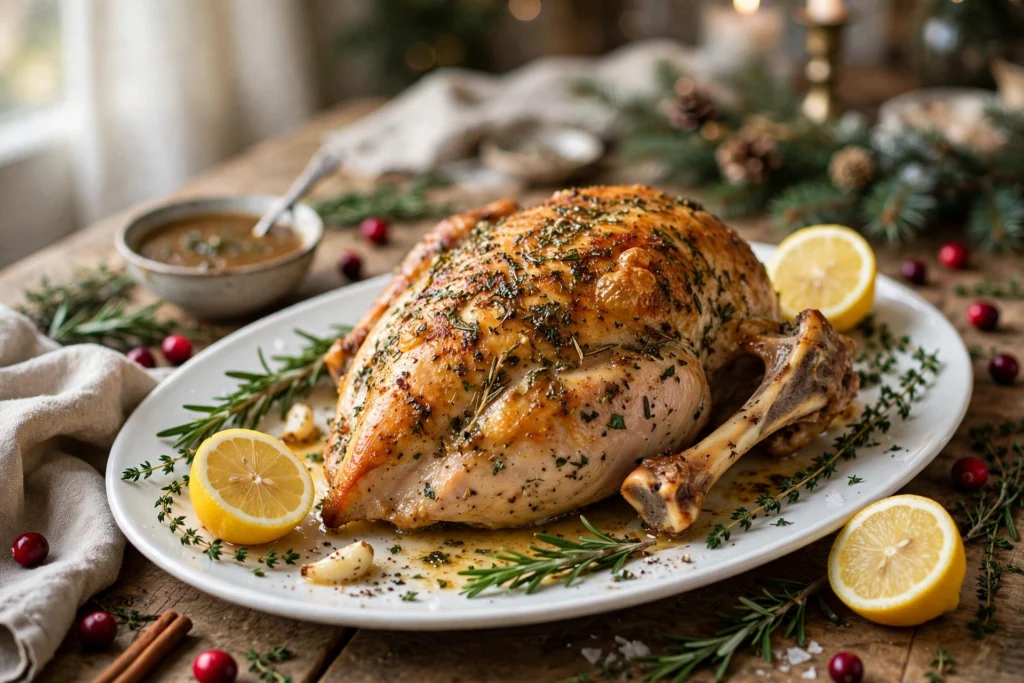
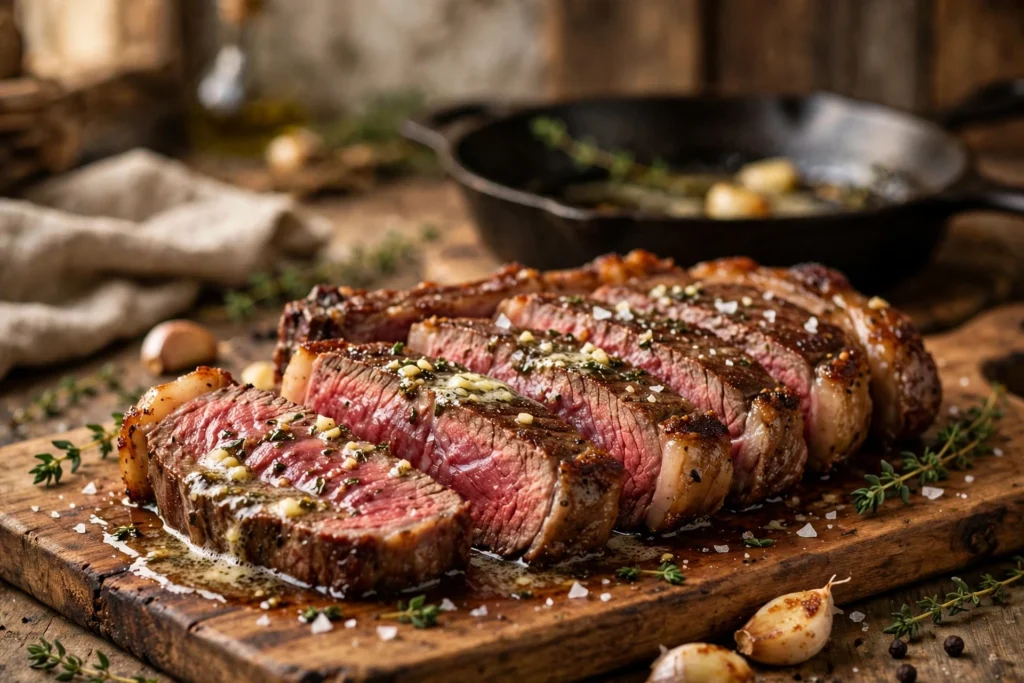
These belong beside a roast: roast turkey breast at Thanksgiving or Christmas, or a medium-rare steak on a Sunday. They are just as happy next to honey glazed carrots on a holiday table. For a Mexican-leaning meal, serve them with papas con chorizo on the side, or use the leftover potatoes in crispy potato tacos the next day. And if you love roast potatoes enough to want a second version, try the whipped feta roasted potatoes — crisp potatoes over a cool, creamy feta base.
Storage
In the Fridge
Cool the potatoes completely, then refrigerate in a single layer in a covered container for up to 3 days. They will soften in the fridge — that is normal, and the reheat below brings most of the crunch back.
Reheating (Keep the Crunch)
Reheat in a 425F oven on a baking sheet for 10 to 12 minutes, turning once, until hot and crisp again. A hot oven is the only reheat that works — the microwave turns them soft and steamy. A quick drizzle of oil before reheating helps the crust re-crisp.
Freezing
Roast potatoes freeze better than most people expect. Cool completely, freeze in a single layer on a tray, then transfer to a freezer bag for up to 2 months. Reheat from frozen in a 425F oven for 15 to 20 minutes.
Make Ahead
Parboil, rough up, and cool the potatoes the day before, then cover and refrigerate. On the day, heat the fat, tip the cold potatoes in, and roast as directed, adding about 5 minutes to the roast time. This is the holiday trick — the fussy step is done before the guests arrive.
Frequently Asked Questions
Why are my roast potatoes not crispy?
The usual cause is one of four things: the fat was not hot enough when the potatoes went in, the tin was crowded so the potatoes steamed, the potatoes went in wet, or they were pulled out too pale. Next time, heat the fat for a full 10 minutes, spread the potatoes in a single layer, steam-dry them well after parboiling, and roast until deep golden — darker than you think.
What are the best potatoes for roast potatoes?
Floury potatoes: Russet in the US, Maris Piper or King Edward if you can find them. Their starch breaks down in the parboil and forms the fluffy coating that crisps. Waxy potatoes like red potatoes and new potatoes hold their shape but never get fluffy inside, so they make poor roast potatoes.
Should I boil potatoes before roasting?
Yes, if you want them truly crispy. Parboiling for 8 to 10 minutes softens the outside so it can be roughed up into the fluffy coating that becomes crunch. Potatoes roasted raw from the oven stay smooth-skinned and leathery by comparison.
What does baking soda do to roast potatoes?
Baking soda raises the pH of the parboil water, which breaks down the potato surface faster and creates more of the starchy paste that turns into crunch. Use no more than 1/2 teaspoon in the pot — more can make the potatoes taste soapy.
Can I make roast potatoes ahead of time?
Yes. Parboil, rough up, and cool the potatoes the day before, then refrigerate covered. On the day, roast them in hot fat as directed, adding about 5 minutes. Fully roasted potatoes can also be reheated in a 425F oven for 10 to 12 minutes.
Why do my roast potatoes stick to the pan?
Sticking usually means the fat was not hot enough, or the potatoes were moved too early. Hot fat sets the crust before it can bond to the tin, and once the crust is set the potato releases on its own. Use a heavy tin, heat the fat well, and do not try to turn the potatoes in the first 25 minutes.
Try These Next
- Whipped Feta Roasted Potatoes — crisp roast potatoes over a cool, creamy feta base.
- Papas con Chorizo — Mexican potatoes with chorizo, a skillet cousin of this recipe.
- Crispy Potato Tacos — the best use for leftover roast potatoes.
- Roast Turkey Breast — the roast these potatoes were made to sit beside.
- Medium-Rare Steak — a Sunday steak dinner, with these potatoes on the side.
- Honey Glazed Carrots — a sweet holiday side that shares the table beautifully.
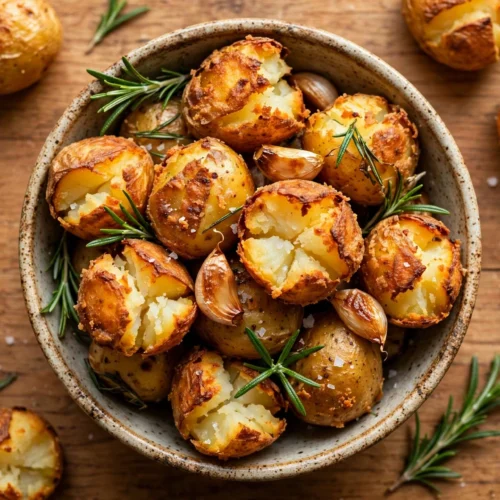
Crispy Roast Potatoes
Ingredients
- 3 pounds Russet potatoes peeled and cut into even chunks
- 1 tablespoon fine sea salt for the parboil water
- 1/2 teaspoon baking soda
- 1/3 cup duck fat
- 4 garlic cloves unpeeled and lightly smashed
- 2 rosemary sprigs
- 1 teaspoon flaky sea salt to finish
- 1 tablespoon fine semolina optional
Instructions
- Heat the oven to 425 degrees F. Peel the potatoes and cut them into even chunks, about the size of a small egg. Put them in a large pot, cover with cold water by about 1 inch, and add the fine sea salt and baking soda. Bring to a boil, then simmer 8 to 10 minutes, until the outside is soft and a knife meets a little resistance in the middle.
- Drain the potatoes well in a colander and leave them to steam dry for 3 to 5 minutes. Shake and toss them hard in the colander 3 or 4 times to rough up the edges until fluffy and ragged. Toss with the semolina now, if using.
- While the potatoes parboil, pour the duck fat into a large, heavy roasting tin and put it in the hot oven for at least 10 minutes, until shimmering and very hot. Set the tin on the stovetop over medium heat, tip the potatoes in so they slide rather than drop, and turn them in the fat to coat. Spread them in a single layer so they do not touch.
- Roast for 25 minutes without opening the oven door. Turn each potato over with tongs so a fresh face meets the hot tin.
- Tuck the smashed garlic cloves and rosemary sprigs into the tin between the potatoes. Roast 20 to 30 minutes more, until deep golden and very crisp, 45 to 55 minutes total.
- Lift the potatoes onto a warm plate, sprinkle with the flaky sea salt, and serve immediately.
Notes
- Use floury potatoes — Russet is the best US pick; waxy potatoes never get fluffy inside.
- Cut even pieces so they cook at the same rate.
- Do not use more than 1/2 teaspoon baking soda, or the potatoes can taste soapy.
- The fat must be screaming hot — listen for the sizzle when the potatoes land.
- Do not crowd the tin; potatoes that touch steam instead of roasting.
- Roast until deep golden, darker than you think — pale gold means soft.
- Do not cover finished potatoes with foil; trapped steam softens the crust.
- Parboil the day before for a holiday make-ahead; add about 5 minutes to the roast time.