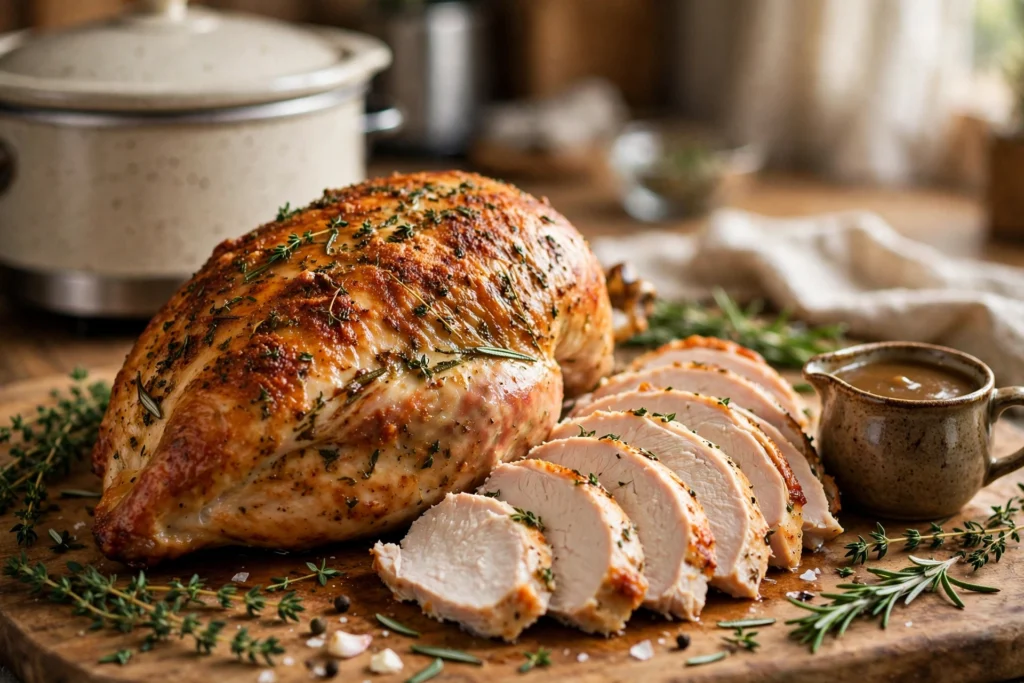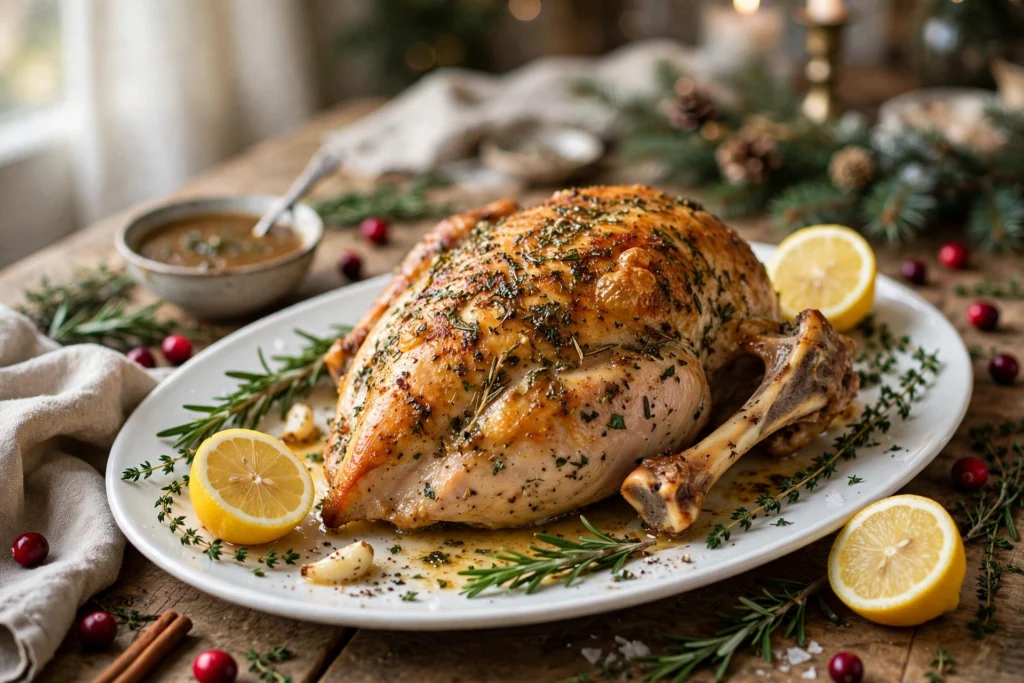

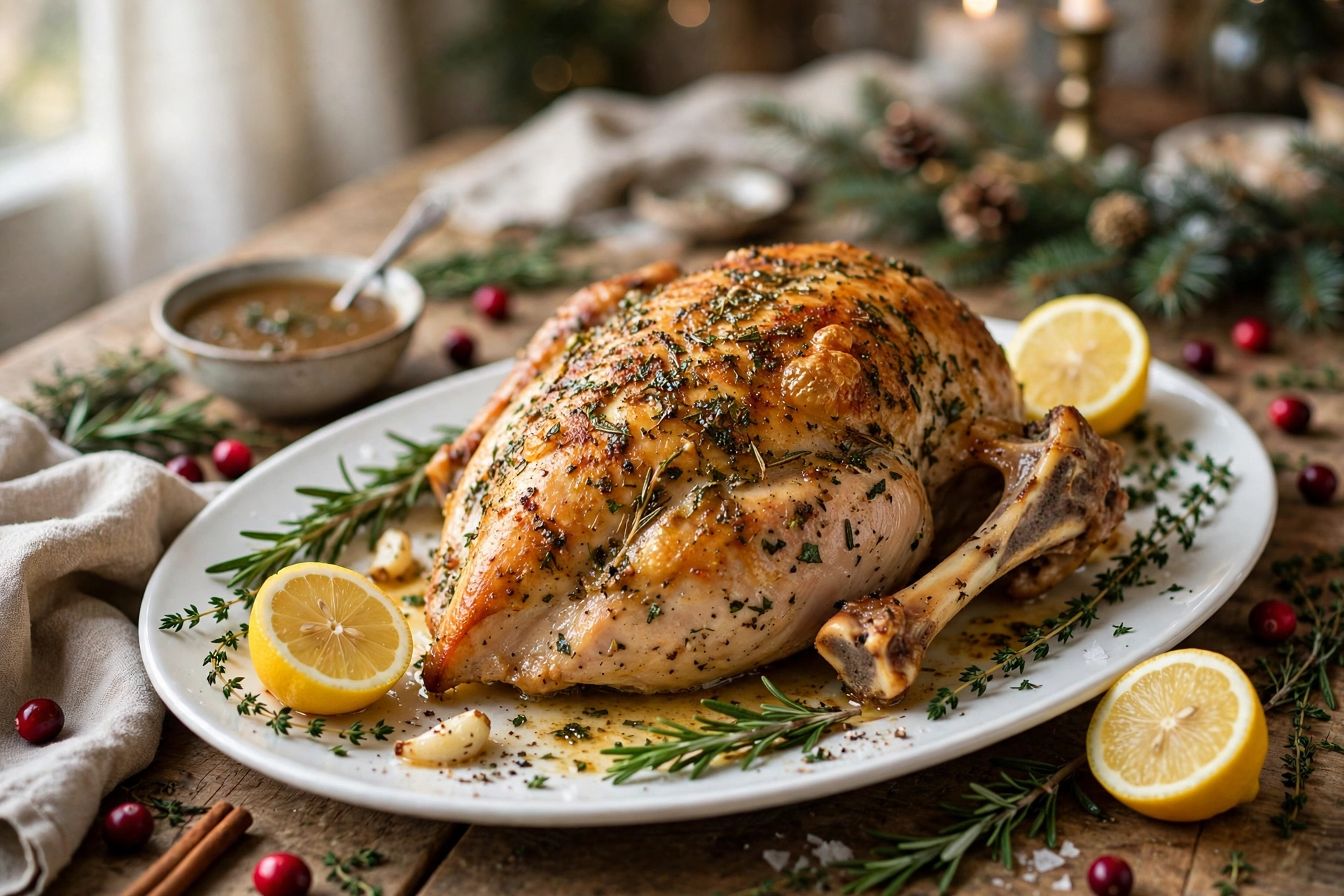
A whole turkey is a project. A turkey breast is a dinner. This turkey breast recipe gives you everything people love about a holiday roast — juicy meat, golden crispy skin, herb butter in every bite — in about two hours, with a bird small enough for a regular oven and a regular weeknight table. One 4-pound bone-in breast feeds six people.
The secret is butter under the skin. It melts as the breast roasts, basting the meat from the inside while the skin above it turns crisp and brown. Fresh rosemary, thyme and sage go into that butter, along with garlic and lemon zest, so the flavor reaches all the way through the meat.

Why You’ll Love It
- All the good parts, none of the project. A breast is the cut everyone reaches for, roasted in about two hours instead of all day.
- Juicy, not dry. Butter under the skin bastes the meat from the inside as it roasts.
- Golden, crispy skin. A dry surface and a hot start give you skin that actually crackles.
- Feeds six from one pan. A 4-pound bone-in breast serves six generously, with leftovers for sandwiches.
- Holiday flavor, any night. Rosemary, thyme, sage and garlic taste like a celebration.
- Built-in gravy base. The pan juices turn into a quick gravy with almost no extra work.
- Easy to carve. A bone-in breast slices cleanly once you know the two cuts, and this article shows you both.
Ingredients
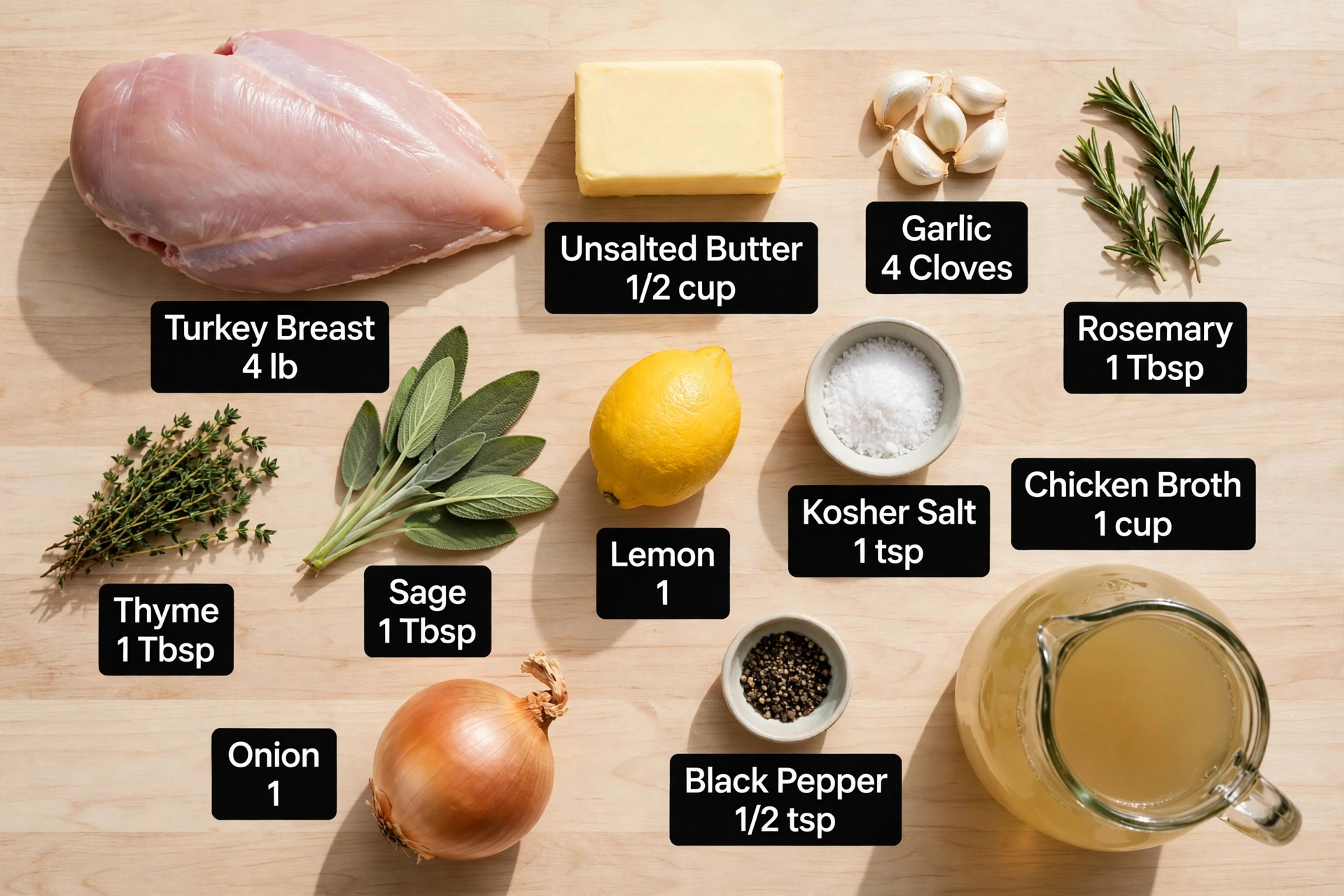
- 4 lb bone-in, skin-on turkey breast — The bone keeps the meat juicy and adds flavor as it roasts, and the skin protects the meat and crisps beautifully. Look for a single whole breast, not two halves. Substitution: a boneless breast of the same weight — roast it for about 1 hour 15 minutes instead.
- 1/2 cup unsalted butter, softened — The carrier for all the flavor. Softened butter spreads under the skin without tearing it, and it melts slowly as the breast roasts. Substitution: salted butter, with 1/2 teaspoon less salt.
- 4 garlic cloves, minced — Warm, savory depth in the herb butter. Mince it fine so it spreads evenly under the skin. Substitution: 1 teaspoon garlic powder, mixed into the butter.
- 1 tablespoon fresh rosemary, finely chopped — Piney and bold, the classic turkey herb. Chop it fine so no one bites into a woody needle. Substitution: 1 teaspoon dried rosemary.
- 1 tablespoon fresh thyme leaves — Earthy and gentle, it rounds out the rosemary. Substitution: 1 teaspoon dried thyme.
- 1 tablespoon fresh sage, finely chopped — Warm and slightly peppery, the flavor that says holiday dinner. Substitution: 1 teaspoon dried sage.
- 1 lemon, halved — Half goes into the pan for aroma, half is squeezed over the finished slices for brightness. The zest goes into the butter. Substitution: 1 tablespoon white wine vinegar in the pan.
- 1 teaspoon kosher salt — Seasons the meat and helps the skin crisp. Substitution: 3/4 teaspoon fine sea salt.
- 1/2 teaspoon black pepper — A little bite against the rich butter. Substitution: white pepper, in the same amount.
- 1 onion, quartered — The roasting bed. It lifts the breast off the pan so hot air moves underneath, and it flavors the pan juices for gravy. Substitution: 2 carrots and 2 celery stalks, cut into chunks.
- 1 cup low-sodium chicken broth — Poured into the pan, not over the breast. It keeps the oven moist and becomes the base of the pan gravy. Substitution: water.
How to Make Roast Turkey Breast with Herb Butter
1Step 1: Pat Dry and Make the Herb Butter
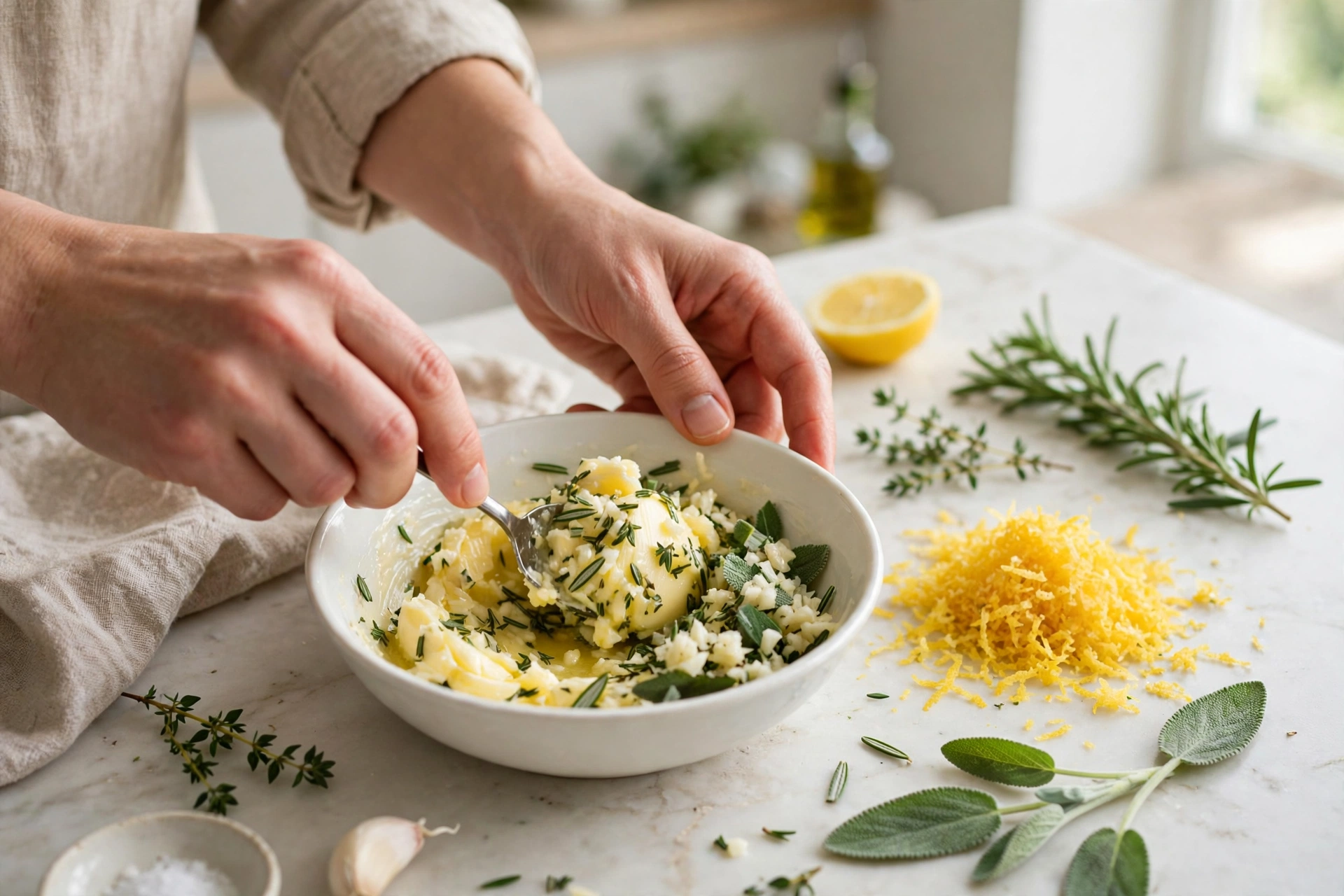
Pat dry and make the herb butter. Heat the oven to 325F and set the rack in the center. Take the breast out of the fridge 30 minutes before roasting so it is not ice cold. Pat it very dry with paper towels, top and bottom — a dry surface is what lets the skin crisp. Zest the lemon into a bowl, then stir in the softened butter, minced garlic, rosemary, thyme, sage, salt and pepper until everything is evenly mixed. The butter should smell like a herb garden already.
2Step 2: Butter Under the Skin
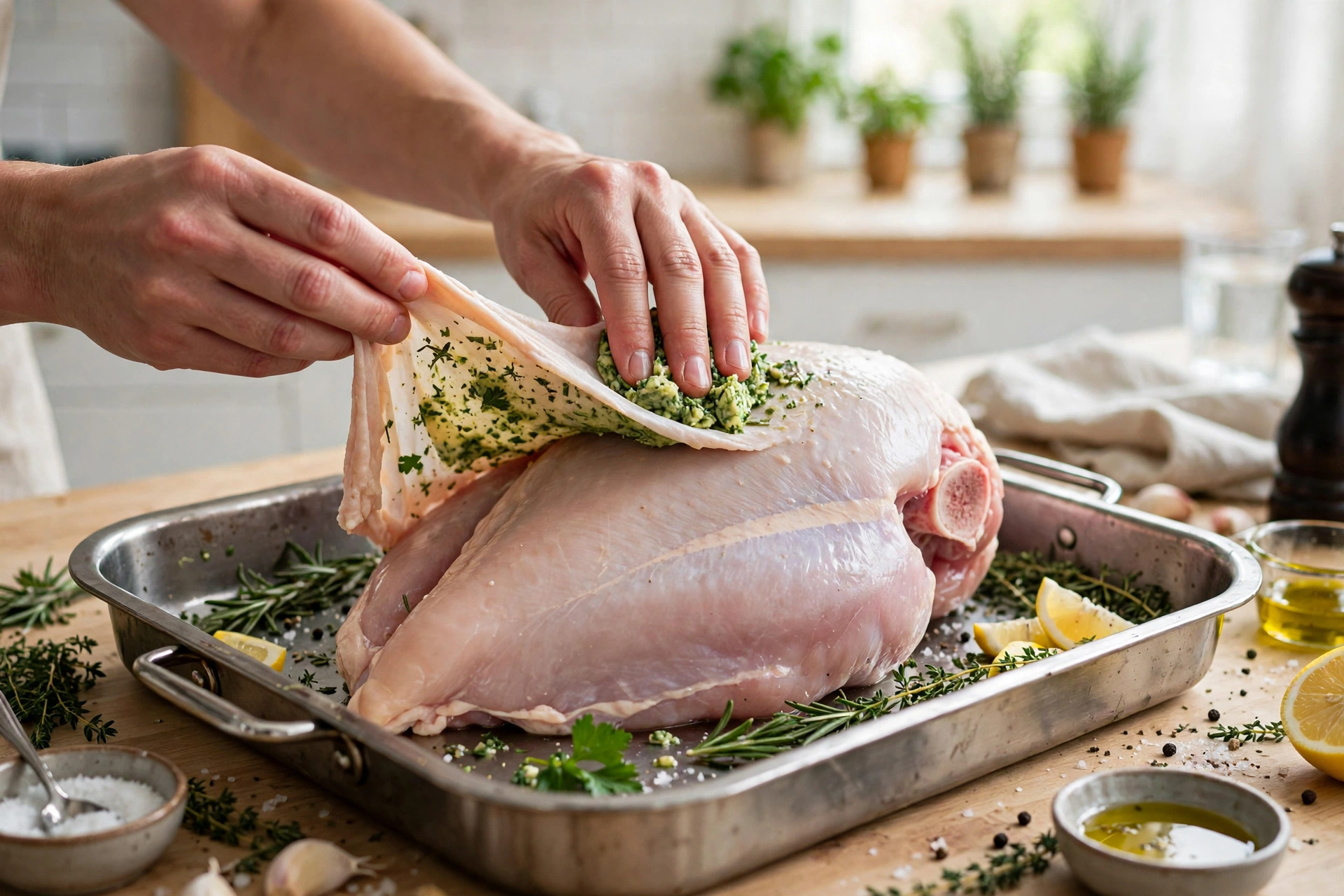
Butter under the skin. Slide your fingers gently under the skin at the neck end, loosening it from the meat without tearing it — work slowly and stop if you feel resistance. Spread about two-thirds of the herb butter under the skin, smoothing it over the meat with your fingers from the outside. Rub the rest over the outside of the skin. Set the breast on the quartered onion in a roasting pan, tuck the lemon halves around it, and pour the broth into the pan around the breast, never over the skin.
3Step 3: Roast Until Golden
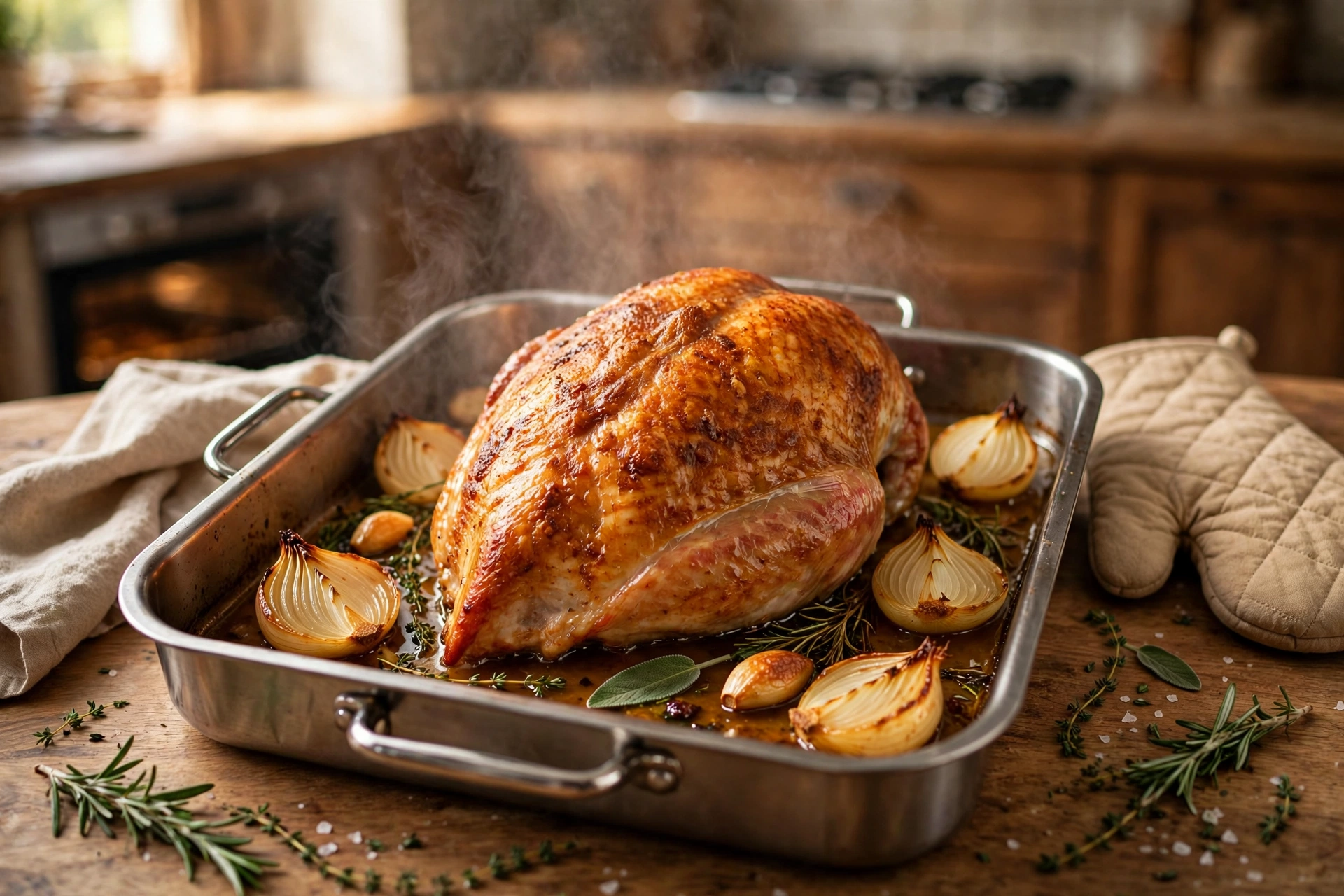
Roast until golden. Roast uncovered for 1 hour 30 minutes to 1 hour 45 minutes, until the skin is deep golden brown and a thermometer in the thickest part reads 160F. Baste once, halfway through, by spooning the pan juices over the skin — once is enough, and opening the oven more often only cools it down. If the skin browns too fast, tent it loosely with foil for the last 20 minutes. A 4-pound breast roasts at about 20 minutes per pound, but the thermometer decides, not the clock.
4Step 4: Rest and Carve
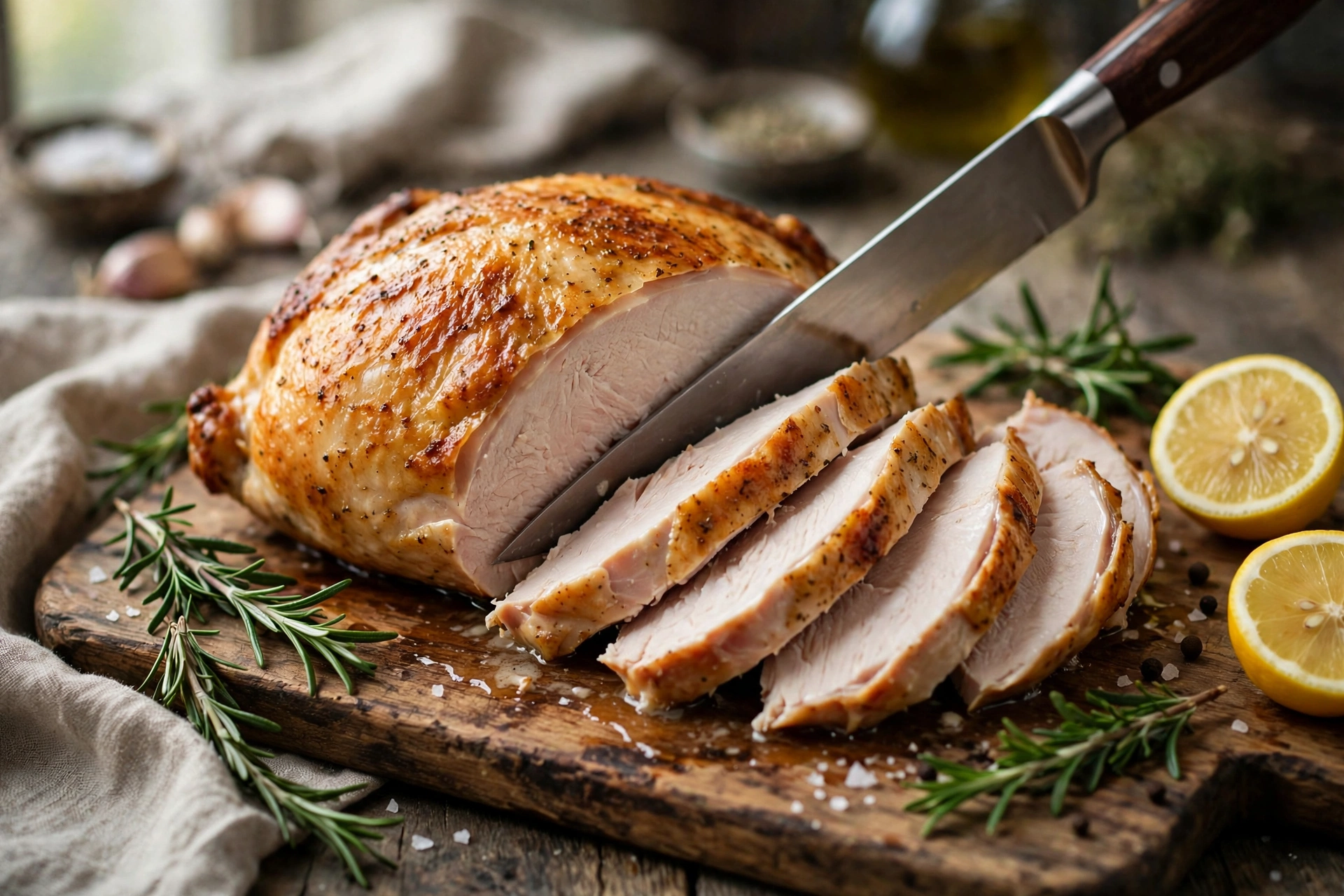
Rest and carve. Move the breast to a cutting board and rest it for 20 minutes before you touch the knife. The temperature climbs to 165F as it rests, and the juices settle back into the meat — cut it hot and they run out onto the board instead. While it rests, make the quick gravy from the pan juices (see the Technique section). To carve, cut along one side of the breastbone to free the whole breast half, then slice it across the grain. Squeeze the roasted lemon over the slices, and serve.
Technique: The Temperature Guide, the Crisp Skin, and the Carving
Roast turkey breast fails in only a few ways, and all of them are fixable. Dry meat, pale skin, and torn-up carving are the three complaints, and this section takes them one at a time.
The Temperature Guide
Time is a rough guide at best, because breasts differ in shape and your oven has its own habits. A thermometer is the tool that decides. Put it in the thickest part of the breast, away from the bone, and pull the breast at these temperatures:
| When to pull | Thermometer reads | After a 20-minute rest |
|---|---|---|
| Too early — keep roasting | Below 155F | Still underdone |
| Perfect — pull now | 160F | 165F, juicy and safe |
| Already done — serve now | 165F | 170F, still good, a little firmer |
| Overdone | Above 170F | Dry — slice thin and serve with gravy |
Bone-In or Boneless: Which Breast to Buy
Bone-in wins for flavor and juiciness. The bone slows the cooking slightly, which keeps the meat from drying out, and it adds flavor to the meat around it. It also roasts more evenly, because the bone holds the shape. Boneless is easier to carve and cooks faster — about 1 hour 15 minutes for a 4-pound boneless breast — but it dries out faster too, so check it early. Either way, buy skin-on: the skin is the shield that keeps the meat moist.
How to Get Crispy Skin
Crisp skin comes from three things, in order. First, the breast must be dry — pat it, then pat it again. Second, the butter goes under the skin, not in a thick layer on top of it; a thick layer on top melts and runs off. Third, do not cover the breast with foil for most of the roast — foil traps steam, and steamed skin never crisps. If the skin browns before the meat is done, tent it loosely with foil for the last 20 minutes only.
The Quick Pan Gravy
While the breast rests, pour the pan juices through a strainer into a measuring cup and let the fat rise for a minute. Skim off most of the fat, then measure 2 tablespoons of it back into a small saucepan. Whisk in 2 tablespoons of flour and cook for 1 minute, then slowly whisk in the remaining juices plus enough chicken broth to make 2 cups total. Simmer for 3 to 4 minutes until it thickens enough to coat a spoon, then taste for salt. If the gravy tastes flat, a squeeze of the roasted lemon wakes it up.
How to Carve a Bone-In Breast
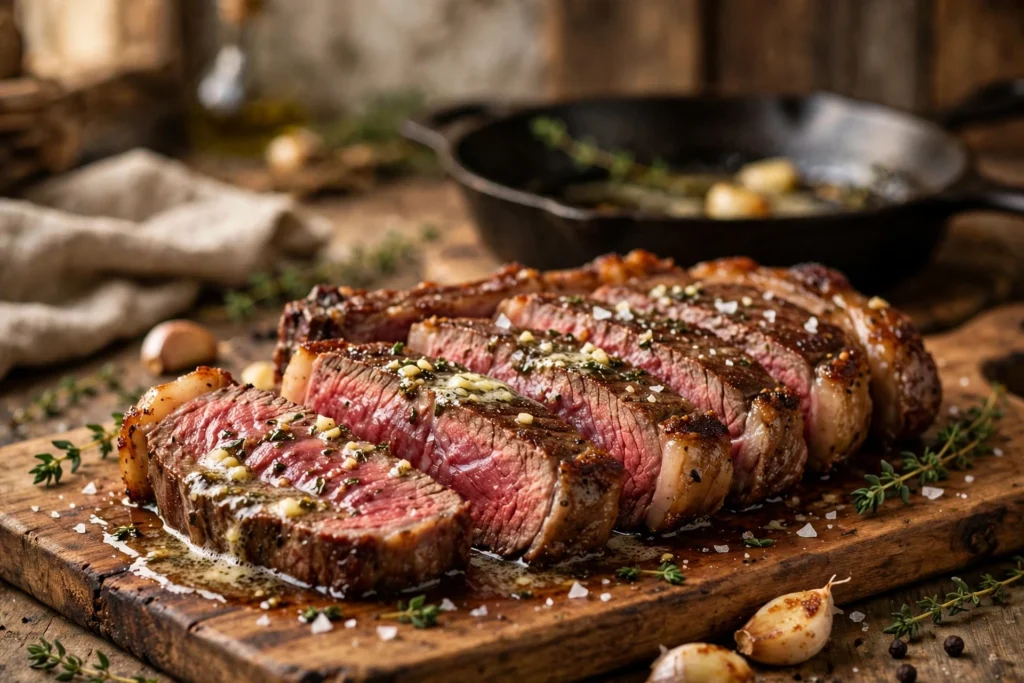
Carving is where a good roast gets ruined, so slow down. Set the rested breast on a cutting board with the breastbone facing up. Run a long, sharp knife down one side of the breastbone and cut the whole breast half free in one piece. Lay that half flat, skin-side up, and slice it across the grain into even slices about 1/2 inch thick. Repeat on the other side. Slicing across the grain keeps each slice tender.
Tips for the Best Roast Turkey Breast
- ✔️ Pat the breast very dry. Wet skin steams instead of crisping, and no amount of butter fixes that.
- ✔️ Soften the butter fully. Cold butter tears the skin when you spread it; room-temperature butter slides under it easily.
- ✔️ Loosen the skin gently. Work your fingers under it slowly — a torn skin lets the butter leak out and leaves a bare patch.
- ✔️ Pour broth around, never over. Liquid on the skin is the fastest way to pale, soft skin.
- ✔️ Baste only once. Every time you open the oven, the temperature drops and the roast takes longer.
- ✔️ Pull at 160F, not 165F. The breast coasts to 165F as it rests, and those 5 degrees are the difference between juicy and dry.
- ✔️ Rest the full 20 minutes. Cutting early spills the juices onto the board instead of keeping them in the meat.
Variations
Garlic Butter Turkey Breast
Double the garlic to 8 cloves and skip the rosemary, keeping the thyme and sage. The result is richer and more savory, and it pairs beautifully with mashed potatoes and gravy.
Citrus Herb Turkey Breast
Add the zest of 1 orange to the herb butter, and roast the breast on a bed of orange slices instead of onion. The citrus perfumes the meat and the pan juices, and the gravy tastes brighter.
Smoky Paprika Turkey Breast
Add 1 teaspoon smoked paprika and 1/2 teaspoon cumin to the herb butter. The skin turns a deeper golden color and the flavor leans warm and smoky instead of purely herby.
Spicy Cajun Turkey Breast
Swap the herbs for 2 tablespoons of Cajun seasoning mixed into the butter, and add a pinch of cayenne. Roast the same way. This version loves cranberry sauce on the side.
Leftover Turkey Breast Sandwiches
Slice the cold leftovers thin and pile them on bread with mayonnaise, cranberry sauce, and lettuce. It is the sandwich everyone actually looks forward to the day after a roast.
What to Serve With Roast Turkey Breast
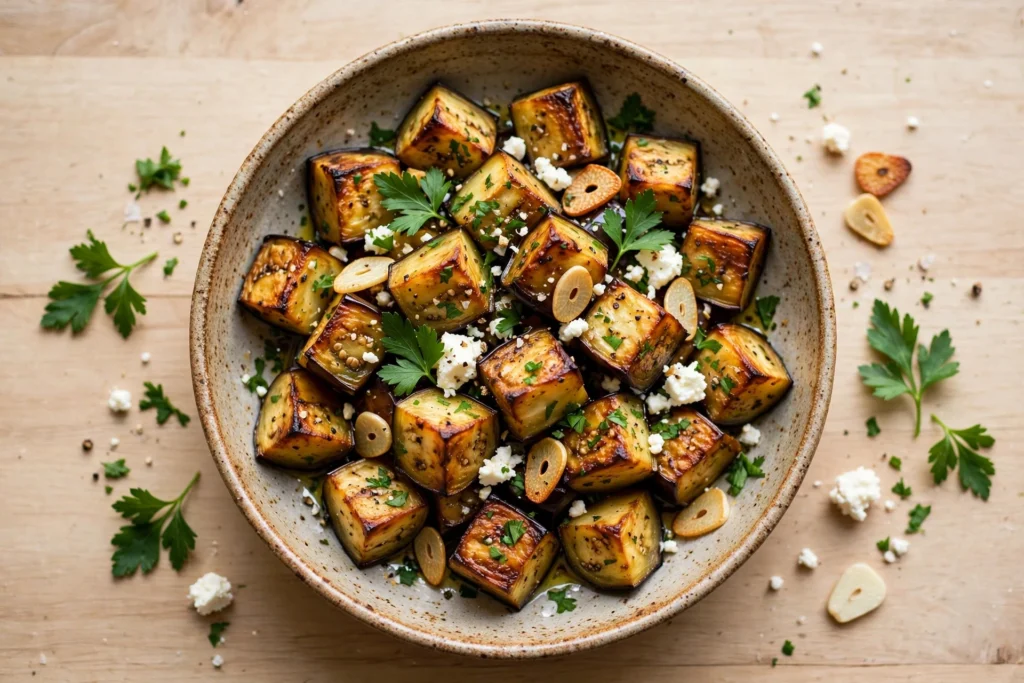
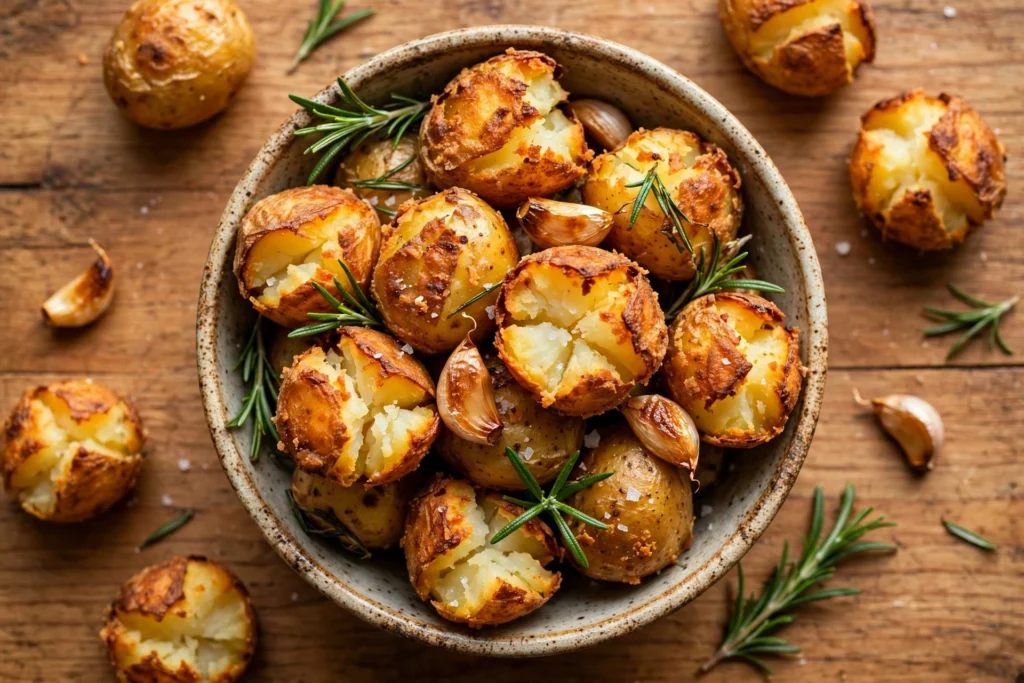
This is a holiday-style roast, so serve holiday-style sides. Start with cranberry sauce — the sweet-tart sauce is the classic partner for roast turkey, and it cuts through the rich herb butter perfectly. Honey glazed carrots add sweetness and color to the plate, and whipped feta roasted potatoes soak up the pan gravy beautifully. A green vegetable keeps the plate balanced — green beans, Brussels sprouts, or a simple salad all work. And if the table is bigger than the breast, add slow cooker brisket as a second main, so everyone has a choice. Serve it with the same sides you would serve with roast turkey — the breast is simply the smaller, faster version of that dinner.
For a hands-off version, try slow cooker turkey breast instead.
A bright kale salad on the side cuts through the rich herb butter.
Storage
In the Fridge
Let the turkey cool completely, then store the slices in an airtight container in the fridge for up to 4 days. Keep the slices in a single layer if you can, and pour any leftover pan juices over them — the juices keep the meat moist when you reheat it. Store the gravy in a separate container for up to 4 days.
Reheating
Reheat gently, or the turkey dries out. Warm the slices in a 300F oven, covered with foil, for about 15 minutes, with a spoonful of pan juices or broth over them. Avoid the microwave if you can — it heats unevenly and toughens the meat.
In the Freezer
Sliced turkey breast freezes for up to 3 months. Wrap portions tightly in plastic wrap, then foil, and thaw overnight in the fridge before reheating gently. Freeze the gravy separately for up to 3 months. The skin goes soft in the freezer, so eat it fresh.
Frequently Asked Questions
How long do you cook a turkey breast per pound?
Roast a bone-in turkey breast at 325F for about 20 minutes per pound — so a 4-pound breast takes about 1 hour 30 minutes to 1 hour 45 minutes. Pull the breast when the thickest part reads 160F, and let it rest 20 minutes so it coasts to 165F. A boneless breast cooks faster, at about 15 minutes per pound.
What temperature should a turkey breast be when done?
A turkey breast is done and safe to eat at 165F in the thickest part. Pull it from the oven at 160F and rest it for 20 minutes — the temperature rises about 5 degrees as it rests, so it lands at 165F without overcooking. Pulling it at 165F means it finishes at 170F, which is safe but noticeably drier.
Should I cook a turkey breast covered or uncovered?
Roast it uncovered for most of the time, so the skin crisps. Covering it with foil traps steam and leaves the skin pale and soft. The only exception is if the skin browns before the meat is done — then tent it loosely with foil for the last 20 minutes.
Is bone-in or boneless turkey breast better?
Bone-in is better for flavor and juiciness. The bone slows the cooking, adds flavor, and holds the breast’s shape, so the meat stays moist. Boneless cooks faster and carves more easily, but it dries out faster, so check it early. Either way, buy skin-on — the skin protects the meat and crisps into the best part.
How do I keep a turkey breast from drying out?
Three things keep it juicy: butter under the skin, which bastes the meat from the inside; pulling it at 160F instead of 165F, so it finishes as it rests; and resting it for a full 20 minutes before carving, so the juices settle instead of running out onto the board.
Can I make roast turkey breast ahead of time?
Yes. Roast it a day ahead, let it cool, and store the slices in the fridge with the pan juices poured over them. Reheat gently in a 300F oven, covered with foil, for about 15 minutes. The skin will not stay crisp overnight, so if crisp skin matters, roast it the day you serve it.
Try These Next
- Roast Turkey — the whole-bird version, for a full holiday table.
- Cranberry Sauce — sweet-tart and simple, the classic partner for roast turkey.
- Honey Glazed Carrots — sweet, glossy carrots for the same plate.
- Whipped Feta Roasted Potatoes — creamy, salty potatoes that love pan gravy.
- Slow Cooker Brisket — a second slow-cooked main for a bigger table.
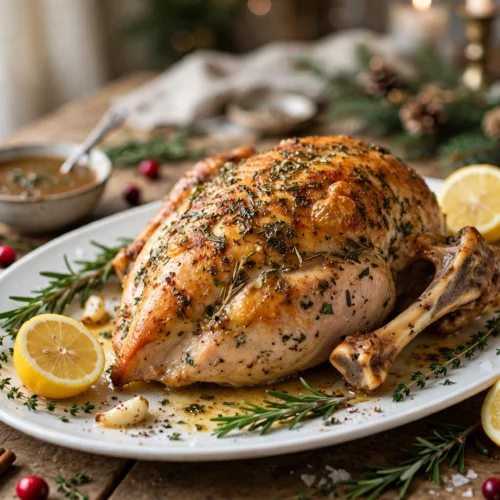
Roast Turkey Breast with Herb Butter
Ingredients
- 4 lb bone-in skin-on turkey breast
- 1/2 cup unsalted butter softened
- 4 garlic cloves minced
- 1 tablespoon fresh rosemary finely chopped
- 1 tablespoon fresh thyme leaves
- 1 tablespoon fresh sage finely chopped
- 1 lemon halved
- 1 teaspoon kosher salt
- 1/2 teaspoon black pepper
- 1 onion quartered
- 1 cup low-sodium chicken broth
Instructions
- Heat the oven to 325 degrees F and set the rack in the center. Take the breast out of the fridge 30 minutes before roasting. Pat it very dry with paper towels.
- Zest the lemon into a bowl. Stir in the softened butter, minced garlic, rosemary, thyme, sage, salt, and pepper until evenly mixed.
- Slide your fingers gently under the skin at the neck end to loosen it without tearing it. Spread about two-thirds of the herb butter under the skin, and rub the rest over the outside. Set the breast on the quartered onion in a roasting pan, tuck the lemon halves around it, and pour the broth into the pan around the breast.
- Roast uncovered for 1 hour 30 minutes to 1 hour 45 minutes, until the skin is deep golden brown and a thermometer in the thickest part reads 160 degrees F. Baste once halfway through. If the skin browns too fast, tent it loosely with foil for the last 20 minutes.
- Move the breast to a cutting board and rest it for 20 minutes, until it reaches 165 degrees F. Cut along one side of the breastbone to free each breast half, then slice across the grain into even slices. Squeeze the roasted lemon over the slices and serve.
Notes
- Pat the breast very dry before you start — wet skin steams instead of crisping.
- Soften the butter fully so it spreads under the skin without tearing it.
- Pour the broth into the pan around the breast, never over the skin.
- Pull the breast at 160 degrees F and rest it for 20 minutes — it coasts to 165 degrees F as it rests.
- Rest the full 20 minutes before carving, or the juices run out onto the board.
- Leftovers keep 4 days in the fridge; reheat gently in a 300 degree F oven, covered, with a spoonful of pan juices over the slices.