
Want a salsa that tastes like a Mexican taqueria made it? This salsa verde is exactly that — roasted tomatillos, charred serrano peppers and a smoky poblano, pulsed chunky with cilantro and lime until it turns bright, tangy and just spicy enough. It takes only 20 minutes from start to finish, and most of that time the broiler does the work.
The best part is how much flavour comes from so little. A pound of tomatillos, two serranos, one poblano, half an onion and a few cloves of garlic go under the broiler until they blister and blacken at the edges — and that char is the whole secret. It turns the sharp, lemony bite of raw tomatillos into something rounder, smokier and deeper, the way a good salsa verde should taste.
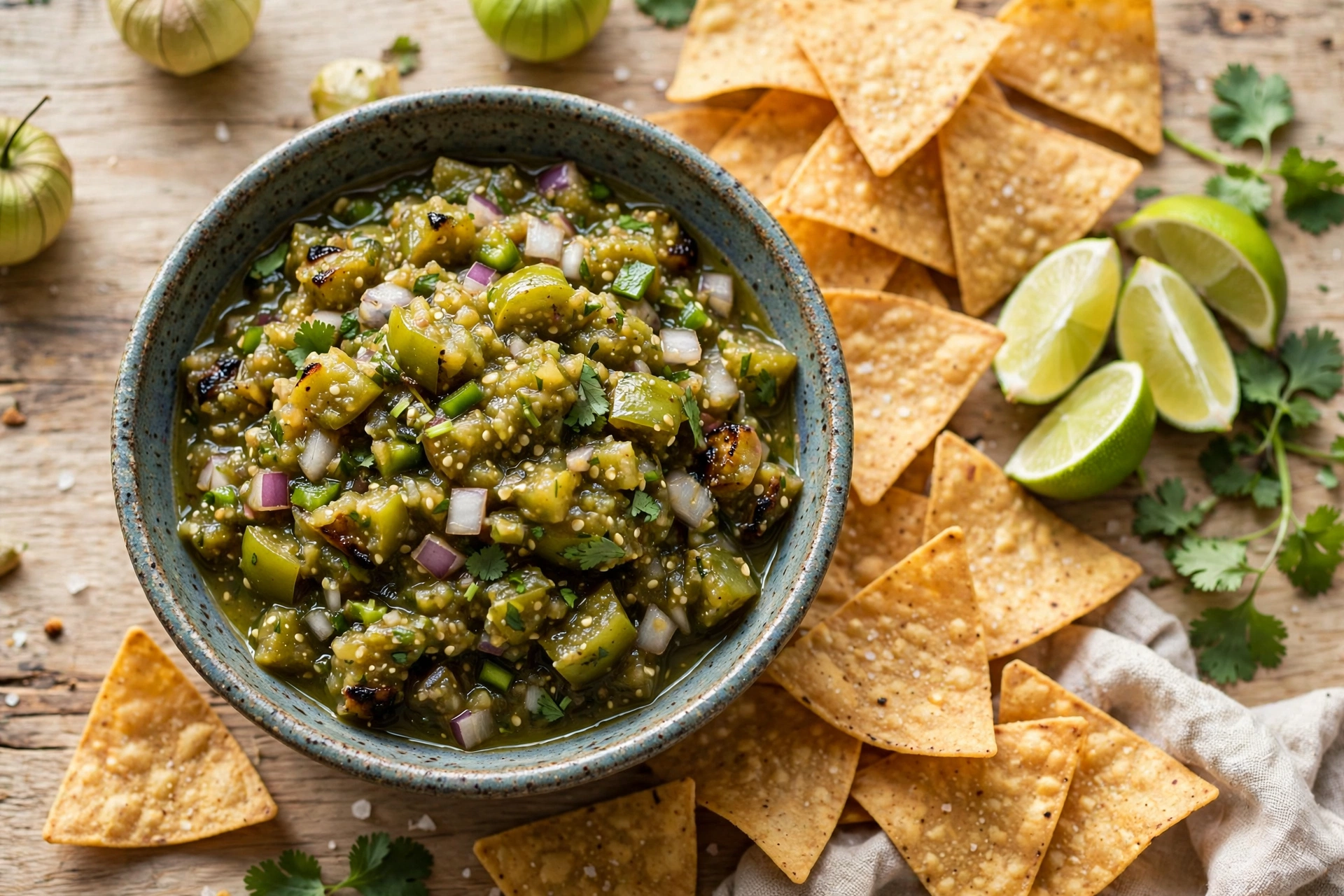
Make a batch for your family and watch it disappear. If you love the bright green salsa served in Mexican kitchens, this roasted tomatillo salsa verde will become the jar you always keep in the fridge.
Why You’ll Love It
- A Mexican classic. Salsa verde is the green salsa of Mexican kitchens — spooned over enchiladas, tacos and eggs all over Mexico, and the first salsa on the table at a taqueria.
- Ready in 20 minutes. Ten minutes of roasting, five minutes of pulsing, and it is on the table.
- Roasted, not boiled. The broiler chars the tomatillos and peppers, giving the salsa a smoky depth that a boiled salsa verde never gets.
- Chunky, not smooth. Pulsed in a food processor, it keeps little pieces of tomatillo and pepper — the texture that scoops best on a chip.
- Just the right heat. Two serranos give it a clean, bright heat you can dial up or down by seeding them — or swap in a jalapeño for a milder batch.
- Goes with everything. Enchiladas, tacos, eggs, grilled chicken, rice and beans — one batch covers a whole week of Mexican meals.
- Keeps beautifully. It tastes even better the next day, and it freezes for months, so a double batch is never wasted.
What Is Salsa Verde?
Salsa verde means ‘green sauce’ in Spanish, and it is the green salsa of Mexico — made from tomatillos, not green tomatoes, and coloured by cilantro and green chillies. Tomatillos look like small green tomatoes in papery husks, but they are a different fruit altogether: tart, lemony and a little sweet, with a sticky skin under the husk that rinses off under the tap. When they are roasted, their sharp edge softens and their flavour turns rounder and deeper, which is why this recipe roasts them instead of boiling them.
A roasted tomatillo salsa verde is different from the red salsa most people know. Red salsa is built on tomatoes and dried chillies, so it tastes rich and earthy; salsa verde is built on tomatillos and fresh green chillies, so it tastes bright, tangy and fresh, with a little smoky char from the broiler. It is the salsa for enchiladas verdes, for chilaquiles, for tacos al pastor — anywhere a bright, acidic sauce cuts through rich, cheesy food.
This version keeps it classic and chunky. The vegetables are roasted under the broiler until they blister and soften, then pulsed — not blended — with cilantro, lime, salt and a pinch of cumin. Pulsing keeps little pieces of tomatillo and pepper in the salsa, so every spoonful has texture, and the cumin adds a warm, earthy note underneath the brightness. It is the salsa verde Mexican families make in a molcajete or a food processor, and it is the one that disappears fastest at the table.
Ingredients
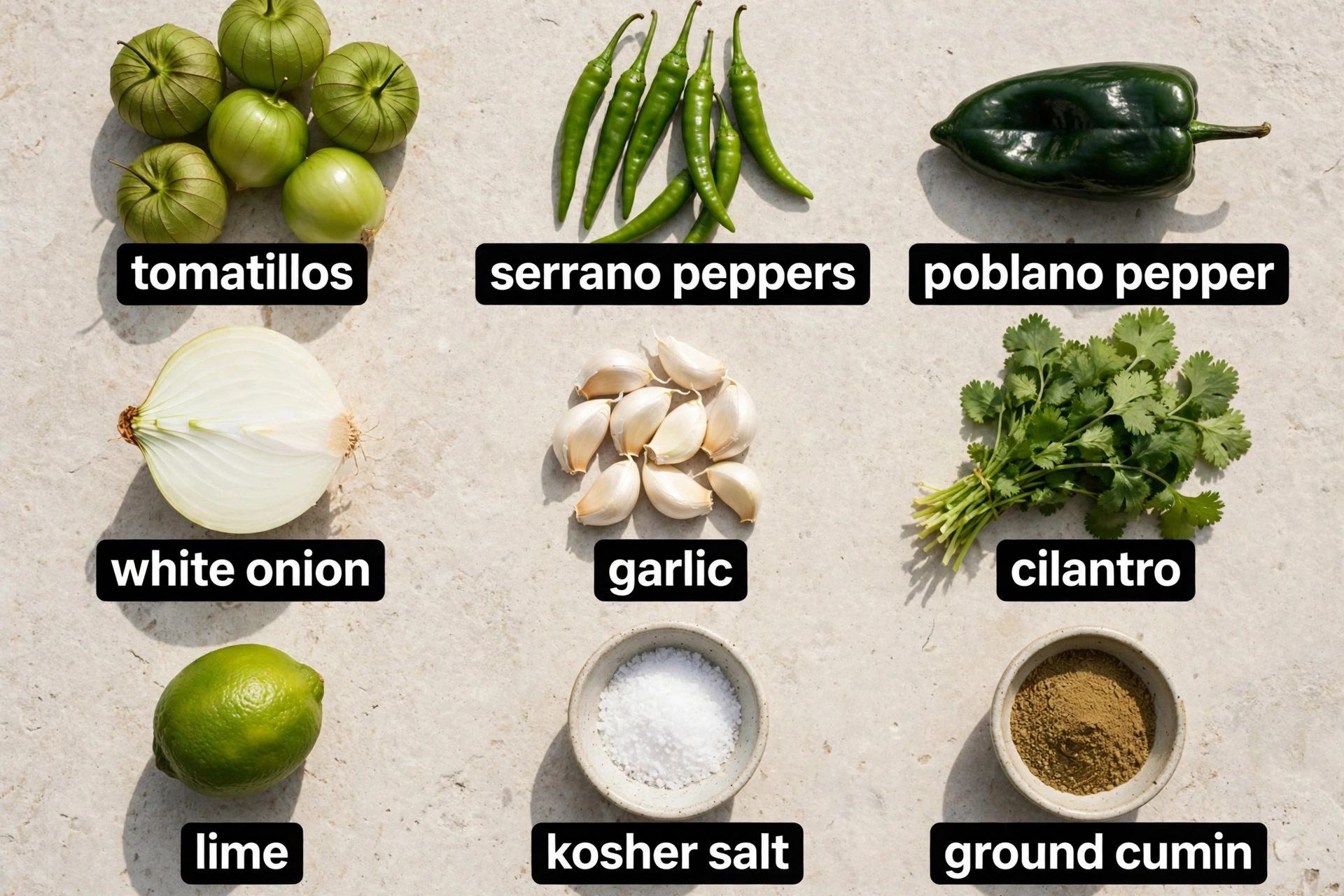
Tomatillos — 1 lb, husked and rinsed (about 10 medium). Tomatillos are the heart of salsa verde — tart, lemony and a little sweet, and they turn dull olive-green and soft when they are roasted, which is how you know they are ready. Pick firm tomatillos that fill their husks, and rinse them well after husking, because they are sticky underneath. Green tomatoes are not the same thing (see FAQ), so do not swap them in.
Serrano peppers — 2, stemmed (seeded for milder). Serranos are what give this salsa verde with serrano peppers its clean, bright heat. Hotter than a jalapeño, with a fresh, grassy bite. Leave the seeds in for a spicier salsa, or scrape them out for a milder one. For a gentler batch, swap one serrano for a jalapeño.
Poblano pepper — 1. The poblano is the smoky depth in this salsa. It is mild — barely any heat at all — but when it chars under the broiler it turns sweet and smoky, and that flavour runs through the whole batch. If you cannot find a poblano, use an Anaheim pepper or a green bell pepper instead.
White onion — 1/2, quartered. White onion roasts sweet and mild, and it gives the salsa its savoury backbone. Yellow onion works too, but white onion is the classic choice for Mexican salsas. Sharper when raw, sweeter when roasted. Cut it into quarters so it roasts evenly and does not burn.
Garlic — 3 cloves, unpeeled. Garlic roasted in its skin turns soft, sweet and mellow — nothing like the sharp bite of raw garlic. Roast the cloves unpeeled so they steam inside their skins, then squeeze them out once they are cool enough to handle. If you only have garlic powder, use 1/2 teaspoon, but the roasted cloves are worth it.
The Seasonings:
Fresh cilantro — 1/2 cup leaves and tender stems. Cilantro is what makes salsa verde taste green and fresh. Use the leaves and the tender stems — the stems carry just as much flavour as the leaves, and they blend in easily. If you are one of the people who tastes soap in cilantro, use flat-leaf parsley instead, but the flavour will be milder.
Lime — 1, juiced (about 2 tablespoons). Lime juice brightens the whole salsa and lifts the roasted flavours. Fresh lime is essential here — bottled lime juice tastes flat by comparison. Taste and add more at the end if the salsa needs a lift.
Kosher salt — 1 teaspoon, plus more to taste. Salt is what makes the tomatillos taste like themselves — and a salsa without enough salt tastes flat, no matter how good the roasting was. Start with a teaspoon, then taste and add more at the end. If you only have table salt, use 3/4 teaspoon, because it is finer and saltier by volume.
Ground cumin — 1/2 teaspoon. Cumin is the warm, earthy note underneath the brightness — the pinch that makes this salsa taste like it came from a Mexican kitchen. It is a small amount on purpose: just enough to deepen the flavour without taking over. If you do not like cumin, leave it out — the salsa is still excellent without it.
How to Make It
1 Step 1 — Prep the Tomatillos
Peel the papery husks off the tomatillos and rinse them well under cold water — they are sticky underneath. Cut them in half and set them cut-side down on a baking sheet.
2 Step 2 — Roast the Vegetables
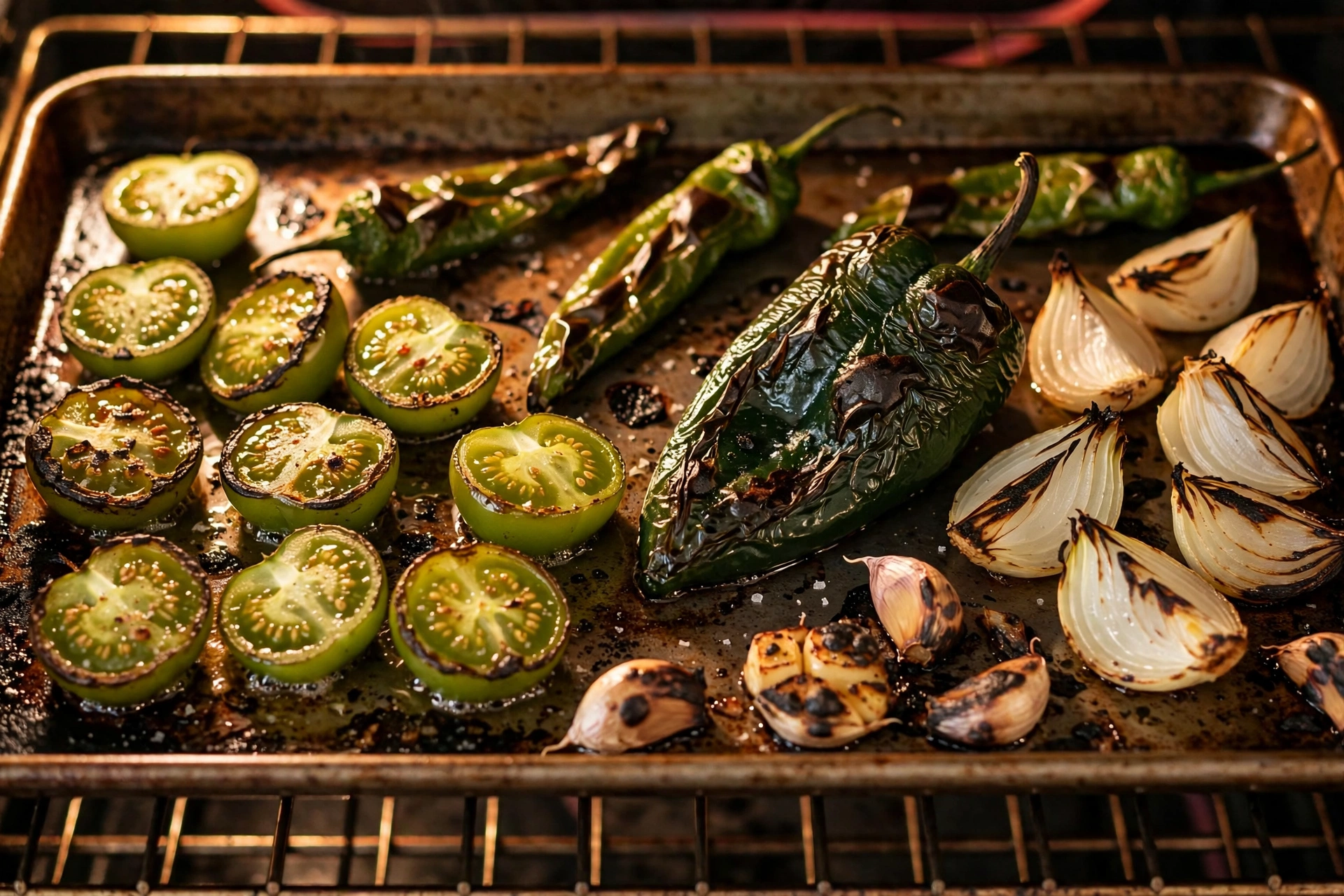
Put the tomatillos, serranos, poblano, onion quarters and unpeeled garlic on the baking sheet. Slide it under the broiler and roast until the vegetables are charred and softened — about 8 to 10 minutes, flipping halfway.
3 Step 3 — Cool and Peel the Garlic
Let the roasted vegetables cool for a few minutes, then squeeze the soft garlic out of its skins. Leave the charred skins on the peppers and tomatillos — that char is flavour.
Pulse and Serve:
4 Step 4 — Pulse Everything Chunky
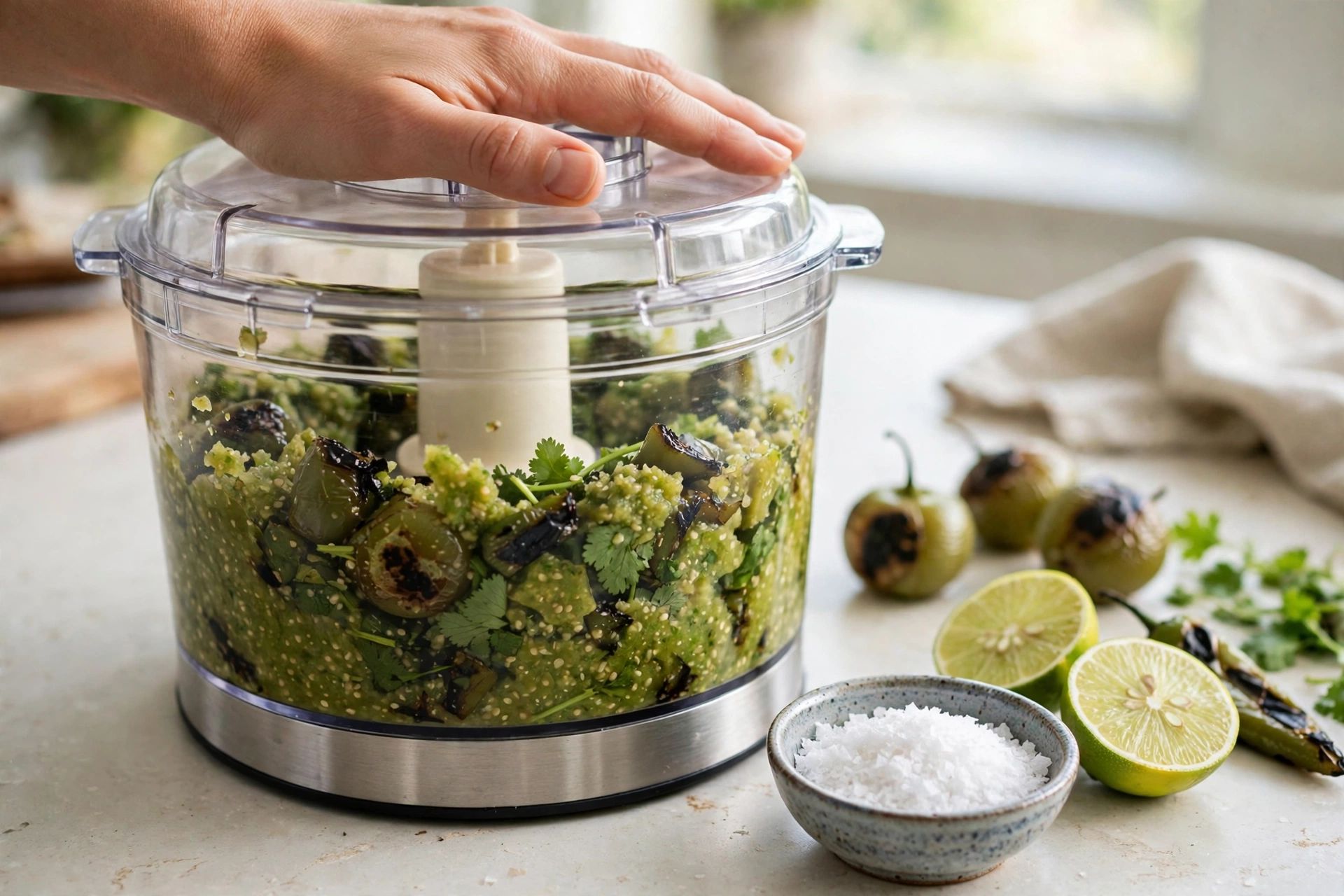
Tip the roasted vegetables and their juices into a food processor with the cilantro, lime juice, salt and cumin. Pulse in short bursts — 6 to 8 pulses — until the salsa is chunky, not smooth. Do not blend it.
5 Step 5 — Taste, Adjust and Serve
Taste the salsa and adjust the salt and lime — it should taste bright, tangy and just spicy enough. Let it rest for 10 minutes, then serve it warm or at room temperature with chips, tacos or enchiladas.
Technique: How to Make Salsa Verde with the Perfect Char
Two things decide whether a roasted tomatillo salsa verde turns out smoky and bright or flat and dull: how the vegetables are charred, and how the salsa is pulsed. Get those two right and the rest takes care of itself.
Charring the Vegetables
First, the char. Set the oven rack about 15 cm (6 inches) below the broiler — close enough that the vegetables blister, far enough that they do not burn before they soften. Put the tomatillos cut-side down, the peppers whole, the onion quarters cut-side down, and the garlic cloves unpeeled, all on one baking sheet. Leave a little space between them. Under the broiler, the tomatillos will turn dull olive-green and soften, and their skins will blacken in spots — that is exactly what you want. Flip everything halfway through, about 4 to 5 minutes in, so both sides char.
The whole roast takes 8 to 10 minutes. If the peppers blacken faster than the tomatillos, pull them out early. A pepper that is black all over tastes bitter, not smoky. Bitter is the one flavour you cannot fix later. The garlic is done when it is soft enough to squeeze out of its skin.
Pulsing for the Right Texture
Second, the texture. This is where a food processor earns its place. A blender makes salsa verde smooth — fine for a sauce, but not for a salsa you scoop with a chip. A food processor, pulsed in short bursts, keeps little pieces of tomatillo, onion and pepper in the mix. Every spoonful has texture. Six to eight short pulses is usually enough. Check after every two pulses and stop as soon as it looks chunk.
If you go too far, you cannot go back. So pulse less than you think you need. Then give it one more pulse only if it still looks like a salad. Tip in the juices from the baking sheet too. Those roasted juices are pure flavour, and they loosen the salsa just enough. Add the cilantro, lime, salt and cumin with the vegetables, not after. They are chopped evenly through the salsa instead of sitting on top.
One more thing matters: let it rest. Salsa verde tastes good the moment it is pulsed, but it tastes better after 10 minutes — and better still the next day. Resting lets the salt dissolve, the lime settle into the roasted vegetables, and the heat of the serranos spread evenly through the batch. If you have time, make it the night before and keep it in the fridge; the flavours meld overnight, and the salsa turns a deeper, more even green.
Tips
- ✔ Husk and rinse the tomatillos well. They are sticky under the husk, and that stickiness carries a bitter taste. A good rinse under cold water takes it off.
- ✔ Roast until charred and softened. The tomatillos should turn dull olive-green and slump a little, with blackened spots on the skin. Pale, firm tomatillos make a sharp, raw-tasting salsa.
- ✔ Pulse, don’t blend. Six to eight short pulses in a food processor gives you chunky salsa. A blender turns it smooth, and you cannot undo it.
- ✔ Taste and adjust at the end. Salt and lime are the two things that make or break a salsa verde. Taste after pulsing, then add more salt or lime a little at a time until it tastes bright.
- ✔ Let it rest 10 minutes. The flavours meld as it sits — the salt dissolves, the lime settles in, and the heat spreads evenly. Overnight in the fridge is even better.
- ✔ Save the roasting juices. The juices on the baking sheet are pure roasted flavour. Tip them into the food processor with the vegetables instead of throwing them away.
Variations
This salsa verde is easy to shape around your table, and the base stays the same.
- Milder. Seed both serranos and use only one, or swap them for two jalapeños — the salsa stays bright and green, with a gentler warmth that kids can eat.
- Spicier. Leave the serrano seeds in and add a third serrano, or stir in a diced jalapeño after pulsing for a fresh, sharp heat on top of the roasted one.
- Smoother. If you prefer a pouring sauce for enchiladas, blend the salsa smooth in a blender and add a splash of water or chicken stock until it runs off a spoon. It is the same salsa, just a different texture.
- With avocado. Blend in half a ripe avocado after pulsing for a creamy salsa verde — richer, paler green, and wonderful on tacos. Eat it the same day, because avocado browns.
- With tomatillos only. Leave out the poblano for a sharper, greener salsa that lets the tomatillos do all the talking — the classic taqueria style.
- Smoky chipotle. Stir in half a chipotle in adobo, finely chopped, after pulsing, for a smoky, brick-red-flecked salsa verde with a slow, deep heat.
What to Serve With
Salsa verde is a sauce that belongs on the table with almost everything Mexican — and this roasted tomatillo salsa verde is no exception. The classic pairing is enchiladas: spoon it over Easy Chicken Enchiladas and you have enchiladas verdes, the green enchiladas Mexican kitchens are famous for. It is the salsa verde for enchiladas that makes the dish — bright, tangy and just spicy enough to cut through the cheese.
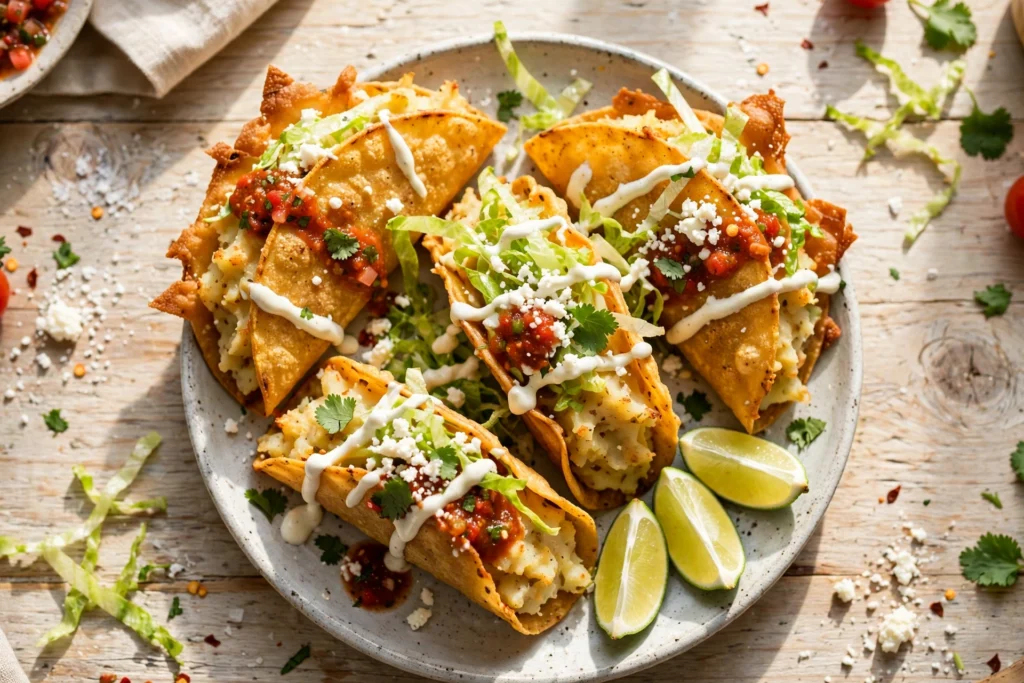
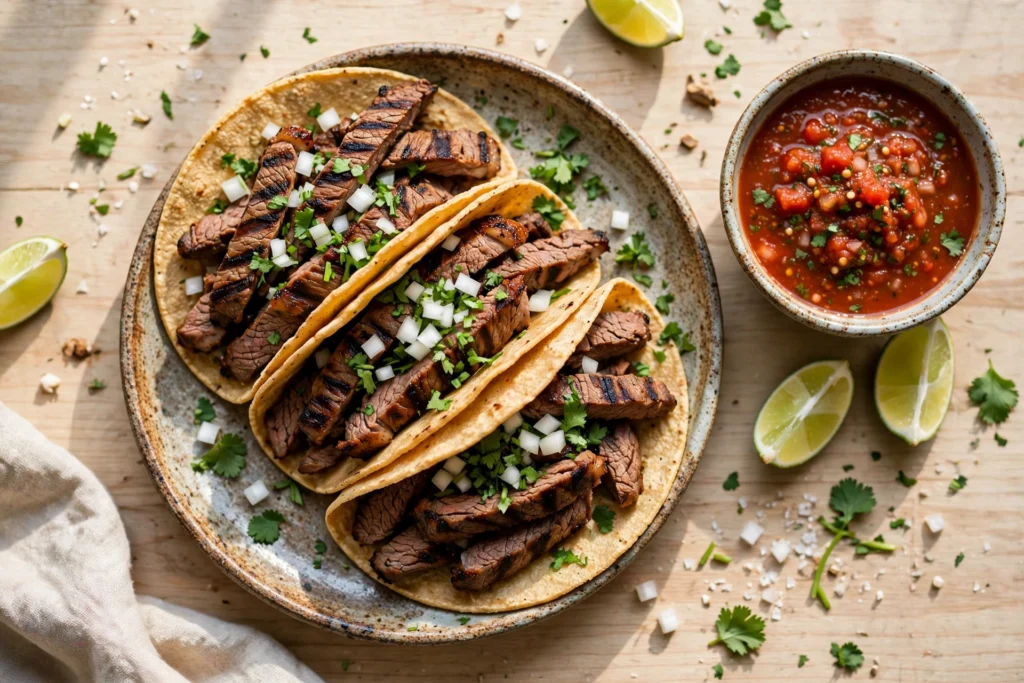
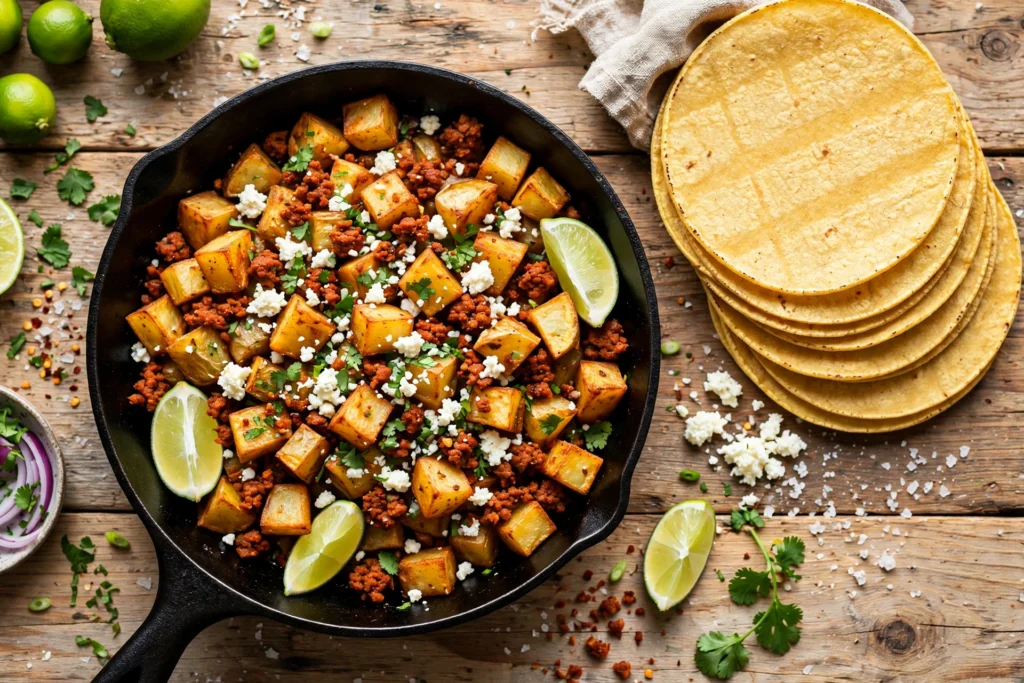
It is just as good on tacos. Spoon it over Crispy Potato Tacos for a crunchy, creamy, tangy bite, or over Skirt Steak Tacos where the bright acidity cuts through the smoky grilled steak. For a breakfast table, pour it over Chilaquiles — the fried tortilla chips soak up the salsa and turn soft and savoury — or over fried eggs with warm tortillas. And for a quick weeknight dinner, Chicken Smash Tacos with a big spoonful of salsa verde on top need nothing else on the plate.
Set out a bowl of it with tortilla chips before dinner, and keep a jar in the fridge all week — it goes on grilled chicken, rice and beans, roasted vegetables, and anything that needs a bright, tangy lift.
Storage
Let the salsa cool to room temperature before moving it to a jar or airtight container. It keeps in the refrigerator for 7 to 10 days, and it tastes even better the next day, once the flavours have had a night to meld.
To serve it again, stir it well — the juices settle at the bottom — and taste it before you put it out. A squeeze of lime wakes it back up if it has gone flat in the fridge. Serve it cold, at room temperature, or gently warmed; all three are right, depending on the dish.
For longer storage, freeze the salsa verde for up to 3 months. Pour it into a freezer-safe container or bag, leaving a little space at the top for expansion, and label it with the date. Thaw it overnight in the refrigerator, stir well, and taste and adjust the salt and lime before serving — freezing dulls the flavours a little, and a fresh squeeze of lime brings them back. Do not freeze the avocado variation; avocado goes brown and grainy in the freezer.
Frequently Asked Questions
Is salsa verde spicy?
It depends on the chillies. This salsa verde with serrano peppers has a clean, bright heat — medium-spicy, about the level of a good taqueria salsa. Serranos are hotter than jalapeños, so if you want it milder, scrape the seeds out of the serranos or swap them for jalapeños. If you want it hotter, leave the seeds in and add a third serrano. The heat also softens a little as the salsa rests.
What is the difference between salsa verde and red salsa?
The base. Salsa verde is made from tomatillos and fresh green chillies, so it tastes bright, tangy and fresh, with a lemony edge. Red salsa is made from tomatoes and dried chillies, so it tastes richer, rounder and earthier. Salsa verde is the salsa for enchiladas verdes, chilaquiles and tacos al pastor; red salsa is the salsa for tacos, burritos and chips. Both belong on a Mexican table — they just do different jobs.
Can I use green tomatoes instead of tomatillos?
You can, but the salsa will taste different. Green tomatoes are firmer and sharper than tomatillos, and they do not soften the same way under the broiler, so the salsa comes out thinner and more acidic. If tomatillos are all you cannot find, use unripe green tomatoes and add a pinch of sugar and an extra squeeze of lime to round out the sharpness — but tomatillos are worth looking for, because they are what make salsa verde taste like salsa verde.
More Questions About Salsa Verde
How long does salsa verde last?
In the refrigerator, in a jar or airtight container, it keeps for 7 to 10 days — and it tastes best on day two, once the flavours have melded. In the freezer it keeps for up to 3 months. If it smells sour or fizzy, or the colour has gone grey-green, throw it out — fresh salsa verde should smell bright and tangy, never sour.
Can I freeze salsa verde?
Yes. Pour the cooled salsa into a freezer-safe container or bag, leaving a little space at the top, and freeze for up to 3 months. Thaw it overnight in the refrigerator, stir well, and taste and adjust the salt and lime before serving — freezing dulls the flavours a little, and a fresh squeeze of lime brings them back. Do not freeze the avocado variation.
What do I serve salsa verde with?
Almost everything Mexican. It is the salsa verde for enchiladas — spooned over enchiladas verdes — and it is just as good on tacos, chilaquiles, fried eggs, grilled chicken, rice and beans, and roasted vegetables. Set a bowl of it out with tortilla chips before dinner, and keep a jar in the fridge all week for anything that needs a bright, tangy lift.
Try These Next
If you loved this Mexican salsa verde, try these recipes next:
- Easy Chicken Enchiladas — the classic enchiladas to spoon this salsa verde over, baked golden with melted cheese.
- Pozole Rojo — a rich, hearty Mexican hominy soup with pork and chillies, perfect with a spoonful of salsa verde on top.
- Air Fryer Chicken Enchiladas — crisp, golden enchiladas from the air fryer, made for a green salsa.
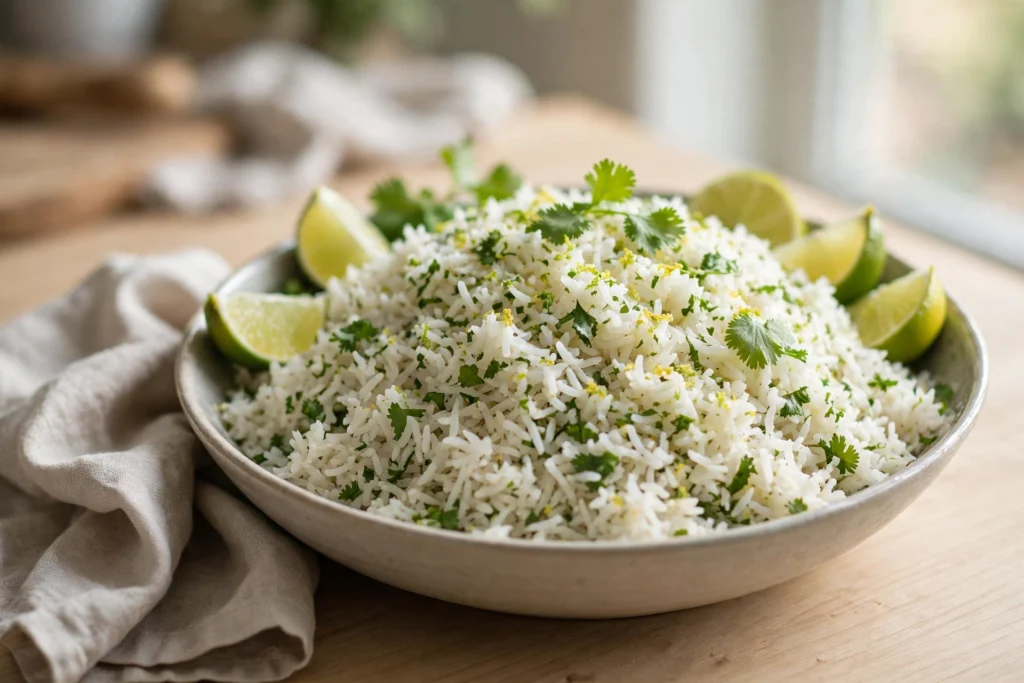
- Cilantro Lime Rice — fluffy Mexican rice with lime and cilantro, the perfect base for a spoonful of salsa verde.
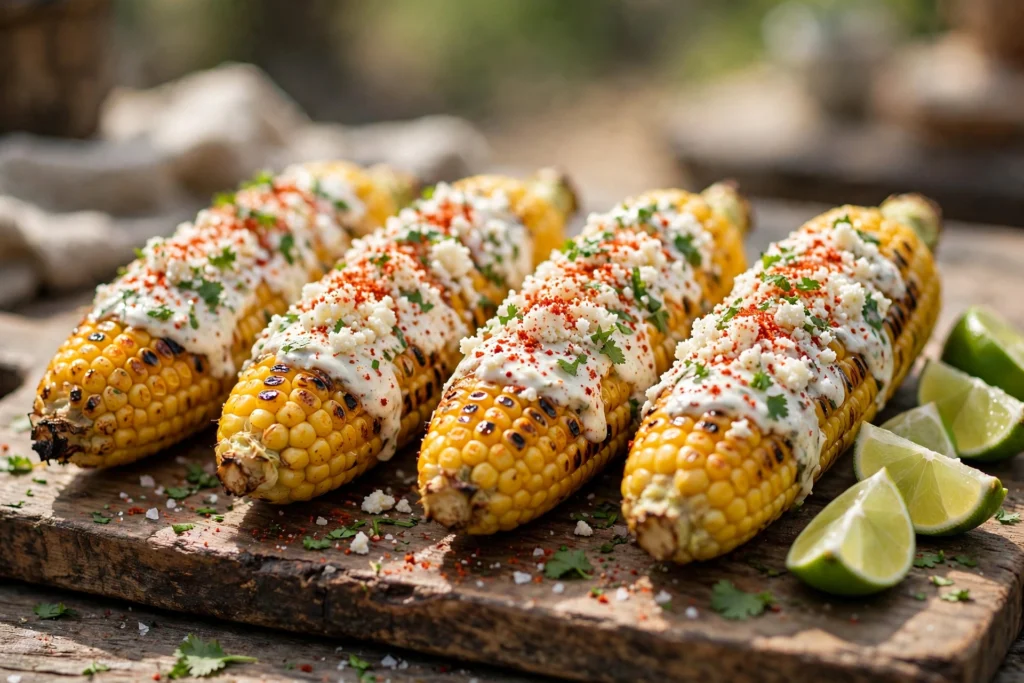
- Mexican Street Corn — charred corn with lime, cheese and chilli, bright and tangy beside this salsa.
- Healthy Mexican Quinoa Bowl
Salsa Verde (Tomatillo Salsa)
Ingredients
Equipment
Method
- Peel the papery husks off the tomatillos, rinse them well under cold water, cut them in half and set them cut-side down on a baking sheet.
- Put the tomatillos, serranos, poblano, onion quarters and unpeeled garlic on the baking sheet; slide it under the broiler and roast until charred and softened, about 8 to 10 minutes, flipping halfway.
- Let the roasted vegetables cool for a few minutes, then squeeze the soft garlic out of its skins.
- Tip the roasted vegetables and their juices into a food processor with the cilantro, lime juice, salt and cumin; pulse in short bursts (6 to 8 pulses) until chunky, not smooth.
- Taste and adjust the salt and lime, let the salsa rest for 10 minutes, then serve warm or at room temperature.
Notes
- Husk and rinse tomatillos well — they are sticky under the husk, and that stickiness carries a bitter taste.
- Roast until charred and softened — the tomatillos should turn dull olive-green and slump a little, with blackened spots on the skin.
- Pulse, don't blend smooth, for chunky salsa — six to eight short pulses in a food processor is enough, and you cannot undo over-blending.
- Taste and adjust salt and lime at the end — salt and lime are the two things that make or break a salsa verde.
- Let it rest 10 minutes (or overnight) for the flavours to meld — the salt dissolves, the lime settles in, and the heat spreads evenly.