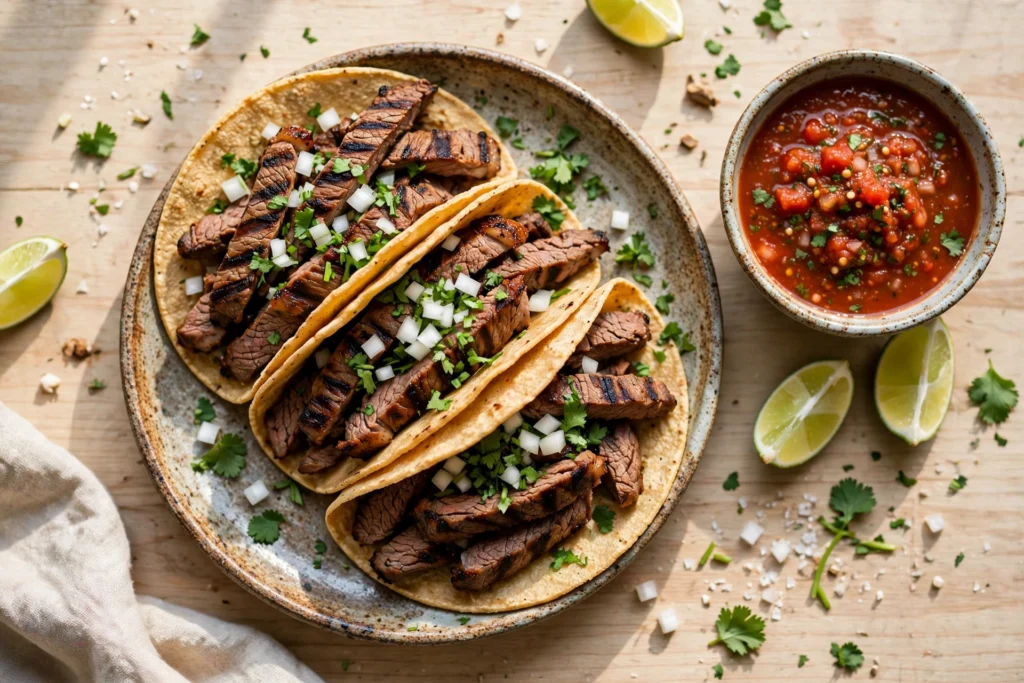

Some soups are quick. Menudo is not one of them. This Mexican tripe soup takes a whole morning, and it is worth every minute. Tender honeycomb tripe, silky beef feet, and chewy white hominy swim in a deep red chile broth. Then lime, raw onion, and oregano go on top at the table. The result is rich, warm, and deeply satisfying.
Menudo is the soup of Saturday mornings in Mexico. Families gather around the pot after a long week. Street stalls sell it by the bowl before noon. And many people swear by it as the best cure after a late night. One bowl, and you will understand why.
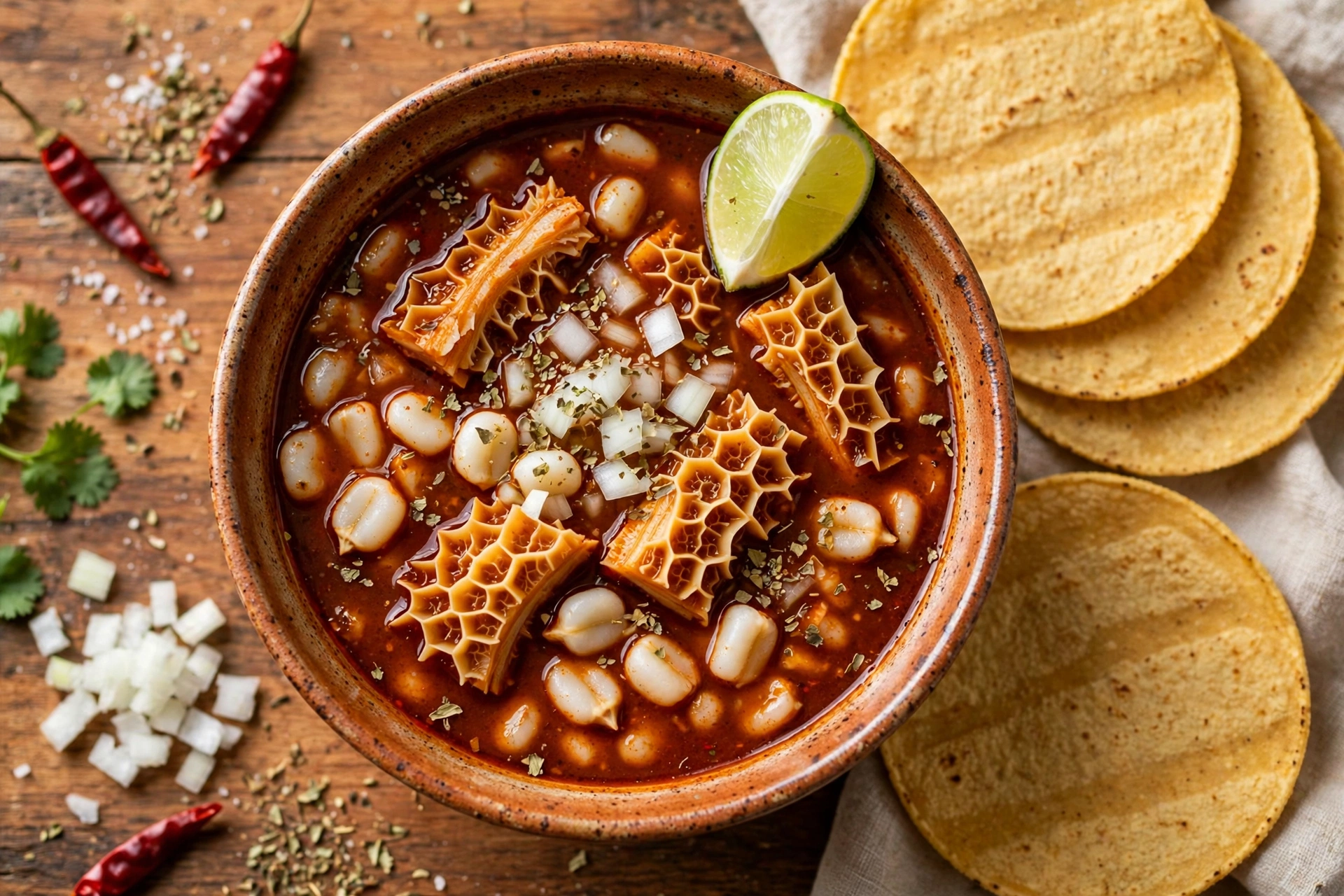
This authentic menudo recipe feeds eight hungry people from one pot. Most of the time is hands-off. The pot simmers while you get on with your morning. So start it early, and let the house fill with the smell of chiles and garlic. Your family will gather before you call them.
Why You’ll Love It
- A true Mexican weekend classic. Menudo is the soup of Saturday mornings, family gatherings, and New Year’s Day all over Mexico.
- Deep, rich flavour. Hours of gentle simmering turn tripe and beef feet into tender meat and a silky, brick-red broth.
- Mostly hands-off cooking. You clean the tripe, then the pot does the work. Only about 45 minutes of the whole cook is active.
- Feeds a crowd. One pot makes eight big bowls, so it is perfect for a family breakfast or a weekend party.
- A topping bar for everyone. Lime, onion, oregano, and crushed chile go on the table, so each person finishes their own bowl.
- Naturally gluten free and dairy free. Nothing in the pot needs flour or cream.
- Even better the next day. The flavours deepen overnight, so leftovers are a gift, not a chore.
What Is Menudo?
Menudo means tripe soup in a Mexican kitchen. It is a slow-cooked soup built on beef tripe — the lining of a cow’s stomach — and white hominy, all simmered in a red chile broth. The dish goes by other names in different parts of Mexico. In central Mexico, people call it pancita or mole de panza. In the south, it is mondongo. The soup is the same at heart, even if the name changes.
The tripe is the star. Honeycomb tripe is the best cut for this soup. Its ridged surface soaks up the chile broth like a sponge. After a long, gentle simmer, it turns tender and chewy, never rubbery. If you have never cooked tripe before, do not worry. The cleaning steps below take care of the smell. And the long simmer takes care of the texture.
Menudo rojo is the red version, and it is the one most people know. Dried guajillo and ancho chiles are soaked, blended, and strained into the pot. That is what turns the broth deep red. Menudo blanco is the white version. It skips the chile sauce, so the broth stays pale and mild. This recipe is the red one, with hominy, because that is the version most families in northern Mexico make.
Ingredients
Tripe:
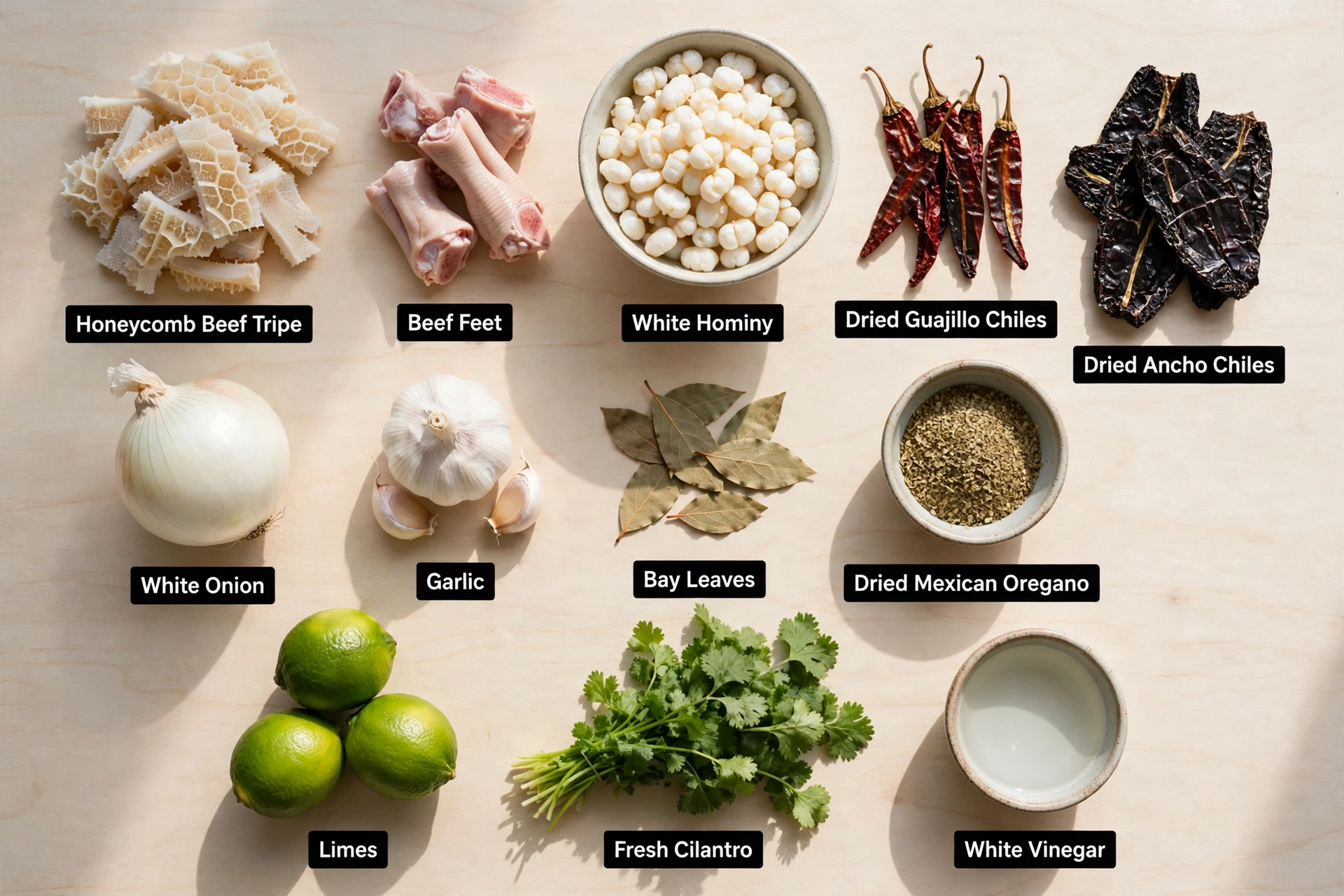
Honeycomb beef tripe — 3 pounds, cleaned. Honeycomb tripe is the star of menudo. Its ridged, honeycomb surface holds onto the red chile broth, so every bite tastes of the soup. Ask your butcher for tripe that is already cleaned. If it still has yellow fat on the smooth side, trim it off with a sharp knife. Blanket tripe works as a swap, but it is smoother and holds less broth.
White vinegar — 1/2 cup, for soaking the tripe. Vinegar is for cleaning, not for flavour. A soak in vinegar water mellows the strong smell of the tripe and helps the salt scrub work. Lime juice does the same job, so use the juice of 2 limes if you have no vinegar.
Lime juice — 2 tablespoons, from 1 lime. Lime juice goes on the tripe with the salt scrub. Its acid cuts the smell and brightens the meat. Save the rest of the lime for serving. If you only have bottled lime juice, it works fine for the scrub.
Kosher salt — 1 tablespoon for the scrub, plus more to taste. Salt is the abrasive in the cleaning step. It scrubs the folds of the honeycomb clean. Then more salt seasons the broth as it cooks. If you use table salt, use 2 teaspoons for the scrub instead, because it is finer and saltier by volume.
Beef Feet:
Beef feet (pata) — 1 pound, sawed into 2-inch pieces. Beef feet give the broth its body. As they simmer, their collagen melts into gelatin, and that is what makes the broth silky and rich. Ask your butcher to saw them into pieces for you. If you cannot find beef feet, use 1 pig’s trotter, split in half, instead. Or skip the feet and add 1 more pound of tripe — the soup will still taste wonderful, but the broth will be a little thinner.
Broth:
White onion — 1 large, halved. Onion is the sweet, aromatic base of the broth. One half goes in at the start with the tripe. The other half goes into the chile sauce. A yellow onion works too, and it tastes a little sweeter.
Garlic — 1 whole head, halved crosswise. A whole head of garlic sounds like a lot. It is not. The cloves soften as they simmer, and their flavour turns mellow and sweet. If you only have loose cloves, use 8 of them, peeled and smashed.
Bay leaves — 2. Bay leaves add a warm, background note that you would miss if it were gone. They go in with the tripe and come out before serving. Dried bay leaves are fine. If you have none, use 1/2 teaspoon of dried oregano instead.
Water — 10 cups. Water is the broth. It covers the tripe and the feet, and it slowly turns into soup as the meat simmers. Use cold water, not hot, so the pot heats up gently and the broth stays clear. If you like, you can swap 4 cups of the water for low-sodium beef broth for an even richer base.
Seasoning:
Dried Mexican oregano — 1 tablespoon. Mexican oregano is not the same as the oregano on a pizza. It is earthier and more citrusy, and it is the classic menudo seasoning. It goes into the broth and also on the table, so each person can add more. If you only have Mediterranean oregano, use half as much, because it tastes stronger.
Cumin seeds — 1 teaspoon. Cumin adds a warm, earthy depth to the broth. Whole seeds are best, because they release their flavour slowly as the soup simmers. If you have no whole seeds, use 1 teaspoon of ground cumin instead.
Whole black peppercorns — 1 teaspoon. Peppercorns give the broth a gentle heat without any bite. They stay whole, so they never make the soup cloudy. If you have no whole peppercorns, use 1/2 teaspoon of ground black pepper.
Red Chile Sauce:
Dried guajillo chiles — 8, stemmed and seeded. Guajillo chiles are the heart of menudo rojo. They are mild and fruity, with a gentle warmth, and they give the broth its brick-red colour. Tear them open, pull out the stems and seeds, and shake out any loose seeds. If you cannot find guajillos, use dried New Mexico chiles instead.
Dried ancho chiles — 3, stemmed and seeded. Ancho chiles are dried poblanos. They are sweet, dark, and a little smoky, and they round out the guajillo flavour. Use the same cleaning method as the guajillos. If you have no anchos, add 2 more guajillos instead.
Dried chiles de árbol — 2 (optional, for heat). These small, thin chiles are very hot, so two is enough for the whole pot. They are optional. Skip them if your family likes mild food, and put crushed chile de árbol on the table instead. That way, each person adds their own heat.
Garlic — 4 cloves, peeled. Garlic goes into the sauce as well as the broth. It blends smooth and adds a warm, savoury note to the chile paste. Fresh garlic is best here, because it blends cleanly.
Hominy:
Cooked white hominy — 1/2 cup, from the cans below. A spoonful of hominy blended into the sauce is the trick that makes this broth silky. It thickens the sauce without any flour, and it ties the whole soup together. Scoop it from the rinsed hominy before you add the rest to the pot.
White hominy — 2 cans (25 ounces each), drained and rinsed. Hominy is dried corn with the hull removed, and it is the chewy heart of menudo. Canned hominy is the easy route. Rinse it well under cold water, so the soup stays clean and clear. If you use dried hominy, soak it overnight and boil it for 1 hour before you start the soup.
To Serve:
Lime wedges — 2 limes, cut into wedges. Lime is not optional. A squeeze over the bowl brightens the rich broth and wakes the whole soup up. Serve at least 2 wedges per bowl.
Chopped white onion, dried Mexican oregano, and crushed chile de árbol — for the table. These toppings are how each person finishes their own bowl. Raw onion adds bite, oregano adds an earthy note, and crushed chile adds heat. Put small bowls of each on the table and let everyone build their own.
Chopped fresh cilantro and warm corn tortillas — for the table. Cilantro adds a fresh, herbal note on top of each bowl. Warm corn tortillas are for scooping up the tripe and the hominy, and for wiping the bowl clean. Flour tortillas work too, but corn is the classic choice.
How to Make Menudo
1 Clean and Soak the TripeRinse the tripe under cold running water. Then trim off any yellow fat from the smooth side with a sharp knife. Cut the tripe into bite-sized pieces, about 1 to 2 inches each. Keep the pieces roughly the same size, so they cook at the same speed.
Next, scrub the pieces. Put them in a large bowl and sprinkle over the lime juice and 1 tablespoon of kosher salt. Rub the tripe with your hands for 2 to 3 minutes, working the salt into the folds of the honeycomb. Then pour in the 1/2 cup of white vinegar and enough cold water to cover. Let it soak for 30 minutes. Drain the tripe, rinse it well, and set it aside. This cleaning step is the whole secret to menudo that smells good.
Building the Broth
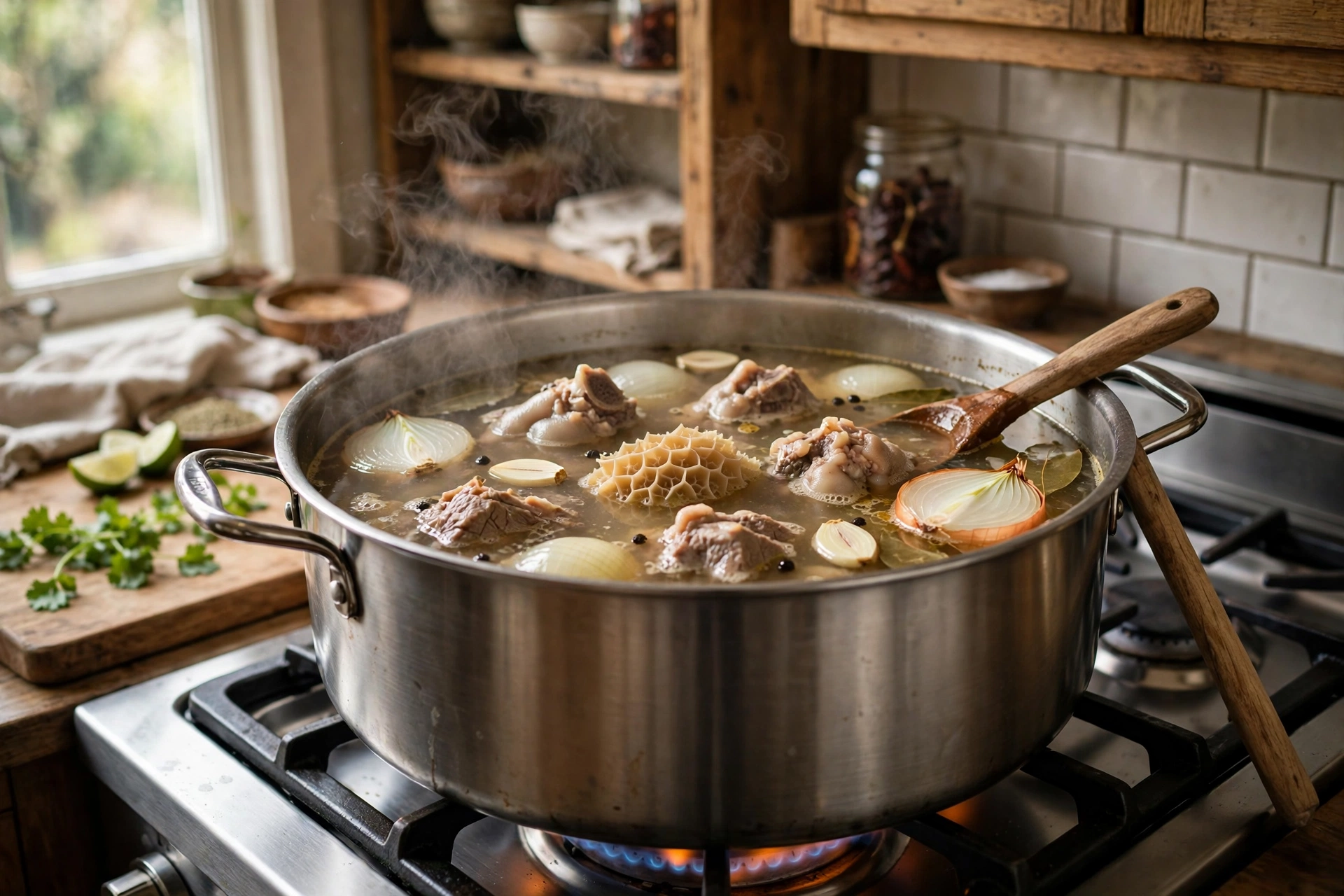
2 Parboil the Tripe and Build the BrothPut the cleaned tripe and the beef feet in a large stockpot. Cover them with cold water by about 2 inches, and bring the pot to a boil over high heat. Let it boil hard for 5 minutes. Then drain the pot completely and rinse the tripe and the feet under hot water. Throw that first water away. This parboil step takes the last of the strong smell with it.
Now build the real broth. Return the tripe and the feet to the clean pot. Add the halved onion, the halved head of garlic, the bay leaves, the oregano, the cumin seeds, the peppercorns, and the 10 cups of cold water. Bring the pot to a boil over medium-high heat. As soon as it boils, skim off any foam that rises to the top. Then reduce the heat to the lowest simmer you can manage. Cover the pot with the lid slightly ajar. Cook for 2 1/2 to 3 hours, until the tripe is very tender when you poke it with a fork. It should give easily, with a soft, chewy bite.
Making the Red Chile Sauce
3 Make the Red Chile SauceWhile the tripe simmers, make the sauce. Heat a dry skillet or comal over medium heat. Lay the guajillo and ancho chiles flat in the pan, and toast them for about 30 seconds per side. They should smell warm and fruity, not burnt. If they start to smoke, lift them out right away. Burnt chiles turn bitter, and the whole sauce will taste bitter too.
Next, put the toasted chiles in a bowl and cover them with hot water. Let them soak for 20 minutes, until they are soft and pliable. Then drain them, and put them in a blender with the 4 garlic cloves, the quarter onion, the 1/2 cup of cooked hominy, and 1 cup of the hot soaking water. Blend until the sauce is completely smooth, about 1 minute. Then pour it through a fine strainer into a bowl, and press it with a spoon to push all the smooth sauce through. Throw away the skins left in the strainer. This strained sauce is what makes the broth silky.
Finishing the Soup
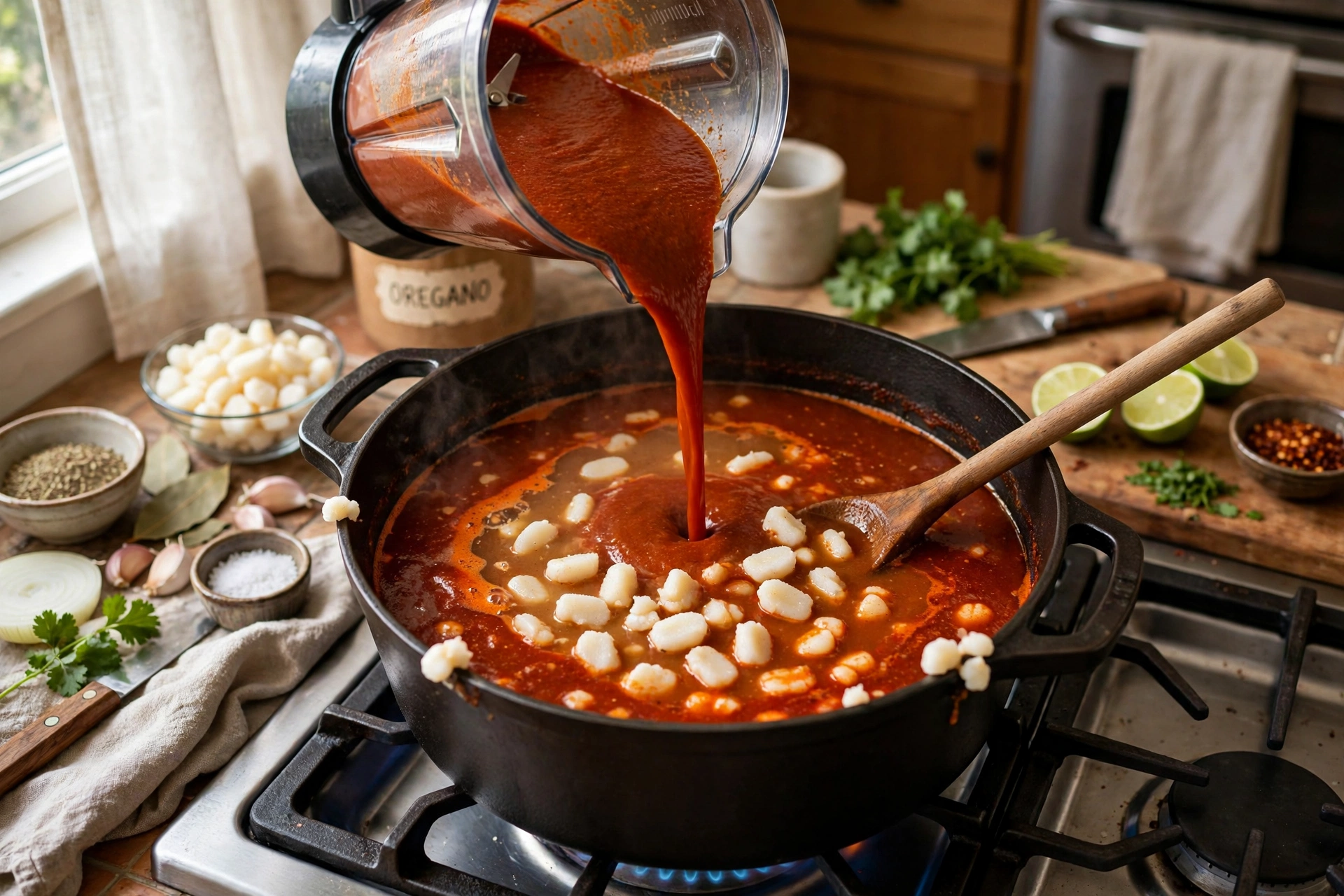
4 Add the Sauce and the HominyWhen the tripe is tender, fish out the bay leaves, the garlic head, and the onion halves and throw them away. They have given all their flavour to the broth. Now stir the strained red chile sauce into the pot. Add the drained and rinsed hominy too. Stir everything together, and bring the soup back to a gentle simmer.
Cook for 30 minutes more, partly covered, until the hominy is tender and the flavours have melded. The broth should turn a deep brick red, and it should coat the back of a spoon. Taste the soup now, and add salt until it tastes right. If the broth is too thick, add a splash of hot water. If it is too thin, simmer it uncovered for 10 more minutes.
Serving the Menudo
5 Serve the MenudoLadle the soup into large, deep bowls. Make sure each bowl gets plenty of tripe, a few pieces of beef foot, and a good spoonful of hominy. Top each bowl with a little chopped onion and cilantro. Set lime wedges, dried oregano, crushed chile de árbol, and more chopped onion on the table. Serve with warm corn tortillas on the side. Each person squeezes lime over their bowl and adds their own toppings. That is how menudo is meant to be eaten.
Technique: How to Clean Tripe So Your Menudo Never Smells
The one thing that stops people from making menudo is the smell of the tripe. A good menudo should not stink. It should smell like chiles, garlic, and oregano. The cleaning steps below are the whole difference. Take them seriously, and your soup will smell wonderful.
The Salt-and-Lime Scrub
Start with the scrub. Salt works as an abrasive in the folds of the honeycomb, and it lifts away the residue that causes the smell. Lime juice adds acid, which cuts the odour further. So rub the tripe pieces with salt and lime juice for a full 2 to 3 minutes. Work the salt into every fold. This is hands-on work, and it is worth it. If the tripe still smells strong after the scrub, scrub it once more with a fresh spoonful of salt.
The Vinegar Soak
Next comes the soak. A 30-minute soak in vinegar water mellows the smell even more. Use 1/2 cup of white vinegar in enough cold water to cover the tripe. Do not skip the soak, and do not rush it. Half an hour is the right amount of time. After the soak, drain the tripe and rinse it well under cold water until the water runs clear. Your hands will tell you when it is clean.
The Parboil
The parboil is the step you will actually notice. Boil the tripe and the beef feet in plain water for 5 minutes, then throw that water away and rinse everything. This first boil pulls the last of the strong flavour out of the meat. The water you throw away will smell strong. The broth you build after it will not. So never skip the parboil, and never reuse that first water for the soup.
The Gentle Simmer
Once the broth is built, keep the heat low. You want a bare simmer: a few small bubbles breaking the surface every second or two, never a rolling boil. A hard boil does three bad things. First, it shakes the tripe apart, so the broth turns cloudy. Second, it tightens the meat, so the tripe stays tough instead of turning tender. Third, it cooks the hominy too fast, so it falls apart before the soup is done. So keep the lid slightly ajar, check the pot every half hour, and adjust the heat so the surface barely trembles. How to make menudo tender? Time and a gentle simmer are the only answers.
Tips for the Best Menudo
- Buy tripe that is already cleaned. Ask your butcher for cleaned honeycomb tripe. It saves you half the prep work, and it is the easiest way to start.
- Never skip the cleaning steps. The scrub, the soak, and the parboil are the whole secret. A menudo that skips them will smell, and no amount of chile will fix it.
- Do not burn the chiles. Toast them for 30 seconds per side, no more. Burnt chiles turn bitter, and the whole pot will taste bitter too.
- Strain the sauce. A fine strainer catches the tough chile skins. The smooth sauce is what makes the broth silky.
- Add the hominy late. Hominy goes in only in the last 30 minutes. If it goes in early, it turns mushy and the soup loses its texture.
- Salt at the end. The broth reduces as it cooks, so the salt level changes. Taste and adjust after the sauce and the hominy go in.
- Make it the day before. Cook the tripe and the sauce on Friday, chill them, and finish the soup on Saturday morning. The fat lifts off easily when it is cold.
Variations
Menudo Blanco (White Menudo)
Menudo blanco is the white version of the soup, and it is the classic in parts of central Mexico. Skip the red chile sauce entirely. Simmer the tripe and the feet the same way, then add the hominy in the last 30 minutes. Season the broth with extra oregano and a little more lime at the table. The broth stays pale and mild, so the flavour of the tripe and the hominy shines through. Serve it with the same topping bar, and add sliced radishes for crunch.
Menudo Recipe Slow Cooker Version
This menudo recipe works well in a slow cooker, and it frees up your morning. First, clean and parboil the tripe and the feet on the stove, just like the stovetop version. Then move everything — tripe, feet, onion, garlic, bay leaves, oregano, cumin, peppercorns, and water — into the slow cooker. Cook on low for 8 to 10 hours, or on high for 4 to 5 hours, until the tripe is tender. Then stir in the strained chile sauce and the hominy, and cook on high for 45 minutes more. The slow cooker makes the broth extra clear, because it never boils hard.
Instant Pot Menudo
A pressure cooker cuts the long simmer down a lot. Clean and parboil the tripe and the feet first, as usual. Then put them in the pot with the onion, garlic, bay leaves, oregano, cumin, peppercorns, and 8 cups of water. Pressure cook on high for 50 minutes, then let the pressure release naturally for 15 minutes. Open the pot, stir in the strained chile sauce and the hominy, and simmer on sauté mode for 20 minutes. The total time drops to about 2 hours. Halve the recipe if your pot is small, because a full batch is too big for a 6-quart Instant Pot.
Spicy Menudo
If your family likes heat, build it into the pot. Add 2 more dried chiles de árbol to the sauce, and stir 1 chopped serrano into the soup with the hominy. The heat will bloom as the soup simmers. Serve with extra crushed chile de árbol and sliced fresh serranos at the table, so each person can add more. A spoonful of chile de arbol salsa on top of each bowl works too, and it adds a smoky note as well as heat.
What to Serve with Menudo
Menudo is a full meal on its own, but a few sides turn it into a feast. Start with warm corn tortillas — they are essential for scooping up the tripe and the hominy. Then add a spoonful of rice. Cilantro lime rice is the perfect partner, because its bright, citrusy flavour lifts the rich broth. A bowl of frijoles charros on the side adds even more comfort, and their smoky beans taste wonderful next to the soup.
For something fresh and crunchy, serve Mexican street corn alongside the soup. Its creamy, tangy coating is a lovely contrast to the red chile broth. And for the table, a bowl of guacamole and a spoonful of salsa macha give everyone a way to finish their bowl their own way. A cold agua fresca or a light Mexican beer rounds the meal out.
Storage
How to Store Menudo in the Fridge
Let the soup cool to room temperature, then store it in airtight containers in the fridge for up to 4 days. Keep the tripe and the hominy in the broth, because the broth keeps them moist. The fat will rise to the top and set into a layer as it chills. That is normal. Just lift it off with a spoon before reheating, or stir it back in for a richer soup.
How to Freeze Menudo
This soup freezes very well. Cool it fully, then freeze it in portions in freezer-safe containers or bags for up to 3 months. Leave a little space at the top of each container, because the broth expands as it freezes. For the best texture, freeze the broth and the tripe together, but freeze the hominy separately if you can — hominy can turn soft after freezing. Thaw overnight in the fridge before reheating.
How to Reheat Menudo
Reheat the soup gently on the stove over medium-low heat until it simmers. Do not boil it hard, or the tripe will toughen and the hominy will fall apart. If the broth has thickened in the fridge, add a splash of water to loosen it. Taste and adjust the salt after reheating, because cold dulls flavour. Add fresh onion, oregano, and a squeeze of lime to each bowl, so the reheated soup tastes bright and fresh again.
Frequently Asked Questions
What is menudo made of?
Menudo is made of honeycomb beef tripe and white hominy, simmered for hours in a red chile broth. The broth starts with onion, garlic, bay leaves, Mexican oregano, and cumin. Beef feet often go in too, because their collagen makes the broth silky. The red colour comes from a sauce of soaked guajillo and ancho chiles, blended and strained into the pot. At the table, it is served with lime, chopped onion, oregano, and crushed chile.
What does menudo taste like?
Menudo tastes rich, warm, and deeply savoury, with a gentle heat from the chiles. The tripe itself is mild, and it takes on the flavour of the red chile broth as it simmers. Its texture is tender and chewy, a little like slow-cooked mushrooms. The hominy adds a soft, starchy bite. Then lime and raw onion at the table brighten the whole bowl. If you have never tried tripe, menudo is the best first taste, because the broth does most of the talking.
How long does menudo take to cook?
Menudo takes about 4 hours and 30 minutes from start to finish. The tripe needs 2 1/2 to 3 hours of gentle simmering to turn tender. Then the red chile sauce and the hominy cook for 30 minutes more. Most of that time is hands-off — only about 45 minutes is active work, and 30 of those minutes are the cleaning soak. In a slow cooker, the tripe needs 8 to 10 hours on low. In an Instant Pot, the whole soup takes about 2 hours.
More Menudo Questions
Why do people eat menudo on weekends?
Menudo is a weekend soup for two reasons. First, it takes hours to cook, so it fits a slow Saturday morning, not a busy weeknight. Second, it is a family dish. One pot feeds eight people, so it suits a gathering. Many people also call it the best cure after a late night, because the hot, salty broth and the rich tripe settle the stomach. In Mexico, street stalls sell it on weekend mornings, and it often sells out before noon.
What is the difference between menudo rojo and menudo blanco?
The difference is the chile sauce. Menudo rojo is the red version. Dried guajillo and ancho chiles are soaked, blended, and strained into the pot, so the broth turns deep red and tastes warm and fruity. Menudo blanco is the white version. It skips the chile sauce, so the broth stays pale and mild, and the flavour of the tripe and the hominy comes through more clearly. Both versions use the same toppings: lime, onion, and oregano.
Can you make menudo without tripe?
Yes, you can, but it will not quite be menudo. The closest swap is beef shank or beef chuck, cut into bite-sized pieces and simmered the same way. The soup will still have the red chile broth and the hominy, and it will taste wonderful. But it will miss the chewy texture and the mild flavour that only tripe gives. If tripe is hard to find, ask your butcher to order it. Or try caldo de res instead, which is a beef shank soup in the same family.
Storing and Freezing Menudo
Can you freeze menudo?
Yes, menudo freezes well for up to 3 months. Cool it fully, then freeze it in portions in freezer-safe containers, leaving a little space at the top for expansion. Thaw it overnight in the fridge, then reheat it gently on the stove. The hominy can turn a little soft after freezing, so if that bothers you, freeze the broth and the tripe together and add fresh hominy when you reheat.
Try These Next
If you loved this menudo, try the other soups on Weekly Cuisine next. Start with caldo de res, the Mexican beef soup with shank, corn, and chayote in a rich homemade broth. Then try pozole verde, a bright green chicken pozole with hominy and pumpkin seeds. For a hearty meatless bowl, lentejas is a chunky Mexican lentil soup that feeds a crowd for pennies. Pozole rojo brings the classic red chile pork version, and sopa de fideo con carne molida is a quick noodle soup with ground beef for busy nights. And if you want more beef, barbacoa is slow-cooked, fall-apart beef that is perfect for tacos.
Ingredients
Method
- Clean and soak the tripe: Rinse the tripe, trim the fat, and cut it into 1- to 2-inch pieces. Scrub with lime juice and 1 tablespoon salt for 2 to 3 minutes, then soak in vinegar water for 30 minutes. Drain and rinse well.
- Parboil and build the broth: Boil the tripe and beef feet in water for 5 minutes, then drain and rinse. Return to a clean pot with the onion, garlic, bay leaves, oregano, cumin, peppercorns, and 10 cups cold water. Simmer gently, lid ajar, for 2 1/2 to 3 hours until the tripe is very tender.
- Make the red chile sauce: Toast the guajillo and ancho chiles 30 seconds per side, soak in hot water for 20 minutes, then blend with the garlic, quarter onion, 1/2 cup hominy, and 1 cup hot soaking water until smooth. Strain through a fine strainer.
- Add the sauce and hominy: Remove the bay leaves, garlic, and onion from the pot. Stir in the strained chile sauce and the drained hominy. Simmer 30 minutes more until the hominy is tender. Season with salt to taste.
- Serve: Ladle into large bowls with tripe, beef foot, and hominy in each bowl. Top with onion and cilantro. Serve with lime wedges, oregano, crushed chile, and warm corn tortillas on the table.
Notes
- Never skip the cleaning steps — the scrub, the soak, and the parboil are what keep menudo smelling good.
- Do not burn the chiles when toasting, or the sauce will turn bitter.
- Strain the sauce for a silky broth with no tough chile skins.
- Add the hominy only in the last 30 minutes so it stays chewy.
- The soup tastes even better the next day, so make it ahead when you can.