Pozole verde is the green pozole of Mexico. It is bright, tangy, and full of tender chicken and plump hominy. The broth glows green from roasted tomatillos and poblanos. And the toppings bar at the table turns one pot into a feast.
This chicken pozole verde takes 70 minutes from start to finish. Most of that time, the pot simmers on its own. The secret is the roast. First, the tomatillos and poblanos go under the broiler until charred. Then, they blend into a smoky green sauce. Finally, that sauce joins the chicken broth and hominy for a soup that tastes like a celebration.
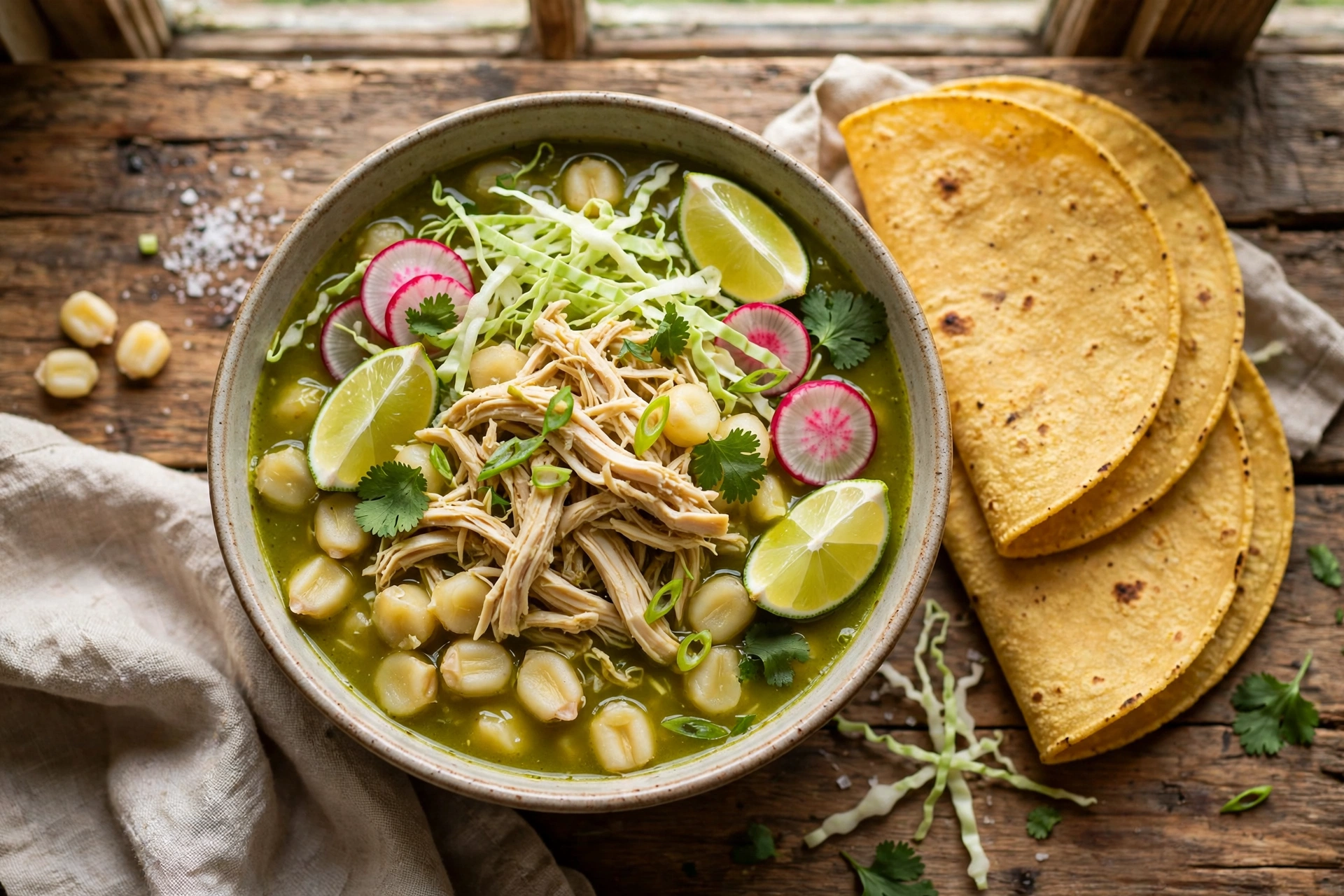
This pozole verde is the soup Mexican families make for birthdays, holidays, and Sundays. It feeds a crowd, it tastes better the next day, and every bowl looks different, because everyone tops their own. So make a big pot. Your table will thank you.
Why You’ll Love It
- A Mexican celebration soup. Pozole verde is the green pozole of Guerrero — festive, bright, and made for sharing.
- Ready in 70 minutes. One pot, most of it hands-off simmering, and the roast takes only 10 minutes.
- Roasted, not boiled. The tomatillos and poblanos roast first, so the green sauce tastes smoky and deep.
- Tender chicken in every spoonful. Boneless thighs simmer gently, then shred into juicy strands.
- Plump hominy. The chewy corn kernels make every bowl hearty and satisfying.
- A toppings bar. Cabbage, radishes, avocado, lime, and queso fresco let everyone build their own bowl.
- Better the next day. The green broth deepens overnight, so leftovers are a gift.
What Is Pozole Verde?
Pozole verde is the green pozole of Mexico. It is a soup of shredded chicken, hominy, and a bright green broth. The green comes from tomatillos, poblano peppers, jalapeños, and cilantro. In Mexico, pozole is celebration food. Families make it for birthdays, holidays, and Sundays. And in Guerrero, on the Pacific coast, they make it green.
Pozole verde vs pozole rojo — what is the difference? Pozole rojo is red, made with dried red chiles like guajillo and ancho. In contrast, pozole verde is green, made with tomatillos and green chiles. The red version tastes smoky and rich. The green version tastes bright and tangy. Both use hominy, and both are served with a toppings bar. This recipe is the green one.
Hominy is the heart of pozole. It is corn that has been soaked in an alkaline solution, which gives the kernels their soft, chewy bite and their own full flavour. Canned hominy is already cooked, so it only needs to heat through. That is what makes this pozole verde a weeknight-friendly soup, even though it tastes like a party.
The Roasted Version
Why roast the vegetables? Because raw tomatillos taste sharp and sour. Roasting softens them, sweetens them, and adds a smoky char. The poblanos roast too, and their skins blister and blacken in spots. Then the peppers peel easily, and their flesh turns silky.
Isabel’s pozole verde simmers everything together and blends it. This version roasts first. The tomatillos, poblanos, onion, and garlic go under the broiler for about 10 minutes. Then they blend with toasted pepitas and cilantro into a smooth green sauce. Finally, that sauce fries briefly in oil before it joins the pot. Frying the sauce deepens its colour and its flavour. It is one extra step, and it is worth it.
Epazote is the other difference. It is a Mexican herb with a strong, earthy flavour. A few sprigs simmer in the broth, and they give the pozole its unmistakable taste. If you cannot find fresh epazote, dried epazote works too. And if you cannot find either, the soup is still delicious — just add a little extra Mexican oregano.
Ingredients
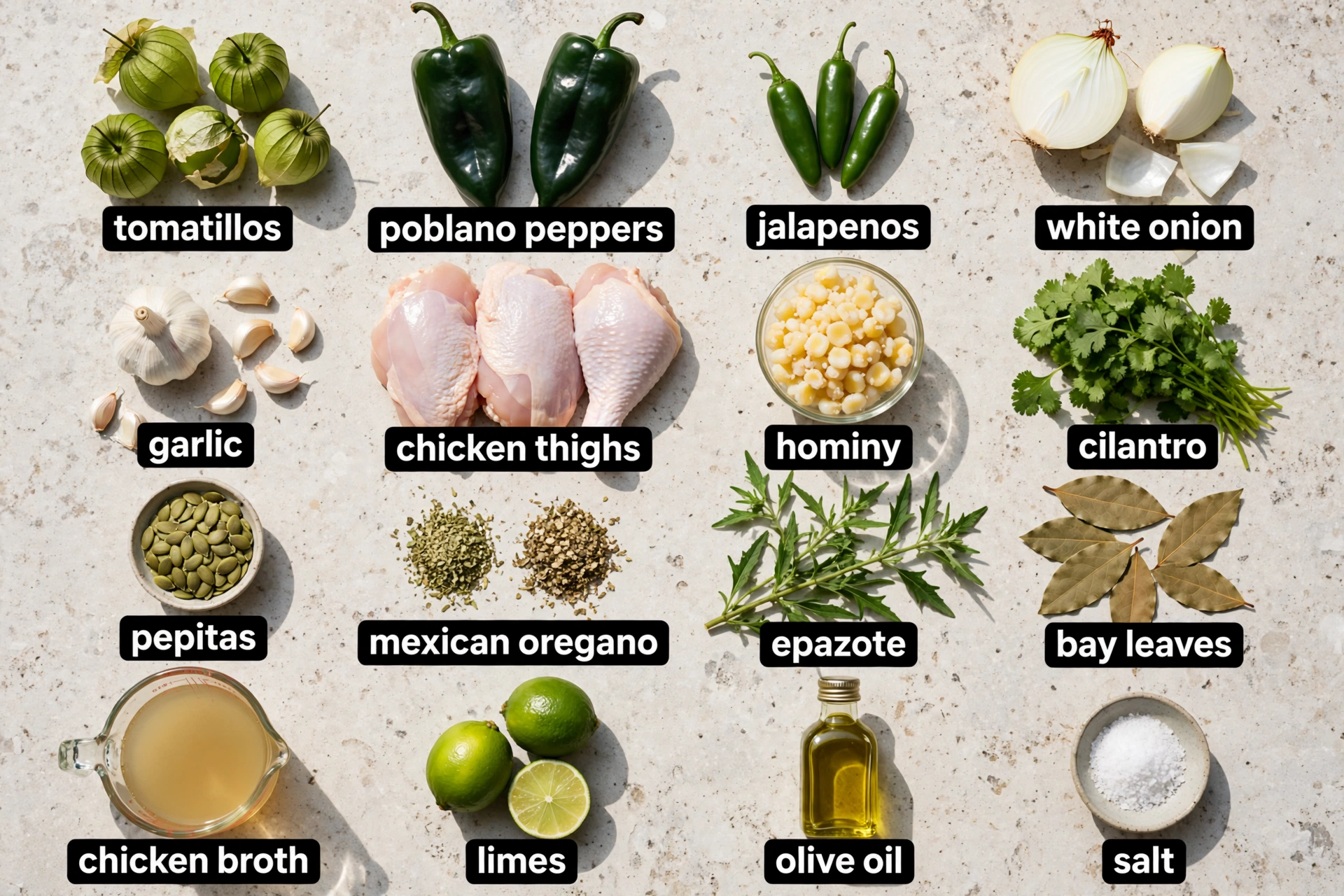
For the Chicken and Broth:
Boneless skinless chicken thighs — 2 lbs. Chicken thighs are the best cut for pozole verde. They stay juicy through a long simmer, and they shred into tender strands. Chicken breasts work too, but they dry out faster. So thighs are the safer choice. Trim off any large pieces of fat first.
Low-sodium chicken broth — 6 cups. Broth is the liquid the chicken simmers in, so it matters. Low-sodium broth is best, because you control the salt. Homemade stock is wonderful here. Water works in a pinch, but the soup tastes thinner.
White onion — 1 large, quartered and divided. Onion does two jobs in this soup. Half simmers in the broth and sweetens it. The other half roasts for the green sauce. A white onion tastes a little sharper than a yellow one, and that sharpness suits the tangy tomatillos.
Garlic — 6 cloves, divided. Garlic adds the savoury depth that rounds out the green sauce. Two cloves simmer in the broth. Four cloves roast for the sauce. Roasted garlic turns sweet and soft, so it blends right in.
Bay leaves — 2. Bay leaves add a quiet, herbal depth to the broth. You notice them only when they are missing. Fish them out before serving — they are not meant to be eaten.
Fresh epazote — 2 to 3 sprigs (or 1 teaspoon dried). Epazote is the herb that makes pozole taste like pozole in Mexico. It is earthy and strong, so a little goes a long way. Fresh sprigs are best. Dried epazote works too. If you cannot find either, add an extra half teaspoon of Mexican oregano.
For the Roasted Salsa Verde:
Tomatillos — 1 lb (about 8 to 10 medium), husks removed. In fact, tomatillos are the tangy green base of the sauce. They look like small green tomatoes, and they wear papery husks. Peel the husks off and rinse the sticky coating away. Firm, bright green tomatillos are best. Yellow ones are overripe and too sweet.
Poblano peppers — 2 large. In fact, poblanos are mild, smoky peppers with almost no heat. They roast beautifully, and their flesh turns silky. They give the sauce its deep green colour and its gentle smokiness. If you cannot find poblanos, use 1 green bell pepper instead.
Jalapeños — 2, stemmed (seed 1 for mild heat). Jalapeños bring the heat. Two peppers give a warm, noticeable kick. Seed one of them to keep the soup friendly. Keep both seeds in for a spicier bowl. Or leave one jalapeño out entirely for a mild soup.
For the Seeds, Herbs, and Oil:
Pepitas — 1/4 cup (hulled pumpkin seeds). In fact, pepitas are toasted pumpkin seeds. They blend into the sauce and give it body, so the broth turns silky instead of thin. They also add a nutty flavour. Toast them in a dry skillet until they pop and smell fragrant. Do not skip the toasting — raw pepitas taste flat.
Fresh cilantro — 1 cup, chopped, plus more for serving. In fact, cilantro is the fresh green note that makes the sauce taste alive. One cup goes into the blender. More goes on top of each bowl at the table. Use the leaves and the tender stems. If cilantro tastes soapy to you, use half a cup and add a handful of baby spinach instead.
Olive oil — 1 tablespoon. In fact, olive oil is what the green sauce fries in. Frying the sauce for a few minutes deepens its colour and its flavour. It also helps the sauce blend into the broth instead of sitting on top.
For the Seasoning:
Ground cumin — 1/2 teaspoon. In fact, cumin adds a warm, earthy note that ties the green sauce together. Half a teaspoon is enough. More than that, and it starts to fight the tomatillos.
Dried Mexican oregano — 1 teaspoon. In fact, Mexican oregano is earthier and more citrusy than the Mediterranean kind. It adds a herbal note that tastes unmistakably Mexican. Crush it between your palms as you add it, so it releases its oils.
Kosher salt — 1 teaspoon, plus more to taste. Salt is what makes the chicken, the hominy, and the green sauce taste like themselves. Taste at the end and add more a pinch at a time. The broth already has salt, so start small.
Black pepper — 1/2 teaspoon. In fact, black pepper adds a mild bite that lifts the green sauce. Freshly ground pepper tastes best here.
For the Hominy and Toppings:
White hominy — 2 cans (15 oz each), drained and rinsed. Hominy is the chewy corn that makes pozole pozole. Canned hominy is already cooked, so it only needs to heat through. Drain it and rinse it well, so the soup stays clear and bright. White hominy is the classic choice. Yellow hominy works too.
Limes — 2, cut into wedges. Lime wedges go on the table, not in the pot. A squeeze over each bowl brightens the whole soup. It is the finishing touch that every bowl needs.
Shredded green cabbage — 2 cups. Cabbage is the classic pozole topping. It adds a fresh crunch that balances the rich broth. Shred it thin, so it wilts just slightly in the hot soup.
Radishes — 5, thinly sliced. Radishes add a peppery crunch and a pop of colour. Slice them thin, so they are easy to spoon up with the soup.
Avocado — 1, diced. Diced avocado adds a creamy, cool contrast to the hot soup. Add it at the table, not in the pot, so it stays fresh and green.
Chopped white onion — 1/2 cup. Raw white onion adds a sharp bite that cuts through the rich broth. A small spoonful on top is enough.
Crumbled queso fresco — 1/2 cup. Queso fresco adds a salty, crumbly finish that melts just slightly into the hot soup. Cotija works too. Leave it out for a dairy-free bowl.
Warm corn tortillas or tostadas — for serving. Warm tortillas are made for scooping up pozole, and tostadas add a crunch. Put a stack on the table and let everyone help themselves.
How to Make It
1 Simmer the Chicken in the Broth
Add the chicken thighs, broth, half the onion, 2 garlic cloves, the bay leaves, the epazote, and half the salt to a large soup pot. Bring it to a boil, then reduce the heat to low. Cover and simmer for 30 minutes, until the chicken is tender. Skim off any foam that rises to the surface.
 2 Roast the Tomatillos, Poblanos, Onion and Garlic
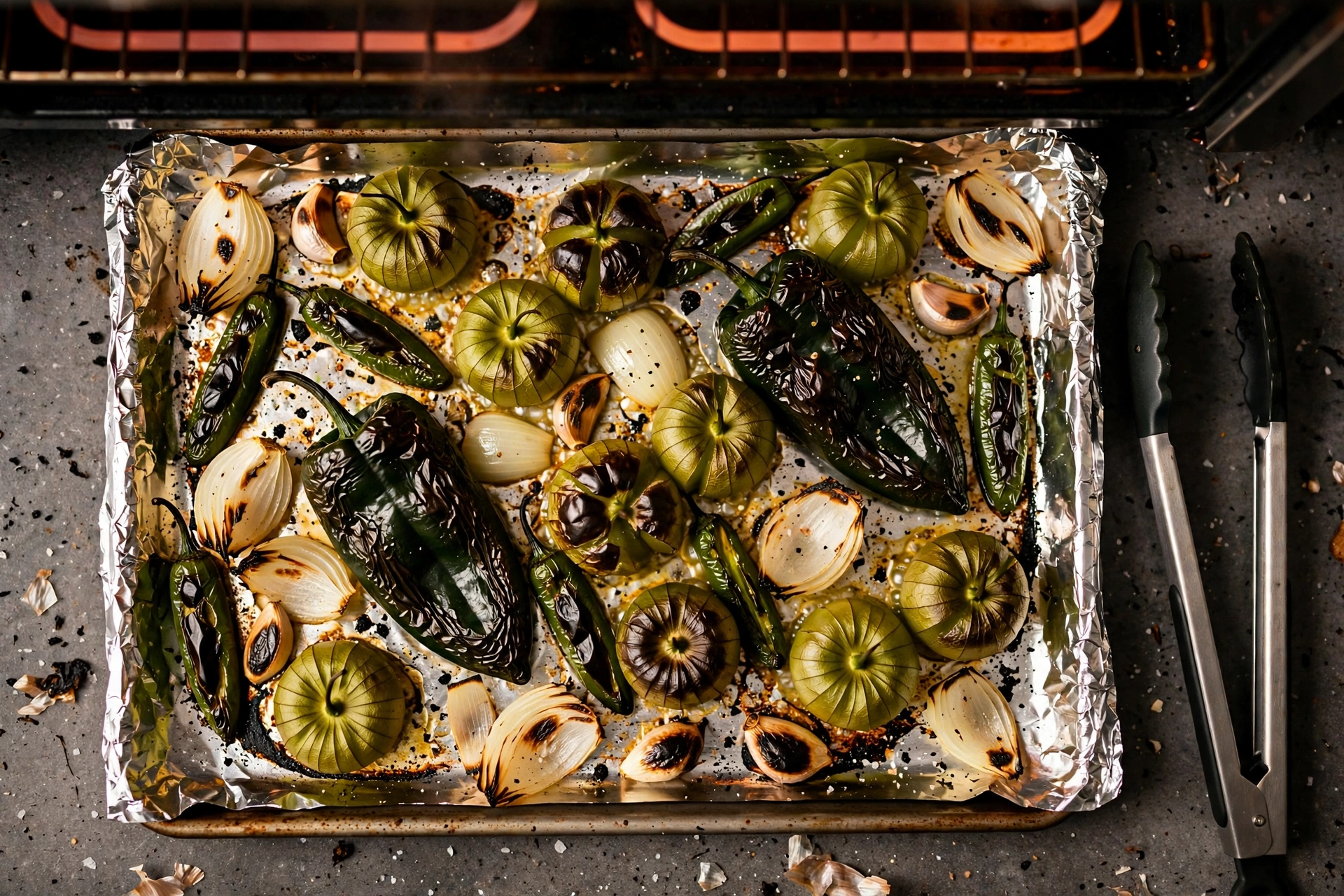
While the chicken simmers, heat the broiler. Place the tomatillos, poblanos, jalapeños, the remaining onion, and the remaining garlic on a foil-lined sheet pan. Broil for 5 minutes, flip everything over, and broil for 3 to 4 more minutes, until charred in spots and soft. Let the poblanos cool briefly, then peel off the loose skins and remove the stems.
3 Toast the Pepitas and Blend the Salsa Verde
Toast the pepitas in a dry skillet over medium heat for 2 to 3 minutes, until they pop and smell fragrant. Then add the roasted vegetables, the pepitas, the cilantro, the cumin, and 1 cup of broth to a blender. Blend until smooth and bright green.
Blend and Build:
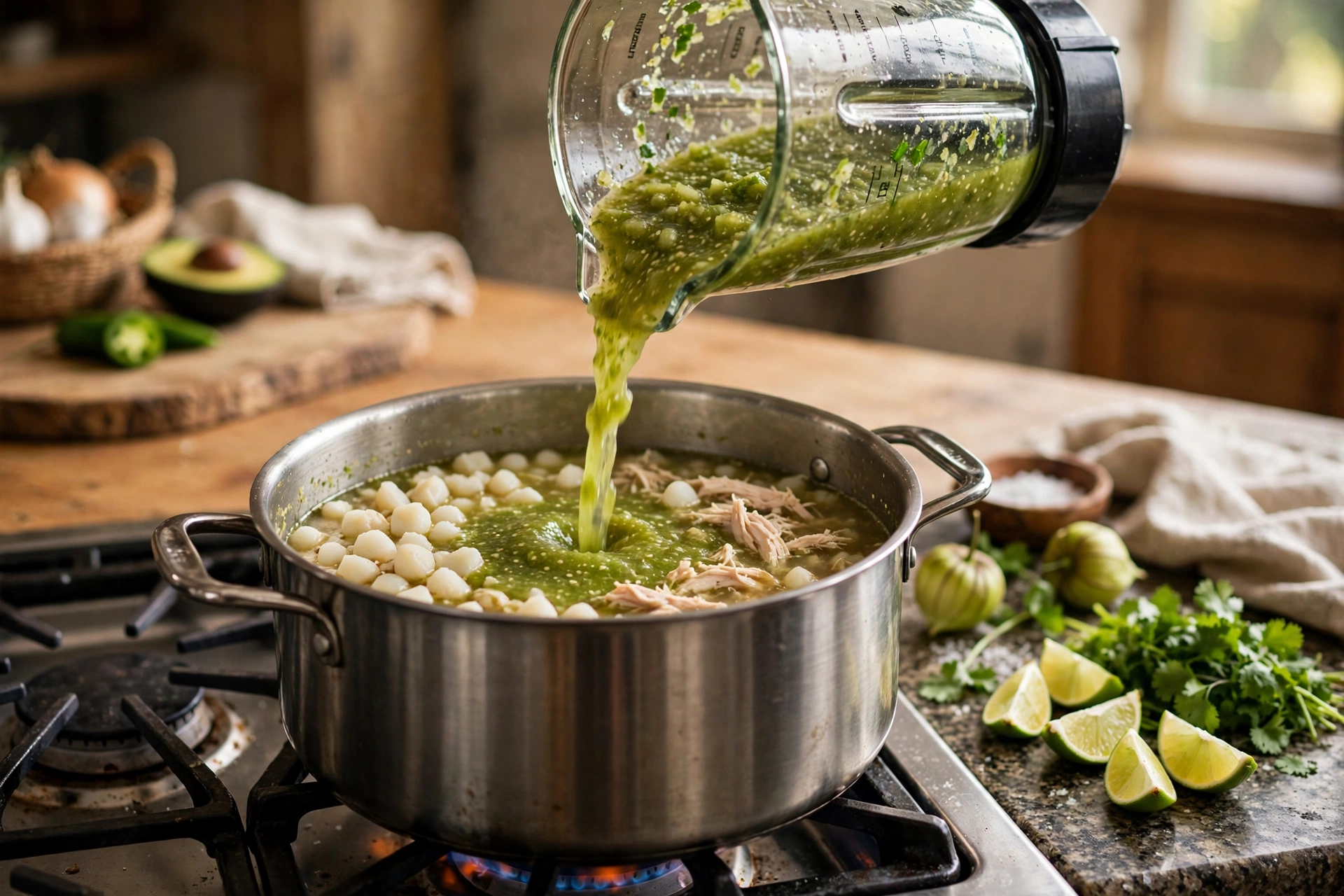 4 Fry the Sauce, Then Add the Hominy and Chicken
Lift the chicken out of the pot and shred it with two forks. Discard the bay leaves and the epazote. Heat the olive oil in the pot over medium heat. Pour in the green sauce and fry it for 5 minutes, stirring often. Then stir in the hominy, the shredded chicken, and the Mexican oregano. Simmer gently for 10 minutes. Taste and add more salt if needed.
5 Ladle, Top, and Serve
Ladle the hot pozole into bowls. Set out the toppings bar: shredded cabbage, sliced radishes, diced avocado, chopped onion, queso fresco, and lime wedges. Let everyone top their own bowl. Serve at once with warm corn tortillas or tostadas.
Technique: How to Get the Green Sauce Right
The difficult step in pozole verde is the salsa verde. It is the soul of the soup. If the sauce is thin or sour, the whole pot tastes wrong. Three things make it right: the roast, the pepitas, and the fry.
First, the roast matters. Broil the tomatillos until they blister and soften. Their sharpness mellows, and their flavour deepens. The poblanos should char in spots, then peel easily. If the vegetables are still firm and pale, give them another minute or two. Soft and charred is the goal.
Second, the pepitas matter. Toasted pumpkin seeds give the sauce its body. Without them, the sauce is thin and watery, and it floats on top of the broth. With them, the sauce turns silky and blends right in. Toast them until they pop. Then blend them with the vegetables and a cup of broth until the sauce is completely smooth.
Third, the fry matters. Pour the blended sauce into hot oil and cook it for 5 minutes. It will darken slightly, and it will smell rich and toasty. This step is what turns a raw blended sauce into a cooked salsa verde. Then the sauce joins the broth, and the whole pot turns a beautiful green.
The Roast in Detail
How long should you broil? About 5 minutes on the first side, then 3 to 4 minutes after flipping. The tomatillos should collapse a little and show dark spots. The poblanos should blister all over. Every broiler is different, so watch the pan. If the vegetables start to burn, move the pan down a rack.
One more thing matters: the jalapeños. Roast them with everything else, and seed them after roasting if you want a mild soup. The seeds hold most of the heat. So seed one jalapeño and keep the other whole for a medium heat. Or seed both for a gentle warmth that everyone can enjoy.
Tips
- ✓ Roast until charred in spots. Pale, firm vegetables make a sour sauce. Soft and blistered is the goal.
- ✓ Toast the pepitas until they pop. Raw pepitas taste flat. Toasted ones give the sauce its nutty body.
- ✓ Fry the sauce before it joins the pot. Five minutes in hot oil deepens the colour and the flavour.
- ✓ Simmer the chicken gently. A rolling boil makes the thighs tough. Low heat keeps them juicy and easy to shred.
- ✓ Skim the foam. A spoonful of foam off the top keeps the broth clear and bright.
- ✓ Taste at the end, not the middle. The sauce, the hominy, and the chicken all add salt. So season last, a pinch at a time.
Variations
This pozole verde is easy to shape around your table, and the base stays the same.
- Spicier. Keep the seeds in both jalapeños, or add 1 serrano pepper to the roast. The soup turns hot and bright.
- Milder. Seed both jalapeños and use only 1 poblano. The soup stays green and gentle, and kids can enjoy it.
- With pork. Swap the chicken thighs for 2 lbs of boneless pork shoulder, cut into chunks. Simmer it for 1 hour, until it shreds easily.
- With spinach. Add 2 cups of baby spinach to the blender with the cilantro. The sauce turns an even deeper green, and no one tastes the spinach.
- With mushrooms. For a meatless version, simmer 1 lb of sliced mushrooms in the broth instead of chicken. The soup stays hearty, and the mushrooms add a meaty bite.
- Extra smoky. Roast 1 extra poblano and add a pinch of chipotle powder to the blender. The sauce gets a deeper smoke.
What to Serve With
What to serve with pozole verde? Start with warm corn tortillas or tostadas. They are made for scooping up the broth, and a stack on the table turns a simple bowl into a full Mexican meal. For a bigger dinner, add a scoop of Cilantro Lime Rice beside the bowl — the lime in the rice echoes the lime in the soup.
On a soup night, set out Mexican Street Corn as a side. The creamy, tangy corn against the bright green soup is the contrast that keeps everyone reaching back. And for a fuller table, add a plate of Frijoles Charros with warm tortillas. The smoky beans and the green pozole together make a feast.
For a lighter lunch, serve pozole verde with a simple salad and a plate of sliced avocado and radishes. The toppings bar already does most of the work, so keep the sides simple and let the soup shine.
Storage
Let the soup cool to room temperature before storing it. It keeps in the refrigerator for up to 5 days in a covered container — and it tastes even better on the second day, once the flavours have melded. So making it a day ahead is a good idea.
How long does pozole verde last? In the fridge, up to 5 days. In the freezer, up to 3 months: cool it completely, ladle it into freezer containers or bags, and leave a little room at the top, because the soup expands as it freezes. Thaw it overnight in the fridge. Then reheat it gently on the stove, and add a splash of broth or water, because the soup thickens as it sits. The toppings — cabbage, radishes, avocado, and queso fresco — do not freeze well, so add them fresh when you serve.
Frequently Asked Questions
Is pozole verde spicy?
It can be, but it does not have to be. The heat comes from the jalapeños. Two jalapeños with their seeds give a warm, noticeable kick. Seed one of them, and the soup turns mild. Seed both, and it is gentle enough for kids. So you control the heat with the seeds.
How to make pozole verde?
Simmer 2 lbs of chicken thighs in 6 cups of broth with onion, garlic, bay leaves, and epazote for 30 minutes. Meanwhile, broil tomatillos, poblanos, jalapeños, onion, and garlic until charred, then blend them with toasted pepitas, cilantro, and cumin. Shred the chicken, fry the green sauce in oil for 5 minutes, then stir in the hominy, the chicken, and the oregano. Simmer for 10 minutes and serve with a toppings bar.
What is pozole verde made of?
Pozole verde is made of shredded chicken, white hominy, and a green broth. The broth comes from tomatillos, poblano peppers, jalapeños, onion, garlic, cilantro, and toasted pepitas, blended into a salsa verde. The soup is seasoned with cumin, Mexican oregano, epazote, bay leaves, salt, and pepper. It is served with cabbage, radishes, avocado, onion, queso fresco, and lime wedges.
More Questions About Pozole Verde
Pozole verde vs pozole rojo — what is the difference?
Pozole rojo is red, made with dried red chiles like guajillo and ancho, and it tastes smoky and rich. In contrast, pozole verde is green, made with tomatillos and green chiles, and it tastes bright and tangy. Both use hominy, and both are served with a toppings bar. The green version comes from Guerrero, on the Pacific coast. The red version is more common in Jalisco and the north.
Can you freeze pozole verde?
Yes — it freezes beautifully. Let the soup cool completely, then ladle it into freezer containers or bags, leaving a little room at the top. It keeps for up to 3 months. Thaw it overnight in the fridge, then reheat it on the stove over low heat. Add a splash of broth or water to loosen it. Add the cabbage, radishes, avocado, and queso fresco fresh when you serve.
What to serve with pozole verde?
Warm corn tortillas or tostadas first of all — they are made for scooping. It is also wonderful with a scoop of cilantro lime rice, with Mexican street corn on the side, or with a plate of frijoles charros. And always put the toppings bar on the table — cabbage, radishes, avocado, onion, queso fresco, and lime wedges — so everyone builds their own bowl.
Try These Next
If you loved this bright green pozole, try these recipes next:
Pozole Rojo — the classic red pozole with guajillo chiles and pork, the smoky cousin of this green version.
Caldo de Pollo — golden Mexican chicken soup with vegetables, rice, lime, and cilantro, another comforting one-pot soup.
Sopa de Fideo con Carne Molida — Mexican fideo soup with ground beef, tomatoes, and toasted noodles, ready in 40 minutes.
Frijoles Charros — smoky Mexican cowboy beans with bacon and chiles, wonderful beside a bowl of pozole.
Cilantro Lime Rice — fluffy lime rice with cilantro, the perfect side for scooping up this soup.
Lentejas — chunky Mexican lentil soup with brown lentils, smoky cumin and lime, a hearty meatless soup.
Menudo (Mexican Tripe Soup with Hominy)
Pozole Verde (Chicken Pozole Verde)
Ingredients
Equipment
Method
- Add the chicken thighs, broth, half the onion, 2 garlic cloves, the bay leaves, the epazote, and half the salt to a large soup pot; bring to a boil, then reduce to low, cover, and simmer for 30 minutes until the chicken is tender, skimming any foam.
- While the chicken simmers, broil the tomatillos, poblanos, jalapeños, the remaining onion, and the remaining garlic on a foil-lined sheet pan for 5 minutes, flip, and broil 3 to 4 more minutes until charred in spots and soft; cool the poblanos briefly, peel off the loose skins, and remove the stems.
- Toast the pepitas in a dry skillet over medium heat for 2 to 3 minutes until they pop; add the roasted vegetables, pepitas, cilantro, cumin, and 1 cup of broth to a blender and blend until smooth and bright green.
- Lift the chicken out and shred it with two forks; discard the bay leaves and epazote; heat the olive oil in the pot, pour in the green sauce, and fry for 5 minutes, stirring often; stir in the hominy, shredded chicken, and Mexican oregano and simmer gently for 10 minutes, then taste for salt.
- Ladle into bowls and serve at once with the toppings bar — shredded cabbage, sliced radishes, diced avocado, chopped onion, queso fresco, and lime wedges — plus warm corn tortillas or tostadas.