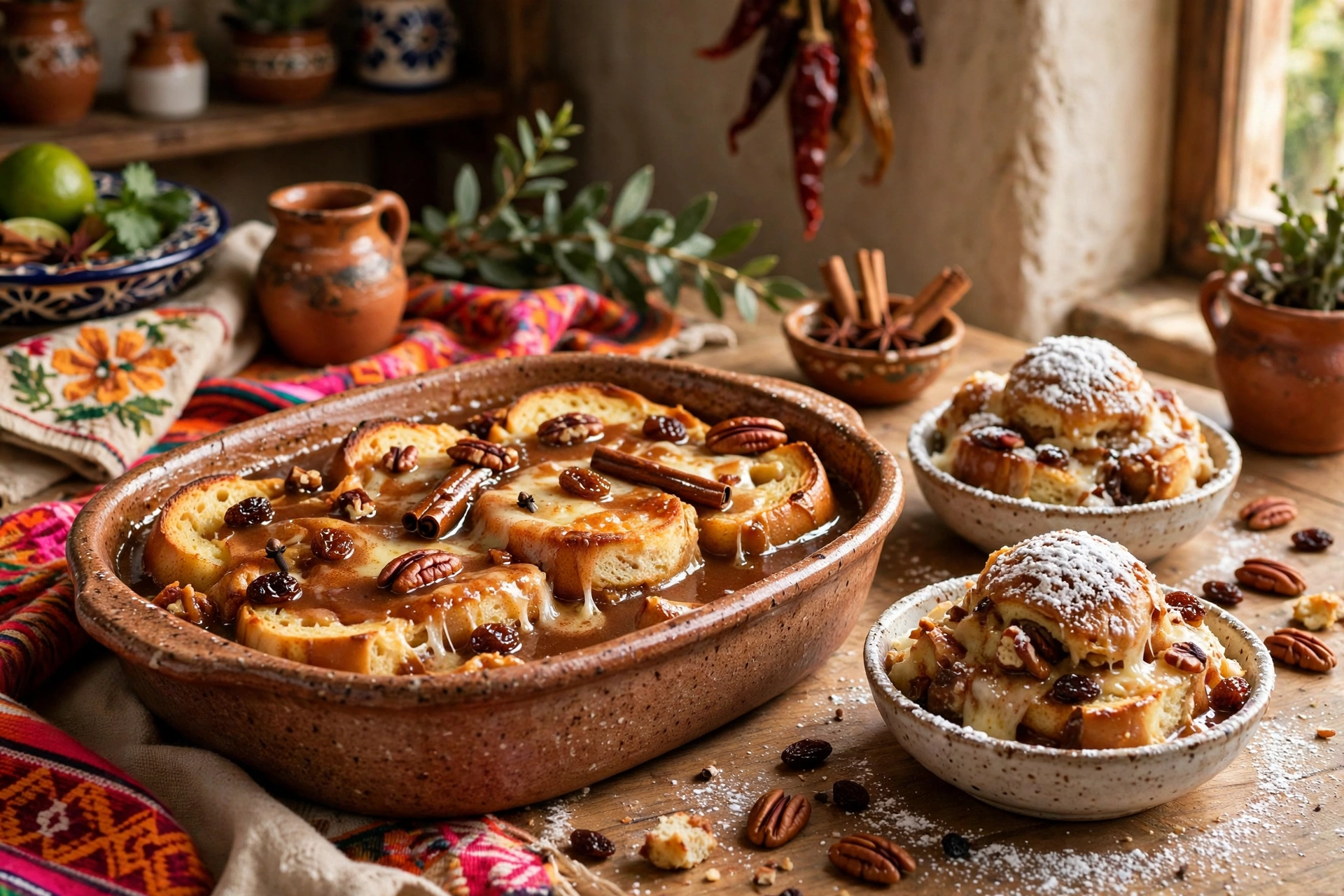
Some desserts taste like a holiday, and capirotada is one of them. This Mexican bread pudding is toasted bolillo bread layered with raisins, pecans and melted cheese, then soaked in a warm piloncillo syrup scented with cinnamon, star anise and cloves and baked until it turns golden and bubbling. It takes about 1 hour 15 minutes from start to finish, and most of that is the syrup simmering and the oven doing the work.
The magic is in the contrast. The bread goes in crisp and comes out soft and syrupy, the cheese melts into salty little pockets against the sweet piloncillo, and the raisins and nuts give every spoonful something to chew on. It is the dessert Mexican families make all through Lent and for Easter, and it tastes just as good warm from the oven as it does cold from the fridge the next day.
Why You’ll Love It
- A true Mexican Lenten classic. Capirotada is the bread pudding Mexican families have made for generations during Lent and Easter — a dessert with real history in every layer.
- Sweet, salty and spiced all at once. Warm piloncillo syrup, melted cheese, cinnamon and cloves — the flavours balance each other in a way plain bread pudding never does.
- Uses up stale bread. Day-old bolillo is actually better here than fresh bread, because dry bread soaks up the syrup without falling apart.
- Make-ahead friendly. It tastes wonderful warm from the oven, and many families say it is even better cold the next day, once the syrup has settled into the bread.
- Feeds a crowd. One 9×13-inch dish makes 8 generous servings, so it is made for family dinners and Easter gatherings.
- Easy to shape around your family. Swap the nuts, change the cheese, skip the raisins — the syrup and the toasted bread stay the same, and the pudding still works.
What Is Capirotada?
Capirotada is a traditional Mexican bread pudding served during Lent — the forty days before Easter — and it is one of the oldest desserts in Mexican cooking. There are many versions of it across Mexico and the southwestern United States, but the heart of the dish never changes: layers of toasted bread, dried fruit, nuts and cheese, all soaked in a sweet syrup made from piloncillo, the unrefined cane sugar that is a staple of Mexican kitchens.
The name comes from the Spanish word capirote, the pointed hood worn in religious processions, and the dish is tied to the season in more than name. Families traditionally make it on Good Friday, when meat is off the table, and the layers are said to carry meaning — the bread for the body, the syrup for the blood, the cinnamon sticks for the cross, the cloves for the nails.
This version is the classic syrup-based capirotada — a Mexican bread pudding with piloncillo syrup, not a milk pudding. The bread is sliced and butter-toasted until crisp, the syrup is water simmered with piloncillo, cinnamon, star anise and cloves until it coats the back of a spoon, and the layers are raisins, pecans, peanuts, crumbled Cotija and shredded Monterey Jack. The cheese is the part that surprises people who have never had capirotada: it melts into salty, gooey pockets that cut through the sweetness of the syrup, and that sweet-and-salty balance is exactly what makes the dish so loved.
Some versions of capirotada are made with milk instead of syrup, and some add sliced bananas — Isabel Eats makes hers that way. This one stays with the older syrup tradition: no milk, no bananas, just bread, syrup, cheese, raisins and nuts, baked in a 9×13-inch dish until bubbling. It is the capirotada most Mexican families in northern Mexico grew up with, and it keeps best in the fridge, because there is no milk to spoil the texture.
Ingredients
For the toasted bread:
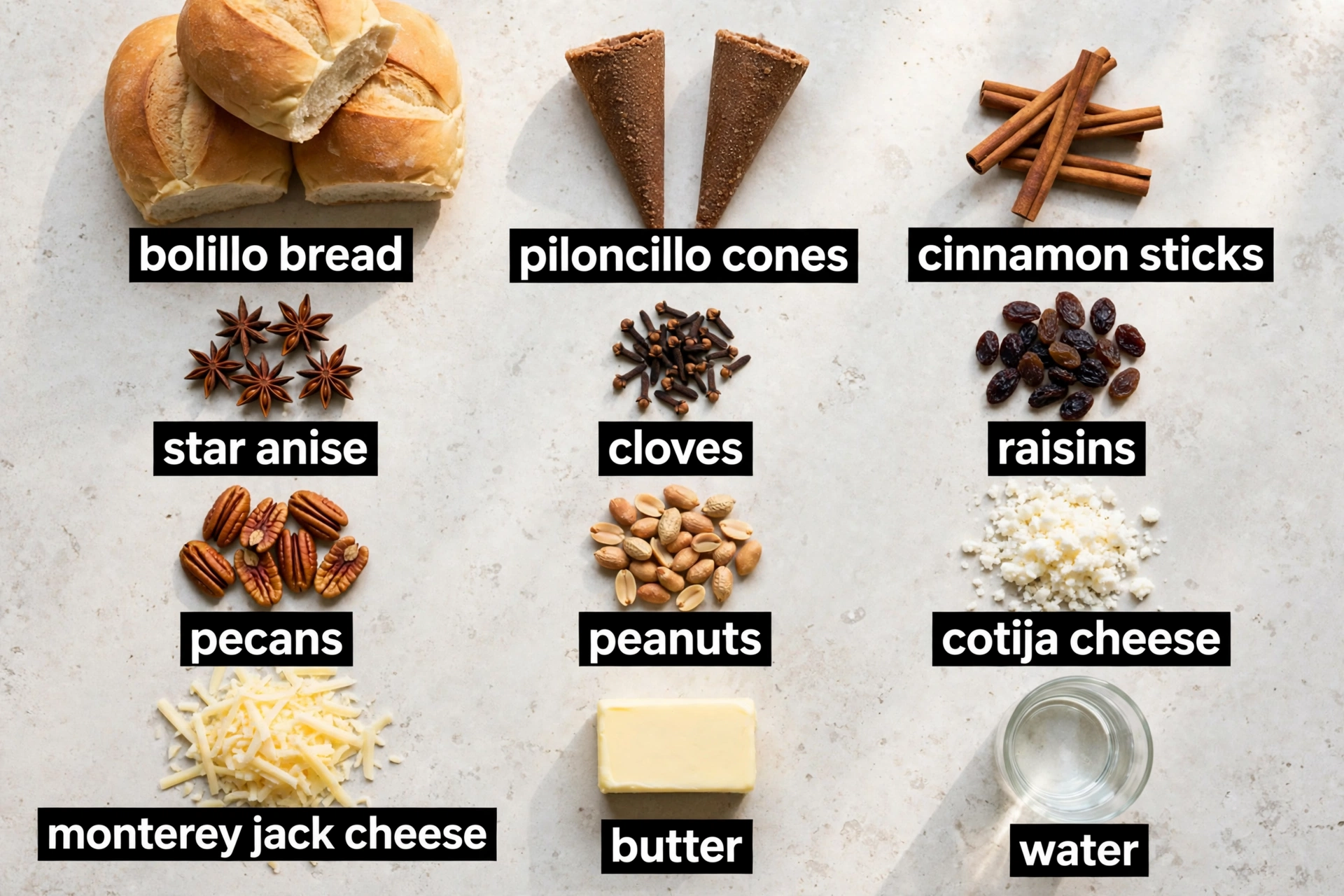
Bolillo rolls — 5, day-old if possible, cut into 1/2-inch slices. Bolillo is the crusty Mexican sandwich roll, and it is the traditional bread for capirotada — sturdy enough to hold its shape after soaking, with a soft crumb that drinks up the syrup. Day-old bread is better than fresh here, because dry bread absorbs syrup without turning to mush. A French baguette or any crusty white loaf works in its place.
Unsalted butter — 6 tablespoons, divided. Butter is brushed on both sides of the bread before toasting, and it is what makes the slices turn golden and crisp instead of just dry. It also greases the baking dish so nothing sticks. Salted butter works too — just skip the pinch of salt in the syrup if you use it.
For the piloncillo syrup:
Water — 4 cups. Water is the base of the syrup. It is what makes this a syrup capirotada rather than a milk pudding. The piloncillo dissolves into it, the spices steep in it, and the bread drinks it up in the dish.
Piloncillo — 12 ounces (about 1 1/2 cups packed dark brown sugar), coarsely chopped. Piloncillo is unrefined Mexican cane sugar, sold in hard cones. It is the soul of capirotada. It gives the syrup a deep, caramel-like sweetness that plain white sugar cannot match. Chop or grate the cone first so it melts evenly. Dark brown sugar is the closest substitute and works well if you cannot find piloncillo.
Spices and Vanilla
Cinnamon sticks — 2. Cinnamon is the warm spice that perfumes the whole pudding. Whole sticks are used in the syrup and fished out before layering. So the flavour is warm and clean rather than gritty.Mexican canela is the traditional choice, but any cinnamon stick works.
Whole cloves — 3. Cloves add a deep, warm, slightly peppery note to the syrup — a little goes a long way. So three is enough. Fish them out with the cinnamon before you pour the syrup, or the flavour turns bitter.
Star anise — 2. Star anise gives the syrup a gentle liquorice warmth that makes people ask what the secret ingredient is. It is optional, but it is the touch that makes this capirotada taste like the old family versions. Remove it with the other spices before layering.
Vanilla extract — 1 teaspoon. Vanilla rounds out the syrup and softens the spices, adding a warm sweetness that sits underneath the cinnamon. Stir it in after the syrup comes off the heat so the flavour stays bright.
Pinch of salt. A pinch of salt in the syrup is what makes the sweetness taste deeper instead of flat. It is a tiny amount, but the syrup tastes noticeably better with it.
For the layers:
Raisins — 1 cup. Raisins are the classic dried fruit in capirotada. They plump up in the warm syrup and turn soft, sweet and jammy inside the pudding. Golden raisins work just as well, and a mix of the two looks pretty in the layers.
Pecans — 1/2 cup, coarsely chopped. Pecans add a buttery crunch that holds up in the baked pudding. Their rich flavour is a natural match for piloncillo. Walnuts or sliced almonds are good substitutes.
Peanuts — 1/2 cup, unsalted. Peanuts are the humble, traditional nut in northern Mexican capirotada — cheap, crunchy and salty-sweet against the syrup. Use unsalted peanuts so the pudding does not turn too salty, and leave them whole or roughly chopped.
Crumbled Cotija cheese — 1 cup. Cotija is a salty, crumbly Mexican cheese. It is the cheese that makes capirotada taste like capirotada. It softens in the heat without melting away completely, leaving salty little crumbles through the sweet layers. Queso fresco is the closest substitute.
Shredded Monterey Jack cheese — 1 cup. Monterey Jack is the melting cheese in this recipe — it turns soft and gooey between the layers and gives the pudding its stretchy, bubbling top. Mild cheddar or Oaxaca cheese work in its place.
To serve (optional):
Powdered sugar — 2 tablespoons, for dusting. A light dusting of powdered sugar over the warm pudding is the pretty finish, and it adds a little extra sweetness on top. Vanilla ice cream is the other classic serving — a scoop beside a warm spoonful is hard to beat.
How to Make Capirotada
1 Step 1 — Gather and Prep
Heat the oven to 350°F and grease a 9×13-inch baking dish with 1 tablespoon of the butter. Slice the bolillo rolls into 1/2-inch rounds and lay them out on a baking sheet so you can see what you are working with.
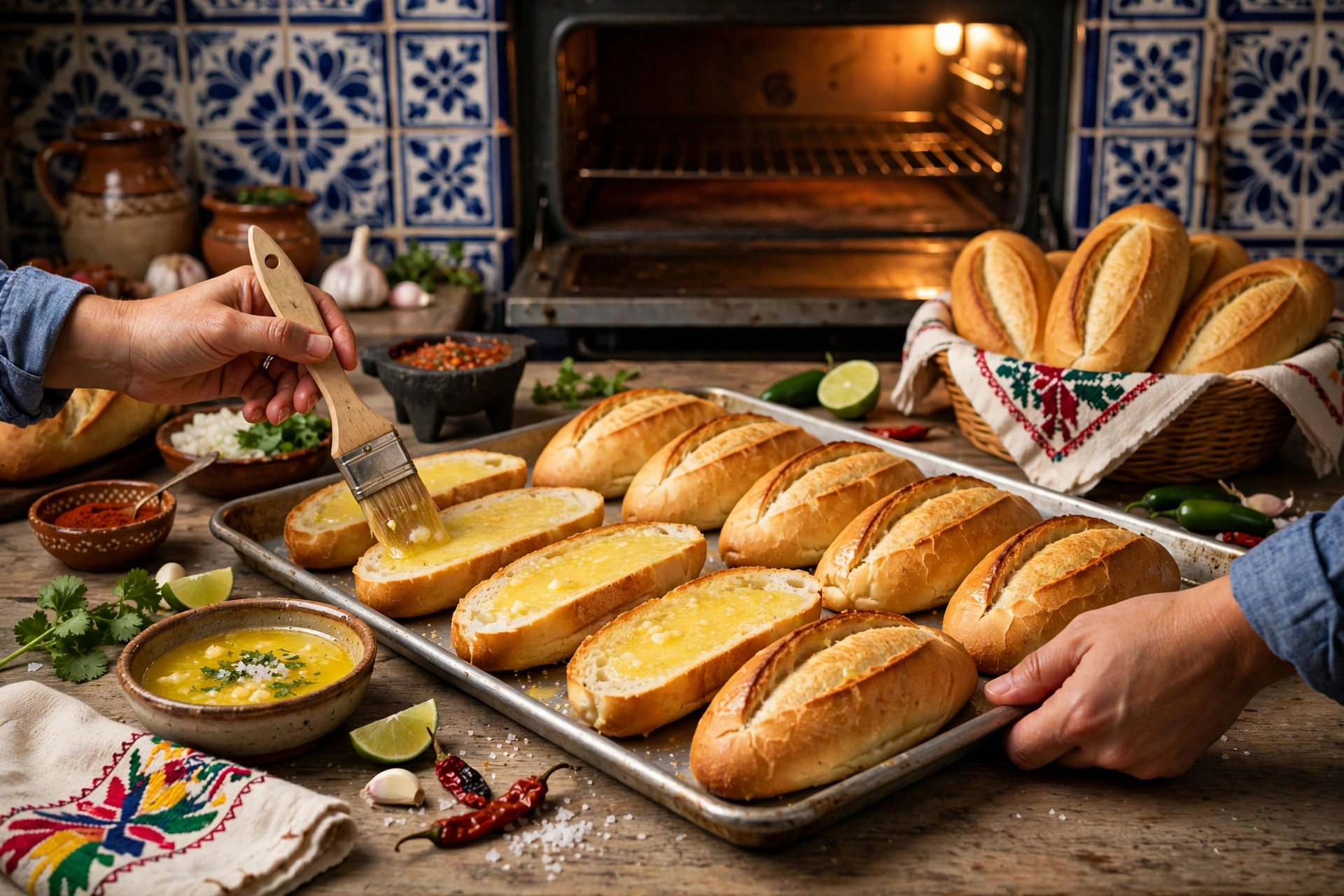
2 Step 2 — Toast the Bread
Brush both sides of each bread slice with the remaining melted butter, arrange them in a single layer on the baking sheet, and bake for 8 to 10 minutes, turning once, until lightly golden and crisp at the edges. Let the slices cool slightly.
3 Step 3 — Make the Piloncillo Syrup
While the bread toasts, combine the water, chopped piloncillo, cinnamon sticks, cloves and star anise in a large saucepan over medium-high heat. Bring to a boil, stirring until the piloncillo dissolves, then lower the heat and simmer for 20 minutes, until the syrup thickens enough to coat the back of a spoon. Strain out the spices, stir in the vanilla and the pinch of salt, and set the syrup aside.
Layer, Soak and Bake:
4 Step 4 — Layer the Pudding
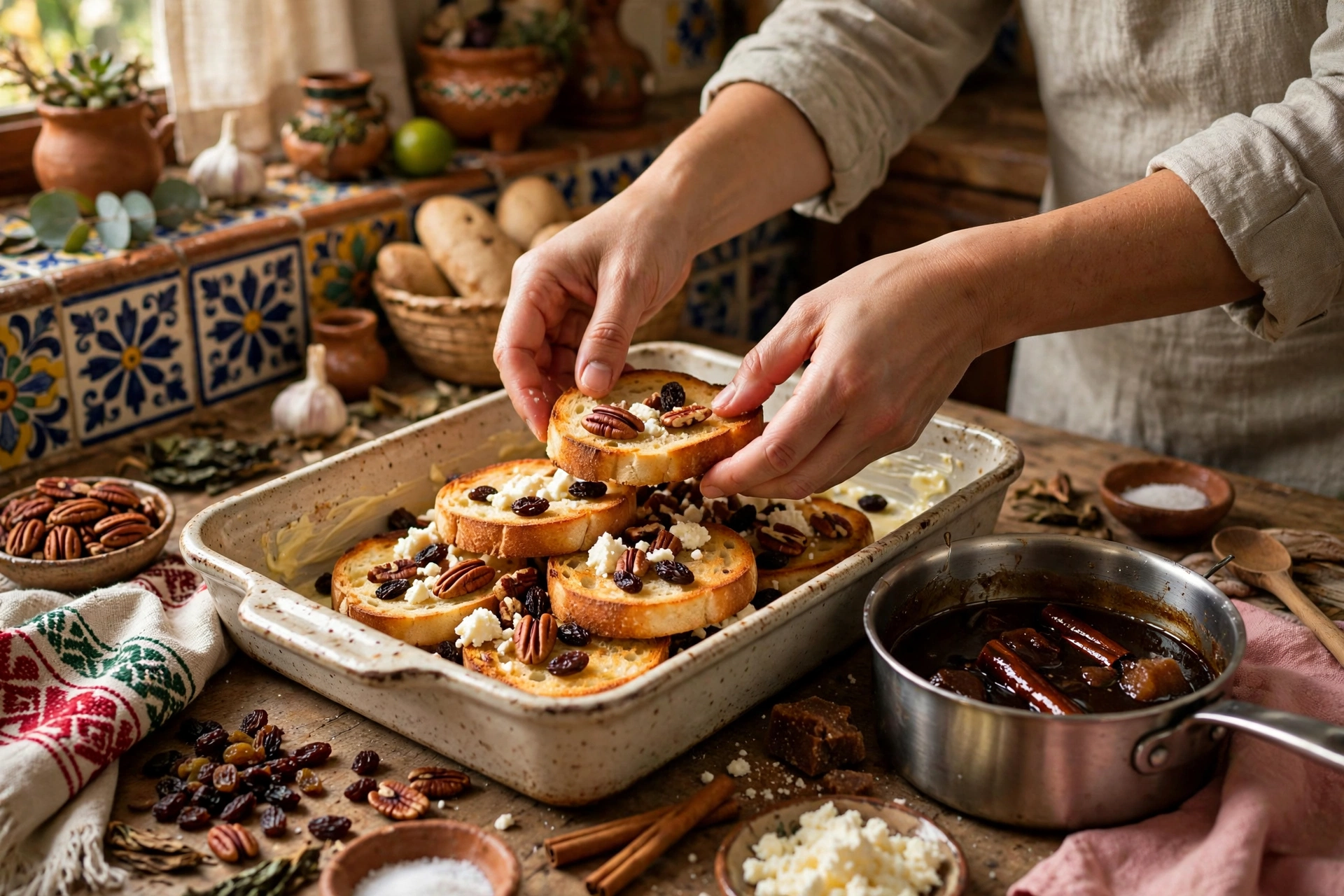
Arrange half of the toasted bread slices in a single layer in the greased baking dish. Slowly pour half of the warm syrup over the bread, letting it soak in, then sprinkle with half of the raisins, half of the pecans, half of the peanuts, half of the Cotija and half of the Monterey Jack. Repeat with the remaining bread, syrup, raisins, nuts and cheese.
5 Step 5 — Soak, Then Bake
Let the assembled pudding sit for 15 minutes so the bread drinks up the syrup. Cover the dish tightly with foil and bake at 350°F for 25 minutes, until the syrup is bubbling, then remove the foil and bake 10 minutes more, until the cheese is golden and the top is lightly browned.
6 Step 6 — Rest and Serve
Let the capirotada rest for 10 minutes so the syrup settles and the layers set. Dust with powdered sugar and serve warm in bowls, or let it cool completely, cover and refrigerate, and serve it cold — both ways are traditional.
Technique: How to Make Capirotada with a Syrup That Soaks In
Two things decide whether capirotada turns out rich and syrupy or dry and disappointing: how the bread is toasted, and how the syrup is poured.
First, the bread must be properly toasted. The slices need to be dry and crisp at the edges — golden, not pale — because dry bread acts like a sponge. Fresh, soft bread soaks up syrup and collapses into mush, while properly toasted bread holds its shape and drinks the syrup slowly, layer by layer. Butter both sides before toasting, bake at 350°F for 8 to 10 minutes, and turn the slices once so both sides crisp evenly. If your bread is already a day or two old, it toasts even faster, so watch it — a few seconds too long and the edges burn, and burnt bread makes the whole pudding taste bitter.
Pour the Syrup Slowly
Second, the syrup must be poured slowly, in two rounds, with a rest in between. This is the step most people rush, and it is the one that matters most in a capirotada recipe with piloncillo. Pour half the warm syrup over the first layer of bread and wait — let it sink in for a minute before you add the fruit, nuts and cheese. Then pour the second half over the top layer the same way, slowly, so the syrup reaches the edges and the corners, not just the middle. Then let the whole dish sit for 15 minutes before it goes into the oven. That rest is not optional: it is when the bread absorbs the syrup all the way through, so the finished pudding is moist in every bite instead of dry on top and soggy at the bottom.
Tips
- Use day-old bread. Stale bolillo is better than fresh for capirotada — dry bread soaks up syrup without falling apart. If your bread is fresh, toast it a minute or two longer.
- Toast until golden, not pale. The slices should be crisp at the edges before they go into the dish. Pale, soft bread turns to mush in the syrup.
- Pour the syrup slowly. Half over the first layer, half over the second, and let each pour sink in before moving on. Fast pouring floods the bottom and leaves the top dry.
- Do not skip the 15-minute soak. The rest before baking is when the bread absorbs the syrup all the way through — it is the difference between a moist pudding and a dry one.
- Fish out the spices. Remove the cinnamon sticks, cloves and star anise from the syrup before layering, or someone will bite into a whole clove.
- Rest before serving. Ten minutes out of the oven lets the syrup settle and the layers set, so the pudding scoops cleanly instead of sliding apart.
Variations
This capirotada is easy to shape around your family, and the syrup and toasted bread stay the same.
- Capirotada without bananas. This recipe already has no bananas — it is the classic syrup version, deeper and more caramel-like than the milk-and-banana kind, and it keeps better in the fridge.
- With bananas. If your family loves the banana version, layer 2 sliced bananas between the bread layers. Add them at the layering step, not earlier, so they stay in slices instead of melting into the syrup.
- With different nuts. Swap the pecans and peanuts for walnuts, sliced almonds or pine nuts — any nut you like works, as long as it is roughly chopped so it spreads through the layers.
- With dried fruit. Add 1/2 cup of dried apricots, prunes or cranberries beside the raisins for a fruitier pudding with more colour in the layers.
- With a single cheese. Use 2 cups of Monterey Jack alone if you cannot find Cotija, or 2 cups of Cotija alone for a saltier, crumblier pudding. The two-cheese mix is the classic balance, but either one works on its own.
- With coconut. Sprinkle 1/2 cup of shredded coconut over the layers for a tropical note that pairs beautifully with the piloncillo.
- As individual servings. Assemble the same layers in buttered ramekins instead of one big dish, and bake for 20 to 25 minutes. Individual capirotadas are lovely for Easter dinner, and everyone gets their own golden top.
What to Serve With
Capirotada is a dessert, so it usually follows the meal — and in Lent and at Easter, that meal is often something simple and comforting. Serve it after Caldo de Pollo, a golden Mexican chicken soup that warms everyone up before the sweet course, or after Frijoles Charros, the smoky cowboy beans that are a proper Mexican family dinner on their own.
A scoop of vanilla ice cream beside a warm spoonful of capirotada is the classic pairing — the cold cream against the warm, spiced syrup is the best bite on the plate. A cup of Mexican hot chocolate or a mug of coffee is the other traditional companion, especially when the pudding is served cold the next day. For an Easter table, set it out beside Mexican Rice Pudding and let guests choose — two Mexican desserts, one warm and syrupy, one cool and creamy.
Storage
Let the capirotada cool completely before covering the dish. It keeps in the refrigerator for 4 to 5 days, covered tightly with foil or plastic wrap — and many families say it tastes even better on the second day, once the syrup has fully settled into the bread.
To reheat, cover the dish with foil and bake at 350°F for 10 to 15 minutes, until warmed through, or warm individual servings in the microwave for 1 to 2 minutes. Serve it cold straight from the fridge too — that is a fully traditional way to eat it, and in warm weather it is the better one. For longer storage, freeze the baked capirotada for up to 2 months, wrapped tightly in foil; thaw overnight in the refrigerator, then reheat covered at 350°F for 20 minutes.
Frequently Asked Questions
What is capirotada?
Capirotada is a traditional Mexican bread pudding made with layers of toasted bread, dried fruit, nuts and cheese, soaked in a sweet piloncillo syrup flavoured with cinnamon and cloves. It is traditionally served during Lent and at Easter, and it can be eaten warm from the oven or cold from the refrigerator.
How do you make capirotada?
Toast sliced bolillo bread until golden, simmer water with piloncillo, cinnamon, cloves and star anise into a syrup, then layer the bread with raisins, nuts and cheese in a baking dish, pouring the syrup over each layer. Let it soak for 15 minutes, then bake covered at 350°F for 25 minutes and uncovered for 10 minutes more, until bubbling and golden.
Is capirotada made with milk or syrup?
Both versions exist. The classic northern Mexican capirotada uses a water-based piloncillo syrup, like this recipe — no milk, no bananas. Other families, including Isabel Eats, make a milk version, simmering the piloncillo in milk and adding sliced bananas and almonds. The syrup version keeps longer in the fridge and has a deeper, more caramel-like flavour.
More Questions About Capirotada
Can you make capirotada without bananas?
Yes — this recipe has no bananas at all. The traditional syrup capirotada is made with bread, piloncillo syrup, cheese, raisins and nuts, and bananas were never part of it. If you like bananas, you can layer 2 sliced bananas in with the other fillings, but the pudding is complete without them.
What kind of bread is best for capirotada?
Bolillo rolls are the traditional choice — crusty on the outside, soft inside, and sturdy enough to hold up after soaking. A French baguette or any crusty white loaf works just as well. Whatever you use, it should be a day or two old, sliced, and toasted until golden before layering.
Can you make capirotada ahead of time?
Yes, and it is one of the best make-ahead Mexican desserts. Assemble it the day before, cover and refrigerate, then bake it the next day — or bake it fully, cool it, and refrigerate for up to 5 days. Many families say capirotada tastes better on the second day, once the syrup has settled into the bread. Serve it warm or cold.
Try These Next
If you loved this Mexican bread pudding, try these recipes next:
- Mexican Rice Pudding — creamy arroz con leche, another classic Mexican dessert that is wonderful served cold.
- Mexican Street Corn — sweet charred corn with lime, cheese and chili, a favourite Mexican side.
- Crispy Potato Tacos — golden corn tortillas filled with mashed potatoes and cheese, fried until crisp.
- Chicken Smash Tacos — crispy smashed chicken tacos, ready in 30 minutes.
- Caldo de Pollo — golden Mexican chicken soup, the comforting main course before a slice of capirotada.
Capirotada (Mexican Bread Pudding)
Ingredients
Equipment
Method
- Heat the oven to 350°F and grease a 9x13-inch baking dish with 1 tablespoon of the butter. Slice the bolillo rolls into 1/2-inch rounds.
- Brush both sides of each bread slice with the remaining melted butter, arrange them in a single layer on a baking sheet and bake for 8–10 minutes, turning once, until golden and crisp.
- While the bread toasts, combine the water, chopped piloncillo, cinnamon sticks, cloves and star anise in a large saucepan. Bring to a boil, then simmer for 20 minutes, until the syrup coats the back of a spoon. Strain out the spices and stir in the vanilla extract and salt.
- Arrange half of the toasted bread slices in a single layer in the greased baking dish. Slowly pour half the syrup over the bread, then sprinkle with half the raisins, pecans, peanuts, Cotija cheese and Monterey Jack cheese. Repeat with the remaining bread, syrup and toppings.
- Let the assembled pudding sit for 15 minutes so the bread drinks up the syrup. Cover the dish tightly with foil and bake at 350°F for 25 minutes, then uncover and bake for 10 minutes more, until golden and bubbling.
- Let the capirotada rest for 10 minutes so the syrup settles and the layers set. Dust with powdered sugar and serve warm or cold, with vanilla ice cream if you like.
Notes
- Use day-old bread — stale bolillo is better than fresh for capirotada. Dry bread soaks up syrup without falling apart.
- Toast until golden, not pale — the slices should be crisp at the edges before they go into the dish, or the pudding turns to mush.
- Pour the syrup slowly — half over the first layer, half over the second, letting each pour sink in before moving on.
- Do not skip the 15-minute soak — the rest before baking is when the bread absorbs the syrup all the way through.
- Fish out the spices — remove the cinnamon sticks, cloves and star anise from the syrup before layering, or someone will bite into a whole clove.