Some Mexican candies need a candy thermometer and a lot of patience. Instead, mazapán needs neither. This homemade mazapan recipe turns raw peanuts and powdered sugar into a crumbly, melt-in-your-mouth disc in 30 minutes. There is no cooking. There is no baking. Just toasting, grinding, and pressing.
Mazapán is the pale beige peanut candy of Mexican markets and corner shops. It tastes like roasted peanuts and sweet cream. It crumbles the moment you bite it. Then it melts on your tongue.
Instead, this version starts from raw peanuts. First, you toast them on a dry comal until the skins darken. Then you rub the skins off in a towel. Next, you grind the cooled peanuts with powdered sugar, salt, and Mexican vanilla. Finally, you press the mixture into round molds. The result is a candy that tastes fresher and nuttier than the store-bought kind.
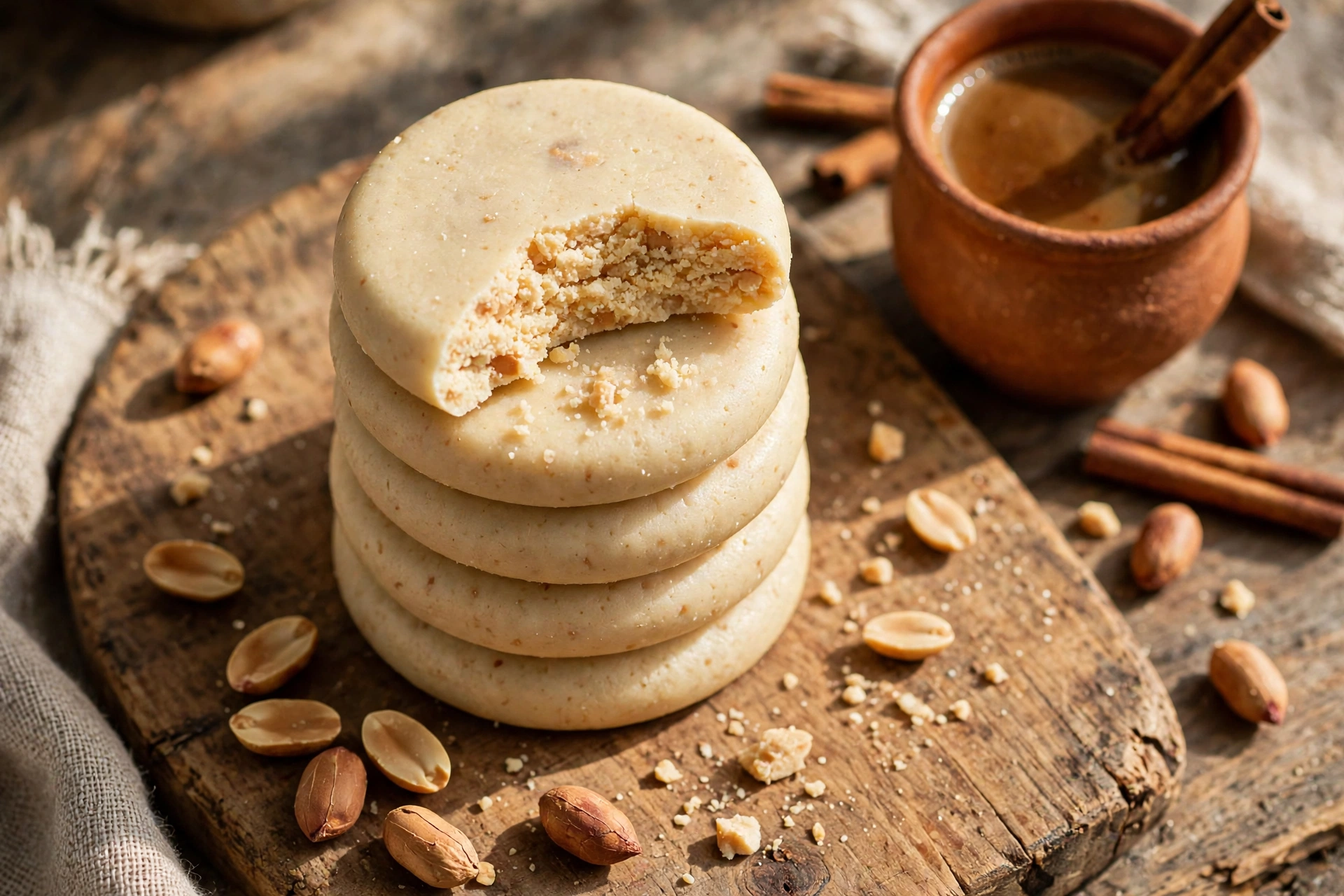
If you love peanut candy, this mazapán will become a favorite. Here is how to make it.
Why You’ll Love It
- A Mexican market classic. Mazapán is the peanut candy of Mexican sweet shops and market stalls — a taste of Guadalajara in every crumbly bite.
- Ready in 30 minutes. No cooking, no baking, no waiting for anything to set. Toast, grind, press, and it is done.
- Only 4 ingredients. Raw peanuts, powdered sugar, salt, and Mexican vanilla. Nothing fancy, nothing hard to find.
- No special equipment. A skillet, a towel, a food processor, and a round cookie cutter are all you need.
- Naturally gluten-free. Peanuts and sugar only — no flour, no dairy, nothing to swap.
- It keeps for weeks. A jar on the shelf lasts up to a month, and it freezes for months.
- Perfect for gifting. Wrap the discs in wax paper and tie them with string — a little bag of homemade Mexican candy.
What Is Mazapán?
Mazapán is a traditional Mexican peanut candy — a pressed disc of finely ground peanuts and powdered sugar that crumbles at the first bite and melts on the tongue. It is pale beige, faintly sweet, and deeply nutty. It looks simple, and it is simple. But that simplicity is the whole point: with only two main ingredients, there is nowhere for a bad peanut or a rushed grind to hide.
In fact, the name comes from Spain, where mazapán was once made with almonds. In Mexico, the candy changed. Almonds gave way to cacahuate — the peanut — and the peanut version became the one every Mexican knows. The most famous maker is Dulces de la Rosa, founded in Guadalajara in 1942. Their pink-wrapped discs turned mazapán into a national candy, sold in corner shops, markets, and lunchboxes all over Mexico.
A Candy From Guadalajara
Guadalajara, in the state of Jalisco, is where mazapán de cacahuate took the form most Mexicans recognize. There, market vendors roast peanuts on a comal until the skins loosen. Then they grind the peanuts with azúcar glass — powdered sugar — and press the mixture hard into fragile discs. The discs are so delicate that they break if you handle them like cookies. That fragility is not a flaw. It is the sign of a good mazapán.
This homemade mazapan recipe follows that same Guadalajara method. The peanuts are toasted from scratch, not bought roasted. The sugar is sifted, not dumped. And the mixture is pressed hard — very hard — so the discs hold their shape. The result is a Mexican peanut candy that tastes like the market version, only fresher.
Ingredients
For the peanuts:
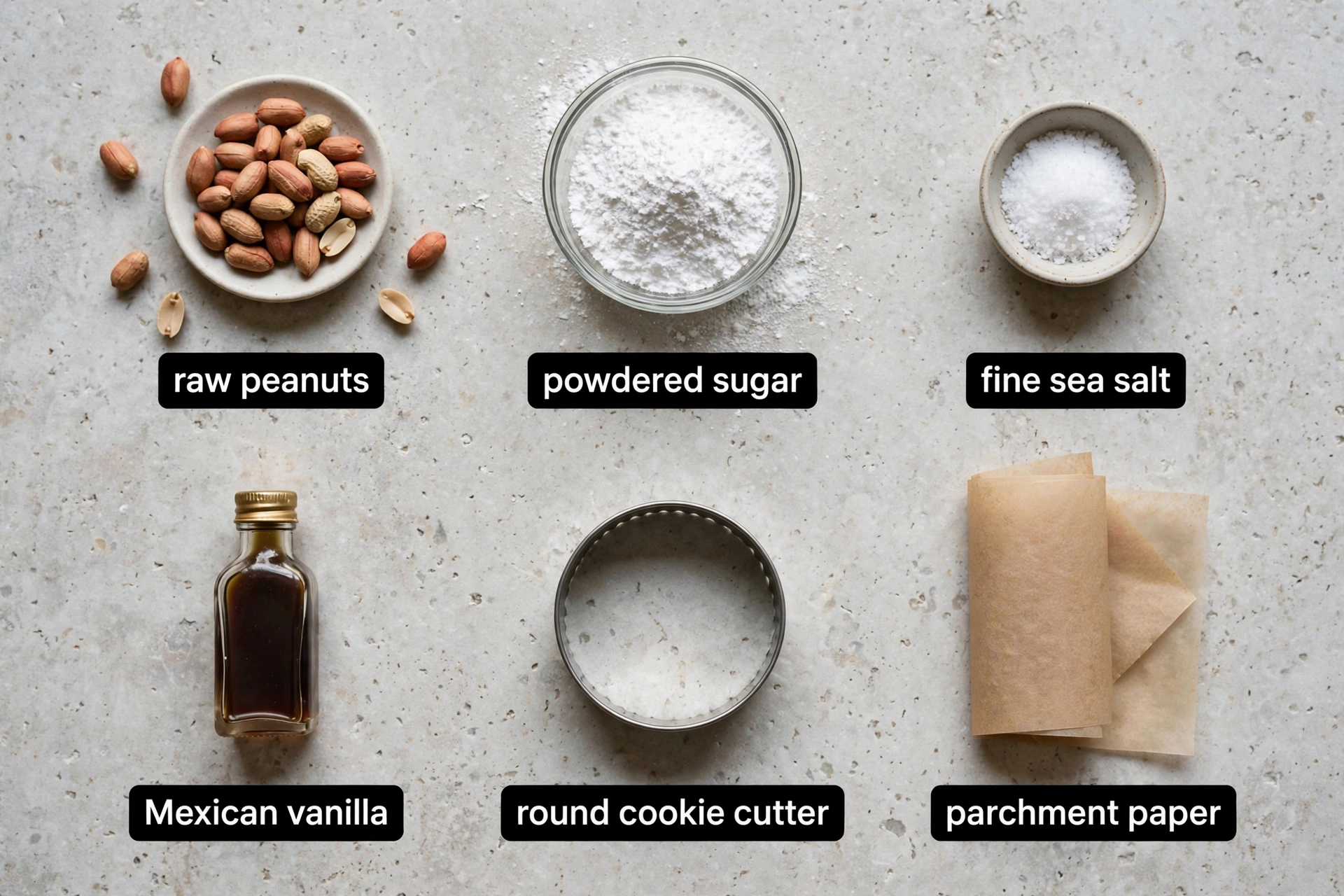
Raw peanuts — 2 cups, skins on (about 290 g). In fact, raw peanuts are the whole point of this version — toasting them yourself gives a fresher, nuttier flavour than starting from a bag of roasted peanuts. Buy shelled raw peanuts with the papery red skins still on. If you can only find roasted unsalted peanuts, use them instead and skip the toasting step — but the flavour will be a little less bright. Salted peanuts work in a pinch: rinse them well, pat them dry, and leave the salt out of the recipe.
For the sugar:
Powdered sugar — 1¼ cups, sifted (150 g). Powdered sugar — also called confectioners’ sugar or icing sugar — is what makes mazapán melt instead of crunch. Sift it before measuring to break every lump. Granulated sugar will not work here: it leaves a gritty texture and the discs will not hold. If you only have granulated sugar, grind it to a fine powder in a clean blender first.
Fine sea salt — ¼ teaspoon. A pinch of salt is the quiet hero of this candy. It makes the peanuts taste more like themselves and keeps the sugar from tasting flat. It is a small amount, but you will notice if it is missing. Use fine sea salt so it blends evenly; kosher salt works too, but use a little less.
Mexican vanilla extract — ½ teaspoon (or ¼ teaspoon vanilla powder). Mexican vanilla adds a warm, floral note that makes the candy taste finished instead of plain. It is a small touch, but it lifts the whole disc. Regular vanilla extract works as a swap. If you use vanilla powder, use half as much — it is stronger.
How to Make It
1 Toast the Peanuts
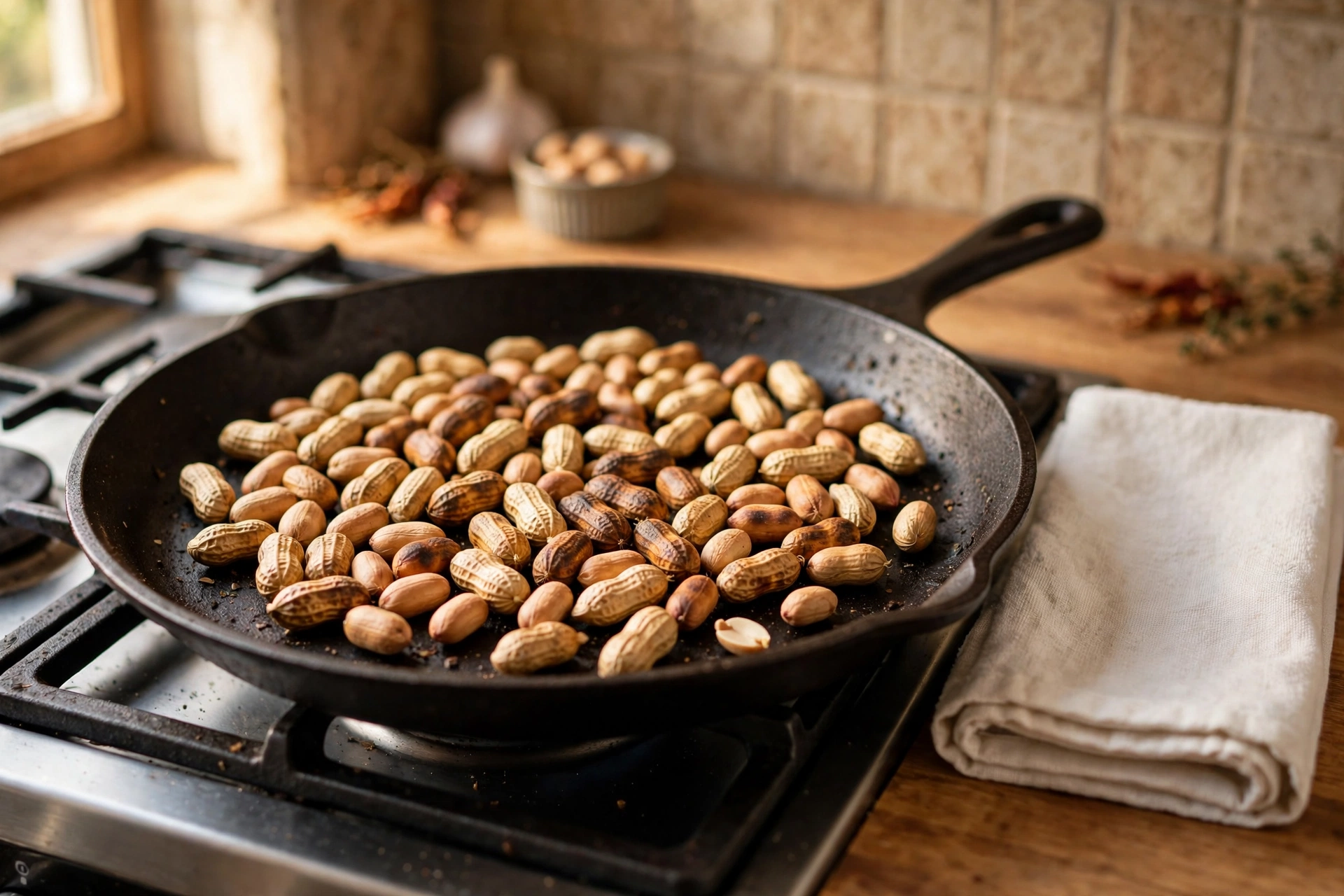
Heat a dry comal or heavy skillet over medium heat. Add the raw peanuts in a single layer and toast for 6 to 8 minutes, shaking the pan often, until the skins darken in patches and the kitchen smells nutty. Do not walk away — burned peanuts taste bitter, and sugar will not hide it.
2 Rub Off the Skins
Tip the hot peanuts into a clean kitchen towel. Fold the towel over them and rub firmly so the papery skins loosen. You do not need every skin gone — a few flecks are honest and they taste fine. Spread the peanuts on a tray and let them cool completely, about 20 minutes. Warm peanuts melt the sugar and push the mixture toward paste.
3 Grind to a Fine Powder
Put half the cooled peanuts in a food processor. Pulse in short bursts, scraping the bowl once or twice, until they look like damp sand. Transfer to a bowl and repeat with the remaining peanuts. Stop before the peanuts turn oily — if they start to clump into butter, you have gone too far.
Press and Finish:
4 Mix and Press
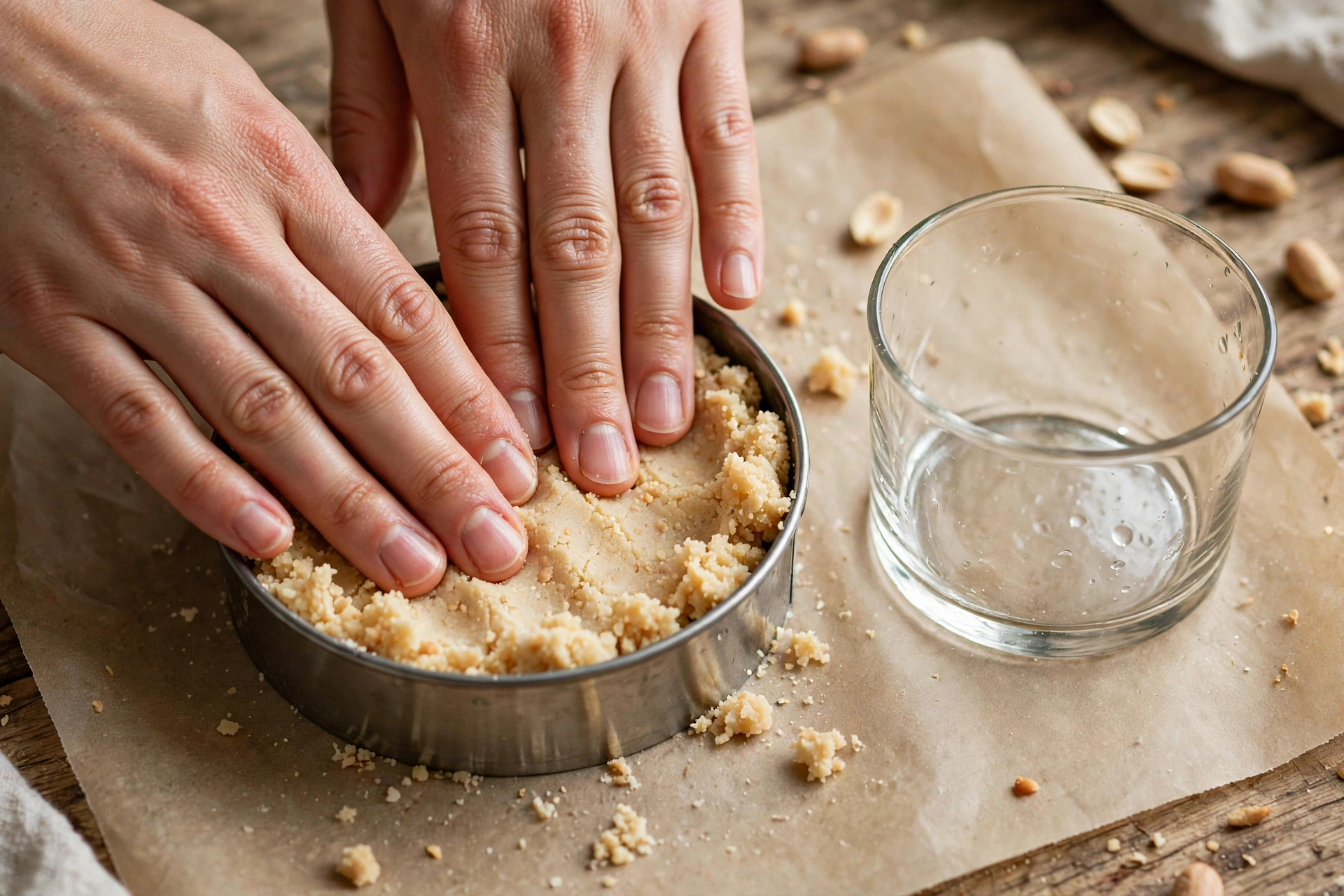
Return all the ground peanuts to the processor. Add the sifted sugar, salt, and vanilla. Pulse 8 to 12 times, scraping once, until the mixture is evenly beige and holds together when squeezed in your fist. Set a 2-inch round cookie cutter on parchment. Spoon in about 2½ tablespoons of mixture and press very hard with a flat-bottom glass, especially around the edges, until the disc is level and firm.
5 Unmold and Store
Lift the cutter slowly while holding the disc steady around its edge. Slide a thin spatula underneath to move the mazapán. Repeat with the rest of the mixture. Let the discs rest for 10 minutes, then store them in an airtight container at room temperature.
Technique: Homemade Mazapan Recipe — Getting the Grind Right
The difficult step in mazapán is the grind. Everything else is easy, but the grind decides whether you get a crumbly candy or a jar of peanut butter. The rule is simple: wake the oil up, do not squeeze it to death.
First, the peanuts must be cool. Warm peanuts release their oil fast in the processor, and oil is what turns powder into paste. Let the toasted peanuts cool completely — about 20 minutes on a tray — before they go anywhere near the blades. If the peanuts still feel warm in your hand, wait longer.
Second, pulse in short bursts. Run the processor for a few seconds, stop, scrape the bowl, and pulse again. The peanuts should look like damp sand: fine, even, and dry to the touch. That texture is the goal. If the mixture starts to clump or shine, stop at once. You cannot un-grind peanut butter back into powder.
Third, work in two batches. Half the peanuts at a time grinds evenly; a full bowl grinds unevenly, with powder at the bottom and chunks at the top. It takes one extra minute, and it is worth it.
The Squeeze Test
The squeeze test tells you when the mixture is ready. Take a spoonful and squeeze it hard in your fist. If it holds together in a clump, it is ready to press. When it falls apart, pulse a few more times — the peanuts need a little more oil released. A wet or greasy feel means you have gone too far, and the discs will be heavy instead of crumbly. The right mixture feels like damp sand that holds its shape when squeezed.
In addition, the press matters as much as the grind. Press very hard — harder than feels polite — and press the edges most of all, because the edges are where a mazapán cracks. A flat-bottom glass gives even pressure. Then lift the mold slowly, holding the disc steady with your other hand. If a disc cracks, press the crumbs back into the mold and try again. Nothing is wasted.
Tips
- ✓ Toast on medium heat, never high. High heat burns the thin skins in seconds. Medium heat gives you time to smell when the peanuts are ready.
- ✓ Do not walk away from the comal. Toasted peanuts go from nutty to burnt fast. Shake the pan often and watch them.
- ✓ Cool the peanuts completely. Warm peanuts melt the sugar and push the mixture toward peanut butter. Twenty minutes on a tray is enough.
- ✓ Sift the sugar. Lumps of powdered sugar make gritty spots in the candy. Sifting takes a minute and it shows.
- ✓ Pulse, do not blend. Short bursts keep the peanuts powdery. A long blend turns them into butter.
- ✓ Press very hard. The more compact the mixture, the better the disc holds. Press the edges hardest of all.
Variations
In addition, this easy mazapan recipe is simple to shape around your pantry, and the base stays the same.
- Chocolate-dipped. Melt dark chocolate and dip half of each disc. Let the chocolate set on parchment. This is the version for chocolate lovers.
- Pistachio mazapán. Replace half the peanuts with shelled pistachios for a greener, richer candy with a deeper flavour.
- Almond mazapán. Use blanched almonds instead of peanuts for a softer, more delicate disc — closer to the old Spanish style.
- Cinnamon. Add ½ teaspoon of ground cinnamon with the sugar for a warm, spiced mazapán.
- Mini mazapanes. Press 1 tablespoon portions into a 1-inch cutter for bite-size candies — lovely on a dessert table.
What to Serve With
In fact, mazapán is a sweet for the end of a meal, or for the middle of the afternoon with coffee. Serve it with a cup of Café de Olla — the cinnamon coffee and the peanut candy taste like they were made for each other. It is just as good after a bowl of Mexican Rice Pudding, where the creamy rice and the crumbly candy make a perfect pair.
On a dessert table, set the mazapán discs beside Tres Leches Cupcakes and Marranitos for a Mexican sweet spread. The soft cake, the spiced pig-shaped cookies, and the crumbly peanut discs give everyone something different to reach for. And at a party, wrap each disc in wax paper and tie it with string — a little bag of homemade Mexican candy that guests can take home.
Storage
In fact, let the mazapanes cool and rest for 10 minutes before storing them. Keep them in an airtight container at room temperature for up to 1 month — they taste best in the first two weeks, while the peanut flavour is at its brightest. Do not refrigerate them: the cold and the moisture make the discs soft and sticky.
For longer storage, freeze mazapán for up to 4 months. Wrap each disc in wax paper, stack them in a freezer bag, and thaw them at room temperature for 30 minutes before serving. Handle them gently when frozen — they are fragile, and they crack easily if knocked around. Keep them dry above all: water is the enemy of a good mazapán.
Frequently Asked Questions
How to make mazapan?
Toast 2 cups of raw peanuts on a dry comal for 6 to 8 minutes, rub the skins off in a towel, and let the peanuts cool completely. Grind the cooled peanuts to a fine powder in a food processor, then pulse in 1¼ cups of sifted powdered sugar, a pinch of salt, and Mexican vanilla. Press about 2½ tablespoons of the mixture very firmly into a 2-inch round mold, lift the mold slowly, and store the discs in an airtight container. The whole recipe takes 30 minutes.
What is mazapan made of?
Mazapán is made of peanuts and powdered sugar — just two main ingredients — plus a pinch of salt and Mexican vanilla in this version. Raw peanuts are toasted, ground to a fine powder, mixed with sifted sugar, and pressed into discs. There is no flour, no dairy, and no egg. It is a naturally gluten-free and vegan Mexican peanut candy.
Is mazapan gluten free?
Yes. Mazapán is naturally gluten-free — it is made only from peanuts, powdered sugar, salt, and vanilla, with no flour or wheat of any kind. Just check that your powdered sugar and vanilla are certified gluten-free if you are serving someone with celiac disease, since some brands process them in shared facilities.
More Questions About Mazapán
How long does mazapan last?
Mazapán lasts up to 1 month in an airtight container at room temperature, and it tastes best in the first two weeks. In the freezer it keeps for up to 4 months — wrap each disc in wax paper, thaw at room temperature for 30 minutes, and handle the discs gently. Do not refrigerate mazapán: the moisture makes the discs soft and sticky.
Why does my mazapan fall apart?
In fact, two reasons, and both are fixable. First, the grind: if the peanuts are ground too coarse, the mixture has nothing to hold it together — pulse a little longer until it looks like damp sand. Second, the press: if the discs were not pressed hard enough, especially around the edges, they crack when lifted. Press very hard with a flat-bottom glass, and lift the mold slowly while holding the disc steady.
Can I make mazapan without a food processor?
Yes, but it takes more effort. Grind the cooled peanuts in small batches in a clean coffee grinder or a high-powered blender, pulsing in short bursts and scraping often. A hand-cranked molino also works. The goal is the same: a fine, even powder, not a paste. Then mix in the sugar by hand in a bowl and press as usual.
Try These Next
If you loved this Mexican peanut candy, try these recipes next:
Mexican Rice Pudding — creamy cinnamon rice pudding, warm or chilled, a classic Mexican dessert.
Tres Leches Cupcakes — soft vanilla cupcakes soaked in three milks, a party favorite.
Pumpkin Conchas — soft Mexican sweet bread with a pumpkin-spiced shell topping.
Marranitos — spiced pig-shaped cookies sweetened with piloncillo, a Mexican bakery classic.
Café de Olla — cinnamon coffee brewed with piloncillo, the perfect cup with mazapán.
Mazapán
Ingredients
Equipment
Method
- Heat a dry comal or heavy skillet over medium heat; add the raw peanuts in a single layer and toast for 6 to 8 minutes, shaking the pan often, until the skins darken in patches and the kitchen smells nutty.
- Tip the hot peanuts into a clean kitchen towel, fold it over and rub firmly to loosen the skins, then spread the peanuts on a tray and let them cool completely, about 20 minutes.
- Put half the cooled peanuts in a food processor and pulse in short bursts, scraping the bowl, until they look like damp sand; transfer to a bowl and repeat with the remaining peanuts.
- Return all the ground peanuts to the processor; add the sifted powdered sugar, salt and vanilla and pulse 8 to 12 times until evenly beige and holding together when squeezed; press about 2 1/2 tablespoons very firmly into a 2-inch round mold on parchment, using a flat-bottom glass, especially around the edges.
- Lift the mold slowly while holding the disc steady, slide a thin spatula underneath to move it, and repeat; let the discs rest 10 minutes, then store in an airtight container.