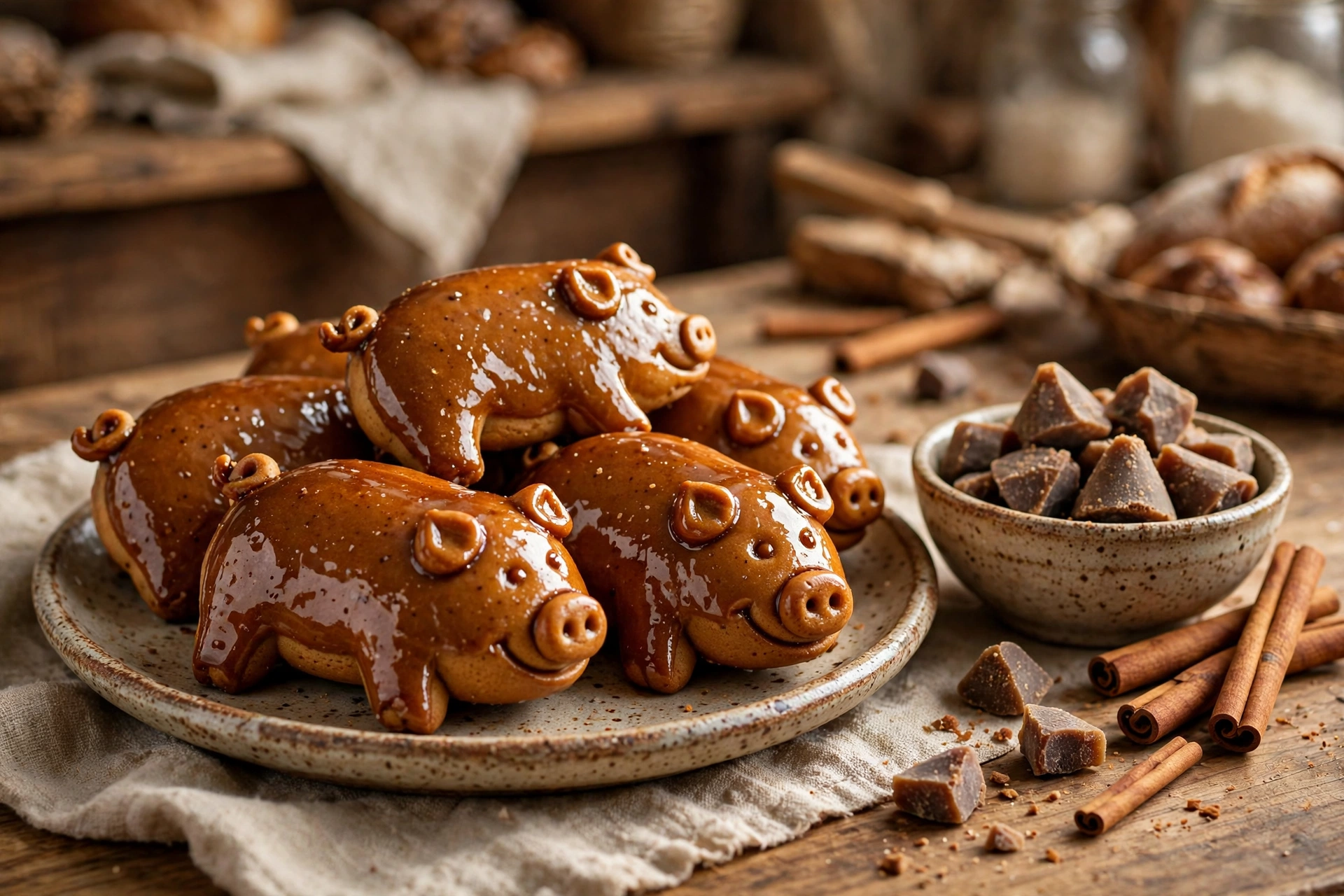
Looking for a Mexican cookie that is soft, spiced and shaped like a little pig? These marranitos are exactly that — pig-shaped gingerbread cookies from Mexico, made with a dark piloncillo syrup, cinnamon and ginger, and baked until lightly golden with small cracks on top. They take about an hour and a half from start to finish, and most of that time is hands-off while the dough chills.
Marranitos are pan dulce — the sweet breads of Mexican bakeries — and they are the cookie children reach for first. The piloncillo gives them a deep, caramel-like sweetness that molasses never quite matches, and the spices make the whole kitchen smell like Christmas in Mexico.
Make a batch for your family and watch them disappear. If you love the soft, spiced cookies of a Mexican panadería, these marranitos will become a new favourite at your table.
Why You’ll Love It
- A Mexican bakery classic. Marranitos are the pig-shaped pan dulce of Mexico — the cookie every Mexican bakery case has, and every child points at first.
- Soft, not crunchy. These are soft, cakey cookies with a tender crumb, not hard gingerbread. They stay soft for days.
- The piloncillo syrup. A real piloncillo syrup — not molasses — gives them a deep, dark, caramel sweetness that tastes like Mexico.
- Fun to shape. Cutting little pigs from the dough is the best part, and children love helping with the cutter.
- Mostly hands-off. About an hour and a half start to finish, but only 20 minutes of actual work — the syrup cooling and the dough chilling do the rest.
- Freezer-friendly. Bake a batch, freeze what you do not eat, and thaw fresh marranitos whenever a sweet craving hits.
What Are Marranitos?
Marranitos — the name means “little pigs” — are pig-shaped cookies from the panaderías, the bakeries, of Mexico. They are a kind of pan dulce, the sweet breads and pastries sold in Mexican bakeries, and they show up most at Christmas and on Día de los Muertos, when bakery cases fill with seasonal shapes.
The cookie itself is soft and cakey, closer to a little spiced cake than to a crisp biscuit. The flavour comes from piloncillo, the unrefined cane sugar sold in dark cones in Mexico, simmered into a syrup with cinnamon, cloves and anise. That syrup is what makes a marranito taste like a marranito — dark, warm and caramel-sweet, with ginger and cinnamon behind it.
This recipe follows the traditional piloncillo-syrup method. The syrup is made first and cooled completely, then mixed into a soft dough with butter and shortening. The dough chills for an hour, the pigs are cut with a 5-inch cutter, and they bake at 350°F until lightly golden, with the small cracks on the surface that tell you they are done.
Ingredients
For the piloncillo syrup:
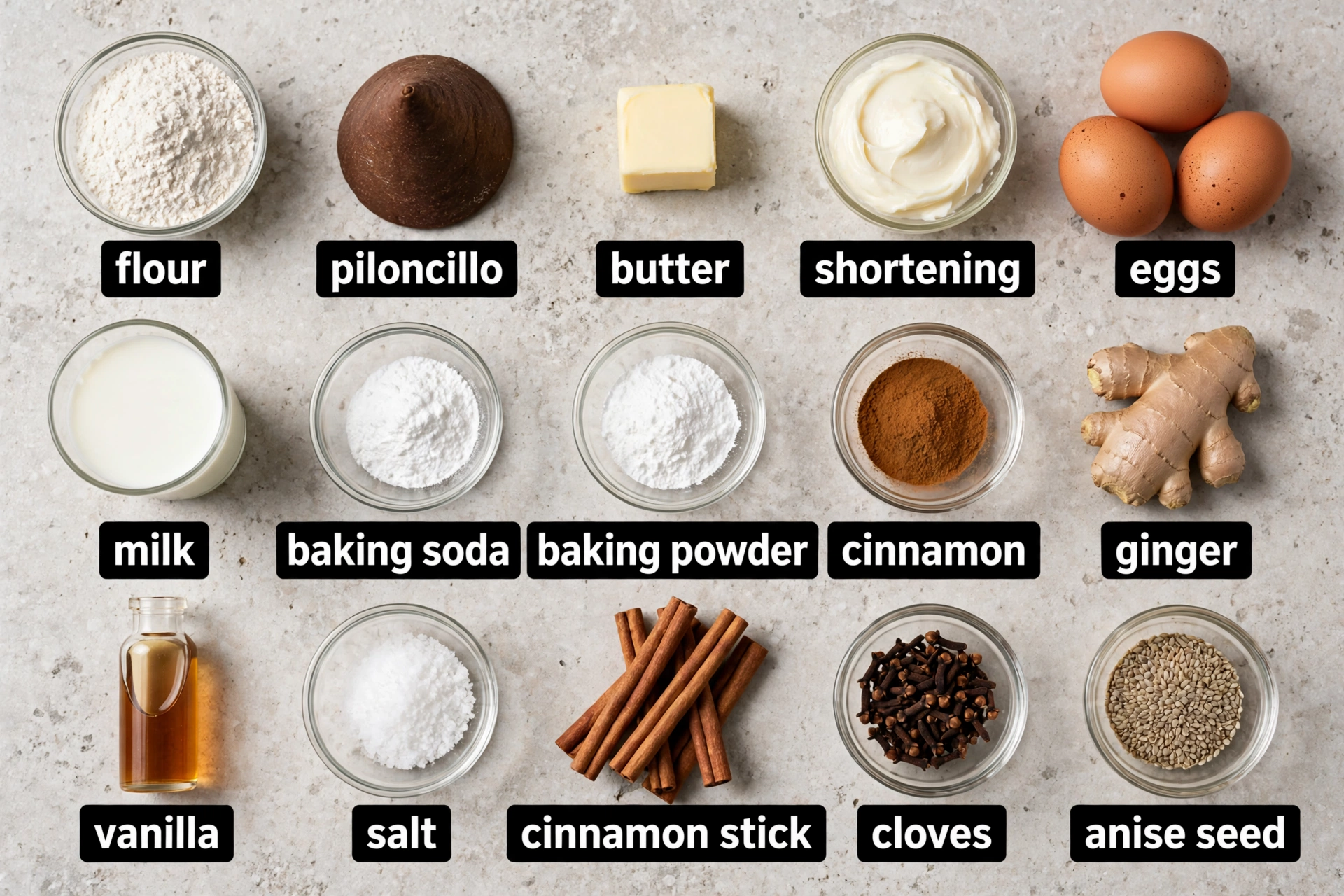
Piloncillo — 1 cup, grated (about 8 oz, 1 small cone). Piloncillo is the unrefined cane sugar of Mexico, sold in dark brown cones, and it is the heart of this recipe. Simmered into a syrup, it gives the cookies their deep caramel sweetness and their dark colour. Dark brown sugar is the usual substitute — use 1 cup, packed — but the flavour will be milder and less complex.
Water — 1/2 cup. Water is what turns the grated piloncillo into a syrup. It dissolves the sugar as it simmers, and the spices steep in it at the same time. Use plain water — nothing else is needed here.
Cinnamon stick — 1 (about 7 inches). A whole cinnamon stick steeps in the syrup while it simmers, giving it a warm, woody spice that ground cinnamon alone cannot match. Fish it out before you strain the syrup. Two teaspoons of ground cinnamon can stand in, but the flavour will be flatter.
Whole cloves — 3. Cloves add a deep, warm spice to the syrup — just three are enough, because cloves are strong. Too many will take over the whole batch. Ground cloves work too, but use only a pinch.
Anise seed — 1/2 teaspoon. Anise seed gives the syrup a gentle liquorice note, the traditional background flavour of Mexican pan dulce. It is subtle — you will taste warmth, not liquorice. Leave it out if you do not like anise, and the cookies will still be lovely.
For the dough:
All-purpose flour — 4 cups, spooned and levelled. Flour is the base of the dough, and all-purpose flour gives marranitos their soft, cakey crumb. Spoon it into the measuring cup and level it off — scooping straight from the bag packs it in, and too much flour makes dry, hard cookies.
Unsalted butter, softened — 1/2 cup (1 stick). Butter makes the dough rich and tender, and it keeps the cookies soft for days. Let it soften at room temperature — cold butter will not rub into the flour properly, and melted butter makes the dough greasy.
Vegetable shortening — 1/4 cup. Shortening is the traditional partner to butter in piloncillo-syrup marranitos, and it is what keeps the crumb so tender. It has no flavour of its own, so the piloncillo and spices shine through. You can use all butter instead — 3/4 cup in total — but the cookies will be a little less tender.
Large eggs — 2. One egg goes into the dough, where it binds everything together and enriches the crumb. The second egg is beaten for the egg wash, which gives the baked pigs their shine. Use room-temperature eggs so they mix in evenly.
Whole milk — 1/4 cup. Milk loosens the dough just enough to bring it together, and it keeps the crumb soft. Whole milk is best, but any milk works — even a plant milk, if that is what you have.
Leavening, Spices and Salt:
Baking soda — 1 1/2 teaspoons. Baking soda is the main leavener here, and it works with the acidity of the piloncillo syrup to lift the dough. It also helps the cookies brown, which is why marranitos come out such a deep golden colour.
Baking powder — 1 teaspoon. Baking powder works with the baking soda to give the cookies their soft, cakey rise. It is the second leavener in the traditional versions, and it keeps the pigs from baking up flat.
Ground cinnamon — 1 1/2 teaspoons. Ground cinnamon seasons the dough itself, so every bite tastes warm and spiced. It works with the cinnamon stick in the syrup — the stick flavours the syrup, the ground cinnamon flavours the dough.
Ground ginger — 2 teaspoons. Ginger is what makes these gingerbread pigs, and 2 teaspoons gives them a warm, gentle heat. Some traditional versions leave the ginger out entirely, but it belongs here — without it, the cookies taste flat.
Vanilla extract — 2 teaspoons. Vanilla rounds out the spices and deepens the caramel flavour of the piloncillo. Pure vanilla extract is best, but imitation vanilla works too.
Kosher salt — 1/2 teaspoon. Salt sharpens every flavour in the dough and keeps the sweetness in check. Without it, the cookies taste one-note and too sweet. Fine sea salt works the same way — use the same amount.
For the egg wash:
Large egg — 1, beaten (the second egg above). The egg wash is brushed over the cut pigs before baking. It gives them their glossy shine and helps the tops brown evenly. A little milk beaten into the egg makes the wash go further, if you like.
How to Make It
1 Make the Piloncillo Syrup: Put the grated piloncillo, water, cinnamon stick, cloves and anise seed in a small saucepan. Simmer over medium heat for 10 to 15 minutes, stirring now and then, until the piloncillo has dissolved completely. Strain the syrup through a fine-mesh sieve, then let it cool completely — about 30 minutes. Warm syrup melts the butter and ruins the dough, so do not rush this step.
2 Mix the Dry Ingredients and Rub in the Butter: Whisk the flour, baking soda, baking powder, salt, ground cinnamon and ground ginger together in a large bowl. Add the softened butter and the shortening, and rub them into the flour with your fingertips until the mixture looks like coarse sand. This step is what makes the crumb tender — the fat coats the flour before any liquid goes in.
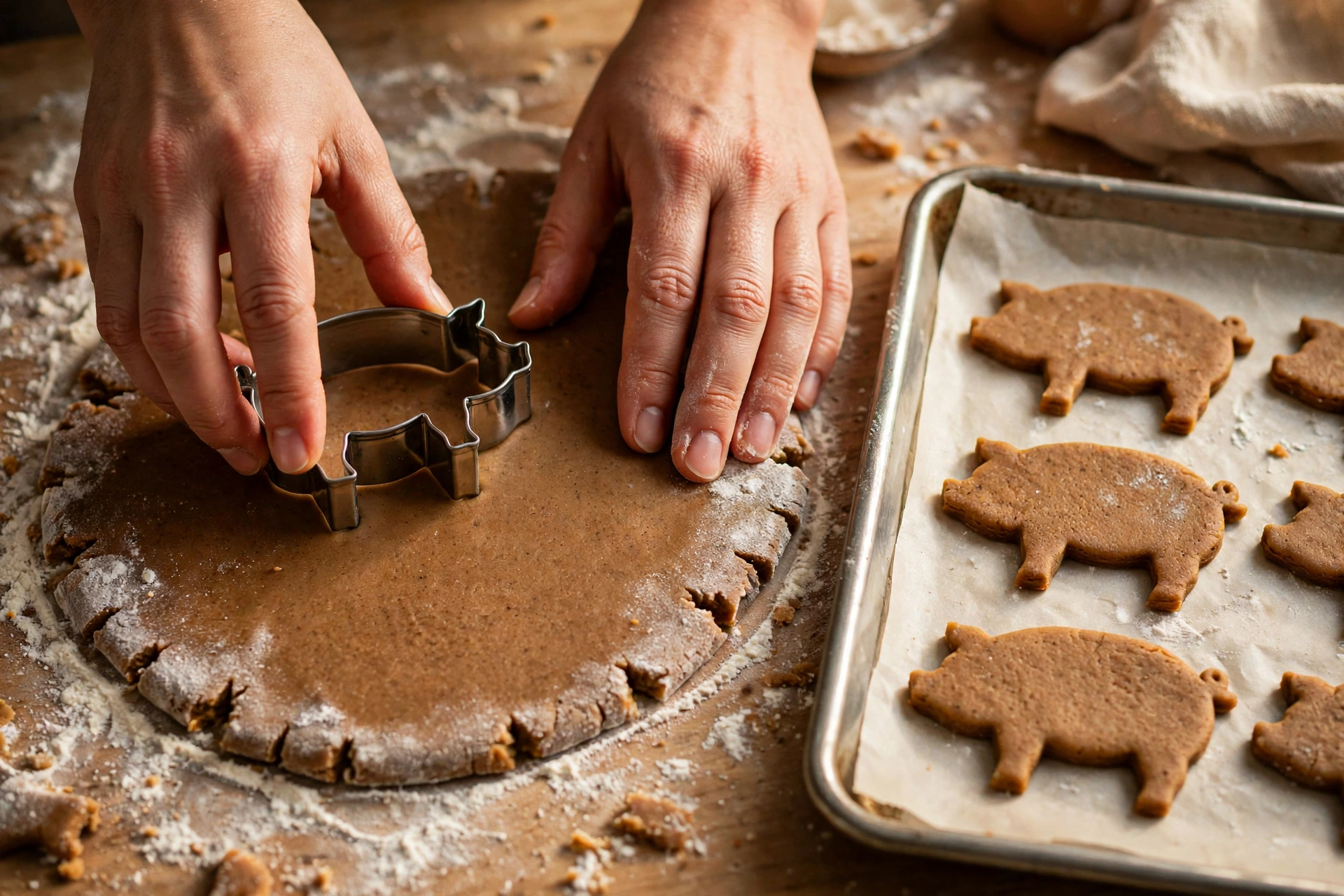 3 Make the Dough and Chill It: Pour in the cooled piloncillo syrup, 1 egg, the milk and the vanilla. Stir with a wooden spoon, then knead briefly — just a few turns — until a soft dough forms. Do not overwork it, or the cookies will be tough. Shape the dough into a flat disc, wrap it in plastic wrap, and chill for at least 1 hour, or overnight.
Cut, Wash and Bake:
4 Roll and Cut the Pigs: Heat the oven to 350°F and line 2 baking sheets with parchment paper. Roll the chilled dough out on a floured surface to 3/8 to 1/2 inch thick. Cut pig shapes with a 5-inch pig-shaped cutter, pressing straight down, and place them 2 inches apart on the sheets. Gather the scraps, re-roll once, and cut more pigs. Chill the cut cookies on their sheets for 15 to 30 minutes so they hold their shape in the oven.
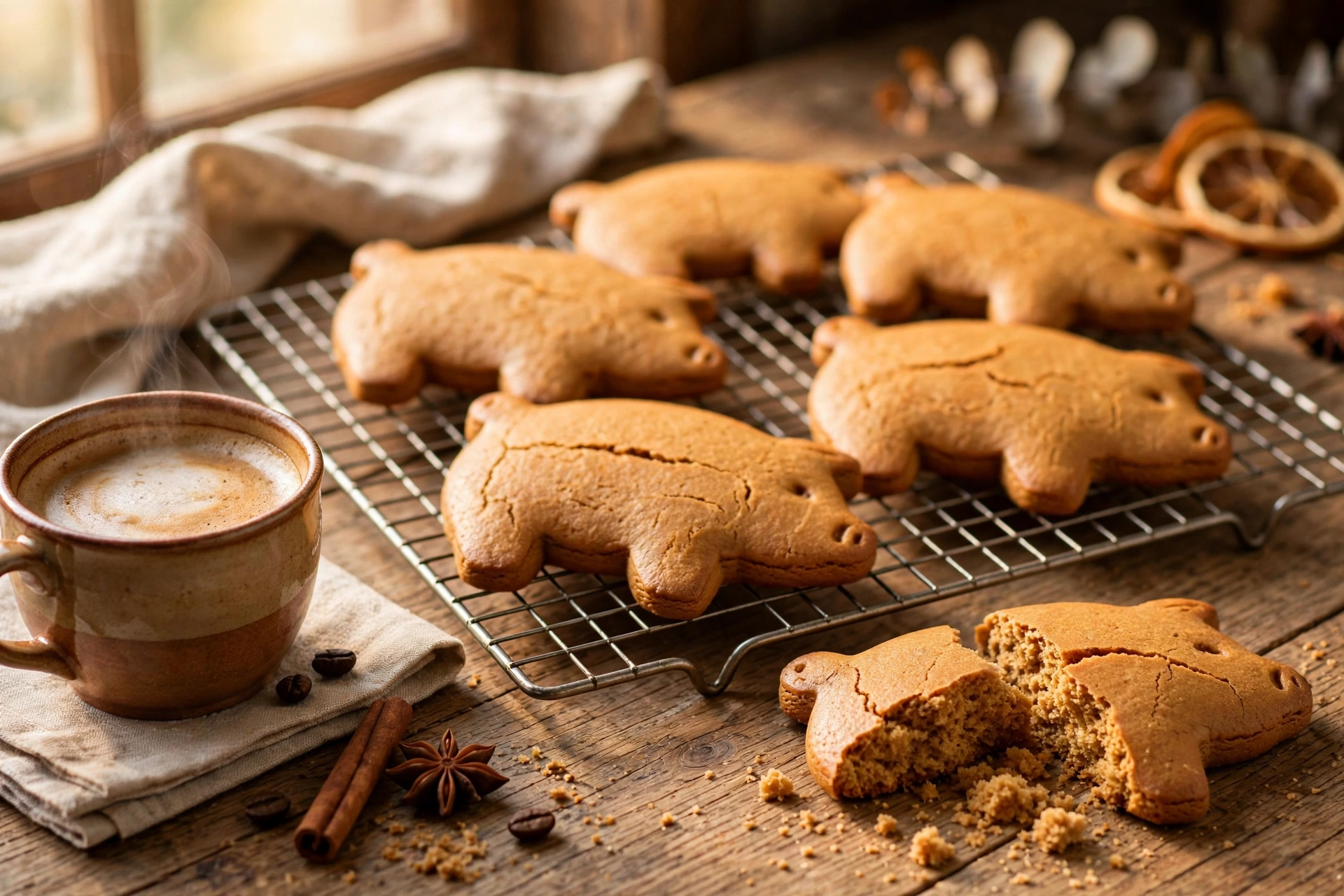 5 Egg Wash and Bake: Brush the chilled pigs lightly with the beaten egg, covering the tops evenly. Bake at 350°F for 12 to 18 minutes, until the cookies are lightly golden and small cracks appear on the surface. Those cracks are the sign they are done — do not wait for them to turn dark, or they will dry out.
6 Cool and Serve: Let the marranitos cool on the baking sheets for 5 minutes, then move them to a wire rack to cool completely. They are soft and a little delicate while warm, so handle them gently. Serve them at room temperature, with milk or coffee, while they are still fresh from the oven.
Technique: The Piloncillo Syrup and Shaping the Pigs
Two things decide whether marranitos turn out soft and pig-shaped or sticky and shapeless: the syrup and the chilling.
First, the syrup. Piloncillo is a hard, dark cone of unrefined cane sugar, and it needs heat and water to dissolve — about 10 to 15 minutes of simmering with the cinnamon stick, cloves and anise. Strain it through a fine-mesh sieve so no spice bits end up in the dough, and then let it cool completely, about 30 minutes. This is the step people rush, and it is the one that matters most. Warm syrup melts the butter the moment it hits the flour, and the dough turns sticky and soft — too soft to roll, too soft to cut, and the pigs spread into blobs in the oven. Cool syrup, on the other hand, mixes into a firm, smooth dough that holds its shape.
Second, the chilling. The dough needs at least 1 hour in the fridge, and the cut pigs need 15 to 30 minutes more on their sheets before they go into the oven. Cold dough holds its edges, so the ears, snout and curly tail stay crisp in the oven instead of melting away. Warm dough spreads, and a spread pig is just a brown blob. If your kitchen is warm, chill the cut cookies for the full 30 minutes — it is the cheapest insurance in the whole recipe.
One more thing matters just as much: do not re-roll the scraps more than once. The first re-roll is fine, but every extra roll works the dough harder, and overworked dough bakes up tough instead of soft and cakey. Gather the scraps once, roll them out, cut the last pigs, and let the little leftover bits go.
Tips
- ✓ Cool the syrup completely. Warm syrup melts the butter and makes a sticky dough that will not hold the pig shape. Give it a full 30 minutes, or make it the day before.
- ✓ Grate the piloncillo first. A whole cone takes forever to dissolve. Grate it on a box grater, or chop it fine with a heavy knife, so it melts in 10 to 15 minutes.
- ✓ Chill the dough for at least 1 hour. Cold dough rolls cleanly and cuts neatly. Warm dough sticks to the cutter and spreads in the oven.
- ✓ Chill the cut pigs too. Fifteen to 30 minutes on their sheets before baking is what keeps the ears, snout and tail crisp.
- ✓ Do not re-roll the scraps more than once. Every extra roll works the dough harder and bakes up tougher cookies.
- ✓ Watch for the cracks. Small cracks on the surface mean the marranitos are done. Do not wait for them to turn dark, or they will dry out.
Variations
- With dark brown sugar instead of piloncillo. Swap the grated piloncillo for 1 cup of packed dark brown sugar, simmered the same way with the water and spices. The cookies will be milder and less dark, but still lovely.
- With molasses. For a darker, more American gingerbread flavour, replace half the piloncillo syrup with 1/2 cup of unsulfured molasses. The cookies will be darker and a little stickier.
- Without ginger. Some traditional versions leave the ginger out entirely and lean on the cinnamon, cloves and anise instead. The cookies will be softer-spiced and more old-fashioned.
- With a piloncillo glaze. Warm 1/2 cup of the leftover syrup and brush it over the baked pigs while they are still warm, for a glossy, extra-sweet finish.
- Mini marranitos. Use a 3-inch pig cutter instead of a 5-inch one, and bake for 2 to 3 minutes less. They are perfect for a party tray or a cookie box.
- With chocolate chips. Fold 1/2 cup of mini chocolate chips into the dough before chilling, for a version children love even more.
What to Serve With
Marranitos belong with a hot drink — that is how they are eaten in Mexico, dunked into coffee or chocolate while they are still fresh from the panadería.
Serve them warm with coffee — a cup of café de olla, the cinnamon-spiced Mexican coffee, is the classic partner, and the cookies are made for dunking in it. Any strong coffee or hot chocolate works beautifully too. For a full Mexican bakery table, serve them with Pumpkin Conchas — soft Mexican sweet bread with a spiced shell topping — and Pan de Elote — sweet Mexican corn bread, moist and golden. Tres Leches Cupcakes make the table feel like a party, and a glass of cold milk is all children need with theirs.
Storage
Let the marranitos cool completely before storing them, or the trapped steam will soften them too much. Keep cooled cookies in an airtight container at room temperature for up to 5 days — they stay soft, and the flavour gets even better on the second day.
For longer storage, wrap the cookies in plastic wrap, put them in a freezer bag, and freeze for up to 2 months. Thaw them at room temperature, or warm them for a few seconds in the microwave for a just-baked feel. Do not store them in the fridge — cold air dries cookies out faster than room temperature does.
Frequently Asked Questions
What are marranitos, and where are they from in Mexico?
Marranitos — the name means “little pigs” — are pig-shaped cookies from the panaderías, the bakeries, of Mexico. They are a kind of pan dulce, the sweet breads and pastries sold in Mexican bakeries, and they show up most at Christmas and on Día de los Muertos, when bakery cases fill with seasonal shapes.
What is piloncillo, and what can I use instead?
Piloncillo is unrefined cane sugar from Mexico, sold in dark brown cones. It tastes like dark caramel with a hint of smoke, and it gives marranitos their deep colour and flavour. The closest substitute is 1 cup of packed dark brown sugar, simmered the same way with the water and spices — the cookies will be milder and less dark, but still good.
Why did my marranitos spread and lose their pig shape?
The dough was too warm. Two things fix it: cool the piloncillo syrup completely before you mix the dough, and chill the cut pigs on their sheets for 15 to 30 minutes before they go into the oven. Warm dough spreads in the oven, and a spread pig loses its ears, snout and tail.
More Questions About Marranitos
Can I make marranitos without a pig-shaped cookie cutter?
Yes. A 4-inch or 5-inch round cutter works — the cookies will be round instead of pig-shaped, and they will taste exactly the same. You can also cut a pig shape freehand with a small knife, using a paper template, or press small balls of dough into ears and a snout by hand.
How long do marranitos stay fresh?
They keep in an airtight container at room temperature for up to 5 days, and they stay soft — the flavour gets even better on the second day. For longer storage, freeze them for up to 2 months, wrapped in plastic wrap in a freezer bag, and thaw at room temperature.
What is the difference between marranitos and gingerbread cookies?
Both are spiced, but they are different cookies. American gingerbread is usually crisp and snappy, made with molasses. Marranitos are soft and cakey pan dulce, made with a piloncillo syrup instead of molasses, and they are shaped like pigs. The flavour is darker and more caramel-like, and the texture is tender, not crunchy.
Try These Next
Pumpkin Conchas — soft Mexican sweet bread with a spiced shell topping.
Tres Leches Cupcakes — soft cupcakes soaked in three sweet milks.
Pan de Elote — sweet Mexican corn bread, moist and golden.
Easy Pumpkin Empanadas — flaky pastry, spiced pumpkin filling, perfect for fall.
Mexican Rice Pudding — a classic Christmas dessert to serve alongside the marranitos.
Marranitos
Ingredients
Equipment
Method
- Make the piloncillo syrup: simmer the grated piloncillo, water, cinnamon stick, cloves and anise seed for 10 to 15 minutes until dissolved, strain through a fine-mesh sieve, and cool completely (about 30 minutes).
- Whisk the flour, baking soda, baking powder, salt, ground cinnamon and ground ginger in a large bowl; rub in the softened butter and shortening until the mixture looks like coarse sand.
- Pour in the cooled piloncillo syrup, 1 egg, the milk and the vanilla; stir, then knead briefly until a soft dough forms. Shape into a flat disc, wrap in plastic wrap, and chill for at least 1 hour.
- Heat the oven to 350°F and line 2 baking sheets with parchment paper. Roll the chilled dough to 3/8 to 1/2 inch thick, cut pig shapes with a 5-inch cutter, place 2 inches apart, and chill the cut cookies on their sheets for 15 to 30 minutes.
- Brush the pigs lightly with the beaten egg and bake at 350°F for 12 to 18 minutes, until lightly golden with small cracks on the surface.
- Cool on the baking sheets for 5 minutes, then move to a wire rack to cool completely. Serve at room temperature with milk or coffee.
Notes
- Cool the piloncillo syrup completely — about 30 minutes — before you mix the dough. Warm syrup melts the butter and makes a sticky dough that will not hold the pig shape.
- Grate the piloncillo first — a whole cone takes forever to dissolve. A box grater or a heavy knife works.
- Chill the dough for at least 1 hour, and chill the cut pigs on their sheets for 15 to 30 minutes before baking, so the ears, snout and tail stay crisp.
- Do not re-roll the scraps more than once — every extra roll works the dough harder and bakes up tougher cookies.
- Watch for the small cracks on the surface — they mean the marranitos are done. Do not wait for them to turn dark, or they will dry out.