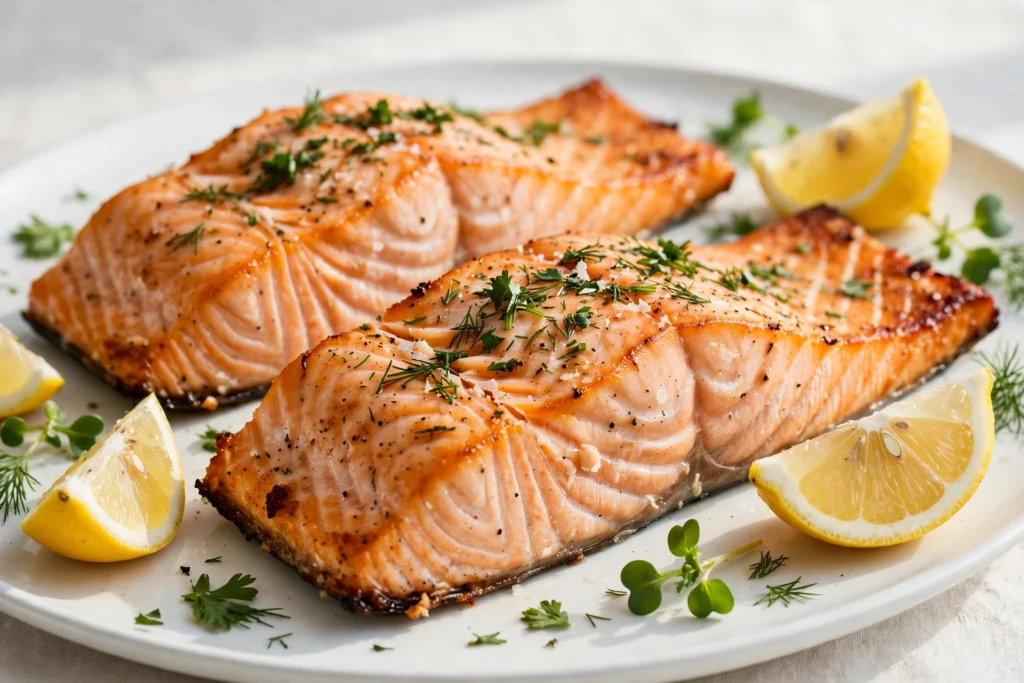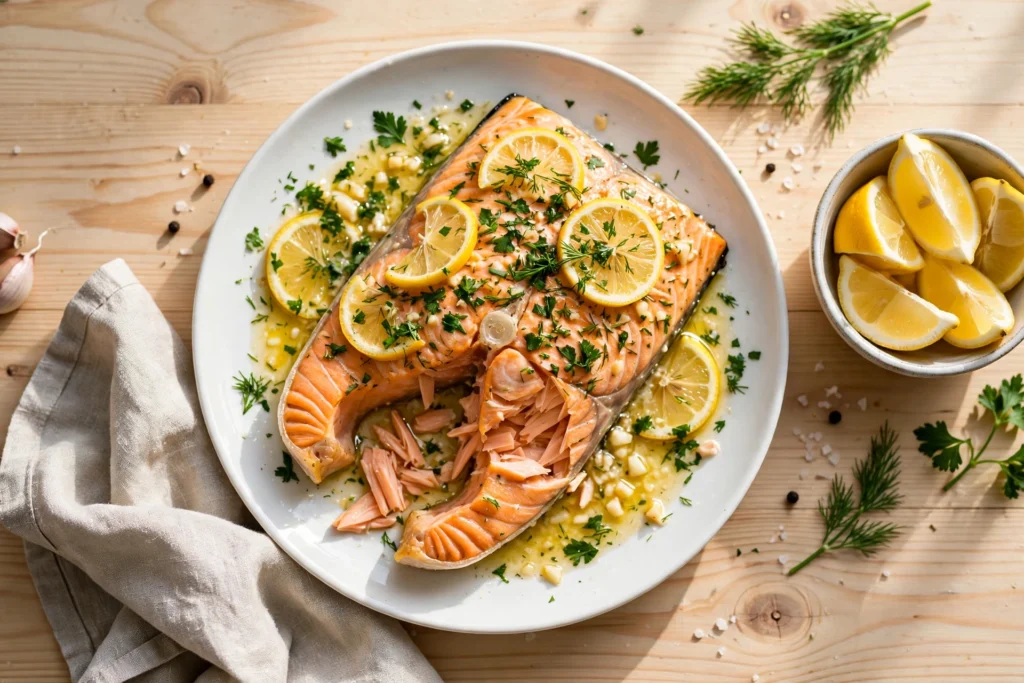

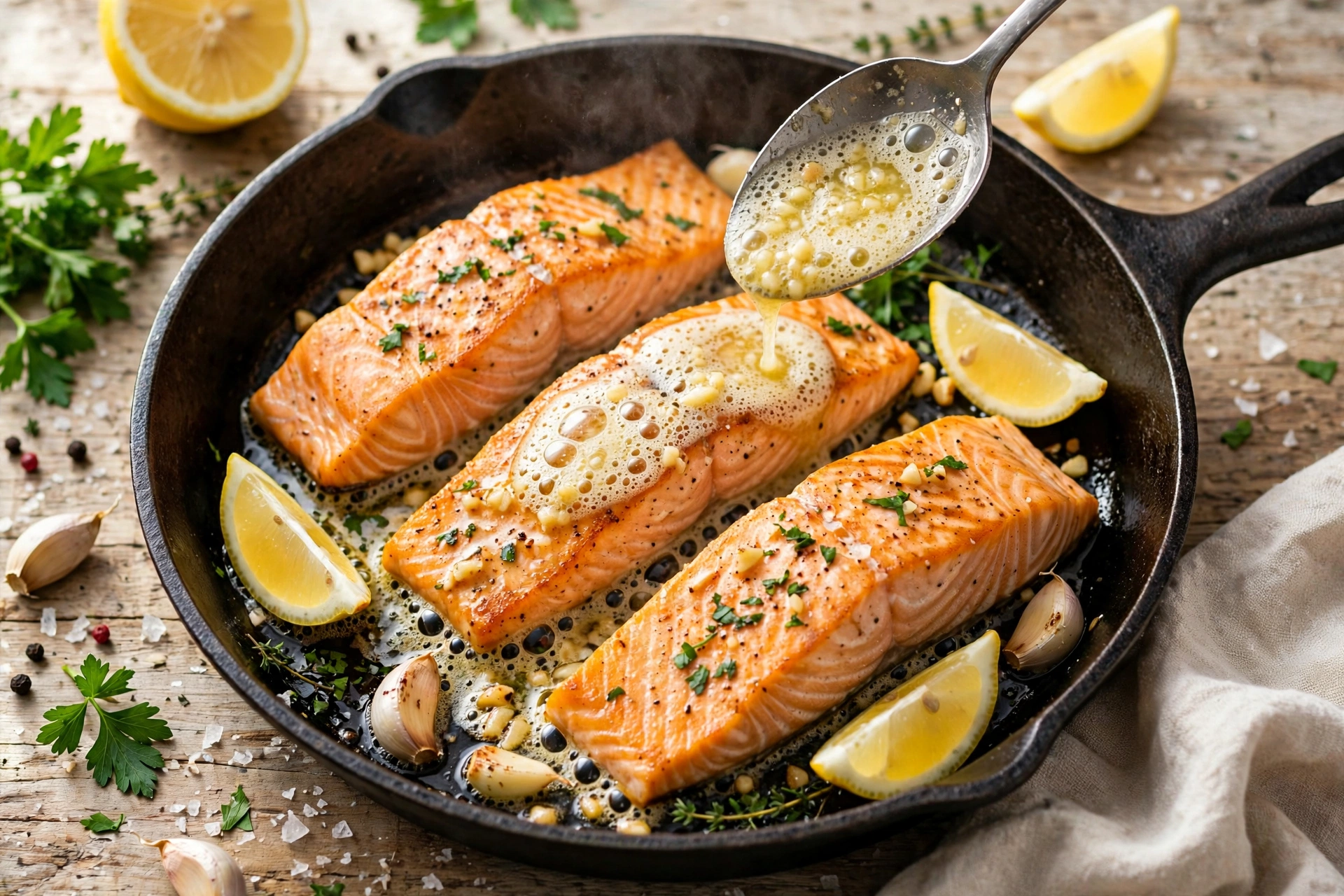
Of all the salmon recipes out there, this is the one I make when I want dinner to feel special without trying very hard. Four fillets, one skillet, twenty minutes — and what comes out is restaurant salmon. The skin is crisp enough to hear, the flesh is golden on the outside and tender inside, and the garlic butter in the pan is so good you will spoon it over everything on the plate.
Pan-seared salmon has a reputation for being tricky, but it is really just three small skills: a dry fillet, a hot pan, and patience. Once you learn those, this dish becomes a weeknight regular. It tastes rich and buttery, bright with lemon, and just a little bit fancy — the kind of dinner that makes an ordinary Tuesday feel like an occasion worth sitting down for.

Why You’ll Love It
- Ready in 20 minutes. Ten minutes of prep and ten minutes in the pan — faster than takeout.
- Crispy skin, tender center. A proper sear gives you crunch on the outside and a juicy middle.
- One skillet, easy cleanup. Everything happens in a single pan, including the sauce.
- Garlic butter baste. Spooning foaming butter over the fillets cooks them from the top and adds rich flavor.
- Works with skin-on or skinless. The method adapts, and the doneness guide covers both.
- Impressive but simple. It looks like a restaurant plate, yet it uses nine everyday ingredients.
- Endlessly flexible. Serve it with pasta, rice, salad, or roasted vegetables.
Ingredients
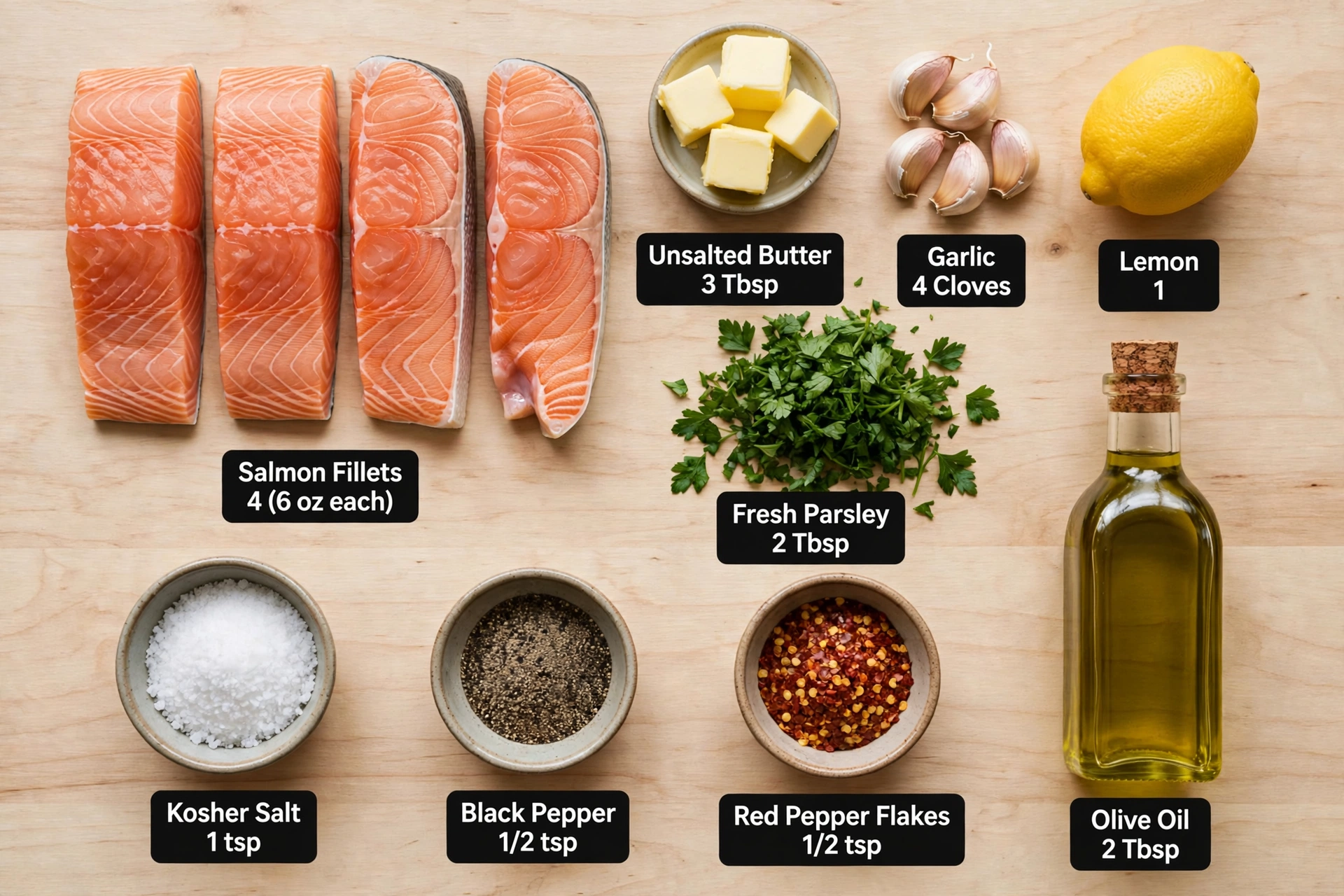
- 4 salmon fillets, skin-on, 6 ounces each — Center-cut fillets cook the most evenly. Skin-on gives you the crispiest result, but skinless works too — start it flesh-side down instead. Substitution: steelhead trout fillets, in the same size.
- 1 teaspoon kosher salt — Seasons the fish and helps the skin crisp. Season just before cooking so the salt does not draw out moisture. Substitution: 3/4 teaspoon fine sea salt.
- 1/2 teaspoon black pepper — A little bite against the rich butter. Substitution: white pepper, in the same amount.
- 2 tablespoons olive oil — For searing. It handles the high heat better than butter, which would burn. Substitution: avocado oil or vegetable oil.
- 3 tablespoons unsalted butter — The base of the garlic butter baste. Unsalted lets you control the seasoning. Substitution: salted butter, with a pinch less salt on the fish.
- 4 garlic cloves, minced — Warm, savory depth in the butter. Mince with a knife, not a press — crushed garlic burns faster. Substitution: 1 teaspoon garlic powder, added with the lemon at the end.
- 1 lemon — Half juiced into the butter at the end, half cut into wedges for serving. The acid balances the richness. Substitution: 1 tablespoon white wine vinegar, added off the heat.
- 2 tablespoons fresh parsley, chopped — A bright, fresh finish over the rich fish. Substitution: fresh dill or chives.
- 1/2 teaspoon red pepper flakes — A gentle warmth in the butter, not real heat. Leave it out if you prefer no spice. Substitution: a pinch of cayenne pepper.
How to Make Pan-Seared Salmon with Garlic Butter
1Pat Dry and Season
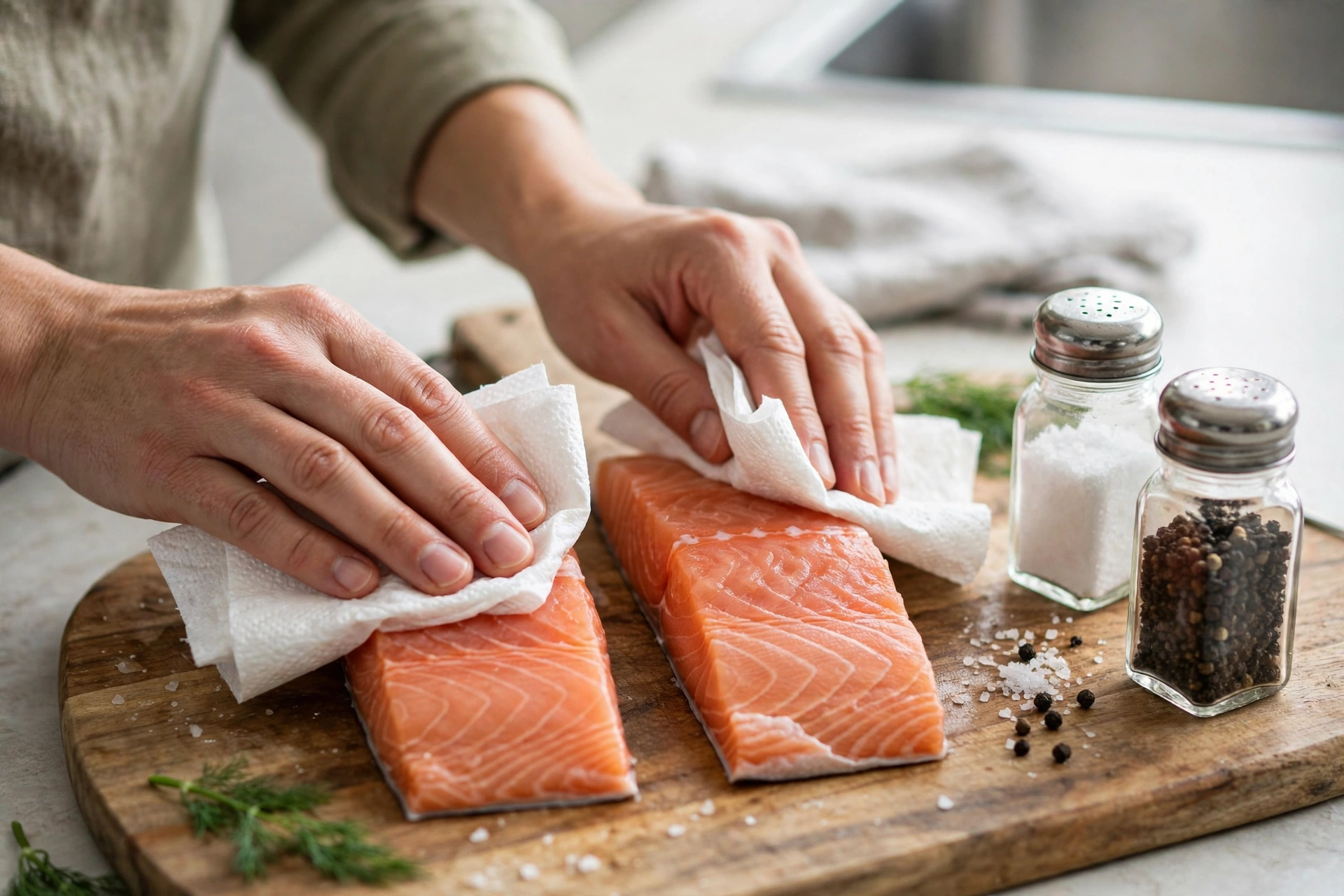
Pat dry and season. Take the salmon out of the fridge 15 minutes before cooking so it is not ice cold. Pat every side very dry with paper towels — top, bottom, and edges. A dry surface is the single most important step: wet fish steams instead of searing, and steamed fish never browns. Season both sides with the salt and pepper just before the fillets go in the pan.
2Sear Skin-Side Down
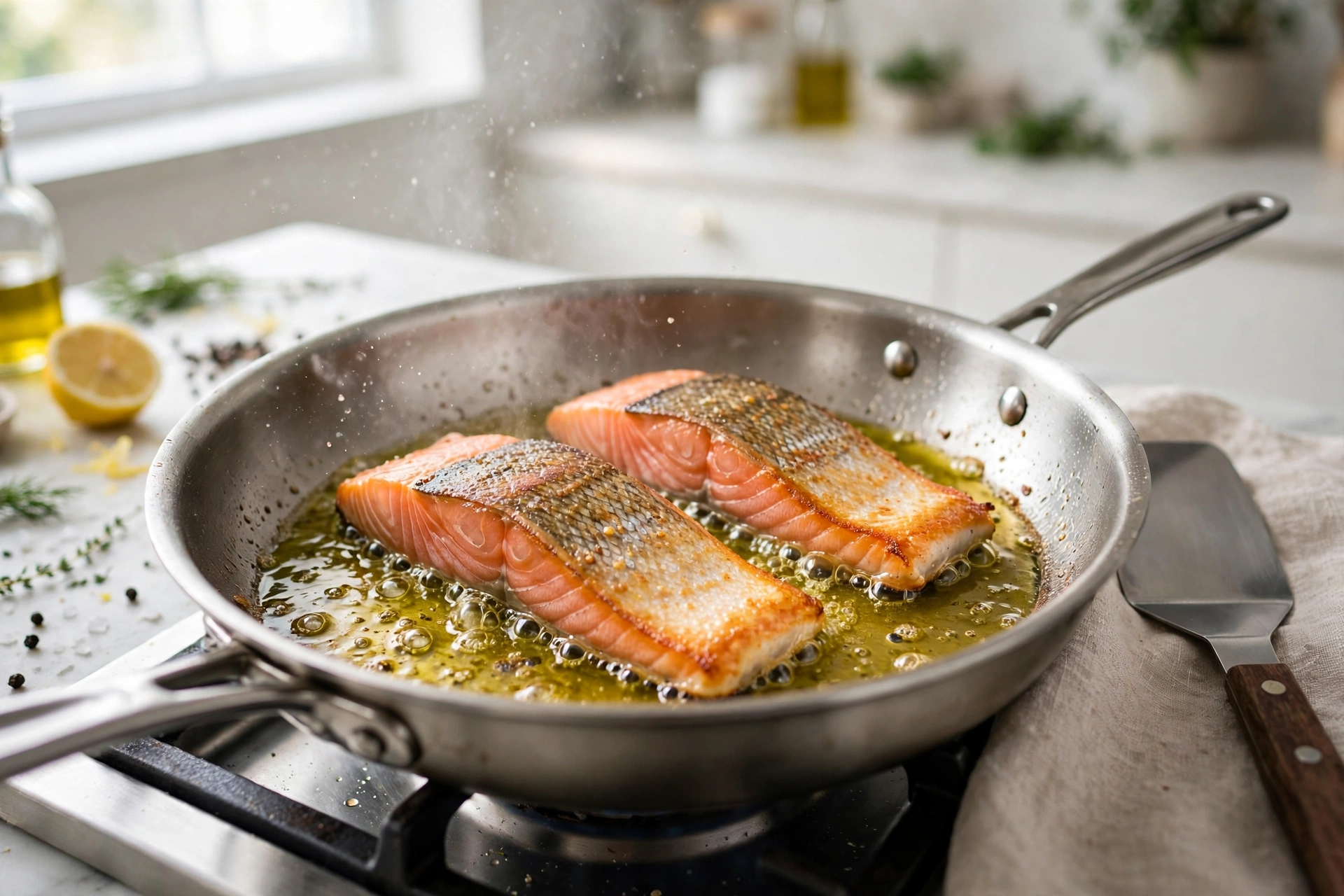
Sear skin-side down. Heat the olive oil in a large skillet over medium-high heat until it shimmers — about 2 minutes. A stainless steel or cast iron skillet browns best; nonstick works but gives a paler crust. Lay the fillets in skin-side down, pressing gently with a spatula for 10 seconds so the skin makes full contact. Cook without moving them for 4 to 5 minutes, until the skin is golden and crisp. You will see the flesh turn opaque from the bottom up. When the skin releases easily with a nudge, it is ready to flip. If it sticks, it is not ready yet — give it another 30 seconds.
3Flip, Add Butter and Garlic, and Baste
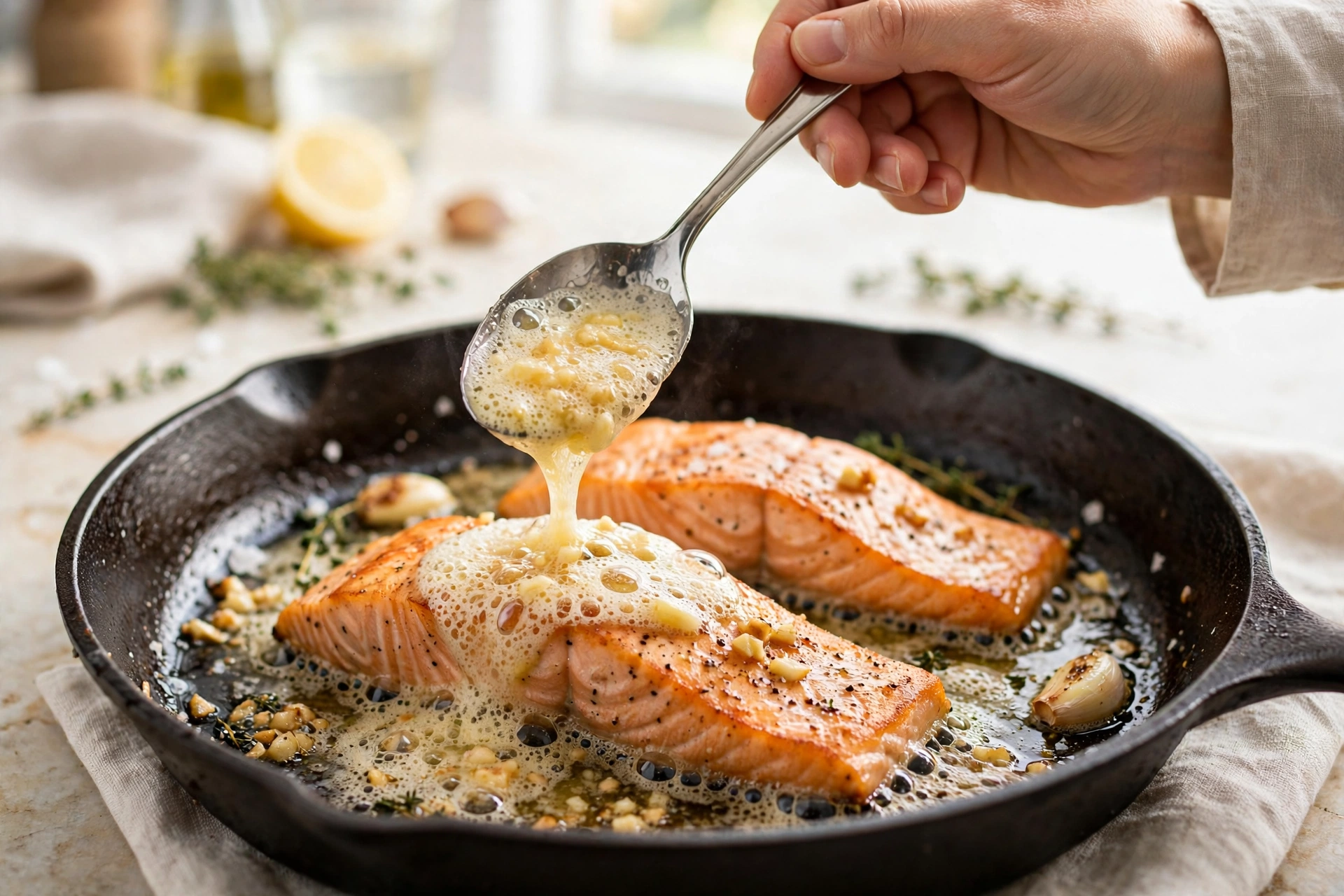
Flip, add butter and garlic, and baste. Flip the fillets and cook for 1 minute. Reduce the heat to medium, then add the butter to the pan. As soon as it melts and foams, add the minced garlic and red pepper flakes. Tilt the pan slightly so the butter pools on one side, then spoon the bubbling butter over the fillets again and again for about 1 1/2 minutes. The garlic cooks as you baste, so by the time the salmon is done, the garlic is golden — not burnt. This is the restaurant trick, and it takes almost no effort.
4Rest and Serve
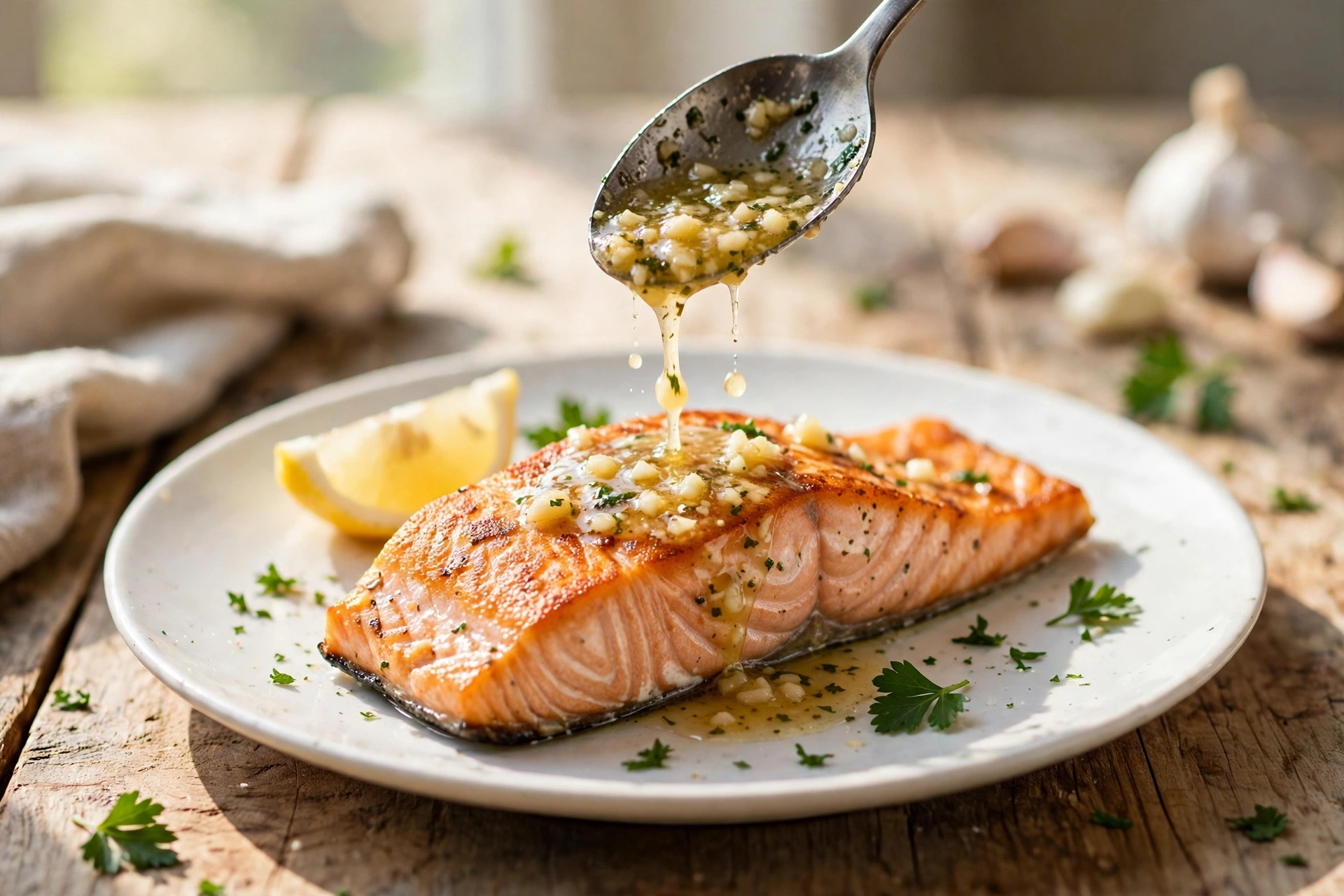
Rest and serve. Check for doneness (see the guide below), then move the salmon to plates. Rest for 3 minutes — the temperature rises a few degrees and the juices settle. Meanwhile, squeeze the lemon half into the pan butter, stir in the parsley, and taste for salt. Spoon the garlic butter over each fillet and serve with the lemon wedges.
Technique: The Sear and the Doneness Guide
Most salmon recipes tell you a time and leave you guessing. Time is a rough guide at best, because fillets differ in thickness. This section gives you the two things that actually decide the result: the sear and the doneness cues.
The Crispy Skin Rules
Crisp skin comes from three things, in order. First, the fish must be dry — pat it, then pat it again. Second, the pan must be hot before the fish goes in; if the oil does not shimmer, wait. Third, do not move the fillet. Every time you lift it, you break the contact that builds the crust. Press it down once at the start, then leave it alone until it releases on its own. If your fillets are skinless, the same rules apply to the flesh side: dry, hot, still.
Which Pan to Use
Stainless steel gives the deepest golden crust, because it holds high heat and browns aggressively. Cast iron is nearly as good and very forgiving. Nonstick is the easiest for beginners — nothing sticks — but the crust stays paler and softer. Whatever pan you use, it must be large enough that the fillets do not touch. Crowded fillets steam each other, and steamed salmon never crisps.
How to Tell When Salmon Is Done
Use a thermometer when you can, and your eyes when you cannot. Pull the salmon off the heat at these temperatures — it rises about 3 to 5 degrees as it rests:
| Doneness | Pull temperature | What it looks like |
|---|---|---|
| Medium-rare (recommended) | 120F | Warm red center, flakes with gentle pressure |
| Medium | 130F | Mostly opaque, slightly translucent center |
| Well done | 145F | Fully opaque, flakes easily throughout |
Without a thermometer, watch the sides: the flesh turns opaque from the bottom up, and the white albumin — those little white beads — starts to appear when the fish is nearly done. A lot of albumin means it is overcooking. Press the thickest part gently with a fork: if it flakes into clean layers, it is ready. If it resists, give it one more minute.
The Garlic Timing Rule
Garlic burns in under a minute in a hot pan, and burnt garlic turns the whole butter bitter. That is why the garlic goes in only after the butter melts, and why you start basting immediately. The butter cools the pan slightly, the constant spooning keeps the garlic moving, and the whole baste lasts just 90 seconds. If your garlic ever turns dark brown, pull the pan off the heat — the butter is still usable, but the garlic has gone too far.
Tips for the Best Pan-Seared Salmon
- Pat the salmon very dry. This matters more than anything else — wet fish steams, dry fish sears.
- Season just before cooking. Salt left sitting on the fish draws out moisture and works against the sear.
- Wait for the shimmer. If the oil is not shimmering, the pan is not hot enough yet.
- Do not move the fillet. Let the skin release on its own; if it sticks, it needs more time.
- Add the garlic late. Garlic burns fast — it goes in with the melted butter, never before.
- Pull it early. Salmon keeps cooking off the heat, so pull it 3 to 5 degrees before your target.
- Rest 3 minutes. The juices settle and the temperature evens out, so the center stays tender.
Variations
Pan-Seared Salmon with Lemon Caper Butter
Add 1 tablespoon of drained capers with the garlic, and finish with the lemon juice as directed. The capers add a briny pop that works beautifully with the rich butter.
Spicy Garlic Butter Salmon
Double the red pepper flakes to 1 teaspoon and add 1/2 teaspoon of smoked paprika with the salt. Finish with a drizzle of hot sauce over each fillet.
Herb Butter Salmon
Swap the parsley for 2 tablespoons of chopped fresh dill, and add 1 teaspoon of lemon zest to the butter with the garlic. This version tastes fresh and bright, almost Scandinavian.
Honey Garlic Salmon
Stir 1 tablespoon of honey into the butter as it melts. The honey caramelizes slightly and gives the salmon a glossy, sweet-savory glaze. Watch the heat — honey browns fast.
Salmon with Creamy Garlic Sauce
After removing the salmon, add 1/2 cup of heavy cream to the pan with the garlic butter, simmer for 2 minutes until slightly thickened, and pour over the fillets. Rich, but wonderful over rice.
Skinless Salmon Version
Use skinless fillets and sear flesh-side down first for 3 minutes, then flip and baste as directed. The baste matters even more here, since there is no skin to protect the flesh.
What to Serve With Pan-Seared Salmon
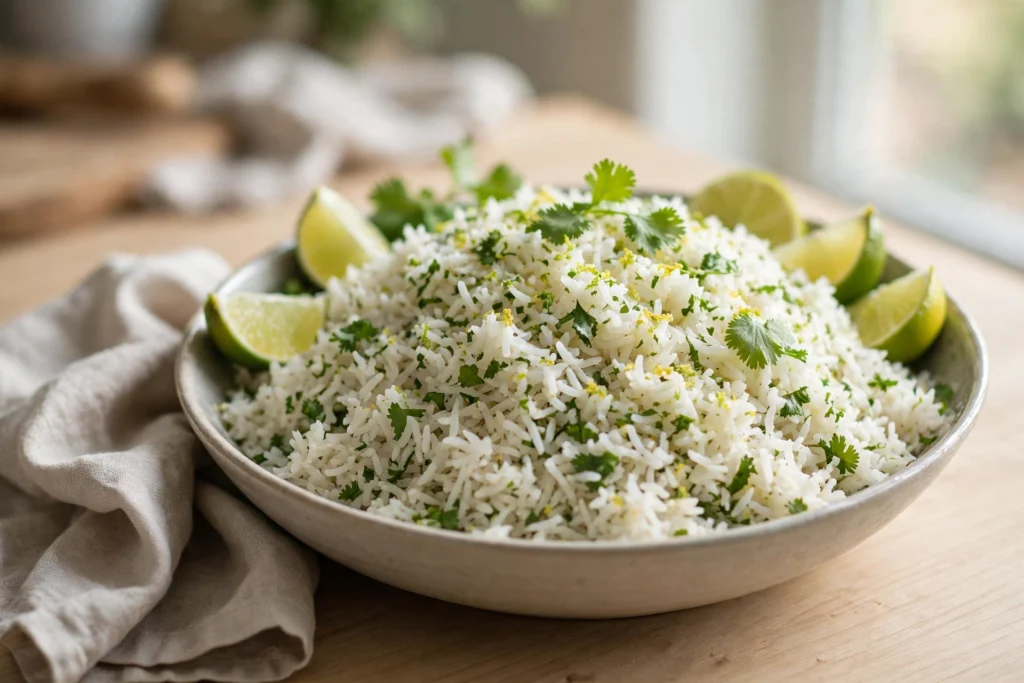
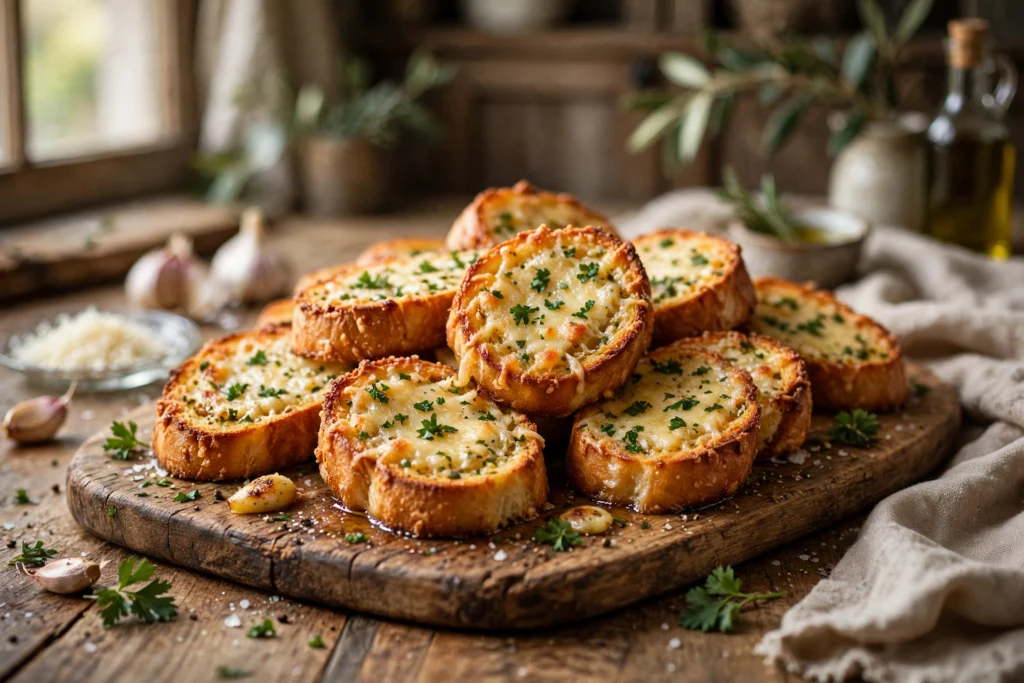
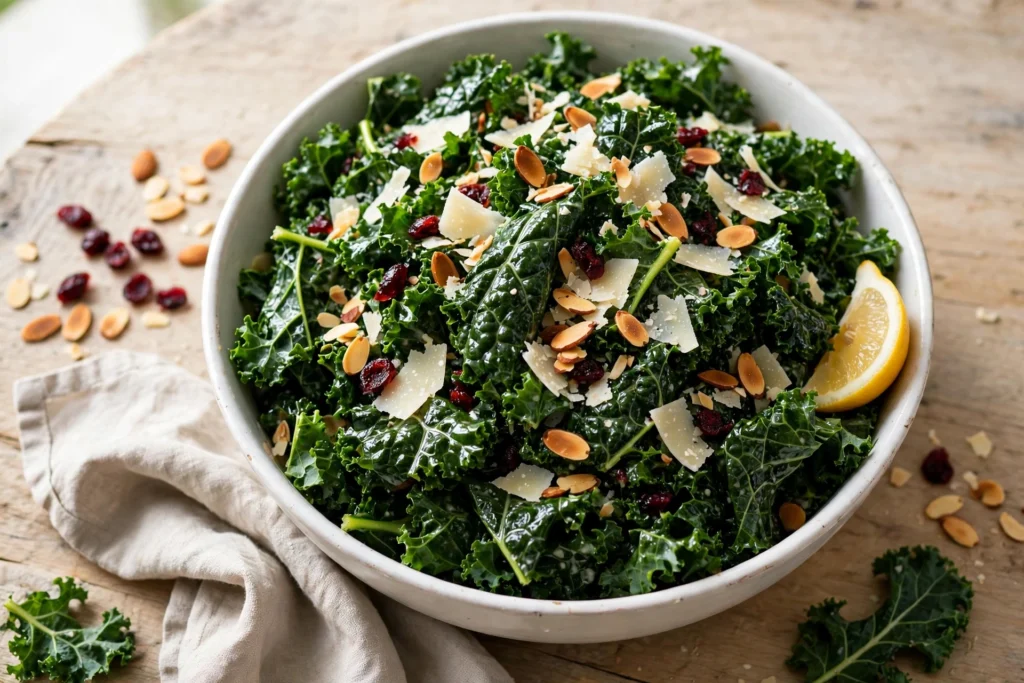
This salmon is rich, so it loves sides that are fresh or starchy enough to soak up the butter. Start with pesto pasta — the herby pasta and the garlic butter are a natural match. Steamed rice or roasted potatoes work just as well, and both catch the pan sauce beautifully. For something green, try a simple salad with italian dressing — the acidity cuts through the richness perfectly. Roasted asparagus, green beans, or a cucumber and tomato salad all keep the plate light. For drinks, keep it easy — sparkling water with lemon, iced tea, or a cold white wine.
Storage
In the Fridge
Let the salmon cool completely, then store it in an airtight container in the fridge for up to 3 days. Keep any leftover garlic butter in a small separate container — it is excellent spooned over vegetables or spread on toast the next day.
Reheating
Reheat gently, or the salmon dries out. Warm it in a 275F oven for about 10 minutes, until just heated through, or in a covered skillet over low heat with a spoonful of the leftover butter. Avoid the microwave if you can — it heats unevenly and toughens the fish. If you must use it, use 50 percent power in 30-second bursts.
In the Freezer
Cooked salmon freezes for up to 2 months, though the texture is best fresh. Wrap each fillet tightly in plastic wrap, then foil, and thaw overnight in the fridge before reheating gently. Do not freeze the garlic butter sauce with the fish — make it fresh when you serve.
Frequently Asked Questions
What are the best salmon recipes for dinner?
The best salmon recipes are the ones that match your time and your pan. For a fast weeknight dinner, pan-seared salmon with garlic butter is hard to beat — 20 minutes, one skillet, crispy skin and a rich sauce. If you prefer hands-off cooking, try easy baked salmon, and for a lighter, crispier result, air fryer salmon is ready in under 15 minutes.
How do you know when pan-seared salmon is done?
Use an instant-read thermometer in the thickest part: pull it at 120F for medium-rare, 130F for medium, or 145F for well done, since it rises a few degrees as it rests. Without a thermometer, watch the sides turn opaque from the bottom up and press gently with a fork — if the fish flakes into clean layers, it is ready.
Should salmon be skin-on or skinless for searing?
Skin-on is best for pan-searing, because the skin protects the flesh from the heat and crisps into the best part of the dish. Skinless fillets work too — sear them flesh-side down first and baste well — but they are less forgiving and dry out faster.
Why does my salmon stick to the pan?
It sticks for one of three reasons: the fish was wet, the pan was not hot enough, or you tried to move it too soon. Pat the fillets very dry, wait until the oil shimmers, and do not touch the fish until the skin releases on its own. If it still sticks, give it another 30 seconds — a proper sear lets go by itself.
Can I make garlic butter salmon without butter?
Yes. Swap the butter for the same amount of olive oil and add the garlic and lemon at the end, off the heat. You lose some richness, but the sear and the garlic flavor still carry the dish. A dairy-free butter alternative also works in the same amount.
How do I reheat leftover salmon without drying it out?
Reheat it gently in a 275F oven for about 10 minutes, or in a covered skillet over low heat with a spoonful of butter. Avoid high heat and the microwave, which both toughen the fish. Leftover salmon is also excellent cold, flaked into salads or over rice bowls.
Try These Next
- Easy Baked Salmon — lemon, garlic, and herbs, baked until tender, ready in under 30 minutes.
- Air Fryer Salmon — crispy edges and a juicy center, with almost no cleanup.
- Pesto Pasta — creamy, herby pasta that pairs perfectly with garlic butter salmon.
- Carne Asada — smoky grilled steak with lime and cilantro, for a completely different kind of family dinner.
- Italian Dressing — a bright homemade dressing for the salad you serve alongside.
- ground chicken meatballs — tender, herby meatballs for an easy weeknight dinner.
- homemade chicken stock — a rich, homemade base for soups and sauces.
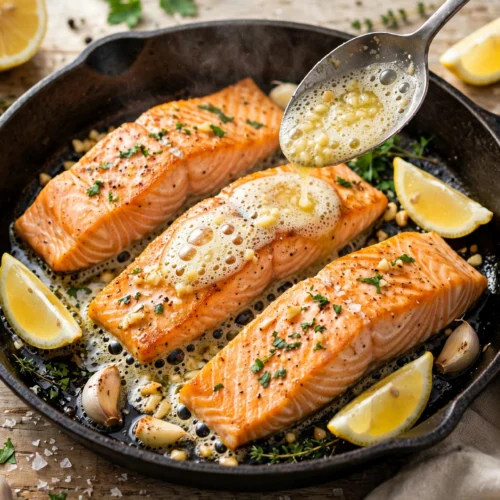
Pan-Seared Salmon with Garlic Butter

Ingredients
- 4 salmon fillets skin-on, 6 ounces each
- 1 teaspoon kosher salt
- 1/2 teaspoon black pepper
- 2 tablespoons olive oil
- 3 tablespoons unsalted butter
- 4 garlic cloves minced
- 1 lemon halved
- 2 tablespoons fresh parsley chopped
- 1/2 teaspoon red pepper flakes
Instructions
- Take the salmon out of the fridge 15 minutes before cooking. Pat every side very dry with paper towels. Season both sides with salt and pepper just before cooking.
- Heat the olive oil in a large skillet over medium-high heat until shimmering, about 2 minutes. Lay the fillets skin-side down, pressing gently with a spatula for 10 seconds. Cook without moving for 4 to 5 minutes, until the skin is golden and crisp and releases easily.
- Flip the fillets and cook 1 minute. Reduce the heat to medium and add the butter. Once it melts and foams, add the garlic and red pepper flakes. Tilt the pan so the butter pools, then spoon the bubbling butter over the fillets for about 1 1/2 minutes.
- Check for doneness with a thermometer (120 degrees F for medium-rare, 130 degrees F for medium, 145 degrees F for well done). Move the salmon to plates and rest 3 minutes.
- Squeeze half a lemon into the pan butter, stir in the parsley, and taste for salt. Spoon the garlic butter over each fillet and serve with lemon wedges.
Notes
- Pat the salmon very dry — wet fish steams instead of searing, and steamed fish never browns.
- Do not move the fillet while it sears; the skin releases on its own when the crust is ready.
- Add the garlic only after the butter melts, and start basting right away so the garlic turns golden, not burnt.
- Pull the salmon 3 to 5 degrees before your target temperature — it keeps cooking as it rests.
- Rest 3 minutes before serving so the juices settle and the center stays tender.
- Leftovers keep 3 days in the fridge; reheat gently in a 275 degree F oven so the fish does not dry out.