
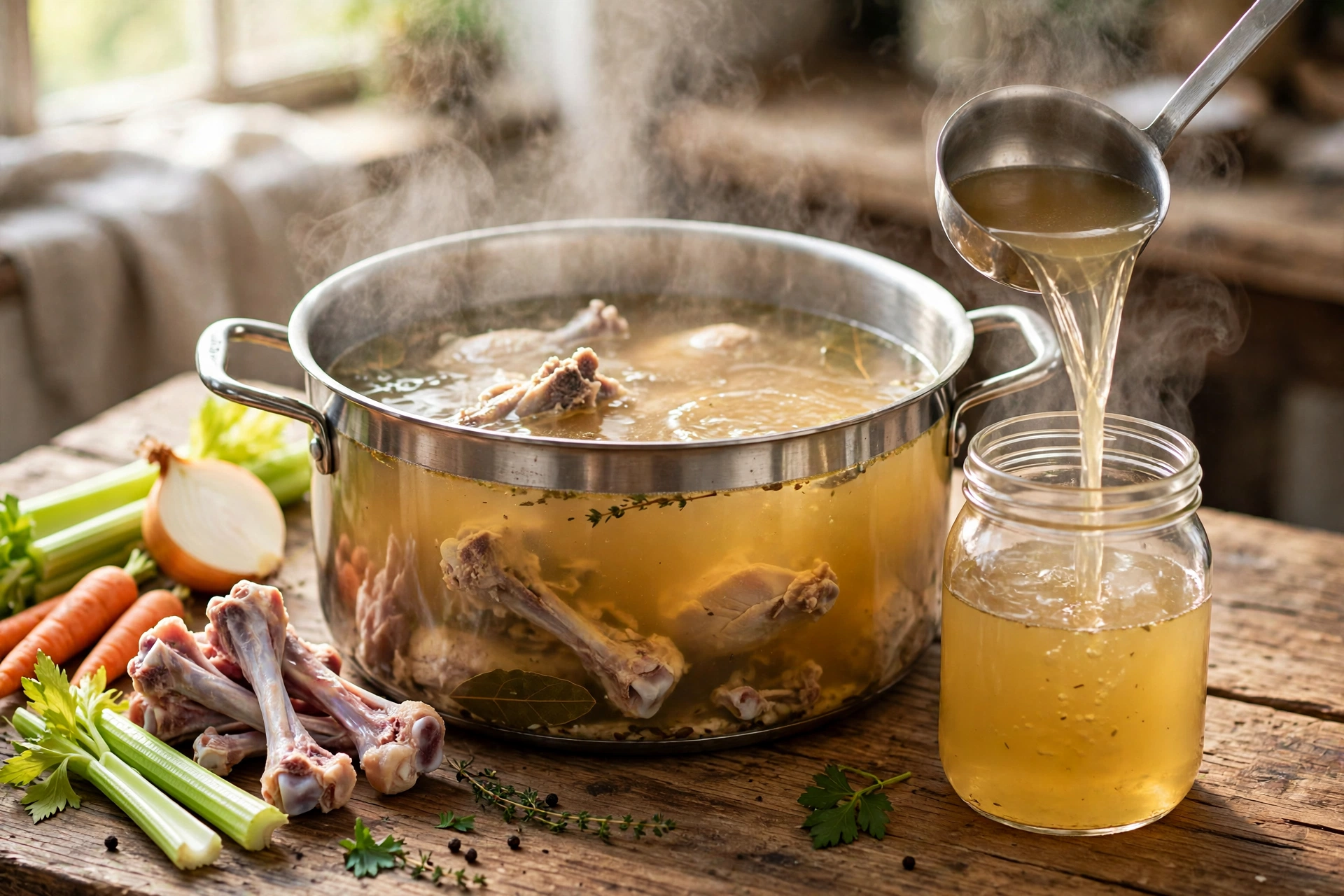
Every great soup starts somewhere, and that somewhere is a pot of homemade stock. Learning how to make soup stock is the single most useful skill a home cook can learn — it costs almost nothing, because the best stock is built from bones and vegetable scraps you were going to throw away, and it makes everything it touches taste better. This recipe gives you about 3 quarts of clear, golden, gelatin-rich chicken stock in about 4 hours, and most of that time the pot just sits there, barely bubbling.

Why You’ll Love It
- Nearly free. Built from bones and scraps you already have — a roast chicken carcass is perfect.
- Better than any carton. Rich, gelatinous body that store-bought stock simply does not have.
- Mostly hands-off. Fifteen minutes of prep, then the pot simmers while you do other things.
- Makes everything better. Soups, risottos, sauces, braises, and even rice cooked in stock.
- Freezer-friendly. Freeze it in portions and you always have stock within reach.
- No salt added. You season the final dish, not the stock — so it works in every recipe.
- The gelatin test. When your chilled stock wobbles like jelly, you know you did it right.
Ingredients
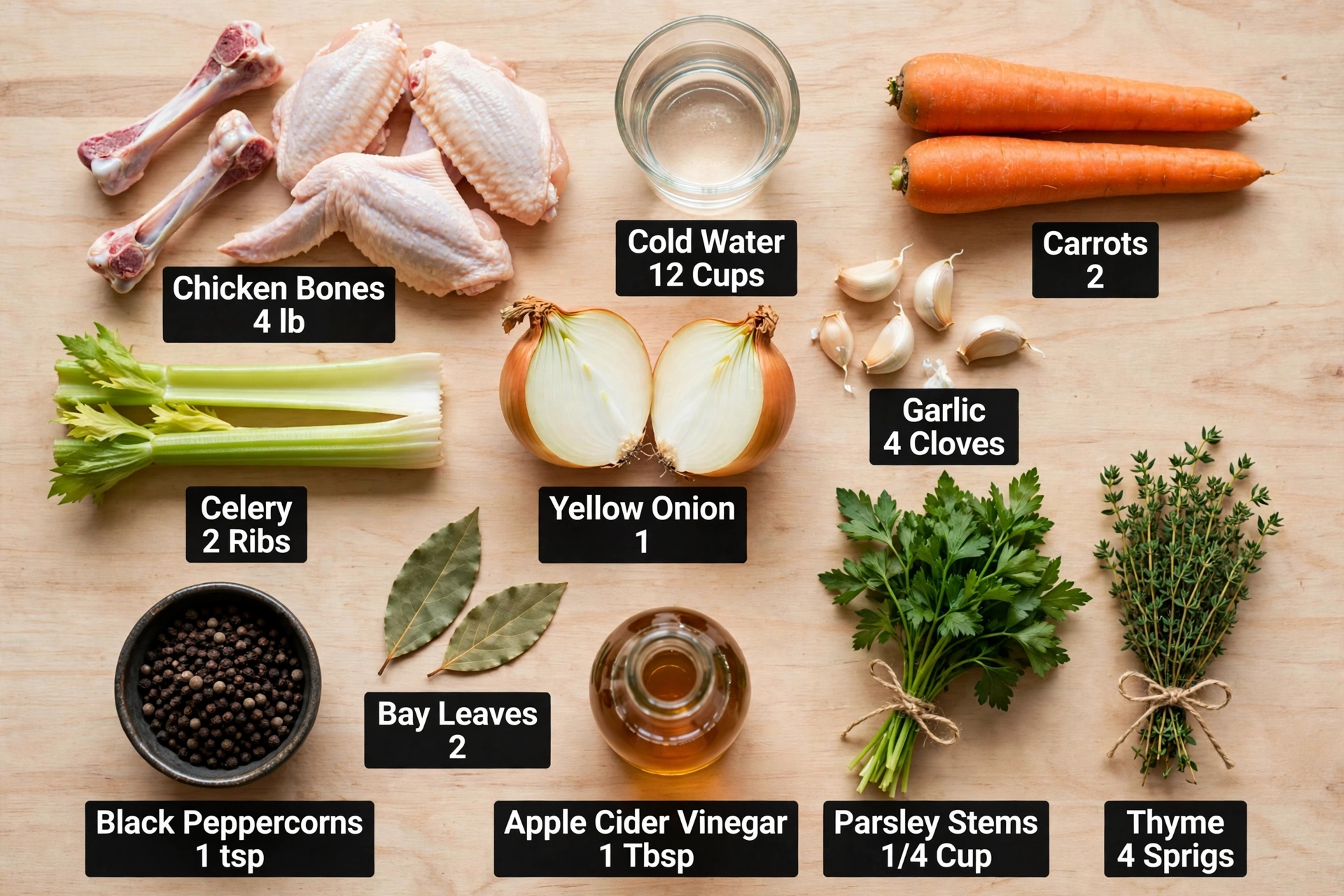
The Stock
- 4 pounds chicken bones — Backs, wings, necks, and a carcass or two. Wings and feet carry the most collagen, which is what makes stock gel. Raw bones give a cleaner, lighter stock; roasted bones give a deeper, browner one. Substitution: 1 whole chicken carcass from a roast chicken plus 1 pound of wings.
- 12 cups cold water — Enough to cover the bones by about 2 inches. More water just dilutes the stock, so do not overfill the pot. Substitution: none — always start with cold water, never hot.
- 2 carrots, roughly chopped — Sweetness and golden color. No need to peel them; just scrub and chop. Substitution: 1 parsnip, roughly chopped.
- 2 celery ribs, roughly chopped — Fresh, savory depth and a classic stock aroma. Use the leafy tops too if you have them. Substitution: 1 small fennel bulb, roughly chopped.
- 1 yellow onion, halved — Sweet, savory backbone of the stock. Leave the skin on — it adds golden color. Substitution: 2 shallots, halved.
- 4 garlic cloves, smashed — Gentle warmth in the background. Skins on is fine. Substitution: 1 teaspoon garlic powder, added with the vegetables.
- 2 bay leaves — A subtle, earthy depth you notice when it is missing. Substitution: 1/2 teaspoon dried thyme, added with the peppercorns.
- 1 teaspoon black peppercorns — Warmth without heat. Whole peppercorns stay clear; ground pepper clouds the stock. Substitution: 1/2 teaspoon white peppercorns.
- 1 tablespoon apple cider vinegar — Helps draw minerals and collagen from the bones. You will not taste it in the finished stock. Substitution: 1 tablespoon white vinegar or lemon juice.
- 1/4 cup parsley stems — Fresh, green flavor from the part most people throw away. Stems, not leaves — leaves turn bitter over a long simmer. Substitution: a small bunch of cilantro stems.
- 4 thyme sprigs — Gentle herbal depth. Substitution: 1 teaspoon dried thyme, tied in cheesecloth with the peppercorns.
The Bone-to-Vegetable Ratio
The vegetables should weigh about 10 percent of the bone weight — for 4 pounds of bones, that is roughly 6 ounces of vegetables total, which is about what one onion, two carrots and two celery ribs give you. More vegetables will not make a better stock; they will make a vegetable soup with chicken flavor.
How to Make Soup Stock
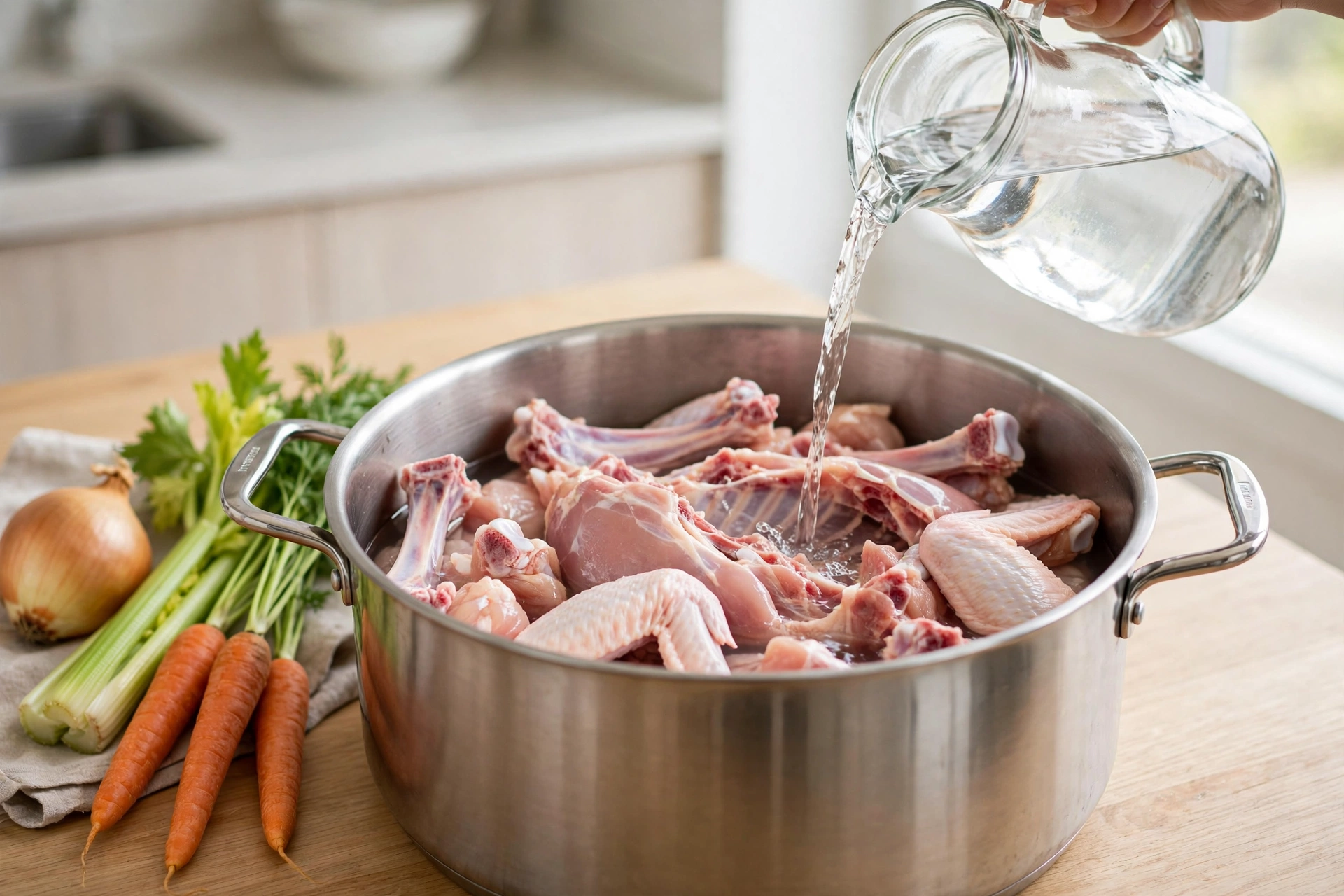
1Bones and Cold Water
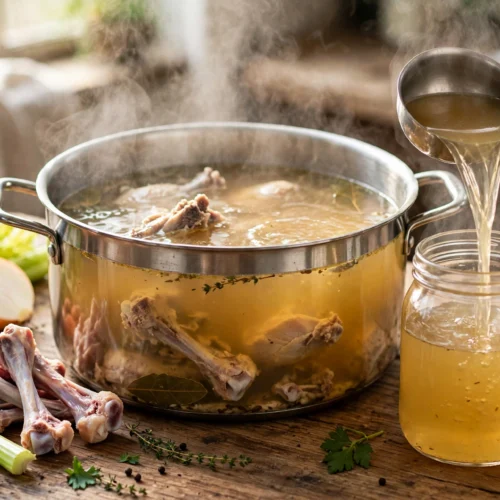
Bones and cold water. Put the chicken bones in a large stockpot — at least 8 quarts — and add the vinegar. Cover with the cold water, so the bones sit under about 2 inches of water. Starting cold matters: as the water heats slowly, soluble proteins dissolve and rise as foam you can skim off. Starting hot sets those proteins in place and clouds the stock from the very beginning.
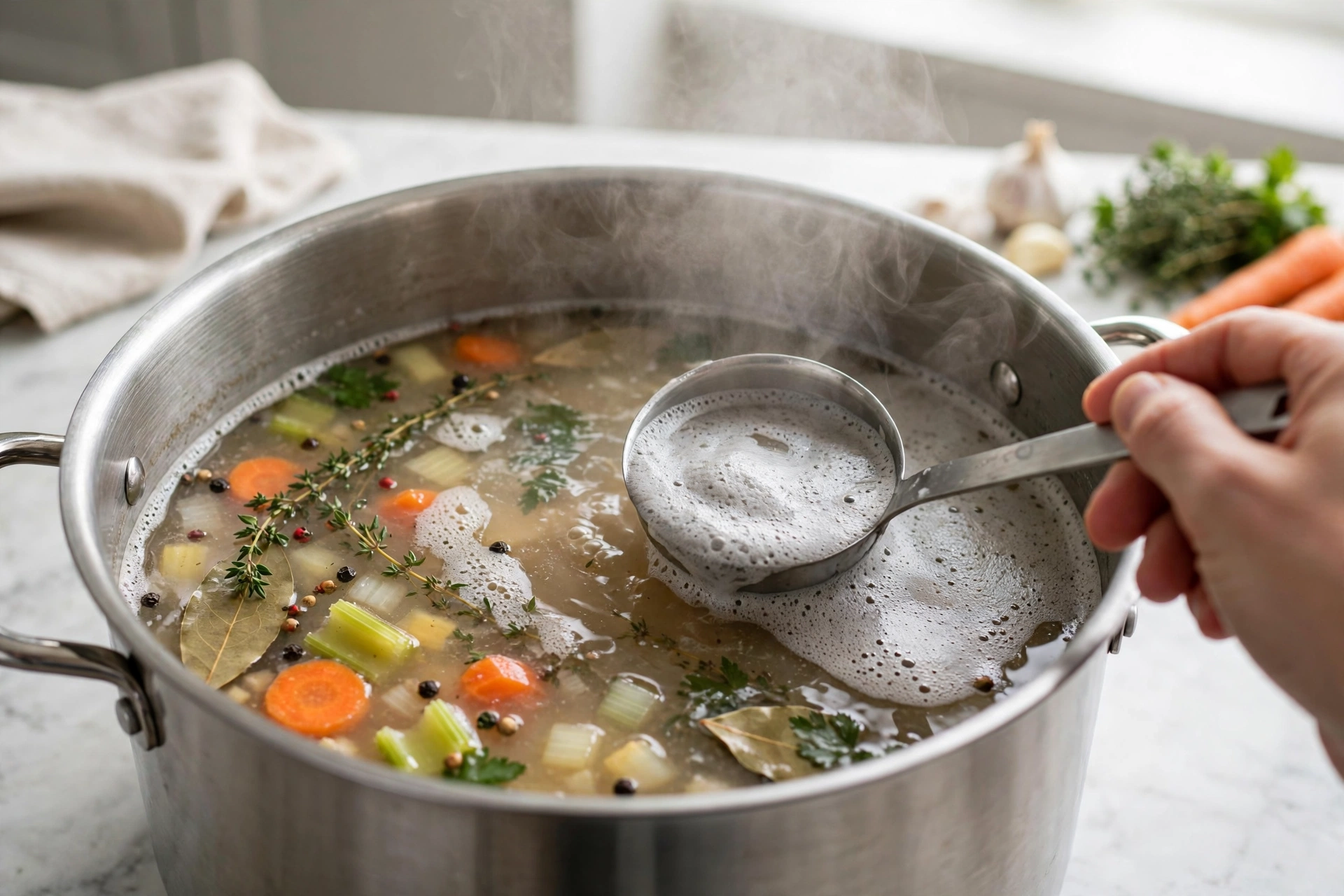
2Bring to a Bare Simmer and Skim
Bring to a bare simmer and skim. Set the pot over medium heat and bring it slowly to a bare simmer — this takes 30 to 45 minutes, and that slow climb is part of the method. You want lazy bubbles breaking the surface every second or two, around 185-205F, never a rolling boil. As the pot heats, grey foam will rise. Skim it off with a ladle or a fine-mesh skimmer and discard it. Most of the foam appears in the first 20 to 30 minutes; keep skimming until the surface stays mostly clear.
3Add the Vegetables and Simmer
Add the vegetables and simmer. Once the foam has slowed, add the carrots, celery, onion, garlic, bay leaves, peppercorns, parsley stems, and thyme. Reduce the heat to low and let the stock simmer, uncovered or partly covered, for 4 hours. Do not stir — stirring clouds the stock by churning up fine particles. If the level drops below the bones, add a little hot water. The pot should barely bubble the whole time; if it starts boiling hard, turn the heat down.
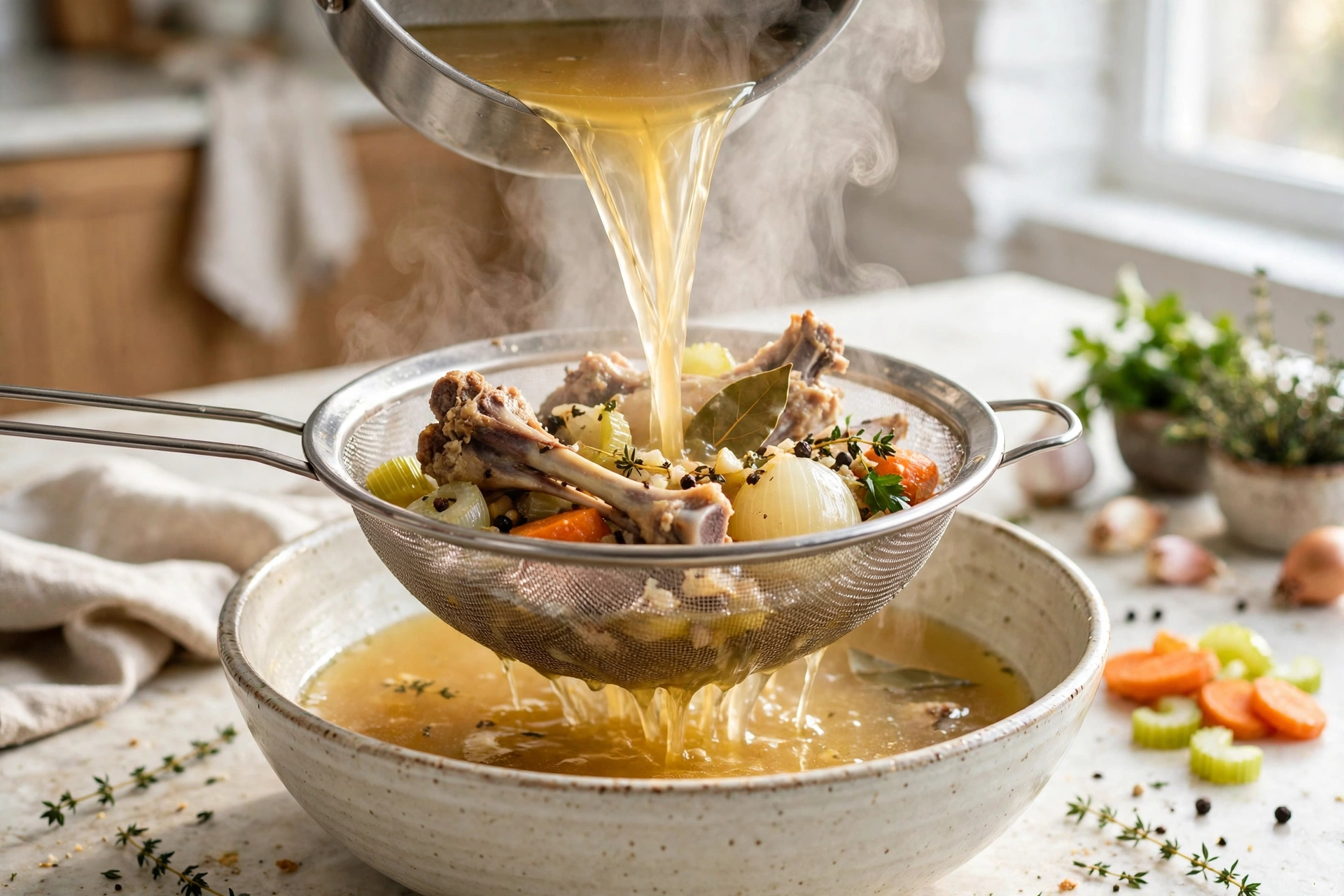
4Strain the Stock
Strain the stock. Lift out the large bones with tongs, then pour the stock through a fine-mesh sieve into a large bowl or another pot. Do not press on the solids — pressing pushes cloudy particles through and defeats the whole careful simmer. For an extra-clear stock, strain a second time through a sieve lined with cheesecloth. Discard the bones and vegetables; they have given up all their flavor.
5Cool and Store
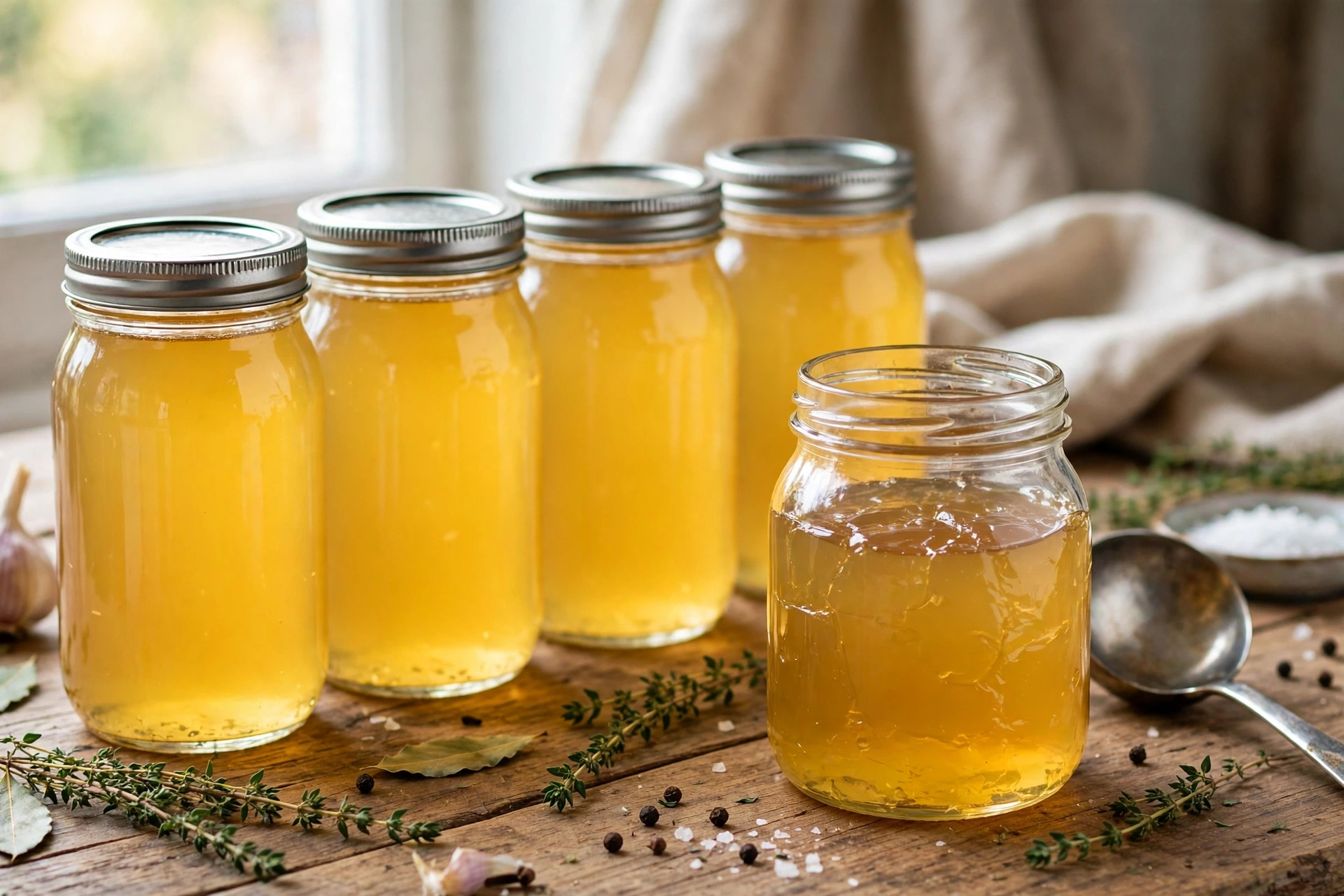
Cool and store. Let the stock cool to room temperature, then pour it into jars or containers in 1-cup and 2-cup portions. Chill in the fridge. Once cold, a layer of fat will set on top — lift it off with a spoon for a lighter stock, or leave some if you are using it for stews. The stock should wobble like jelly when chilled; that is the gelatin, and it means you did it right. Use within 5 days from the fridge, or freeze for up to 6 months.
Technique: Clarity, Gelatin, and the Rules That Make Stock Great
Stock is simple, but it rewards a few rules. This section explains what separates great stock from cloudy, thin stock: clarity, gelatin, and the bone-to-vegetable balance.
The Three Clarity Rules
Clear stock comes from gentle handling, not from special equipment. First, start cold — it lets proteins rise as skimmable foam instead of setting cloudy in the liquid. Second, never boil hard — a rolling boil churns fat into tiny droplets and keeps fine particles suspended, which is the single biggest cause of cloudy stock. Third, never press the solids when you strain — pressing forces the cloudiness back in. Follow those three rules and your stock will come out golden and clear.
The Gelatin Test
Gelatin is what makes homemade stock worth the effort. It comes from collagen in the bones and connective tissue, which melts slowly into the liquid over hours. Wings, feet, necks, and carcasses carry the most collagen. The test is simple: chill the stock overnight. If it sets like jelly and wobbles when you shake the jar, it is rich in gelatin.
Stock vs. Broth vs. Bone Broth
These three get mixed up constantly, so here is the simple version:
| Stock | Broth | Bone broth | |
|---|---|---|---|
| Made from | Bones | Meat (with some bones) | Bones, simmered very long |
| Simmer time | 3-4 hours | 1-2 hours | 12-24 hours |
| Salted? | No | Usually yes | Usually no |
| Sets like jelly? | Yes | Rarely | Yes |
| Best for | Soups, sauces, risotto | Sipping, light soups | Sipping, drinking |
Stock is the cook’s ingredient — unsalted, gelatin-rich, and built for recipes. Broth is the finished soup base — lighter, salted, and made mostly from meat. Bone broth is stock taken to the extreme, simmered for half a day or more.
Why No Salt?
This stock has no salt in it, and that is deliberate. Salt concentrates as stock reduces, so a salted stock can turn over-salted in a sauce or a risotto. Season the final dish, where you can taste and adjust.
Tips for the Best Homemade Stock
- Start with cold water. Hot water sets proteins in place and clouds the stock before you begin.
- Skim early and often. Most foam appears in the first 30 minutes — that is when skimming matters most.
- Never let it boil hard. A bare simmer, with a bubble every second or two, is all it needs.
- Do not stir the pot. Stirring churns up particles and clouds the stock.
- Do not press the solids. Strain gently and let gravity do the work.
- Keep a freezer bag for bones. Toss in every roast chicken carcass and wing tip until you have 4 pounds.
- Cool it fast. Divide hot stock into shallow containers so it cools quickly and safely.
Variations
Vegetable Stock
Leave out the bones and double the vegetables: 4 carrots, 4 celery ribs, 2 onions, 1 leek, 8 garlic cloves, plus mushrooms for depth and a tomato for sweetness. Cover with 12 cups of cold water and simmer gently for 1 hour only — vegetables give up their flavor fast, and longer cooking turns them bitter. Strain the same way. It will not gel, but it will be rich and golden.
Brown Chicken Stock
Roast the raw bones on a sheet pan at 425F for 45 to 60 minutes, until deep golden-brown, then add them to the pot and deglaze the pan with a little water — pour that browned liquid in too. Roast the vegetables for the last 20 minutes. The result is a darker, deeper stock, perfect for gravies and dark sauces.
Slow Cooker Stock
Put everything in a slow cooker, cover with cold water, and cook on low for 8 to 10 hours. Skim once in the first hour if you can, then leave it alone. Strain the same way.
Instant Pot Stock
Combine everything in the pot, cover with water to the max line, and pressure-cook on high for 2 hours with a natural release. The stock will be slightly cloudier than the stovetop version, but the flavor and gelatin are excellent.
Turkey Stock
Save the Thanksgiving carcass and follow the recipe exactly, swapping turkey bones for chicken bones. Turkey wings and legs add even more gelatin.
Cloudy-Stock Rescue
If your stock comes out cloudy, do not throw it away. Chill it, lift off the fat, and strain again through cheesecloth. For a crystal-clear result, whisk 2 egg whites into the cold stock, bring it slowly to a simmer, and let the egg whites trap the particles into a raft you can lift off — the classic clarification trick.
What to Serve With Homemade Stock
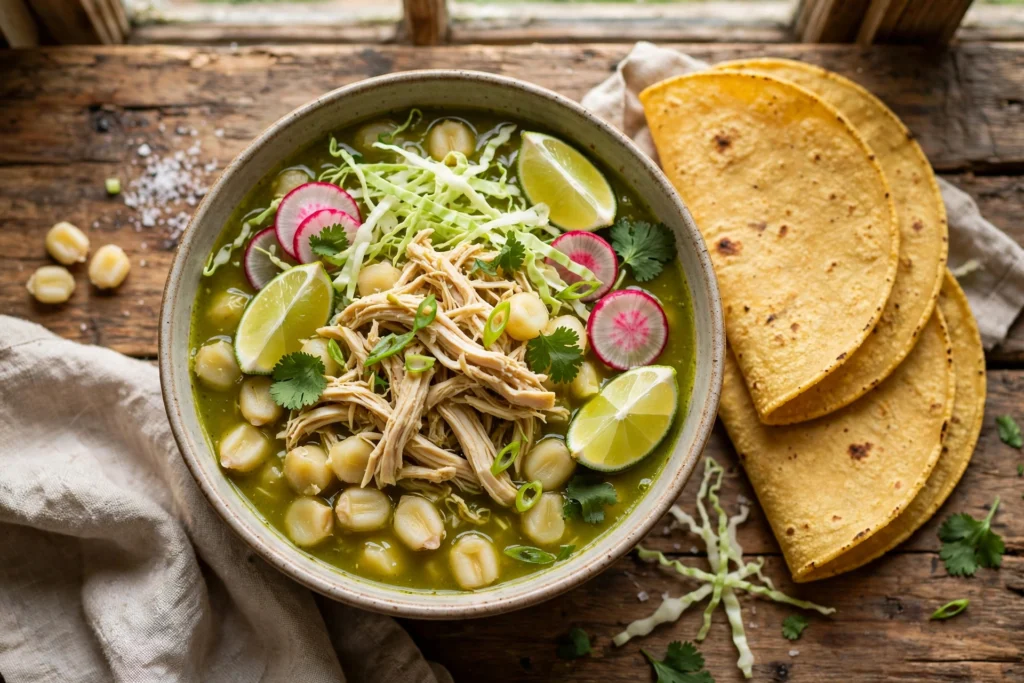
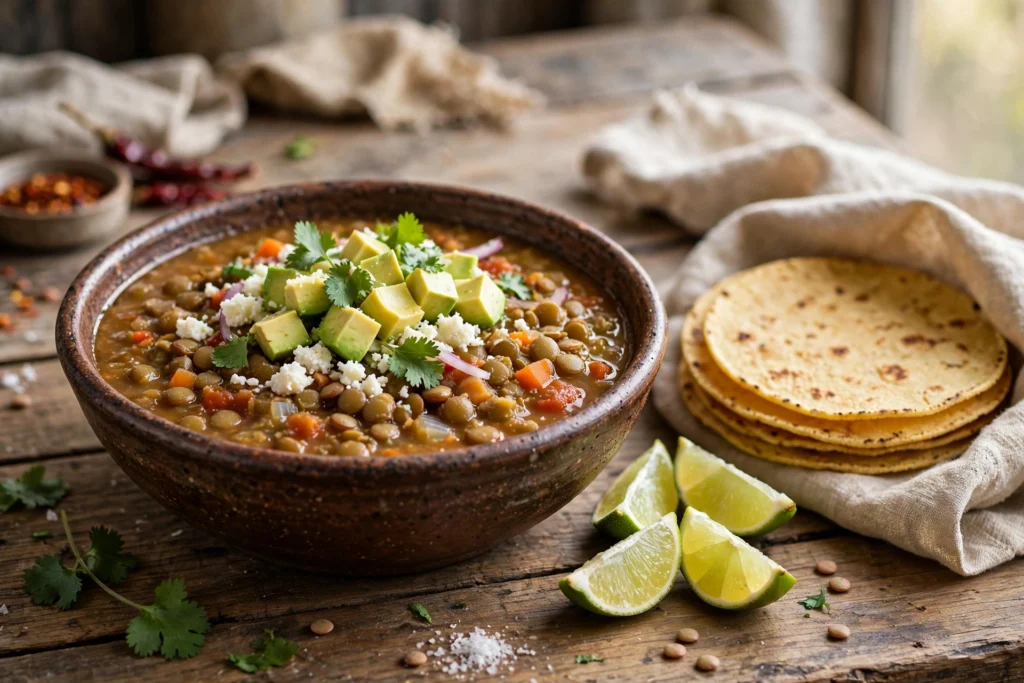
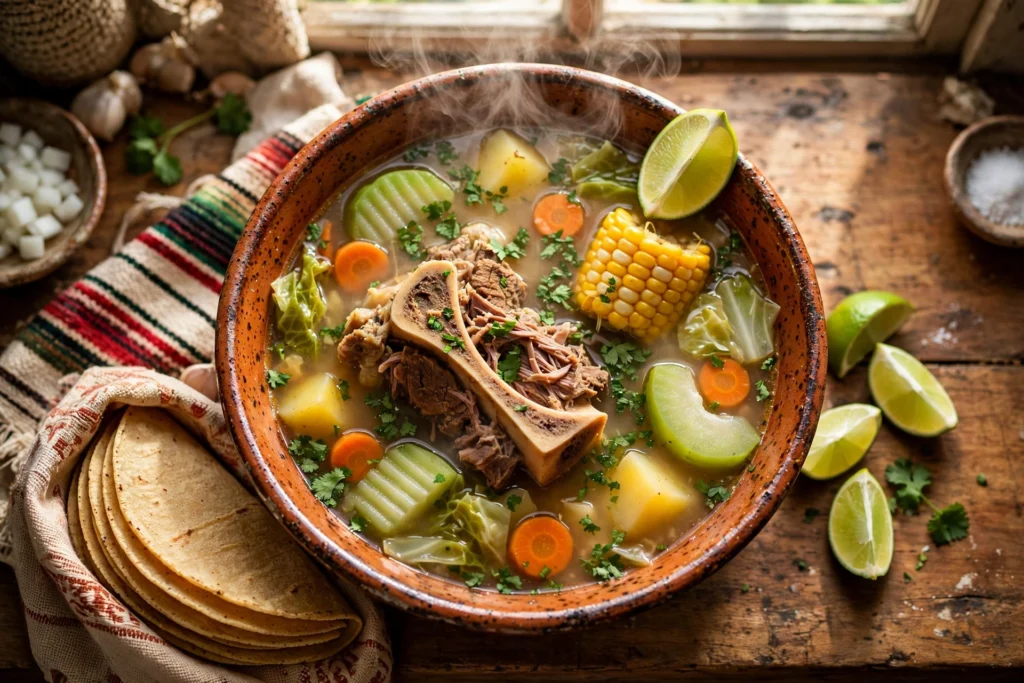
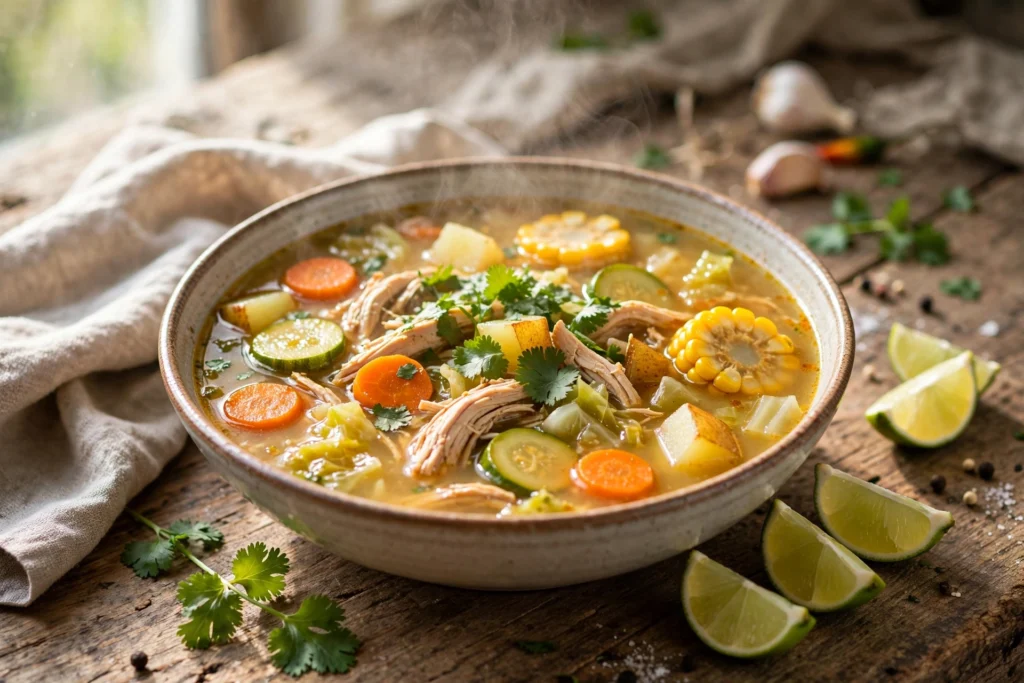
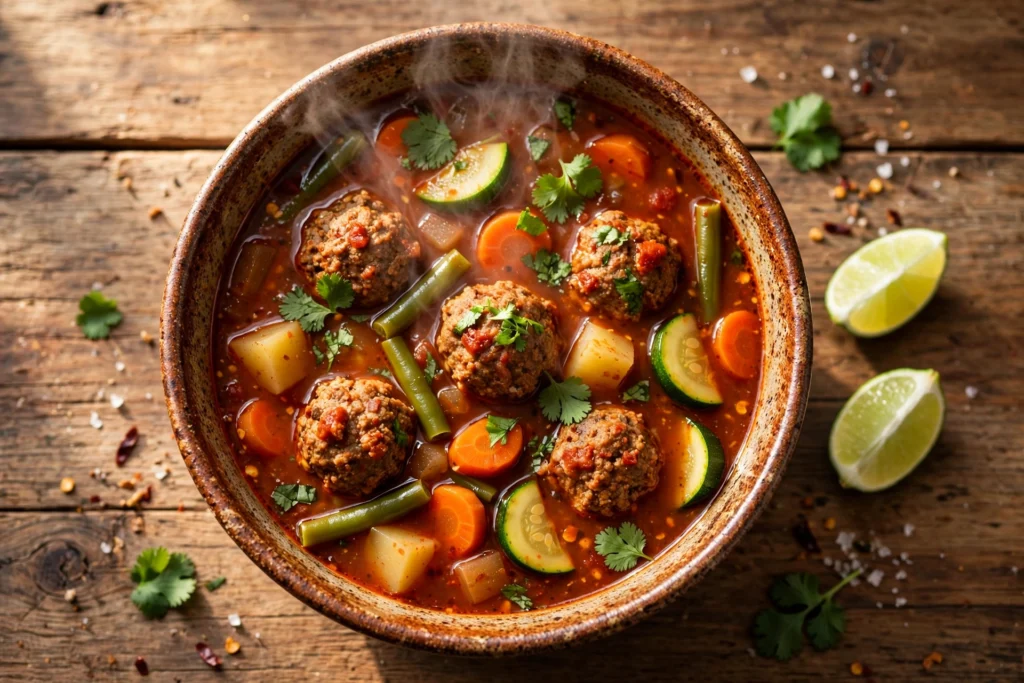
Stock is not served on its own — it is the ingredient that makes everything else better. Start with soups: stuffed pepper soup and caldo de res both taste noticeably richer with homemade stock underneath. Use it to cook rice, quinoa, or lentejas — the grains absorb the flavor as they cook. Braise slow cooker brisket in it, deglaze a pan with it for a quick sauce, or simmer frijoles charros in it instead of water.
Storage
In the Fridge
Cool the stock quickly — divide it into shallow containers so it drops below 40F within about 6 hours — then refrigerate. It keeps for up to 5 days. The fat layer that sets on top actually protects it, so you can leave it on until you are ready to use the stock, then lift it off.
In the Freezer
Stock freezes beautifully for up to 6 months, and freezing is how most cooks keep it. Portion it before freezing: 1-cup containers for sauces and rice, 2-cup containers for soups, and ice-cube trays for the small amounts you need to deglaze a pan. Leave 1 inch of headspace in jars — liquid expands as it freezes and can crack a full jar. Label everything with the date.
Thawing and Reheating
Thaw overnight in the fridge, or gently in a saucepan over low heat straight from frozen. Never thaw stock on the counter. Once thawed, use it within 2 days and do not refreeze it. If your thawed stock smells off or sour, throw it out.
The Fat
Do not throw the skimmed fat away. That golden layer is chicken schmaltz, and it is delicious: use it to roast potatoes, fry eggs, or saute vegetables. It keeps for 2 weeks in the fridge or 3 months in the freezer.
Frequently Asked Questions
How do you make soup stock from scratch?
Put 4 pounds of chicken bones in a large pot, cover with 12 cups of cold water, and bring slowly to a bare simmer. Skim the foam in the first 30 minutes, add an onion, 2 carrots, 2 celery ribs, garlic, bay leaves, peppercorns and herbs, then simmer gently for 4 hours without stirring. Strain through a fine-mesh sieve without pressing the solids, cool, and store.
What is the difference between stock and broth?
Stock is made mostly from bones, simmered 3-4 hours, unsalted, and rich in gelatin — it sets like jelly when chilled. Broth is made mostly from meat, simmered 1-2 hours, usually salted, and lighter. Stock is the cook’s ingredient for recipes; broth is the lighter soup base you can sip on its own.
Why is my chicken stock cloudy?
Cloudy stock almost always comes from one of three causes: the pot boiled too hard, the stock was stirred during the simmer, or the solids were pressed while straining. Next time, keep a bare simmer, do not stir, and strain gently. To rescue a cloudy batch, chill it, lift off the fat, and strain again through cheesecloth.
Why didn’t my stock gel?
Stock gels when it has enough collagen and enough time. If yours stayed liquid, you probably used too few collagen-rich bones, too much water, or too short a simmer. Next time, add wings or feet, use less water, and simmer the full 4 hours. The stock is still fine to use — it just has less body.
How long does homemade chicken stock last?
Homemade stock keeps up to 5 days in the fridge and up to 6 months in the freezer. Freeze it in 1-cup and 2-cup portions so you can thaw exactly what you need. Once thawed, use it within 2 days and do not refreeze it.
Can I use a rotisserie chicken carcass for stock?
Yes — it is one of the best starting points. A rotisserie carcass plus a pound of wings gives you the bones and the collagen you need. Save the carcass in a freezer bag until you have enough bones, then follow the recipe exactly. The roasted bones give a slightly deeper, browner stock.
Try These Next
- Stuffed Pepper Soup — a hearty soup that tastes even better on homemade stock.
- Caldo de Res — a rich Mexican beef soup, built the same slow way.
- Frijoles Charros — cowboy beans simmered in flavor — try cooking them in stock instead of water.
- Lentejas — lentils that soak up every bit of flavor from the pot.
- Slow Cooker Brisket — a low-and-slow braise that starts with a good stock.
- ground chicken meatballs — tender, herby meatballs in a rich marinara.
- canned black beans — a quick, protein-packed side for any meal.
Homemade Chicken Stock

Ingredients
- 4 pounds chicken bones backs, wings, necks, carcass
- 12 cups cold water
- 2 carrots roughly chopped
- 2 celery ribs roughly chopped
- 1 yellow onion halved
- 4 garlic cloves smashed
- 2 bay leaves
- 1 teaspoon black peppercorns
- 1 tablespoon apple cider vinegar
- 1/4 cup parsley stems
- 4 thyme sprigs
Instructions
- Put the chicken bones in a large stockpot (at least 8 quarts) and add the vinegar. Cover with cold water, about 2 inches above the bones.
- Set over medium heat and bring slowly to a bare simmer, 30 to 45 minutes. Skim the grey foam off the surface with a ladle and discard it, repeating for the first 20 to 30 minutes until the surface stays mostly clear.
- Add the carrots, celery, onion, garlic, bay leaves, peppercorns, parsley stems, and thyme. Reduce the heat to low and simmer gently, uncovered or partly covered, for 4 hours. Do not stir. Add a little hot water if the level drops below the bones.
- Lift out the large bones with tongs, then pour the stock through a fine-mesh sieve into a large bowl or pot. Do not press on the solids. For extra-clear stock, strain a second time through cheesecloth.
- Cool to room temperature, then pour into jars or containers in 1-cup and 2-cup portions. Chill in the fridge. Once cold, lift off the fat layer if you like. Use within 5 days, or freeze up to 6 months.
Notes
- Always start with cold water — hot water sets proteins in place and clouds the stock.
- Keep a bare simmer, never a rolling boil, and do not stir the pot while it simmers.
- Skim the foam in the first 30 minutes; that is when most of it appears.
- Do not press the solids when straining — pressing pushes cloudiness back into the stock.
- Good stock sets like jelly when chilled; that wobble is the gelatin and means you did it right.
- Leave the stock unsalted and season the final dish instead.
- Freeze in 1-cup and 2-cup portions with 1 inch of headspace; keeps up to 6 months.