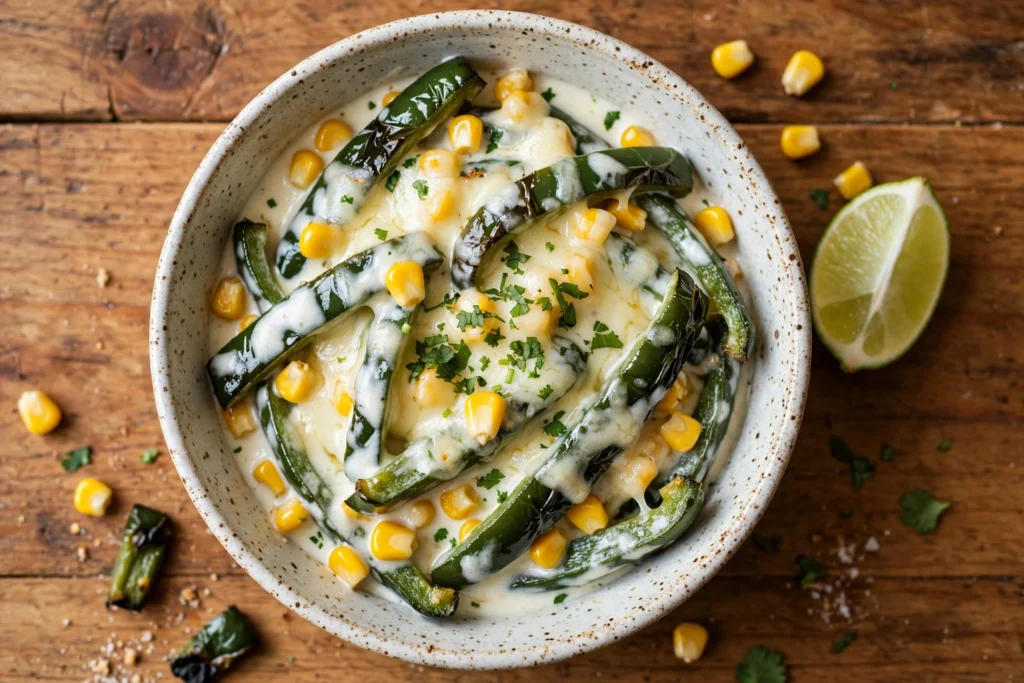
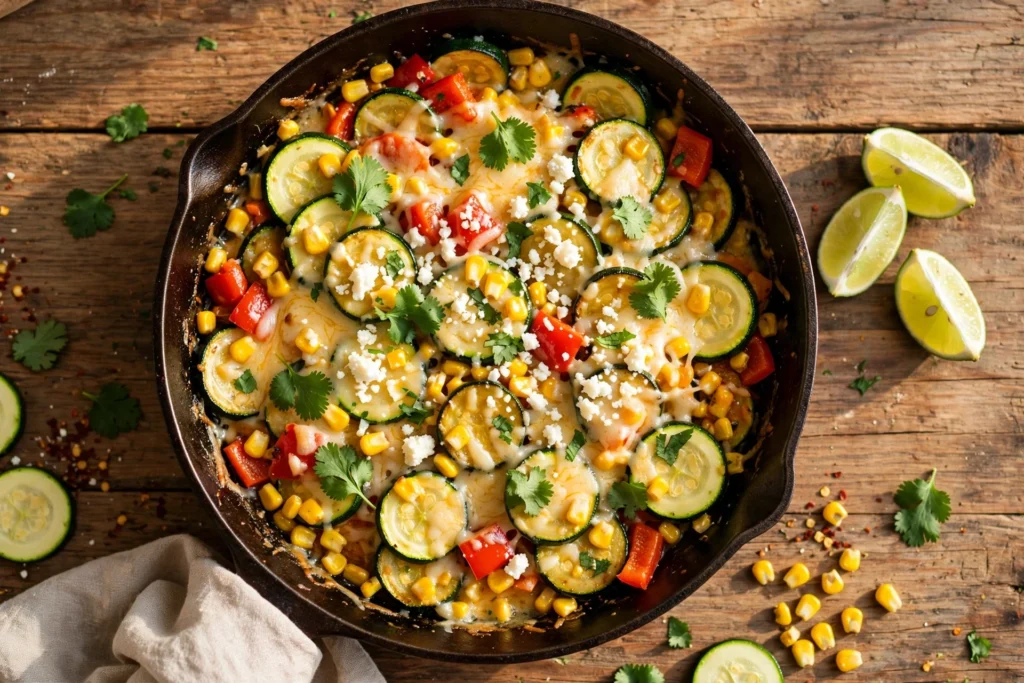
Calabacitas means “little squashes” in Spanish, and it is one of the best things Mexican home cooking does with summer vegetables. Zucchini and yellow squash, sweet corn, peppers, onion, and tomato, all sauteed together in one skillet and finished with melted cheese. It takes 25 minutes, it uses up the squash that is taking over your garden, and it goes with absolutely everything.
The trick is restraint. Squash turns to mush fast, so you cut it thick, cook it just until tender, and take it off the heat the moment the cheese melts. As a result, you get a bright, colorful side dish with real texture. Overcook it, and you get soup.

Why You’ll Love It
- Ready in 25 minutes. Ten minutes of prep, fifteen in the skillet.
- One skillet. Everything cooks together, and there is almost nothing to wash.
- Uses up summer squash. The perfect answer to a garden full of zucchini.
- Naturally vegetarian. Hearty enough to stand alone, light enough to pair with anything.
- Colorful and bright. Green, yellow, red, and gold — it looks as good as it tastes.
- The cheese finish. Melty Monterey Jack with salty Cotija on top.
- Endlessly flexible. Swap the peppers, change the cheese, add a chile for heat.
Ingredients
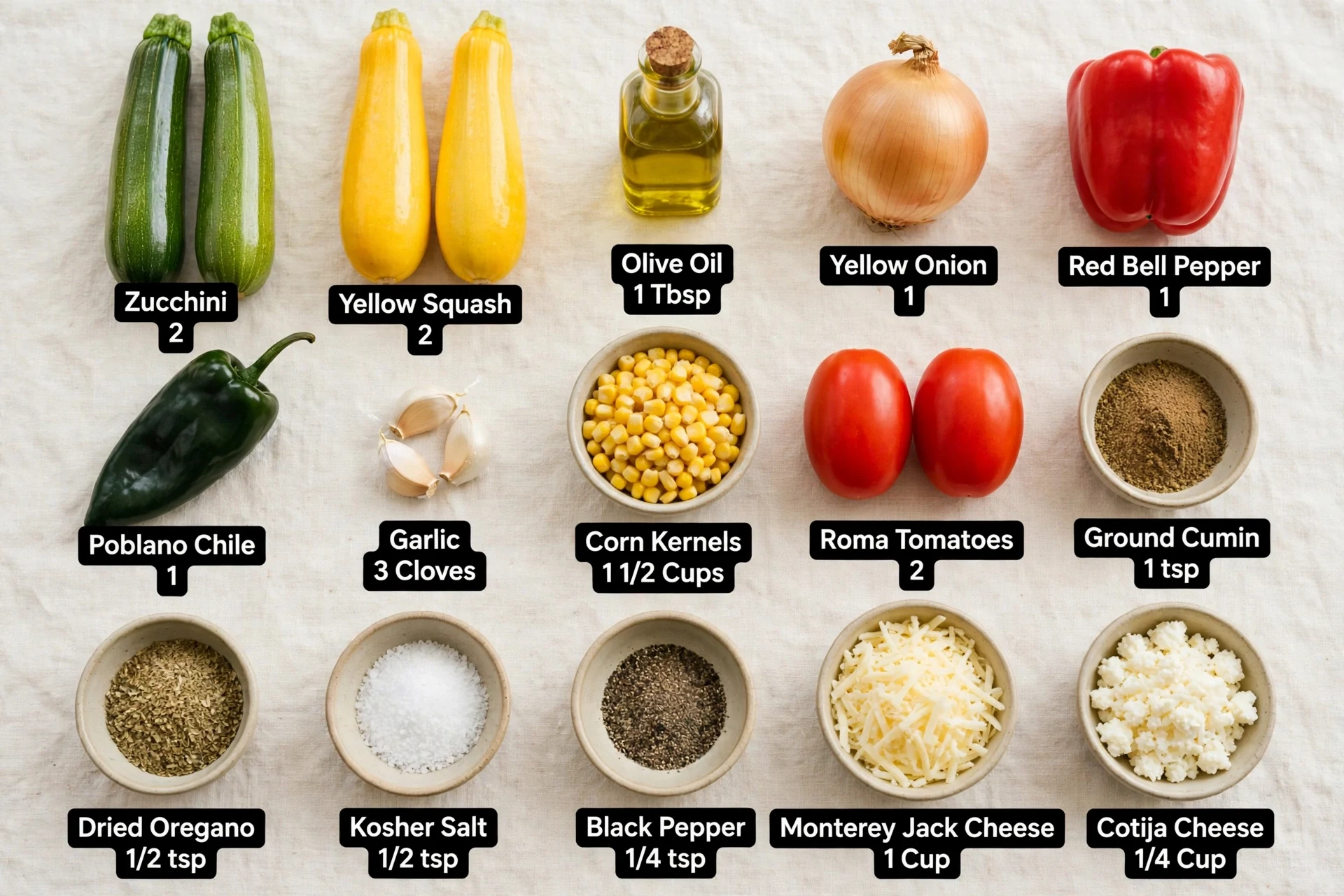
- 2 medium zucchini — The star. Pick small to medium zucchini, about 8 ounces each — big ones are watery and full of seeds. Cut them into 1/2-inch half-moons so they hold their shape. Substitution: 2 medium Mexican grey squash (calabacita).
- 2 medium yellow squash — The second squash. Yellow squash is slightly sweeter than zucchini and adds color. Same size, same cut. Substitution: 2 more zucchini, or 1 small pattypan squash, cut into wedges.
- 1 tablespoon olive oil — For sauteing. Just enough to coat the pan — too much oil makes the squash greasy. Substitution: 1 tablespoon vegetable oil or butter.
- 1 medium yellow onion, diced — Sweet, savory backbone. Dice it small so it softens quickly and melts into the dish. Substitution: 1 medium white onion, diced.
- 1 red bell pepper, diced — Sweetness and color. Red is the sweetest bell pepper; it balances the squash beautifully. Substitution: 1 yellow or orange bell pepper, diced.
- 1 poblano chile, seeded and diced — The quiet depth. Poblano is mild, earthy, and smoky — it gives the dish a real Mexican backbone without heat. Wear gloves if your skin is sensitive. Substitution: 1 green bell pepper, diced, or 1 diced jalapeño for heat.
- 3 garlic cloves, minced — Warmth in the background. Add it after the onion so it does not burn. Substitution: 1 teaspoon garlic powder.
- 1 1/2 cups corn kernels, fresh or frozen — Sweetness and pop. Fresh corn cut from 2 ears is best in summer; frozen works perfectly the rest of the year — no need to thaw it first. Substitution: 1 can (15 ounces) corn, drained.
- 2 Roma tomatoes, diced — A little acidity and juice that ties everything together. Roma tomatoes are meaty and less watery than other tomatoes. Substitution: 1 cup canned diced tomatoes, drained.
Seasonings and Cheese
- 1 teaspoon ground cumin — The Mexican backbone. Warm, earthy, and essential — this is what makes it taste like calabacitas and not just sauteed squash. Substitution: 1 teaspoon chili powder.
- 1/2 teaspoon dried oregano — Mexican oregano if you can find it — it is earthier and more citrusy than Mediterranean oregano. Rub it between your palms as you add it to wake up the oils. Substitution: 1/2 teaspoon dried Mediterranean oregano.
- 1/2 teaspoon kosher salt — Season in layers: a pinch with the onions, then adjust at the end. The cheese adds salt too. Substitution: 1/4 teaspoon fine sea salt.
- 1/4 teaspoon black pepper — A little warmth. Freshly ground is best. Substitution: 1/4 teaspoon white pepper.
- 1 cup shredded Monterey Jack cheese — The melter. Monterey Jack melts smooth and creamy and does not overpower the vegetables. Shred it yourself if you can — pre-shredded cheese has anti-caking powder that melts less smoothly. Substitution: 1 cup shredded Oaxaca cheese or mild Cheddar.
- 1/4 cup crumbled Cotija cheese — The finisher. Salty, crumbly, and slightly tangy, sprinkled on top after the Jack melts. Substitution: 1/4 cup crumbled feta or queso fresco.
How to Make Calabacitas
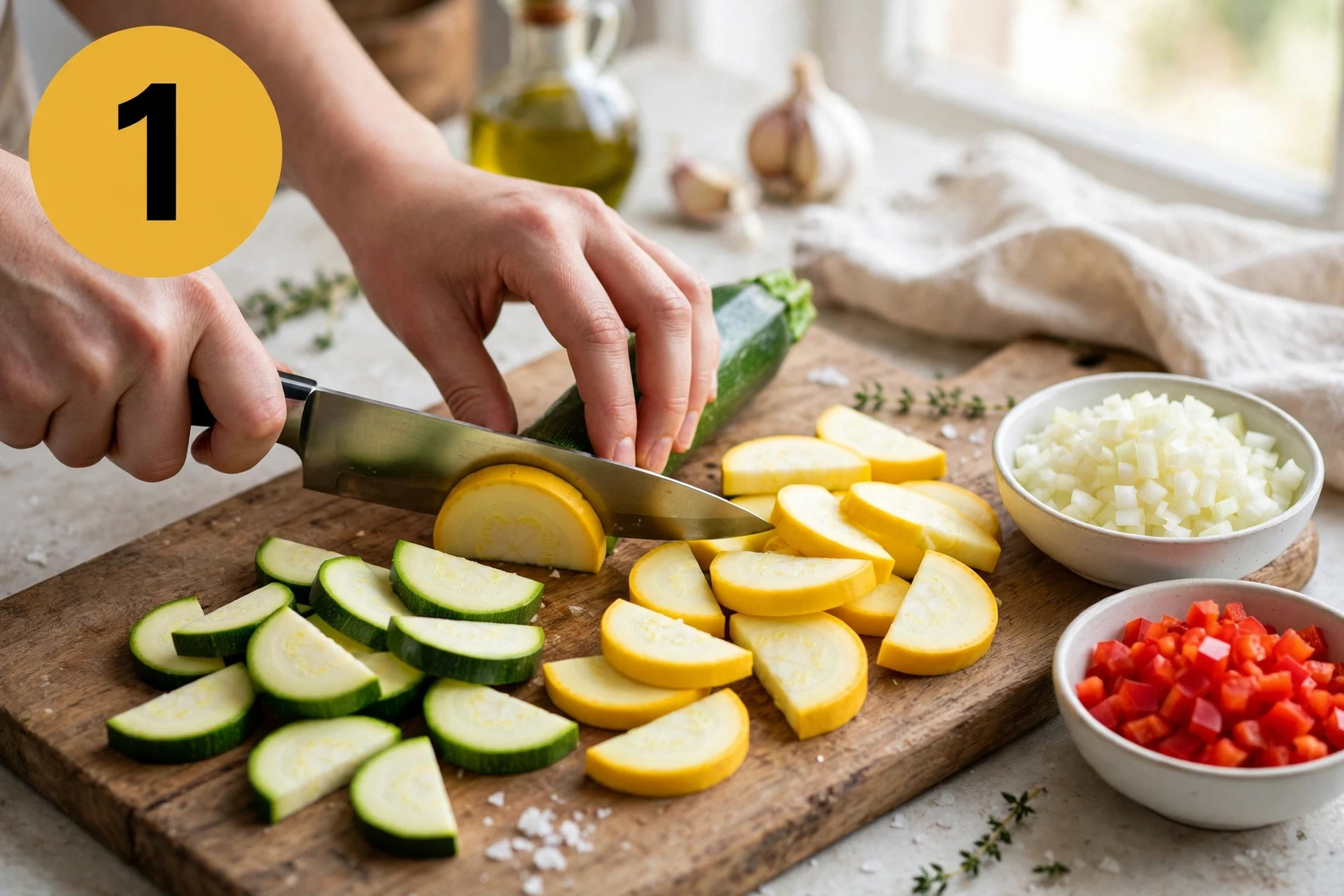
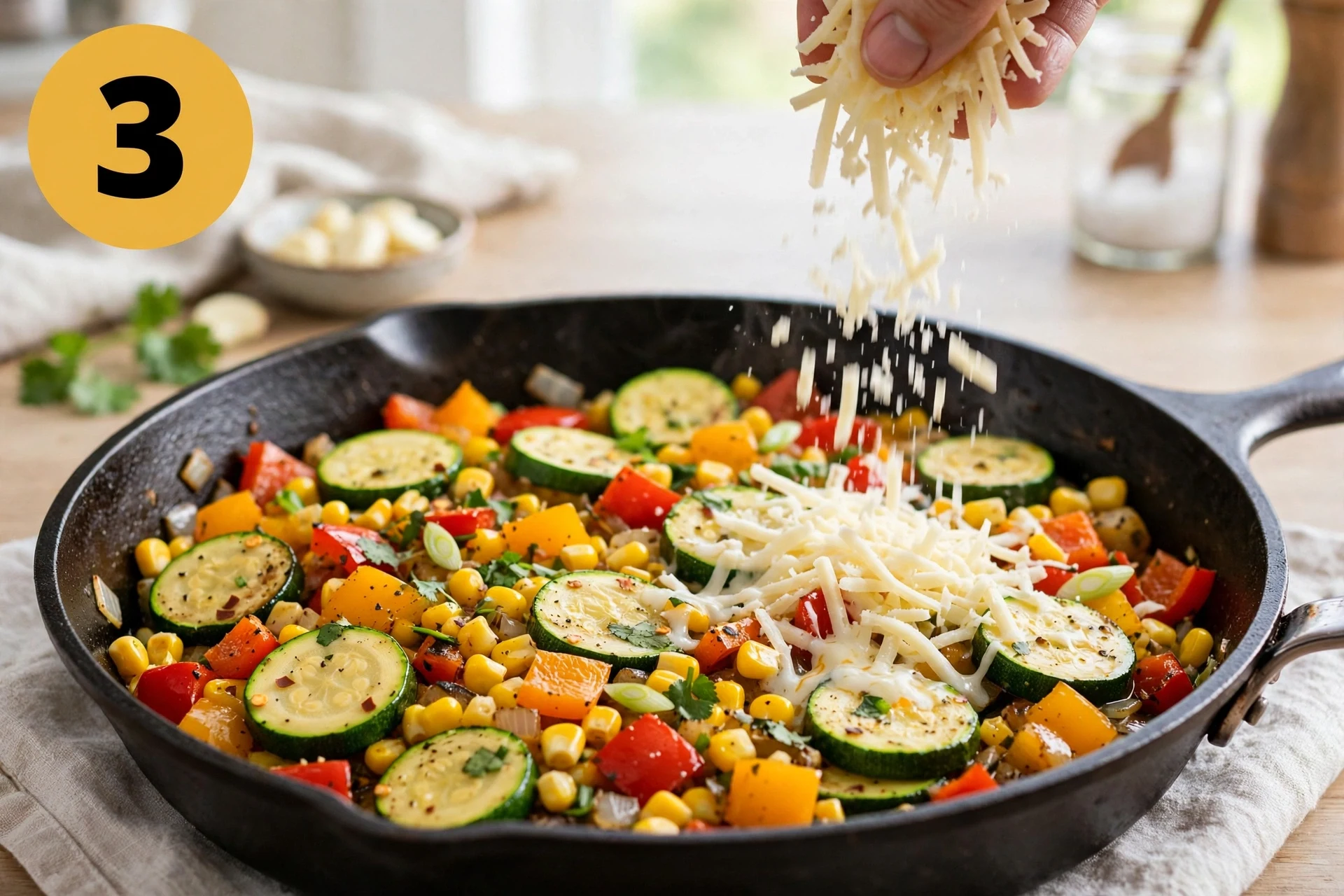
1 Step 1: Cut the SquashCut the squash. First, trim the ends off the zucchini and yellow squash, halve each one lengthwise, and cut crosswise into 1/2-inch-thick half-moons. Half-moons are the right cut: thick enough to stay tender-firm, thin enough to cook in minutes, and big enough to pick up with a fork. Next, dice the onion, red bell pepper, and poblano, and mince the garlic. Keep the garlic separate — it goes in last so it does not burn.
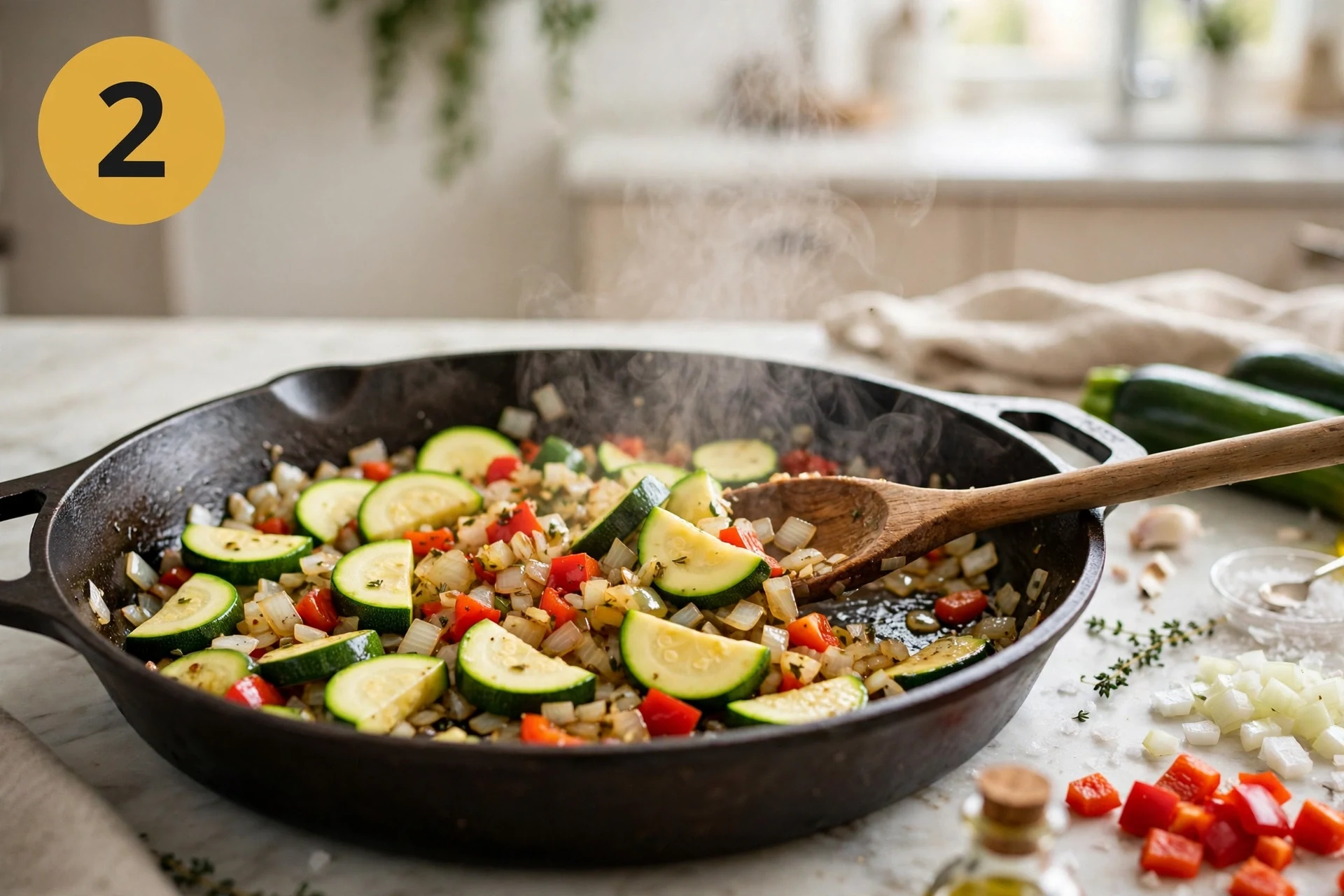
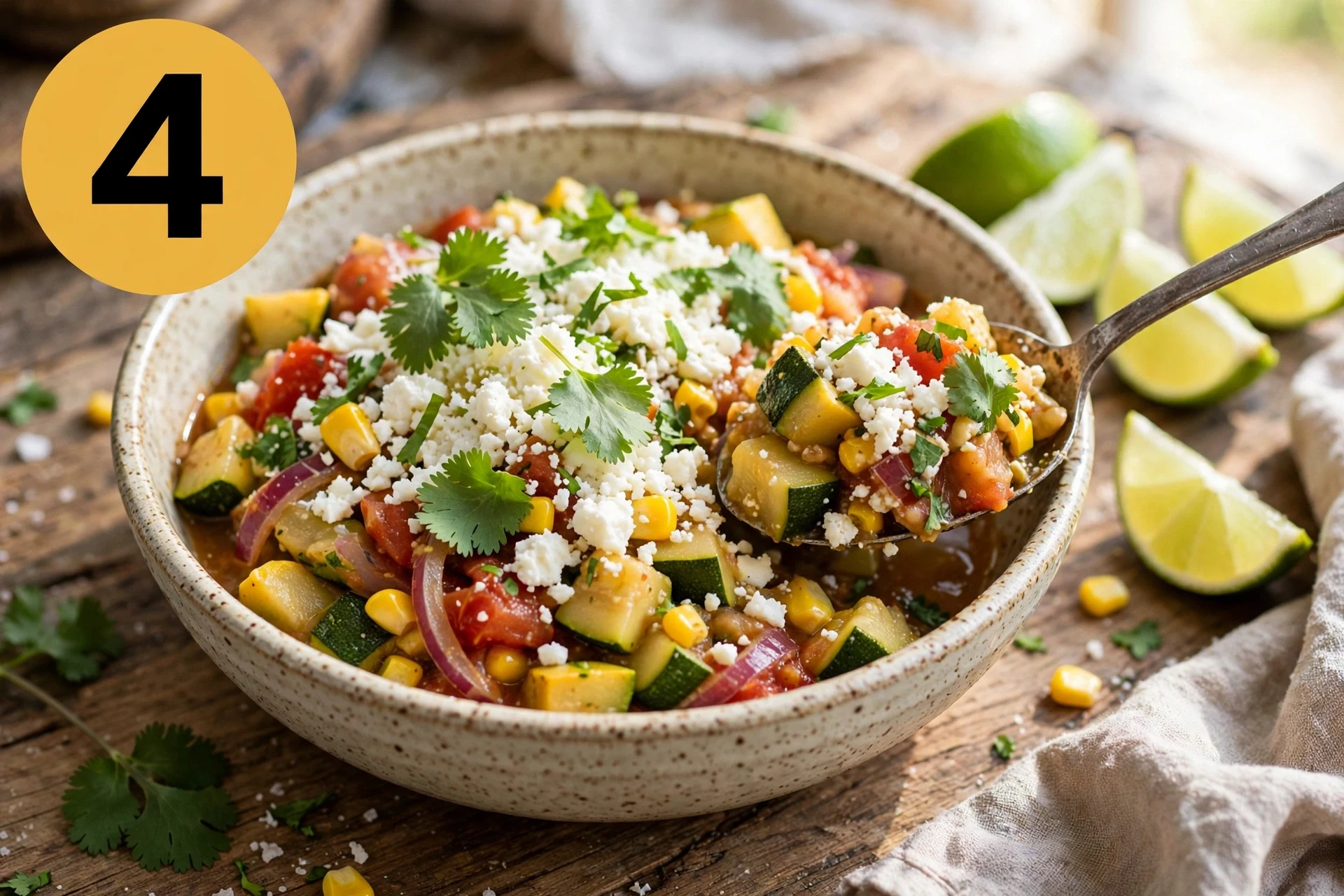
2 Step 2: Saute the VegetablesSaute the vegetables. First, heat the olive oil in a large skillet over medium-high heat. Next, add the onion, red bell pepper, and poblano with a pinch of salt and cook, stirring occasionally, until softened, about 4 minutes. Then add the garlic, cumin, and oregano and cook for 30 seconds, until fragrant. Finally, add the zucchini and yellow squash, season with the remaining salt and pepper, and cook, stirring occasionally, until the squash is just tender, about 5 to 6 minutes. Do not cover the pan — trapped steam turns squash to mush.
Finishing the Dish
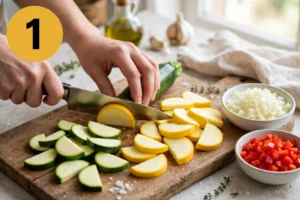
4 Step 4: Add the CheeseAdd the cheese. First, reduce the heat to low and sprinkle the shredded Monterey Jack evenly over the vegetables. Then cover the skillet and cook for 1 to 2 minutes, just until the cheese melts into gooey ribbons. Do not stir it in yet — let it melt on top first, then give the pan one gentle fold so the cheese coats the vegetables without turning the whole dish into a cheesy mass.
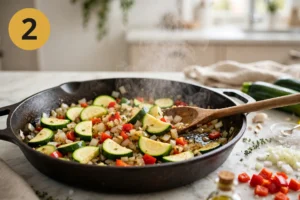
5 Step 5: ServeServe. Finally, transfer the calabacitas to a serving bowl and sprinkle with the crumbled Cotija. Then taste and adjust the salt. Serve warm, with lime wedges on the side if you like — a squeeze of lime at the table brightens everything. This is a side dish, so serve it straight from the bowl next to the main course.
Technique: The Cut, the Don’t-Overcook Rule, and the Cheese
Calabacitas is a 25-minute dish, but three decisions decide whether it is bright and tender or soft and watery: the cut, the cooking time, and the cheese.
The Squash-Cut Guide
The cut controls the texture. Half-moons, 1/2 inch thick, are the best all-round cut: they cook in 5 to 6 minutes, hold their shape, and are easy to eat. Thin rounds cook faster but go soft and fold over; a fine dice cooks in 3 minutes and turns to mush if you look away; big chunks stay crunchy in the middle while the outside overcooks. Also, cut the zucchini and the yellow squash the same size so they finish at the same time. Finally, keep the pieces even — one thin slice in a pan of thick ones will be mush before the rest are done.
The Don’t-Overcook Rule
Squash is mostly water, and it gives that water up as it cooks. The rule is simple: cook until just tender, then stop. For example, the cue is the fork test — a piece should bend slightly when pressed but still hold its shape, with a little bite in the center. That takes about 5 to 6 minutes over medium-high heat. Three things cause mushy calabacitas: covering the pan, which traps steam; cooking on low heat, which stews the squash in its own liquid; and walking away. Finally, stay at the stove, stir occasionally, and pull the pan off the heat the moment the squash passes the fork test — it keeps cooking from residual heat.
The Cheese Guide
Two cheeses do two jobs. Monterey Jack is the melter: smooth, mild, and creamy, it coats the vegetables in gooey ribbons. Similarly, Oaxaca melts the same way and is the more traditional choice. Cheddar works but is sharper and can overpower the squash. Cotija is the finisher: salty, crumbly, and never fully melted, sprinkled on top for a salty pop in every bite. Also, queso fresco and feta play the same role as Cotija. The rule: melt the soft cheese in the pan, sprinkle the crumbly cheese on top at the table. Never use pre-shredded cheese if you can avoid it — the anti-caking coating keeps it from melting smoothly.
Tips for the Best Calabacitas
- ✓ Pick small squash. Eight-ounce zucchini are firm and sweet; big ones are watery and seedy.
- ✓ Cut half-moons, 1/2 inch thick. The cut that holds its shape and cooks evenly.
- ✓ Do not cover the pan. Trapped steam turns squash to mush.
- ✓ Cook on medium-high, not low. High heat browns the edges; low heat stews the squash.
- ✓ Add garlic last. It burns in 30 seconds if it goes in first.
- ✓ Cook off the liquid before the cheese. Watery pan plus cheese equals soup.
- ✓ Melt the Jack, sprinkle the Cotija. Two cheeses, two jobs.
- ✓ Serve it right away. Calabacitas is best hot from the pan — it softens as it sits.
Variations
Calabacitas con Crema
Stir 1/4 cup of Mexican crema or sour cream into the vegetables just before adding the cheese. As a result, it makes a richer, creamier dish — the version most often served in restaurants.
Spicy Calabacitas
Add 1 diced jalapeño with the peppers, and 1/4 teaspoon of cayenne with the cumin. Serve with hot sauce on the side. The heat wakes up the sweet corn beautifully.
Calabacitas with Green Chile
Swap the poblano for 1/2 cup of roasted, chopped New Mexican green chile, stirred in with the corn. This is the New Mexico version — smoky, earthy, and gently hot.
Calabacitas with Black Beans
Stir in 1 can (15 ounces) of black beans, drained and rinsed, with the corn. It turns the side dish into a hearty vegetarian main — serve it over rice or in warm tortillas.
Dairy-Free Calabacitas
Skip both cheeses and finish with a squeeze of lime and a handful of chopped cilantro. The vegetables carry the dish on their own, and it is naturally vegan.
What to Serve With Calabacitas
Calabacitas belongs next to grilled meat: carne asada is the classic pairing, and grilled pollo asado is just as good. It is also the perfect taco-night side — set it out with esquites and Mexican street corn for a full Mexican vegetable spread, or next to rajas con crema for a creamy-and-fresh pairing. Finally, spoon it over rice and beans and it becomes a light vegetarian dinner on its own.
Storage
In the Fridge
Cool the calabacitas quickly and store in an airtight container for up to 3 days. The squash will soften as it sits — that is normal for a cooked squash dish, and it still tastes great.
In the Freezer
Do not freeze calabacitas. Cooked zucchini turns watery and mushy when thawed. Instead, make only what you will eat in 3 days — it comes together in 25 minutes, so a fresh batch is always easy.
Reheating
Reheat gently in a skillet over medium heat for 3 to 4 minutes, stirring occasionally. Add a fresh sprinkle of Cotija after reheating — the cheese from the first serving will have melted into the vegetables. Avoid the microwave if you can; it steams the squash soft.
Leftovers
For example, leftover calabacitas makes great taco filling, a quesadilla filling with extra cheese, or a topping for baked potatoes. Also, stir it into scrambled eggs for a fast breakfast.
Frequently Asked Questions
What is calabacitas?
Calabacitas is a Mexican side dish of sauteed zucchini and yellow squash with corn, peppers, onion, and tomato, finished with melted cheese. The name means “little squashes” in Spanish. It is a home-style dish, common in New Mexico and across Mexico, and it is usually served as a side with grilled meat or tacos.
How do you cut squash for calabacitas?
Cut the zucchini and yellow squash into 1/2-inch-thick half-moons: halve each squash lengthwise, then slice crosswise. Half-moons hold their shape, cook in 5 to 6 minutes, and are easy to eat. However, thin rounds go soft too fast, and a fine dice turns to mush.
What cheese is best for calabacitas?
Monterey Jack is the best melting cheese — smooth and mild. Similarly, Oaxaca is the traditional choice and melts the same way. For the finish, crumbled Cotija adds a salty pop; queso fresco or feta work the same way. Melt the soft cheese in the pan, sprinkle the crumbly cheese on top.
Why is my calabacitas mushy?
Mushy calabacitas comes from overcooking, covering the pan, or cooking on low heat. Squash is mostly water — cook it uncovered over medium-high heat for 5 to 6 minutes, until just tender, and take it off the heat the moment it passes the fork test. It keeps cooking from residual heat.
What do you serve with calabacitas?
Calabacitas goes with grilled meat like carne asada or pollo asado, with tacos, and with rice and beans. It also pairs with other Mexican sides like esquites, Mexican street corn, and rajas con crema. Spooned over rice and beans, it works as a light vegetarian main.
Can I make calabacitas ahead of time?
Calabacitas is best served fresh from the pan — it softens as it sits. However, you can prep all the vegetables ahead and store them in the fridge, then cook the dish in 15 minutes when you are ready to eat. Leftovers keep 3 days in the fridge but do not freeze well.
Try These Next
- Esquites — Mexican street corn in a cup, the other great corn side dish.
- Rajas con Crema — creamy roasted poblano strips, the perfect partner on the plate.
- Mexican Street Corn — elote on the cob with crema, Cotija, and lime.
- Carne Asada — grilled marinated steak, the classic main next to calabacitas.
- Grilled Pollo Asado — citrus-marinated grilled chicken for taco night.
Calabacitas
Ingredients
- 2 medium zucchini
- 2 medium yellow squash
- 1 tablespoon olive oil
- 1 medium yellow onion diced
- 1 red bell pepper diced
- 1 poblano chile seeded and diced
- 3 garlic cloves minced
- 1 1/2 cups corn kernels fresh or frozen
- 2 Roma tomatoes diced
- 1 teaspoon ground cumin
- 1/2 teaspoon dried oregano
- 1/2 teaspoon kosher salt
- 1/4 teaspoon black pepper
- 1 cup shredded Monterey Jack cheese
- 1/4 cup crumbled Cotija cheese
Instructions
- Trim the ends off the zucchini and yellow squash, halve each one lengthwise, and cut crosswise into 1/2-inch-thick half-moons. Dice the onion, red bell pepper, and poblano, and mince the garlic. Keep the garlic separate.
- Heat the olive oil in a large skillet over medium-high heat. Add the onion, red bell pepper, and poblano with a pinch of salt and cook, stirring occasionally, until softened, about 4 minutes. Add the garlic, cumin, and oregano and cook 30 seconds, until fragrant. Add the zucchini and yellow squash, season with the remaining salt and pepper, and cook, stirring occasionally, until just tender, about 5 to 6 minutes. Do not cover the pan.
- Stir in the corn kernels and diced tomatoes and cook 3 to 4 minutes more, until the corn is heated through and the tomatoes have just started to soften. If the pan looks watery, turn the heat up for a minute and let the liquid cook off.
- Reduce the heat to low and sprinkle the shredded Monterey Jack evenly over the vegetables. Cover the skillet and cook 1 to 2 minutes, just until the cheese melts. Give the pan one gentle fold so the cheese coats the vegetables.

- Transfer to a serving bowl and sprinkle with the crumbled Cotija. Taste and adjust the salt. Serve warm, with lime wedges on the side if you like.
Notes
- Pick small squash, about 8 ounces each — big ones are watery and full of seeds.
- Cut half-moons 1/2 inch thick so the squash holds its shape and cooks evenly.
- Do not cover the pan — trapped steam turns squash to mush.
- Cook on medium-high heat, not low — high heat browns the edges, low heat stews the squash.
- Add the garlic after the onion so it does not burn.
- Cook off any liquid in the pan before adding the cheese.
- Melt the Monterey Jack in the pan, then sprinkle the Cotija on top at the table.
- Serve right away — calabacitas is best hot from the pan.
- Leftovers keep 3 days in the fridge; do not freeze cooked zucchini.