
Some salsas are there to cool a taco down. This one is there to wake it up. Chile de arbol salsa is the fiery red Mexican salsa made from tiny dried chile de árbol peppers, charred tomatoes and tomatillos, garlic and lime. A spoonful that brings clean, bright heat and a smoky, nutty depth to anything it touches. It takes only 25 minutes from start to finish. Most of that time the skillet and the blender do the work.
The best part is how little it asks of you. A handful of dried chiles, a couple of tomatoes, a few tomatillos, and ten minutes of toasting and charring. Then everything goes into the blender and comes out a smooth, glowing red sauce that tastes like a Mexican taqueria. It is hot, yes, but it is not just hot: the charred tomatoes bring sweetness, the tomatillos bring a bright tang. The lime brings the whole thing into balance.
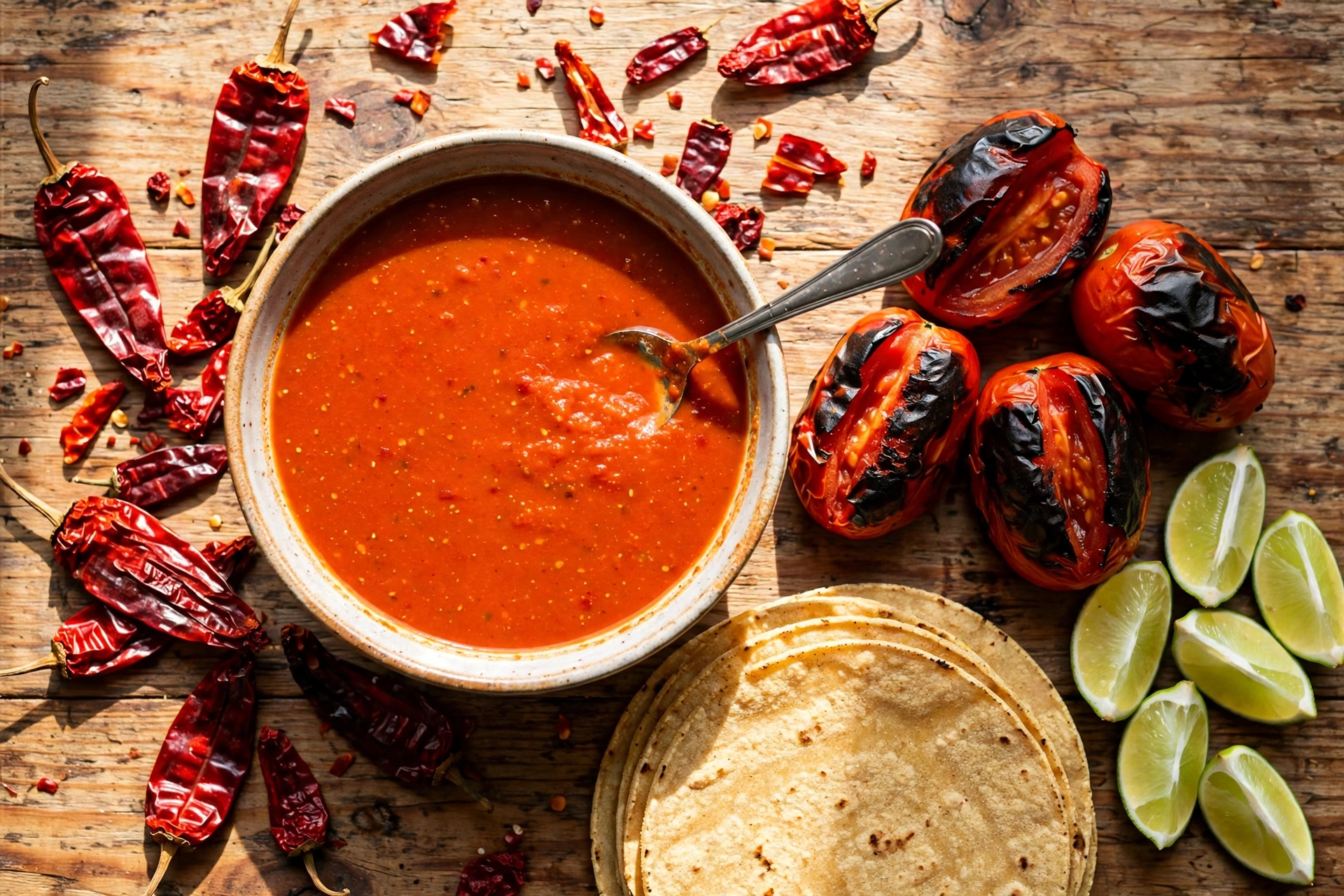
Keep a jar of this chile de arbol salsa in your fridge and every taco night gets better. If you love the spicy red salsas served in Mexican kitchens, this one will become the jar you reach for first.
Why You’ll Love It
- A Mexican taqueria classic. Chile de arbol salsa is the fiery red salsa on the table in Mexican taquerias all over Mexico. The one for tacos, eggs and grilled meat.
- Ready in 25 minutes. Ten minutes of toasting and charring, five minutes in the blender, and it is done.
- Big flavour from a few ingredients. Dried chiles, tomatoes, tomatillos, garlic, onion, cilantro and lime — nothing fancy, nothing hard to find.
- You control the heat. Use 8 chiles for a warm glow or 15 for a proper fire. Keep or remove the seeds to dial it up or down.
- It keeps for weeks. A jar in the fridge lasts up to 2 weeks, and it freezes beautifully for months.
- One batch, many meals. Spoon it over tacos, eggs, grilled chicken, beans and rice — a little goes a long way.
- Naturally vegan and gluten-free. No dairy, no flour, nothing to swap — it is plant-based exactly as it is.
What Is Chile de Arbol Salsa?
Chile de arbol salsa is a smooth, fiery red Mexican salsa made from dried chile de árbol peppers blended with tomatoes, tomatillos, garlic, onion, cilantro, lime and salt. The name tells you the star: chile de árbol means “tree pepper” in Spanish, a small, thin, bright-red dried chile, about two or three inches long, that grows on a woody, tree-like plant in Mexico. It is little, but it is mighty — and it is what gives this salsa its clean, sharp heat.
How spicy is chile de arbol salsa? On the Scoville scale, chile de árbol measures about 15,000 to 30,000 units. Roughly three to six times hotter than a jalapeño, which sits around 2,500 to 8,000, and far milder than a habanero, which climbs past 150,000. That puts this salsa firmly in the hot category, but not in the punishing one. The heat arrives fast and bright, then fades cleanly instead of lingering and burning — which is why Mexican cooks love it for tacos, where the salsa should wake the filling up, not drown it out.
The Toasted Version
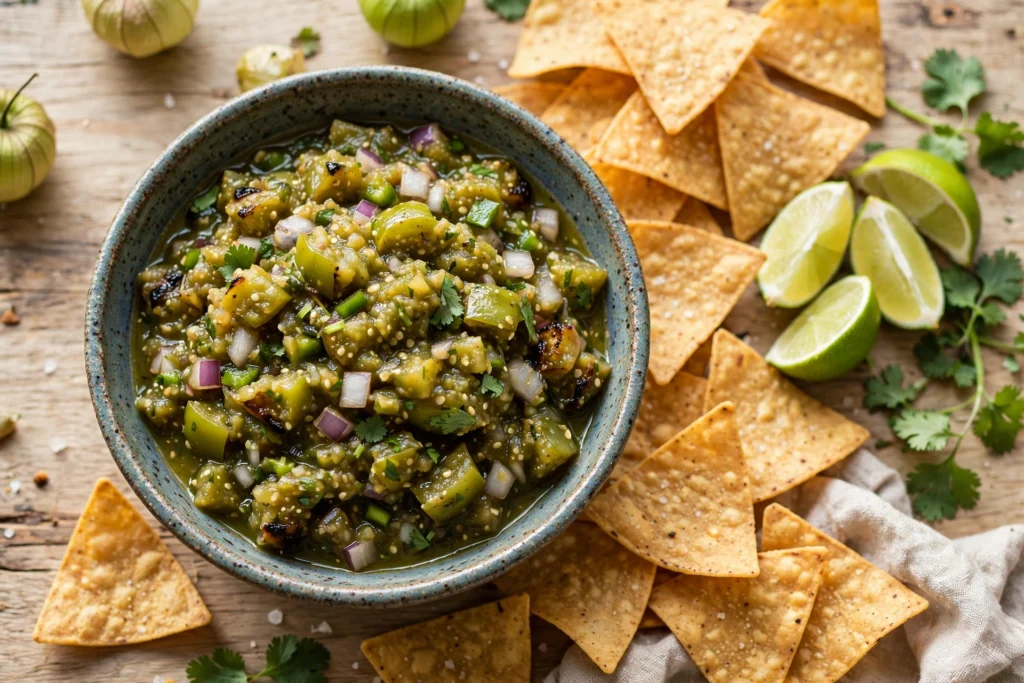
This version is a toasted chile de arbol salsa. Instead of boiling the chiles the way some recipes do, the dried chiles are toasted for a minute or two in a dry skillet until they turn fragrant and a shade darker, and the tomatoes and tomatillos are charred on the same skillet until their skins blister and blacken in spots. That toasting and charring is where the flavour lives: it gives the salsa a smoky, nutty depth that a boiled version never gets, and it takes the raw edge off the chiles so the heat tastes rounded instead of harsh. The tomatillos add a bright, tart note that balances the fire, the onion and garlic add savoury depth, and a squeeze of lime at the end lifts everything.
It is not a chunky pico de gallo, and it is not a mild tomato salsa. It is a smooth, pourable, glowing-red sauce — the kind you spoon over tacos in a thin line, or drizzle over eggs in the morning, or stir into beans and rice when the meal needs waking up. A little goes a long way, and a jar of it in the fridge makes every Mexican meal better.
Ingredients
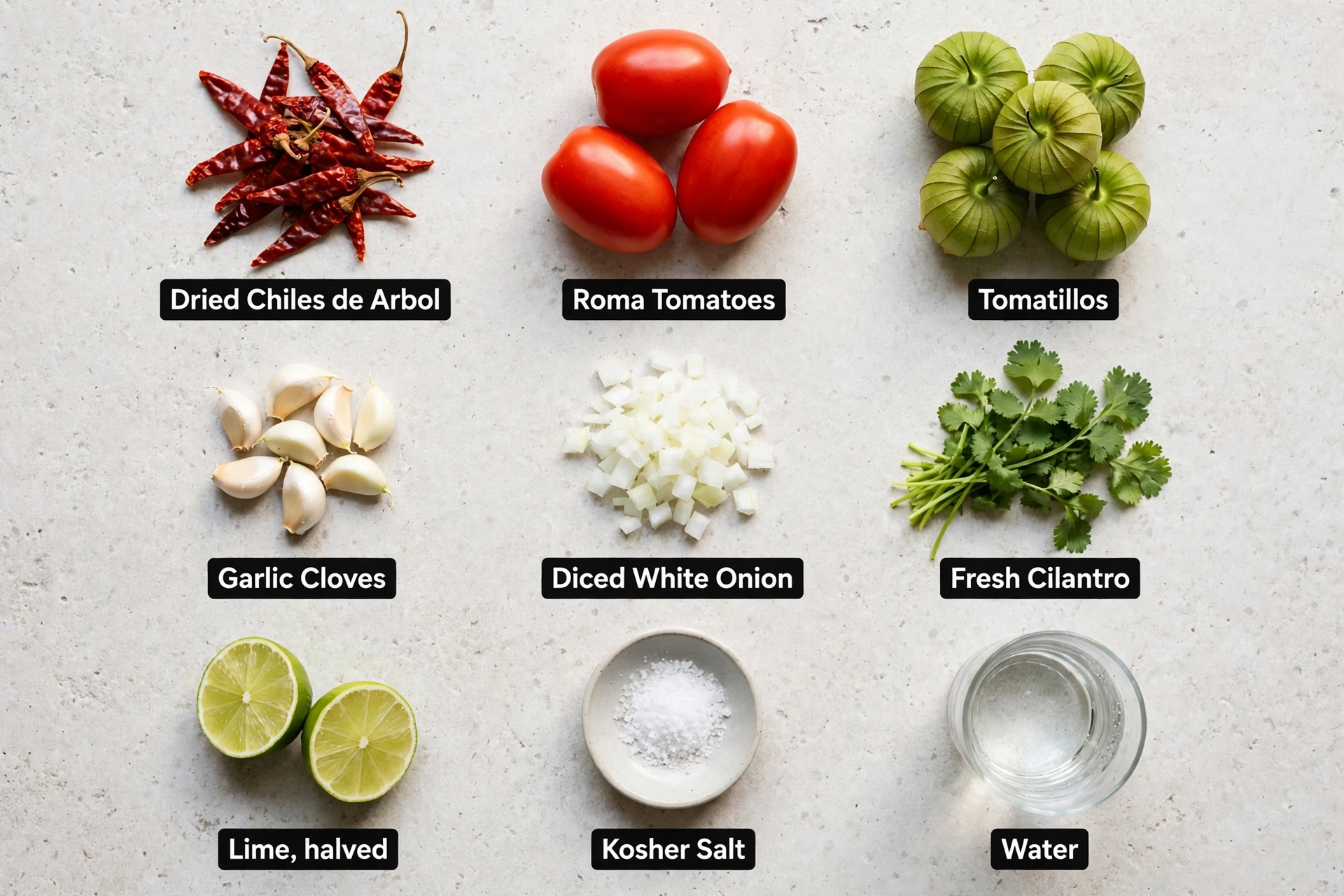
Dried chile de árbol — 12 peppers, stems removed. These little dried chiles are the whole point of the salsa. They bring the clean, bright heat and the nutty, earthy flavour that makes it taste Mexican. Twelve peppers makes a properly hot salsa; use 8 for a milder one or 15 for a fierier one (see the Technique section). Look for chiles that are deep red and still a little flexible — brittle, faded chiles are stale and taste dusty. Dried chile japonés is the closest substitute if you cannot find árbol; dried Thai red chiles work too, but use fewer, because they can be hotter and sharper.
Roma tomatoes — 2, halved. Roma tomatoes are the sweet, fleshy base that tames the chiles. Charring them on the skillet until their skins blister brings out their sweetness and adds a smoky note, and their juice gives the salsa its pourable body. Any ripe, firm tomato works, but Romas have the least water and the most flesh. The salsa stays thick instead of thin.
Tomatillos — 4 small, husks removed and rinsed. Tomatillos are the bright, tart heart of this salsa. Their citrusy tang is what keeps the heat from tasting one-note. Char them on the skillet beside the tomatoes until they soften and blacken in spots. In a pinch, use about 1 1/2 cups of drained canned tomatillos instead, but do not char them — just simmer them briefly before blending.
Aromatics and Herbs:
Garlic — 3 cloves, peeled. Garlic adds the savoury depth that rounds out the chiles. Three cloves gives a bold but not overpowering garlic note; use two if you like it milder, or four if you love garlic. Charring the cloves on the skillet beside the tomatoes mellows them, so they taste warm and sweet instead of sharp and raw.
White onion — 1/4 cup, diced, plus more for serving. White onion adds a fresh, sharp bite that lifts the salsa and keeps it from tasting heavy. A quarter cup blended in is enough — the onion is a supporting player here, not the star. Save a little extra diced onion for scattering over the finished salsa when you serve it.
Fresh cilantro — 1/3 cup, leaves and tender stems. Cilantro brings a fresh, green, citrusy note. That cools the heat just enough to let the other flavours through. Use the tender stems as well as the leaves — they carry plenty of flavour. If you are one of the people who tastes cilantro as soapy, leave it out; the salsa is still excellent without it.
Seasoning and Liquid:
Lime — 1, juiced. Lime juice is the bright finish that balances the heat and the char. It goes in after blending, so its fresh citrus flavour stays bright instead of cooking away. Bottled lime juice is a poor substitute here — a fresh lime is what makes the salsa taste alive.
Kosher salt — 1 teaspoon, plus more to taste. Salt is what makes the chiles and tomatoes taste like themselves. One teaspoon is the starting point — taste after blending and add more a pinch at a time until the flavours snap into focus. Fine sea salt works too; use a little less if your salt is fine-grained.
Water — 1/2 cup, plus more as needed. Water is what turns the blended chiles and vegetables into a pourable salsa. Start with half a cup and add more a splash at a time until the salsa flows off a spoon the way you like it — thick enough to cling to a taco, thin enough to drizzle.
How to Make It
● Step 1 — Toast the Chiles
Heat a dry skillet over medium heat. Add the stemmed chiles in a single layer and toast for 1 to 2 minutes, turning them with tongs, until they are fragrant and a shade darker. Do not walk away — they go from toasted to burnt in seconds.
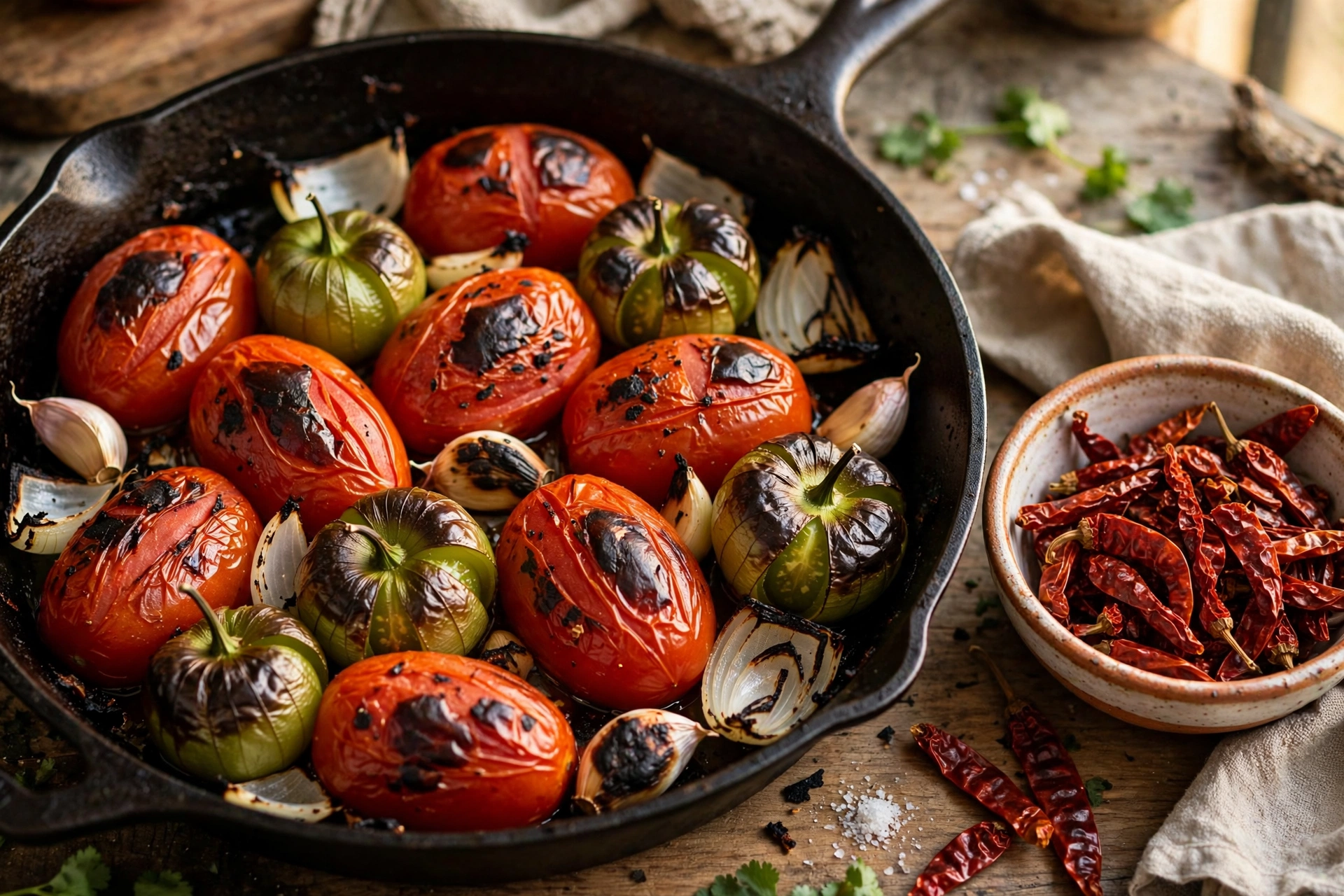
● Step 2 — Char the Tomatoes and Tomatillos
Add the halved tomatoes, cut-side down, the husked tomatillos, the garlic cloves and the diced onion to the same hot skillet. Cook for 8 to 10 minutes, turning once or twice, until the skins blister and blacken in spots and the tomatillos have softened.
● Step 3 — Soak the Chiles
Move the toasted chiles to a bowl and cover them with hot water. Let them soak for 10 minutes until they are soft and pliable, then drain them. This softens the chiles so they blend silky-smooth instead of grainy.
Blend and Finish:
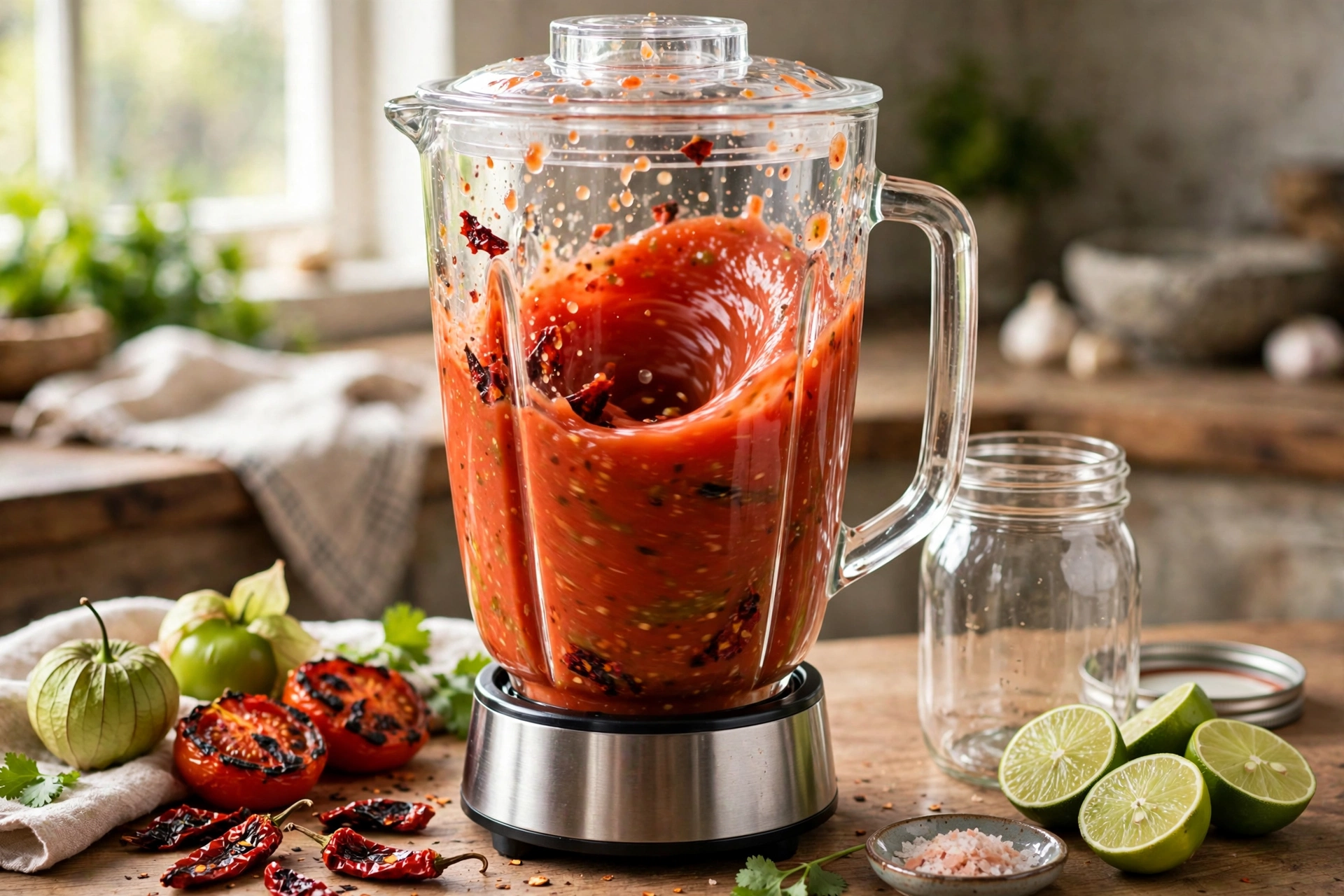
● Step 4 — Blend It Smooth
Add the drained chiles, the charred tomatoes, tomatillos, garlic and onion, the cilantro, salt and half a cup of water to a blender. Blend for 1 to 2 minutes until completely smooth, adding water a splash at a time until the salsa pours off a spoon. Stir in the lime juice and taste for salt.
● Step 5 — Rest and Serve
Pour the salsa into a jar or bowl and let it rest for at least 10 minutes. The flavours meld and the heat settles as it cools. Serve at room temperature or chilled, with a little extra diced onion and cilantro scattered on top.
Technique: Toasted Chile de Arbol Salsa Without Burning the Chiles
Three things decide whether a toasted chile de arbol salsa turns out smoky and rounded or bitter and harsh: how hot the skillet is, how long the chiles stay in it, and whether the seeds stay in.
First, the skillet. Use a dry skillet — no oil — over medium heat, never high. High heat is the number-one reason toasted chiles turn bitter: the thin skins scorch before the inside has had time to warm through, and a scorched chile tastes like ash no amount of tomato can fix. Medium heat gives you a window of about a minute or two, which is enough time to smell the change. The chiles are ready when they smell warm and nutty and turn a shade darker, and when the skins puff up slightly. That is the moment to take them out. If you see smoke, or if a chile turns black, it is burnt — throw that one away and start the batch again rather than blending it in, because one burnt chile can bitter the whole jar.
Second, keep them moving. Chiles are thin and light, so the side touching the skillet heats much faster than the side facing up. Turn them every 20 seconds or so with tongs, and keep them in a single layer — a pile of chiles steams instead of toasting, and the ones in the middle never get the heat. The whole job takes 60 to 90 seconds for most batches. Stand at the stove and watch them; this is not a step to walk away from.
Seeds and Soaking
Third, the seeds are your heat dial. The seeds and the pale veins inside the chiles carry most of the capsaicin, so leaving them in gives you the full fire and removing them cuts the heat by a good third while keeping the smoky flavour. For a milder salsa, shake the seeds out of the soaked chiles before blending, and use 8 chiles instead of 12. For a hotter one, keep the seeds in and go up to 15 chiles. And remember that the salsa tastes hotter when it is warm from the blender than it will after it rests — let it sit for ten minutes before you judge the heat. If it is still too hot after resting, blend in an extra charred tomato to dilute it; that is how to make chile de arbol salsa less spicy without losing the flavour.
One more thing matters: soak the toasted chiles before blending. Ten minutes in hot water softens the tough skins so the blender can turn them silky-smooth. Skip the soak and the salsa comes out grainy, with little flecks of skin that catch on the tongue. Drain the soaking water away — it carries the bitter notes — and blend with fresh water instead.
Tips
1. Toast on medium heat, never high. High heat scorches the thin chiles in seconds. Medium heat gives you time to smell when they are ready.
2. Do not walk away from the skillet. Toasted chiles go from fragrant to burnt in seconds. Stay at the stove and turn them every 20 seconds.
3. Throw away any burnt chile. One blackened chile can make the whole jar bitter. It is better to lose one chile than a whole batch.
4. Soak the chiles before blending. Ten minutes in hot water softens the skins so the salsa blends silky-smooth instead of grainy.
5. Add the lime juice after blending. Lime added before blending loses its brightness. Stirred in at the end, it keeps the salsa tasting fresh.
6. Let it rest before you judge it. The salsa tastes hotter straight from the blender. Ten minutes of resting lets the flavours meld and the heat settle.
Variations
This chile de arbol salsa is easy to shape around your table, and the base stays the same.
- Milder. Use 8 chiles instead of 12 and shake the seeds out after soaking. The salsa keeps its smoky flavour with about a third less heat — the version for guests who like flavour more than fire.
- Fierier. Use 15 chiles with the seeds left in, and add a pinch of cayenne if you want a real burn. This is the version for the hot-sauce lovers at the table.
- With tomatillos only. Leave the tomatoes out and use 8 small tomatillos instead for a greener, tangier salsa. With a brighter bite — lovely over eggs and grilled chicken.
- Smoky. Add 1 dried guajillo chile, stemmed and seeded, to the toasting step. It brings a sweet, smoky note that rounds out the sharp heat of the árbol chiles.
- Chunky. Blend for only 20 to 30 seconds instead of 2 minutes. The salsa stays thick and rustic with visible flecks of tomato and chile — the taqueria style for spooning over tacos.
- With a splash of vinegar. Stir in 1 tablespoon of white vinegar with the lime juice for a sharper, hot-sauce-style salsa. That keeps a little longer in the fridge.
What to Serve With
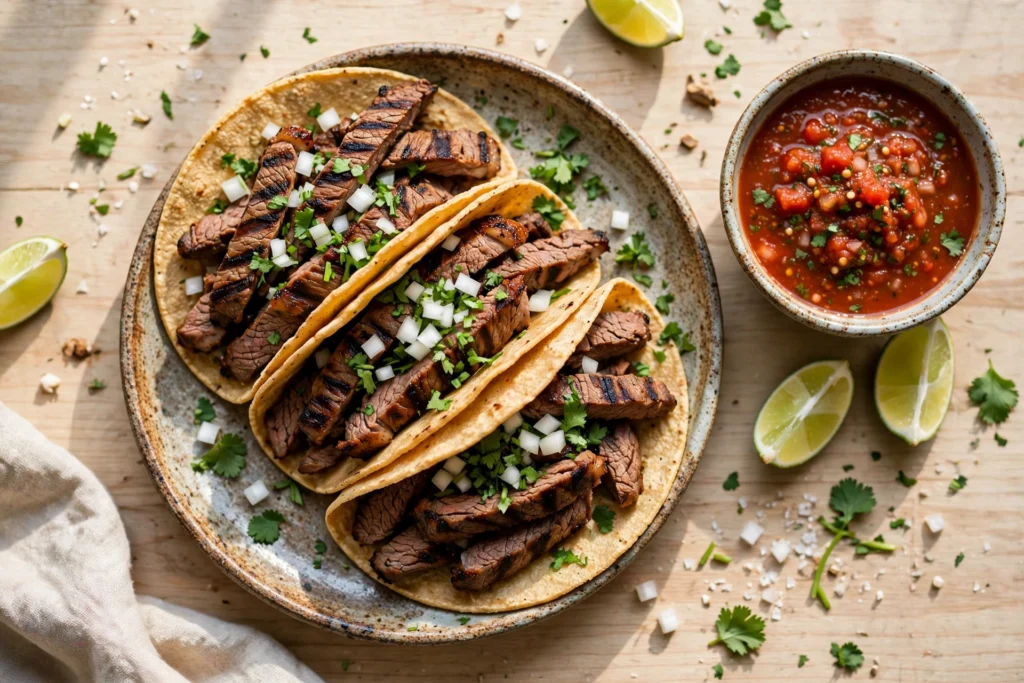
Chile de arbol salsa for tacos is where this salsa earns its keep. Spoon it in a thin line over Crispy Potato Tacos. The creamy potato filling against the bright fire is one of the best bites on the site. Or over Skirt Steak Tacos. The charred steak and the charred salsa taste like they were made for each other. It is just as good over Chicken Smash Tacos, drizzled over the crisp smashed chicken with a squeeze of lime.
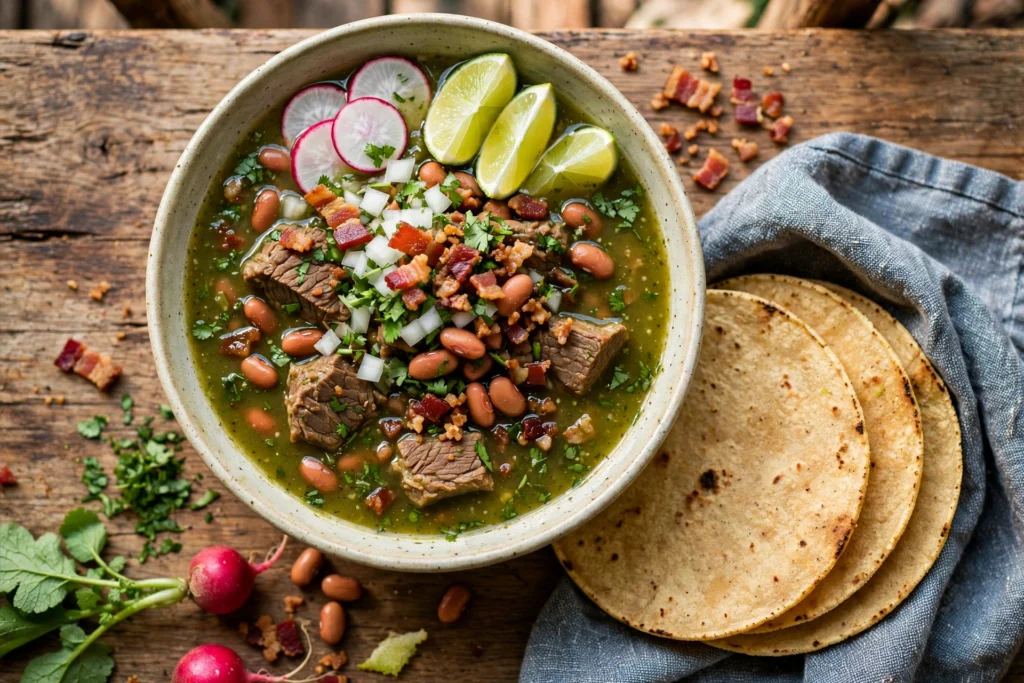
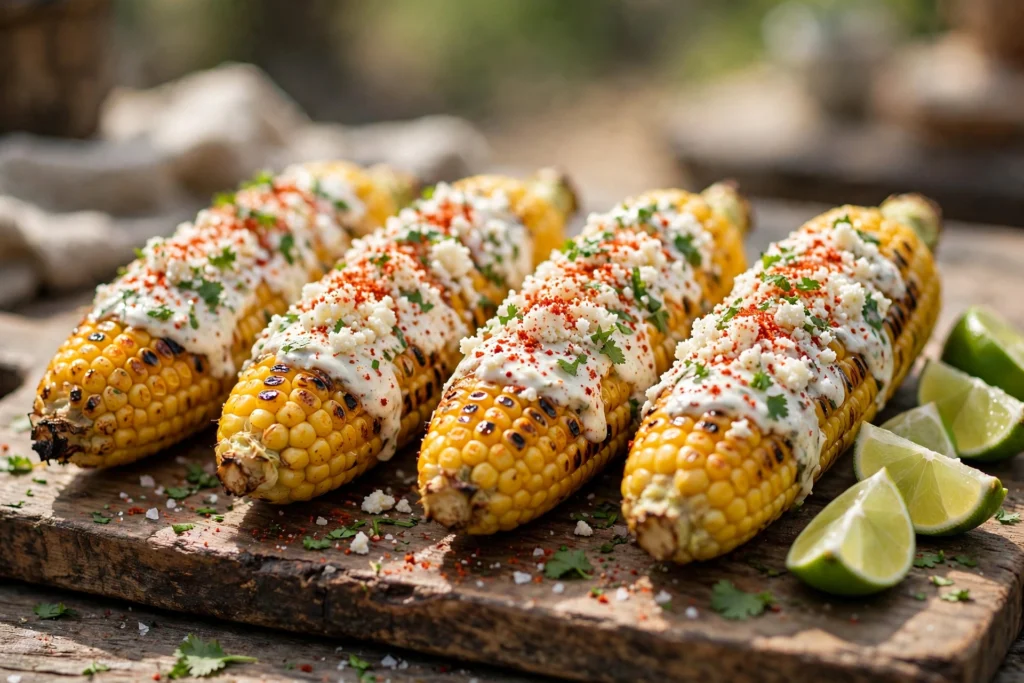
Beyond tacos, this is a breakfast salsa. Spoon it over fried or scrambled eggs, over chilaquiles, or over a plate of Frijoles Charros with warm tortillas. It wakes up grilled meat, roast chicken and beans. A spoonful stirred into Sopa de Fideo con Carne Molida turns a gentle soup into a bold one. And on a snack table, set the jar beside Mexican Street Corn and a bowl of guacamole. The creamy corn against the fiery salsa is the contrast that keeps everyone reaching back.
Serve it in a small bowl with a spoon, so everyone takes as much heat as they want. A little goes a long way, and the people who love it will always take a second spoonful.
Storage
Let the salsa cool to room temperature before moving it to a clean glass jar with a tight lid. It keeps in the refrigerator for up to 2 weeks — the flavours actually get better over the first day or two as the chiles, tomato and lime meld together, so making it a day ahead is a good idea.
How long does chile de arbol salsa last? In the fridge, up to 2 weeks in an airtight jar. If you see mould, or if it smells sour instead of bright and tangy, throw it away. For longer storage, freeze it for up to 6 months: pour it into ice-cube trays, freeze until solid, then move the cubes to a freezer bag. Thaw a cube or two at a time in the fridge — no heating needed — and the salsa is ready to spoon over tacos exactly as it was. Do not leave it sitting out on the table for hours; put the jar back in the fridge when the meal is over.
Frequently Asked Questions
How spicy is chile de arbol salsa?
Very spicy, but not punishing. Chile de árbol measures about 15,000 to 30,000 Scoville units. Roughly three to six times hotter than a jalapeño and far milder than a habanero. The heat arrives fast and bright, then fades cleanly. Twelve chiles with the seeds in makes a properly hot salsa; use 8 chiles and remove the seeds for a milder one.
How to make chile de arbol salsa less spicy?
Use fewer chiles — 8 instead of 12. And shake the seeds and pale veins out after soaking, which cuts the heat by about a third. Blending in an extra charred tomato also dilutes the fire without losing the flavour. And let the salsa rest for ten minutes before judging it: it tastes hotter straight from the blender than it does once it has settled.
What is chile de arbol salsa made of?
Dried chile de árbol peppers, Roma tomatoes, tomatillos, garlic, white onion, fresh cilantro, lime juice, salt and water. The chiles are toasted in a dry skillet, the tomatoes and tomatillos are charred on the same skillet, and everything is blended smooth with lime juice stirred in at the end.
More Questions About Chile de Arbol Salsa
How long does chile de arbol salsa last?
In the refrigerator, in a clean airtight jar, it lasts up to 2 weeks. And it tastes even better on the second day, once the flavours have melded. In the freezer it keeps for up to 6 months; freeze it in ice-cube trays and thaw a cube or two at a time. Throw it away if you see mould or if it smells sour.
Can you freeze chile de arbol salsa?
Yes — it freezes beautifully. Let it cool completely, pour it into ice-cube trays, freeze until solid, then move the cubes to a freezer bag for up to 6 months. Thaw the cubes in the fridge and use the salsa exactly as you would fresh; no heating is needed. This is the best way to keep a big batch, since a little salsa goes a long way.
What do you eat chile de arbol salsa with?
Tacos first of all — it is the classic taco salsa. Especially carne asada, potato and chicken tacos. It is also wonderful over fried or scrambled eggs, chilaquiles, grilled meat, beans and rice, and stirred into soups. Set it on the table in a small bowl with a spoon, so everyone takes as much heat as they like.
Try These Next
If you loved this fiery Mexican salsa, try these recipes next:
- Crispy Potato Tacos — golden corn tortillas filled with mashed potatoes and cheese, perfect with a spoonful of this salsa.
- Skirt Steak Tacos — smoky grilled steak tacos with lime and cilantro, made for a fiery salsa.
- Mexican Street Corn — creamy, tangy street corn that cools the heat of this salsa beautifully.
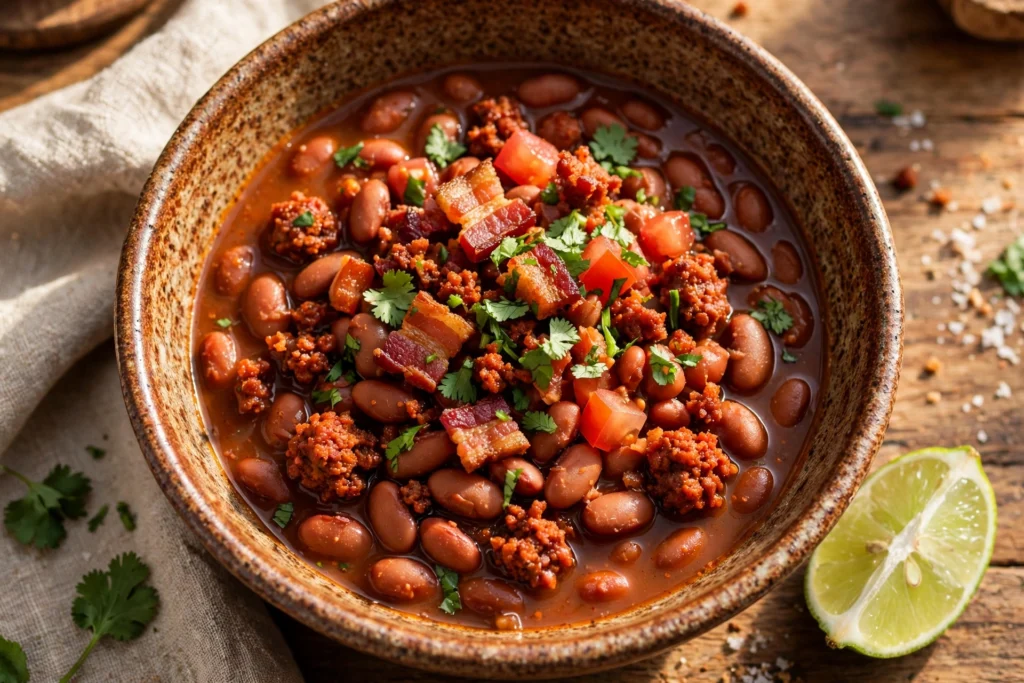
- Frijoles Charros — smoky Mexican cowboy beans, wonderful with a spoonful of chile de arbol salsa on top.
- Caldo de Pollo — golden Mexican chicken soup that takes a spoonful of this salsa very well.
- Salsa Macha Recipe — Smoky, nutty, garlicky and warm with heat, with a crunch you can hear.
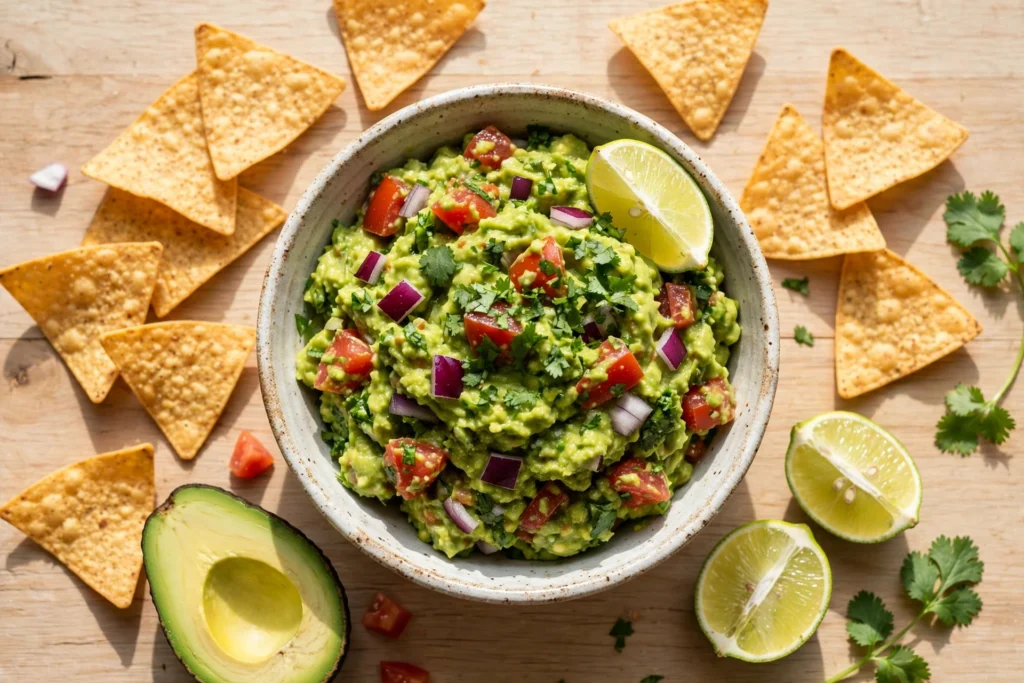
- Guacamole Recipe — Ripe Hass avocados mashed chunky with fresh lime, red onion, tomato, jalapeño and cilantro.
Chile de Arbol Salsa
Ingredients
Equipment
Method
- Heat a dry skillet over medium heat; add the stemmed chiles in a single layer and toast for 1 to 2 minutes, turning with tongs, until fragrant and a shade darker.
- Add the halved tomatoes cut-side down, the husked tomatillos, garlic cloves and diced onion to the same hot skillet; cook 8 to 10 minutes, turning once or twice, until the skins blister and blacken in spots and the tomatillos have softened.
- Move the toasted chiles to a bowl, cover with hot water and soak for 10 minutes until soft and pliable, then drain.
- Add the drained chiles, charred tomatoes, tomatillos, garlic and onion, cilantro, salt and 1/2 cup water to a blender; blend 1 to 2 minutes until completely smooth, adding water a splash at a time until pourable; stir in the lime juice and taste for salt.
- Pour into a jar or bowl, rest at least 10 minutes, and serve at room temperature or chilled, with extra diced onion and cilantro on top.
Notes
- Toast the chiles on medium heat, never high — high heat scorches them in seconds and makes the salsa bitter.
- Do not walk away from the skillet while toasting — turn the chiles every 20 seconds and take them out the moment they smell nutty.
- Throw away any burnt chile — one blackened chile can bitter the whole jar.
- Soak the toasted chiles for 10 minutes in hot water before blending, so the salsa turns silky-smooth instead of grainy.
- Add the lime juice after blending and let the salsa rest for 10 minutes — the flavours meld and the heat settles as it cools.