Nothing smells like Christmas in Mexico quite like a pot of ponche navideño simmering on the stove. Cinnamon, guava, orange and piloncillo drift through the house while the fruit turns soft and sweet in the spiced water. By the time you ladle it into mugs, the whole room feels like a posada. This Mexican Christmas punch takes about an hour and a half from start to finish, and most of that time the pot does the work on its own.
The best part is what lands in your mug. Ponche navideño is not a drink you strain and forget. Every cup comes with pieces of warm, soft fruit to eat with a spoon. There are tart tejocotes, sweet guava, tender apple and quince, and a stick of sugar cane to chew when you are done. It is a drink and a dessert in the same mug.
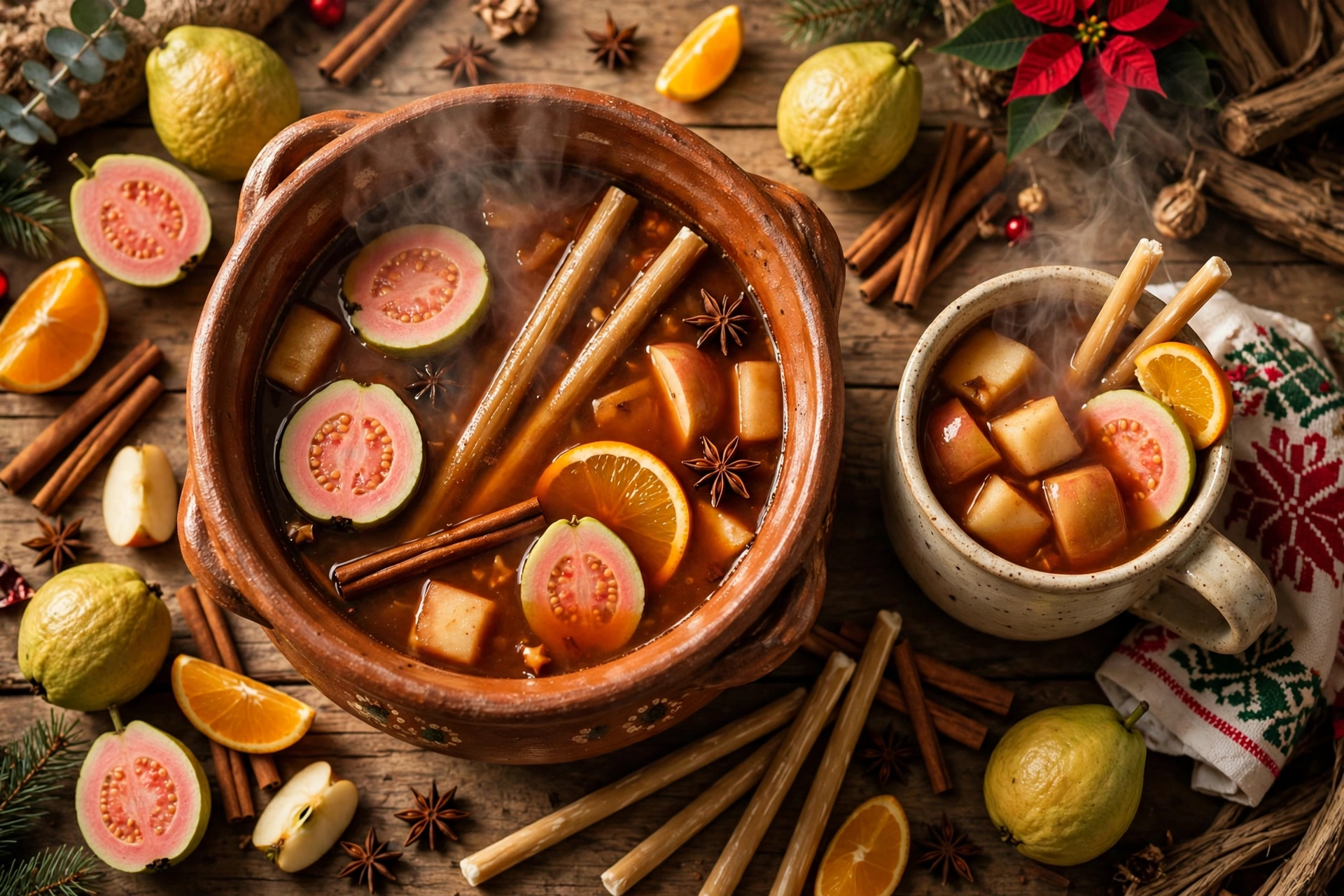
Make a pot for your family on Christmas Eve and watch it disappear. If you love the warm, spiced drinks served in Mexican homes during Las Posadas, this ponche navideño will become a new holiday tradition at your table.
Why You’ll Love It
- The drink of Las Posadas. Ponche navideño is the warm fruit punch Mexico serves for the nine nights of Las Posadas and on Nochebuena — the taste of a Mexican Christmas in a mug.
- A drink and a dessert in one. Every cup comes with soft, sweet cooked fruit to eat with a spoon, and a sugar cane stick to chew at the end.
- Mostly hands-off. Twenty minutes of chopping fruit, then the pot simmers on its own for over an hour while your house fills with the smell of cinnamon and guava.
- Made for a crowd. One pot makes 12 mugs, and the recipe doubles easily for a big posada or a Christmas party.
- Naturally festive. The deep red colour comes from hibiscus flowers, not food colouring, and the sweetness comes from piloncillo, not white sugar.
- Easy to shape around your family. Make it alcohol-free for the kids, spike it with rum or tequila for the grown-ups, or cook it in the slow cooker while you get on with the rest of Christmas dinner.
What Is Ponche Navideño?
Ponche navideño is Mexico’s traditional Christmas punch — a warm, spiced fruit drink that has been ladled out of big clay pots at Las Posadas, the nine-day celebration leading up to Christmas, for generations. It starts as a pot of water scented with cinnamon and hibiscus and sweetened with piloncillo. Then it is filled with the fruits of the Mexican winter. There are tejocotes, guavas, apples, quince, oranges and sugar cane, with prunes and raisins for depth.
The defining fruit is the tejocote, a small, golden Mexican hawthorn fruit with a tart flavour and a hint of apricot. It is the one ingredient that appears in virtually every traditional ponche recipe, and it is what makes ponche taste like ponche instead of ordinary spiced cider. If you cannot find tejocotes, a firm pear is the closest substitute, but the real thing is worth the trip to a Mexican grocery store in December.
Ponche is always served hot, and it is never strained. The cooked fruit is the best part — you ladle it into the mug with the liquid and eat it with a spoon, and the sugar cane stick that goes in each cup is there to suck on after you finish drinking. Some families add a splash of rum, brandy or tequila to the grown-ups’ mugs. That is called ponche con piquete. The punch itself is alcohol-free, so the whole family drinks the same pot.
This version is the full traditional ponche navideño with tejocotes. It keeps the sugar cane, the quince and the dried fruit that simpler versions leave out. It simmers for a full hour. The fruit goes properly soft and the spices have time to steep into the liquid. The result is a deep red, sweet-tart punch that tastes like Christmas in Mexico.
Ingredients
For the Spiced Base
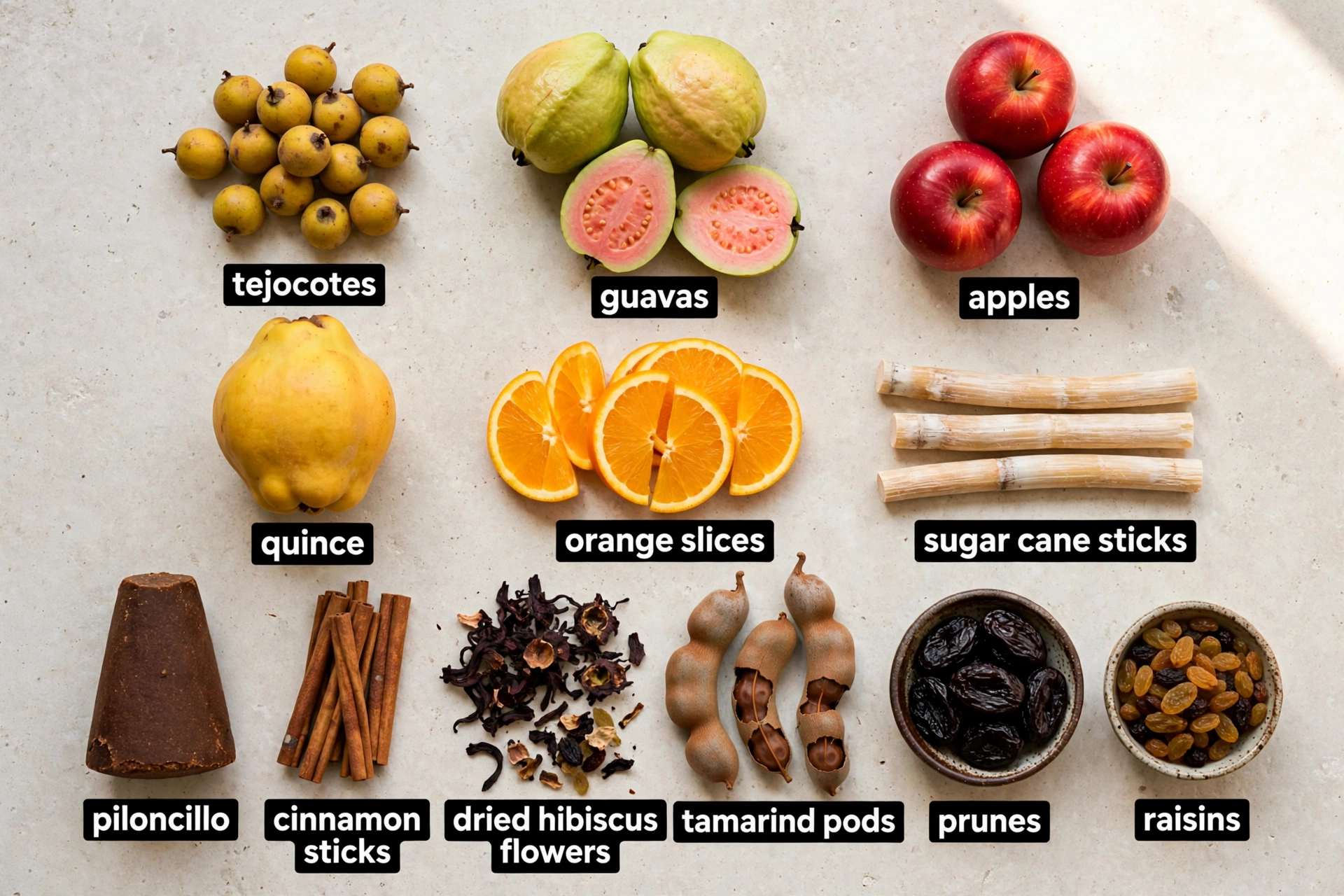
- Water — 16 cups (1 gallon). Water is the base of the punch, and a full gallon is what makes this a party-sized pot — 12 mugs with fruit in every one. Use filtered water if your tap water tastes of chlorine, because the punch is mostly water and you will taste it.
- Mexican cinnamon sticks (canela) — 4. Canela is the soft, papery cinnamon used in Mexican cooking, and it gives ponche its warm, sweet-spiced flavour. It is different from the hard cassia cinnamon sticks sold in most supermarkets — canela is milder and more fragrant. If you can only find cassia, use 2 sticks instead of 4, because it is much stronger.
- Dried hibiscus flowers (flor de jamaica) — 1/2 cup. Hibiscus flowers give ponche navideño its beautiful deep red colour and a gentle tartness that balances the sweetness. They are sold as flor de jamaica in Mexican grocery stores and in the tea aisle of most supermarkets. Rinse them briefly before adding them to the pot.
Tamarind and Sugar Cane
- Tamarind pods — 5, peeled. Tamarind adds a sour, fruity tang that makes the punch taste bright instead of just sweet. Peel away the brittle brown shell and pull out the stringy veins before adding the pods — the pulp inside is what you want. If you cannot find whole pods, use 3 tablespoons of seedless tamarind pulp instead.
- Sugar cane — 2 pieces, peeled and cut into sticks. Sugar cane is the classic ponche garnish: a stick goes into every mug, and you chew it after you finish drinking. It also sweetens the punch gently as it simmers. Buy peeled sugar cane from the refrigerated produce section of a Mexican grocery store and cut it into matchstick-sized pieces with a sharp knife — it is tough, so cut carefully on a sturdy board. If you cannot find it, leave it out and add a little extra piloncillo.
For the Fruit
- Tejocotes — 10, rinsed and halved. Tejocotes are the small, golden Mexican hawthorn fruits that define ponche navideño — tart, with a hint of apricot, and a dense, pithy texture that goes soft and spoonable in the hot punch. Rinse them well, cut off the tops and halve them; the tiny seeds inside soften during cooking, so there is no need to dig them out. If you cannot find tejocotes, use 2 firm Bosc pears, peeled, cored and chopped.
- Guavas — 6, quartered. Guavas are the sweet, floral heart of the punch — ripe ones smell fragrant even through the skin, and they melt into the liquid as it simmers. Use ripe but firm yellow guavas with creamy white flesh, and quarter them with the skin on. If your guavas are very soft, add them in the last 20 minutes so they hold their shape.
- Red apples — 2 medium, cored and chopped. Apples give the punch body and a gentle sweetness, and their chunks stay firm enough to eat with a spoon. Use a mild, sweet apple like Fuji or Gala rather than a tart Granny Smith, which makes the punch too sharp. Leave the skin on — it holds the pieces together as they cook.
Quince and Dried Fruit
- Quince — 1, peeled, cored and chopped. Quince is the fruit that makes this ponche different from the simpler versions. Raw it is hard and astringent, but simmered in spiced water it turns soft, pink and floral, with a flavour somewhere between apple and pear. One quince is enough — it is there for fragrance, not bulk. If you cannot find quince, use an extra apple and a pear.
- Orange — 1, sliced into rounds. Orange slices add a bright, citrusy note and look beautiful floating on top of the pot. Slice the orange into thick rounds with the peel on, and remove any seeds. A clementine or two works in place of the orange if that is what you have.
- Prunes — 1/2 cup, halved. Prunes are the dried fruit that gives ponche its deep, dark sweetness — they plump up in the hot liquid and turn soft and jammy. Halve them lengthwise so they soak up the spiced water faster. Dried figs work in their place if you prefer them.
- Raisins — 1/2 cup. Raisins add little bursts of sweetness all through the punch, and they swell up soft and plump as they simmer. Dark raisins are the classic choice, but golden raisins work just as well.
To Sweeten
- Piloncillo — 8 ounces (about 1 cone), or 1 cup dark brown sugar. Piloncillo is the unrefined cane sugar sold in cones in Mexican grocery stores, and it is what gives ponche its molasses-like depth — regular white sugar makes the punch taste flat by comparison. Grate it or chop it roughly so it dissolves faster. Dark brown sugar is the closest substitute, and it works well in a pinch.
To Serve (Optional)
- Rum, brandy or tequila — to taste. A splash of rum or brandy in the grown-ups’ mugs turns ponche into ponche con piquete, the spiked version served at adult posadas. Add it to the mug, not the pot, so the kids’ punch stays alcohol-free.
How to Make Ponche Navideño
Step 1 — Prep the Fruit
Rinse the tejocotes and halve them. Quarter the guavas, core and chop the apples and quince, slice the orange into rounds, and halve the prunes. Peel the sugar cane and cut it into matchstick-sized sticks, and peel the tamarind pods, pulling out the stringy veins.
Step 2 — Simmer the Spiced Base
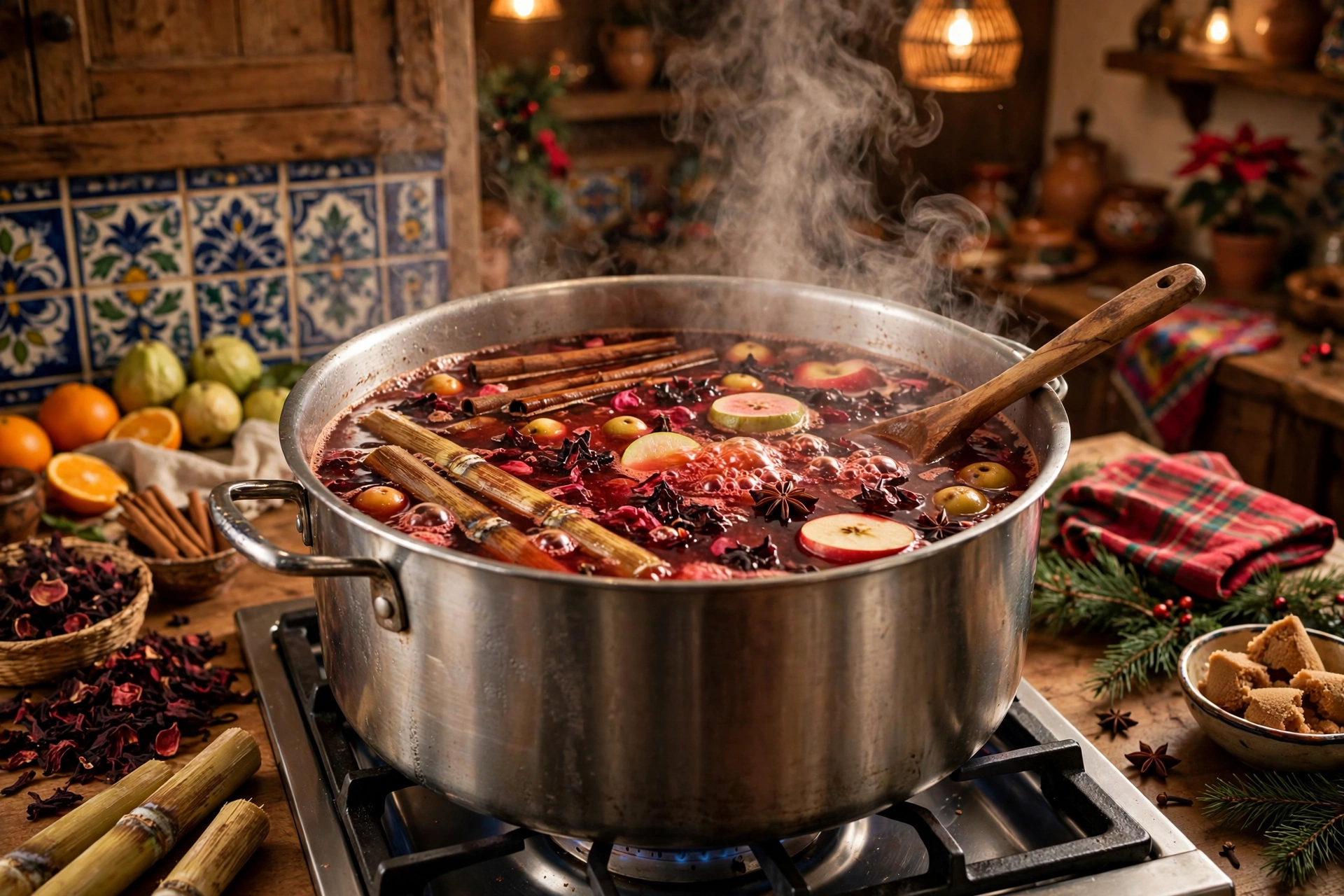
Put the water, cinnamon sticks, hibiscus flowers, tamarind pods and sugar cane sticks in a large stockpot. Bring to a boil over medium-high heat, then lower the heat and simmer for 20 minutes, until the water turns a deep red-brown and smells of cinnamon.
Step 3 — Add the Fruit
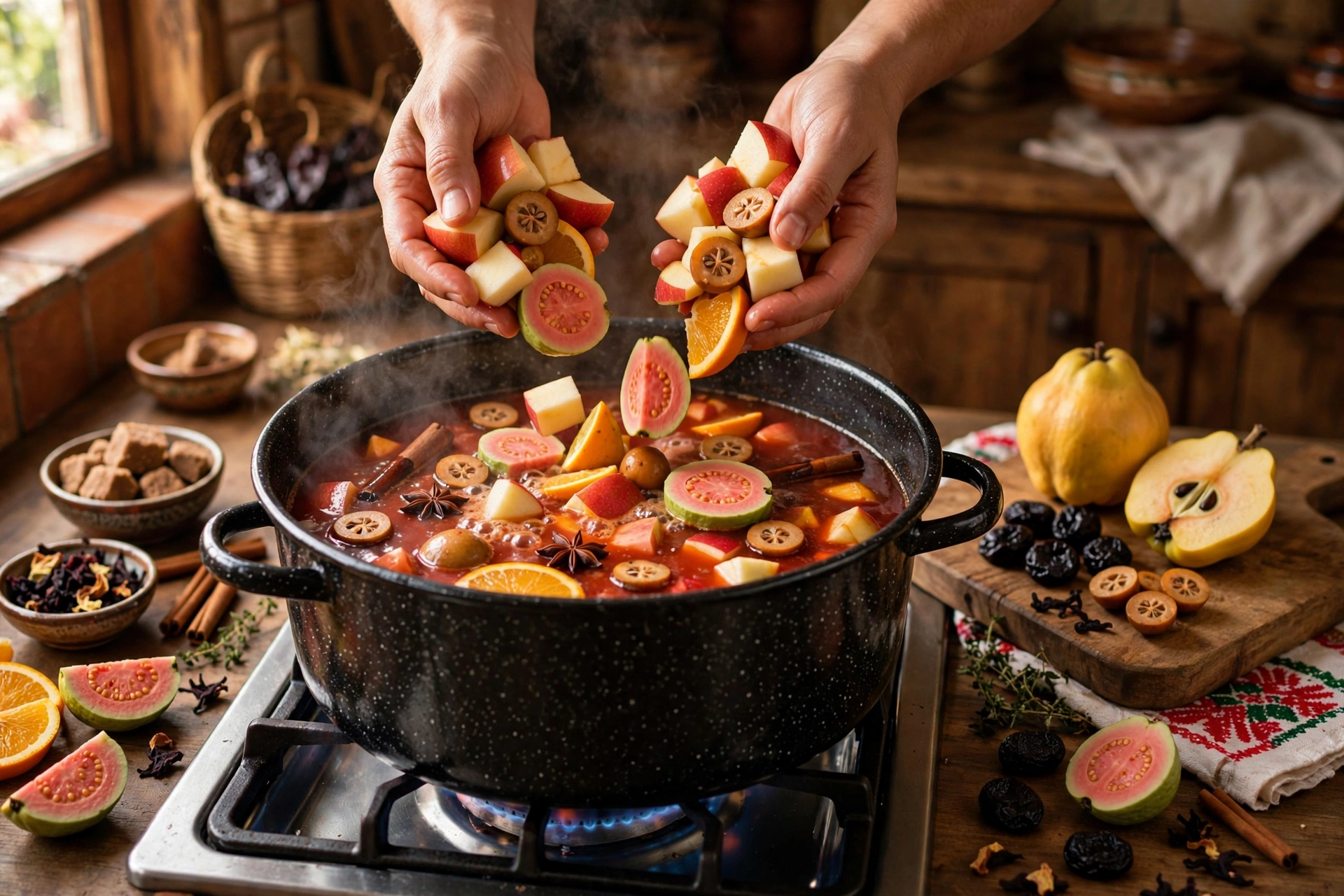
Add the tejocotes, guavas, apples, quince, orange slices, prunes and raisins to the pot. Return to a gentle simmer over medium-low heat and cook for 40 minutes, until the fruit is soft but still holding its shape.
Sweeten and Serve:
Step 4 — Sweeten and Finish
Stir in the piloncillo and keep simmering for 10 more minutes, stirring now and then, until it has completely dissolved. Taste the punch and add a little more piloncillo or brown sugar if you like it sweeter — it should taste sweet-tart, not syrupy.
Step 5 — Serve Hot with Fruit
Remove the cinnamon sticks and ladle the ponche navideño into mugs while it is still hot, making sure every cup gets a good scoop of the cooked fruit and a stick of sugar cane. Add a splash of rum or brandy to the grown-ups’ mugs if you like.
Technique: Ponche Navideño with Sugar Cane That Tastes Like Mexico
Three things decide whether ponche navideño tastes like the real thing or like ordinary spiced cider: the order the fruit goes in, the heat, and the sweetness.
Add the Fruit in Order
First, the order matters. The spiced base — water, cinnamon, hibiscus, tamarind and sugar cane — simmers on its own for 20 minutes before any fruit goes in. That head start lets the cinnamon and hibiscus steep properly into the water. The liquid itself is deeply flavoured before the fruit starts giving up its own juices. If everything goes in at once, the fruit overcooks while the spices are still catching up. The punch tastes thin.
Keep the Heat Low and Sweeten Last
Second, keep the heat low once the fruit is in. Ponche navideño should simmer gently, never boil hard. A rolling boil breaks the fruit apart into mush and turns the guavas to pulp. It also makes the hibiscus bitter. You want the surface barely moving — a few lazy bubbles — for the full 40 minutes. The fruit should come out soft enough to eat with a spoon but still in recognisable pieces.
Third, sweeten at the end, not the beginning. Piloncillo goes in during the last 10 minutes, after the fruit has released its own sweetness into the pot. If you sweeten first, you cannot tell how sweet the punch already is, and you will almost always overshoot. Taste after the piloncillo has dissolved. Add more only if the punch still tastes tart. It should finish sweet-tart, the way a Christmas punch should, not syrupy.
One more thing matters: do not strain it. Ponche is served with the fruit in the mug — that is the tradition, and it is the best part. If you prefer a clearer drink, ladle the liquid through a sieve into the mug and then spoon some of the fruit back in on top. Never throw the cooked fruit away.
Tips
- Simmer, never boil, once the fruit is in. A gentle simmer keeps the fruit in soft pieces; a hard boil turns it to mush and makes the hibiscus bitter.
- Sweeten at the end. Add the piloncillo in the last 10 minutes and taste before adding more — the fruit sweetens the punch as it cooks.
- Prep the tejocotes first. They are the firmest fruit and the fiddliest to cut, so get them done while the base is coming to a boil.
- Use canela, not cassia. Mexican cinnamon is soft and fragrant; hard cassia sticks are much stronger, so use only 2 if that is all you can find.
- Make sure every mug gets fruit. The cooked fruit is the best part of ponche navideño — ladle with a big spoon and scoop from the bottom of the pot.
- Keep it warm, not boiling. Once it is done, keep the pot on the lowest heat or in a slow cooker on warm so guests can help themselves all evening.
Variations
This ponche navideño is easy to shape around your family and your kitchen, and the base stays the same.
- Ponche con piquete. Add a splash of rum, brandy or añejo tequila to each mug at serving time — never to the whole pot, so the kids’ punch stays alcohol-free.
- Slow cooker ponche navideño. Combine everything except the alcohol in a slow cooker and cook on low for 4 to 6 hours, or on high for 2 to 3 hours, until the fruit is soft. This is the easiest way to keep the punch warm all evening at a party.
- Without tejocotes. If you cannot find tejocotes, use 2 firm Bosc pears, peeled, cored and chopped — they give a similar soft, sweet-tart bite.
- With pears instead of quince. Swap the quince for 2 pears if quince is out of season — the punch stays floral and fruity, just a little milder.
- Less sweet. Use half the piloncillo and let the fruit do the sweetening, or stir in the sugar a spoonful at a time at the end until it tastes right to you.
- With a citrus twist. Add a couple of clementines or a sliced lime to the pot with the orange for a brighter, more citrusy punch.
What to Serve With
Ponche navideño is the drink of the Christmas table, so it belongs beside the foods Mexico serves at Christmas. A mug of hot ponche with a plate of Mexican Rice Pudding is the classic pairing — the creamy, cinnamon-scented rice pudding and the warm, spiced punch taste like they were made for each other.
Serve it with Frijoles Charros and Rajas con Crema at a Christmas supper. The rich, savoury beans and the creamy poblano strips are exactly the kind of food a hot, sweet-tart punch was made to sit beside. And for a lighter bite with your mug, a plate of crisp snacks on the side keeps the posada going late into the evening.
Set out extra sugar cane sticks and a small bowl of the cooked fruit on the table, so everyone can top up their mug the way they like it.
Storage
Let the ponche cool to room temperature. Then move it to an airtight container or a large jar, fruit and all. It keeps in the refrigerator for up to 4 days, and the flavour actually deepens overnight as the fruit keeps steeping in the spiced liquid.
To reheat, warm it gently in a pot over medium-low heat until steaming. Do not boil it, or the fruit will fall apart. A slow cooker on warm is the easiest way to reheat a big batch for a second night of posadas.
For longer storage, freeze the ponche for up to 3 months. Freeze the liquid and the fruit together in freezer-safe containers, leaving a little room at the top for expansion. Thaw overnight in the refrigerator and reheat gently on the stove. The fruit will be softer after freezing, but the flavour will still be there.
Frequently Asked Questions
What is ponche navideño?
Ponche navideño is Mexico’s traditional Christmas punch — a warm, spiced fruit drink made by simmering tejocotes, guavas, apples, quince, oranges, sugar cane, tamarind, hibiscus and piloncillo in water. It is served hot during Las Posadas and on Christmas Eve, with the soft cooked fruit ladled into every mug.
What is ponche navideño made with?
The classic ponche navideño with tejocotes is made with tejocotes (Mexican hawthorn fruit), guavas, apples, quince, oranges, sugar cane, tamarind, dried hibiscus flowers, cinnamon, prunes, raisins and piloncillo. The tejocote is the defining ingredient — it is what makes ponche taste like ponche instead of ordinary spiced cider.
Can you make ponche navideño in a slow cooker?
Yes — it is one of the easiest ways to make it. Combine everything except the alcohol in a slow cooker and cook on low for 4 to 6 hours, or on high for 2 to 3 hours, until the fruit is soft. Keep it on warm all evening so guests can help themselves, and add a splash of rum or tequila to individual mugs at serving time.
More Questions About Ponche Navideño
How long does ponche navideño last?
Ponche navideño keeps in the refrigerator for up to 4 days in an airtight container, fruit and all. The flavour actually deepens overnight. Reheat it gently on the stove until steaming — do not boil it, or the fruit will fall apart. It also freezes well for up to 3 months.
What can I use instead of tejocotes in ponche navideño?
The closest substitute is 2 firm Bosc pears, peeled, cored and chopped — they give a similar soft, sweet-tart bite. Some recipes use Fuyu persimmons instead. But tejocotes are worth the trip to a Mexican grocery store in December, because they are the fruit that gives ponche its signature flavour.
Is ponche navideño alcoholic?
No — the punch itself is alcohol-free, so the whole family drinks the same pot. For the grown-ups, a splash of rum, brandy or tequila goes into individual mugs at serving time, which is called ponche con piquete. Never add the alcohol to the whole pot.
Try These Next
If you loved this Mexican Christmas punch, try these recipes next:
- Mexican Rice Pudding — creamy cinnamon rice pudding, the classic Christmas dessert to serve with ponche.
- Caldo de Pollo — warm Mexican chicken soup, perfect for a cold December evening.
- Mexican Street Corn — sweet charred corn with lime and cheese, a festive side for a holiday table.
- Bean and Cheese Taquitos — crispy rolled taquitos with beans and melted cheese, made for dipping at a party.
- Crispy Potato Tacos — golden corn tortillas filled with mashed potatoes and cheese, fried until crisp.
- Ensalada de Manzana (Mexican Christmas Apple Salad)
Ponche Navideño (Mexican Christmas Punch)
Ingredients
Equipment
Method
- Rinse the tejocotes and halve them; quarter the guavas, core and chop the apples and quince, slice the orange into rounds, and halve the prunes; peel the sugar cane and cut it into sticks, and peel the tamarind pods, pulling out the stringy veins.
- Put the water, cinnamon sticks, hibiscus flowers, tamarind pods and sugar cane sticks in a large stockpot; bring to a boil over medium-high heat, then lower the heat and simmer for 20 minutes, until the water turns a deep red-brown and smells of cinnamon.
- Add the tejocotes, guavas, apples, quince, orange slices, prunes and raisins to the pot; return to a gentle simmer over medium-low heat and cook for 40 minutes, until the fruit is soft but still holding its shape.
- Stir in the piloncillo and keep simmering for 10 more minutes, stirring now and then, until it has completely dissolved; taste and add a little more piloncillo or brown sugar if you like it sweeter.
- Remove the cinnamon sticks and ladle the ponche into mugs while it is still hot, making sure every cup gets a good scoop of the cooked fruit and a stick of sugar cane; add a splash of rum or brandy to the grown-ups' mugs if you like.
Notes
- Simmer, never boil, once the fruit is in — a gentle simmer keeps the fruit in soft pieces; a hard boil turns it to mush and makes the hibiscus bitter.
Sweeten at the end — add the piloncillo in the last 10 minutes and taste before adding more; the fruit sweetens the punch as it cooks.
Use canela, not cassia — Mexican cinnamon is soft and fragrant; hard cassia sticks are much stronger, so use only 2 if that is all you can find.
Make sure every mug gets fruit — the cooked fruit is the best part; ladle with a big spoon and scoop from the bottom of the pot.
Keep it warm, not boiling — once it is done, keep the pot on the lowest heat or in a slow cooker on warm so guests can help themselves all evening.