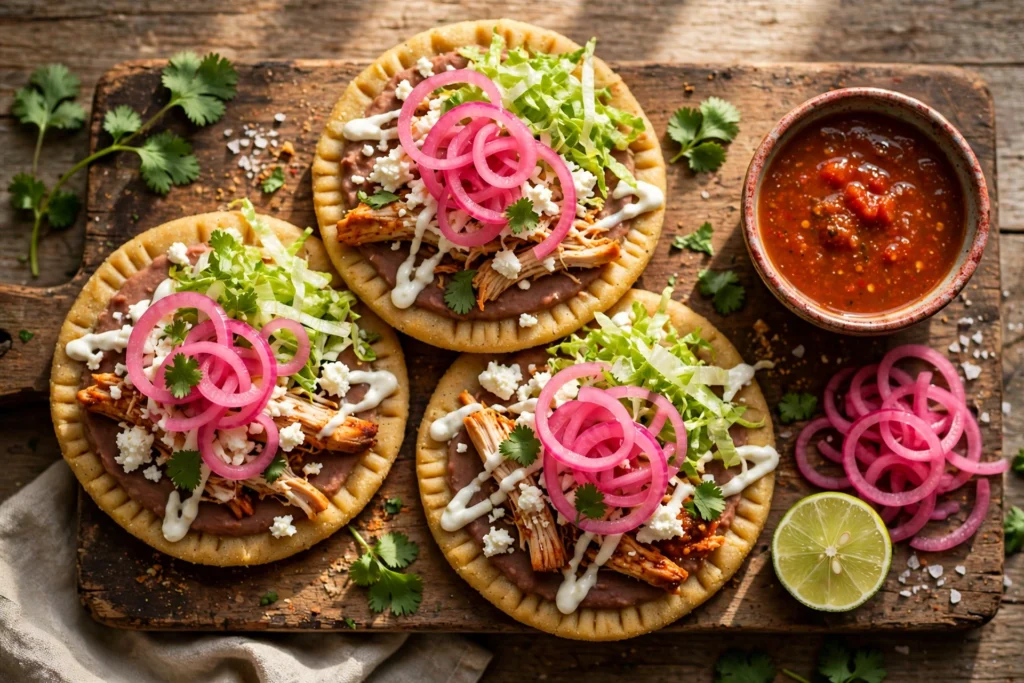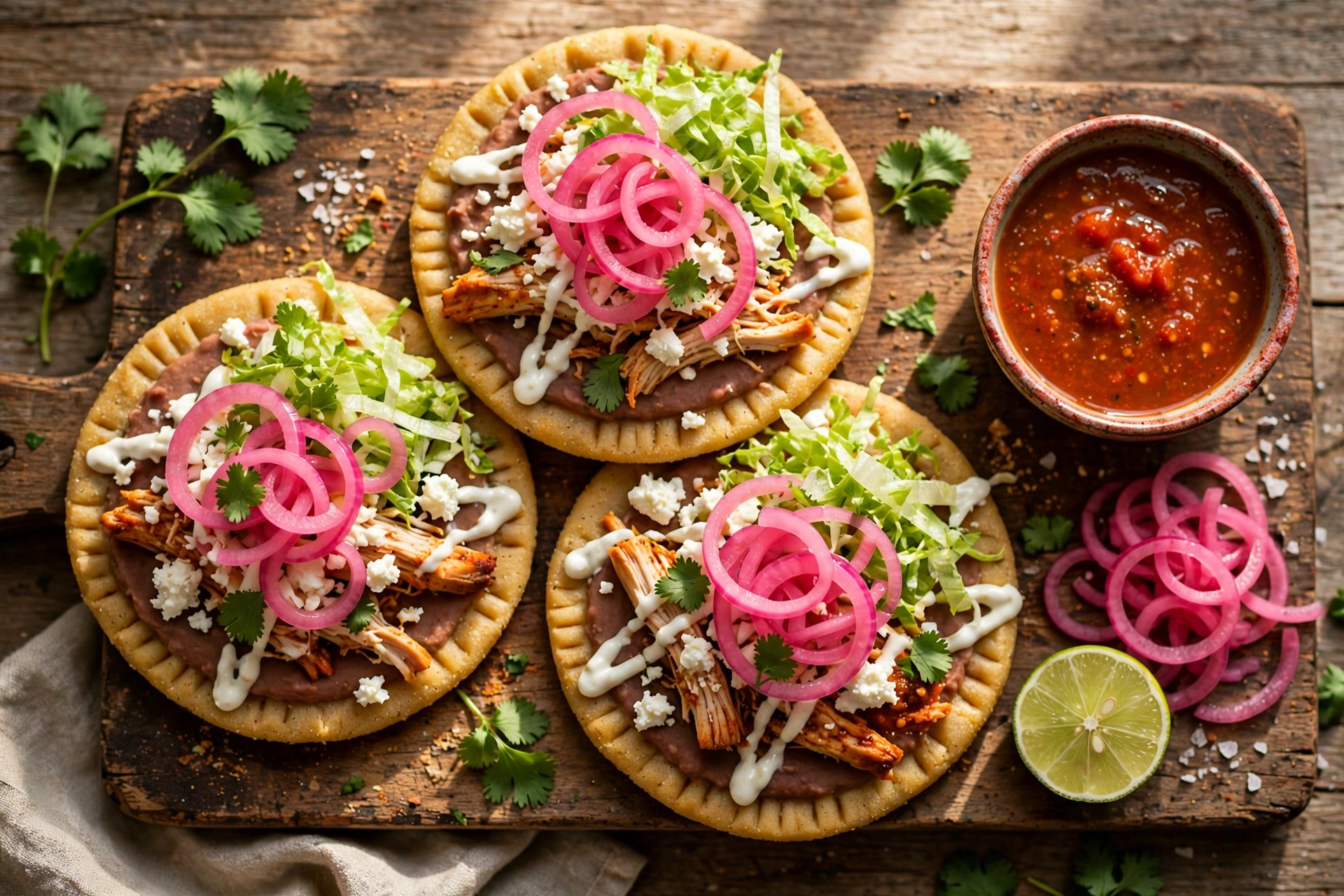
Thick, golden, and built to hold a feast — sopes are Mexico’s most generous little cakes. A soft masa disc gets a pinched rim, a quick fry, and then a pile of refried beans, smoky chicken tinga, and bright pickled red onions. Every bite has crunch, creaminess, smoke, and tang, and the whole thing is ready in about an hour.
Most sopes recipes stop at the shell: mix the masa, press it, fry it, and top it with whatever is in the fridge. That leaves the topping as an afterthought, and dry, plain toppings are the reason homemade sopes disappoint. This recipe treats the whole plate as a system: the chicken tinga is juicy and saucy by design, so it soaks into the masa instead of sitting dry on top, and the pickled red onions cut the richness with lime-bright acidity. The dough section also teaches the hydration test that keeps your sopes from cracking — the one thing every other recipe skips.

Why You’ll Love It
- A complete sopes system, not just a shell. Juicy chicken tinga and pickled red onions are built into the recipe.
- The dough test that prevents cracks. Learn the hydration check once, and your sopes will never split again.
- Ready in 1 hour. Faster than most people expect, and the shells can be made ahead.
- Endlessly customizable. Everyone builds their own plate, so picky eaters and spice lovers are both happy.
- Perfect party food. Par-cook the shells, hold them, and fry to order while guests pile on toppings.
- Kid-friendly project. Pressing and pinching masa is the kind of hands-on cooking kids actually love.
- Naturally gluten-free. Masa harina is corn-based, so the shells are gluten-free from the start.
Ingredients
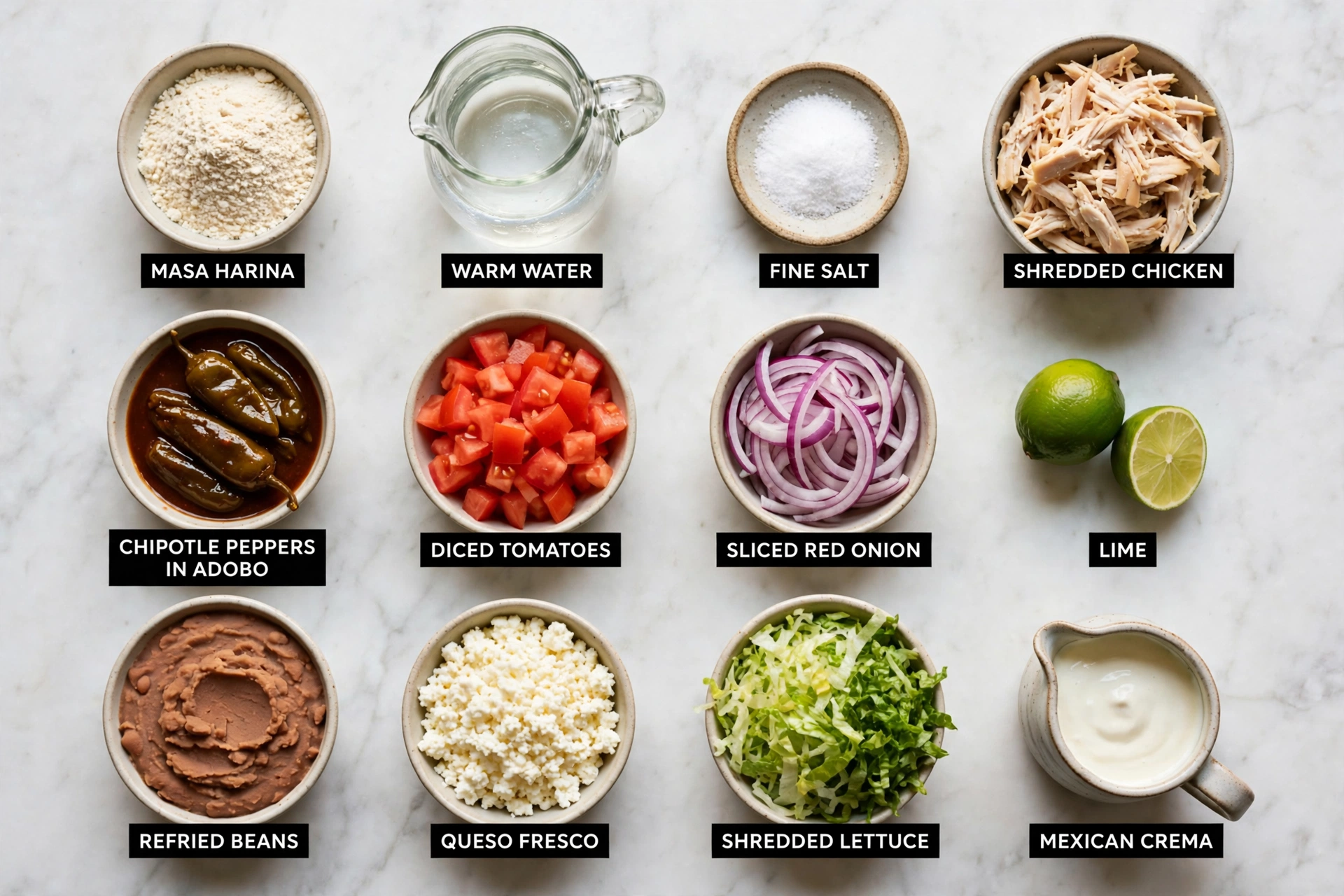
Masa Dough
- 2 cups masa harina — Dried corn flour made for tortillas and tamales; it is what gives sopes their corn flavor. Use white, yellow, or blue corn masa harina — all of them work. Substitution: fresh masa (not masa preparada), about 14 ounces, with no added water until the dough tells you it needs it.
- 1 teaspoon fine salt — Seasons the dough so the sopes taste good even before the toppings go on. Substitution: 3/4 teaspoon kosher salt.
- 1 1/2 cups warm water, plus more as needed — Warm water hydrates the masa harina faster than cold water, so the dough comes together soft instead of crumbly. Add it gradually and stop when the dough feels right. Substitution: warm chicken broth for a richer-tasting shell.
- 1/4 cup vegetable oil, for frying — For the final fry that crisps the outside of the sopes. You only need a shallow layer in the pan, not a deep fry. Substitution: lard for the most traditional flavor, or grapeseed oil.
Chicken Tinga
- 2 cups cooked shredded chicken — The base of the tinga. Rotisserie chicken is the fastest option. Substitution: shredded pork or beef, or 2 cups of cooked black beans for a vegetarian tinga.
- 1 tablespoon olive oil — For sauteing the onion and garlic that start the tinga sauce. Substitution: vegetable oil.
- 1/2 white onion, thinly sliced — Softens into the sauce and gives the tinga its sweet, savory base. Substitution: yellow onion in the same amount.
- 2 garlic cloves, minced — Warm, savory depth in the sauce. Substitution: 1/2 teaspoon garlic powder.
- 1 can (14.5 ounces) diced tomatoes, undrained — The saucy body of the tinga. The juice is what makes the chicken juicy instead of dry. Substitution: 2 large Roma tomatoes, diced, plus 1/4 cup water.
- 2 chipotle peppers in adobo, minced, plus 1 tablespoon adobo sauce — Smoky heat that defines the tinga. The sauce carries the flavor, so do not skip it. Substitution: 1 teaspoon chipotle powder, or 1 tablespoon hot sauce.
- 1/2 teaspoon dried oregano (Mexican oregano if you have it) — A small herbal note that keeps the tomato sauce from tasting flat. Substitution: dried marjoram.
- 1/2 teaspoon kosher salt, plus more to taste — Seasons the sauce so the chicken tastes seasoned all the way through. Substitution: 1/4 teaspoon fine sea salt.
Quick Pickled Red Onions
- 1 medium red onion, thinly sliced — The bright, crunchy, pink topping that cuts through the rich masa and beans. Slice it as thin as you can. Substitution: thinly sliced white onion, though it will not turn pink.
- 1/2 cup fresh lime juice (about 3 limes) — The acid that pickles the onion and turns it bright pink. Substitution: white vinegar in the same amount, though lime tastes fresher.
- 1 teaspoon sugar — Rounds off the sharp lime so the onions taste tangy, not sour. Substitution: a pinch of honey.
- 1/2 teaspoon kosher salt — Draws the moisture out of the onion so it softens and pickles quickly. Substitution: 1/4 teaspoon fine sea salt.
Toppings
- 1 cup refried beans, warmed — The first layer on every sope. It glues the toppings down and adds creamy richness. Use homemade or canned — both work. Substitution: mashed black beans with a little cumin.
- 1 cup shredded lettuce — Cool, fresh crunch on top of the warm tinga. Substitution: shredded cabbage, which holds its crunch even longer.
- 1/2 cup crumbled queso fresco — Salty, crumbly cheese that finishes every sope. Substitution: crumbled cotija, or feta in a pinch.
- 1/2 cup Mexican crema — A cool, tangy drizzle over the top. Substitution: sour cream thinned with a little milk.
- Salsa of your choice — Salsa verde is wonderful here, or use your favorite red salsa. A spoonful per sope is plenty.
- Chopped fresh cilantro — A bright finish over the assembled sopes. Substitution: chopped fresh parsley.
How to Make Sopes
1 Step 1: Mix the Masa Dough
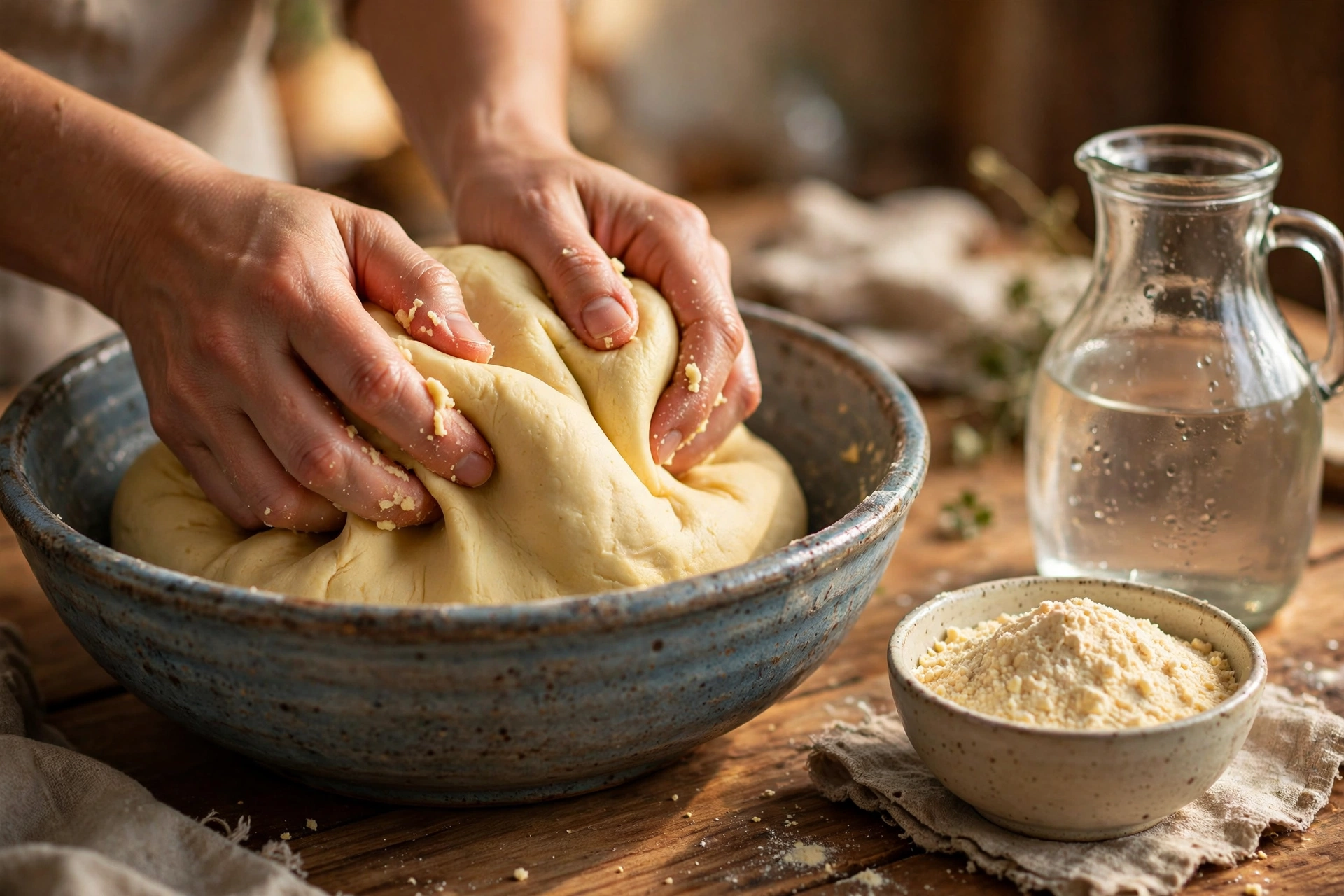
Mix the masa dough. Start the pickled onions first, because they need 30 minutes to turn pink — slice the red onion thin, toss it with the lime juice, sugar, and salt, and set it aside. Then whisk the masa harina and fine salt together in a large bowl. Pour in 1 cup of the warm water and mix with your hands, then add the rest a little at a time, kneading for 2 to 3 minutes until the dough feels smooth and soft, like playdough. It should hold together when squeezed and not crack at the edges. If it cracks, add water a tablespoon at a time; if it sticks, add masa harina a teaspoon at a time. Cover with a damp towel and rest 10 minutes.
2 Step 2: Shape and Press the Discs
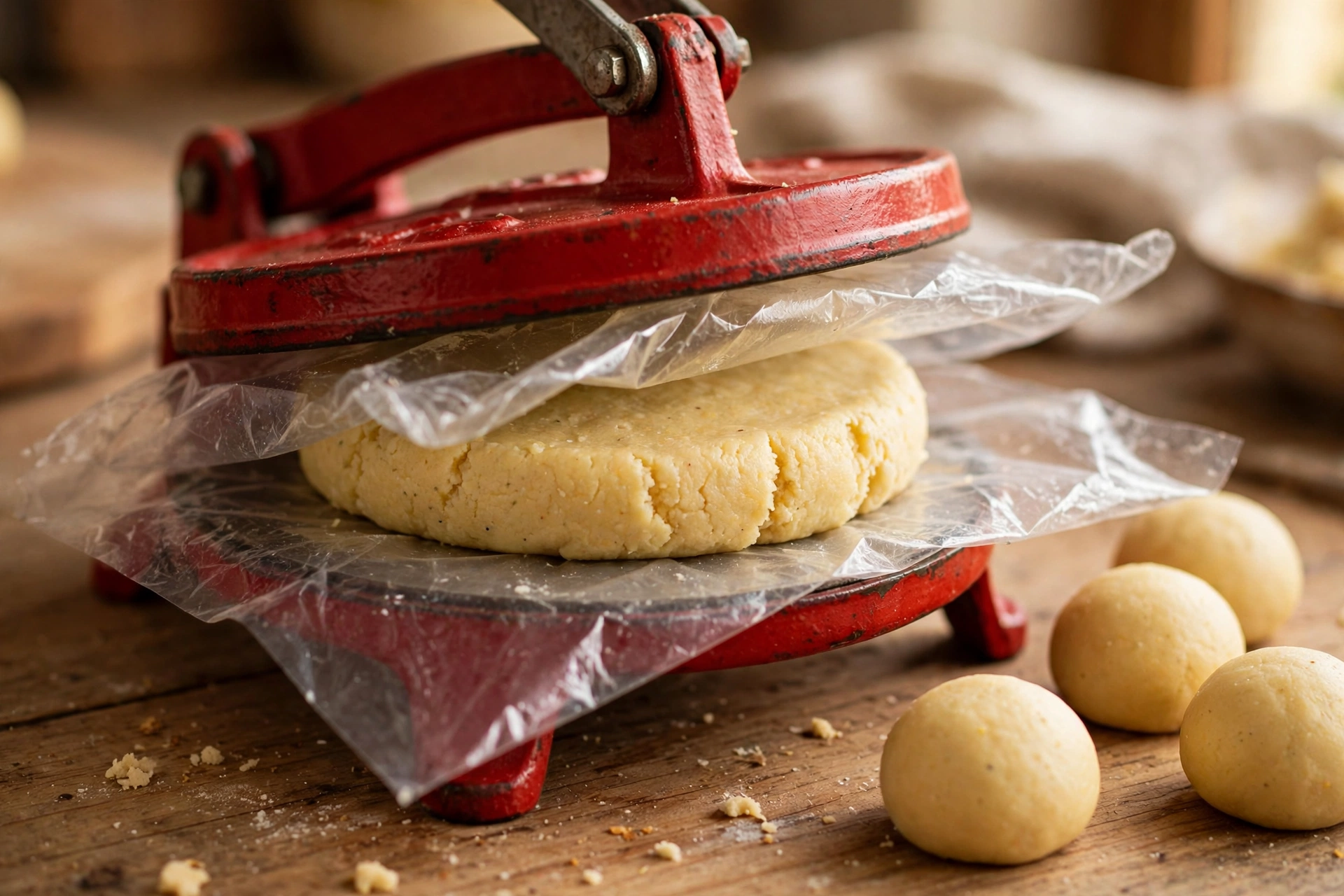
Shape and press the discs. Divide the dough into 12 equal pieces and roll each into a smooth ball, about the size of a golf ball, keeping them covered with the damp towel so they do not dry out. Press one ball at a time between two sheets of plastic or parchment in a tortilla press, pushing gently, until you have a disc about 4 inches across and 1/4 inch thick — noticeably thicker than a corn tortilla. No press? Flatten the ball with the bottom of a heavy plate, flipping it once.
3 Step 3: Par-Cook and Pinch the Rim
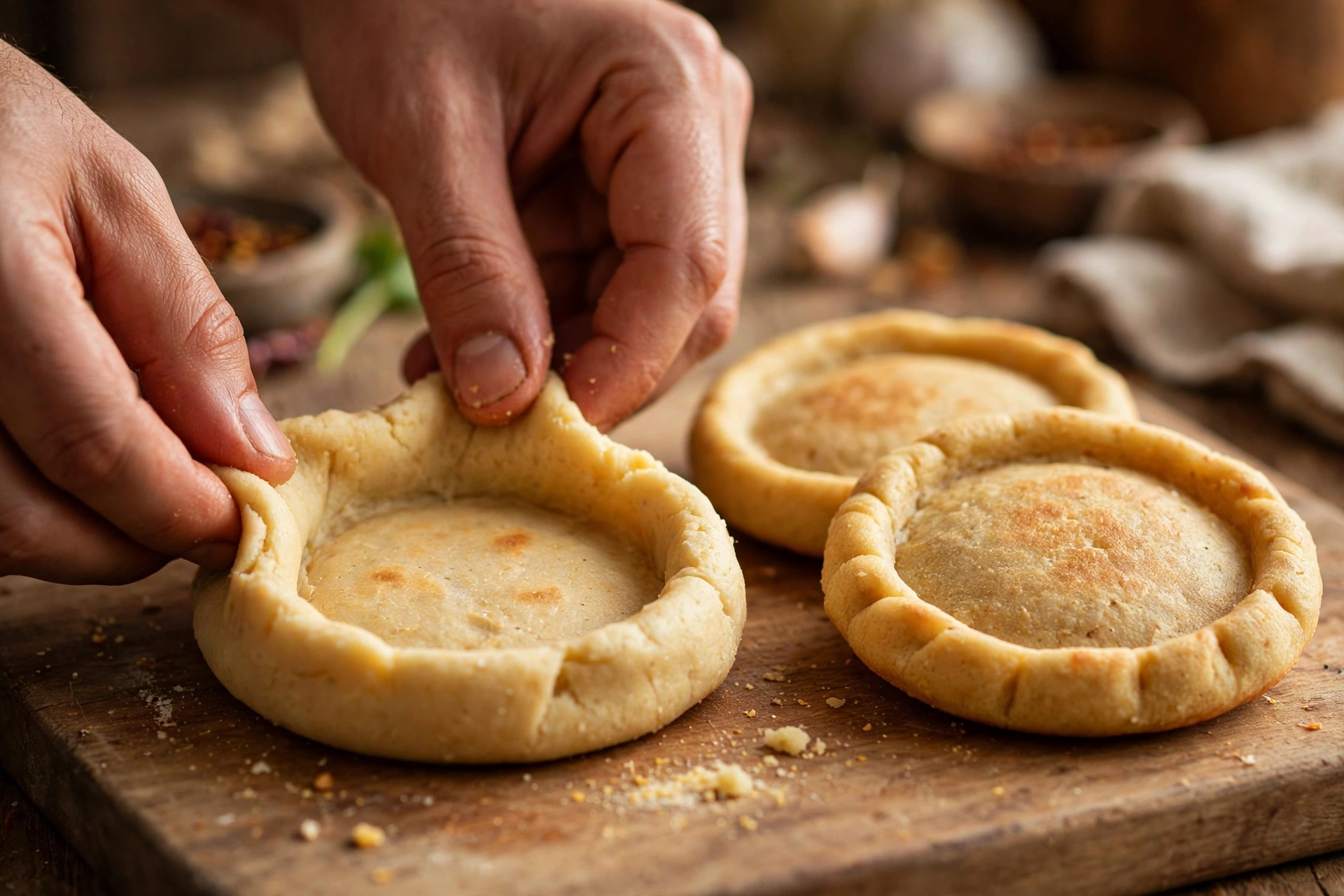
Par-cook and pinch the rim. Heat a dry comal, cast-iron skillet, or nonstick pan over medium heat for 5 minutes until evenly hot. Cook each disc for 1 to 2 minutes per side, until the surface turns opaque and speckled with light brown spots. Then move it to a cutting board, wait a few seconds until you can touch it, and pinch the edge all the way around with your thumbs and forefingers, pulling the rim up about 1/4 inch, like the crust of a pie. This rim is what makes a sope a sope — and do not wait too long, because cold masa cracks instead of bending.
4 Step 4: Fry Until Crisp
Fry until crisp. Heat the vegetable oil in a large skillet over medium-high heat until it shimmers. Fry the rimmed sopes in batches, 1 to 2 minutes per side, until golden in spots and crisp, then drain them rim-side up on a paper towel-lined plate. For a lighter finish, skip the oil and return the sopes to the dry comal for 1 more minute per side — softer and less crisp, but still delicious. Keep the finished shells warm in a 200°F oven.
5 Step 5: Make the Chicken Tinga
Make the chicken tinga. While the shells fry, heat the olive oil in a medium skillet over medium heat. Cook the sliced onion for 3 to 4 minutes until soft, then add the garlic and cook 30 seconds more. Stir in the diced tomatoes with their juice, the minced chipotle peppers, adobo sauce, oregano, and salt, and simmer for 5 minutes until the sauce thickens slightly. Then fold in the shredded chicken and cook 2 to 3 minutes more, until heated through and coated in sauce. The tinga should be juicy, not dry — if it looks dry, add a splash of water.
6 Step 6: Assemble and Serve
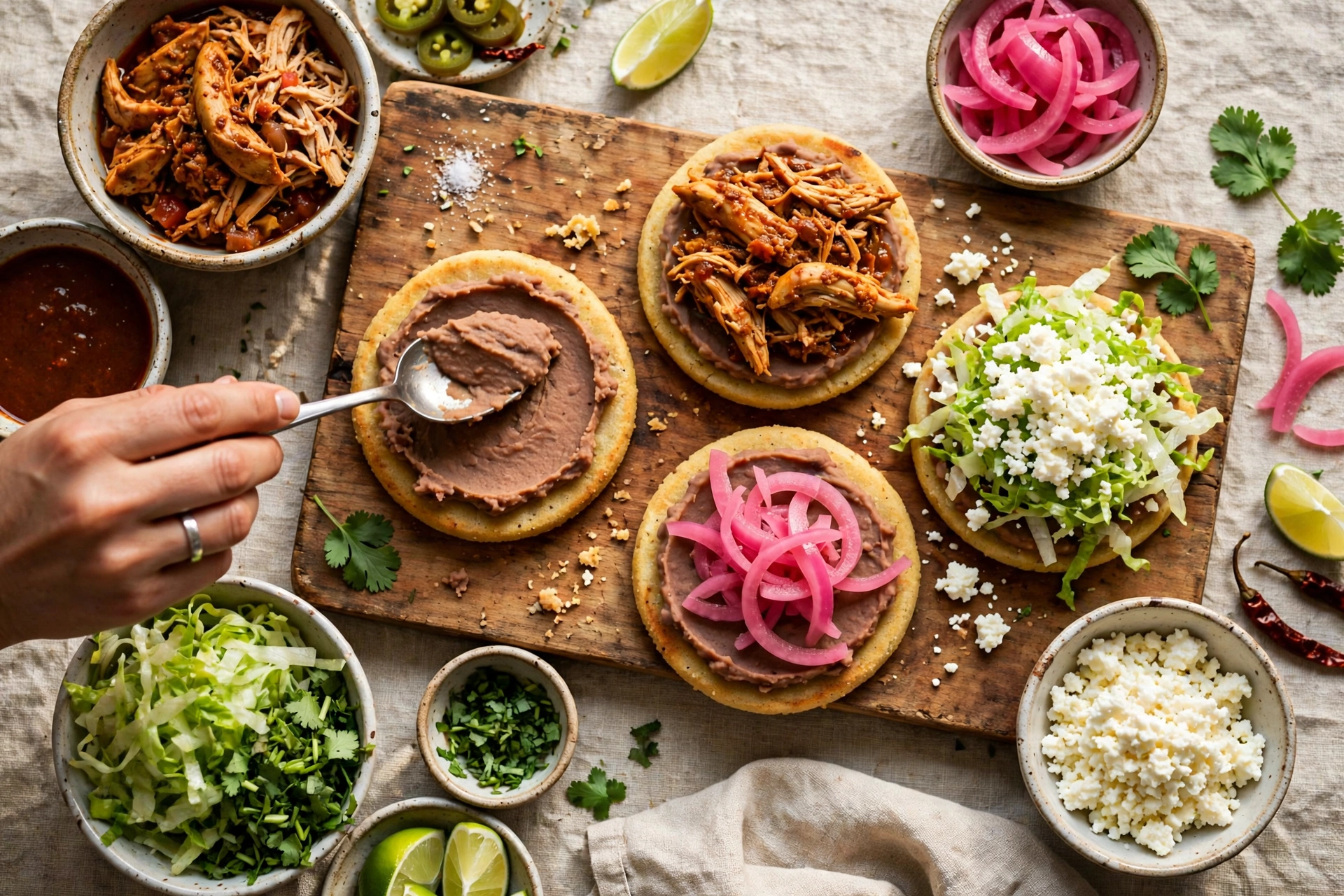
Assemble and serve. Spread a spoonful of warm refried beans into the well of each hot sope, then pile on the chicken tinga. Top with the pink pickled red onions, shredded lettuce, crumbled queso fresco, a drizzle of Mexican crema, and a spoonful of salsa. Finish with chopped cilantro and serve immediately, while the shells are still crisp and the tinga is hot. Sopes are finger food, so put plenty of napkins on the table.
Technique: The Masa Hydration Test — Play-Doh, Not Crumbs
The dough is the whole game with sopes, so here is the test that saves them. Roll a small piece into a ball, then press it flat between your palms. If the edge cracks into deep fissures, the dough is too dry — add warm water a tablespoon at a time and knead for a minute before testing again. If it sticks to your palms and smears, it is too wet — add masa harina a teaspoon at a time. When the dough is right, it feels like soft playdough: smooth, slightly tacky, and able to press flat with only hairline cracks at the edge. Humidity and the age of your masa harina change how much water you need, so never trust the measuring cup alone — trust the test. Resting the dough for 10 minutes under a damp towel matters too, because it lets the masa harina fully hydrate.
Pinch Timing: Warm, Not Hot, Not Cold
The rim is the signature of a sope, and the timing of the pinch is what makes it or breaks it. Pinch too soon, while the disc is steaming hot, and you will burn your fingers and tear the masa. Wait too long, and the masa cools, stiffens, and cracks instead of bending. So the rule is simple: cook the disc, move it to the board, count to ten, and then pinch. At ten seconds it is warm and pliable. Use your thumbs on the inside and your forefingers on the outside, and walk the rim all the way around in one steady pass. If a small crack appears, press it closed with a damp fingertip. After pinching, return the sope to the heat rim-side down for about a minute to set the edge, then flip and cook the bottom for another minute until freckled with brown spots.
Tips for the Best Sopes
- ✔️ Start the pickled onions first. They need 30 minutes in lime juice to turn pink and soften, so make them before you mix the dough.
- ✔️ Keep the dough covered at all times. Masa dries out fast in open air, and dry dough cracks — a damp towel over the bowl and the waiting balls is not optional.
- ✔️ Press gently, not hard. A sope should be 1/4 inch thick. Press too hard and you get a tortilla; press too lightly and it stays a ball.
- ✔️ Count to ten before pinching. Ten seconds off the heat is the sweet spot — warm enough to bend, cool enough to touch.
- ✔️ Fry in batches and do not crowd the pan. Crowded sopes steam instead of crisping, and the oil temperature drops.
- ✔️ Warm the beans. Cold refried beans straight from the can make the shell soggy. Warm them first so everything on the plate is hot.
- ✔️ Serve immediately. A topped sope waits for no one — the shell softens as the toppings sit.
Variations
Vegetarian Sopes (Beans and Cheese)
Skip the chicken tinga and pile on warm refried beans, sauteed mushrooms with garlic and cumin, sliced avocado, lettuce, queso fresco, and crema. The mushrooms give the same savory depth as meat.
Sopes with Chorizo and Potatoes
Brown 1/2 pound of Mexican chorizo with 1 cup of diced, boiled potatoes for the classic papas con chorizo topping — rich, smoky, and the version most Mexican families grew up with.
Baked Sopes (No Frying)
Skip the oil entirely. After pinching the rims, bake the shells at 400°F for 10 minutes, flipping once, until set and lightly golden. They are softer and less crisp than fried sopes, but they hold toppings just as well.
What to Serve With Sopes
Sopes are a meal on their own, but the right sides turn them into a feast. Start with frijoles charros — warm, hearty beans are the natural partner for masa. A simple cabbage slaw with lime dressing adds crunch and cuts the richness, and salsa verde belongs on the table in its own bowl for extra spoonfuls. For drinks, keep it classic: agua fresca, a cold Mexican lager, or sparkling water with lime.
Storage
In the Fridge
Store the parts separately, never assembled. The fried shells keep in an airtight container for up to 3 days, the tinga and beans for up to 4 days, and the pickled onions for up to 2 weeks. Assembled sopes go soggy within an hour, so always build them fresh.
Reheating
Reheat the shells in a dry skillet over medium heat for 1 to 2 minutes per side, or in a 350°F oven for 5 minutes, until crisp again — the microwave makes them soft, so skip it. Warm the tinga and beans gently on the stove, then assemble with the cold toppings.
In the Freezer
The plain shells freeze well for up to 2 months: cool completely, stack with parchment between each one, and seal in a freezer bag. Thaw in the fridge overnight, then reheat in a dry skillet or oven until crisp. The tinga also freezes well for up to 3 months; thaw overnight and reheat on the stove with a splash of water.
Frequently Asked Questions
What are sopes?
Sopes are small, thick Mexican corn cakes made from masa, with a pinched rim around the edge that holds the toppings in. They are pan-cooked until slightly crisp outside and soft inside, then piled with refried beans, meat, lettuce, cheese, and salsa — one of Mexico’s antojitos, or little cravings.
What is the difference between sopes and tostadas?
Sopes are thick, soft, doughy masa cakes with a raised rim, while tostadas are thin, flat, fully crisp fried tortillas. Both hold similar toppings, but a sope is soft and chewy inside with a crisp edge, and a tostada is crunchy all the way through.
Can I make sopes without a tortilla press?
Yes. Flatten each ball of dough with the bottom of a heavy plate, pressing between two sheets of plastic or parchment, then flip and press once more to even it out. You can also pat the dough out by hand — it takes practice, but it is the traditional way.
Can I make sopes ahead of time?
Yes, and they are great for parties. Par-cook the discs and pinch the rims, then hold the shells at room temperature for up to 4 hours, or in the fridge for up to 3 days. Fry them just before serving so they are hot and crisp.
Can I bake sopes instead of frying them?
Yes. After pinching the rims, bake the shells at 400°F for 10 minutes, flipping once, until set and lightly golden. Baked sopes are softer and less crisp than fried ones, but they hold toppings just as well.
What toppings go on sopes?
Refried beans always come first, so everything else has something to stick to. After that, the classics are a protein — chicken tinga, chorizo, carnitas, or picadillo — plus shredded lettuce, crumbled queso fresco, diced onion, Mexican crema, and salsa. Pickled red onions, avocado, and radish slices are welcome too.
Why did my sopes crack?
Cracked sopes almost always mean the dough was too dry. Add warm water a tablespoon at a time and knead until the dough feels like soft playdough — smooth, slightly tacky, and able to press flat with only hairline cracks at the edge. The other cause is pinching too late: pinch the rim while the disc is still warm, about ten seconds off the heat.
Try These Next
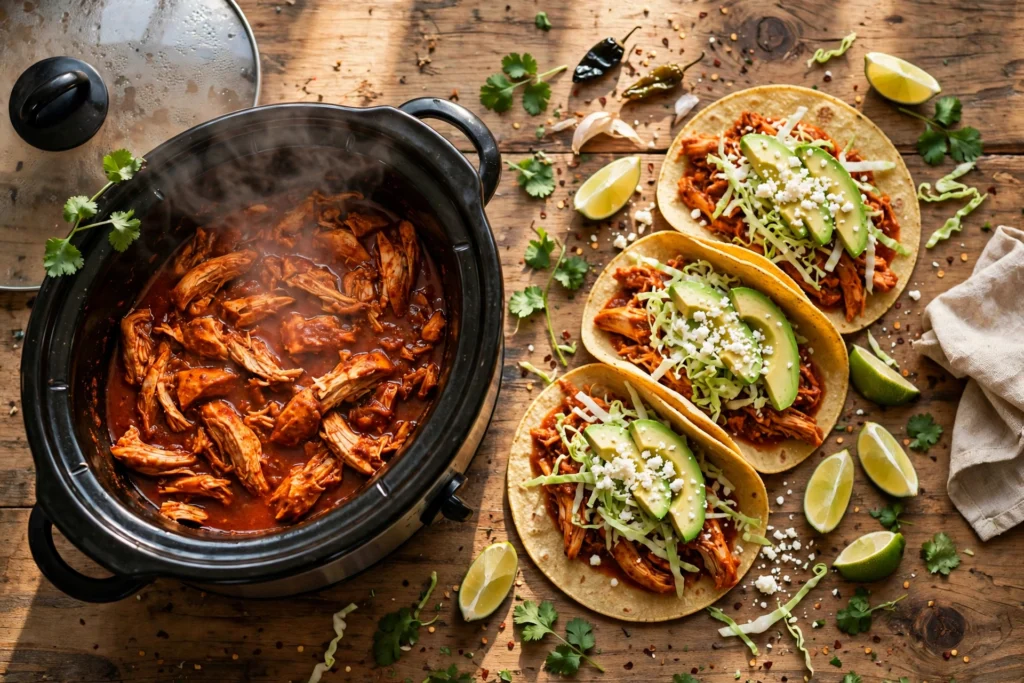
- Chicken Tinga — the smoky shredded chicken in tomato and chipotle that tops these sopes, served warm in tacos.
- Homemade Corn Tortillas — the same masa skills, pressed thin instead of thick, for fresh tortillas at home.
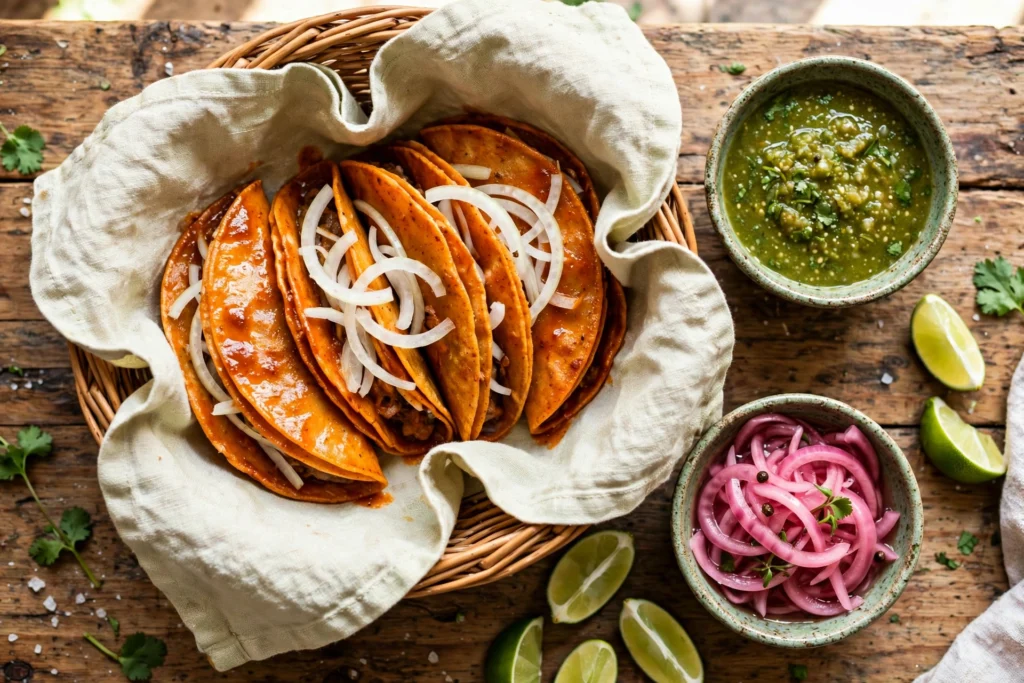
- Tacos de Canasta — soft, steamed basket tacos; another Mexican classic built on masa and patience.
- Crispy Potato Tacos — golden, crunchy potato tacos with the same satisfying crisp-soft contrast.
- Salsa Verde — bright tomatillo salsa that belongs on the table with every sope you serve.
- Frijoles Charros — warm charro beans; the perfect hot side next to a plate of sopes.
Sopes
Ingredients
Masa dough
- 2 cups masa harina
- 1 teaspoon fine salt
- 1 1/2 cups warm water plus more as needed
- 1/4 cup vegetable oil for frying
Chicken tinga
- 2 cups cooked shredded chicken
- 1 tablespoon olive oil
- 1/2 white onion thinly sliced
- 2 garlic cloves minced
- 1 can diced tomatoes 14.5 ounces, undrained
- 2 chipotle peppers in adobo minced, plus 1 tablespoon adobo sauce
- 1/2 teaspoon dried oregano
- 1/2 teaspoon kosher salt plus more to taste
Quick pickled red onions
- 1 medium red onion thinly sliced
- 1/2 cup fresh lime juice about 3 limes
- 1 teaspoon sugar
- 1/2 teaspoon kosher salt
Toppings
- 1 cup refried beans warmed
- 1 cup shredded lettuce
- 1/2 cup crumbled queso fresco
- 1/2 cup Mexican crema
- Salsa of your choice
- Chopped fresh cilantro
Instructions
- Start the pickled onions first: toss the thinly sliced red onion with the lime juice, sugar, and salt, and set aside at least 30 minutes. Whisk the masa harina and fine salt in a large bowl. Add 1 cup of the warm water, mix with your hands, then add the remaining 1/2 cup a little at a time, kneading 2 to 3 minutes until the dough feels smooth and soft like playdough. Cover with a damp towel and rest 10 minutes.
- Divide the dough into 12 equal pieces and roll each into a smooth ball, about the size of a golf ball, keeping them covered with the damp towel. Press one ball at a time between plastic or parchment in a tortilla press into a disc about 4 inches across and 1/4 inch thick.
- Heat a dry comal or cast-iron skillet over medium heat for 5 minutes. Cook each disc 1 to 2 minutes per side, until opaque and speckled with light brown spots. Move to a cutting board, count to ten, then pinch the edge all the way around to form a rim about 1/4 inch high.
- Heat the vegetable oil in a large skillet over medium-high heat until it shimmers. Fry the rimmed sopes in batches, 1 to 2 minutes per side, until golden in spots and crisp. Drain rim-side up on a paper towel-lined plate. Keep warm in a 200 degree F oven.
- While the shells fry, heat the olive oil in a medium skillet over medium heat. Cook the sliced onion 3 to 4 minutes until soft, add the garlic and cook 30 seconds more. Stir in the diced tomatoes with their juice, chipotle peppers, adobo sauce, oregano, and salt. Simmer 5 minutes, then fold in the shredded chicken and cook 2 to 3 minutes more until heated through and coated in sauce.
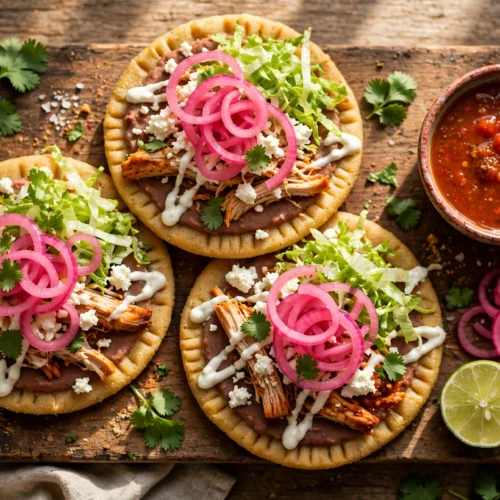
- Spread warm refried beans into the well of each hot sope, pile on the chicken tinga, and top with pickled red onions, shredded lettuce, crumbled queso fresco, a drizzle of Mexican crema, and a spoonful of salsa. Finish with chopped cilantro and serve immediately.
Notes
- Start the pickled onions first — they need 30 minutes in lime juice to turn pink and soften.
- Keep the dough covered with a damp towel at all times — masa dries out fast and dry dough cracks.
- If the dough cracks when pressed, it is too dry — add warm water a tablespoon at a time and knead again.
- Pinch the rim about ten seconds after the disc leaves the heat — warm enough to bend, cool enough to touch.
- Fry in batches and do not crowd the pan, or the sopes steam instead of crisping.
- Store the parts separately — shells, tinga, beans, and onions keep for days apart, but assembled sopes go soggy within an hour.
- Plain shells freeze well for up to 2 months — stack with parchment between each one.