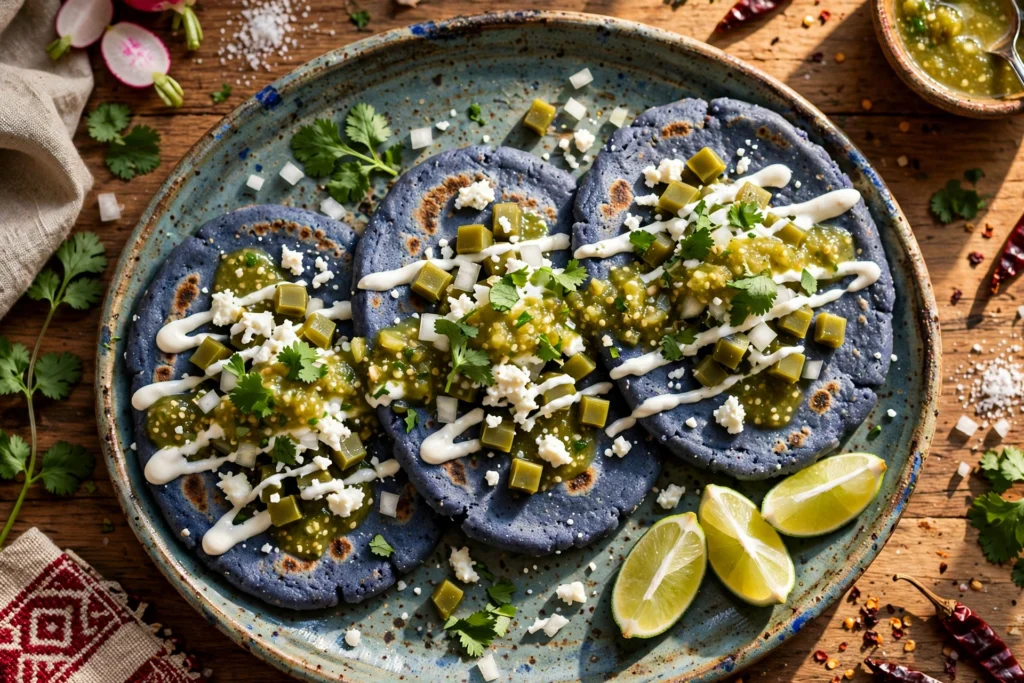
There is nothing like a warm corn tortilla straight off the comal. These homemade corn tortillas are soft, pliable and fragrant with toasted corn, with little golden freckles where the hot pan kissed them. They taste nothing like the stiff, papery tortillas from a plastic bag. They take under an hour from start to finish. Most of that time the dough is simply resting while you get on with the filling.
The best part is how little you need. Three ingredients — masa harina, salt and hot water — a bowl, a rolling pin and a heavy skillet. No tortilla press at all. This is how to make corn tortillas the no-press way. Once you have made a batch, you will wonder why you ever bought them ready-made.
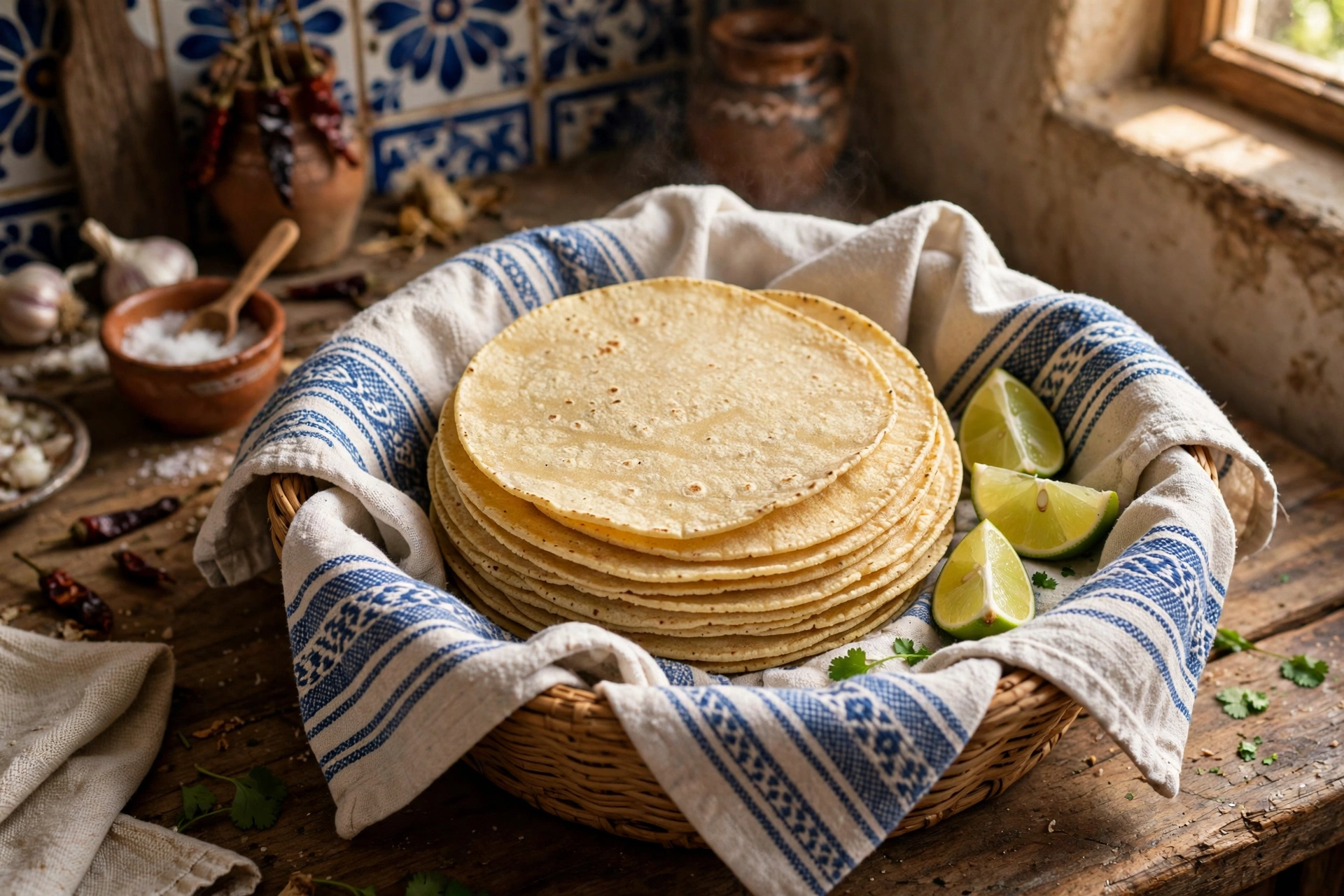
Make a batch for taco night and watch the table go quiet. If you love real Mexican cooking, these homemade corn tortillas are the foundation everything else is built on. They are soft enough to fold, strong enough to hold a filling, and warm enough to steam up the kitchen towel you wrap them in.
Why You’ll Love It
- A true Mexican staple. Homemade corn tortillas are the daily bread of Mexico — the base of tacos, enchiladas, chilaquiles and quesadillas in Mexican kitchens everywhere.
- Only three ingredients. Masa harina, salt and hot water. Nothing else goes in, and nothing else is needed.
- No press needed. A rolling pin and the bottom of a heavy skillet do the pressing — this is homemade corn tortillas without a press, for cooks who do not own one.
- Ready in under an hour. Ten minutes of mixing and kneading, a 30-minute rest, then a quick press and cook.
- Soft and foldable, not stiff. A proper rest and a hot comal give you tortillas that bend without breaking.
- Naturally gluten-free. Corn tortillas with masa harina have no wheat in them at all, so the whole family can eat them.
- Cheaper and fresher than shop-bought. A bag of masa harina makes batch after batch for pennies a tortilla, and they taste like warm corn, not cardboard.
What Are Homemade Corn Tortillas?
A corn tortilla is a thin, round flatbread made from masa — corn dough. It is the daily bread of Mexico. For thousands of years, Mexican cooks have ground nixtamalized corn into masa, pressed it into rounds and cooked it on a hot comal. That is still how it is done today. The only difference in a modern kitchen is the shortcut. Masa harina is the dried corn flour made from that same nixtamalized corn, mixed with hot water to bring it back to soft dough.
That is all this recipe is. Masa harina, fine salt and hot water, kneaded for a few minutes, rested for half an hour. Pressed into rounds about six inches across, and cooked for a minute on a hot comal until they puff and freckle. No yeast, no rising, no oil, no wheat — just corn, salt and water, the way Mexican tortillas have always been.
Why Make Them at Home
Learning how to make corn tortillas at home changes the way you cook Mexican food. Shop-bought corn tortillas are often stiff and dry, and they crack the moment you try to fold them. A homemade one is soft and pliable while it is warm. It has a gentle corn flavour and a tender bite that holds a filling without falling apart. They are the base for everything on this site — tacos, enchiladas, chilaquiles, taquitos. Once you can make them, every one of those recipes gets better.
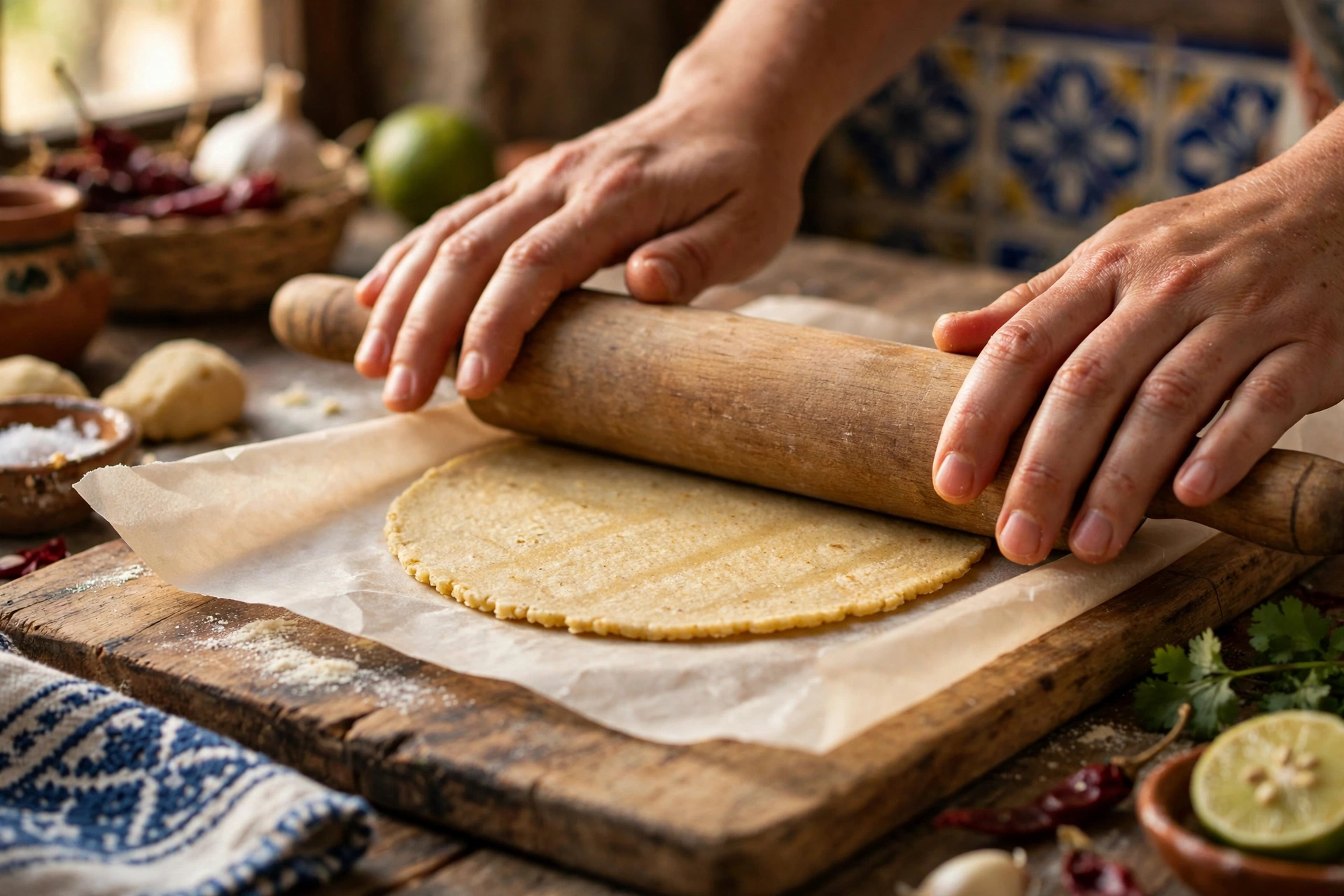
This version is written for cooks who do not own a tortilla press, because most of us do not. A rolling pin between two sheets of parchment does the flattening. The flat bottom of a heavy skillet finishes the job with one firm press. The result is a round, even tortilla about six inches across — not perfectly circular, and that is part of the charm. A slightly uneven homemade tortilla is the sign of a real one.
Ingredients
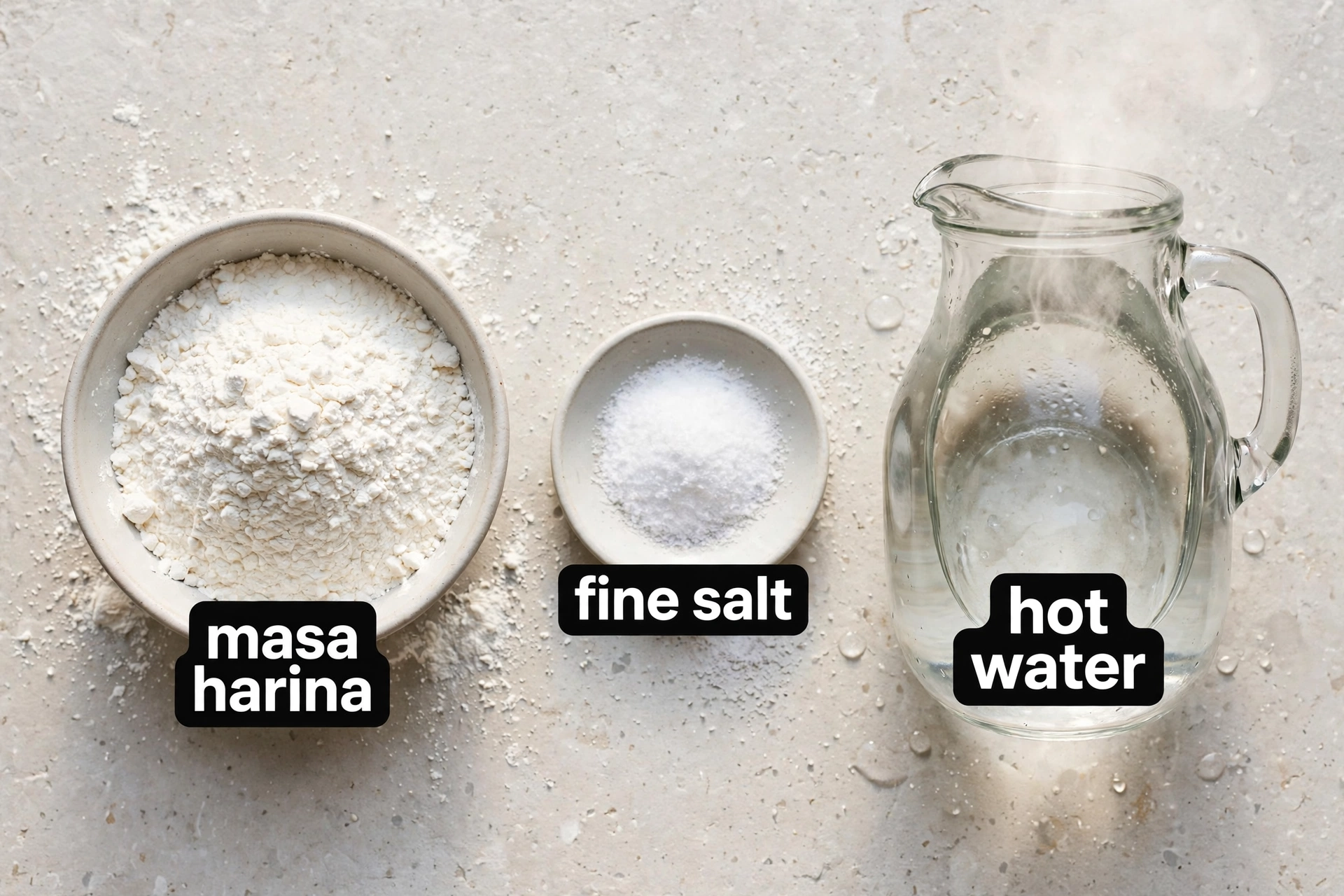
Masa harina — 2 cups (white or yellow corn). Masa harina is the whole recipe, really — the dried flour made from nixtamalized corn. The corn has been soaked in lime water so it can be ground into dough. It is what gives corn tortillas their flavour and their soft, pliable texture. White masa harina makes pale, mild tortillas; yellow masa harina makes golden ones with a slightly sweeter, more corny taste. Either works, so use whichever your shop stocks. Do not swap in regular cornmeal or corn flour. They are not nixtamalized, so they will not hold together into a dough (see FAQ Q3).
Fine salt — 1 teaspoon. Salt is the only seasoning in the dough. It is what makes the tortillas taste like themselves instead of plain corn. Fine salt dissolves evenly through the masa — table salt or fine sea salt both work. If you only have coarse salt, dissolve it in the hot water first so it spreads through the dough.
Hot water — 1 1/2 cups, plus more as needed. Hot water is what turns the dry masa harina back into soft dough. It needs to be hot, not lukewarm. Hot water hydrates the masa properly and makes a smoother dough that presses without cracking. If your water is only warm, the dough will be drier and harder to work with. Heat it until it is steaming.
For pressing and cooking:
Parchment paper — 2 sheets. Parchment is the no-press cook’s best friend. The dough ball sits between two sheets, so it never sticks to the rolling pin or the skillet bottom. The tortilla peels off cleanly every time. Cut the sheets a little larger than the tortilla so you have something to hold onto.
A clean kitchen towel — for keeping warm. A towel is not an ingredient, but it is essential. Cooked tortillas stacked inside a folded towel stay warm and soft. The steam they share keeps them bendable. Use a clean, lint-free towel — a tea towel is perfect.
How to Make It
Step 1 — Mix the Dough
Stir the masa harina and salt together in a large bowl. Then pour in 1 1/2 cups hot water and mix until a soft dough forms.
Step 2 — Knead and Rest
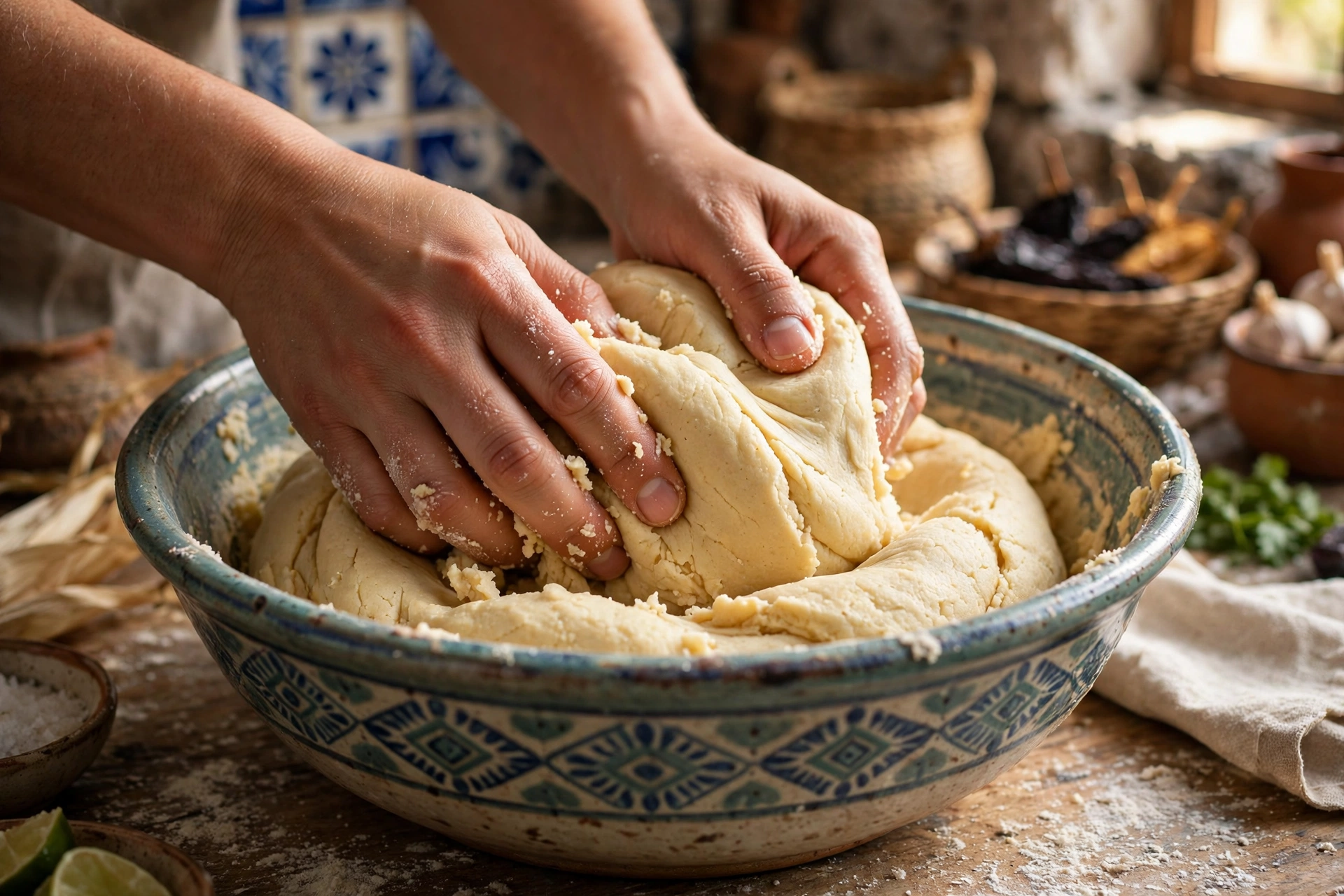
Knead the dough in the bowl for 2 to 3 minutes until it is smooth and holds together. Then cover with a damp towel and rest for 30 minutes.
Step 3 — Divide into Balls
Pinch off pieces of dough and roll them into 12 smooth balls, about the size of a golf ball. Keep them covered with the damp towel.
Press and Cook:
Step 4 — Press Without a Press
Place a dough ball between two sheets of parchment. Roll it out with a rolling pin, turning it as you go, until it is about 6 inches across. Finish with one firm press from the flat bottom of a heavy skillet so it is even all the way across.
Step 5 — Cook on a Hot Comal
Peel the parchment off and lay the tortilla on a hot, dry comal or cast-iron skillet. Cook for 30 to 60 seconds per side until it puffs and freckles. Then stack it in the towel to keep warm while you press and cook the rest.
Technique: Homemade Corn Tortillas Without a Press
Two things decide whether homemade corn tortillas turn out soft and pliable or dry and cracked. They are the feel of the dough, and the heat of the comal. Get those two right and the rest is easy.
The Dough Feel
The dough should feel soft and pliable, like Play-Doh. It is smooth, a little springy, and able to hold its shape without sticking to your hands. That is the whole test. If you press a ball flat and the edges crack and split, the dough is too dry. That is the answer to why are my corn tortillas cracking: add water a tablespoon at a time, kneading it in, until the edges press out smooth. If the dough sticks to your hands, to the parchment or to the rolling pin, it is too wet. Add masa harina a spoonful at a time until it lets go cleanly.
The 30-minute rest is what makes this easy. While the dough rests under its damp towel, the masa harina drinks in the water fully. The dough turns smoother and more pliable than it was when you first mixed it. Skip the rest and the dough fights you — it cracks at the edges and tears when you press it. Rest it and it rolls out like soft clay. If the dough still feels dry after the rest, wet your hands and knead the water in. A little goes a long way.
Getting the Puff
The puff is the sign of a good tortilla, and it comes from a hot comal and a third flip. Heat the comal over medium-high heat until a drop of water sizzles and dances on it. If the pan is too cool, the tortilla dries out before it cooks and turns stiff. Lay the tortilla down and cook for 30 to 60 seconds until the edges lift and pale spots appear. Then flip. Cook the second side for about the same time, then flip once more. On that third side, the tortilla should puff up like a little balloon as the steam inside it expands.
If it does not puff, do not worry: it will still taste wonderful. A tortilla that does not puff is usually one that was pressed a little thick. Or it was cooked on a pan that was not quite hot enough. Press the next one a touch thinner, let the comal get hotter, and try again. The puff often arrives on the third or fourth tortilla, once the pan is properly hot. Stack every finished tortilla inside the towel as you go. The steam they share is what keeps them soft and bendable for serving.
Tips
- ✔ Use hot water, not warm. Hot water hydrates the masa harina properly and makes a smoother dough that presses without cracking.
- ✔ Do not skip the 30-minute rest. The rest lets the masa drink in the water, and the dough turns smooth and pliable. Skip it and the tortillas crack at the edges.
- ✔ Keep the dough balls covered. Uncovered masa dries out in minutes. Keep the balls under a damp towel and work with one at a time.
- ✔ Press evenly, edge to edge. A tortilla that is thick at the edges and thin in the middle cooks unevenly and cracks. Roll from the centre out, and finish with the skillet bottom.
- ✔ Let the comal get properly hot. A drop of water should sizzle and dance on it before the first tortilla goes down — a cool pan makes stiff, dry tortillas.
- ✔ Stack them in a towel as you cook. The steam the warm tortillas share keeps the whole stack soft and foldable until dinner is served.
Variations
These homemade corn tortillas are a base recipe. The base stays the same — but a few small changes make them your own.
- With yellow masa harina. White masa makes the classic pale tortilla; yellow masa makes a golden tortilla with a slightly sweeter, more corn-forward flavour. The method and water are the same either way.
- Thicker, for sopes and gorditas. Press the dough a little thicker — about 1/4 inch. Then cook for an extra 15 to 30 seconds per side. The thicker tortilla pinches and puffs up better for sopes and gorditas.
- Smaller, for street tacos. Divide the dough into 16 balls instead of 12 and press to about 4 inches across. These are perfect street-taco size, and they make a batch of 16.
- With a pinch of baking powder. Add 1/2 teaspoon of baking powder to the dry masa before the water. It is not traditional, but it gives the tortillas a little extra puff and a softer bite.
- Herb tortillas. Stir a tablespoon of finely chopped cilantro or a teaspoon of dried oregano into the masa before adding the water. Green-flecked and lovely with fish tacos.
- For the freezer. Cook the tortillas, cool them completely, and stack them with parchment between each one in a freezer bag. They keep for 3 months; reheat on a hot comal or in the microwave.
What to Serve With
These tortillas are the foundation of the whole Mexican table. They are the wrap for tacos, the base for enchiladas, the crisped chip for chilaquiles. Start with the tacos. Pile them high with skirt steak, onions and salsa for Skirt Steak Tacos. Or spoon them full of crispy spiced potatoes and cabbage for Crispy Potato Tacos.
For a cosy, soupy supper, tear them over a bowl of Sopa de Fideo con Carne Molida. It is a noodle soup with ground beef and tomato that is pure comfort. Or use them to scoop up Caldo de Pollo, the golden chicken soup that is Mexico’s answer to a cold day.
Leftover tortillas never go to waste. Cut them into triangles and fry them into chips. Tear them into strips for tortilla soup, or crisp them in a little oil for chilaquiles the next morning.
Storage
Let the tortillas cool completely inside their towel. Stacking them while they are hot makes them steam soft. Letting them cool while wrapped keeps them from drying out. Once cool, stack them in an airtight container or a zip-top bag. Put a sheet of parchment between every few tortillas so they do not stick together.
They keep in the fridge for 4 to 5 days. Reheat them on a hot, dry comal or skillet for 15 to 20 seconds per side until they are warm and flexible again. Or wrap a small stack in a damp paper towel and microwave for 20 to 30 seconds.
To freeze, stack the cooled tortillas with parchment between each one and seal them in a freezer bag. They keep for up to 3 months. Thaw overnight in the fridge, or warm them straight from frozen on a hot comal. Give them about 30 seconds per side. Always freeze cooked tortillas, not raw dough.
Frequently Asked Questions
Do I need a tortilla press to make homemade corn tortillas?
No. A rolling pin, two sheets of parchment and the flat bottom of a heavy skillet do the job perfectly. Roll the dough out with the pin. Then finish with one firm press from the skillet bottom to flatten it evenly. Many Mexican cooks press by hand, and the result is just as good.
Why are my corn tortillas cracking?
Your dough is too dry, or it was not rested long enough. Add water a tablespoon at a time, kneading it in, until the dough presses out smooth without cracked edges. And do not skip the 30-minute rest, because it lets the masa absorb the water fully. Cold dough cracks more easily too, so keep the dough balls covered and at room temperature.
Can I use regular cornmeal instead of masa harina?
No — regular cornmeal is not nixtamalized, so it will not bind into a dough and the tortillas will crumble apart. Masa harina is made from corn that has been soaked in lime water. That is what gives the dough its flavour and its ability to hold together. Look for it in the international aisle or a Mexican grocery.
More Questions About Homemade Corn Tortillas
Are corn tortillas gluten free?
Yes, corn tortillas made with masa harina are naturally gluten free — there is no wheat in them at all. Just check the bag of masa harina. Make sure it is not made in a facility that also processes wheat, if that matters for you.
How do I store homemade corn tortillas?
Let them cool completely in their towel. Then stack them in an airtight container or a zip-top bag with parchment between every few tortillas. They keep in the fridge for 4 to 5 days. Reheat them on a hot, dry comal for 15 to 20 seconds per side. Or wrap a small stack in a damp paper towel and microwave for 20 to 30 seconds.
Can I freeze homemade corn tortillas?
Yes. Stack the cooled tortillas with parchment between each one and seal them in a freezer bag. They keep for up to 3 months. Thaw overnight in the fridge, or warm them straight from frozen on a hot comal for about 30 seconds per side. Always freeze cooked tortillas, not raw dough.
Try These Next
If you loved making these tortillas from scratch, these recipes are the perfect next step. Each one starts with, or belongs alongside, a warm stack of corn tortillas.
- Chilaquiles
- Easy Chicken Enchiladas
- Cemitas Poblanas
- Pozole Rojo
- Chicken Smash Tacos
- Healthy Mexican Quinoa Bowl
Homemade Corn Tortillas
Ingredients
Equipment
Method
- Stir the masa harina and salt together in a large bowl, then pour in 1 1/2 cups of hot water; mix with a spoon, then your hands, until a soft dough comes together.
- Knead the dough in the bowl for 2 to 3 minutes until smooth, cover with a damp towel, and leave to rest for 30 minutes.
- Pinch off pieces of dough and roll into 12 smooth balls, about the size of a golf ball; keep them covered under the damp towel.
- Place a dough ball between two sheets of parchment and roll out with a rolling pin, turning as you go, until about 6 inches across; finish with one firm press from the flat bottom of a heavy skillet.
- Peel off the parchment and cook on a hot, dry comal or cast-iron skillet for 30 to 60 seconds per side until puffed and freckled; stack in a towel to keep warm.
Notes
- Start with 1 1/2 cups hot water and add more a tablespoon at a time — the exact amount varies with the brand of masa harina and the humidity.
- Rest the dough 30 minutes for smoother tortillas — rested dough presses without cracking.
- Keep the dough balls covered so they don't dry out — work with one at a time.
- Press evenly — thick edges crack, so roll from the centre out and finish with the skillet bottom.
- Stack cooked tortillas in a towel so they steam soft — the shared steam keeps the whole stack pliable.