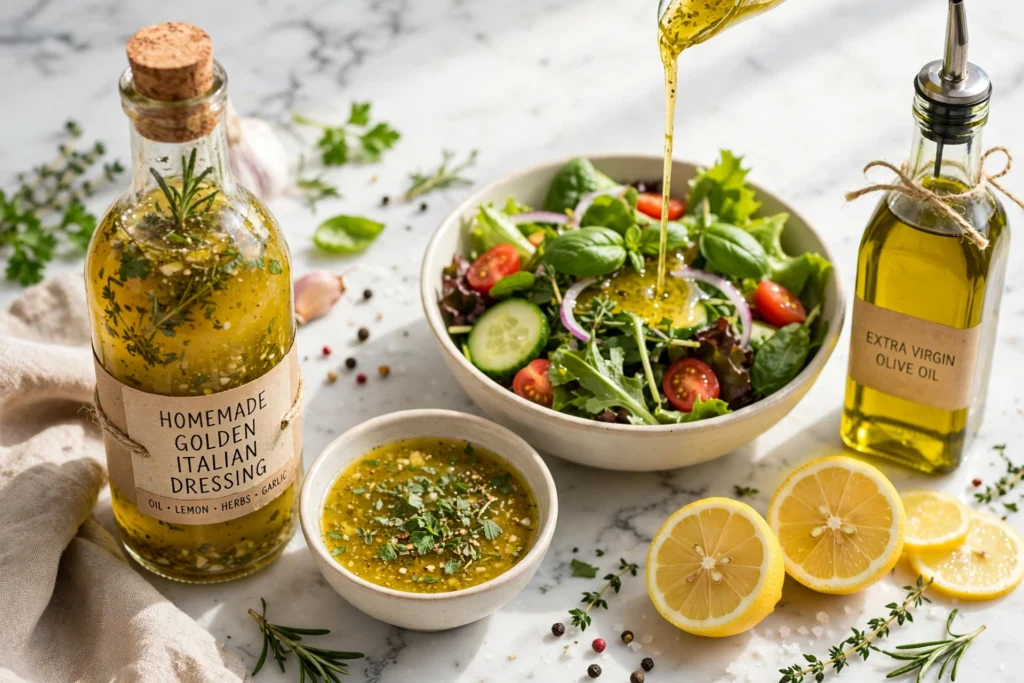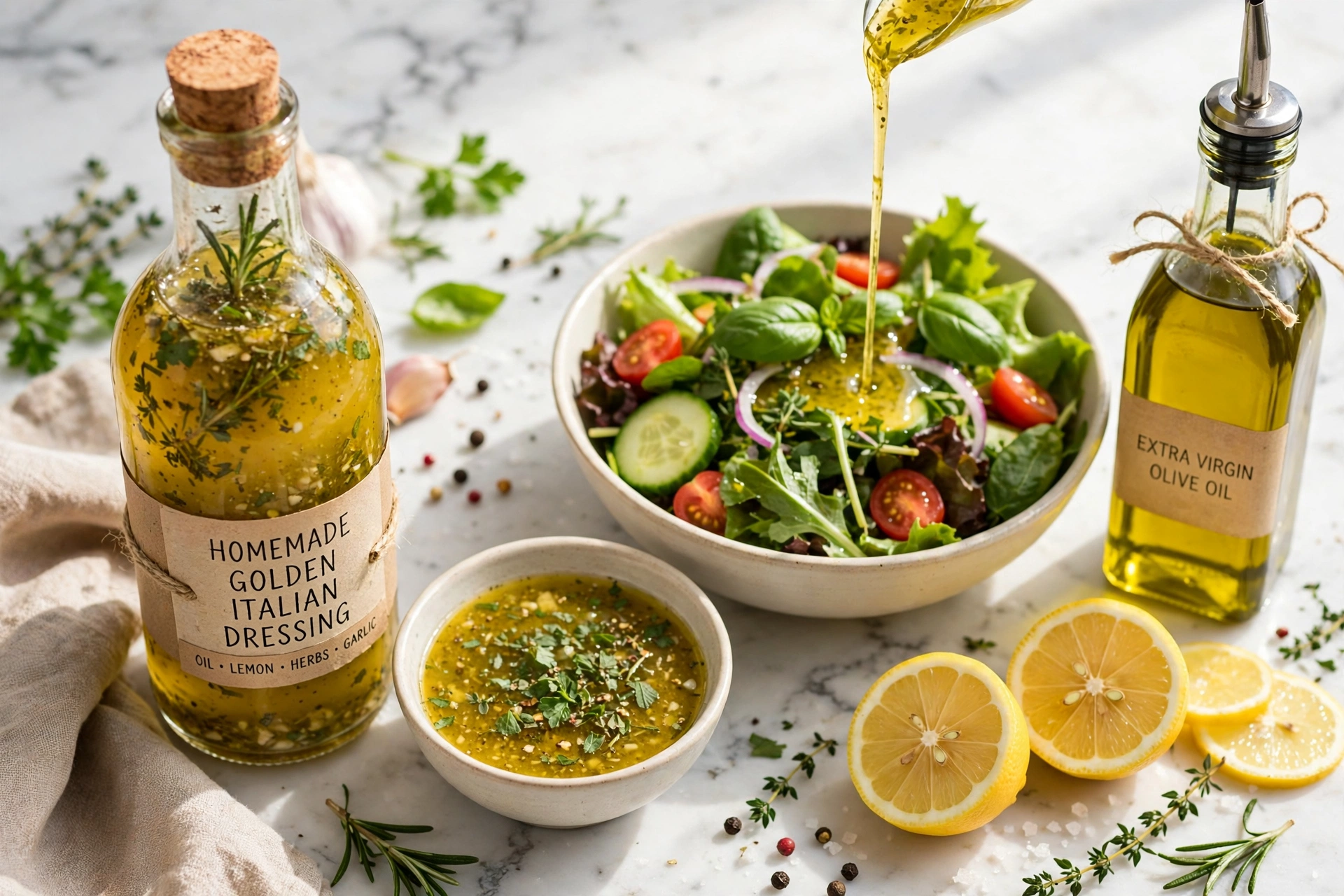
Five minutes, one jar, and a dressing that tastes like it came from a good Italian deli — not a plastic bottle. This homemade Italian dressing is zesty and herby, with olive oil, red wine vinegar, fresh lemon, garlic, and a little Parmesan. Shake it, pour it, and dinner tastes better instantly.
Bottled Italian dressing has its place, but it always tastes a little flat: too sweet, too salty, and faintly chemical. The homemade version fixes all three problems at once. You control the salt, you pick the oil, and the fresh garlic and lemon do the work that preservatives cannot. Once you make it, the bottle in the fridge door starts looking very lonely.

Why You’ll Love It
- 5 minutes, one bowl. Whisk, shake, done — faster than a trip to the store.
- Better than bottled. Fresh garlic, real lemon, and good olive oil beat preservatives every time.
- You control everything. Less salt, more lemon, extra garlic — it is your dressing.
- A pantry staple. The ingredients are things you already have.
- More than a salad dressing. It is also a marinade, a bread dip, and a pasta salad dressing.
- No cooking, no blender. A bowl and a whisk, or a jar and a good shake.
- The dry mix lasts for months. Make the spice blend once and the dressing is always one shake away.
Ingredients
The Dressing
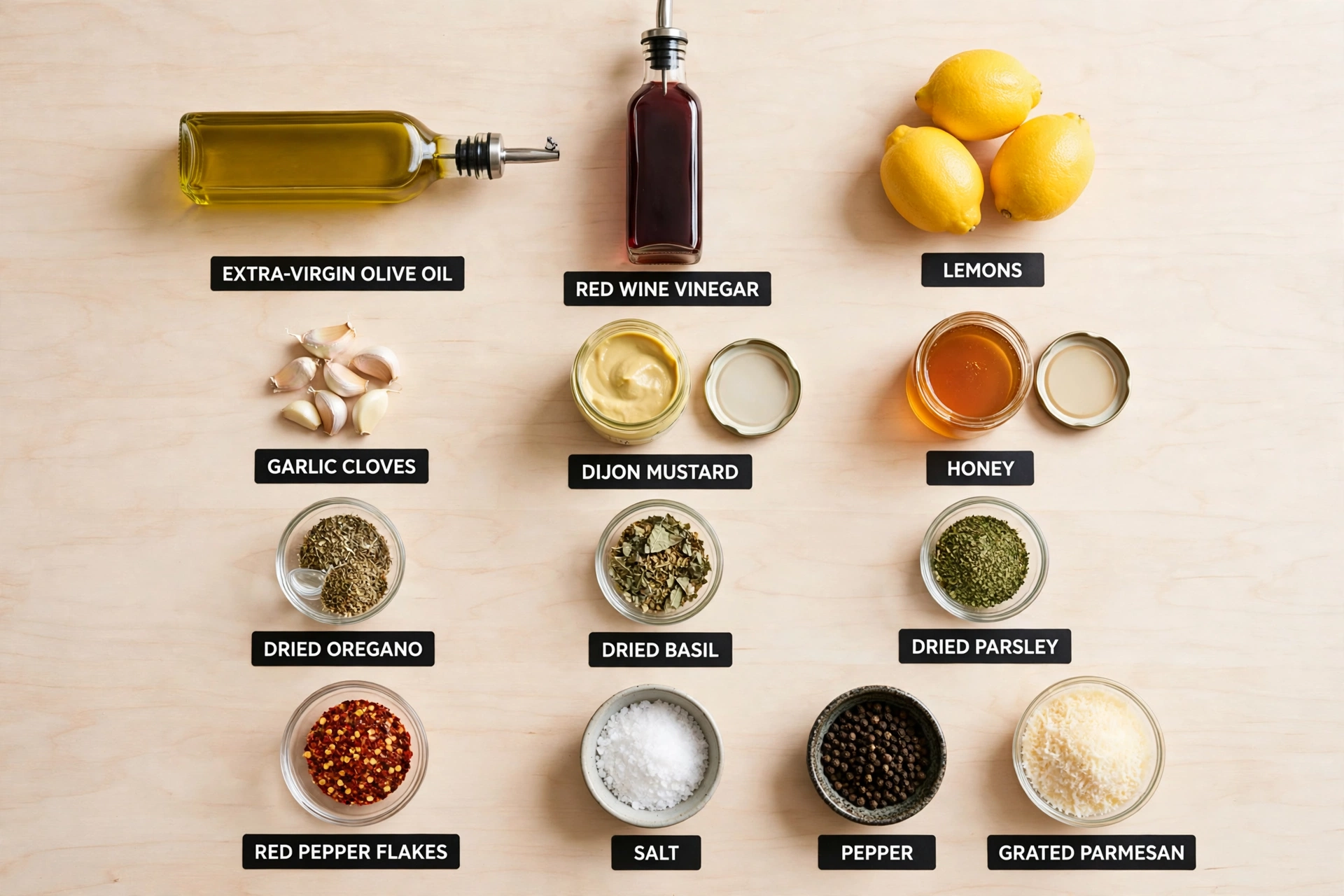
- 2/3 cup extra-virgin olive oil — The body of the dressing; two-thirds of the bottle is oil, so use one you like the taste of. Substitution: light olive oil for a milder flavor, or avocado oil.
- 1/3 cup red wine vinegar — The main acid; it gives the dressing its classic zesty bite. Substitution: white wine vinegar for a lighter flavor, or apple cider vinegar in a pinch.
- 2 tablespoons fresh lemon juice — Bright, fresh acidity that bottled dressing never has. Substitution: 2 more tablespoons of red wine vinegar.
- 1 tablespoon Dijon mustard — Tang plus emulsification; this is what holds the dressing together. Substitution: 1 tablespoon whole-grain mustard, or 1 teaspoon mustard powder.
- 1 teaspoon honey — Not for sweetness — it rounds off the sharp edges of the vinegar and lemon. Substitution: maple syrup, or a pinch of sugar.
- 2 garlic cloves, finely minced or grated — Sharp, savory depth. Grating gives a smoother dressing than mincing. Substitution: 1/2 teaspoon garlic powder.
- 1 teaspoon dried oregano — The defining herb of Italian dressing. Substitution: 1 tablespoon chopped fresh oregano.
- 1/2 teaspoon dried basil — Sweet and herbal, it softens the oregano. Substitution: 1 tablespoon chopped fresh basil.
- 1/2 teaspoon dried parsley — A mild, green herbal note. Substitution: 1 tablespoon chopped fresh parsley.
- 1/2 teaspoon onion powder — Quiet savory depth without raw onion bite. Substitution: 1 tablespoon finely minced shallot.
- 1/2 teaspoon kosher salt, plus more to taste — Seasons the whole bottle. Substitution: 1/4 teaspoon fine sea salt.
- 1/4 teaspoon black pepper — A little warmth in the background. Substitution: white pepper.
- 1/4 teaspoon red pepper flakes — The “zesty” part; leave it out for a mild dressing. Substitution: a pinch of cayenne.
Optional Finish
- 2 tablespoons finely grated Parmesan cheese — Adds a salty, creamy richness and helps the dressing cling to lettuce. Substitution: Pecorino Romano, or skip it for a dairy-free dressing.
How to Make Italian Dressing
1Step 1 – Whisk the Acid Base
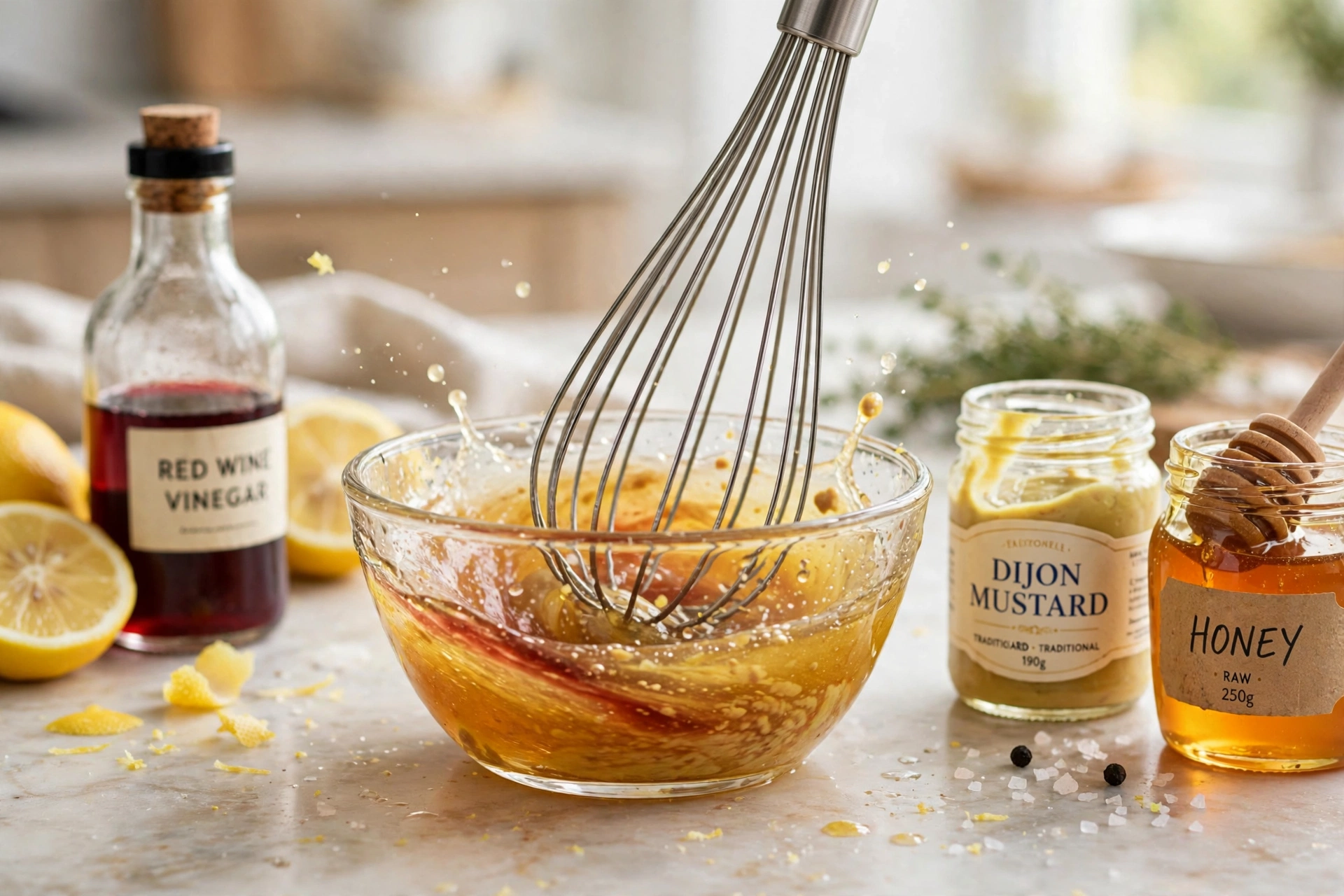
Whisk the acid base. Put the red wine vinegar, lemon juice, Dijon mustard, and honey in a small bowl or a mason jar. Whisk until the honey dissolves and the mustard is fully blended in. Starting with the acids and mustard first is the secret to a dressing that stays together — the mustard is the emulsifier, and it needs to be evenly spread before the oil goes in.
2Step 2 – Stream in the Oil
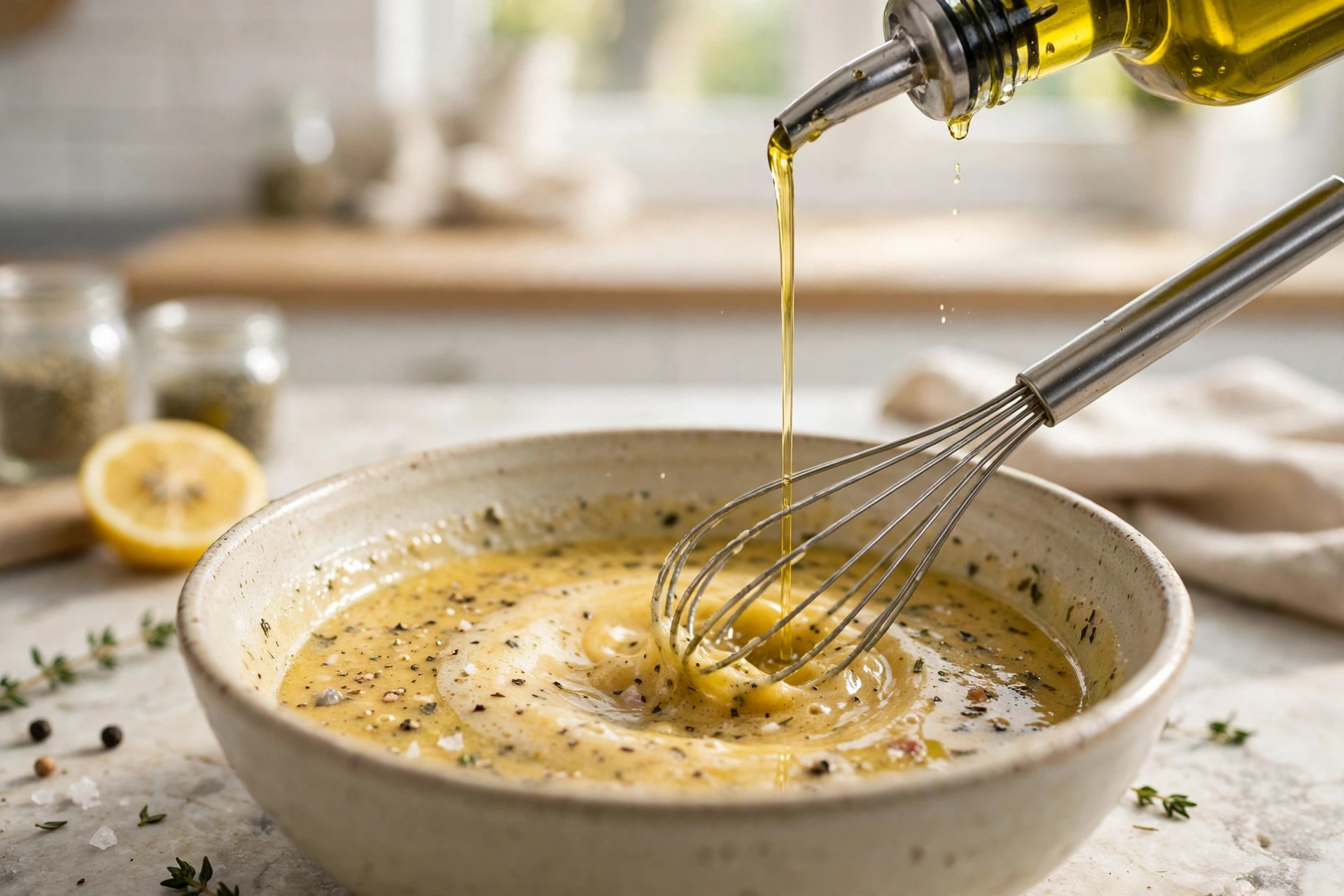
Stream in the oil. While whisking constantly, pour the olive oil in a slow, thin stream. Keep whisking until the dressing turns slightly thick and cloudy — that cloudiness means the oil and vinegar have emulsified. If you are using a jar, screw the lid on tight and shake hard for 30 seconds instead. Either way, do not dump the oil in all at once, or the dressing will separate.
3Step 3 – Stir in the Herbs
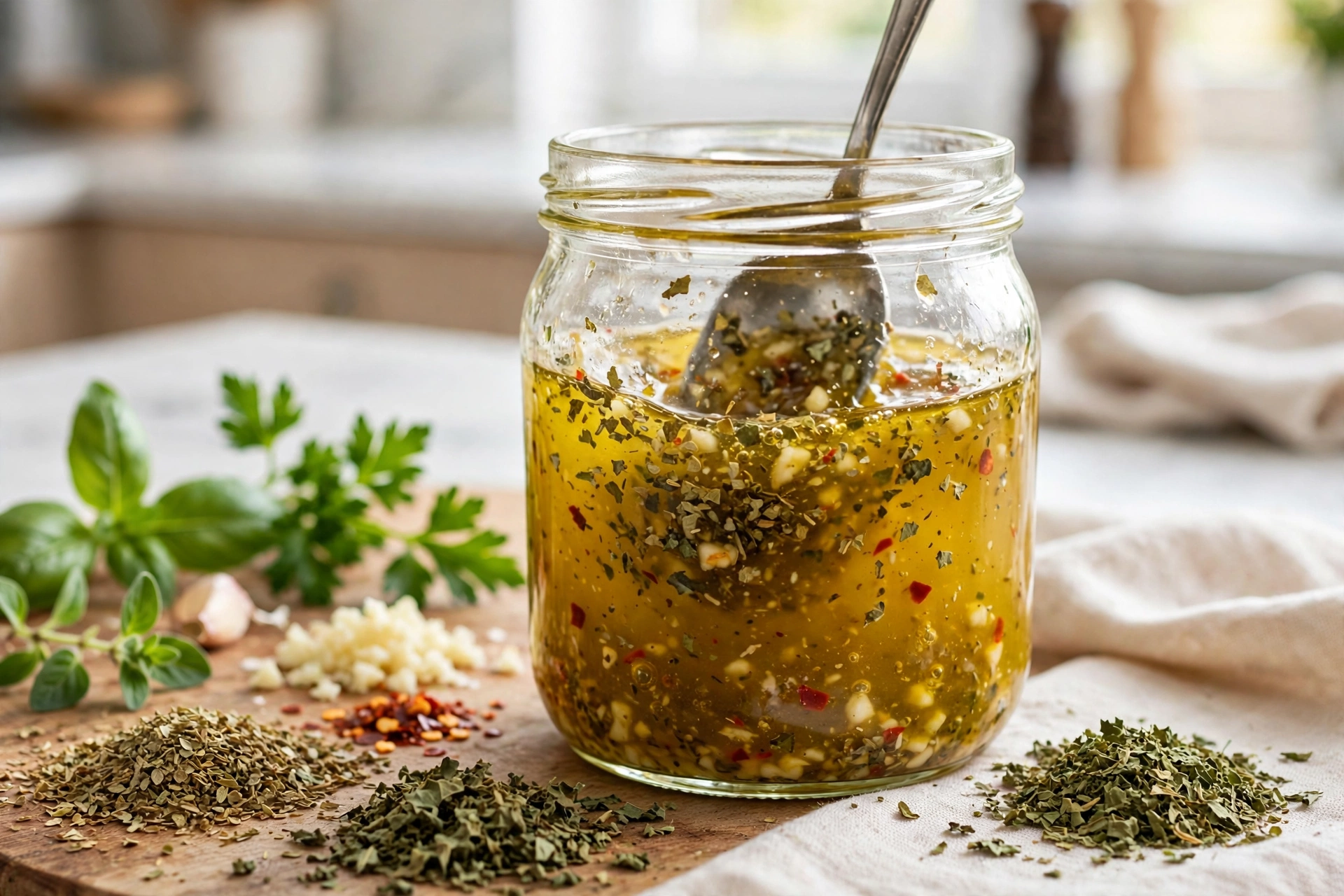
Stir in the herbs. Add the garlic, oregano, basil, parsley, onion powder, salt, black pepper, and red pepper flakes, and whisk again. If you are using Parmesan, stir it in now. Taste the dressing and adjust: more salt if it tastes flat, a squeeze more lemon if it tastes heavy, a drop more honey if the vinegar bites too hard.
4Step 4 – Rest and Serve
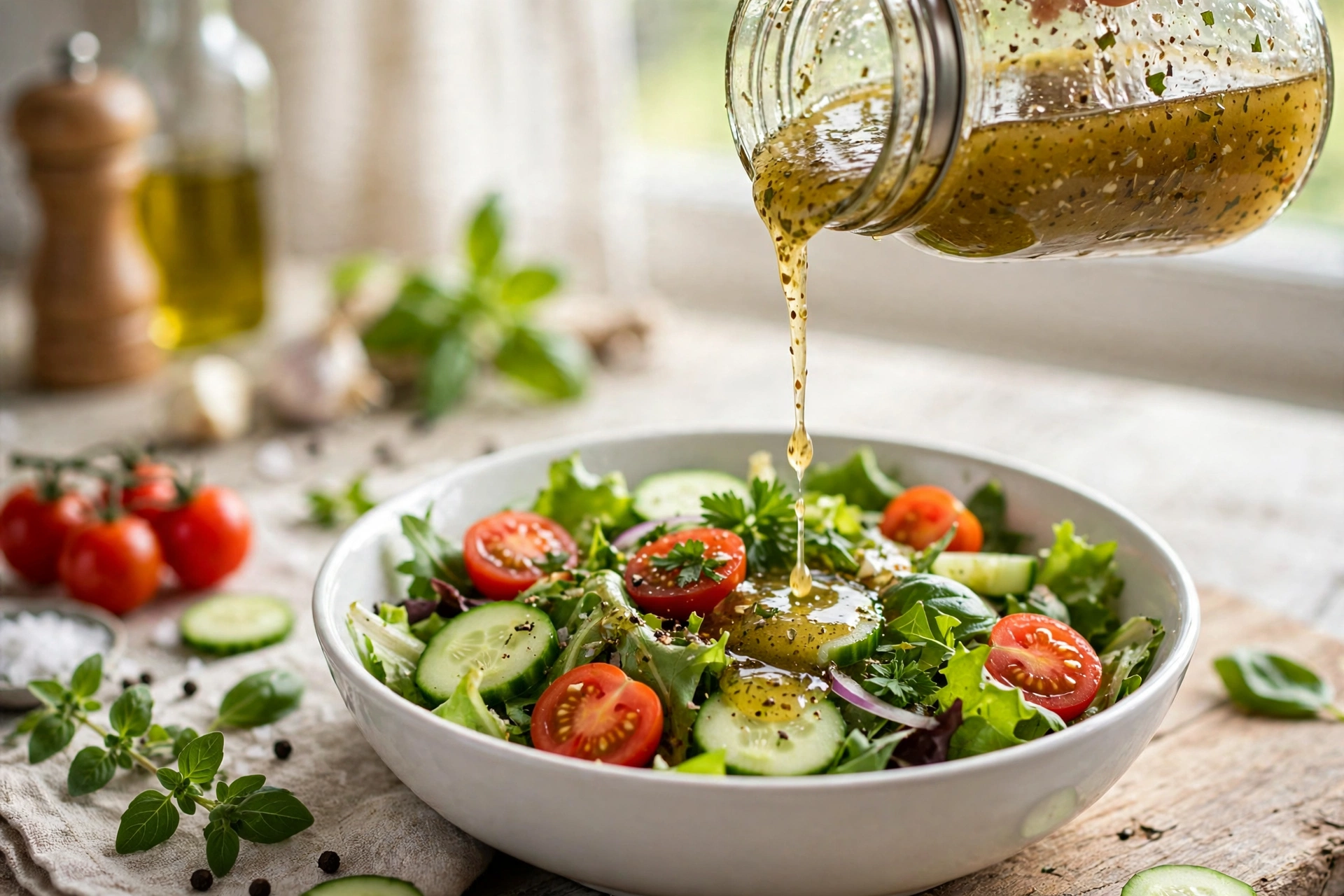
Rest and serve. Let the dressing sit for 30 minutes before using it, if you can. The rest lets the dried herbs soften and the garlic mellow into the oil, and the flavor improves noticeably. Shake or whisk again right before pouring, since a little separation is normal. Drizzle over salad, or use it as a marinade.
Technique: The 3-to-1 Ratio and How to Fix a Broken Dressing
Italian dressing is not really a recipe — it is a ratio. Learn the ratio and the fix, and you will never need to measure again.
The 3-to-1 Rule
Classic vinaigrettes run on 3 parts oil to 1 part acid. This recipe follows it: 2/3 cup oil to 1/3 cup vinegar plus lemon juice. Once you know the ratio, you can scale the dressing to any size and adjust it by taste. Too sharp? Add oil, a spoonful at a time. Too flat or oily? Add vinegar or lemon juice. Too bland? Salt and garlic, not more oil. Taste as you go, and the ratio does the rest.
How to Fix a Broken Dressing
A separated dressing is not ruined — it just needs a fresh emulsifier. Pour the dressing into a clean bowl, add 1 teaspoon of Dijon mustard and 1 teaspoon of warm water, and whisk. Then drizzle the separated dressing back in, a spoonful at a time, whisking constantly. The mustard grabs the oil and vinegar and pulls them back together. The most common cause of breaking is adding the oil too fast, so the slow stream in Step 2 is the real fix; this rescue is only the backup plan.
Choosing the Oil
The oil is two-thirds of the bottle, so it matters more than any other ingredient. A mild extra-virgin olive oil is the best choice: fruity but not bitter. A very peppery, robust olive oil can overpower the herbs, and a cheap “light” olive oil tastes like nothing at all. Never use an oil you would not enjoy on its own, and keep the bottle out of the light — olive oil goes rancid faster than most people expect.
Tips for the Best Italian Dressing
- ✓️ Use a jar, not just a bowl. A mason jar with a tight lid makes shaking easy and doubles as the storage container.
- ✓️ Grate the garlic, don’t chop it. Grated garlic melts into the dressing; chopped garlic stays in chunks and can taste harsh in a cold dressing.
- ✓️ Rest it for 30 minutes. Dried herbs need time to soften and the garlic needs time to mellow. The dressing you taste at minute one is not the dressing you will taste at minute thirty.
- ✓️ Shake before every pour. A little separation is normal, even in a good emulsion. Shake or whisk, then pour.
- ✓️ Warm the jar if the oil clouds. Olive oil firms up in the fridge. Set the jar in warm water for a few minutes or leave it on the counter for 20 minutes before serving.
- ✓️ Taste with lettuce, not a spoon. Dressing tastes sharper on a spoon than it does on salad. Dip a lettuce leaf in to judge the seasoning properly.
- ✓️ Double the dry herbs for pasta salad. Pasta soaks up dressing, so a batch meant for pasta salad needs a stronger hand with the herbs and salt.
Variations
Zesty Italian Dressing
Add 1/2 teaspoon more red pepper flakes and increase the red wine vinegar by 2 tablespoons. The extra acid and heat give the dressing the bold, zesty bite that bottled “zesty” versions promise.
Creamy Italian Dressing
Whisk in 2 tablespoons of mayonnaise and an extra tablespoon of Parmesan. The dressing turns thick, pale, and creamy — perfect for wedge salads and as a sandwich spread.
Lemon Italian Dressing
Swap the red wine vinegar for fresh lemon juice entirely (1/3 cup total) and add 1 teaspoon of lemon zest. The result is lighter, brighter, and citrus-forward — lovely on fish and grilled vegetables.
Spicy Calabrian Italian Dressing
Stir in 1 tablespoon of Calabrian chili paste with the herbs. It adds a fruity, slow heat that plain red pepper flakes cannot match.
Vegan Italian Dressing
Use maple syrup instead of honey and leave out the Parmesan. The dressing is naturally vegan otherwise, and the maple syrup rounds the vinegar exactly the way honey does.
Italian Dressing Dry Mix (Pantry Staple)
Whisk together 1 tablespoon dried oregano, 1 1/2 teaspoons garlic powder, 1 1/2 teaspoons onion powder, 1 teaspoon dried basil, 1 teaspoon dried parsley, 1 teaspoon sugar, 1 teaspoon salt, and 1/2 teaspoon black pepper. Store in a small jar for up to 6 months. To make dressing, whisk 1 tablespoon of the mix with 1/2 cup olive oil, 2 tablespoons red wine vinegar, and 1 tablespoon water.
What to Serve With Italian Dressing
This dressing earns its place on the table by going with almost everything. Toss it with a simple green salad, and it turns lettuce, tomato, and cucumber into a real dish. It is the natural partner for chipotle chicken salad when you want a lighter, brighter dressing instead of a creamy one, and it wakes up a low carb taco salad beautifully. Beyond salad, pour it over roasted vegetables, drizzle it on grilled chicken, or toss it through a pasta salad — the acid and herbs cut through rich food. It also makes a quick marinade: coat chicken or shrimp, rest 15 minutes for fish or up to 2 hours for chicken, then grill. And do not overlook the simplest use of all — good bread, torn and dipped, with a bowl of this dressing beside it.
Storage
In the Fridge
Store the dressing in a sealed jar in the refrigerator for up to 5 days. That is shorter than most recipes claim, and the reason is the fresh garlic: raw garlic in oil loses its fresh flavor quickly and should not be kept for a week. Shake well before each use.
The Garlic Rule
If you want the dressing to last longer, leave the fresh garlic out and use 1/2 teaspoon of garlic powder instead. A garlic-powder version keeps for up to 2 weeks in the fridge. Alternatively, make the dry mix from the variations section and whisk a fresh batch whenever you need one — it takes two minutes.
In the Freezer
Do not freeze Italian dressing. The oil and vinegar separate permanently, the herbs turn bitter, and the texture never comes back. Make a fresh batch instead — it only takes five minutes.
Frequently Asked Questions
How long does homemade Italian dressing last?
Up to 5 days in the fridge in a sealed jar, because of the fresh garlic. If you use garlic powder instead of fresh garlic, it keeps for up to 2 weeks. Always shake before using, and throw it out if it smells off or tastes bitter.
Why does my Italian dressing separate?
Separation is normal for a vinaigrette — oil and vinegar always want to part ways. Shake or whisk before every pour. If it separates badly, the oil was probably added too fast. Fix it by whisking 1 teaspoon of Dijon mustard with 1 teaspoon of warm water in a clean bowl, then drizzling the separated dressing back in slowly while whisking.
What is the difference between Italian dressing and zesty Italian dressing?
They share the same base, but zesty Italian dressing has more vinegar and more heat — usually extra red pepper flakes and a little more garlic. This recipe becomes the zesty version by adding 1/2 teaspoon more red pepper flakes and 2 extra tablespoons of red wine vinegar.
Can I use Italian dressing as a marinade?
Yes. It is an excellent marinade for chicken, shrimp, and vegetables. Marinate fish or shrimp for 15 minutes and chicken for up to 2 hours. Do not marinate longer than that — the vinegar and lemon juice will start to break down the surface of the meat and make it mushy.
Is homemade Italian dressing healthier than bottled?
Generally, yes. Homemade dressing has no preservatives, no added sugar beyond a teaspoon of honey, and no artificial flavors. You control the salt and the oil quality. A bottled dressing often contains more sodium and sugar than this version.
Can I make Italian dressing without Parmesan?
Yes. The Parmesan is optional and the dressing is excellent without it. Leave it out for a dairy-free or vegan version — just use maple syrup instead of honey as well.
Try These Next
- Chipotle Chicken Salad — smoky chicken salad that loves a bright, zesty dressing.
- Low Carb Taco Salad — a fresh, crunchy taco salad that this dressing wakes right up.
- Salsa Verde — another homemade condiment that beats the jarred version, every single time.
- Ground Turkey Tacos — lean turkey tacos; try this dressing as a drizzle over the top.
- Homemade Corn Tortillas — warm, fresh tortillas with a salad dressed in this Italian dressing on the side.
- Fresas con Crema — strawberries in sweet cream, for the sweet finish after a salad-led meal.
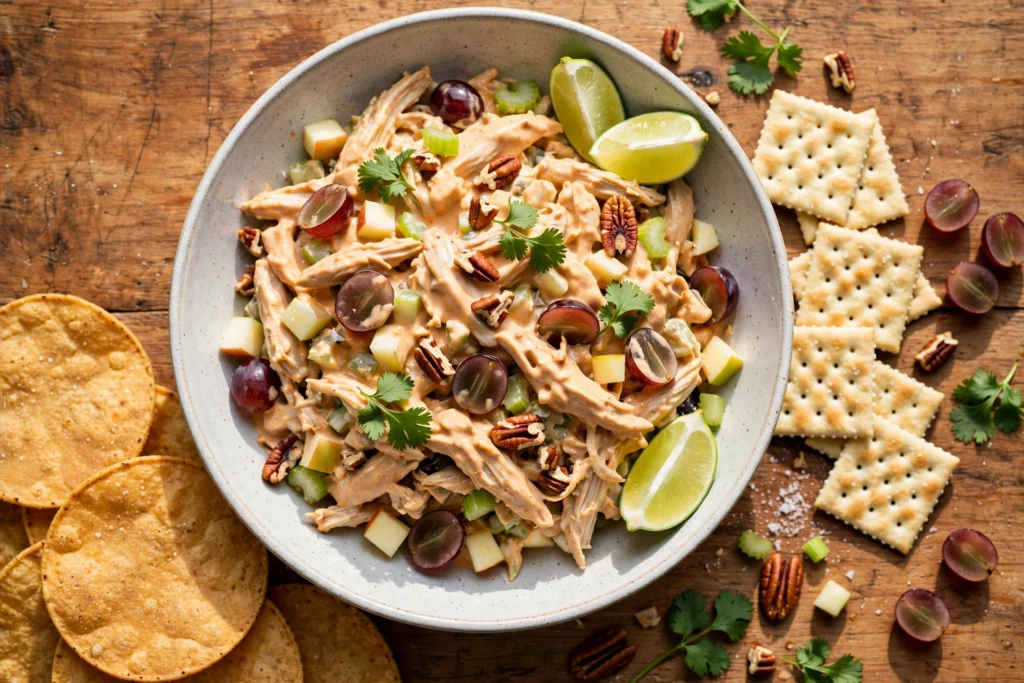
- Ensalada de Pollo — creamy chipotle-lime Mexican chicken salad, ready in 25 minutes.
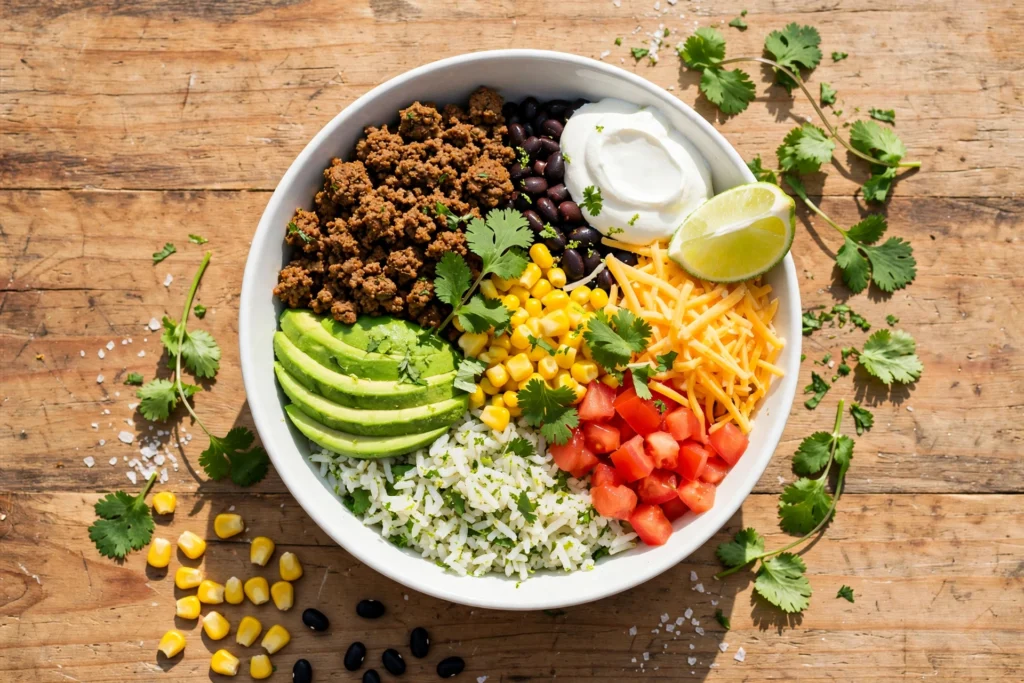
- Taco Bowls — build-your-own taco bowls, ready in 40 minutes.
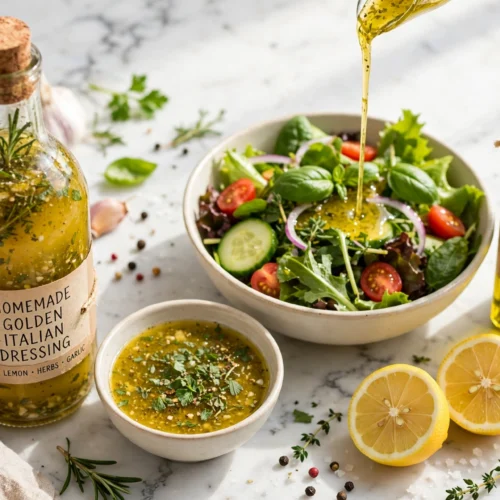
Italian Dressing

Ingredients
- 2/3 cup extra-virgin olive oil
- 1/3 cup red wine vinegar
- 2 tablespoons fresh lemon juice
- 1 tablespoon Dijon mustard
- 1 teaspoon honey
- 2 garlic cloves finely minced or grated
- 1 teaspoon dried oregano
- 1/2 teaspoon dried basil
- 1/2 teaspoon dried parsley
- 1/2 teaspoon onion powder
- 1/2 teaspoon kosher salt plus more to taste
- 1/4 teaspoon black pepper
- 1/4 teaspoon red pepper flakes
- 2 tablespoons finely grated Parmesan cheese optional
Instructions
- Put the red wine vinegar, lemon juice, Dijon mustard, and honey in a small bowl or mason jar. Whisk until the honey dissolves and the mustard is fully blended.
- While whisking constantly, pour the olive oil in a slow, thin stream. Keep whisking until the dressing turns slightly thick and cloudy. If using a jar, screw the lid on tight and shake hard for 30 seconds instead.
- Add the garlic, oregano, basil, parsley, onion powder, salt, black pepper, and red pepper flakes and whisk again. Stir in the Parmesan if using. Taste and adjust the seasoning.
- Let the dressing rest for 30 minutes if you can, then shake or whisk again right before serving. Drizzle over salad or use as a marinade.
Notes
- Start with the acids and mustard before the oil — the mustard is the emulsifier and it needs to be evenly spread first.
- Pour the oil in a slow, thin stream while whisking, or the dressing will separate.
- Rest the dressing for 30 minutes before using so the dried herbs soften and the garlic mellows.
- Store in a sealed jar in the fridge for up to 5 days with fresh garlic, or up to 2 weeks with garlic powder instead.
- If the dressing separates, whisk 1 teaspoon Dijon mustard with 1 teaspoon warm water in a clean bowl and drizzle the dressing back in slowly while whisking.
- Olive oil firms up in the fridge — set the jar in warm water for a few minutes before serving.