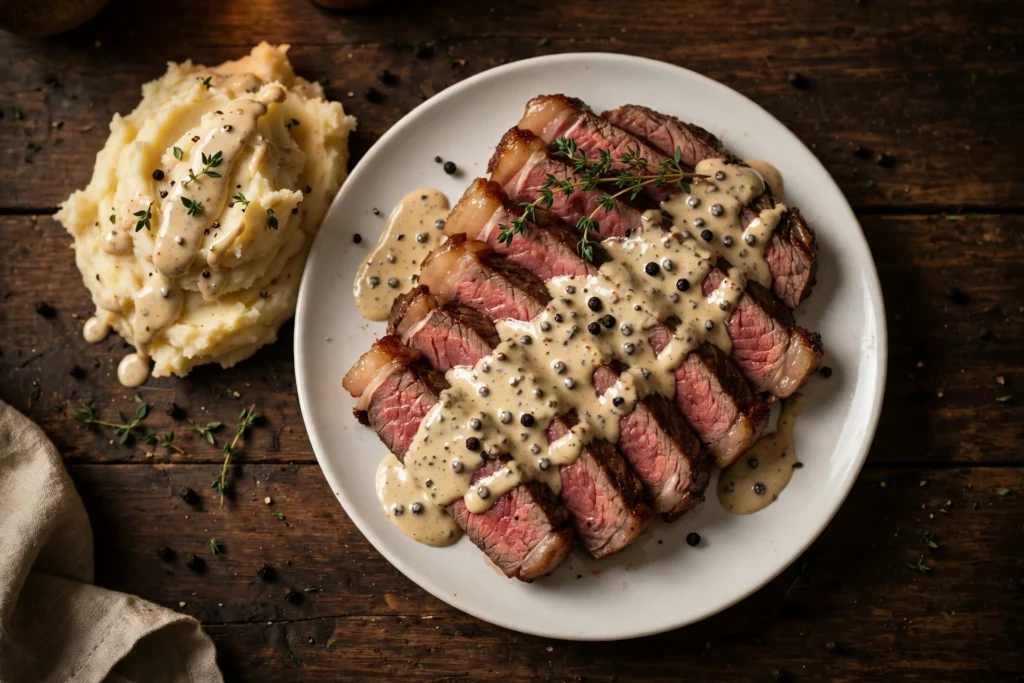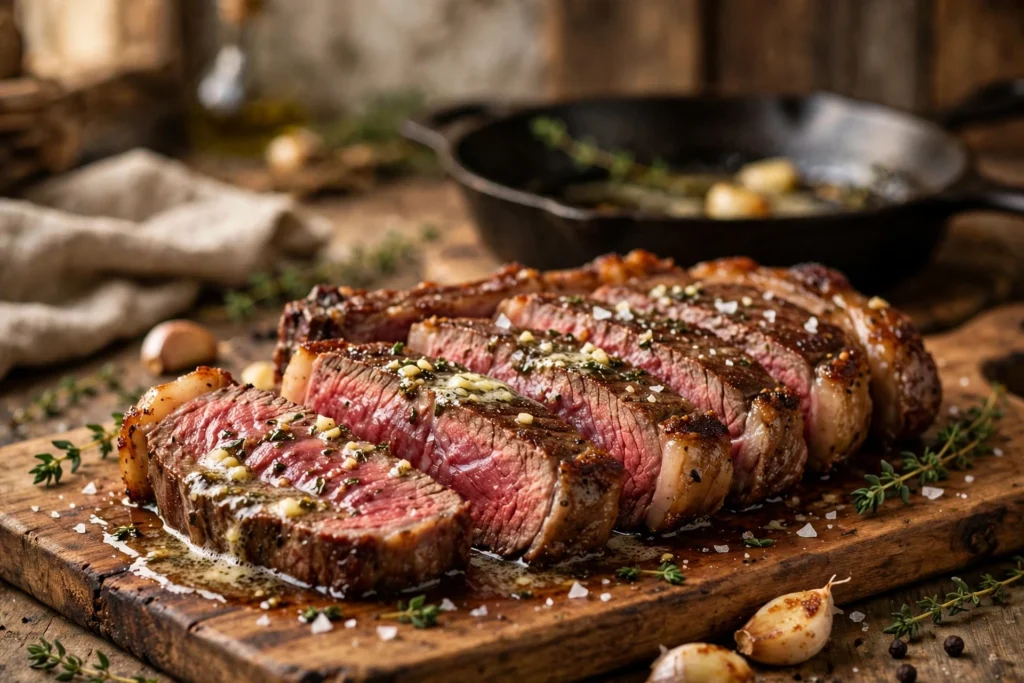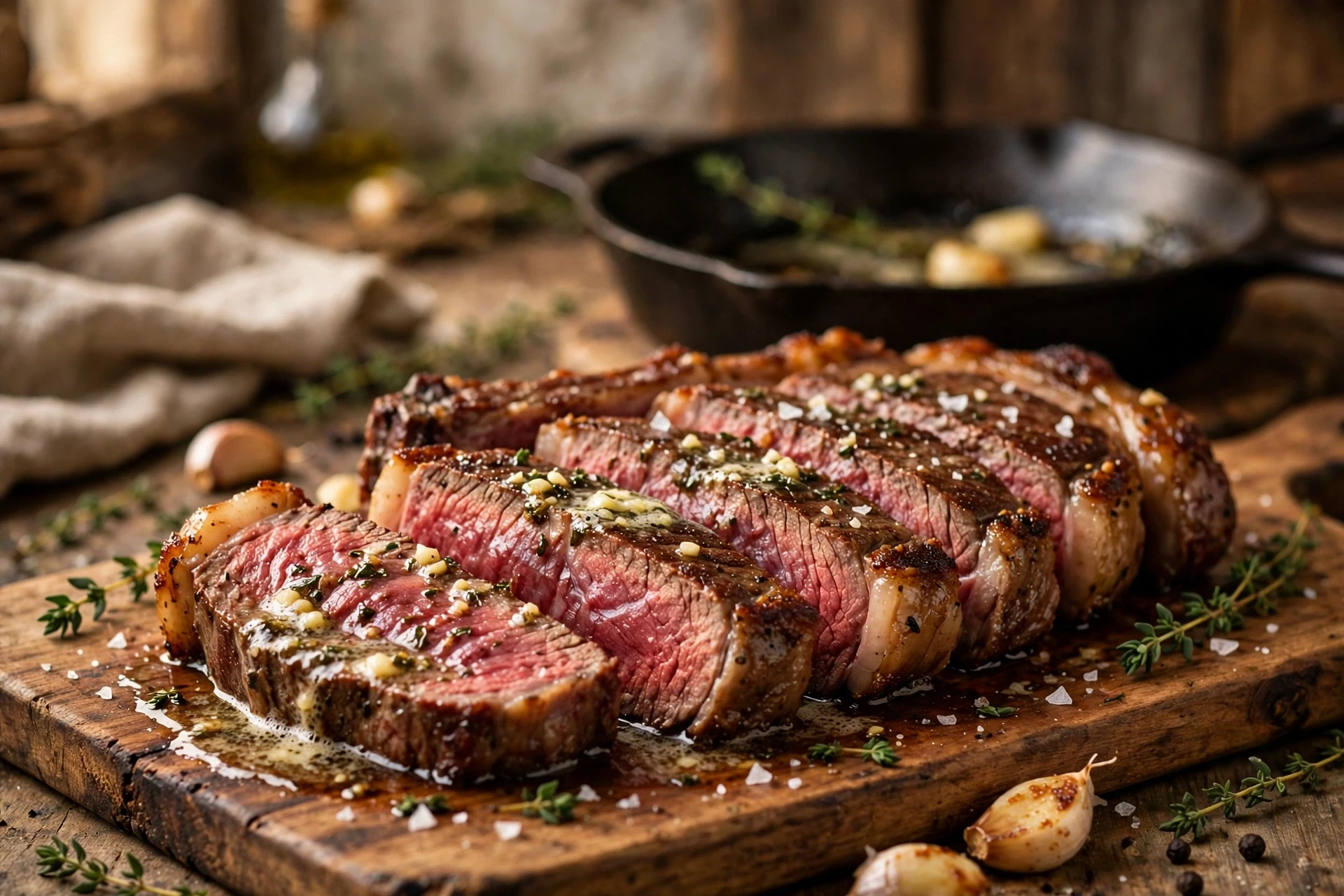
There is a moment when you cut into a perfect medium-rare steak that makes the whole dinner worth it. The knife slides through a deep brown crust, and inside is a warm red center, juicy and tender, with the edges just kissed by the heat. It tastes like a steakhouse — rich, beefy, buttery — and it took ten minutes in a pan you already own. This perfect medium-rare steak is that dinner: two thick ribeyes, a screaming-hot cast iron skillet, a garlic herb butter baste, and a rest that lets the juices settle.
Medium-rare is not a mystery, and it is not luck. It is a temperature, and this recipe gives you three ways to hit it: a thermometer, your eyes, and your thumb. The doneness table below tells you exactly what to look for at every level, the salt guide tells you when to season, and the resting section explains why the steak keeps cooking after it leaves the pan.

Why You’ll Love It
- Steakhouse flavor at home. A deep brown crust, a warm red center, and garlic herb butter — for a third of the restaurant price.
- Ready in 30 minutes. Ten minutes of prep, ten minutes in the pan, ten minutes of rest.
- Three ways to check doneness. A thermometer, visual cues, and a touch test — so you can land medium-rare with or without a thermometer.
- One pan. The steak and the butter baste share a single skillet, so cleanup is easy.
- A full doneness table. Every level from rare to well done, with pull temps, final temps, and what each one looks like.
- Special-occasion worthy. This is the dinner to make when you want to impress someone — including yourself.
Ingredients
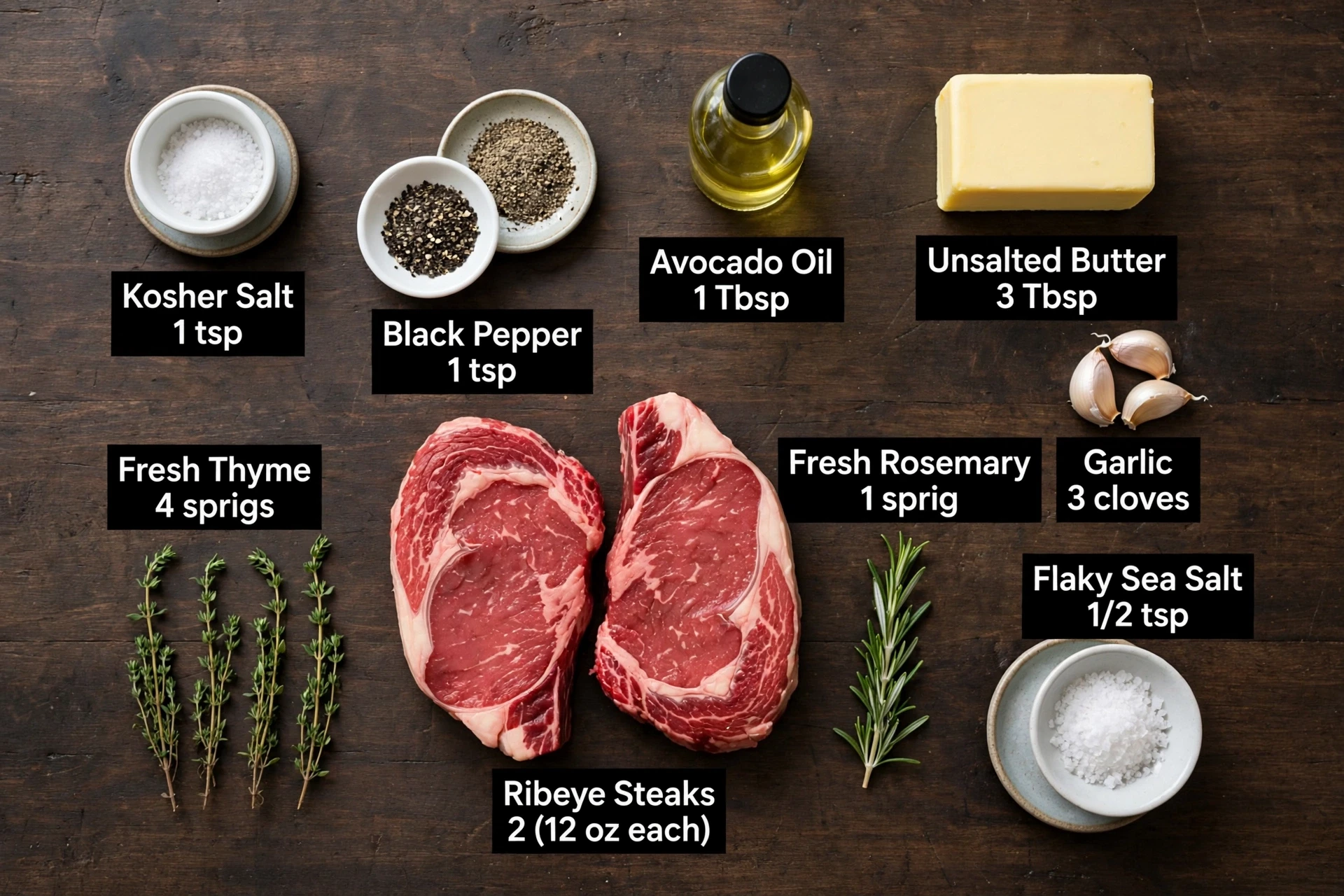
- 2 ribeye steaks, 12 ounces each, 1 1/2 inches thick — Ribeye is the most forgiving cut for medium-rare: its marbling melts into the meat as it cooks, keeping it juicy even if you overshoot by a minute. Buy steaks at least 1 1/2 inches thick — a thin steak goes grey before it browns. Substitution: New York strip, in the same size, for a beefier bite; or filet mignon, for the most tender result.
- 1 teaspoon kosher salt — Seasons the steak and helps the crust form. Kosher salt’s big flakes distribute evenly and dissolve slowly, which matters for the salt timing in the technique section. Substitution: 3/4 teaspoon fine sea salt.
- 1 teaspoon black pepper, coarsely ground — A warm, peppery bite against the rich beef. Coarse-ground pepper survives the sear better than fine pepper, which can taste bitter at high heat. Substitution: 1 teaspoon freshly cracked mixed peppercorns.
- 1 tablespoon avocado oil — For searing at high heat. Its high smoke point means it can take a ripping-hot pan without burning. Substitution: refined grapeseed oil or vegetable oil. Do not use olive oil for the sear — it smokes too early.
- 3 tablespoons unsalted butter — For the baste. Unsalted lets you control the seasoning, and the milk solids brown into a nutty, golden butter that perfumes the steak. Substitution: salted butter, with a pinch less salt on the steak.
- 3 garlic cloves, smashed — Savory depth in the butter baste. Smash them flat with the side of a knife — smashed cloves perfume the butter without burning the way minced garlic would. Substitution: 1/2 teaspoon garlic powder, added with the butter.
- 4 sprigs fresh thyme — The classic steak herb. Thyme holds up to the heat and gives the butter a woodsy, savory note. Substitution: 4 sprigs of fresh oregano, or 1 teaspoon of dried thyme added with the butter.
- 1 sprig fresh rosemary — Bold and piney, rosemary is the other classic steak herb. One sprig is enough — more can overpower the beef. Substitution: 2 more sprigs of thyme, if you do not like rosemary.
- 1/2 teaspoon flaky sea salt, for finishing — The final touch. Flaky salt adds tiny crunchy bursts on the sliced steak that kosher salt cannot give. Substitution: a pinch of kosher salt, though you lose the crunch.
How to Make Perfect Medium-Rare Steak
1Step 1: Temper, Pat Dry and Season
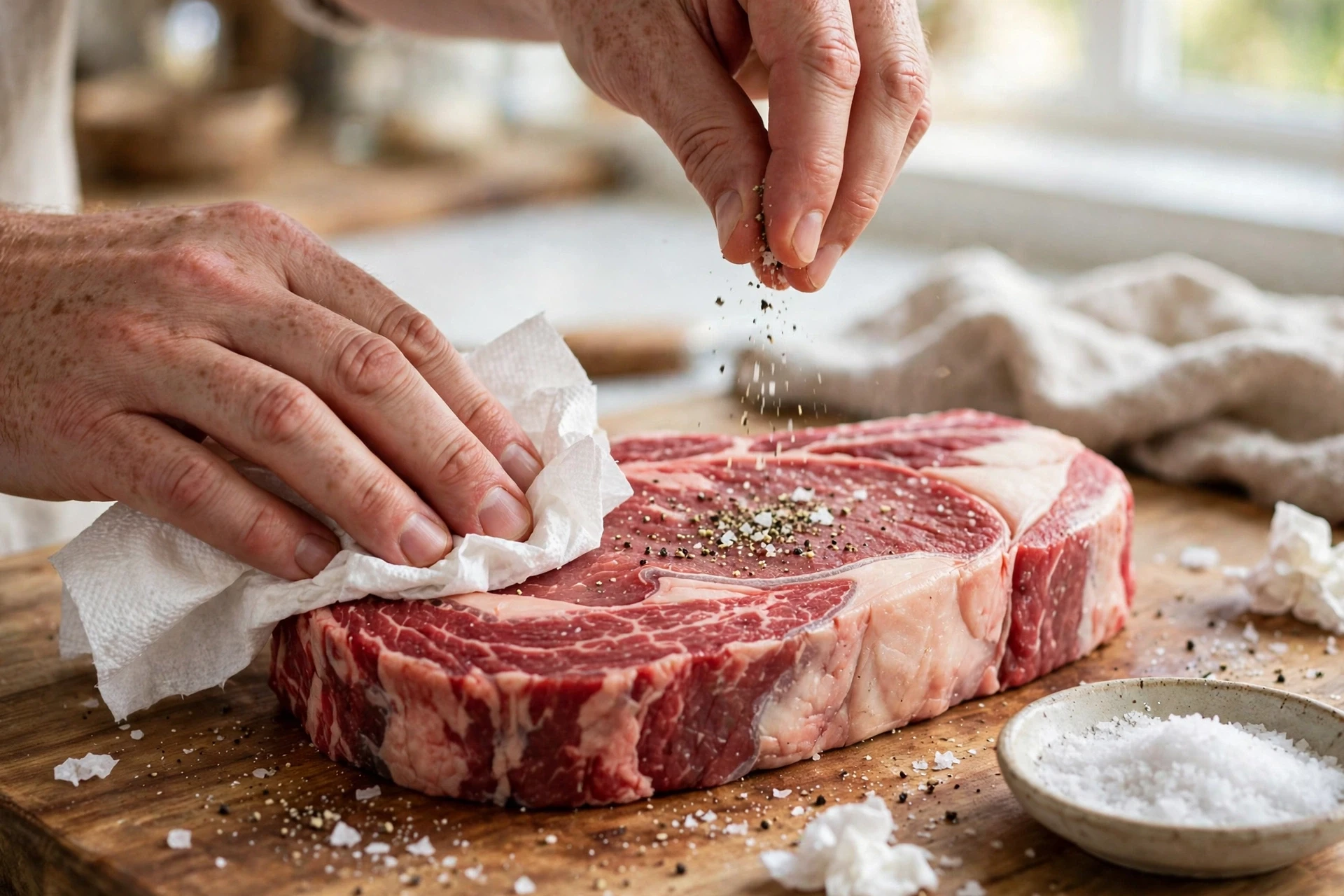
Temper, pat dry and season. Take the steaks out of the fridge 30 minutes before cooking and let them come toward room temperature on a plate. Pat every side very dry with paper towels, including the edges. A dry surface is what makes a brown crust: wet steak steams, and steamed steak turns grey. Season both sides and the edges generously with the kosher salt and black pepper just before cooking.
2Step 2: Sear the First Side
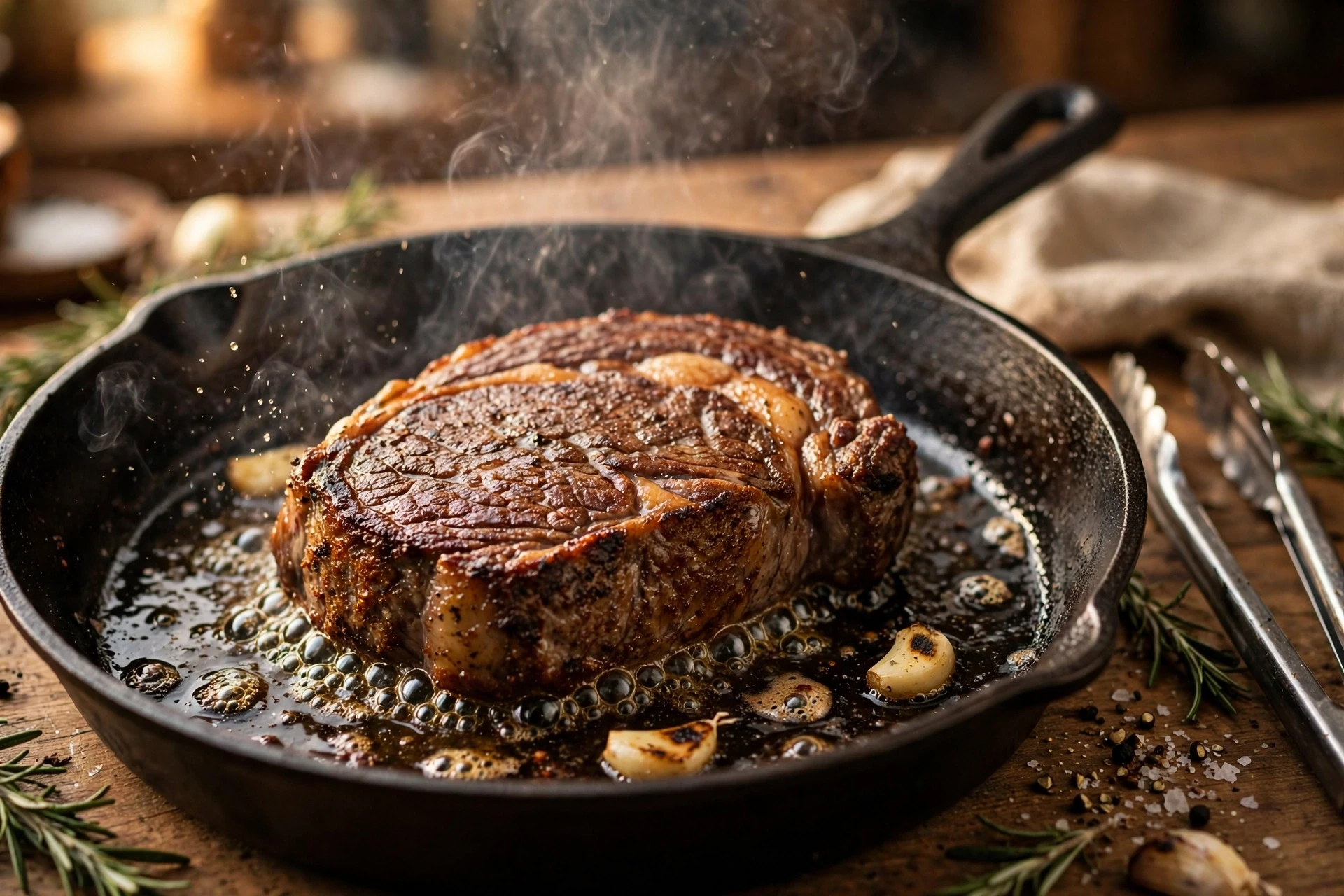
Sear the first side. Heat the avocado oil in a large cast iron skillet over high heat for 3 to 4 minutes, until the oil shimmers and just starts to smoke. Lay the steaks in the pan away from you, so any oil splatter goes away from your hands, and press gently with tongs for 10 seconds so the meat makes full contact. Cook without moving them for 3 to 4 minutes, until a deep brown crust forms. Do not peek, do not press, do not move them — every lift breaks the contact that builds the crust. When the steak releases easily with a nudge, the crust is ready.
3Step 3: Flip, Add Butter and Baste
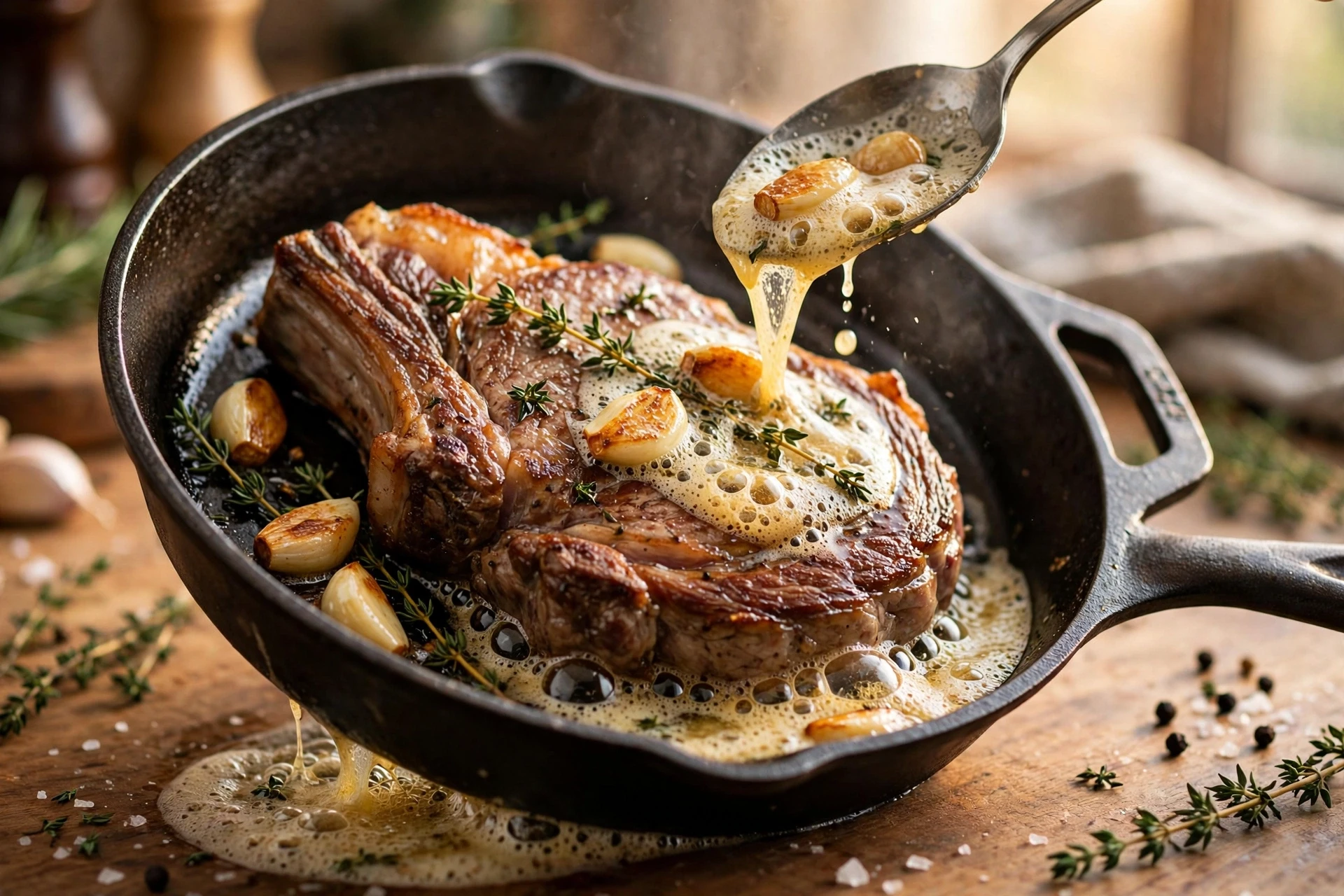
Flip, add butter and baste. Flip the steaks and cook the second side for 2 to 3 minutes. Reduce the heat to medium, then add the butter, smashed garlic, thyme and rosemary to the pan. As soon as the butter melts and foams, tilt the pan slightly so the butter pools on one side, then spoon the bubbling butter over the steaks again and again for 1 to 2 minutes. The butter does two jobs at once: it cooks the top of the steak gently, and it carries the garlic and herb flavor into every bite.
4Step 4: Rest and Slice
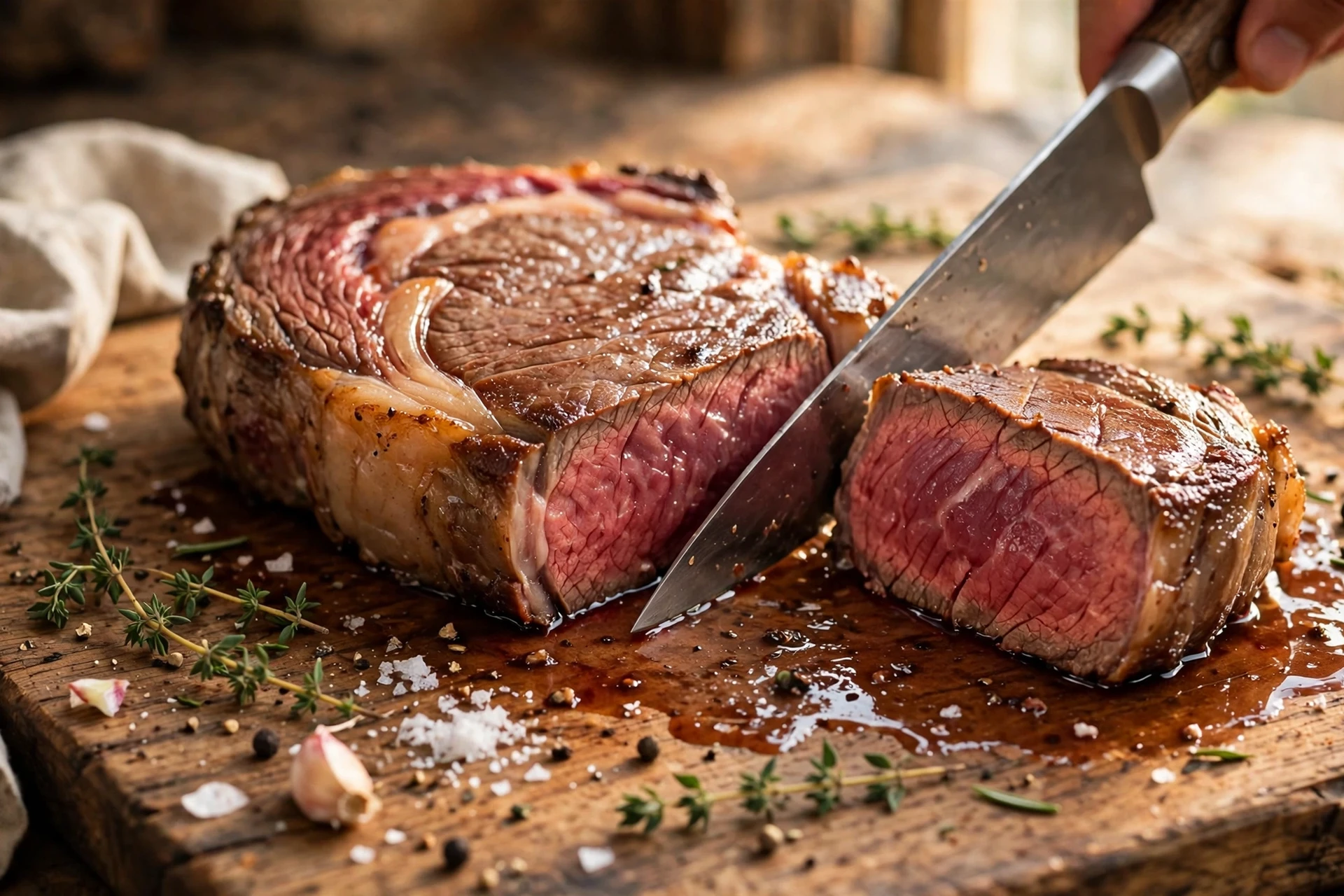
Rest and slice. Check the temperature with an instant-read thermometer in the thickest part — pull the steaks at 125F for medium-rare (see the table below). Transfer them to a cutting board and tent loosely with foil. Rest for 5 to 10 minutes: the temperature climbs another 5 degrees, the juices redistribute, and the center settles into a warm red. Slice against the grain into 1/2-inch strips, spoon the warm pan butter over the top, and finish with the flaky sea salt.
Technique: The Doneness Table, the Salt, and the Rest
Three things decide whether your steak is medium-rare or a miss: the pull temperature, the salt timing, and the rest.
The Doneness Table
Use a thermometer when you can, and your eyes when you cannot. Pull the steak off the heat 5 degrees before your target — it climbs about 5 degrees while it rests. These are final temperatures after resting:
| Doneness | Pull temperature | Final temperature | What it looks like |
|---|---|---|---|
| Rare | 115F | 120F | Cool red center, very soft to the touch |
| Medium-rare (recommended) | 125F | 130-135F | Warm red center, yielding but springy |
| Medium | 135F | 140-145F | Warm pink center, firm with slight give |
| Medium-well | 145F | 150-155F | Slightly pink center, firm |
| Well done | 155F | 160F and up | No pink, very firm throughout |
Without a thermometer, use the touch test: press the center of the steak. Rare feels very soft, like the base of your thumb when your hand is relaxed. Medium-rare feels like that spot when you touch thumb to index finger — yielding, with a spring back.
When to Salt: Now or 40 Minutes Ahead — Never In Between
Salt timing is the detail most home cooks get wrong. You have two good options. Option one: salt right before the steak hits the pan, as this recipe does. The salt seasons the crust and never has time to draw out moisture. Option two: salt at least 40 minutes ahead and leave the steak uncovered in the fridge. The salt draws moisture out, then the moisture dissolves the salt and gets reabsorbed, seasoning the meat deeply and drying the surface — the best crust of all. The bad option is the middle: salting 10 or 20 minutes ahead. That is exactly when the salt has pulled moisture to the surface but the meat has not reabsorbed it yet, so the steak goes into the pan wet, and a wet steak steams instead of searing. So salt now, or salt 40 minutes ahead — never in between.
The Rest and Carryover Cooking
Cut a steak the second it leaves the pan and the juices run out onto the board. Wait, and those juices settle back into the meat. The rule is simple: rest for about half the cooking time, tented loosely with foil — about 5 to 10 minutes for these steaks. While it rests, the temperature keeps climbing about 5 degrees. That is carryover cooking, and it is why you pull the steak at 125F instead of 130F. Pull 5 degrees early and the rest delivers you exactly to medium-rare.
Which Cut Is Best for Medium-Rare
Ribeye is the best all-round choice for medium-rare: its marbling melts as it cooks, basting the meat from the inside, and it forgives a minute of overcooking. New York strip is a close second — beefier, firmer, a little leaner, with a great crust. Filet mignon is the most tender cut, but it is lean, so it dries out fast if you overshoot — use a thermometer with filet, every time. Whatever you choose, buy it thick: 1 1/2 inches is the sweet spot.
Tips for the Best Medium-Rare Steak
- ✔️ Buy it thick. A 1 1/2-inch steak gives the crust time to form before the center passes medium-rare. A thin steak cannot do both.
- ✔️ Pat it very dry. Moisture is the enemy of a brown crust — dry the surface, the edges, and the fat cap.
- ✔️ Salt now or 40 minutes ahead. Never salt 10 or 20 minutes before cooking — that is when the surface is wettest.
- ✔️ Do not move the steak. Let the crust release on its own; if it sticks, it needs more time.
- ✔️ Add the butter late. Butter burns at searing heat — it goes in after the flip, never before.
- ✔️ Pull 5 degrees early. The steak climbs about 5 degrees while it rests, so pull at 125F for a 130F finish.
- ✔️ Rest 5 to 10 minutes. The juices settle and the temperature evens out, so the center stays tender.
Variations
Filet Mignon, Medium-Rare
Swap the ribeye for 2 filet mignon steaks, 8 ounces each, about 1 1/2 inches thick. Filet is the most tender cut, so sear it for 3 minutes per side, baste well, and use a thermometer — filet goes from medium-rare to medium in about 60 seconds.
What to Serve With Medium-Rare Steak
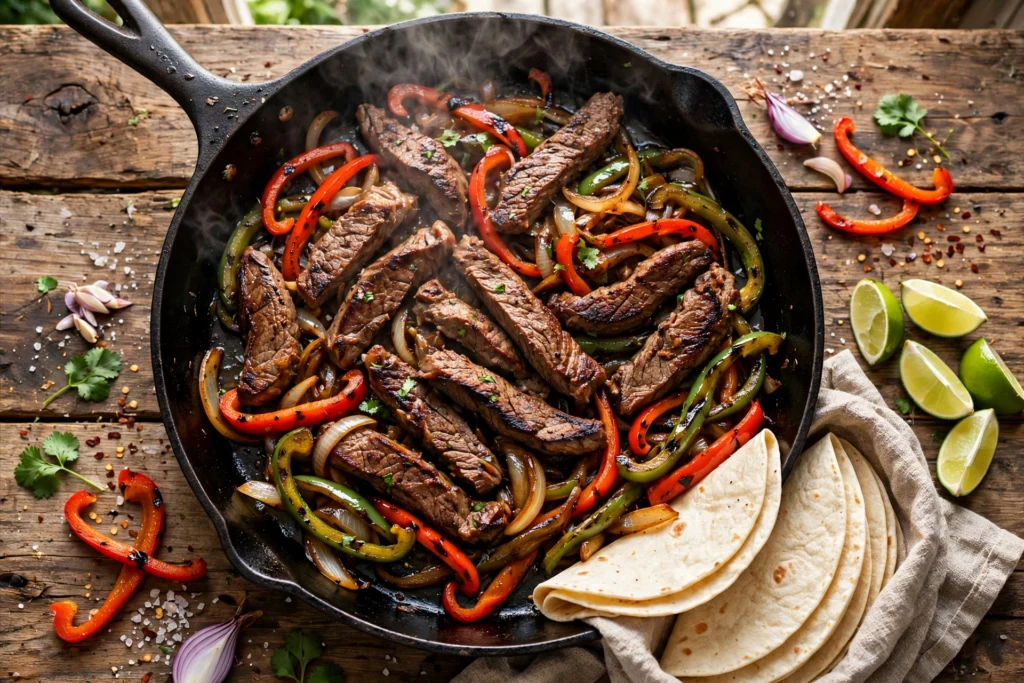
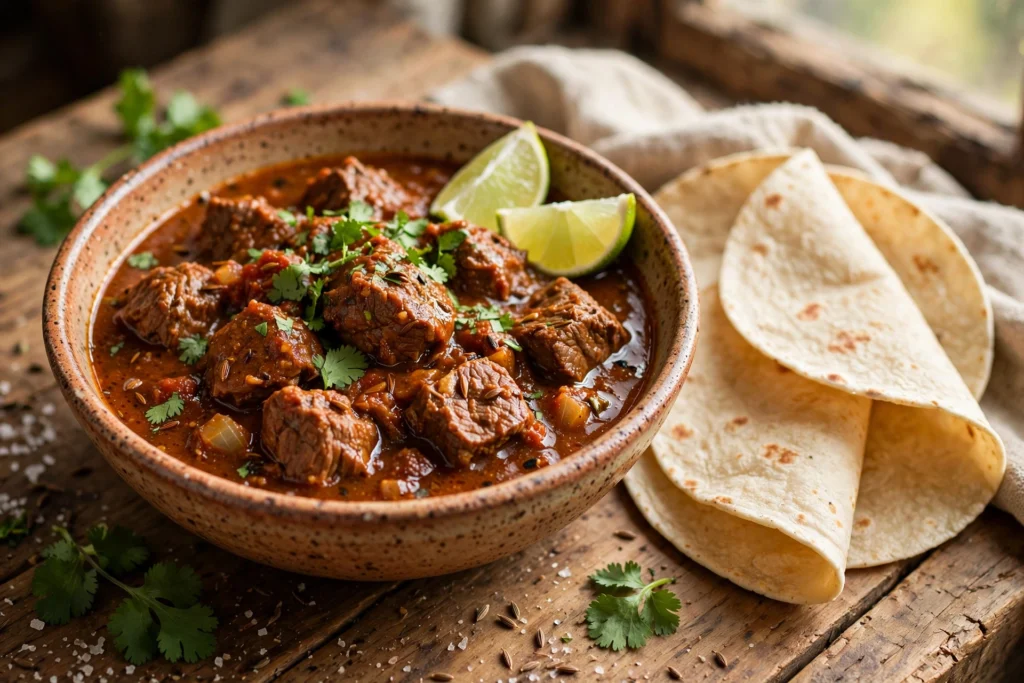
A steak this rich deserves classic steakhouse sides. Start with creamy mashed potatoes — they are the best vehicle for extra garlic herb butter. Crispy fries are the bistro choice, and a simple green salad cuts through the richness. Roasted asparagus or garlicky green beans add color and crunch. For more beef dinners, cottage pie is the comfort bake for the next cold night, slow cooker brisket cooks itself all day, carne asada brings smoky grilled steak with lime and cilantro, and carne guisada is tender Mexican beef stew in a rich chile sauce. For drinks, a glass of red wine is the classic pairing, or sparkling water with lemon if you prefer.
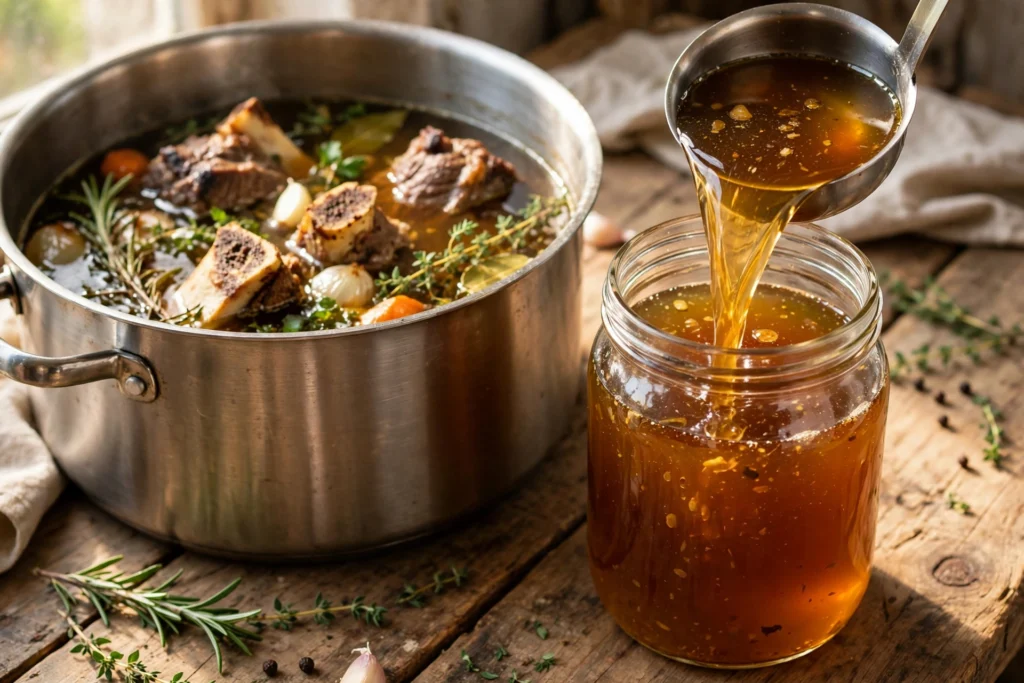
A pan sauce made with homemade beef stock is the classic finish for this steak.
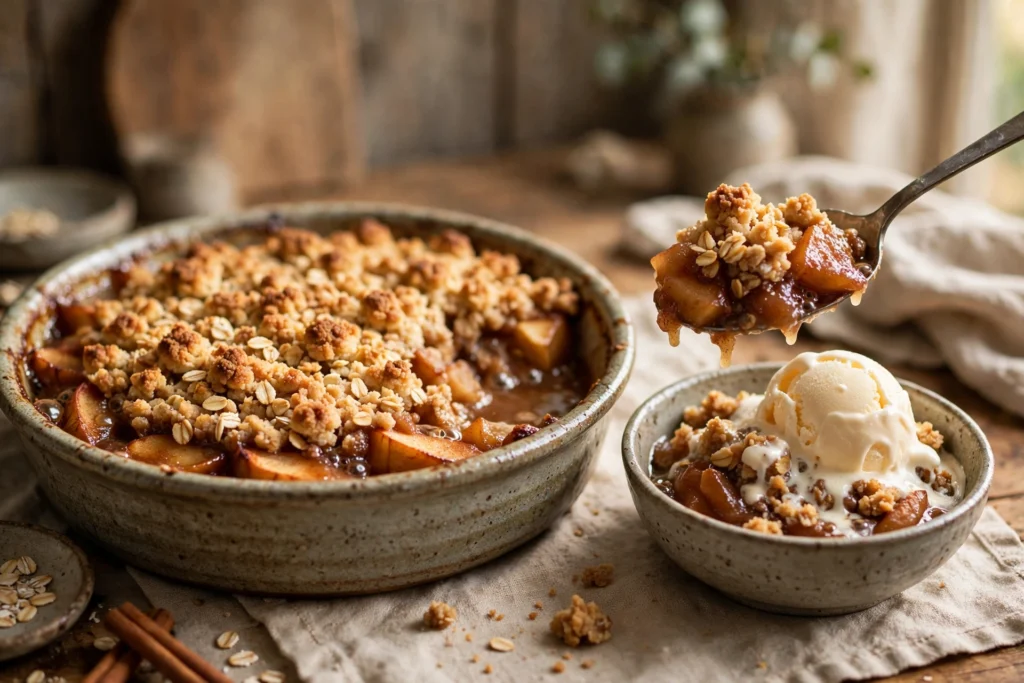
End the steak dinner with apple crumble and vanilla ice cream.
Storage
In the Fridge
Let the steak cool completely, then store it in an airtight container in the fridge for up to 4 days. Keep any leftover garlic herb butter in a small separate container — it is excellent spooned over vegetables or spread on toast the next day.
Reheating
Reheat the steak gently, or it overcooks in seconds. The best method is a 250F oven on a wire rack over a sheet pan, until it reaches your desired temperature, then rest for 5 minutes. A quicker method: warm the slices in a covered skillet over low heat with a spoonful of the leftover butter for 1 to 2 minutes. Avoid the microwave — it overcooks the edges fast and turns medium-rare into well done.
In the Freezer
Cooked steak freezes for up to 2 months, wrapped tightly in plastic wrap and then foil, though the texture is best fresh. Thaw overnight in the fridge before reheating gently. Raw steaks freeze better than cooked ones, so if you bought extra, freeze them raw and cook them fresh.
Frequently Asked Questions
What temperature is medium rare steak?
Medium-rare steak finishes at 130 to 135F, with a warm red center. Because the temperature climbs about 5 degrees while the steak rests, pull it off the heat at 125F and let the rest carry it to 130F.
How long do you cook a steak for medium rare?
For a 1 1/2-inch thick ribeye in a hot cast iron skillet, cook 3 to 4 minutes on the first side, 2 to 3 minutes on the second side, then 1 to 2 minutes of butter basting — about 8 minutes total in the pan. Time is only a rough guide, though: thickness, pan heat and starting temperature all change it, so check with a thermometer and pull at 125F.
How do you tell if a steak is medium rare without a thermometer?
Use the touch test and your eyes. Press the center of the steak: medium-rare feels yielding but springy, like the base of your thumb when you touch your thumb to your index finger.
Should you salt a steak before cooking?
Yes, but the timing matters. Salt right before cooking, or at least 40 minutes ahead. Salting 10 or 20 minutes ahead is the worst timing — the salt draws moisture to the surface, the meat has not reabsorbed it yet, and the steak goes into the pan wet, which stops the crust from forming.
How long should a steak rest?
Rest a 1 1/2-inch steak for 5 to 10 minutes, tented loosely with foil. The juices redistribute during the rest, so the steak stays juicy when you slice it, and the temperature climbs about 5 degrees to its final target.
What is the best cut for medium rare steak?
Ribeye is the best all-round choice — its marbling keeps it juicy and forgives a minute of overcooking. New York strip is a close second, with a beefier flavor and a firmer bite. Filet mignon is the most tender, but it is lean, so use a thermometer and pull it on time. Whatever you choose, buy it at least 1 1/2 inches thick.
Try These Next
- Carne Asada — smoky grilled steak with lime and cilantro, for your next steak night.
- Steak with Peppercorn Sauce — pan-seared steak with a creamy no-brandy peppercorn sauce, made in the same skillet.
- Slow Cooker Brisket — melt-in-your-mouth beef that cooks itself all day.
- Cottage Pie — a golden-topped comfort bake for the next cold night.
- Carne Guisada — tender Mexican beef stew, slow-simmered in a rich chile sauce.
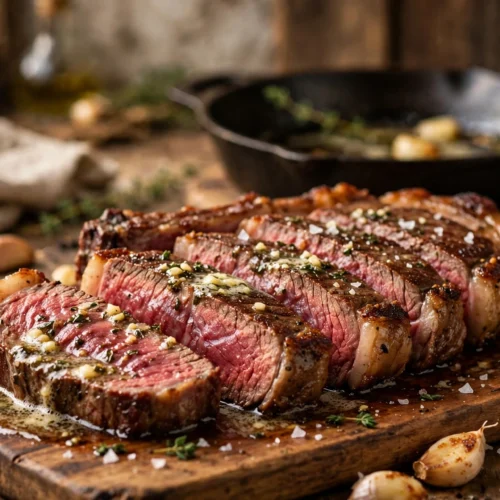
Perfect Medium-Rare Steak
Ingredients
- 2 ribeye steaks 12 ounces each, 1 1/2 inches thick
- 1 teaspoon kosher salt
- 1 teaspoon black pepper coarsely ground
- 1 tablespoon avocado oil
- 3 tablespoons unsalted butter
- 3 garlic cloves smashed
- 4 sprigs fresh thyme
- 1 sprig fresh rosemary
- 1/2 teaspoon flaky sea salt for finishing
Instructions
- Take the steaks out of the fridge 30 minutes before cooking. Pat every side very dry with paper towels, including the edges. Season both sides and the edges with the kosher salt and black pepper just before cooking.
- Heat the avocado oil in a large cast iron skillet over high heat for 3 to 4 minutes, until the oil shimmers and just starts to smoke. Lay the steaks in the pan away from you and press gently with tongs for 10 seconds. Cook without moving for 3 to 4 minutes, until a deep brown crust forms.
- Flip the steaks and cook the second side for 2 to 3 minutes. Reduce the heat to medium and add the butter, smashed garlic, thyme and rosemary. Once the butter melts and foams, tilt the pan so the butter pools and spoon the bubbling butter over the steaks for 1 to 2 minutes.
- Check the temperature with an instant-read thermometer in the thickest part and pull the steaks at 125 degrees F for medium-rare. Transfer to a cutting board and tent loosely with foil. Rest 5 to 10 minutes.
- Slice against the grain into 1/2-inch strips, spoon the warm pan butter over the top, and finish with the flaky sea salt. Serve immediately.
Video
Notes
- Pat the steak very dry before seasoning — moisture is the enemy of a brown crust.
- Salt right before cooking, or at least 40 minutes ahead — never 10 or 20 minutes ahead, when the surface is wettest.
- Pull the steak at 125 degrees F for medium-rare; it climbs about 5 degrees while it rests.
- Buy steaks at least 1 1/2 inches thick — a thin steak goes grey before it browns.
- Add the butter only after the flip — butter burns at searing heat.
- Rest 5 to 10 minutes before slicing so the juices settle and the center stays tender.
- Leftovers keep 4 days in the fridge; reheat gently in a 250 degree F oven so the steak does not overcook.