
New England Clam Chowder
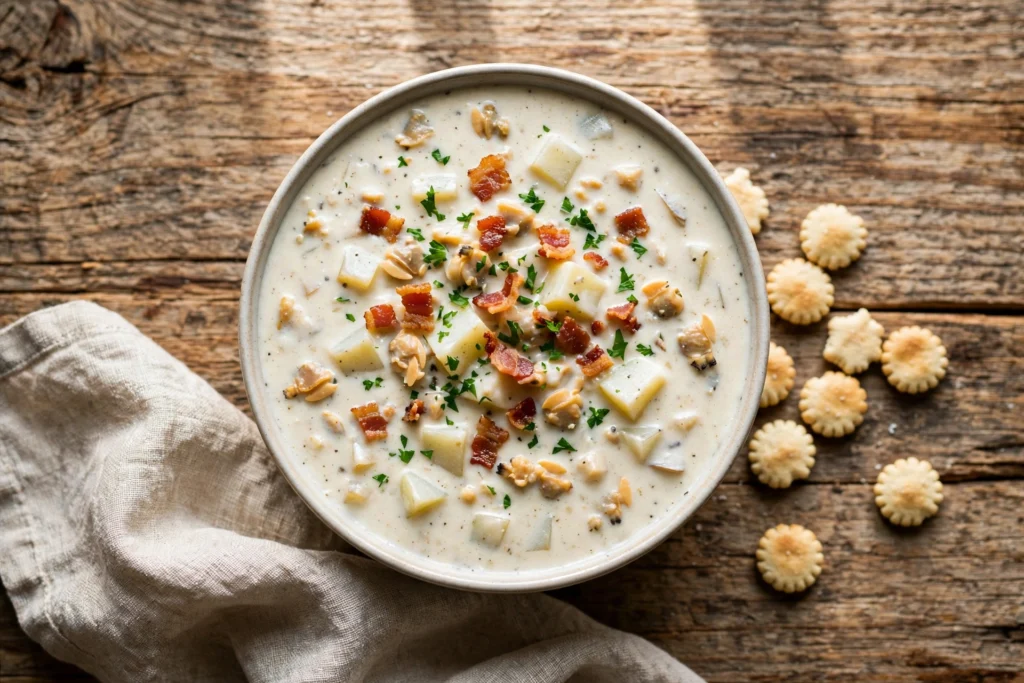
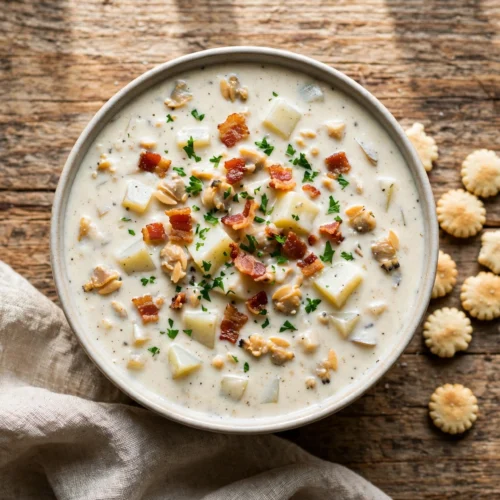
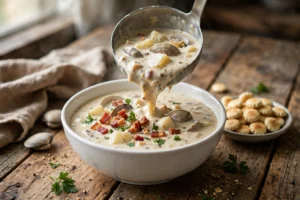
There is a bowl of soup that tastes like a cold day on the New England coast, even when you are nowhere near the ocean. Thick, creamy, and briny, with soft cubes of potato, tender clams, and smoky bacon on top — and it comes together in one pot, in 50 minutes, with canned clams from the pantry.
This is the white chowder, the Boston kind, not the tomato-based Manhattan one. The base is rich but not gluey, the clams stay tender, and the cream never curdles. Below is the cream-base system that makes it foolproof, plus the clam guide and the potato timing that keeps every cube intact.
The Foggy Harbor Bowl
I did not grow up near the ocean, so my first real bowl of clam chowder came from a paper cup at a harbor stand on a cold, gray afternoon. The wind was coming off the water, and that cup was the warmest thing I had held all day. I asked the woman at the stand how she kept the cream from splitting, and she laughed and said, “You never let it boil, honey. Never.” I have cooked chowder by that one rule ever since.
Joanne Helena
Why You’ll Love It
- Ready in 50 minutes, in one pot. Canned clams mean no steaming, no shucking, and no fish counter.
- A cream base that never curdles. The warm-dairy, low-heat system works every single time.
- No floury taste. The flour is cooked out properly, so the chowder tastes like cream and clams, not paste.
- Potatoes that stay in cubes. The timing keeps them tender but intact — never gluey, never mushy.
- Real clam flavor. Bottled clam juice plus the juice from the cans gives the base a deep briny backbone.
- Smoky bacon in every spoonful. Crisped bacon goes in the pot and on top.
- Even better the next day. This chowder thickens and deepens overnight — and the reheat rules keep it silky.
Ingredients
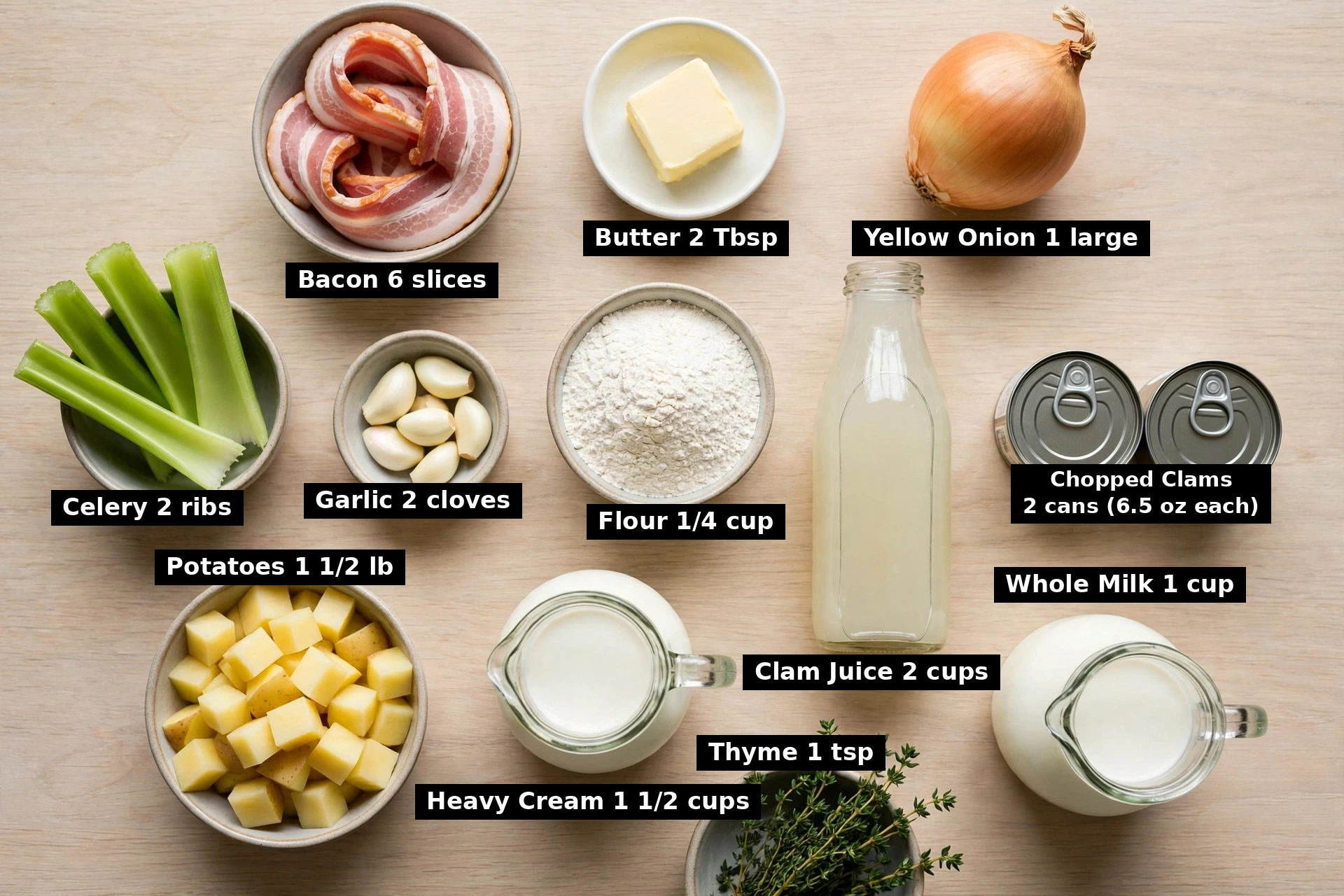
The Chowder Base
- 6 slices thick-cut bacon, chopped (about 6 oz) — The smoky backbone; its fat cooks the whole soup. Substitution: 4 oz salt pork, or 2 tablespoons of butter.
- 2 tablespoons unsalted butter — Melts into the bacon fat for a soft start. Substitution: olive oil.
- 1 large yellow onion, finely diced (about 1 1/2 cups) — Dice it fine, so it melts into the soup. Substitution: white onion, or 2 shallots.
- 2 celery ribs, diced (about 1 cup) — The green note that keeps the chowder from tasting flat. Substitution: diced fennel.
- 2 garlic cloves, minced — Just enough for warmth; it should whisper, not shout. Substitution: 1/2 teaspoon garlic powder.
- 1/4 cup all-purpose flour — The thickener; cooked two full minutes in the hot fat, it leaves no pasty taste. Substitution: 2 tablespoons cornstarch in 2 tablespoons cold water.
- 2 cups bottled clam juice (two 8-oz bottles) — The briny backbone — what makes the soup taste like the ocean. Substitution: clam-can juice topped up with water or broth to make 2 cups.
- 2 cans chopped clams, 6.5 oz each, with their juice — Already cooked, so they go in last and only need warming. Do not drain them. Substitution: 2 dozen fresh littlenecks, steamed and chopped — see Technique.
- 1 1/2 lb Yukon Gold potatoes, peeled and cut into 1/2-inch dice (about 4 cups) — They hold their shape while turning creamy inside. Substitution: red potatoes, unpeeled. Avoid russets; they fall apart.
- 1 bay leaf — Removed before serving; it gives the broth a faint herbal depth. Substitution: 1/4 teaspoon dried thyme.
- 1 teaspoon fresh thyme leaves (or 1/2 teaspoon dried thyme) — The classic chowder herb. Substitution: dried thyme, or chopped fresh parsley.
The Cream Base
- 1 1/2 cups heavy cream — The richness that makes this a New England chowder; its high fat also resists curdling. Substitution: half-and-half, warmed the same way.
- 1 cup whole milk — Lightens the cream so the chowder pours like soup. Substitution: more half-and-half.
To Finish
- 1 teaspoon kosher salt, plus more to taste — Season at the end; clam juice and bacon are already salty. Substitution: fine sea salt.
- 1/2 teaspoon black pepper, freshly ground — A warm bite pre-ground pepper cannot match. Substitution: white pepper.
- 2 tablespoons chopped fresh parsley, for serving — The green finish that brightens a very white bowl. Substitution: snipped fresh chives.
- Oyster crackers, for serving (optional) — The classic companion; they go on top at the table, never stirred in. Substitution: saltines, or garlic toast for dunking.
How to Make New England Clam Chowder
Step 1: Crisp the Bacon
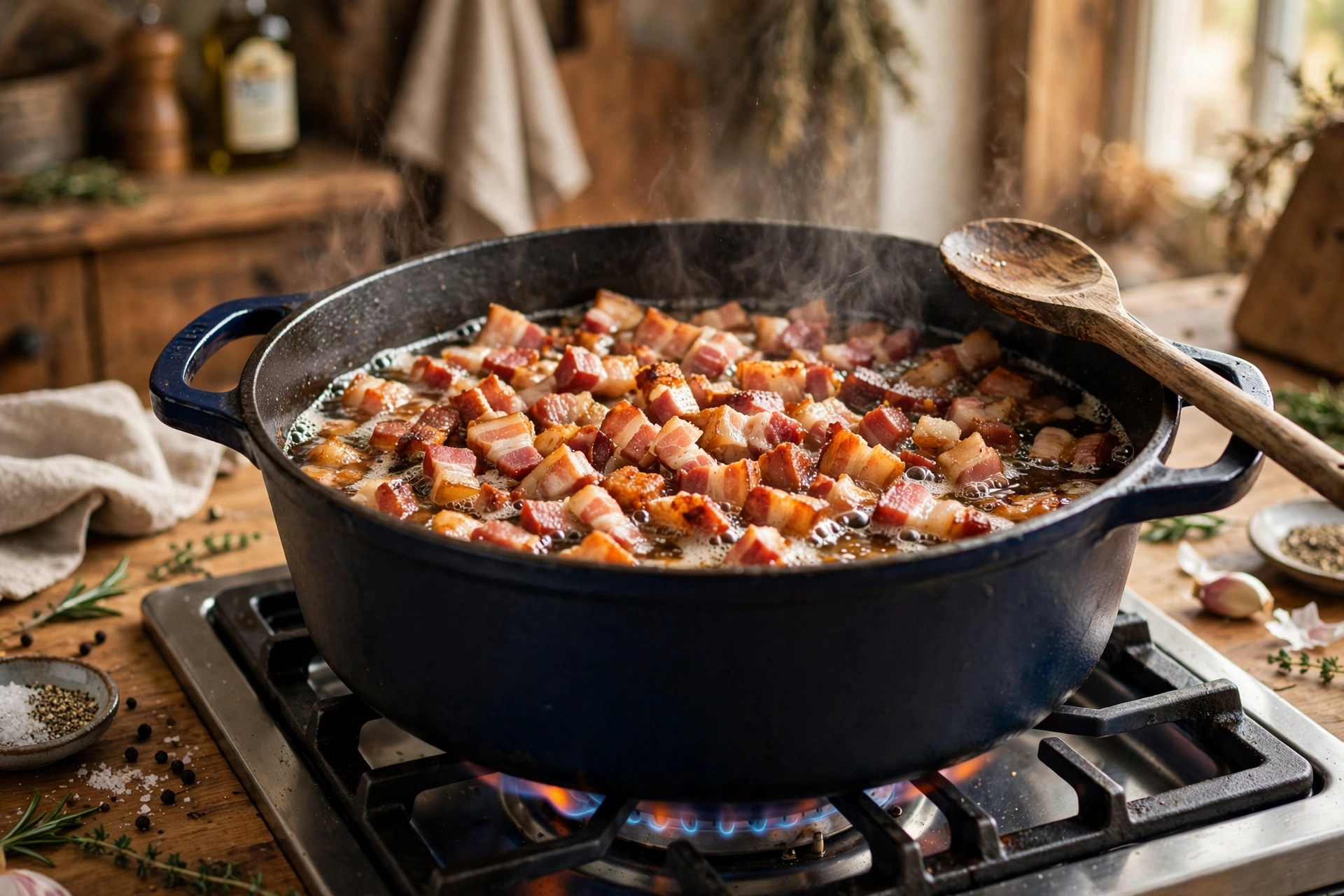
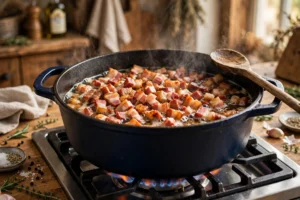
Crisp the bacon. Put the chopped bacon in a cold Dutch oven or large heavy pot over medium heat. Cooking from cold lets the fat render slowly, so the bacon crisps evenly. Cook 8 to 10 minutes, stirring now and then, until golden and crisp, then lift it out with a slotted spoon. Leave all the fat in the pot — it is the flavor base for the whole chowder.
Step 2: Soften the Onion, Celery, and Garlic
Soften the aromatics. Add the butter to the bacon fat and let it melt. Add the onion and celery with a pinch of salt, and cook over medium heat for 6 to 8 minutes, stirring often, until the onion is soft and translucent. Do not let them brown — browned onion turns the chowder beige and bitter. Stir in the garlic and cook 1 minute more.
Step 3: Cook the Flour, Then Simmer the Potatoes
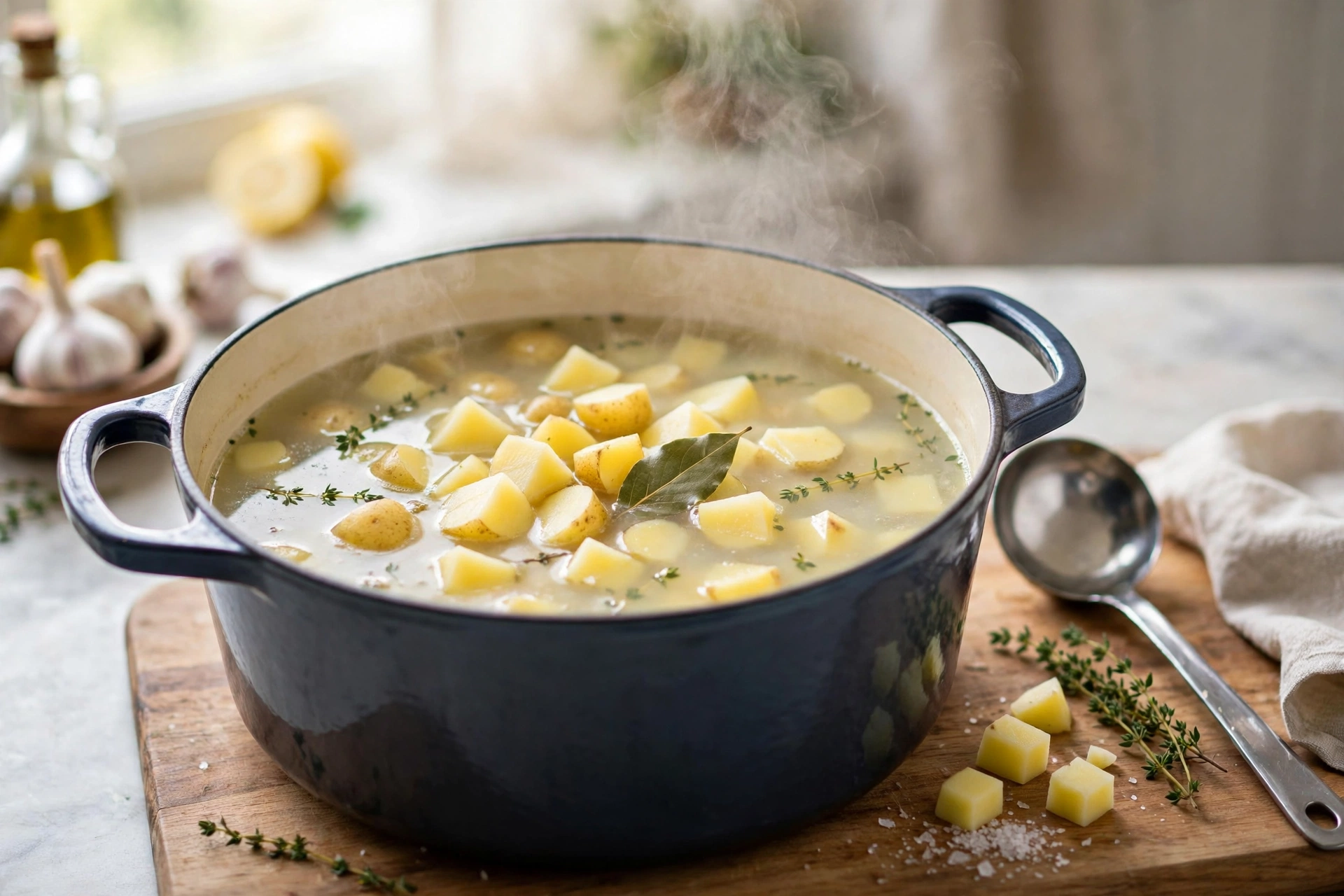
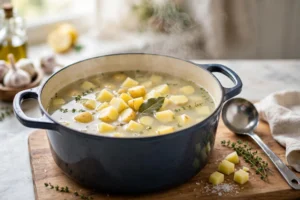
Cook the flour, then simmer the potatoes. Sprinkle the flour over the vegetables and stir constantly for 2 full minutes — those two minutes cook out the raw flour taste. Pour in the clam juice a little at a time, stirring, until smooth. Add the potatoes, bay leaf, and thyme, then simmer 12 to 15 minutes, until the potatoes are just tender.
Step 4: Warm the Cream and Build the Cream Base
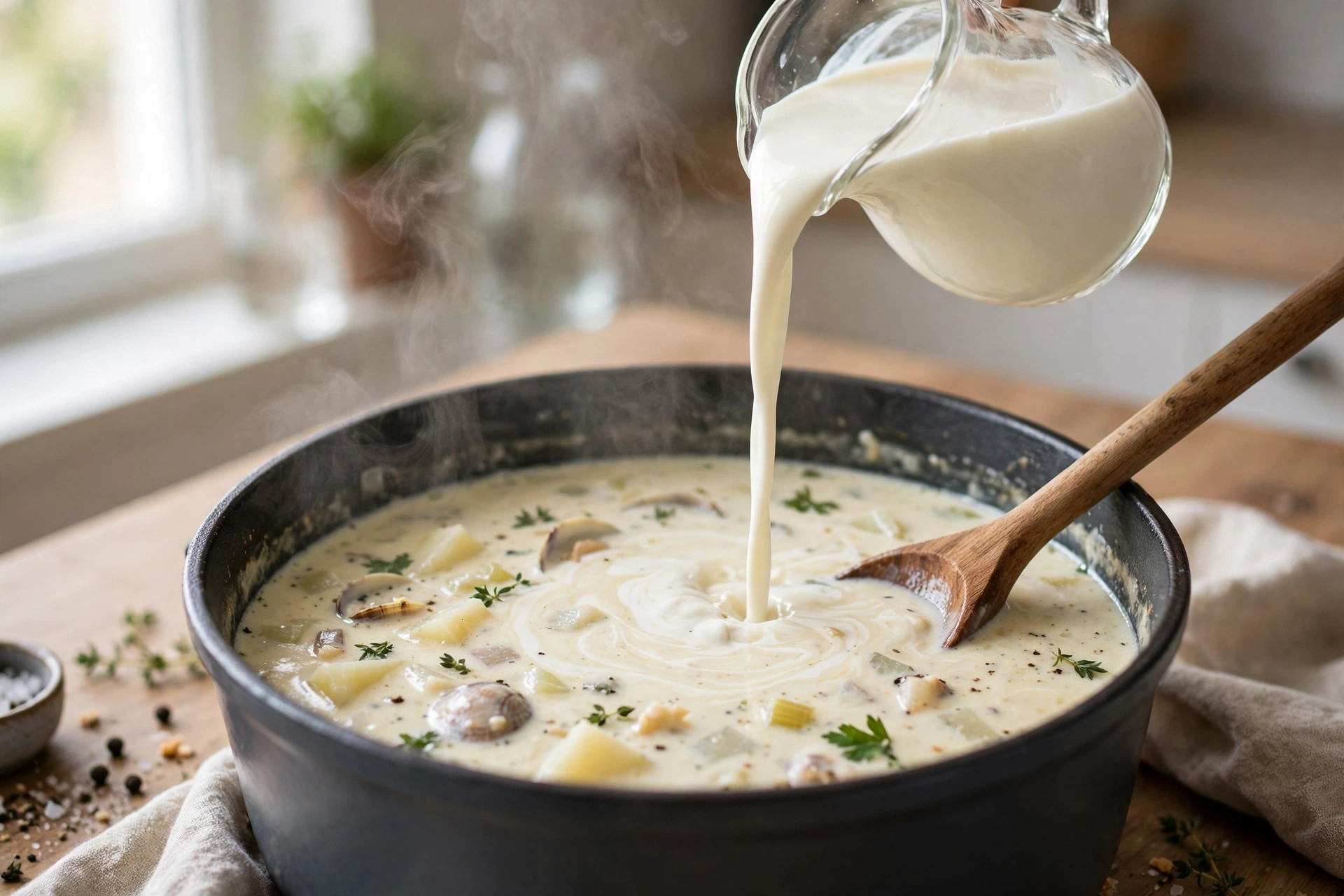
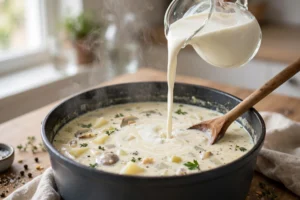
Warm the cream and build the cream base. While the potatoes simmer, warm the cream and milk in a small saucepan over low heat until steaming — about 3 minutes. Do not boil them. With the soup pot on low heat, pour the warm dairy in a slow stream, stirring constantly. Warm dairy meets hot soup without a temperature shock — the reason this chowder never curdles.
Step 5: Add the Clams and Finish — Never Boil
Add the clams and finish. Stir in the clams with all their juice, plus half of the reserved bacon. Warm over low heat for 3 to 4 minutes, until steaming. Do not let it boil — not even a bubble: boiling turns canned clams rubbery and splits a cream base, and both happen fast. Take the pot off the heat, discard the bay leaf, and season with salt and black pepper.
Step 6: Rest, Season, and Serve
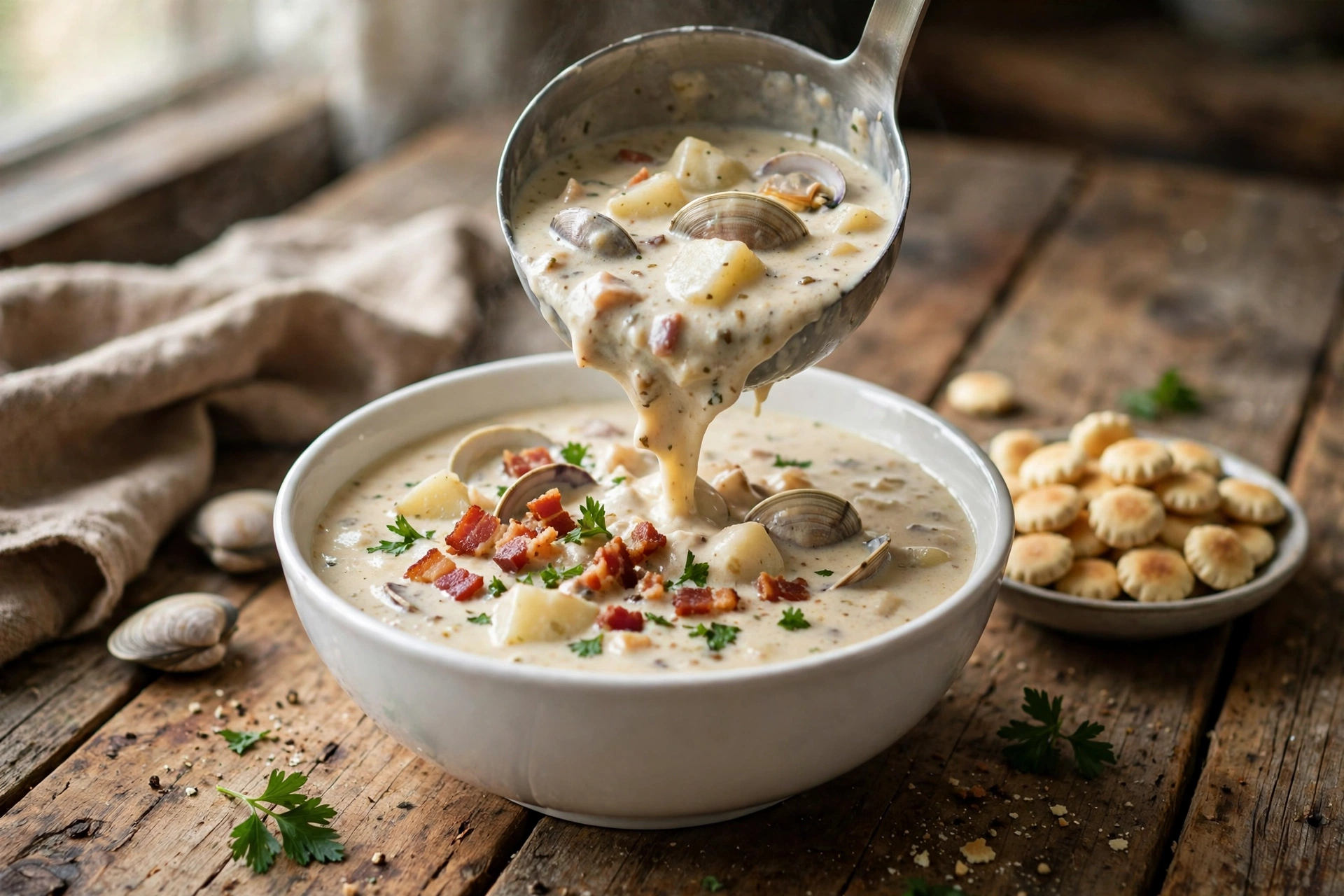
Rest, season, and serve. Rest the chowder off the heat for 5 minutes, so the potato starch finishes thickening the base. Ladle into warm bowls, top with the remaining bacon and parsley, and serve with oyster crackers.
Technique: The Cream-Base System — No Curdling, No Floury Taste
Most chowder failures are cream failures: a split base, uncooked flour, or dissolved potatoes. Each has a cause, and each cause has a fix.
Why Cream Curdles — and How to Stop It
Cream curdles when dairy proteins tighten and squeeze out their water, which high heat and sudden temperature shocks cause. Cold cream poured into a boiling pot is the worst of both. So keep the heat low once the dairy goes in, warm the cream and milk first, and never let the chowder boil. Heavy cream helps too: its high fat cushions the proteins.
The Flour Roux Without the Floury Taste
Flour thickens chowder beautifully, but only when cooked — raw flour tastes like paste no matter how good the clams are. The fix is two minutes of constant stirring in the hot bacon fat before any liquid goes in. The flour will bubble gently and smell faintly nutty; that is the raw taste cooking out. Then add the clam juice a little at a time, stirring, so the roux loosens into a smooth sauce.
Warm Dairy, Never Cold
This is the step most recipes skip, and it matters most. Cold dairy hitting hot soup is a temperature shock, and a shocked base can split even on low heat. Warming the cream and milk takes three minutes and removes the shock. Pour it in slowly, in a thin stream, while you stir.
The Potato Timing
Potatoes decide whether your chowder is a soup or a porridge. Yukon Golds hold their shape, but even they fall apart if they simmer too long — then their starch turns the whole pot gluey. Simmer 12 to 15 minutes, and take them off the heat the moment a knife slides in easily. Test at 12 minutes; they keep cooking in the hot base while you add the dairy, so a minute early beats a minute late. Never boil them hard — a rolling boil batters the cubes apart.
Fresh Clams or Canned Clams — the Honest Comparison
Fresh clams taste brighter and more oceanic, and near the coast they are worth the effort. Buy 2 dozen littlenecks, scrub them well, and steam them in 2 cups of water until they open, about 6 to 8 minutes. Chop the meat coarsely, strain the liquid, and use it as part of the clam juice. Add the fresh clams at the same point, with 2 extra minutes of gentle warming. Canned clams, though, are already cooked, cheap, available everywhere, and honestly very good in chowder. For a weeknight pot, canned clams win; for a special occasion, go fresh.
The Overnight Rest
Chowder tastes better the next day: overnight, the potato starch finishes thickening the base and the flavors deepen. Make it a day ahead if you can, cool it quickly, and refrigerate it. Reheat gently, over low heat, stirring often — never let it boil.
How to Fix a Split Chowder
If the base ever splits, do not throw it out. Take the pot off the heat, cool 5 minutes, then whisk in 2 tablespoons of cold heavy cream, a little at a time. The emulsion usually comes back together. If not, blend the chowder in batches for 20 seconds; the base re-emulsifies, though the potatoes will break down.
Tips for the Best New England Clam Chowder
- Start the bacon in a cold pot. Cold-to-hot rendering gives evenly crisp bacon and the most fat for the soup base.
- Never let the finished chowder boil. Boiling splits the cream and turns the clams rubbery.
- Warm the cream and milk first. Three minutes in a small pan removes the temperature shock.
- Cook the flour for two full minutes. That stands between a silky chowder and one that tastes like paste.
- Test the potatoes at 12 minutes. Pull them the moment a knife slides in — they keep cooking in the hot base.
- Season at the end, not the start. Clam juice and bacon are already salty, and their saltiness concentrates as it simmers.
- Save half the bacon for the top. Bacon stirred in flavors the soup; bacon on top gives the crunch in every spoonful.
- Rest the chowder for 5 minutes before serving. The starch finishes thickening the base.
Variations
Lighter Half-and-Half Chowder
Swap the cream and milk for 2 1/2 cups of half-and-half, warmed the same way. The chowder will be lighter and thinner, so simmer the potatoes 2 minutes longer and keep the heat even lower once the dairy goes in.
Corn and Clam Chowder
Stir in 1 cup of fresh or frozen corn with the clams in Step 5, and add 1/2 teaspoon of smoked paprika with the flour.
Traditional Salt Pork Chowder
Replace the bacon with 4 oz of salt pork, diced small, rendered the same way in a cold pot. Taste before adding salt — salt pork is much saltier than bacon.
Spicy Clam Chowder
Add 1/4 teaspoon of cayenne and 1 tablespoon of hot sauce with the clam juice. The gentle heat wakes up the cream and makes the briny clam flavor taste brighter.
Gluten-Free Clam Chowder
Skip the flour: whisk 2 tablespoons of cornstarch with 2 tablespoons of cold water, stir it into the simmering potato broth, and cook 2 minutes until thickened. Then add the warm dairy and clams as written.
What to Serve With New England Clam Chowder
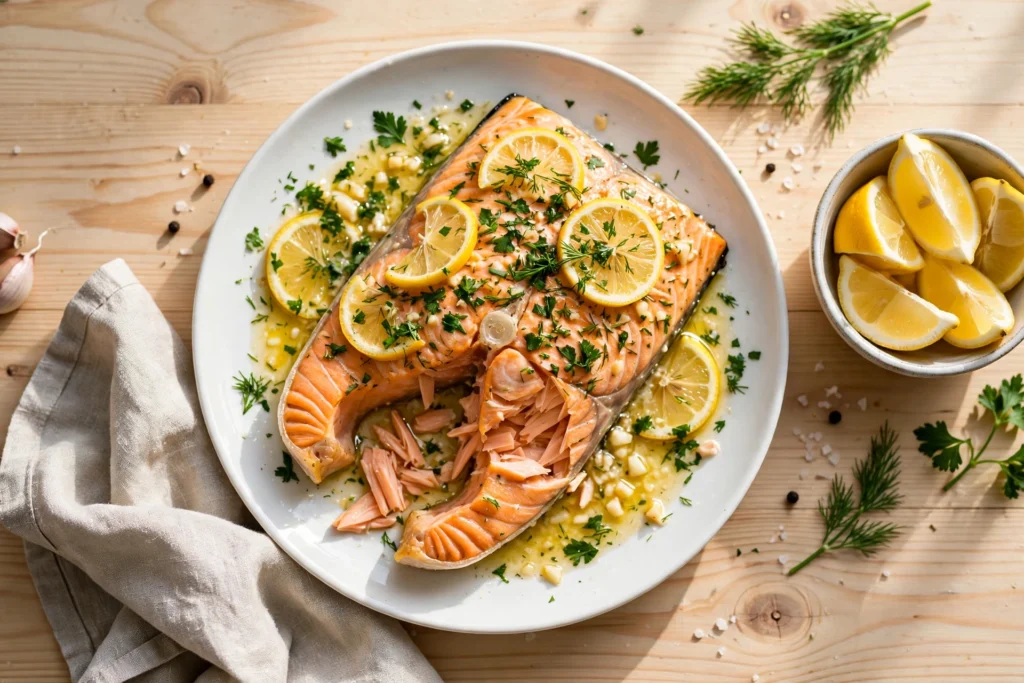
A bowl of chowder wants something to dunk. Thick slices of garlic toast are the first choice — buttery, crisp, and made for soaking up the cream base. For a second course, a fillet of pan-seared salmon with garlic butter turns a soup supper into a full seafood dinner, and its crisp skin is a lovely contrast to the soft chowder. If the table is a snacking spread instead, a bowl of smoked salmon dip with crackers keeps the seafood theme going. And for a lighter, broth-based contrast, a bowl of caldo de camaron makes a beautiful second soup — one creamy, one brothy, both from the sea.
Storage
In the Fridge
Let the chowder cool completely, then refrigerate in an airtight container for up to 3 to 4 days. It tastes better on day two. Reheat gently over low heat, stirring often — never let it boil. The microwave works too, in 1-minute bursts at 50% power.
In the Freezer
Cream-based chowder does not freeze well; the dairy separates and turns grainy. Freeze the base instead, before the cream, milk, and clams — it keeps up to 3 months. Thaw overnight in the fridge, simmer, then add the warm dairy and clams fresh.
Make-Ahead
Cook it fully, cool it quickly, and refrigerate up to 1 day before serving. Reheat slowly over low heat, and top each bowl with freshly crisped bacon and parsley. To feed a crowd, double the recipe — the timings stay the same.
Frequently Asked Questions
Can I use canned clams for New England clam chowder?
Yes — canned clams are the best choice for most cooks. They are already cooked, cheap, and available year-round, and the juice in the can adds real clam flavor. Use two 6.5 oz cans with all their juice, added at the very end and warmed just 3 to 4 minutes. Fresh clams work too, but canned need no steaming or shucking.
Why did my clam chowder curdle?
Chowder curdles when the heat is too high or cold dairy hits a hot pot. Prevent it by warming the cream and milk first, pouring them in slowly, and keeping the finished chowder on low heat — steaming, never bubbling. If it splits, cool the pot 5 minutes, then whisk in 2 tablespoons of cold heavy cream a little at a time.
What is the difference between New England and Manhattan clam chowder?
New England chowder — also called Boston clam chowder — is white and cream-based, with potatoes, onion, bacon or salt pork, and chopped clams in a rich, thick base. Manhattan clam chowder is red and tomato-based, with a clear tomato broth and no cream at all. They are entirely different soups that share only the clams.
Can you freeze clam chowder?
A finished cream-based chowder does not freeze well — the dairy separates when it thaws and turns grainy. Freeze the base instead, before the dairy and clams go in: the potato-and-clam-juice base keeps up to 3 months. Thaw overnight in the fridge, simmer, then add the warm cream, milk, and clams fresh.
How long does clam chowder last in the fridge?
New England clam chowder keeps 3 to 4 days in an airtight container in the refrigerator, and it tastes better on the second day, once the potato starch has thickened the base. Reheat gently over low heat and never let it boil. Discard after 4 days.
Try These Next
- Pan-Seared Salmon — crisp-skinned salmon with garlic butter, the perfect second course after a bowl of chowder.
- Smoked Salmon Dip — a creamy, smoky dip for the snacking table.
- Caldo de Camaron — a brothy Mexican shrimp soup — the light contrast to this rich chowder.
- Million Dollar Soup — another rich, comforting soup for the next cold night.
- Stuffed Pepper Soup — a hearty soup for the same weeknight rotation. Cadillac Margarita Cocktail — a reposado tequila margarita with a Grand Marnier float.
- Homemade Enchilada Sauce — a rich, smoky red enchilada sauce from dried chiles.
>
New England Clam Chowder
Ingredients
The Chowder Base
- 6 slices thick-cut bacon chopped (about 6 oz)
- 2 tablespoons unsalted butter
- 1 large yellow onion finely diced (about 1 1/2 cups)
- 2 celery ribs diced (about 1 cup)
- 2 garlic cloves minced
- 1/4 cup all-purpose flour
- 2 cups bottled clam juice two 8-oz bottles
- 2 cans chopped clams 6.5 oz each, with their juice
- 1 1/2 lb Yukon Gold potatoes peeled and cut into 1/2-inch dice (about 4 cups)
- 1 bay leaf
- 1 teaspoon fresh thyme leaves or 1/2 teaspoon dried thyme
The Cream Base
- 1 1/2 cups heavy cream
- 1 cup whole milk
To Finish
- 1 teaspoon kosher salt plus more to taste
- 1/2 teaspoon black pepper freshly ground
- 2 tablespoons chopped fresh parsley for serving
- Oyster crackers for serving (optional)
Instructions
- Put the chopped bacon in a cold Dutch oven or large heavy pot over medium heat. Cook for 8 to 10 minutes, stirring now and then, until golden and crisp. Lift the bacon out with a slotted spoon onto a paper-towel-lined plate and set aside. Leave all the fat in the pot.

- Add the butter to the bacon fat and let it melt. Add the onion and celery with a pinch of salt and cook over medium heat for 6 to 8 minutes, stirring often, until the onion is soft and translucent. Do not let them brown. Stir in the garlic and cook for 1 minute more, until fragrant.
- Sprinkle the flour over the vegetables and stir constantly for 2 full minutes. Pour in the clam juice a little at a time, stirring and scraping the bottom of the pot, until smooth. Add the potatoes, bay leaf, and thyme. Bring to a gentle boil, then lower the heat and simmer for 12 to 15 minutes, until the potatoes are just tender when pierced with a knife.
- While the potatoes simmer, warm the heavy cream and milk in a small saucepan over low heat until steaming and warm to the touch, about 3 minutes. Do not boil. With the soup pot on low heat, pour the warm dairy into the chowder in a slow stream, stirring constantly, until smooth and creamy.
- Stir in the chopped clams with all their juice and half of the reserved crispy bacon. Warm over low heat for 3 to 4 minutes, until steaming and the clams are heated through. Do not let it boil. Take the pot off the heat, discard the bay leaf, and season with salt and black pepper to taste.
- Let the chowder rest off the heat for 5 minutes. Ladle into warm bowls and top each one with the remaining crispy bacon and chopped parsley. Serve right away with oyster crackers on the side.
Notes
- Start the bacon in a cold pot — the fat renders slowly and the bacon turns evenly crisp.
- Never let the finished chowder boil; boiling splits the cream and turns the clams rubbery.
- Warm the cream and milk before adding them so the cream base never suffers a temperature shock.
- Cook the flour for two full minutes in the hot fat so the chowder never tastes floury.
- Test the potatoes at 12 minutes and pull them the moment a knife slides in — they keep cooking in the hot base.
- Season with salt at the end, not the start, because clam juice and bacon are already salty.
- Save half the bacon for topping each bowl so the garnish stays crisp.
- The chowder tastes even better the next day; reheat gently over low heat and never let it boil.