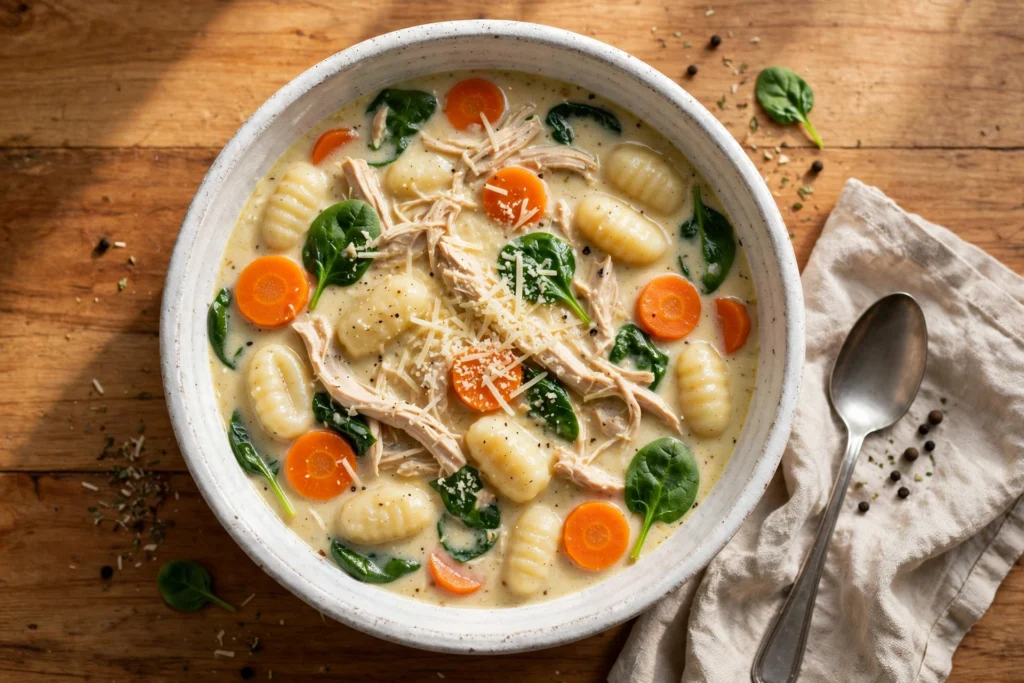

Spaghetti Squash in Oven
Spaghetti squash is the one vegetable that turns into dinner with a fork. Roast it in the oven, drag a fork through the flesh, and out come long, golden strands that look like spaghetti and taste sweet, nutty, and lightly caramelized. No pasta pot, no special equipment, and no fuss.
This spaghetti squash in oven takes 10 minutes of hands-on work and 40 minutes in a 400°F oven. The result is a healthy side dish that goes with almost anything — steak, chicken, salmon, or a bowl of your favorite sauce. And once you learn the cut/roast system below, the strands come out dry and separate every single time, never watery and never mushy.
The Squash That Scared Me
The first spaghetti squash I ever bought sat on my kitchen counter for a week, because I was too nervous to cut it. It was hard as a rock, my knife felt too small, and I was sure I would hurt myself. Then a neighbor showed me the trick: a few minutes in the microwave first, a steady hand, and a knife that does the work while you rock it gently. That squash turned into the best side dish of the week, and I have roasted one almost every fall since.
Joanne Helena
Why You’ll Love It
- It really does look like spaghetti. One fork pull and the flesh separates into long, golden strands.
- Only 10 minutes of hands-on time. The oven does the rest while you cook the main dish.
- Healthy and light. Low in calories and carbs, high in fiber, and naturally gluten-free.
- No watery strands. The cut-side-down roast and the salt draw the moisture out before it ever reaches your plate.
- Goes with everything. Steak, chicken, salmon, pork, or a simple tomato sauce — it fits them all.
- Cheap and keeps well. One squash feeds four people for a few dollars, and leftovers reheat beautifully.
Ingredients
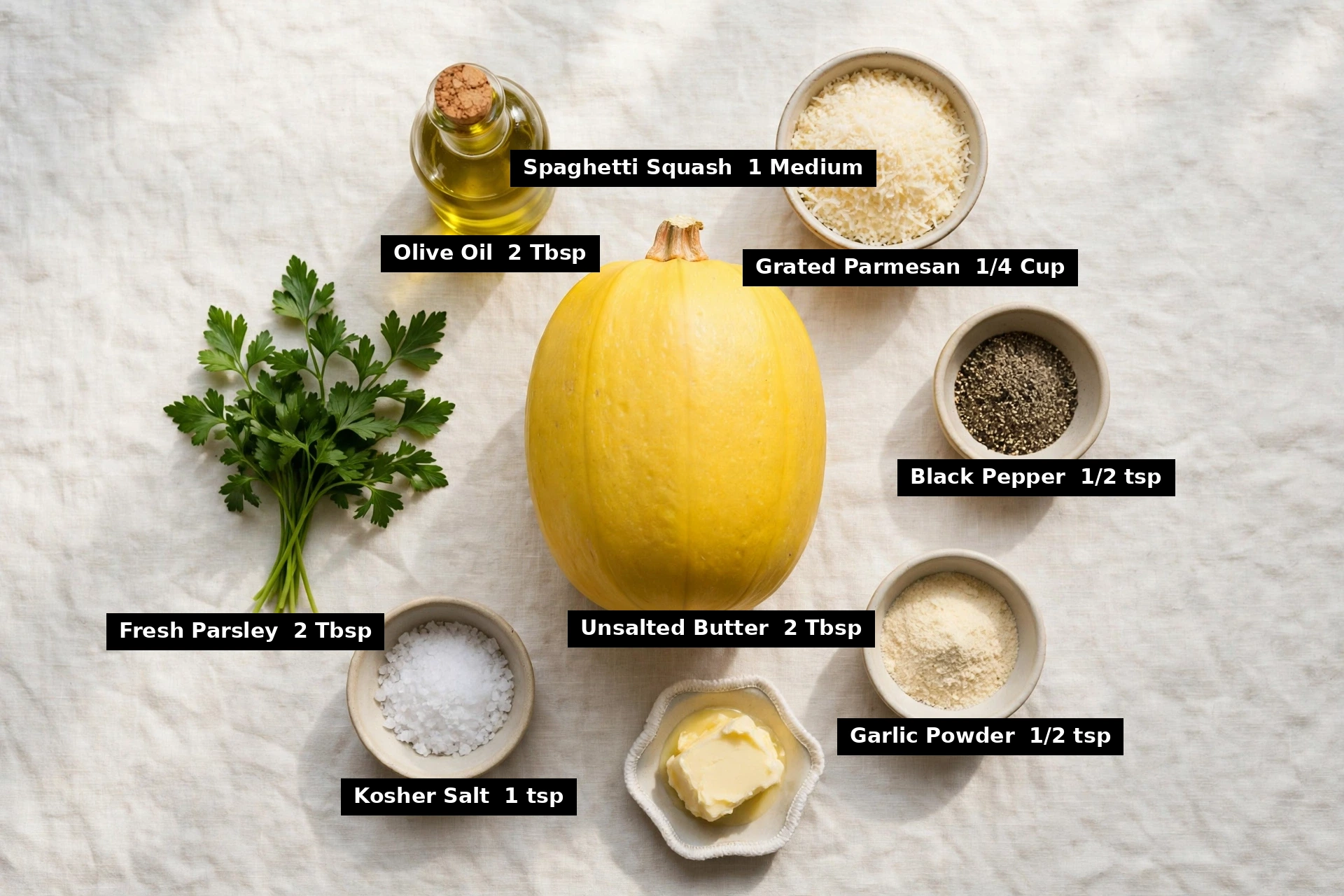
- 1 medium spaghetti squash (about 3 pounds) — The star of the show. Pick one that feels heavy for its size, with a firm, dull rind and no soft spots or cracks — a dull rind means it ripened fully on the vine. A medium squash, about 3 pounds, gives you roughly 4 cups of strands. Substitution: 2 small spaghetti squash (about 1 1/2 pounds each) — roast them the same way and check them 5 minutes earlier.
- 2 tablespoons olive oil — Brushed on the cut flesh, it keeps the strands from drying out and helps the edges caramelize in the oven. Use a good olive oil here, because you will taste it. Substitution: 2 tablespoons avocado oil or melted butter.
- 1 teaspoon kosher salt — More than seasoning: salt draws moisture out of the flesh as it roasts, and that is the first line of defense against watery strands. Sprinkle it evenly over both halves before they go in the oven. Substitution: 3/4 teaspoon fine sea salt.
- 1/2 teaspoon freshly ground black pepper — A little warmth and bite that balances the squash’s natural sweetness. Freshly ground pepper tastes brighter than pre-ground, so grind it if you can. Substitution: 1/2 teaspoon white pepper for a milder heat.
- 1/2 teaspoon garlic powder — Quiet, savory depth that sinks into the strands as they roast. Garlic powder spreads evenly and never burns the way fresh garlic can at 400°F. Substitution: 1/2 teaspoon onion powder, or 1 teaspoon Italian seasoning for a herby version.
- 2 tablespoons unsalted butter, melted — The finishing touch. Tossed through the warm strands, butter makes them silky and rich without drowning them. Add it after roasting, never before, so it stays fresh and glossy. Substitution: 2 tablespoons olive oil for a dairy-free finish.
- 1/4 cup grated Parmesan cheese — Salty, nutty, and the perfect partner for the sweet squash. Grate it fresh if you can — pre-grated cheese does not melt as nicely into warm strands. Substitution: 1/4 cup grated Pecorino Romano or nutritional yeast for a dairy-free option.
- 2 tablespoons chopped fresh parsley — A bright, fresh finish that lifts the whole dish and adds color to the bowl. Chop it just before serving so it stays green and fragrant. Substitution: 2 tablespoons chopped fresh basil or chives.
How to Make Spaghetti Squash in Oven
Step 1: Preheat the Oven and Pick Your Squash
Preheat the oven and pick your squash. Heat the oven to 400°F and set a rack in the center. Line a rimmed baking sheet with parchment paper. Meanwhile, pick a squash that feels heavy for its size, with a firm, dull rind and no soft spots or cracks. Give it a good wash and dry it well, because field dirt hides in the rind’s ridges.
Step 2: Cut the Squash in Half Lengthwise
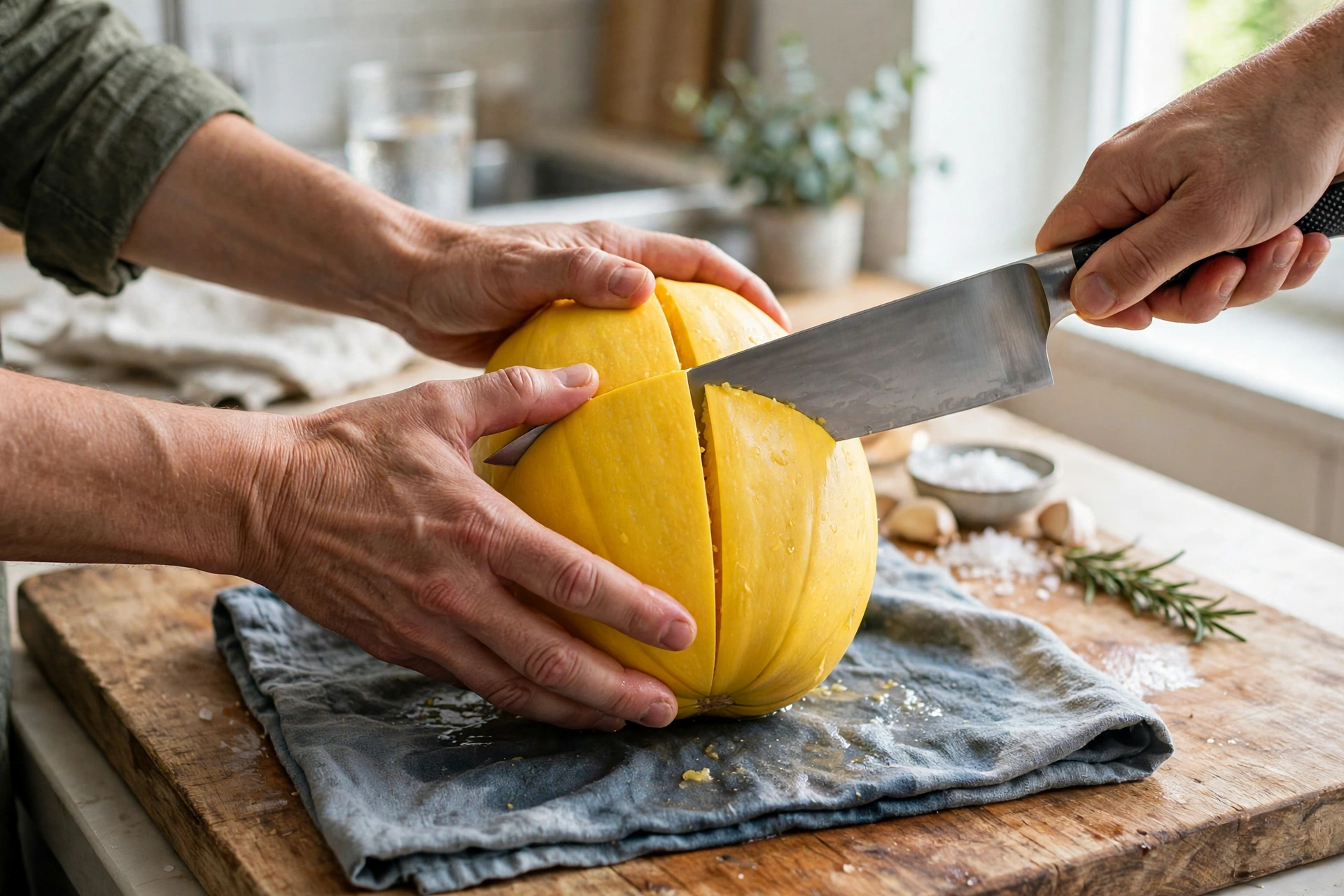
Cut the squash in half lengthwise. Set the squash on a damp towel so it cannot roll, and use your largest, sharpest chef’s knife. Press the tip of the knife into the center of the squash, then rock the blade down through one end, keeping your free hand well away from the blade. Turn the squash around and cut through the other end the same way. If the squash is too hard to cut, pierce it all over with a fork and microwave it for 2 to 3 minutes first — that softens the rind just enough to make the cut safe.
Step 3: Scoop Out the Seeds and Season
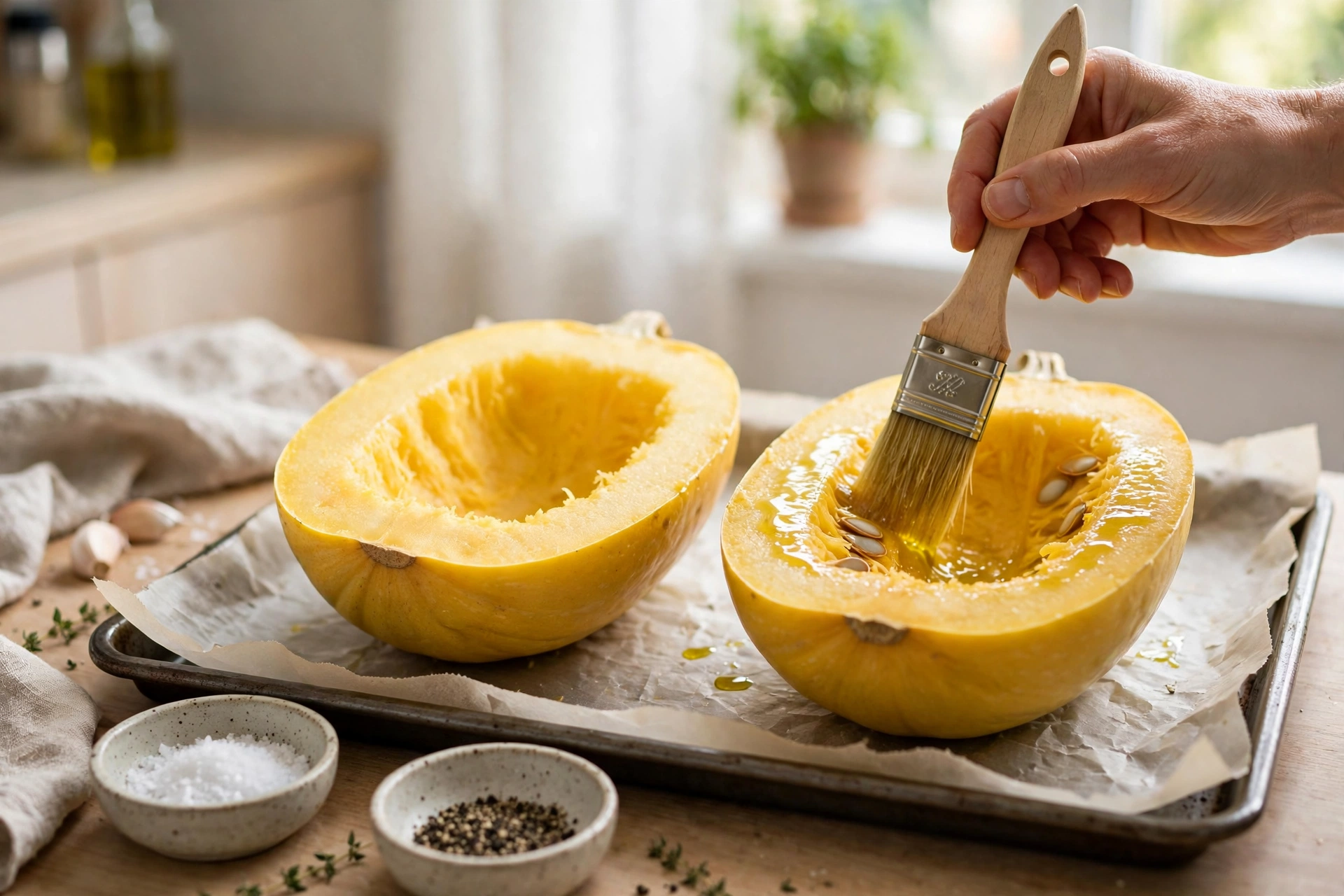
Scoop out the seeds and season. Use a large spoon or an ice cream scoop to scrape out the seeds and the stringy fibers from the center of each half — scrape firmly, because the stringy bits cling to the flesh. Then brush the cut flesh of both halves with the olive oil, and sprinkle evenly with the kosher salt, black pepper, and garlic powder. The salt goes on now, before roasting, so it can draw the moisture out while the squash cooks.
Step 4: Roast Cut-Side Down
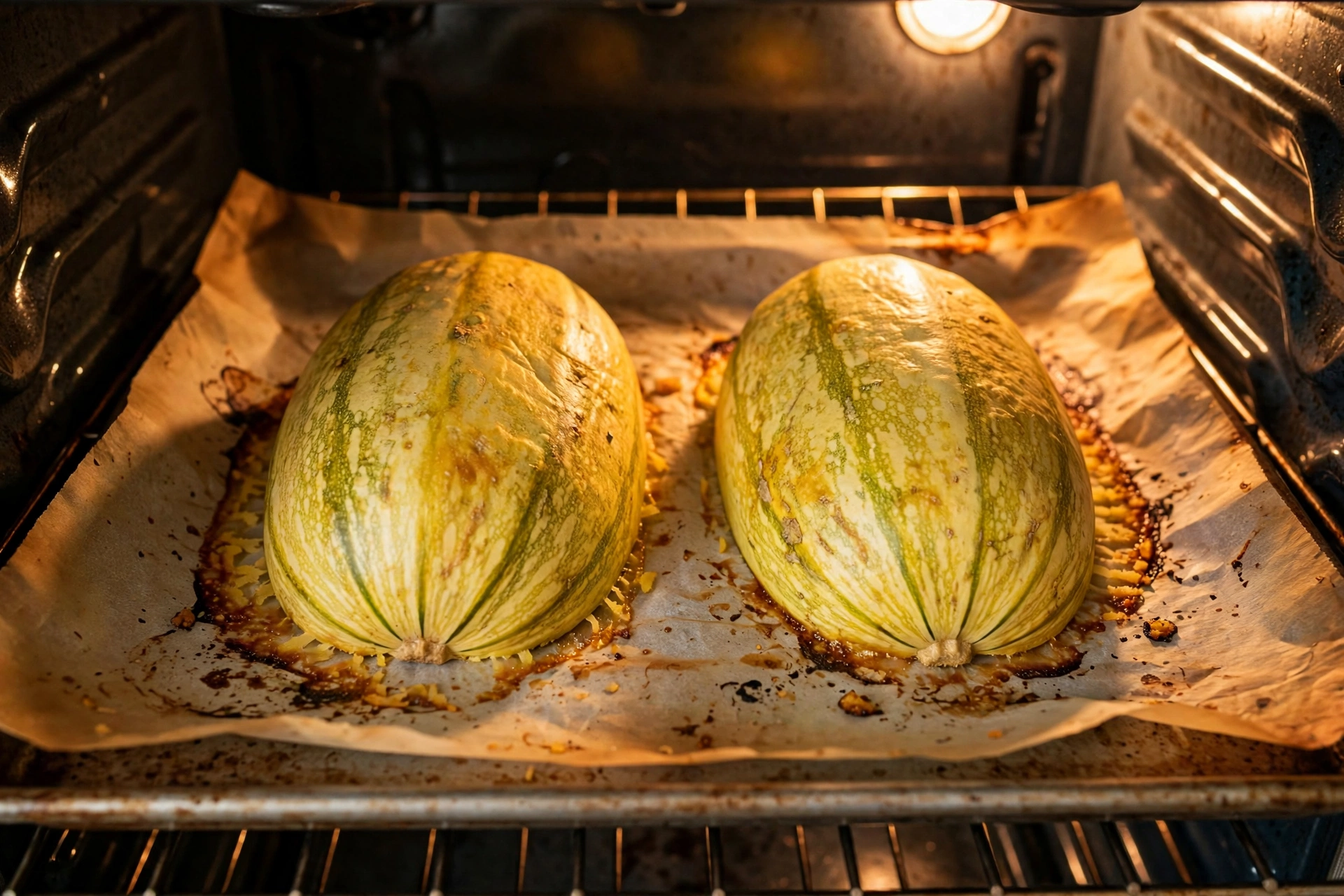
Roast cut-side down. Place both halves cut-side down on the lined baking sheet and slide them into the oven. Roast for 40 to 45 minutes for a medium squash, starting to check at 35 minutes. The squash is done when a fork slides easily into the thickest part of the flesh and the rind gives slightly when you press it with an oven mitt. If it still resists, give it 5 more minutes and check again.
Step 5: Rest, Then Pull the Strands with a Fork
Rest, then pull the strands with a fork. Take the squash out of the oven and flip the halves cut-side up. Let them rest for 5 to 10 minutes — this rest matters, because the steam escapes and the strands firm up instead of turning watery. Then hold a half steady with an oven mitt and drag a fork across the flesh in long strokes, from one end to the other. The strands will lift away in long, golden ribbons. Scrape gently and keep going until you reach the thin rind.
Step 6: Butter, Parmesan, and Serve
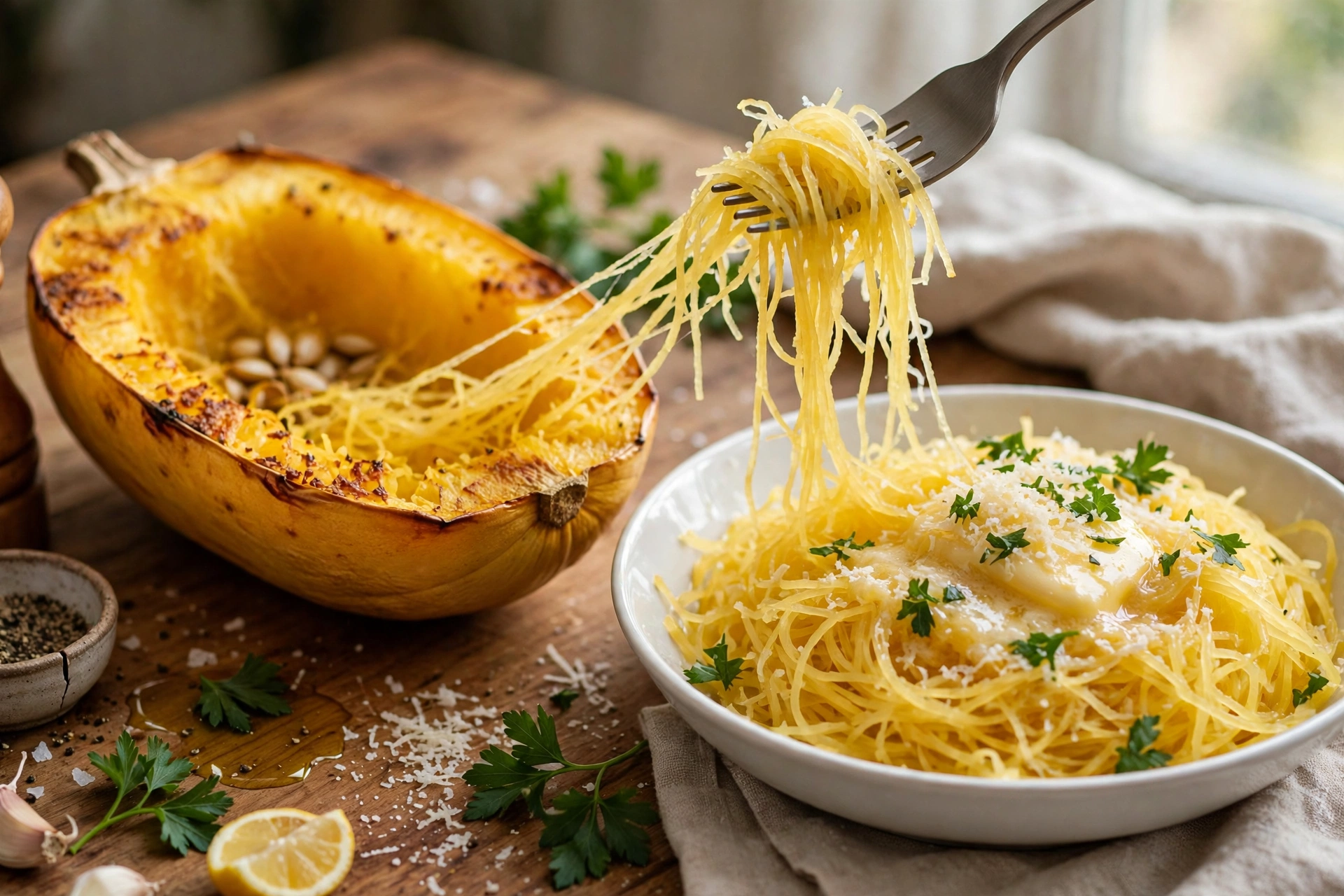
Butter, Parmesan, and serve. Pile the strands into a serving bowl, or leave them in the shells for a pretty table presentation. Drizzle over the melted butter and toss gently, then sprinkle with the Parmesan and the chopped parsley. Taste and add another pinch of salt if it needs it. Serve warm, right away, while the strands are still fluffy.
Technique: The Cut/Roast System for Dry, Separate Strands
Most spaghetti squash disappoints in exactly one way: it comes out watery. The strands sit in a puddle, the sauce slides off, and the dish tastes steamed instead of roasted. Every part of this method exists to prevent that.
Why Spaghetti Squash Turns Watery
A spaghetti squash is mostly water, and that water has to go somewhere. If you roast the halves cut-side up, the water pools inside the shell and steams the flesh. If you cover the pan, the steam has nowhere to escape. And if you pull the strands while the squash is still piping hot, the trapped steam turns to liquid on the plate. So the fix is simple: roast cut-side down, leave the pan uncovered, and let the squash rest before you touch it with a fork.
The Safe Cut
The cut is the only hard part of this recipe, and it is the part most recipes skip over. A spaghetti squash rind is thick and hard, and a dull knife is dangerous here because it slips. Use your sharpest chef’s knife, set the squash on a damp towel so it cannot roll, and keep your free hand behind the blade at all times. If the rind will not give, do not force it — pierce the squash all over with a fork and microwave it for 2 to 3 minutes. That short burst softens the rind just enough to cut safely, and it does not cook the flesh.
The Doneness Test: Fork Plus Rind Press
Do not trust the clock alone, because squash vary. Use two tests together. First, press the rind gently with an oven mitt — it should give slightly, like a ripe avocado. Second, slide a fork into the thickest part of the flesh — it should go in easily and pull out a few strands. If the rind is still firm or the fork meets resistance, roast for 5 more minutes and test again. Start checking at 35 minutes for a small squash and 40 minutes for a medium one, and never let it go past the point where the strands turn to mush.
The Watery-Strand Rescue
If your strands still look wet, do not panic. First, let them sit in a colander for a few minutes so the excess water drains away. Then, if they are still damp, toss them in a hot, dry skillet for 2 to 3 minutes — the heat evaporates the extra moisture and the strands firm right up. This rescue also works on leftovers that went soft in the fridge.
Tips for the Best Spaghetti Squash in Oven
- Pick a heavy squash with a dull rind. Heavy means dense flesh; a dull rind means it ripened fully. Shiny skin means it was picked early.
- Salt before roasting, not after. Salt on the raw flesh draws moisture out in the oven; salt added at the end just sits on wet strands.
- Always roast cut-side down, uncovered. This is the single biggest difference between dry strands and a watery squash.
- Start checking at 35 minutes. Ovens vary, and 5 extra minutes is the difference between perfect strands and mush.
- Let it rest 5 to 10 minutes before pulling. The rest lets steam escape and the strands firm up.
- Pull with long, smooth fork strokes. Short choppy scraping breaks the strands into bits.
- Butter and Parmesan go on last. Add them after roasting so they stay fresh and glossy instead of baking into the flesh.
Variations
Garlic Butter Spaghetti Squash
Make the recipe as written, then toss the warm strands with 2 tablespoons of melted butter, 2 minced garlic cloves, and an extra pinch of salt. The garlic blooms in the warm butter and perfumes the whole bowl.
Spaghetti Squash with Marinara and Parmesan
Skip the butter finish and spoon 1 1/2 cups of warm marinara sauce over the strands instead, then top with the Parmesan and a few torn basil leaves. It tastes like a lighter, fresher spaghetti dinner.
Mexican-Style Spaghetti Squash
Season the halves with 1 teaspoon of chili powder and 1/2 teaspoon of cumin instead of the garlic powder, then finish the strands with lime juice, crumbled cotija cheese, and chopped cilantro. It pairs beautifully with tacos and grilled chicken.
Pesto Spaghetti Squash
Toss the warm strands with 1/3 cup of pesto and an extra handful of Parmesan. The herby oil coats every strand, and it takes about 30 seconds to put together.
What to Serve With Spaghetti Squash in Oven
Spaghetti squash is a side dish that plays well with almost any main. A medium-rare steak is the classic partner — the rich, juicy steak against the light, sweet strands is a perfect plate. For a weeknight dinner, baked chicken thighs are just as good, with crispy skin and pan juices that belong spooned over the squash. A grilled pork tenderloin brings smoky, savory flavor that balances the squash’s sweetness, and a pan-seared salmon turns the whole meal light and elegant. For a vegetarian plate, top the strands with marinara and Parmesan and call it dinner.
Storage
In the Fridge
Store the pulled strands in an airtight container in the fridge for up to 4 days. Keep them plain — without the butter and Parmesan — and add the finish fresh when you reheat them, so they taste newly made.
In the Freezer
Spaghetti squash freezes well. Spread the cooled strands on a baking sheet and freeze for 1 hour, then pack them into freezer bags for up to 3 months. Thaw overnight in the fridge before reheating.
Reheating
Reheat the strands in a skillet over medium heat for 3 to 4 minutes, with a drizzle of olive oil or a knob of butter. The skillet is better than the microwave here, because the dry heat drives off any moisture that collected in storage. Add the Parmesan and parsley after reheating.
Make-Ahead
Roast the squash up to 2 days ahead, pull the strands, and store them plain in the fridge. When dinner time comes, warm them in a skillet, toss with butter and Parmesan, and serve — the whole side dish is ready in 5 minutes.
Frequently Asked Questions
How long does spaghetti squash take to cook in the oven?
A medium spaghetti squash (about 3 pounds) takes 40 to 45 minutes at 400°F when halved and roasted cut-side down. Start checking at 35 minutes — small squash may be done in 30 to 35 minutes, while a large one can need 45 to 50 minutes. The fork test matters more than the clock.
How do you know when spaghetti squash is done?
Press the rind gently with an oven mitt — it should give slightly, like a ripe avocado. Then slide a fork into the thickest part of the flesh: it should go in easily and pull out long strands. If the fork meets resistance or the strands will not separate, roast for 5 more minutes and test again.
Do you roast spaghetti squash cut-side up or down?
Cut-side down. Roasting cut-side down lets the moisture drip out onto the pan instead of pooling in the shell, and the cut flesh caramelizes against the hot pan. Cut-side up steams the squash and gives you watery strands.
Why is my spaghetti squash watery?
Watery strands usually mean the squash was roasted cut-side up, the pan was covered, or the strands were pulled while the squash was still steaming hot. Roast cut-side down and uncovered, let the squash rest 5 to 10 minutes before pulling, and if the strands are still wet, toss them in a hot, dry skillet for 2 to 3 minutes to evaporate the extra moisture.
Can you cook spaghetti squash whole in the oven?
Yes. Pierce the whole squash all over with a fork so the steam can escape, then roast it at 400°F for 60 to 75 minutes, until the rind gives when pressed. Let it rest for 10 minutes before cutting it open, because the steam inside is very hot. The halved method is faster and gives better caramelization, so save the whole method for days when you do not want to cut a raw squash.
Try These Next
- Crispy Roast Potatoes — golden, crunchy roast potatoes that belong on the same plate as this spaghetti squash.
- Medium-Rare Steak — the perfect main dish for these strands, rich and juicy against the light, sweet squash.
- Baked Chicken Thighs — crispy-skinned chicken thighs with pan juices made for spooning over warm spaghetti squash strands. Chick-fil-A Sauce Recipe — a copycat Chick-fil-A sauce, ready in 5 minutes.
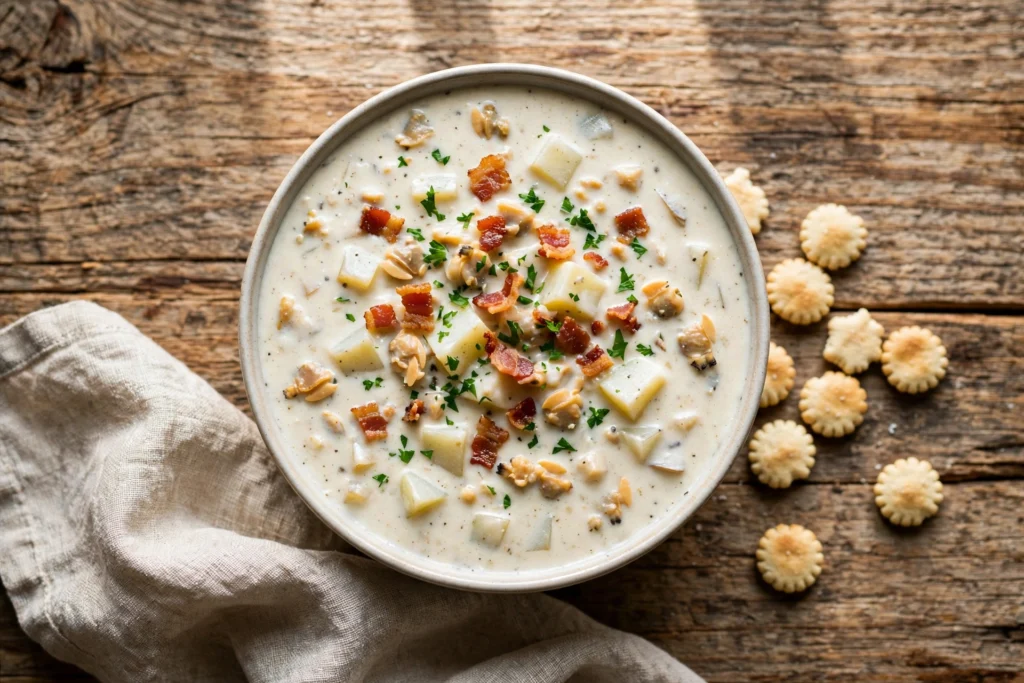
- New England Clam Chowder — a creamy classic white chowder with bacon and potatoes.
>

Spaghetti Squash in Oven
Ingredients
- 1 medium spaghetti squash (about 3 pounds)
- 2 tablespoons olive oil
- 1 teaspoon kosher salt
- 1/2 teaspoon freshly ground black pepper
- 1/2 teaspoon garlic powder
- 2 tablespoons unsalted butter melted
- 1/4 cup grated Parmesan cheese
- 2 tablespoons chopped fresh parsley
Instructions
- Preheat the oven to 400°F and set a rack in the center. Line a rimmed baking sheet with parchment paper. Wash the spaghetti squash and dry it well.
- Set the squash on a damp towel so it cannot roll. Press the tip of a large, sharp chef's knife into the center of the squash and rock the blade down through one end, then turn the squash and cut through the other end, halving it lengthwise. If the squash is too hard to cut, pierce it all over with a fork and microwave for 2 to 3 minutes first to soften the rind.

- Scoop out the seeds and stringy fibers from the center of each half with a large spoon. Brush the cut flesh with the olive oil and sprinkle evenly with the kosher salt, black pepper, and garlic powder.
- Place both halves cut-side down on the lined baking sheet. Roast for 40 to 45 minutes, starting to check at 35 minutes, until a fork slides easily into the thickest part of the flesh and the rind gives slightly when pressed with an oven mitt.
- Remove from the oven and flip the halves cut-side up. Rest for 5 to 10 minutes so the steam escapes, then hold a half steady with an oven mitt and drag a fork across the flesh in long strokes to pull out the strands.
- Pile the strands into a serving bowl or leave them in the shells. Drizzle with the melted butter, toss gently, and sprinkle with the Parmesan and chopped parsley. Taste, add salt if needed, and serve warm.



Notes
- Pick a squash that feels heavy for its size, with a firm, dull rind and no soft spots — a dull rind means it ripened fully.
- Use your sharpest chef's knife and a damp towel under the squash so it cannot roll; if the rind will not give, microwave the pierced squash for 2 to 3 minutes first.
- Salt the cut flesh before roasting so the salt can draw moisture out in the oven — salt added at the end cannot do that job.
- Always roast cut-side down and uncovered, so moisture drips out onto the pan instead of pooling in the shell.
- Start checking at 35 minutes and test in 5-minute increments; use the fork test and the rind press together, not the clock alone.
- Let the squash rest 5 to 10 minutes before pulling the strands, so the steam escapes and the strands firm up instead of turning watery.
- Pull with long, smooth fork strokes from end to end — short, choppy scraping breaks the strands into bits.
- Store pulled strands plain in the fridge for up to 4 days and reheat in a skillet, adding the butter and Parmesan fresh.