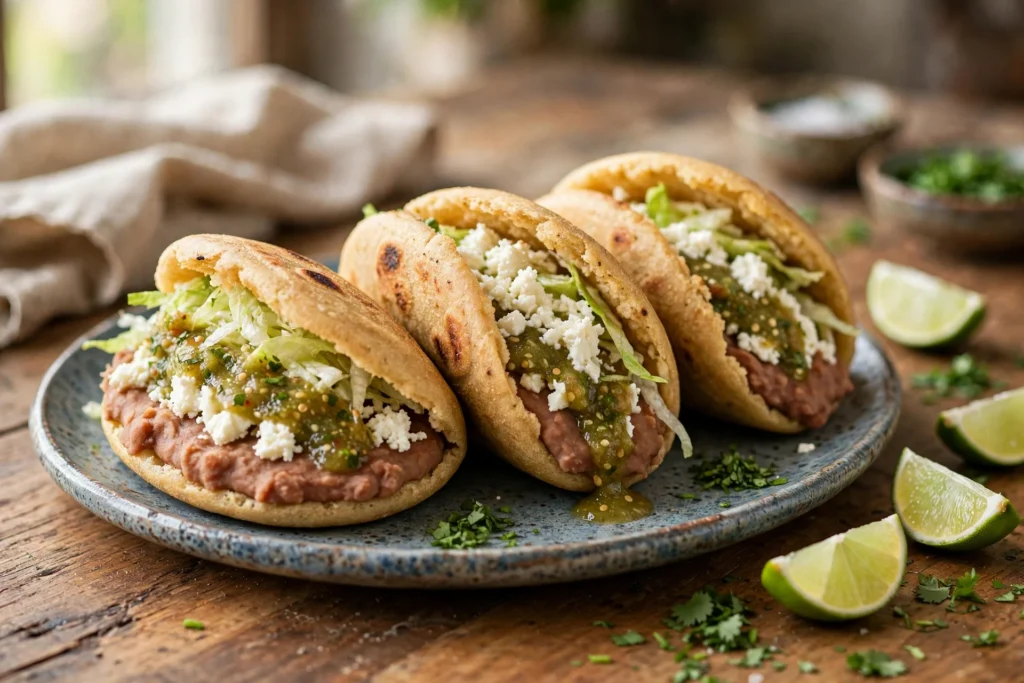

Gorditas are the thick little corn cakes that street vendors griddle all over Mexico — golden outside, soft and steamy inside, split open like a pocket and stuffed with beans, cheese, and salsa. The name means “little fat ones,” and it fits: these are plump, sturdy, and satisfying in a way a thin tortilla never is.
If you have never made masa dough before, this is the recipe to start with. The dough comes together in five minutes, the griddle does most of the work, and the first puffed gordita is genuinely exciting. Fill them with beans and cheese, or go all in with shredded meat. Either way, dinner is on the table in forty minutes.

Why You’ll Love It
- Real street food at home. Thick, golden masa cakes with a pocket inside — the genuine article, not a tortilla folded in half.
- Five-minute dough. Masa harina, water, salt, and a little lard — no yeast, no rising, no waiting around.
- Endlessly fillable. Beans and cheese tonight, shredded chicken or pork tomorrow, eggs and chorizo for breakfast.
- Naturally gluten-free. Corn masa is the whole base, so no wheat flour is needed at all.
- Faster than delivery. Forty minutes from bowl to table, and most of that is the griddle doing its job.
- A crowd-pleaser. Set up a filling bar and let everyone stuff their own — it turns dinner into an event.
Ingredients
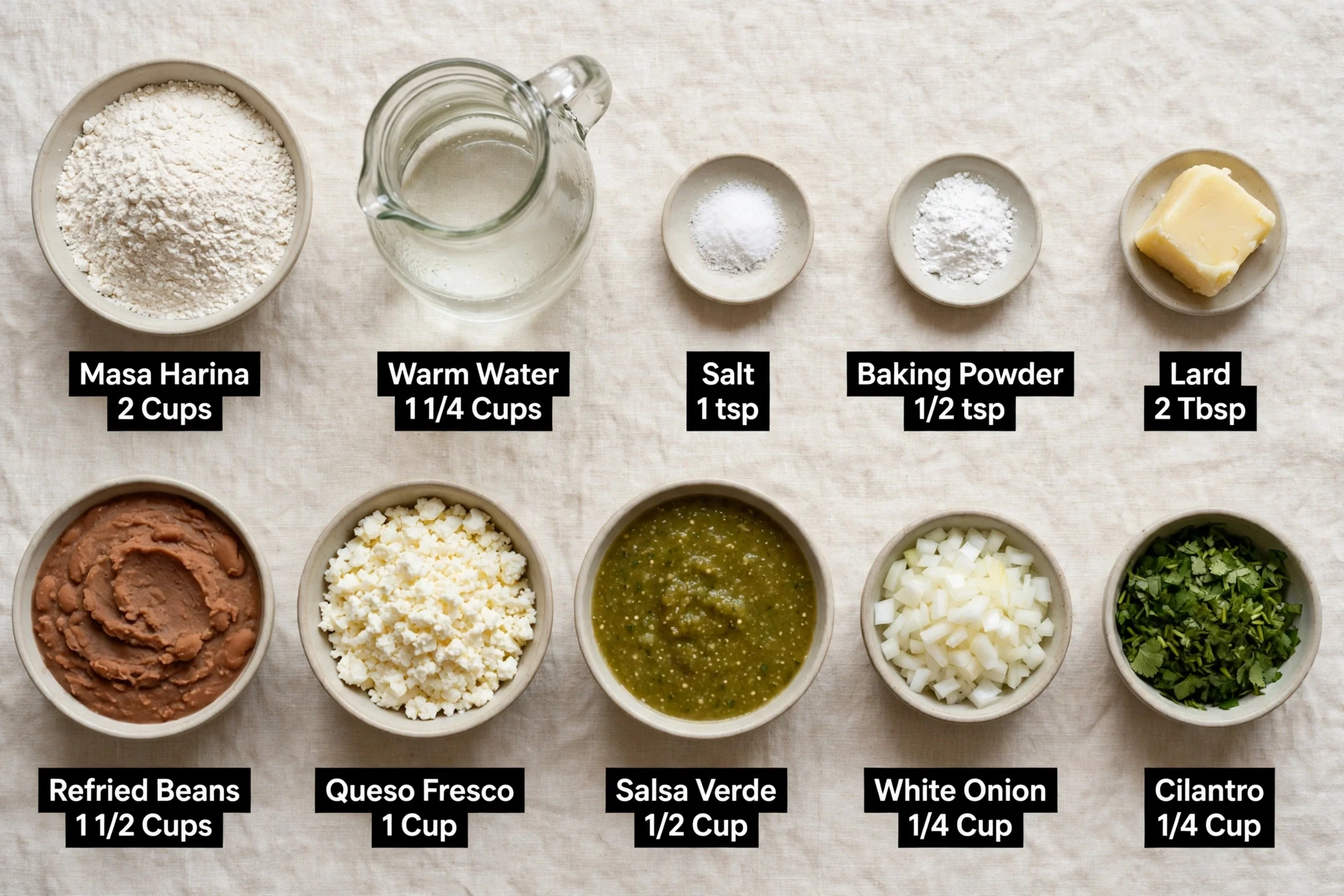
For the Masa Dough
- 2 cups masa harina — Instant corn masa flour, the nixtamalized corn flour that makes tortillas and gorditas possible. Look for Maseca or Bob’s Red Mill in the Mexican aisle. Cornmeal and arepa flour will not work — only masa harina gives a dough that holds together and puffs. Substitution: 2 cups fresh masa from a tortilleria (skip the water).
- 1 1/4 cups warm water, plus more as needed — Warm water hydrates the masa faster and more evenly than cold water. Start with the full amount, then add a tablespoon at a time if the dough feels dry. Substitution: 1 1/4 cups warm low-sodium chicken broth for a richer dough.
- 1 teaspoon fine salt — Seasons the dough all the way through, since the filling cannot do it alone. Fine salt mixes in evenly. Substitution: 1 teaspoon kosher salt.
- 1/2 teaspoon baking powder — A small lift that helps the gorditas puff on the griddle. It is optional, but first-time makers will notice the difference. Substitution: omit it — the gorditas will still cook through, just with a little less puff.
- 2 tablespoons lard, softened — The traditional fat. It makes the dough tender and helps the crumb stay soft inside the crisp shell. Vegetable shortening works the same way. Substitution: 2 tablespoons vegetable shortening, or omit for a leaner, vegan dough.
For the Filling
- 1 1/2 cups refried beans, warmed — The classic base layer. Warm beans spread easily inside the pocket and keep the other fillings from falling out. Canned refried beans are fine; homemade are better. Substitution: 1 1/2 cups black beans, mashed with a fork.
- 1 cup crumbled queso fresco — Cool, salty, crumbly cheese that balances the warm beans. It does not melt into a puddle — it stays in soft crumbles. Substitution: 1 cup crumbled feta (saltier, so use a little less) or shredded Oaxaca cheese.
- 1/2 cup salsa verde — Bright, tangy green salsa that cuts through the richness of the beans and cheese. Spoon it in last so it does not soak the masa. Substitution: 1/2 cup red salsa or pico de gallo.
- 1/4 cup finely chopped white onion — Sharp, fresh crunch on top. White onion is traditional and milder than red here. Substitution: 1/4 cup finely chopped red onion.
- 1/4 cup chopped fresh cilantro — The fresh, green finish. If your household hates cilantro, leave it out — the gorditas will not miss it. Substitution: 1/4 cup chopped fresh parsley, or omit.
How to Make Gorditas
1 Step 1: Mix the Dough
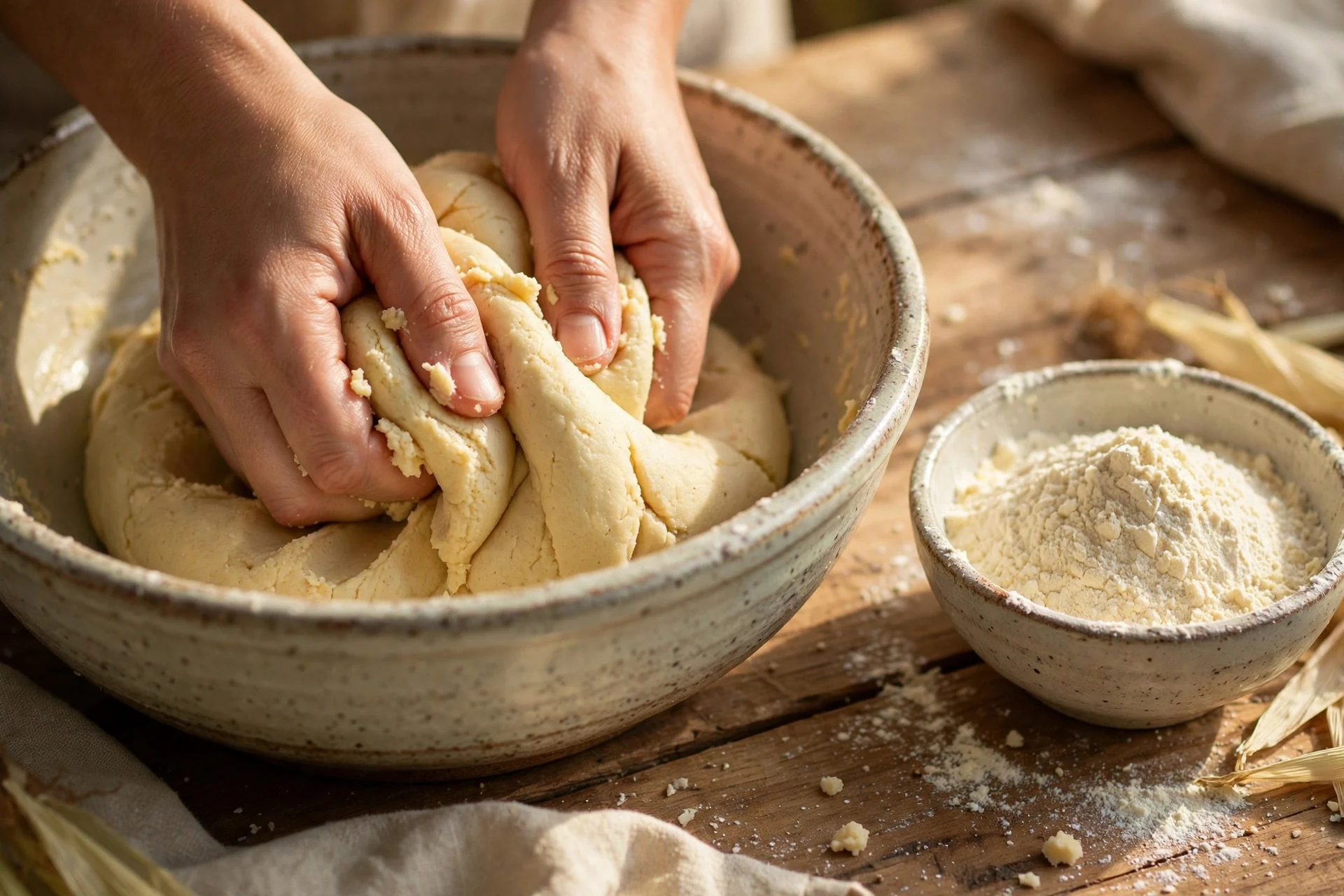
Mix the dough. Whisk the masa harina, salt, and baking powder together in a large bowl. If you are using lard or shortening, rub it into the dry ingredients with your fingers until the mixture looks like coarse crumbs. Pour in the warm water and mix with your hand until a soft dough forms, then knead it in the bowl for 2 to 3 minutes until smooth. The dough should feel like soft play dough — moist, smooth, and not sticky. If the edges crack when you press a ball, knead in water a tablespoon at a time. If it sticks to your hands, add masa harina a tablespoon at a time.
Rest the dough. Cover the bowl with a damp kitchen towel and let the dough rest for 10 minutes at room temperature. This short rest lets the masa fully hydrate, and the dough comes out smoother and easier to shape. Meanwhile, warm the refried beans in a small saucepan over low heat, and set out the queso fresco, salsa verde, onion, and cilantro in small bowls.
3 Step 3: Divide and Shape
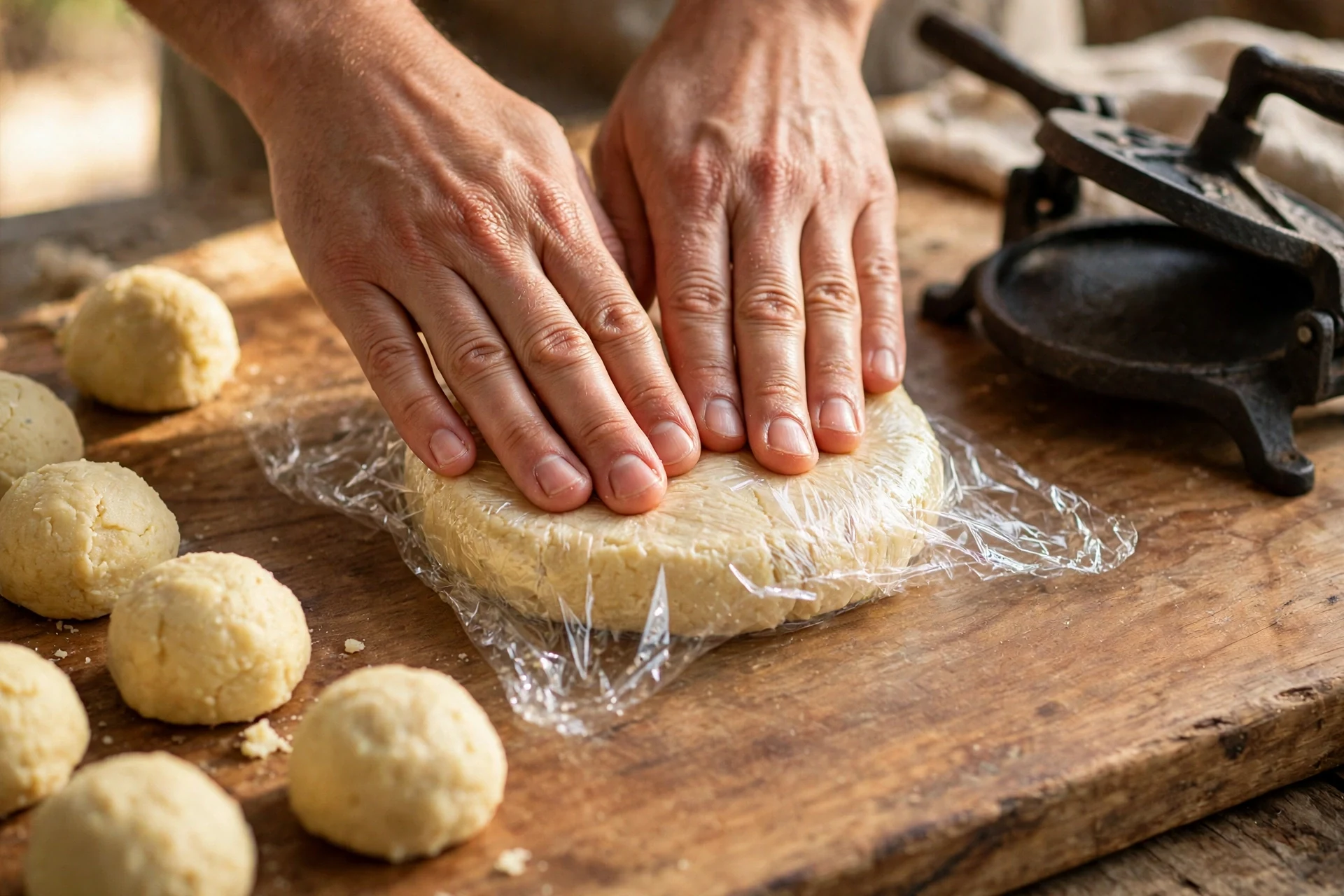
Divide and shape. Divide the dough into 8 equal pieces and roll each one into a smooth ball about the size of a golf ball. Keep the balls covered with the damp towel while you work so they do not dry out. One at a time, place a ball between two sheets of plastic wrap or parchment paper and press it with a tortilla press, a heavy skillet, or your palm into a thick round — about 4 inches across and 1/4 inch thick. Thinner rounds cook like tortillas and will not puff, while thicker ones stay raw in the middle.
4 Step 4: Griddle Until Puffed
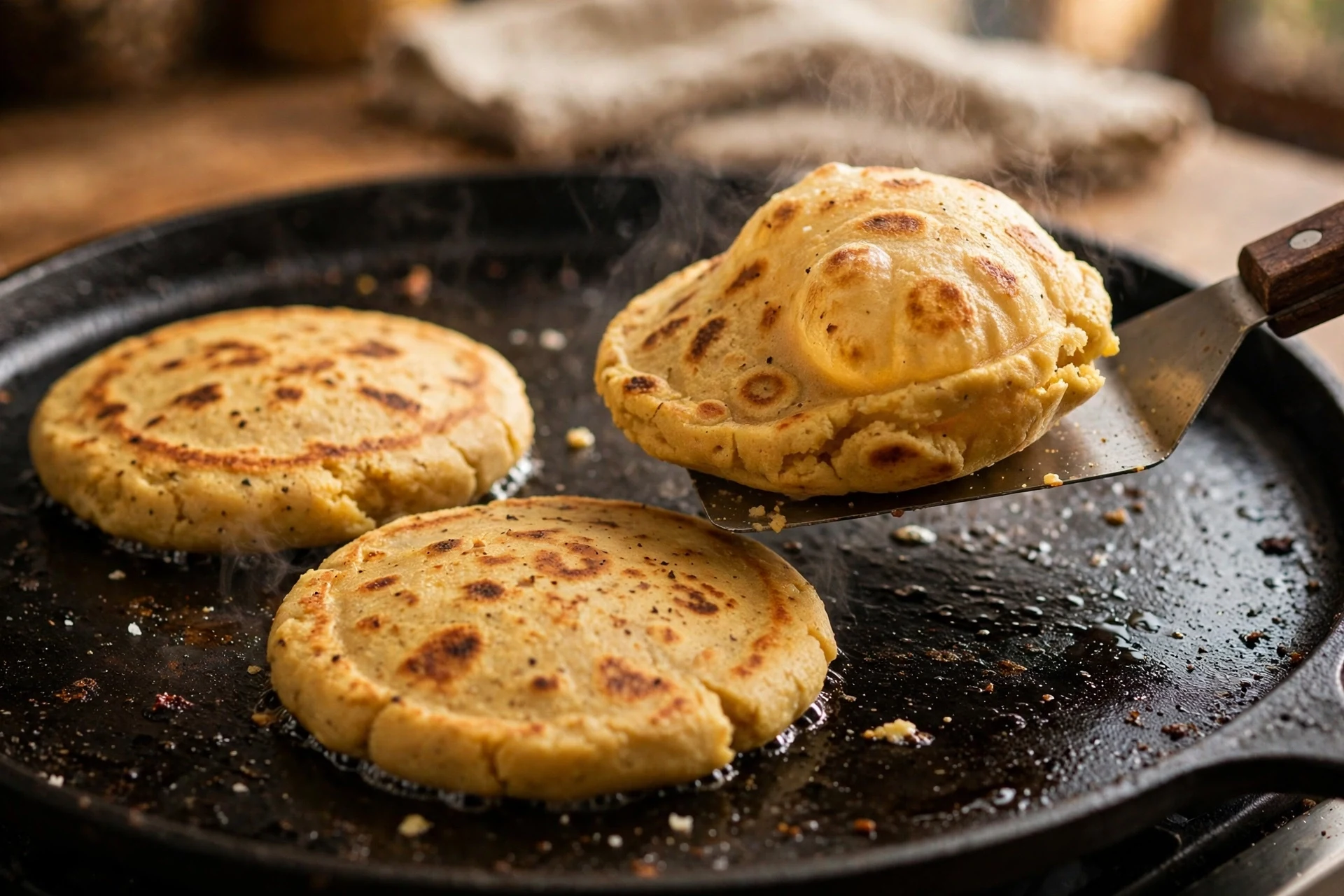
Griddle until puffed. Heat a dry cast-iron skillet, griddle, or comal over medium heat — no oil. Lay 2 or 3 gorditas in the pan, leaving room to flip. Cook for 3 to 4 minutes on the first side, until the edges look dry and matte and golden-brown spots appear. Flip and cook 3 to 4 minutes more. The gorditas should puff at least partly — a bubble across the round is enough, and a gentle press with a spatula on the last flip spreads the steam. Move them to a plate and keep them warm under a towel while you cook the rest.
5 Step 5: Split While Hot
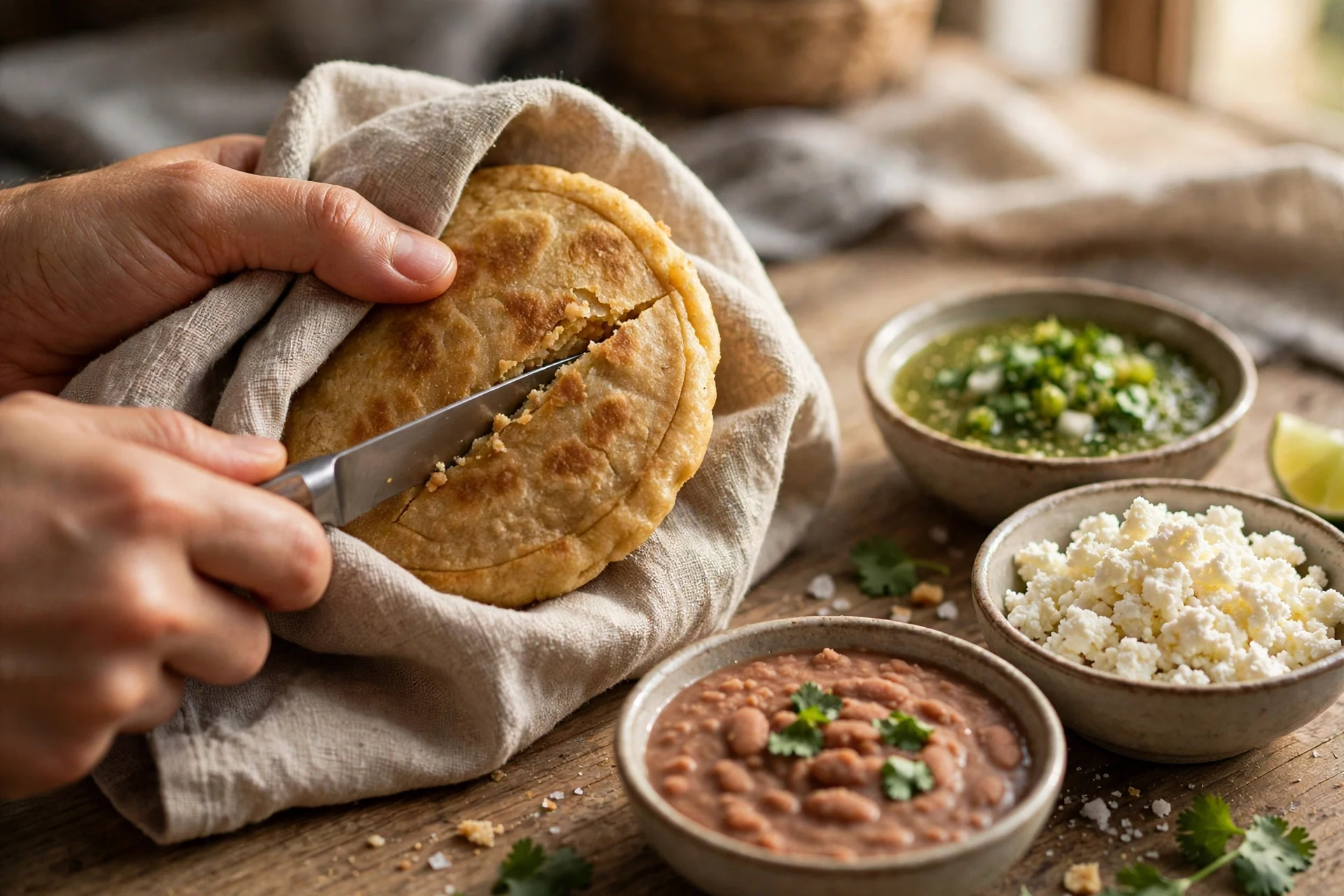
Split while hot. Hold a gordita in a folded kitchen towel and push the tip of a small paring knife into the edge. Cut about halfway around — 180 degrees — and leave the other half attached, so you get a pocket instead of two lids. Do this while the gordita is still hot: the steam inside keeps the layers apart, and the knife finds the seam easily. Once a gordita cools, the layers stick together and the split tears.
Fill and serve. Open each pocket and spread in a heaping spoonful of warm refried beans — about 3 tablespoons per gordita. Add a spoonful of crumbled queso fresco, a spoonful of salsa verde, and a sprinkle of onion and cilantro. Do not overfill: about 1/4 cup of filling per gordita is plenty, and an overstuffed pocket falls apart in your hands. Serve immediately, while the shells are still warm and crisp at the edges.
Technique: The Masa System
Gorditas fail in predictable ways, and every one of them traces back to the dough, the heat, or the split.
The Dough Feel
The whole recipe hangs on one test: the dough should feel like soft play dough. Press a ball between your palms — the edges should stay smooth, not crack. If they crack, the dough is too dry; knead in water a tablespoon at a time until the cracks disappear. If it sticks to your hands, it is too wet; add masa harina a tablespoon at a time. The 2 cups masa to 1 1/4 cups water ratio here is the starting point, and humidity changes it — dry winter air needs a splash more water, humid summer air a little less. Trust your hands over the measuring cup.
Why Gorditas Puff
The puff is steam. Water at the center of the dough boils, and once both faces have set into a crust, the steam cannot escape — so it pushes one layer away from the other and hollows out the middle. That is why thickness and heat both matter. At 1/4 inch thick on medium heat, the outside sets just as the inside starts steaming. If the pan is too hot, the outside burns before the middle cooks. If the pan is too cool, the gordita dries out before it ever puffs. And if the round is too thin, there is not enough water inside to make steam at all. A partial puff is a success — a bubble across part of the round is enough for the knife to find the seam.
Griddled vs. Fried
Both methods are traditional, and they give different gorditas. Griddled gorditas, the way this recipe makes them, are toasty and light, with no added fat and a soft, steamy crumb — the everyday version. Fried gorditas are crisp and golden all over, with a richer shell, but they absorb oil and are best eaten right away. To fry them, heat 1 inch of oil in a heavy skillet to 350 degrees Fahrenheit and fry each gordita 1 to 2 minutes per side until puffed and golden.
Gorditas vs. Sopes
These two get mixed up constantly, so here is the clear line. A gordita is cooked whole, then split open along the edge and filled inside. A sope is an open base with a pinched rim, and the toppings are piled on top. Both start from the same masa dough, but a gordita is a handheld pocket, while a sopes is eaten with a fork and knife.
Tips for the Best Gorditas
- ✅ Use masa harina, nothing else. Cornmeal and arepa flour are not nixtamalized, so the dough falls apart. Check the bag: it should say masa harina.
- ✅ Trust the play-dough test. Smooth edges when pressed means the dough is right; cracks mean add water, stickiness means add masa.
- ✅ Keep the rounds 1/4 inch thick. Thinner rounds cook like tortillas and will not puff; thicker ones stay raw inside.
- ✅ Medium heat, not high. A pan that is too hot burns the outside before the middle cooks.
- ✅ Split while hot. The steam keeps the layers apart; a cooled gordita tears when you cut it.
- ✅ Cut halfway around only. Leave one side attached, or the pocket becomes two lids.
- ✅ Do not overfill. About 1/4 cup of filling per gordita is plenty — more than that falls apart.
Variations
Crispy Fried Gorditas
After shaping, fry the rounds in 1 inch of oil at 350 degrees Fahrenheit for 1 to 2 minutes per side until puffed and deeply golden. Drain on paper towels and split while hot. These are richer and crunchier than the griddled version, and they are best eaten immediately.
Chicken Tinga Gorditas
Fill the pockets with warm chicken tinga instead of beans, then top with queso fresco, onion, and cilantro. The smoky tomato-chile chicken is the classic street filling, and it keeps for days in the fridge.
Carnitas Gorditas
Fill with warm, crisped carnitas and a spoonful of salsa verde. The rich pork against the toasted masa is the combination street vendors are famous for.
What to Serve With Gorditas
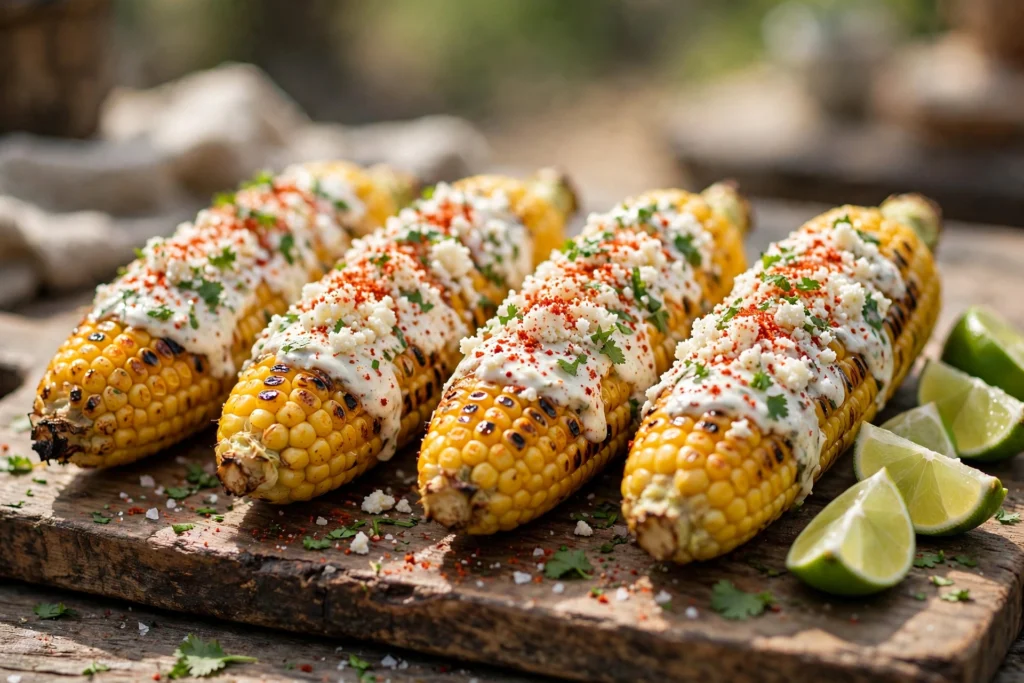
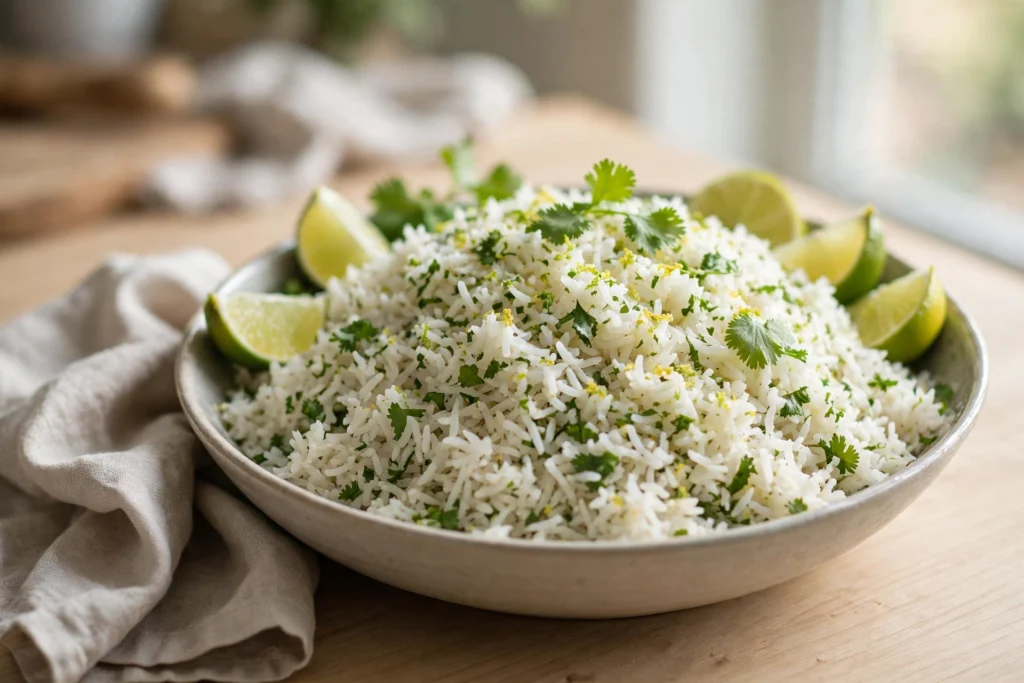
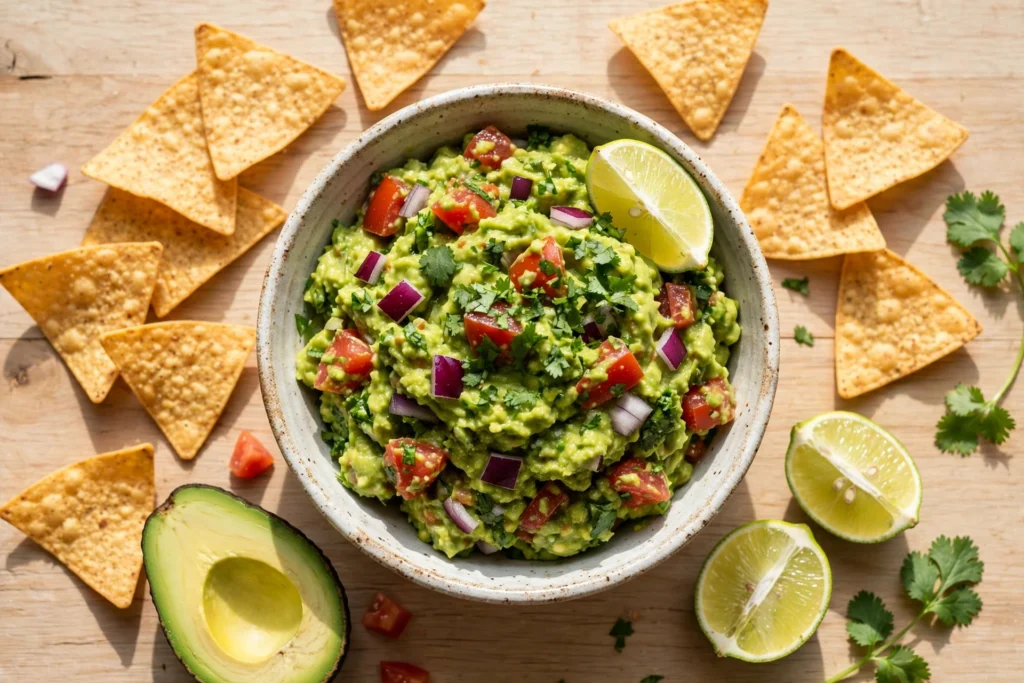
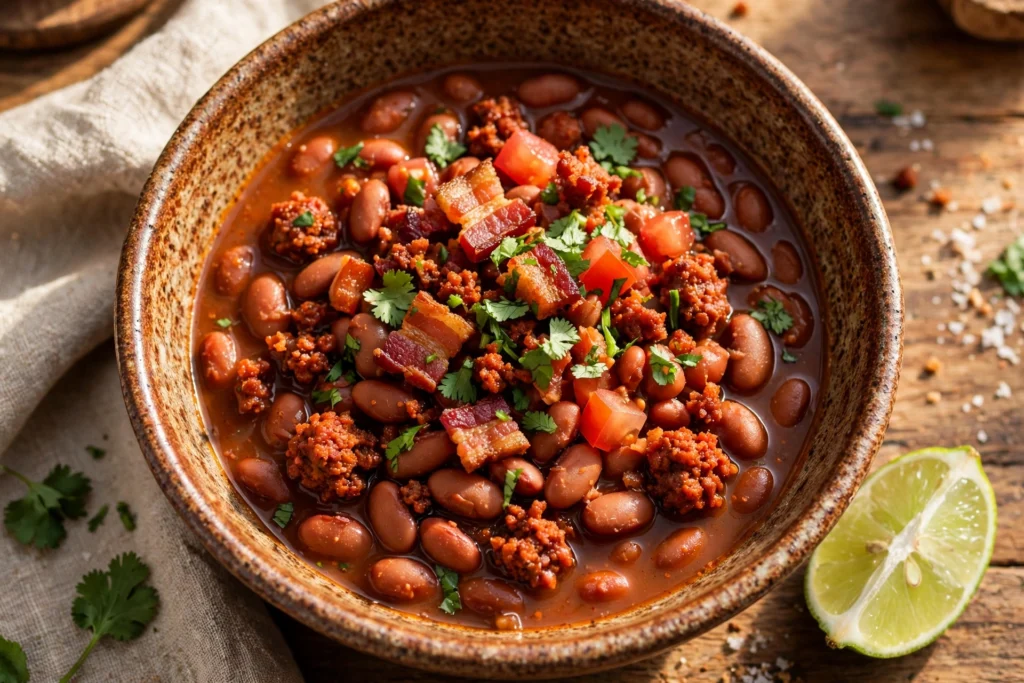
Gorditas are a full meal on their own, but the right sides turn them into a feast. A pot of beans and a simple cabbage slaw keep the table classic. For a bigger spread, serve them alongside taco bowls and add carne asada for the meat lovers. Set the fillings out in bowls and let people stuff their own; the gordita bar is half the fun.
Storage
In the Fridge
Store cooked, unfilled gorditas in an airtight container in the fridge for up to 4 days, and keep the fillings in separate containers — filled gorditas go soggy fast. The filling keeps 3 to 4 days in the fridge as well, and it tastes even better on day two.
In the Freezer
Freeze cooked, unfilled gorditas for up to 3 months. Stack them with parchment paper between each one so they do not stick, and seal them in a freezer bag with the air pressed out. The filling freezes too — beans and shredded meats keep 3 to 4 months in airtight containers.
Reheating
Reheat unfilled gorditas on a dry griddle over medium-low heat for 2 to 3 minutes per side, until soft inside again. Sprinkle very dry ones with a few drops of water first. Bring the filling to a simmer in a pan before stuffing. The microwave turns gorditas rubbery, so skip it.
Frequently Asked Questions
What are gorditas made of?
Gorditas are made from masa harina (nixtamalized corn flour), warm water, salt, and often a little lard or baking powder. The dough is pressed into thick rounds, cooked on a dry griddle or fried, split open while hot, and stuffed with fillings like refried beans, cheese, salsa, and shredded meat.
What is the difference between gorditas and sopes?
A gordita is a pocket: the masa cake is cooked whole, split open along the edge, and filled inside. A sope is an open base with a pinched rim, and the toppings are piled on top. Both use the same masa dough, but a gordita is eaten by hand like a pocket sandwich, while a sope is eaten with a fork.
Why won’t my gorditas puff?
Usually three reasons: dough that is too dry, rounds that are too thick or too thin, or a pan that is too cool. The dough should feel like soft play dough, with no cracks at the edges. Keep the rounds 1/4 inch thick and cook on medium heat. A partial puff is enough — a bubble across part of the round gives the knife a seam to follow.
Can I use cornmeal instead of masa harina?
No. Cornmeal is not nixtamalized, so the dough crumbles when you shape it and falls apart on the griddle. Arepa flour holds together but makes an arepa, not a gordita — it was never treated with lime, so it tastes like plain corn instead of tortilla. Only masa harina or fresh masa works.
Are gorditas fried or griddled?
Both. Griddled gorditas are cooked on a dry comal or cast-iron skillet — toasty, light, and the everyday version. Fried gorditas are cooked in hot oil at 350 degrees Fahrenheit until crisp and golden — richer and crunchier, but they absorb oil and are best eaten right away. This recipe griddles them, with a fried variation in the Variations section.
Can I make gorditas ahead of time?
Yes, in parts. Make the fillings up to 3 days ahead and keep them in the fridge. Cook the gorditas earlier in the day, store them unfilled, and reheat them on the griddle before splitting and filling. Make the dough on the day, though — shaped raw rounds dry out at the edges after about 2 hours in the fridge, even wrapped.
Try These Next
- Sopes — the open-topped cousin of the gordita, with a pinched rim and toppings piled on top.
- Chicken Tinga — smoky shredded chicken, the classic gordita filling.
- Carnitas — slow-cooked pork, crisped at the edges, made for stuffing into masa.
- Taco Bowls — a build-your-own dinner with the same feed-a-crowd spirit.
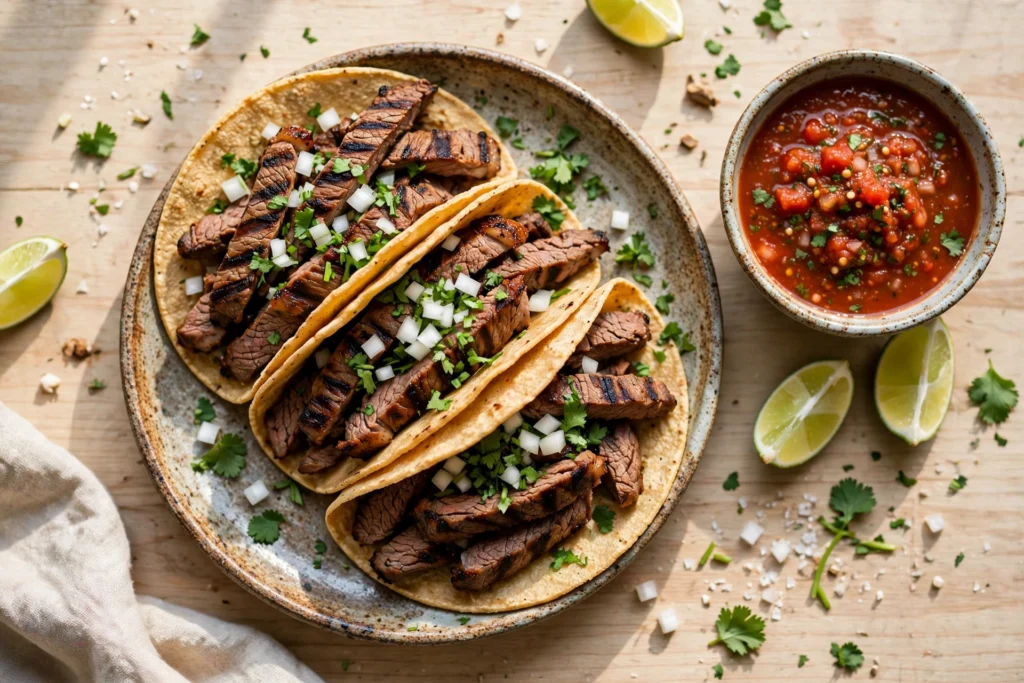
- Carne Asada — charred grilled steak for the biggest appetites at the table.
- Sheet pan nachos — a two-layer nacho pan for the same game day table.
- Monster cookies — thick, chewy cookies for dessert.
Gorditas
Ingredients
For the Masa Dough
- 2 cups masa harina
- 1 1/4 cups warm water plus more as needed
- 1 teaspoon fine salt
- 1/2 teaspoon baking powder
- 2 tablespoons lard softened
For the Filling
- 1 1/2 cups refried beans warmed
- 1 cup crumbled queso fresco
- 1/2 cup salsa verde
- 1/4 cup finely chopped white onion
- 1/4 cup chopped fresh cilantro
Instructions
- Whisk the masa harina, salt, and baking powder together in a large bowl. Rub the lard into the dry ingredients with your fingers until the mixture looks like coarse crumbs. Pour in the warm water and mix with your hand until a soft dough forms. Knead in the bowl for 2 to 3 minutes until smooth.
- Cover the bowl with a damp kitchen towel and let the dough rest for 10 minutes at room temperature. Meanwhile, warm the refried beans in a small saucepan over low heat.
- Divide the dough into 8 equal pieces and roll each into a smooth ball. Keep the balls covered with the damp towel. Press each ball between two sheets of plastic wrap or parchment paper into a thick round about 4 inches across and 1/4 inch thick.
- Heat a dry cast-iron skillet, griddle, or comal over medium heat. Cook 2 or 3 gorditas at a time for 3 to 4 minutes on the first side until the edges look dry and golden-brown spots appear. Flip and cook 3 to 4 minutes more until puffed at least partly. Keep warm under a towel while you cook the rest.
- Hold a gordita in a folded kitchen towel and push the tip of a small paring knife into the edge. Cut about halfway around, leaving the other half attached, to form a pocket. Split each gordita while it is still hot.
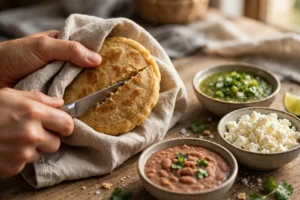
- Spread about 3 tablespoons of warm refried beans into each pocket. Add crumbled queso fresco, salsa verde, onion, and cilantro. Serve immediately.
Notes
- Use masa harina only — cornmeal and arepa flour will not hold together or puff.
- The dough should feel like soft play dough; knead in water a tablespoon at a time if the edges crack.
- Keep the rounds 1/4 inch thick; thinner rounds cook like tortillas and will not puff.
- Cook on medium heat — a pan that is too hot burns the outside before the middle cooks.
- A partial puff is enough; a bubble across part of the round gives the knife a seam to follow.
- Split each gordita while it is still hot; once it cools, the layers stick together and tear.
- Cut only halfway around the edge and leave one side attached, so you get a pocket, not two lids.
- Do not overfill — about 1/4 cup of filling per gordita is plenty.