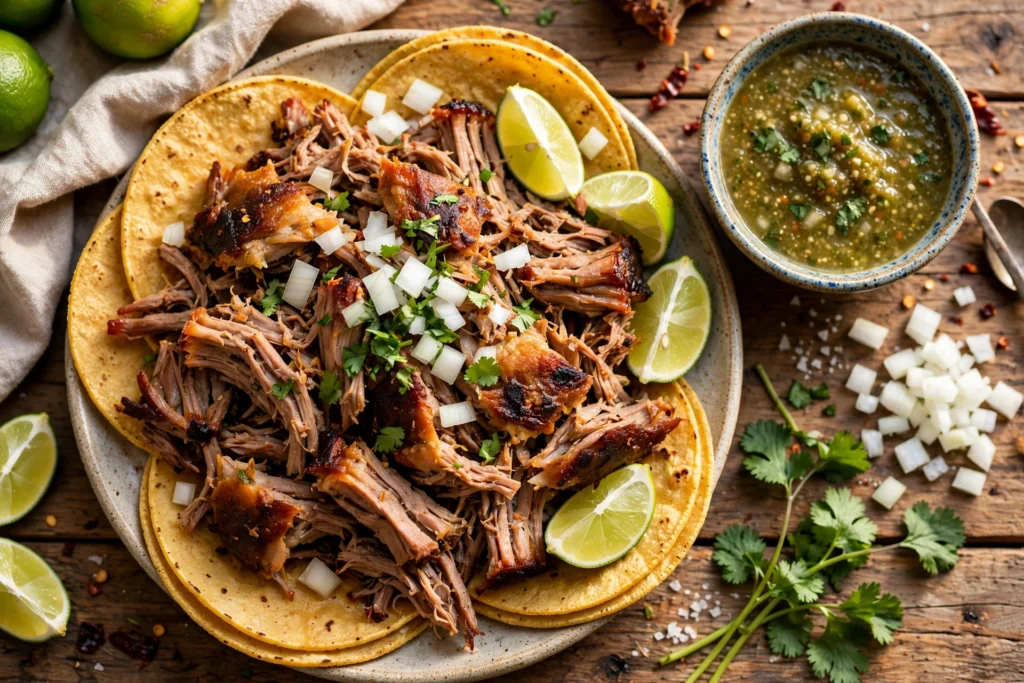
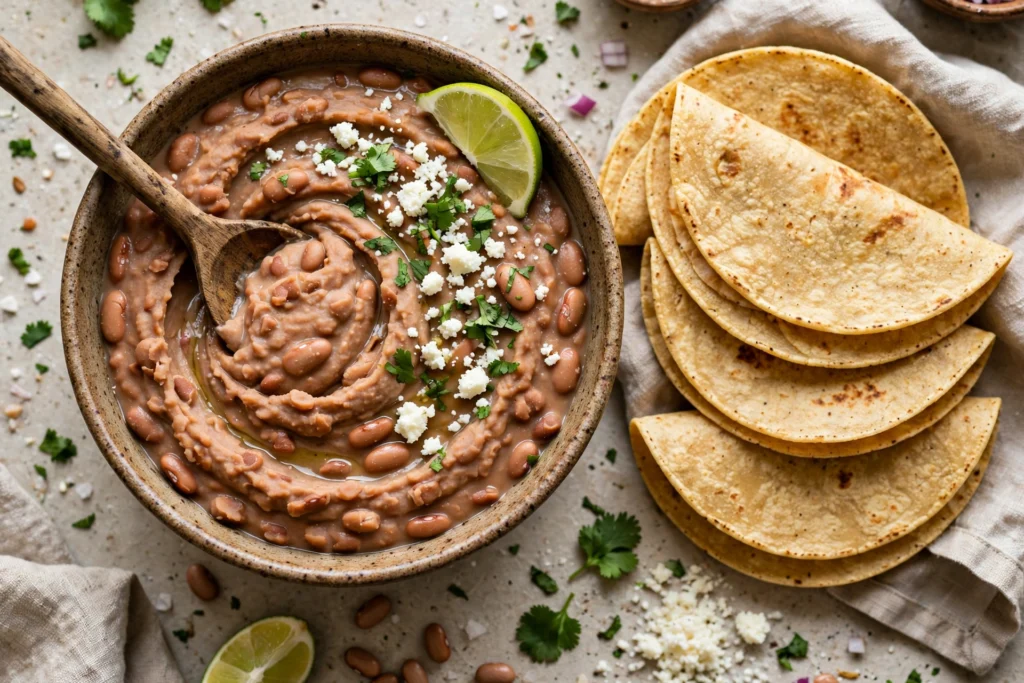
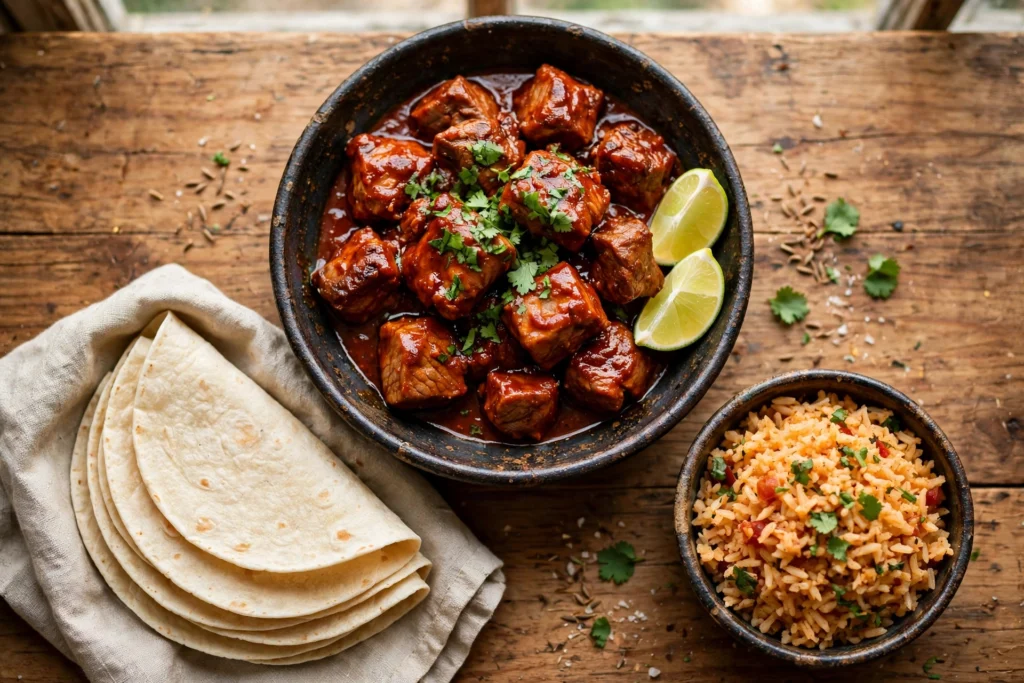
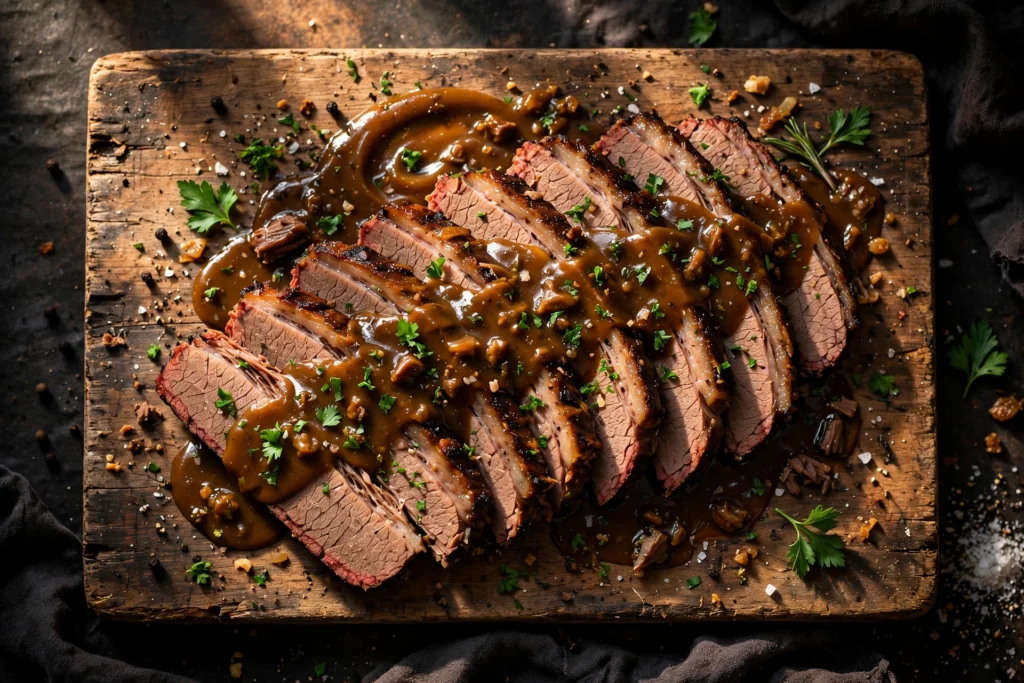
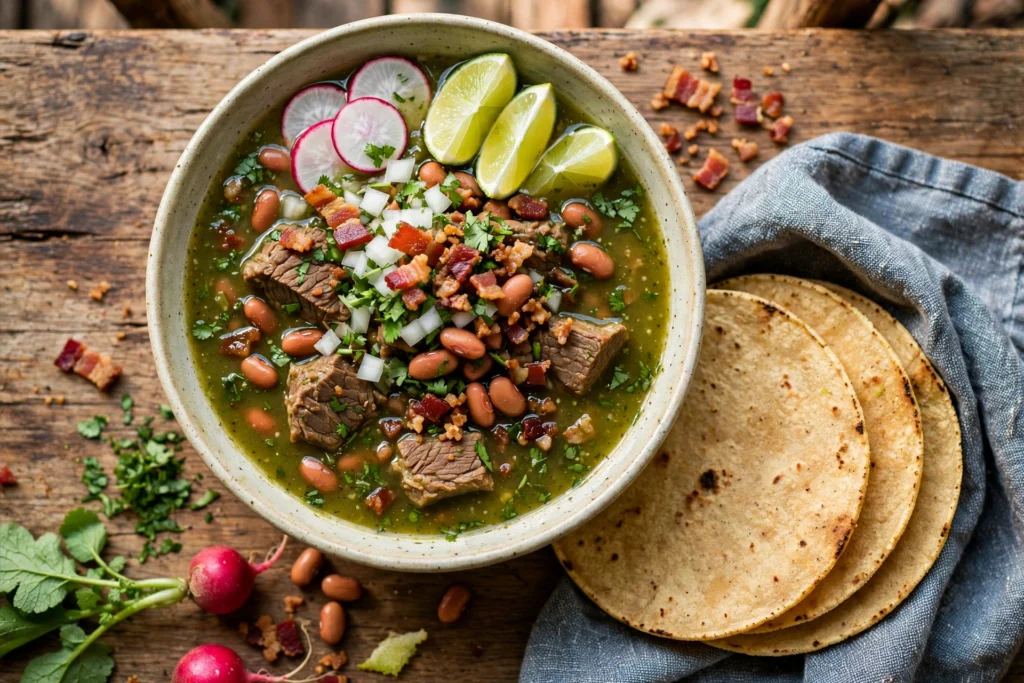
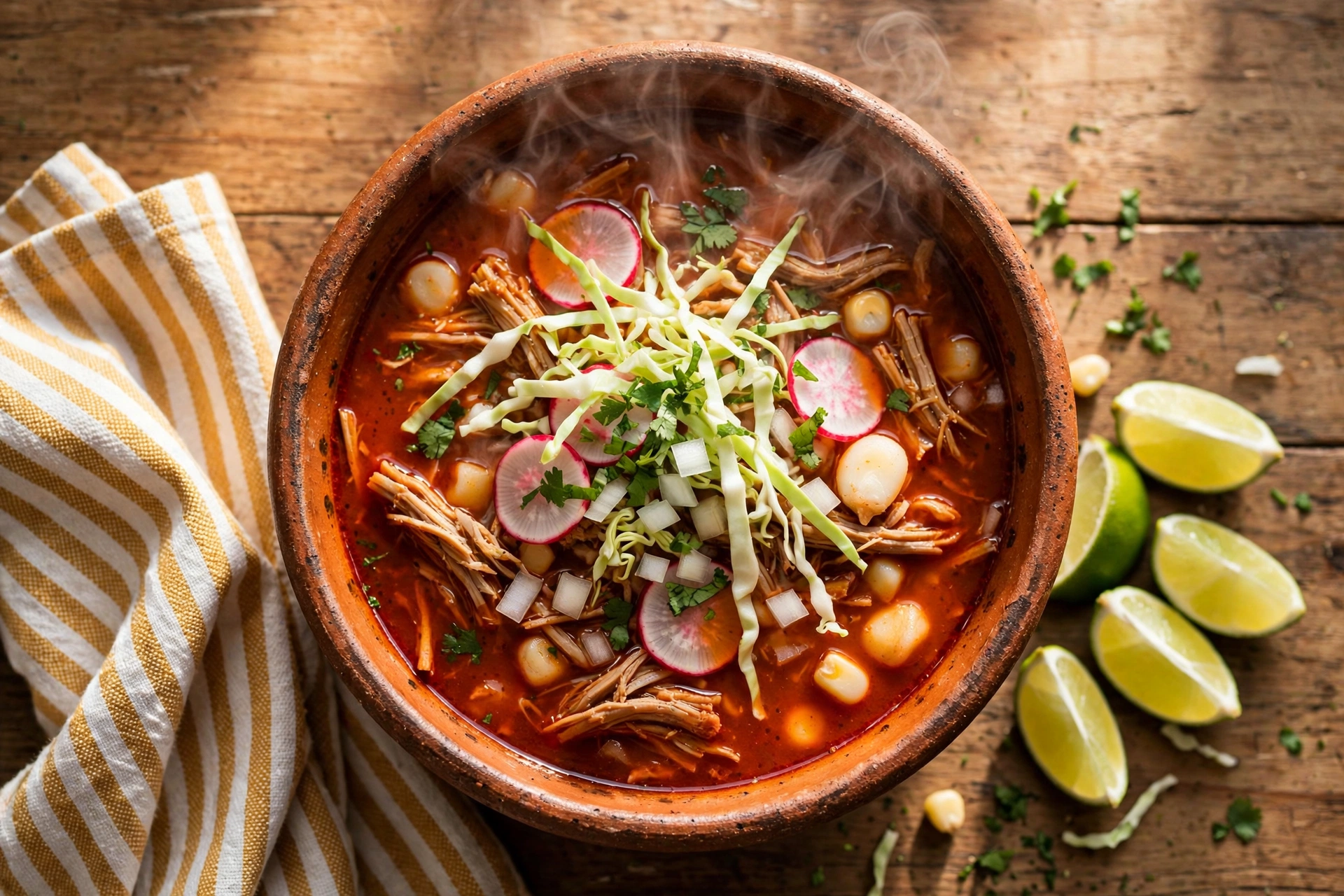
Pozole is Mexico’s most beloved soup. It is rich, smoky, and built for cold nights and big family tables. Yet the classic version simmers for hours. This Instant Pot pozole gives you the same deep flavor in about an hour. Tender pork shoulder falls apart in a smoky guajillo chile sauce, and plump hominy soaks up every drop. Then a fresh topping bar of cabbage, radishes, and lime wakes the whole bowl up.
In Mexico, pozole is celebration food. Families serve it at birthdays, holidays, and Sunday lunches. The name comes from the Nahuatl word pozolli, which means foamy, because the hominy blooms like little flowers as it cooks. Today, the Instant Pot makes this old favorite a weeknight dinner. The pressure cooker does the slow work for you. So grab your pot. Dinner is about to smell like a Mexican kitchen.
Why You’ll Love It
- Slow-simmered flavor in about an hour. The pressure cooker builds deep flavor fast. It tastes like the pot simmered all day, yet it is ready in just over an hour.
- Fall-apart tender pork. Pork shoulder turns meltingly soft under pressure. It shreds with two forks, and every strand soaks up the red chile sauce.
- Plump hominy that never turns mushy. The hominy goes in after pressure cooking. It simmers just long enough to heat through, so it stays firm and chewy.
- A smoky homemade chile sauce. Dried guajillo and ancho chiles blend into a rich red sauce. It beats any jarred sauce, and it takes only ten minutes.
- A topping bar everyone loves. Shredded cabbage, radishes, onion, cilantro, and lime let each person build their own bowl. Kids love choosing their own toppings.
- Perfect for meal prep. Pozole tastes even better the next day. It also freezes well, so make a full pot and save half for later.
- One pot, easy cleanup. Everything cooks in the Instant Pot. You sear, pressure cook, and simmer in the same pot, so there is only one pot to wash.
Ingredients
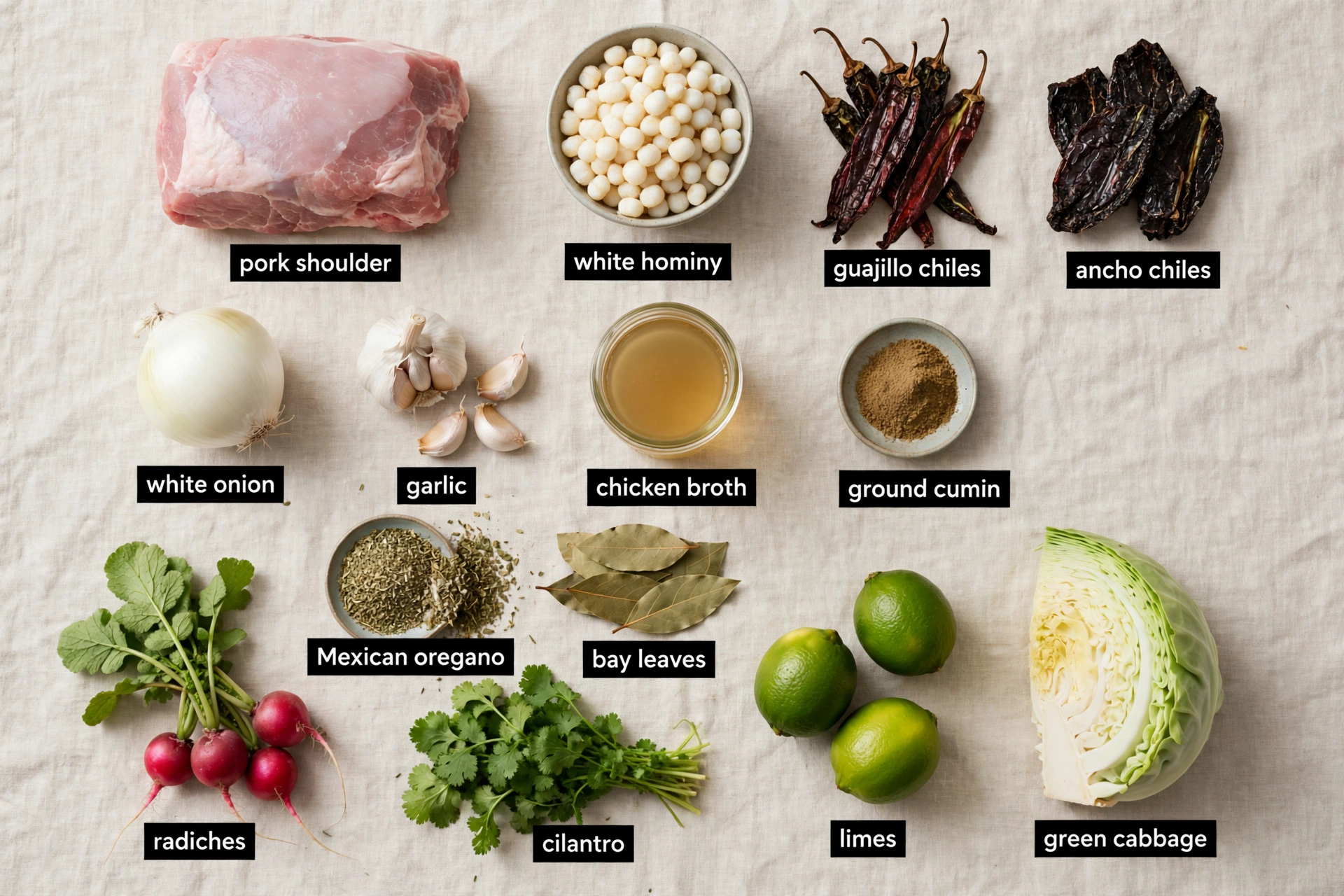
Every ingredient earns its place here. The dried chiles bring the smoke, and the pork brings the richness. The hominy brings the heartiness, and the fresh toppings bring the crunch. Read the notes before you start, because a few small choices make a big difference.
For the Chile Sauce
4 guajillo chiles, stems and seeds removed — Guajillo chiles give the sauce its red color and mild, fruity heat. They are the backbone of pozole rojo. If you cannot find guajillos, use New Mexico chiles instead.
2 ancho chiles, stems and seeds removed — Ancho chiles are dried poblanos. They add a deep, raisin-like sweetness that rounds out the sauce. Together with the guajillos, they make the classic pozole rojo base.
1/2 white onion, halved — Half of the onion goes into the sauce. First, char it in a dry skillet until the edges blacken. That char adds a smoky depth that no spice can match. Save the other half for dicing at serving time.
4 cloves garlic — Garlic goes into the blender with the chiles. It gives the sauce a warm, savory base. Fresh garlic works best here, because its flavor stays bright.
1 teaspoon ground cumin, toasted — Toast the cumin in a dry skillet for 30 seconds first. Toasting wakes up the spice and makes it taste warmer and nuttier. If you skip this step, the sauce will still work, yet it will taste flatter.
1 teaspoon dried Mexican oregano — Mexican oregano tastes more citrusy than the Mediterranean kind. It is traditional in pozole, so use it if you can find it. Regular oregano works in a pinch.
1/2 teaspoon freshly ground black pepper — Black pepper adds a gentle bite to the sauce. Freshly ground pepper tastes much better than pre-ground here.
2 cups hot water — Hot water softens the chiles and blends the sauce smooth. Use the soaking water for extra flavor, because it picks up color and heat from the chiles.
For the Pozole
2 pounds boneless pork shoulder, cut into 2-inch chunks — Pork shoulder is the best cut for pozole. It has enough fat to stay juicy, and it shreds easily after pressure cooking. Do not use pork loin here, because it turns dry and tough under pressure.
1 1/2 teaspoons kosher salt, divided — Salt seasons the pork from the inside. Use 1 teaspoon on the meat and save 1/2 teaspoon for the final seasoning. Taste at the end and adjust from there.
1 teaspoon freshly ground black pepper — Black pepper seasons the pork before searing. It also adds a mild warmth to the finished broth.
2 tablespoons vegetable oil — Oil is for searing the pork. It helps the meat brown evenly and stops it from sticking to the pot. Use a neutral oil, because olive oil can smoke on high Saute.
4 cups low-sodium chicken broth — Chicken broth is the body of the soup. Use low-sodium broth so you can control the salt. Beef broth works too, and it makes a slightly richer soup.
2 bay leaves — Bay leaves add a quiet herbal note to the broth. They cook with the pork and come out before serving. Do not skip them, because they add depth you would miss.
2 cans (15 ounces each) white hominy, drained and rinsed — Canned hominy makes this a weeknight recipe. Rinse it well first, because the canning liquid tastes starchy. If you want the from-scratch route, see the dried hominy variation below.
For Serving
2 cups shredded green cabbage — Cabbage adds fresh crunch to each bowl. Shred it thin, because thin shreds soften slightly in the hot broth. Romaine lettuce works as a swap.
4 radishes, thinly sliced — Radishes add a peppery bite and a bright color. Slice them thin so they stay crisp. If you do not like radishes, use sliced cucumber instead.
1/2 white onion, finely diced — Raw onion adds a sharp, fresh bite. Dice it small so it scatters evenly over the bowl. Soak it in cold water for 10 minutes first if you want a milder flavor.
1/2 cup chopped fresh cilantro — Cilantro adds a fresh, herbal finish. If your family does not like cilantro, use chopped green onions instead.
2 limes, cut into wedges — Lime juice brightens the rich broth. Serve plenty of wedges, because everyone squeezes a different amount.
1 teaspoon dried Mexican oregano, for sprinkling — A pinch of oregano over each bowl is traditional. It adds a final herbal note right before eating.
Warm corn tortillas or tostadas, for serving — Tortillas turn the soup into a full meal. Serve them warm on the side, or crumble tostadas over the top for crunch.
How to Make Instant Pot Pozole
This pozole comes together in five steps. First, you build the chile sauce. Then you sear the pork. After that, the Instant Pot does the hard work. Finally, you shred the pork, add the hominy, and set out the toppings. The whole pot takes about an hour and fifteen minutes, and most of that time is hands-off.
Make the Sauce and Sear the Pork
1Step 1 — Make the chile sauce
Heat a dry skillet over medium heat. Add the guajillo and ancho chiles and toast them for 30 seconds per side, until they smell warm and fragrant. Do not let them burn, because burnt chiles taste bitter. Then move the chiles to a bowl and cover them with hot water. Let them soak for 10 minutes, until soft. Meanwhile, char the onion half in the same dry skillet, cut side down, for about 2 minutes, until the edges blacken. Next, drain the chiles and add them to a blender with the charred onion, garlic, cumin, oregano, black pepper, and 2 cups of hot water. Blend for 2 minutes, until the sauce is completely smooth. Set it aside.
2Step 2 — Sear the pork
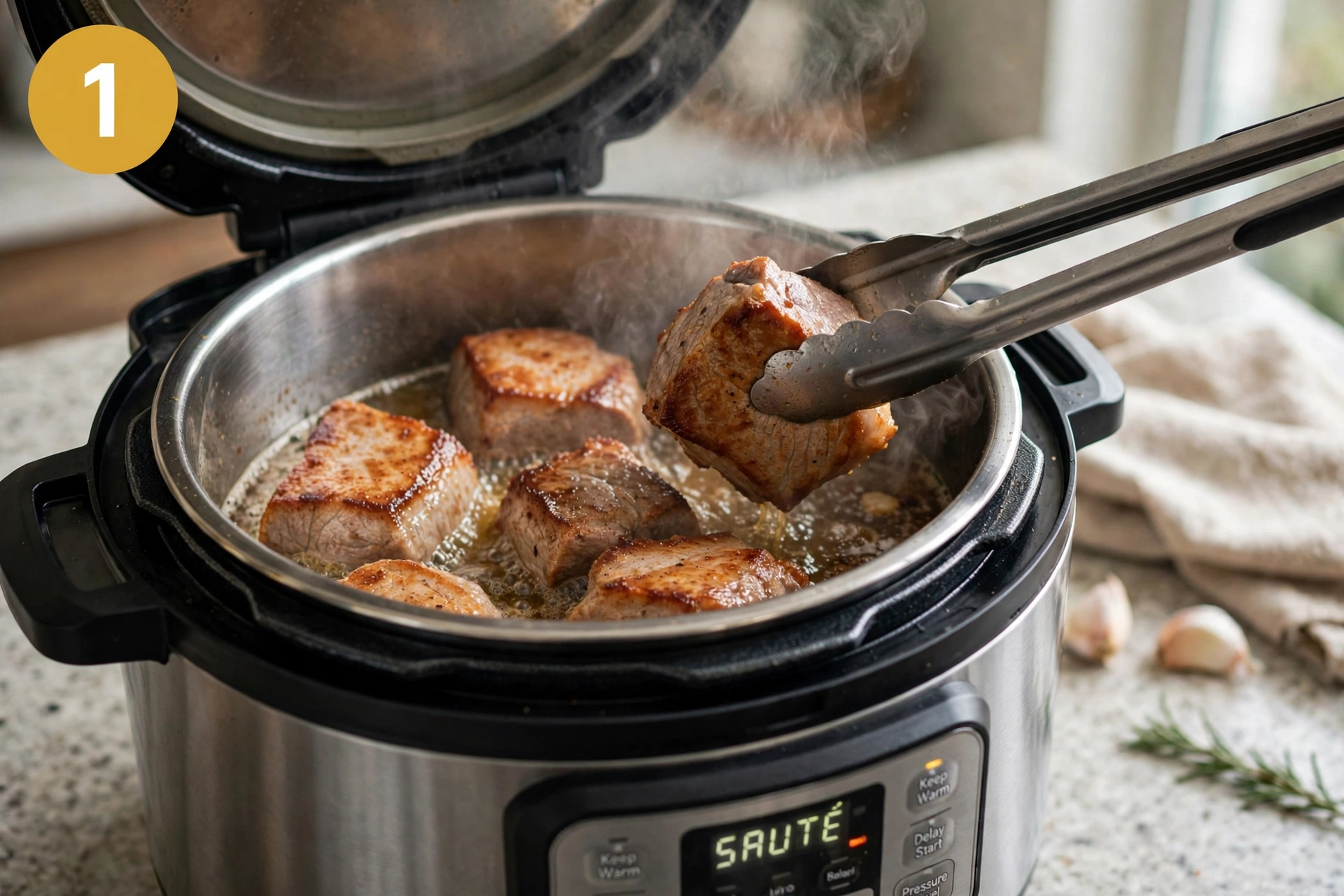
Pat the pork chunks dry with paper towels. Dry meat browns much better than wet meat. Season the chunks on all sides with 1 teaspoon of salt and the black pepper. Then set the Instant Pot to Saute on high and add the oil. When the oil shimmers, add half of the pork in a single layer. Brown the pieces for 3 minutes per side, until they have a deep golden crust. Move the browned pork to a plate. Then repeat with the second batch. Do not crowd the pot, because crowded meat steams instead of browning.
Pressure Cook the Pozole
3Step 3 — Pressure cook the pozole
Turn off the Saute function. Pour the chile sauce into the pot and scrape the bottom with a wooden spoon. This step matters, because it loosens the browned bits and stops the burn notice. Then return all the pork to the pot with any juices from the plate. Add the broth and the bay leaves, and stir once. Lock the lid and set the valve to sealing. Cook on high pressure for 35 minutes. When the timer ends, let the pressure release naturally for 15 minutes. Then move the valve to venting to release the rest of the steam. Finally, open the lid carefully, away from your face.
Shred, Simmer, and Serve
4Step 4 — Shred the pork and add the hominy
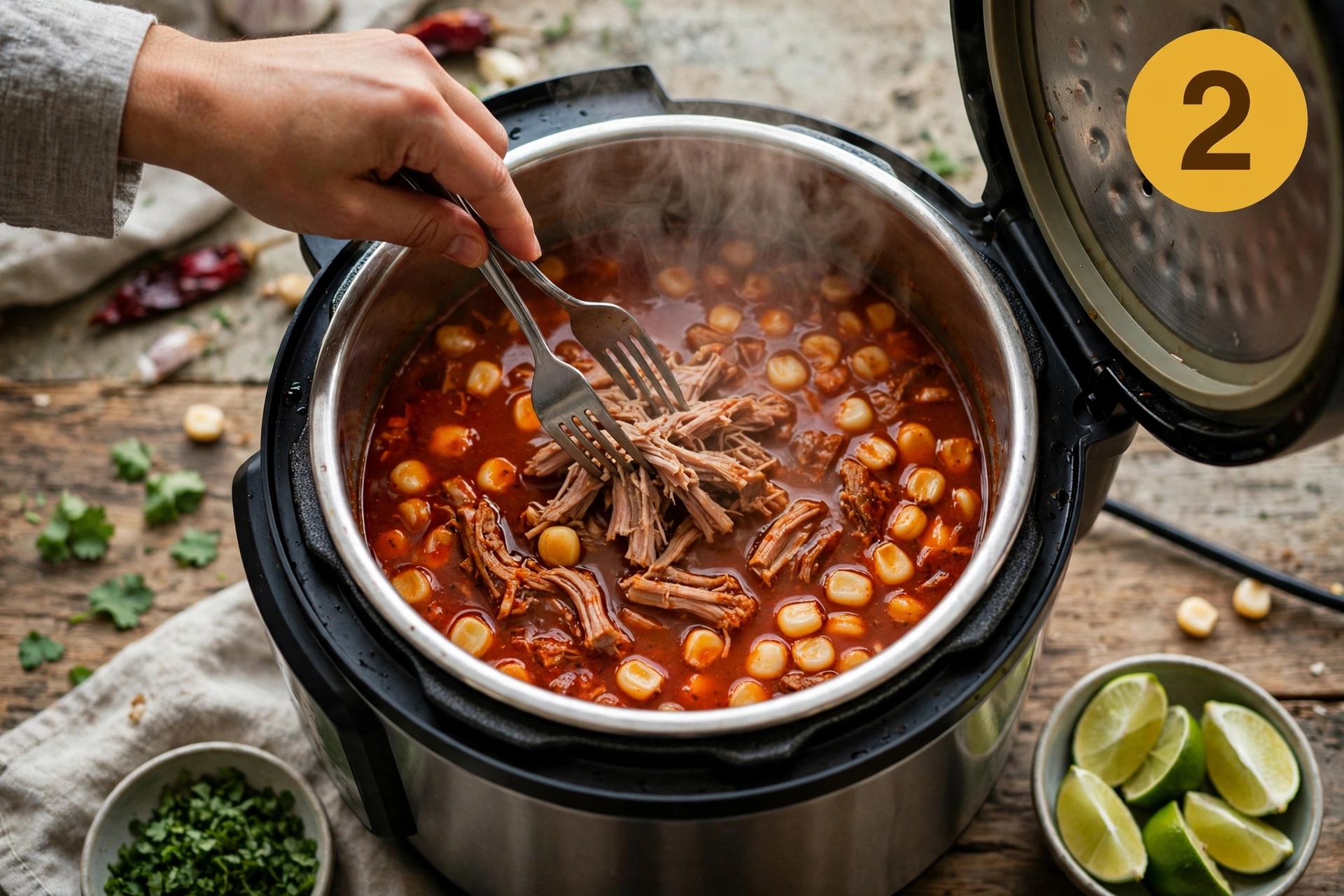
Lift the pork chunks out with tongs and set them on a cutting board. Then shred the meat with two forks. It should fall apart easily. If a piece resists, it needs more time, so return it to the pot for 5 more minutes. Next, stir the shredded pork back into the pot. Add the drained hominy and set the Instant Pot to Saute. Simmer for 10 minutes, until the hominy is hot all the way through. This is the key step: the hominy heats in the sauce, yet it stays plump and firm.
5Step 5 — Season, finish, and serve
First, fish out the bay leaves and throw them away. Then stir in the lime juice and the apple cider vinegar. These two small additions brighten the whole pot. Next, taste the broth and add the remaining 1/2 teaspoon of salt if it needs it. Finally, ladle the pozole into wide bowls. Set out the cabbage, radishes, onion, cilantro, lime wedges, and oregano in small bowls, so everyone tops their own bowl. Serve with warm tortillas or crunchy tostadas on the side.
Technique: The Two Moves That Make This Pozole
Two small choices set this pozole apart. The first is the natural release. The second is the hominy timing. Get these two moves right, and the soup tastes like it simmered all day.
Why Natural Release Matters
A quick release drops the pressure in seconds. That sudden change squeezes juice out of the meat, and the pork can turn dry. A natural release works differently. The pressure falls slowly, and the meat relaxes in the hot broth. As a result, the pork stays juicy and shreds easily. So wait the full 15 minutes. It feels slow, yet it makes a real difference. If you are in a hurry, wait at least 10 minutes before you vent the rest. Never quick-release this pozole straight from high pressure.
Add the Hominy Last
Hominy is already cooked in the can. It only needs to heat through. If it pressure cooks for 35 minutes, it turns soft and starchy, and the broth gets cloudy. For that reason, this recipe adds the hominy after the pressure cycle. Ten minutes on Saute is enough. The kernels heat all the way through, yet they stay plump and chewy. In fact, this is the trick that keeps the texture right. So resist the urge to add the hominy early, even if it saves a step.
Tips
- Cut the pork into even chunks. Pieces of about 2 inches cook at the same speed. If some chunks are much bigger, they will stay tough while the small ones shred.
- Do not skip the sear. Browning builds the flavor base of the whole soup. The browned bits on the pot bottom dissolve into the sauce and make it taste richer.
- Scrape the pot bottom well. After you pour in the sauce, scrape every browned bit loose. If food stays stuck to the bottom, the Instant Pot may show a burn notice.
- Taste before you salt. The broth, the sauce, and the pork all bring salt. So taste at the end and add the last 1/2 teaspoon only if the soup needs it.
- Let it rest for 10 minutes. The flavors settle as the pot cools slightly. In fact, pozole tastes even better the next day, after a night in the fridge.
- Keep the toppings cold and crisp. Shred the cabbage and slice the radishes just before serving. Cold, crunchy toppings against hot broth are what make pozole special.
- Use a 6-quart pot or bigger. This recipe fills a 6-quart Instant Pot to a safe level. If you have a 3-quart pot, halve the recipe. If you have an 8-quart pot, the recipe works as written.
Variations
- Pozole verde in the Instant Pot. Swap the red chile sauce for a green one. Blend 1 pound of tomatillos with 2 jalapenos, 1 onion, 4 garlic cloves, and a big handful of cilantro. Then follow the same steps. For a full green version, see our Pozole Verde.
- Chicken pozole. Use 2 pounds of boneless chicken thighs instead of pork. Cut the pressure time to 15 minutes, and keep the 10-minute natural release. Then shred the chicken and add the hominy the same way.
- Spicier pozole. Add 2 dried arbol chiles to the sauce. They bring real heat without changing the flavor much. For a milder bowl, serve the arbol chiles on the side instead.
- Slow cooker version. Sear the pork in a skillet first. Then add the pork, sauce, broth, and bay leaves to a slow cooker. Cook on low for 6 hours or on high for 3 hours. After that, shred the pork, stir in the hominy, and cook 30 more minutes on high.
- Dried hominy from scratch. Soak 1 1/2 cups of dried white hominy overnight. Then drain it and add it to the pot with the pork before pressure cooking. Cook for 50 minutes instead of 35. The kernels bloom beautifully, and the broth tastes even richer.
- Vegetarian pozole. Skip the pork and use 8 cups of vegetable broth. Add 2 cans of pinto beans with the hominy at the end, and stir in 2 cups of roasted mushrooms for a meaty bite. The chile sauce stays the same.
- Pozole blanco. Leave out the chile sauce entirely. Cook the pork in broth with onion, garlic, bay leaves, and cumin, then add the hominy. The broth stays pale and clean, and the toppings do the talking.
What to Serve With
Pozole is a full meal on its own, yet a few sides make it a feast. Warm corn tortillas are the classic partner. Tear them into pieces and dip them into the broth. Tostadas add crunch, so set out a stack with the toppings. A simple side of Cilantro Lime Rice soaks up extra broth, and Frijoles Charros make the table feel complete. For drinks, serve agua fresca or Mexican lager with lime. And for dessert, keep it simple with Mazapan or a bowl of Mexican rice pudding.
Storage
Pozole keeps well, and it tastes better the next day. Let the pot cool for 30 minutes first. Then store the pozole in airtight containers in the fridge for up to 4 days. Keep the toppings separate, because they stay crisp that way. To reheat, warm the pozole gently on the stove over medium heat, and add a splash of broth if it thickened. For the freezer, cool the pozole fully, then freeze it in portions for up to 3 months. Thaw it in the fridge overnight before reheating. Do not freeze the fresh toppings. Instead, cut fresh cabbage, radishes, and onion on serving day.
FAQ
Yes, and it is one of the best uses for a pressure cooker. The Instant Pot cuts a 3-hour simmer down to about an hour. The pork turns fall-apart tender, and the chile sauce tastes slow-cooked. Just remember to sear the pork first and to let the pressure release naturally for 15 minutes.
Cook 2-inch pork chunks on high pressure for 35 minutes, then let the pressure release naturally for 15 minutes. After that, simmer the hominy for 10 minutes on Saute. In total, the pot takes about 1 hour and 15 minutes, including the time it needs to come up to pressure.
Put canned hominy in after pressure cooking. Canned hominy is already cooked, so it only needs 10 minutes to heat through. If it pressure cooks for 35 minutes, it turns soft and starchy. The only exception is dried hominy, which goes in before pressure cooking because it needs the full cook time to soften.
More Questions
Tough pork usually means it needed more time, not less. Pork shoulder turns tender only after its connective tissue breaks down. If the meat resists shredding, lock the lid again and cook for 10 more minutes on high pressure. Also, check that you used pork shoulder, because lean cuts like pork loin turn dry and tough under pressure.
Yes. Soak 1 1/2 cups of dried white hominy overnight, then drain it. Add it to the pot with the pork before pressure cooking, and cook for 50 minutes instead of 35. The kernels bloom into soft, chewy flowers, and the broth tastes even richer. Do not skip the soak, because unsoaked hominy can stay hard in the center.
Pozole rojo gets its red color and smoky flavor from dried red chiles like guajillo and ancho. Pozole verde gets its green color from tomatillos, green chiles, and cilantro. Both use pork or chicken and hominy, and both take the same fresh toppings. If you like smoky and mild, choose rojo. If you like bright and tangy, try our Pozole Verde.
Try These Next
- Pozole Rojo — the classic stovetop red pozole this Instant Pot version is based on
- Pozole Verde — bright chicken pozole with tomatillos and cilantro
- Caldo de Pollo — comforting Mexican chicken soup with vegetables and rice
- Lentejas — hearty Mexican lentil soup with chorizo and vegetables
- Sopa de Fideo con Carne Molida — cozy Mexican noodle soup with seasoned ground beef
- Guacamole Recipe — creamy guacamole for the topping bar or tostadas on the side
Instant Pot Pozole
Instant Pot pozole with tender pork shoulder, hominy, and a smoky guajillo chile sauce — all the flavor of slow-simmered pozole rojo in about an hour.Ingredients
Method
- Make the chile sauce. Toast the guajillo and ancho chiles in a dry skillet for 30 seconds per side, then soak in hot water for 10 minutes. Char the onion half in the same skillet, cut side down, for 2 minutes. Blend the drained chiles with the charred onion, garlic, cumin, oregano, black pepper, and 2 cups hot water for 2 minutes, until completely smooth.
- Sear the pork. Pat the pork chunks dry and season with 1 teaspoon salt and the black pepper. Set the Instant Pot to Saute on high, add the oil, and brown the pork in two batches, 3 minutes per side, until deeply golden.
- Pressure cook. Turn off Saute. Pour in the chile sauce and scrape the bottom of the pot. Return the pork with its juices, add the broth and bay leaves, and stir. Lock the lid, set the valve to sealing, and cook on high pressure for 35 minutes. Let the pressure release naturally for 15 minutes, then vent the rest.
- Shred the pork and add the hominy. Lift out the pork and shred it with two forks. Stir it back into the pot, add the drained hominy, and simmer on Saute for 10 minutes, until the hominy is hot through.
- Season, finish, and serve. Remove the bay leaves. Stir in the lime juice and apple cider vinegar, then taste and add the remaining 1/2 teaspoon salt if needed. Ladle into bowls and serve with cabbage, radishes, onion, cilantro, lime wedges, oregano, and warm tortillas or tostadas.
Notes
- Cut the pork into even 2-inch chunks so every piece cooks at the same speed.
- Scrape the pot bottom well after adding the sauce so the Instant Pot does not show a burn notice.
- Never quick-release this pozole straight from high pressure — wait at least 10 minutes of natural release so the pork stays juicy.
- The pozole tastes even better the next day. Store it in the fridge for up to 4 days or freeze it for up to 3 months.
- For a 3-quart Instant Pot, halve the recipe. For an 8-quart pot, use the recipe as written.